
The Philosophy of Grounding: Understanding Silat Takedowns


Welcome to Martial Arts Mastery, where we delve into the heart and soul of combat traditions worldwide. Are you ready to unlock the secrets of unshakeable balance and devastating takedowns? This week, we explore the profound philosophy behind Silat grounding techniques, revealing how mastering connection to the earth can elevate your entire martial arts practice. Discover the principles that underpin this ancient art and prepare to redefine your understanding of force and leverage. Intrigued? Read on to uncover the wisdom embedded within Silat's earth-rooted foundation.
- Introduction to Silat Grounding Techniques and its Philosophical Roots
- The Philosophical Underpinnings of Silat Grounding
- Key Elements of Effective Silat Grounding Techniques
- Silat Takedowns: A Philosophical Approach to Off-Balancing
- Grounding Techniques in Different Silat Styles
- Practical Applications of Silat Grounding for Self-Defense
- Training Methods for Developing Silat Grounding Skills
- The Future of Silat Grounding: Preserving Tradition and Embracing Innovation
-
Frequently Asked Questions
- What is the core philosophy behind Silat grounding techniques?
- How does the historical context of Silat influence its grounding techniques?
- What are some key differences between Silat grounding techniques and those found in other martial arts like Judo or wrestling?
- How do Silat grounding techniques relate to self-defense strategies?
- How can I improve my understanding and application of Silat grounding techniques?
- Final Reflection: Embracing the Root in Silat and Life
- Master the Ground: Elevate Your Silat Today!
Introduction to Silat Grounding Techniques and its Philosophical Roots
Exploring the Core Principles of Silat Grounding
Silat, the diverse martial art originating from Southeast Asia, places significant emphasis on grounding techniques, which form a fundamental aspect of its combat system. These techniques are not merely physical maneuvers but are deeply intertwined with the art's philosophical underpinnings. At its core, Silat grounding is about establishing a stable, rooted connection with the earth while simultaneously disrupting an opponent's balance.
This dual focus allows practitioners to generate power efficiently, absorb incoming force, and execute takedowns and sweeps with precision. The principles extend beyond mere physical stability, encompassing a mental and spiritual rootedness that influences a practitioner's calm under pressure and strategic thinking during conflict.
The core principles involve understanding body structure, leverage, and the strategic use of stances ( kuda-kuda). Practitioners learn to shift weight fluidly, maintain a low center of gravity, and utilize the natural lines of force within the body. This physical understanding is coupled with the philosophical idea of being like a tree – rooted and stable, yet flexible and able to sway with the wind.
This combination of physical mechanics and philosophical insight is crucial for mastering Silat grounding techniques philosophy, enabling not just effective combat application but also a deeper connection to the art's heritage. Mastery involves countless hours of dedicated practice, honing muscle memory and intuitive response based on these foundational concepts.
The Importance of Understanding Philosophy in Silat Takedowns
Understanding the philosophy behind Silat takedowns is paramount, elevating the techniques from simple physical actions to expressions of a profound martial art. Without this philosophical context, a takedown might be seen merely as a way to bring an opponent to the ground.
However, within the framework of Silat, a takedown is often a strategic disruption of keseimbangan (balance), a calculated move designed to control the flow of conflict and create opportunities. The philosophical perspective informs why a technique is applied, when it is most effective, and how it aligns with the practitioner's intent, whether it be self-defense, control, or disengagement.
The philosophical roots, such as the connection to tanah (earth) and the concept of adat (customs and traditions), provide a moral and ethical compass for the application of these powerful techniques. They teach practitioners humility, respect for the opponent, and the responsible use of force. This deep philosophical understanding ensures that the physical skills are wielded with wisdom and awareness, reflecting the art's rich cultural heritage. Therefore, studying the philosophy is not an academic exercise but a vital component of practical training, shaping the practitioner's mindset and enhancing the effectiveness and ethical application of Silat grounding techniques philosophy.
The Philosophical Underpinnings of Silat Grounding
The Concept of Tanah (Earth) in Silat Philosophy
In Silat philosophy, Tanah (Earth) is a fundamental concept representing stability, rootedness, and power. It signifies the practitioner's connection to the physical world and serves as the source from which strength and balance are drawn. Just as a tree draws sustenance and stability from the earth through its roots, a Silat practitioner aims to be deeply rooted, providing a solid foundation for all movements, particularly takedowns and grounding techniques. This connection is not just physical; it also implies a mental and spiritual groundedness, allowing the practitioner to remain calm and centered even amidst chaos.
The concept of Tanah directly influences the execution of Silat grounding techniques philosophy. Techniques emphasize keeping a low center of gravity, utilizing strong, stable stances ( kuda-kuda), and directing force downwards into the ground to generate power or absorb impact. When executing a sweep, for instance, the power comes from the stable base connected to the earth, allowing the leg to act as a powerful lever.
Similarly, when defending against a push or strike, the practitioner "roots" themselves into the ground, diffusing the incoming force safely. This philosophical principle transforms physical actions into expressions of a deeper connection to the fundamental elements, making the practitioner resilient and powerful.
Achieving Keseimbangan (Balance) Through Grounding Techniques
Keseimbangan (Balance) is a core principle in Silat, encompassing not only physical equilibrium but also mental and emotional stability. Grounding techniques are the primary means by which a practitioner achieves and maintains their own keseimbangan while simultaneously seeking to disrupt that of their opponent. A stable base, achieved through proper stances and body alignment, allows the practitioner to move efficiently, generate force, and respond dynamically to changing situations without losing their own balance. This internal balance is crucial for both offense and defense, particularly in the dynamic exchanges that lead to takedowns.
Furthermore, understanding how to achieve keseimbangan in oneself provides the insight needed to identify and exploit weaknesses in an opponent's balance. By sensing shifts in weight, posture, and movement, a skilled practitioner can apply minimal force at precise moments to off-balance the opponent, making takedowns significantly easier and more energy-efficient. This interplay between maintaining one's own balance and disrupting the opponent's is central to the strategic application of Silat grounding techniques philosophy, highlighting that stability is not static but a dynamic state constantly adjusted and controlled during combat.
The Role of Adat (Customs and Traditions) in Shaping Grounding Philosophy
Adat refers to the traditional customs, social codes, and ethical guidelines that govern life in the communities where Silat originated. These traditions play a significant role in shaping the philosophy and practice of Silat, including its grounding techniques. Adat emphasizes respect, humility, discipline, and the responsible use of knowledge and power.
This translates into how grounding techniques are taught and applied – not as brute force actions, but as strategic and ethical responses within a given context. For example, many traditional Silat styles teach techniques with varying levels of force depending on the situation, from gentle control to decisive takedowns, guided by the principles of Adat.
The transmission of Silat grounding techniques philosophy through Adat often involves a deep relationship between teacher and student, where lessons go beyond physical movements to include moral instruction and philosophical discussions. This ensures that the power inherent in effective grounding and takedown skills is tempered with wisdom and ethical consideration.
The respect for lineage and tradition embedded in Adat also preserves the historical context and deeper meanings behind the techniques, preventing them from becoming mere physical exercises devoid of their cultural and philosophical depth. This ensures that the practice remains rooted in the values of the community and the art's history.
Key Elements of Effective Silat Grounding Techniques

Understanding Body Mechanics and Leverage in Silat Takedowns
Effective Silat takedowns heavily rely on a deep understanding of body mechanics and leverage. Practitioners learn to use their own body structure efficiently, aligning bones and muscles to create strong frameworks for generating force or resisting it. This involves mastering concepts like skeletal stacking, where joints are aligned to support weight and transfer energy optimally, minimizing muscular strain.
For instance, a well-executed sweep utilizes the leg as a lever, with the power originating from the hips and core, anchored by a stable base connected to the ground. The angle of attack and the point of contact on the opponent's leg are critical applications of leverage, allowing a smaller practitioner to unbalance a larger opponent.
Leverage is not solely about applying force; it's also about disrupting the opponent's structure. By understanding how an opponent's weight is distributed and where their points of balance are, a Silat practitioner can use minimal effort to create maximum disruption. This might involve applying pressure to a joint's weakest angle, manipulating an opponent's limb to shift their weight onto an unstable position, or using their own momentum against them.
This intelligent application of body mechanics and leverage is a cornerstone of Silat grounding techniques philosophy, making takedowns efficient, powerful, and often surprising to an unprepared opponent. Mastering these principles requires dedicated anatomical understanding and practical application through consistent training.
Utilizing Kuda-Kuda (Stances) for Grounding Stability
Kuda-kuda, or stances, are the foundational positions in Silat and are absolutely vital for grounding stability. They are not static postures but dynamic platforms that allow for fluid movement, power generation, and balance maintenance. Each kuda-kuda is designed for specific purposes, offering different levels of mobility, protection, and stability. Low, wide stances, for example, provide exceptional stability for absorbing pushes or executing powerful sweeps and leg attacks, embodying the principle of Tanah. Taller, narrower stances might offer more mobility but still maintain a core connection to the ground through proper weight distribution and body alignment.
Proper utilization of kuda-kuda involves understanding how to transition between them smoothly and how to shift weight within a stance to maintain balance while moving or engaging an opponent. The ability to instantly adopt a strong, rooted kuda-kuda upon contact or during an exchange is critical for both defending against incoming attacks and initiating takedowns.
A practitioner with a strong command of their kuda-kuda is like a tree with deep roots – difficult to move and capable of generating significant force from a stable base. This mastery of stances is a visible expression of the practitioner's understanding of Silat grounding techniques philosophy.
Applying Buah (Techniques) and Elakan (Evasions) for Grounding
Buah (techniques) and Elakan (evasions) are the actions performed from the foundation of kuda-kuda, and they are intricately linked to grounding principles. Buah encompasses the offensive and defensive maneuvers, including strikes, locks, throws, and takedowns. When executing a takedown ( Buah), the practitioner relies on their stable kuda-kuda to provide the power and balance needed to complete the technique. For example, a leg sweep ( sapuan) is a Buah that requires a strong, grounded stance to generate the necessary force and maintain balance while the leg is extended.
Elakan (evasions) are movements designed to avoid or redirect an opponent's attack. While seemingly opposite to grounding, effective evasions often rely on maintaining balance and a connection to the ground, allowing the practitioner to move quickly and efficiently without losing their base. A sidestep or angle change ( langkah) is an Elakan that uses the grounded foot as a pivot point, enabling rapid movement while remaining stable enough to counter-attack or initiate a takedown.
The interplay between grounded stability ( kuda-kuda), offensive/defensive actions ( Buah), and evasive movements ( Elakan) forms a dynamic system where grounding is not a static concept but an active principle applied throughout the exchange. This synthesis is key to the practical application of Silat grounding techniques philosophy.
Silat Takedowns: A Philosophical Approach to Off-Balancing
The Art of Disrupting an Opponent's Keseimbangan
Silat takedowns are fundamentally about the art of disrupting an opponent's keseimbangan. This goes beyond simply knocking someone over; it involves a deep understanding of human anatomy, movement, and psychological states. A skilled Silat practitioner doesn't rely solely on brute force but rather on timing, angle, and the strategic application of leverage to break the opponent's balance.
This might involve subtle pushes or pulls, manipulating limbs or joints to create instability, or exploiting moments when the opponent is shifting weight or extended. The aim is to make the opponent momentarily unstable, rendering them vulnerable to a takedown with minimal effort.
This philosophical approach views the opponent's keseimbangan as a dynamic system that can be influenced. By sensing the opponent's energy and intent, the practitioner can anticipate movements and apply disruptive forces at the precise moment of vulnerability. This requires sensitivity and intuition, developed through extensive practice and the cultivation of rasa (feeling). The disruption of keseimbangan is not just a physical act but a strategic manipulation of the opponent's entire state, embodying the subtle yet powerful nature inherent in the philosophy of Silat grounding techniques philosophy.
Integrating Seni (Art) and Bela Diri (Self-Defense) in Takedowns
Silat is often described as encompassing both Seni (Art) and Bela Diri (Self-Defense). This duality is clearly reflected in the practice of takedowns. The Seni aspect is evident in the fluid, often deceptive movements, the aesthetic beauty of the techniques, and the deep cultural and philosophical layers that underpin them. Takedowns are not just functional but can be performed with grace and precision, reflecting the practitioner's mastery and understanding of the art form. The historical and traditional forms ( jurus) often highlight this artistic dimension, showcasing the intricate footwork, body mechanics, and strategic principles in a visually appealing manner.
Concurrently, the Bela Diri aspect ensures that these techniques are highly effective for self-defense in real-world situations. Takedowns are practical tools for controlling an aggressor, creating distance, or neutralizing a threat. A well-executed takedown can quickly end a confrontation or put the practitioner in a dominant position.
The integration of Seni and Bela Diri means that the techniques are both effective and performed with the underlying principles and values of Silat. The philosophy of Silat grounding techniques philosophy ensures that the power of the takedown is wielded responsibly, prioritizing defense and control over unnecessary harm, reflecting the art's dual nature.
The Mental Aspect: Focus and Intent in Silat Grounding
The mental aspect, encompassing focus ( tumpuan) and intent ( niat), is as crucial as the physical techniques in Silat grounding. A practitioner must maintain a clear and focused mind, free from distraction and excessive emotion, to effectively sense the opponent's movements and execute techniques with precision. This mental stillness allows for heightened awareness of one's own body and the opponent's, enabling split-second decisions necessary for timing takedowns and maintaining balance. Without focus, even technically perfect movements can fail.
Intent, on the other hand, provides the purpose and direction for the physical actions. In Silat grounding techniques philosophy, intent guides the application of force and leverage. It dictates whether a movement is defensive or offensive, whether the goal is to control, evade, or take down. The practitioner's intent must be clear and strong, driving the technique from conception to execution. This mental discipline, cultivated through meditation and focused training, integrates the mind and body, ensuring that the physical skills are applied effectively and purposefully, transforming simple actions into powerful expressions of will and technique.
Grounding Techniques in Different Silat Styles
Exploring Harimau and its Grounding Philosophy
The Harimau (Tiger) style of Silat, originating from Sumatra, Indonesia, offers a distinct perspective on grounding techniques philosophy. Known for its incredibly low stances and ground-fighting emphasis, Harimau practitioners spend a significant amount of time close to or on the earth. Their grounding philosophy centers around the power and stability derived from a low profile, mimicking the predatory movements of a tiger. This involves deep squats, crawling, and using the legs and feet extensively for sweeps, trips, and joint manipulations from a grounded position.
The focus in Harimau grounding is on disrupting the opponent's lower base while maintaining an extremely stable, low center of gravity. Techniques often involve attacking the opponent's legs, ankles, and knees, using powerful sweeps ( sapuan), scythe-like movements ( arit), and leg entanglements ( kuncian kaki).
The practitioner's connection to the ground is paramount, allowing them to absorb impacts, generate explosive power from low positions, and transition seamlessly between standing and ground combat. This style exemplifies the Tanah principle, demonstrating how being deeply rooted can provide both defensive resilience and potent offensive capability through its unique Silat grounding techniques philosophy.
Analyzing Cimande and its Approach to Takedowns
Cimande, one of the oldest and most widely practiced Silat styles from West Java, Indonesia, has a robust approach to takedowns, heavily influenced by its strong, rooted stances and powerful hand techniques. While not solely focused on ground fighting like Harimau, Cimande emphasizes maintaining a stable base ( kuda-kuda) while engaging the opponent. Its takedown philosophy often involves breaking the opponent's structure through powerful strikes or joint manipulations before leveraging them to the ground.
Cimande grounding techniques philosophy is characterized by strong, stable postures that allow practitioners to absorb powerful attacks and deliver decisive counter-strikes or joint locks that facilitate takedowns. Techniques often involve close-range engagement, using hand strikes and arm manipulations to off-balance the opponent, followed by trips, sweeps, or throws.
The emphasis is on maintaining one's own strong base while disrupting the opponent's stability, often through direct physical engagement. This style showcases how a strong, upright stance, when combined with powerful upper body techniques, can be effectively used to control and take down an opponent, grounded firmly in the principles of leverage and structural integrity.
Comparing and Contrasting Grounding Strategies Across Silat Styles
Comparing Harimau and Cimande highlights the diverse strategies within Silat grounding techniques philosophy. Harimau embodies a philosophy of low, mobile, and ground-centric combat, with grounding being the primary domain of engagement. Its takedowns often involve attacking the opponent's lower base from a low posture, emphasizing leg sweeps, trips, and ground control. The connection to Tanah is literal, with practitioners spending much time close to the earth.
In contrast, Cimande employs a more upright, yet equally rooted, approach. Its grounding supports powerful strikes and joint locks used to break the opponent's balance, leading to takedowns from a more standing or semi-standing position. While both styles value stability and disrupting the opponent's balance, their methods and preferred ranges differ significantly.
Other styles might incorporate elements of both, or focus on throws ( bantingan) requiring different types of grounding and leverage. This variation across styles underscores the adaptability and richness of Silat grounding techniques philosophy, demonstrating that the core principles of balance, stability, and connection to Tanah can be expressed through a wide array of physical applications depending on the style's historical context and tactical focus.
Practical Applications of Silat Grounding for Self-Defense
Adapting Grounding Techniques for Real-World Scenarios
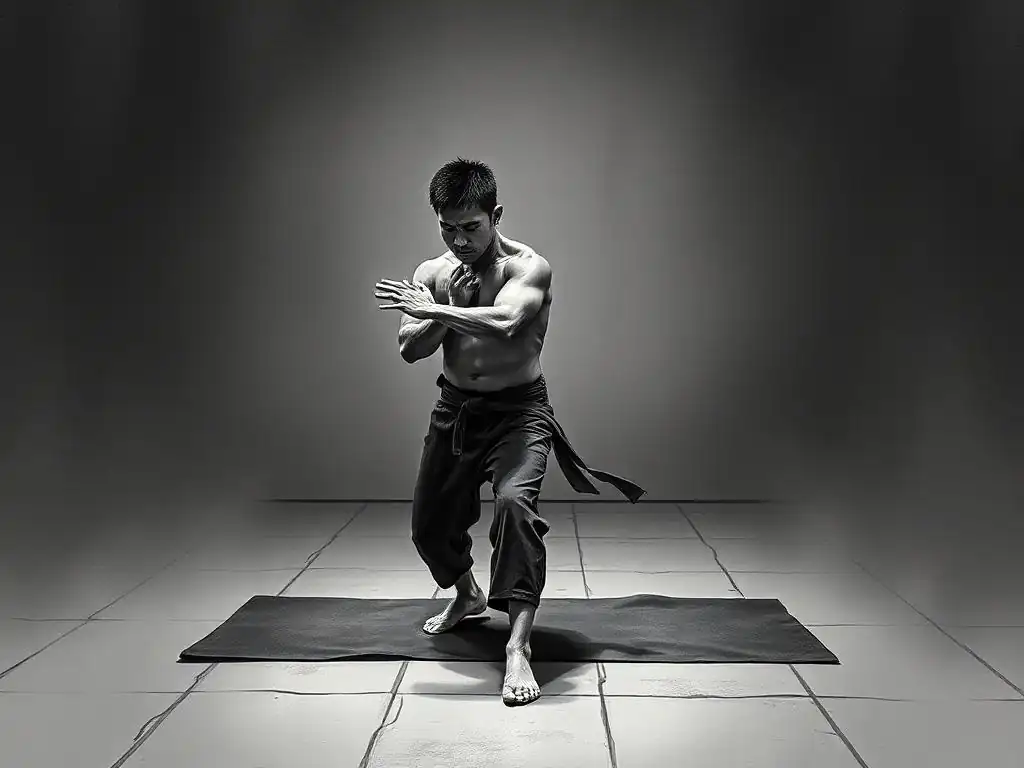
Silat grounding techniques are highly adaptable for real-world self-defense scenarios, which often occur on uneven surfaces, in confined spaces, or against multiple opponents. While training often happens in controlled environments, practitioners learn to apply the underlying principles—maintaining balance, disrupting the opponent's stability, and using leverage—in unpredictable situations. For instance, a sweeping technique might be modified to a simple trip if the ground is unstable, or a low stance might be adjusted for balance if navigating obstacles. The focus shifts from executing a perfect technique to achieving the desired outcome: neutralizing the threat and regaining control.
Real-world application emphasizes efficiency and effectiveness over aesthetic form. A takedown might be used not just to put an opponent on the ground but also to create an opening for escape, to control a non-compliant individual without causing severe injury (if appropriate), or to manage distance. The philosophy of Silat grounding techniques philosophy guides these adaptations, reminding the practitioner to stay calm, assess the environment, and apply techniques responsibly and proportionally to the threat level. This adaptability makes Silat grounding a practical and valuable skill set for personal safety.
Integrating Grounding with Other Silat Techniques
Effective self-defense in Silat involves the seamless integration of grounding techniques with other aspects of the art, such as striking ( pukulan), joint locks ( kuncian), and evasions ( elakan). Takedowns are rarely isolated events but rather occur as part of a dynamic exchange. For example, a strike might be used to momentarily distract or unbalance an opponent, creating an opening for a trip or sweep. Conversely, a failed takedown attempt might transition into a joint lock or lead to a grounded exchange.
The principles of Silat grounding techniques philosophy support this integration. Maintaining a strong base allows the practitioner to deliver powerful strikes without losing balance. Understanding leverage from a grounded perspective enhances the effectiveness of joint locks and control techniques applied on the ground or during the transition. Evasions, as discussed earlier, rely on grounded stability for quick, balanced movement. This holistic approach means that grounding is not a separate category of techniques but a fundamental principle that underpins and enhances all other aspects of Silat combat, making the practitioner a more versatile and capable defender.
The Ethical Considerations of Using Grounding for Self-Defense
The ethical considerations embedded in Silat philosophy are particularly relevant when applying powerful grounding and takedown techniques in self-defense. Silat teaches that the art is primarily for protection, not aggression. The philosophy of Silat grounding techniques philosophy emphasizes control and de-escalation where possible. This means practitioners are trained to use the minimum force necessary to neutralize a threat and avoid causing unnecessary harm. A takedown, for instance, might be chosen over a strike if the goal is to control an attacker without serious injury, or to create distance safely.
The principle of Adat guides the practitioner's decision-making, stressing responsibility and respect. While a takedown can be a very effective way to end a confrontation, its application must align with the ethical framework of Silat. This includes understanding the potential consequences of putting someone on the ground, especially on hard surfaces, and having the skill to control the fall if necessary. The ethical dimension ensures that the power derived from mastering Silat grounding techniques is wielded with wisdom, restraint, and a deep respect for human life, reflecting the art's origins in communities that valued harmony and order.
Training Methods for Developing Silat Grounding Skills
Drills for Improving Balance and Stability
Developing strong Silat grounding skills requires dedicated training focused on improving balance and stability. Common drills include practicing various kuda-kuda for extended periods to build leg strength and endurance, essential for maintaining a low, stable base. Balance exercises on uneven surfaces, such as sand or soft mats, challenge the practitioner to constantly adjust their weight distribution and engage core muscles, enhancing proprioception and dynamic stability. Single-leg drills, like balancing on one foot while performing movements, also improve ankle and knee strength crucial for resisting being off-balanced.
Partner drills are also vital, involving controlled pushing and pulling exercises where practitioners resist being moved from their stance, learning to absorb force by rooting into the ground. Flow drills that involve transitioning between different kuda-kuda while maintaining balance teach fluidity and adaptability. These drills, practiced consistently, build the physical foundation necessary for effective Silat grounding techniques philosophy, transforming theoretical understanding into practical, intuitive skill. The goal is to develop an almost unconscious ability to stay rooted and balanced under pressure.
Partner Exercises for Practicing Takedowns
Partner exercises are indispensable for learning and refining Silat takedowns. These drills range from cooperative practices, where partners assist each other in safely executing techniques like sweeps or trips at slow speeds, to more dynamic, resistant drills simulating real-world exchanges. Initial partner work focuses on understanding body mechanics, leverage points, and safe falling practices. Partners learn to feel their opponent's weight shifts and subtle movements that indicate vulnerability or resistance.
More advanced exercises involve live drilling with increasing levels of resistance, allowing practitioners to practice timing, entry points, and follow-up techniques. Specific drills might focus on defending against common attacks and transitioning into takedowns, or practicing specific takedown variations from different ranges or positions. Grappling exchanges that start from standing and progress to the ground also help integrate takedown skills into a broader combat context. These partner exercises are critical for developing the sensitivity, timing, and practical application needed to effectively utilize Silat grounding techniques philosophy in a dynamic environment.
The Importance of Latihan (Practice) and Rasa (Feeling/Intuition)
The mastery of Silat grounding techniques philosophy is not achieved through intellectual understanding alone but through persistent Latihan (Practice) and the cultivation of Rasa (Feeling/Intuition). Latihan involves countless repetitions of fundamental movements, stances, and techniques, building muscle memory and physical conditioning. It is through diligent practice that the body learns to automatically adopt stable postures, generate power efficiently, and react instinctively to changes in balance. This consistent effort transforms conscious technique into unconscious competence.
Rasa is the intuitive understanding and sensitivity developed through this extensive Latihan. It is the ability to feel the opponent's energy, intent, and balance without conscious analysis. Rasa allows a practitioner to sense when an opponent is about to commit weight, creating the perfect opportunity for a takedown, or to feel when their own balance is compromised and make immediate adjustments.
It is a form of embodied knowledge that goes beyond mere technique. The interplay between dedicated Latihan and the development of Rasa is fundamental to truly embodying the philosophy of Silat grounding techniques philosophy, allowing the practitioner to move and react with efficiency, power, and intuitive timing.
The Future of Silat Grounding: Preserving Tradition and Embracing Innovation
Maintaining the Philosophical Integrity of Silat
As Silat evolves, maintaining the philosophical integrity of its grounding techniques is paramount. This involves ensuring that the core principles of Tanah, Keseimbangan, Adat, and Seni are not lost in the pursuit of purely physical or sport-oriented application. Preserving the philosophy means continuing to teach the ethical considerations, the importance of inner balance, and the deep cultural context alongside the physical techniques. It requires teachers to convey not just the 'how' but also the 'why' behind Silat grounding.
Efforts to maintain this integrity include documenting traditional forms and teachings, fostering strong teacher-student lineages rooted in philosophical transmission, and emphasizing the art's self-defense and ethical dimensions in training. Seminars and cultural exchanges that highlight the diverse philosophical perspectives across different Silat styles also contribute to a broader understanding and appreciation. Maintaining the philosophical integrity ensures that Silat grounding techniques philosophy remains a rich, meaningful martial art rather than just a collection of physical maneuvers.
Adapting Grounding Techniques for Modern Martial Arts
While preserving tradition, Silat grounding techniques philosophy can also adapt and inform modern martial arts. The principles of leverage, balance disruption, and stable base are universally applicable in combat sports like MMA, wrestling, or Judo, as well as in contemporary self-defense systems. Silat's unique low stances, leg attacks, and transitions between standing and ground work offer valuable insights and techniques that can complement or enhance other disciplines. For example, the dynamic sweeps from styles like Harimau can be highly effective in a sport context, provided they are adapted to the rules.
This adaptation involves analyzing the core mechanics of Silat grounding techniques and translating them into drills and applications relevant to modern contexts. It requires understanding how the principles of Tanah and Keseimbangan manifest in different combat ranges and rule sets. While some philosophical nuances might be less emphasized in a purely sport application, the underlying physical and strategic wisdom remains potent. This innovative approach allows the practical effectiveness of Silat grounding to reach a wider audience while demonstrating the timelessness of its core principles.
The Ongoing Evolution of Silat Grounding Philosophy
The philosophy of Silat grounding techniques is not static; it is an ongoing evolution shaped by the experiences of practitioners, the challenges of changing times, and the interaction with other martial disciplines. As Silat is practiced in new environments and faces new threats, the interpretation and application of its core principles continue to deepen and broaden. For instance, the concept of Keseimbangan might be explored in the context of urban self-defense against multiple attackers, requiring a different understanding of balance in chaos.
This evolution is guided by the foundational Adat and philosophical principles, ensuring that changes are consistent with the art's spirit. It involves integrating new scientific understanding of body mechanics or psychology while remaining rooted in traditional wisdom. The ongoing dialogue between tradition and innovation, between physical technique and philosophical insight, ensures that Silat grounding techniques philosophy remains a living, dynamic art form, capable of adapting to the future while honoring its rich past. The journey of understanding Silat grounding is one of continuous learning and refinement, both physically and philosophically.
Frequently Asked Questions
What is the core philosophy behind Silat grounding techniques?
The core philosophy emphasizes maintaining balance while disrupting the opponent's, utilizing principles of kinesthetic awareness and strategic positioning to achieve a takedown.
How does the historical context of Silat influence its grounding techniques?
Silat's history, originating in the Malay Archipelago, shaped its grounding techniques to be practical for jungle warfare and close-quarters combat, focusing on efficiency and adaptability.
What are some key differences between Silat grounding techniques and those found in other martial arts like Judo or wrestling?
Silat grounding often incorporates strikes and joint manipulations alongside takedowns, unlike Judo's focus on throws or wrestling's emphasis on grappling for positional dominance.
How do Silat grounding techniques relate to self-defense strategies?
They provide effective methods for controlling an attacker on the ground, allowing for rapid neutralization through strikes, joint locks, or escapes, crucial in real-world self-defense scenarios.
How can I improve my understanding and application of Silat grounding techniques?
Focus on drilling fundamental movements, understanding the underlying biomechanics, and sparring with experienced practitioners to apply the techniques under pressure and refine your skill.
Final Reflection: Embracing the Root in Silat and Life
The exploration of Silat grounding techniques, viewed through a philosophical lens, reveals more than just effective takedowns; it unveils a profound connection to the present moment and the earth beneath our feet. This grounding, both physical and mental, is not merely a martial art tactic, but a powerful metaphor for navigating the complexities of modern life, where we are often uprooted and adrift.
The principles of Silat grounding, emphasizing balance, awareness, and adaptability, resonate deeply with the human experience. This journey into understanding Silat has underscored the importance of staying centered, even amidst chaos, a lesson I believe is universally applicable. The best fighter is never angry,
reminds us that true strength comes not from aggression, but from a calm, grounded center. This philosophy transcends the dojo, influencing how we approach challenges and interact with the world around us.
Now, consider how you can apply the principles of Silat grounding to your own life. Can you find moments of stillness amidst the noise? Can you cultivate a deeper awareness of your surroundings and your own internal state? Embrace the philosophy of grounding, and discover the strength and stability that comes from being truly present, rooted, and connected to the earth beneath you.
Master the Ground: Elevate Your Silat Today!
Thank you for exploring the philosophy and practical application of Silat takedowns. Now that you've gained insights into the art of grounding, it's time to put knowledge into action and elevate your martial arts journey.
- Commit to mastering at least one new Silat takedown technique each week for the next month. Focus on proper form, balance, and control.
- Share your insights about Silat takedowns with a fellow martial artist, and learn from their experiences. Expand the community of knowledge!
- Explore related martial arts that emphasize grounding techniques, such as Judo or Aikido, to broaden your understanding and cross-pollinate your skill set.
What specific grounding technique are you most eager to master, and how will you integrate it into your existing martial arts practice?