
Seamless Transitions: Combining Strikes and Sweeps in the Muay Thai Clinch


Welcome to Martial Arts Mastery, your gateway to the world's fighting traditions!
Dive deep into the intricate dance of combat as we explore the art and science behind martial arts. In this article, we unravel the secrets of Muay Thai clinch transition techniques. Discover how to seamlessly blend powerful strikes with strategic sweeps, transforming the clinch into your most formidable weapon. Ready to elevate your game? Let's begin!
- Mastering Muay Thai Clinch Transitions: An Introduction
- Developing a Solid Muay Thai Clinch Base for Effective Transitions
- Muay Thai Clinch Striking Fundamentals: Setting Up Sweeps
- Implementing Muay Thai Clinch Sweeps: Turning Defense into Offense
- Combining Strikes and Sweeps: Seamless Muay Thai Clinch Transition Techniques
- Advanced Muay Thai Clinch Strategy: Setting Traps and Exploiting Weaknesses
- Common Mistakes to Avoid in Muay Thai Clinch Transitions
- Training Drills for Seamless Clinch Transitions: Improving Reaction Time and Technique
- The Importance of Sparring for Mastering Muay Thai Clinch Transition Techniques
- Conclusion: Elevating Your Muay Thai Game with Fluid Clinch Transitions
-
Frequently Asked Questions
- What is the Muay Thai clinch, and why is it important?
- What are some common striking techniques used within the Muay Thai clinch?
- What does it mean to "transition" within the Muay Thai clinch?
- How can sweeps be effectively incorporated into a Muay Thai clinch strategy?
- What are some key considerations for safely and effectively practicing Muay Thai clinch transition techniques?
- Final Reflection: Mastering the Art of Flow
- Elevate Your Clinch Game Now!
Mastering Muay Thai Clinch Transitions: An Introduction
Understanding the Importance of Fluidity in the Clinch
Fluidity in the Muay Thai clinch is not merely about moving gracefully; it's about the seamless flow between offensive and defensive actions, particularly when executing Muay Thai clinch transition techniques. A fighter who can effortlessly switch between striking, defending, controlling, and attempting sweeps or throws holds a significant advantage. This ability prevents the opponent from predicting your next move and allows you to maintain dominance or escape disadvantageous positions.
Think of legendary clinch fighters like Samart Payakaroon, known for his smooth transitions that often left opponents unable to anticipate his next strike or sweep attempt. His ability to shift from controlling posture to delivering sharp knees or setting up a sweep was a hallmark of his mastery.
Developing this fluidity requires countless hours of dedicated practice, focusing not just on individual techniques but on the connection between them. A stiff, hesitant fighter in the clinch is vulnerable. They telegraph their intentions, making their strikes less effective and their sweep attempts easier to defend. Conversely, a fluid fighter can use a series of small adjustments – shifts in weight, changes in grip, subtle footwork – to set up powerful actions. This constant, unpredictable movement makes defending against their Muay Thai clinch transition techniques extremely difficult, forcing the opponent to react rather than act.
Why Combine Strikes and Sweeps in the Muay Thai Clinch?
Combining strikes and sweeps in the Muay Thai clinch creates a multi-dimensional attack that overwhelms an opponent's defense. Strikes, primarily knees and elbows at this range, serve multiple purposes: they inflict damage, score points, and crucially, they distract and disrupt the opponent's balance and posture, setting up opportunities for sweeps. A fighter focused on defending relentless knee strikes may momentarily neglect their base, creating the perfect opening for a well-timed sweep. Conversely, the threat of a sweep can make an opponent widen their base or shift their weight defensively, which in turn can open up new angles for strikes.
This synergy between striking and sweeping is what makes the Muay Thai clinch so potent. It's not just about landing individual blows or executing single sweeps; it's about the continuous pressure and the dilemma you present to your opponent. Do they brace for the knee, potentially leaving themselves vulnerable to a sweep? Or do they focus on maintaining balance, risking taking damage from strikes? Effective Muay Thai clinch transition techniques exploit this dilemma, forcing the opponent into a no-win situation and maximizing your chances of control, damage, or a scoring throw.
Developing a Solid Muay Thai Clinch Base for Effective Transitions
Maintaining Balance and Posture in the Clinch
Maintaining impeccable balance and strong posture is the bedrock of effective Muay Thai clinch transition techniques. Without a stable base, any attempt to strike or sweep becomes inherently risky, potentially leading to you being swept or losing control. Your posture should be upright, with your weight distributed evenly or slightly forward, allowing for quick shifts.
Avoid leaning too heavily in any one direction unless intentionally setting up a specific technique. Keeping your core engaged is vital; it connects your upper and lower body, providing stability and power for both striking and resisting sweeps. Think of how fighters like Yodsanklai Fairtex, while not solely a clinch fighter, demonstrated incredible balance even when pressured, allowing him to initiate offense from seemingly difficult positions.
Poor balance or posture in the clinch is often exploited immediately. If you lean back too much, you're susceptible to forward pressure and dump sweeps. If you collapse your posture or hunch over, you lose leverage for strikes and make yourself easier to control and knee. Drills that focus purely on maintaining balance while being lightly pulled or pushed by a partner are essential. Practicing holding posture against resistance builds the foundational strength and body awareness needed for executing complex Muay Thai clinch transition techniques without compromising your own stability.
Establishing Dominant Control: Hand Fighting and Neck Control
Dominant control in the clinch is primarily achieved through superior hand fighting and effective neck control. Hand fighting is a constant battle for position – securing grips on the back of the neck, underhooks, overhooks, or wrist control. The goal is to break your opponent's posture while maintaining your own, limiting their ability to strike and setting up your own attacks.
A double collar tie (securing grips on the back of the opponent's neck with both hands) is a classic dominant position, allowing you to pull their head down and deliver knees. However, achieving and maintaining it requires skilled hand fighting to navigate through their defenses.
Neck control, once established, dictates much of the clinch exchange. By controlling the opponent's head and neck, you control their posture and balance. Pulling the head down exposes the body for knees. Turning the head can disrupt balance and set up sweeps. Elite clinch fighters spend significant time drilling hand fighting sequences – how to break grips, establish their own, and transition between different control points. This relentless pursuit of dominant hand and neck control is a prerequisite for launching effective Muay Thai clinch transition techniques, as it provides the necessary leverage and stability.
Footwork and Positioning for Clinch Dominance and Transitioning
Strategic footwork and positioning are critical for achieving and maintaining dominance in the Muay Thai clinch, directly impacting the effectiveness of your Muay Thai clinch transition techniques. Your feet are your base; their placement determines your balance, power generation, and ability to move your opponent. Stepping correctly allows you to gain angles, off-balance your opponent, or create space for strikes. For instance, stepping to the outside of your opponent's lead foot can set up a hip throw or allow you to turn them.
Effective clinch footwork involves small, precise adjustments rather than large steps. Pivoting, shuffling, and stepping slightly are used to:
- Circle out of a bad position.
- Gain a dominant angle (e.g., getting perpendicular to your opponent).
- Shift weight to load a strike or sweep.
- Follow your opponent's movements to maintain control.
Understanding how to use your foot placement to disrupt your opponent's base while securing your own is fundamental. This positional advantage is often what creates the initial opening for successful Muay Thai clinch transition techniques. For example, stepping through your opponent's legs while pulling their head down can be the first step in a dump sweep, a move entirely dependent on precise footwork and positioning.
Muay Thai Clinch Striking Fundamentals: Setting Up Sweeps
Knee Strikes from the Clinch: Power and Precision
Knee strikes are arguably the most iconic offensive weapon within the Muay Thai clinch, known for their power and scoring potential. Delivered to the body, ribs, or thighs, they wear down opponents and score heavily in competition. Precision is key; targeting specific areas like the solar plexus or the floating ribs can have debilitating effects.
Proper knee technique involves hip drive and utilizing the clinch control to pull the opponent into the strike. A common variation is the straight knee to the body, thrown while pulling the opponent's head down and slightly back. Another is the diagonal knee, often targeting the ribs from an angle.
Beyond inflicting damage, knees from the clinch serve as excellent tools for setting up Muay Thai clinch transition techniques. A series of sharp, well-placed knees forces the opponent to focus on defense, often causing them to shift weight, widen their stance, or momentarily neglect their posture. This defensive reaction creates the instability needed for a sweep opportunity.
For example, landing three consecutive body knees might cause an opponent to lean back slightly, making them susceptible to a forward sweep or dump. Practicing knee strikes while maintaining control and balance is crucial for their effectiveness and their role in facilitating transitions.
Elbow Strikes in the Clinch: Close-Range Devastation
Elbow strikes in the Muay Thai clinch are devastating weapons used at extremely close range, capable of causing cuts and knockouts. They are typically short, sharp movements, often thrown horizontally, diagonally upwards, or downwards. Common clinch elbows include the short horizontal elbow across the opponent's face, the upward elbow under the chin, or the diagonal downward elbow onto the collarbone or temple. Due to their proximity, they require tight control of the opponent's head and posture to land effectively and safely. Fighters like Yodkhunpon Sittraipum were masters of the clinch elbow, using minimal movement for maximum impact.
Like knees, elbows can be used to set up Muay Thai clinch transition techniques. A sharp elbow strike can momentarily stun or disorient an opponent, causing them to flinch or lose focus on their base. This fleeting moment of instability can be capitalized on immediately with a sweep attempt.
For instance, landing a short elbow to the temple might cause the opponent to recoil or shift weight, creating the perfect window to execute a sweep like a hip throw. Integrating elbows into clinch sequences adds another layer of threat, making it harder for the opponent to anticipate your next move, whether it's another strike or a sweep.
Using Strikes to Disrupt Opponent's Balance and Create Sweep Opportunities
The strategic use of strikes is fundamental to creating openings for Muay Thai clinch transition techniques. Strikes aren't just for scoring or damage; they are tactical tools designed to manipulate the opponent's balance and position. Throwing a knee to the body often causes the opponent to instinctively brace or shift their weight backward. This backward lean disrupts their center of gravity and makes them lighter on their feet, making them easier to sweep forward or laterally. Similarly, a sharp elbow or knee to the head area can cause a momentary defensive reaction that compromises their posture.
Consider a common scenario: you have a dominant double collar tie. A powerful knee to the body elicits a reaction – perhaps a slight groan and a shift of weight to the heels. In that instant, while their weight is back, a forward sweep becomes significantly easier to execute.
Alternatively, using strikes in quick succession can prevent the opponent from regaining a stable base, keeping them off-balance and constantly reacting, which is the ideal state for initiating sweep-focused Muay Thai clinch transition techniques. The key is to observe the opponent's reaction to your strikes and immediately capitalize on the resulting instability.
Implementing Muay Thai Clinch Sweeps: Turning Defense into Offense
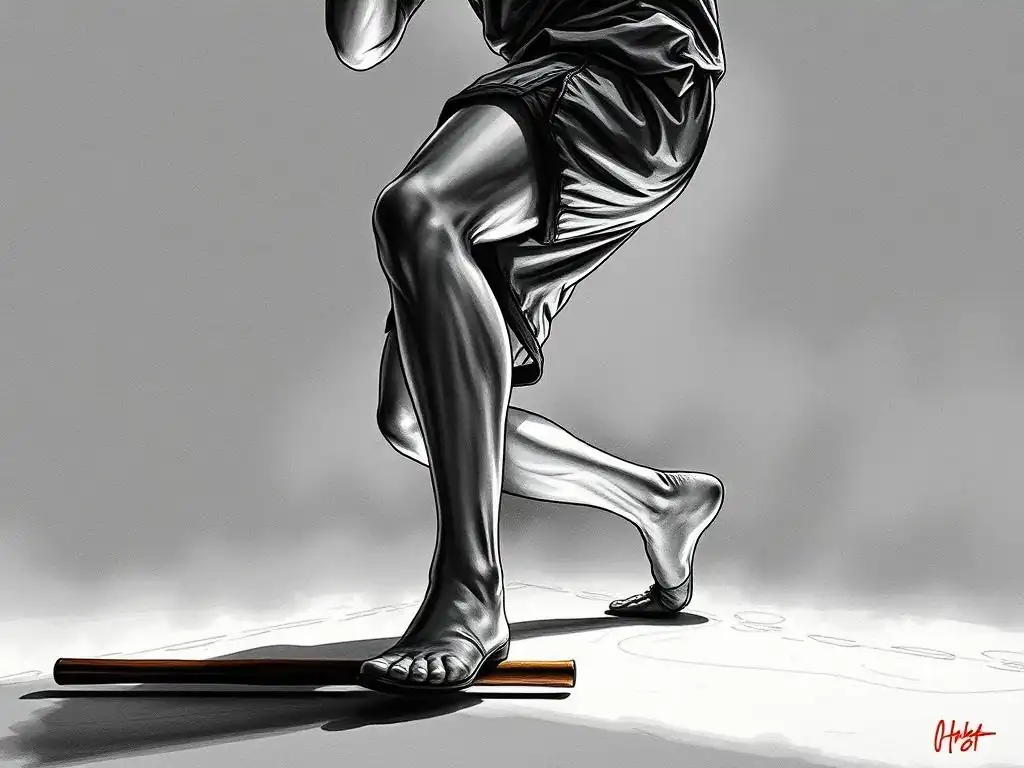
Identifying Sweep Opportunities within the Clinch
Identifying the right moment for a sweep within the complex environment of the Muay Thai clinch requires sharp observation and timing. Opportunities often arise when the opponent's balance is compromised, their weight distribution is unfavorable, or their base is narrow or unstable. Look for signs like excessive leaning (forward, backward, or to the side), a wide or narrow stance, or when they are attempting to pull you off-balance but overcommit. The moment an opponent lifts a leg to knee or adjust their position is also a prime opportunity, as they are momentarily standing on one leg.
Successful Muay Thai clinch transition techniques involving sweeps rely on recognizing these fleeting moments. This skill is honed through countless hours of drilling and sparring, developing an intuitive sense of when an opponent is vulnerable. For example, if you feel your opponent pressing heavily into you, they are likely leaning forward, making them susceptible to a backward sweep or a lateral turn. Conversely, if they are pulling away or leaning back, a forward sweep or dump becomes a viable option. Learning to read these subtle shifts in weight and posture is paramount.
Executing Basic Muay Thai Clinch Sweeps: Hip Throw and Leg Hook Sweep
Two fundamental Muay Thai clinch sweeps are the hip throw and the leg hook sweep. The hip throw (or Ogoshi-like movement) involves securing a dominant grip (often an underhook and a collar tie), stepping deep inside the opponent's guard, turning your hips to face the same direction as them, and using your hip as a fulcrum to lift and throw them off balance. This requires strong core engagement and precise timing, typically executed when the opponent is pushing into you or off-balance.
The leg hook sweep involves using one of your legs to hook behind the opponent's ankle or calf while simultaneously pulling or pushing them off-balance with your upper body control. A common variation is the outside leg hook, where you step outside the opponent's lead leg and hook behind their ankle, pulling their head down and slightly back to sweep them forward.
Both techniques require practice to coordinate the upper body pull/push with the lower body action, making them effective Muay Thai clinch transition techniques when the opportunity arises. Mastery of these basics is essential before moving to more complex throws.
Advanced Sweep Techniques: Spinning Back Sweep and Dump Sweep
Beyond the basics, advanced Muay Thai clinch transition techniques include sweeps like the spinning back sweep and the dump sweep. The spinning back sweep involves using dominant control (like a double collar tie) to turn your opponent violently while stepping around them, often culminating in a sweep or a throw as they lose balance. This requires significant strength, coordination, and the ability to break the opponent's posture and resist their attempts to anchor themselves. It's a high-percentage technique for experienced fighters when they can get the opponent's head turned and their weight shifted.
The dump sweep (or Osoto Gari-like movement) involves driving forward into the opponent while reaping their leg from the outside, often combined with pulling their head down. This is particularly effective when the opponent is leaning back or attempting to disengage.
It's less of a 'lift' and more of a 'drive and reap' motion, using your body weight and forward momentum to take the opponent down. Both the spinning back sweep and the dump sweep are powerful Muay Thai clinch transition techniques that require advanced understanding of leverage, timing, and opponent reaction, often resulting in a definitive score or even a knockout if the opponent falls awkwardly.
Combining Strikes and Sweeps: Seamless Muay Thai Clinch Transition Techniques
Transitioning from Knee Strikes to Sweeps: A Step-by-Step Guide
Transitioning seamlessly from knee strikes to sweeps is a hallmark of effective Muay Thai clinch transition techniques. Here's a basic guide:
- Establish Control: Secure a dominant grip, such as a double collar tie or an underhook/overhook combination.
- Deliver Strikes: Throw 1-3 powerful knee strikes to the opponent's body, aiming to disrupt their balance and force a reaction. Observe their weight shift.
- Identify Opportunity: As they react (e.g., lean back, widen stance, lift a leg), recognize the moment of instability.
- Initiate Sweep: Immediately capitalize on the opening. If they leaned back from knees, step through their legs while maintaining control and execute a dump sweep. If they lifted a leg to knee, hook their standing leg and pull/push for a leg hook sweep.
- Execute and Follow Through: Perform the sweep decisively. As they fall, maintain some control if possible to prevent them from immediately recovering or attempting a counter.
This process isn't a rigid formula but a principle: use strikes to create the setup, then transition instantly to the sweep based on the specific reaction. Many successful Muay Thai clinch transition techniques follow this pattern, making the striking and sweeping components inseparable parts of a single attack sequence.
Linking Elbow Strikes with Clinch Sweeps: Creating Combinations
Linking elbow strikes with clinch sweeps creates dynamic and unpredictable Muay Thai clinch transition techniques. The sharp, sudden impact of an elbow is excellent for causing momentary disorientation, which can immediately be exploited for a sweep.
- Gain Proximity and Control: Get tight with your opponent in the clinch and secure a controlling grip that allows for elbow range, such as a single or double collar tie.
- Land an Elbow: Throw a short, sharp elbow strike, perhaps a horizontal elbow across the jaw or an upward elbow under the chin.
- Observe Reaction: The opponent will likely flinch, shift weight, or momentarily lose posture.
- Transition to Sweep: In that split second of disruption, initiate a sweep. If they flinched backward, a forward sweep or dump is viable. If they shifted weight to one side, a lateral sweep or turn might be effective.
- Maintain Control: Ensure your grip is secure enough through the elbow strike to transition smoothly into the sweep.
This combination is powerful because the sudden nature of the elbow strike often catches the opponent off guard, creating a significant opening for the sweep before they can fully recover their composure or balance. Effective Muay Thai clinch transition techniques often chain these actions together seamlessly.
Drills for Developing Fluid Transitions: Reactive Clinch Drill and Partner Sweep Drill
Developing fluid Muay Thai clinch transition techniques requires specific drilling. The Reactive Clinch Drill involves partners starting in a clinch and reacting to each other's movements. One partner might initiate a light knee, and the other reacts by shifting weight; the first partner then immediately attempts a sweep based on that reaction. The roles are then reversed. This drill emphasizes reading the opponent and reacting quickly.
The Partner Sweep Drill focuses on the transition from strikes to sweeps. One partner holds pads or offers resistance for clinch knees or elbows. After the striking sequence (e.g., three knees), the partner provides a specific reaction (e.g., leans back slightly). The striking partner must then immediately transition into the appropriate sweep technique for that reaction. This drill isolates the strike-to-sweep transition, making the Muay Thai clinch transition techniques automatic reactions rather than planned sequences. Both drills should be practiced with varying levels of resistance and intensity.
Advanced Muay Thai Clinch Strategy: Setting Traps and Exploiting Weaknesses
Using Feints and Deception in the Clinch
Advanced Muay Thai clinch transition techniques often involve feints and deception. A feinted knee strike – lifting the leg as if to knee but not committing – can elicit a defensive reaction that creates an opening for a sweep. Similarly, pretending to go for a sweep in one direction can set up a strike or a sweep in another. For instance, you might initiate the footwork for a leg hook sweep but then instead throw a knee as the opponent braces for the sweep.
Deception in the clinch keeps the opponent guessing. It prevents them from settling into a defensive rhythm and forces them to react to multiple potential threats simultaneously. A fighter who can convincingly feint both strikes and sweeps makes their genuine attacks much harder to defend. This layer of strategy elevates Muay Thai clinch transition techniques from simple combinations to sophisticated traps designed to exploit the opponent's anticipation and defensive habits.
Capitalizing on Opponent's Reactions to Strikes
A crucial aspect of advanced Muay Thai clinch transition techniques is the ability to instantly capitalize on an opponent's reaction to your strikes. Every strike you land or even feint in the clinch is a test – it probes for their defensive response and reveals opportunities. If a knee to the body consistently makes them lean back, you know that leaning back is their default defense, making them vulnerable to forward sweeps or dumps. If an elbow makes them clinch tighter, you know that might be the moment to create space for a knee or work for an underhook.
This requires being present and observant in the clinch, not just executing pre-planned sequences. It's about reading the opponent's body language in real-time and having the repertoire of Muay Thai clinch transition techniques ready to exploit the opening they just gave you. World-class clinch fighters are masters of this, using subtle cues to launch devastating follow-ups.
Adapting Your Strategy Based on Opponent's Style and Stance
Effective Muay Thai clinch transition techniques are not one-size-fits-all; they must be adapted based on the opponent's style, stance (orthodox or southpaw), and physical attributes (height, strength). A taller opponent might be more vulnerable to sweeps that target their base while you work inside their longer limbs. A shorter, stockier opponent might be harder to sweep but more susceptible to knees to the body if you can maintain posture.
Understanding your opponent's tendencies – do they prefer to pull guard? Do they always try to secure an underhook? Are they strong pulling down on the head? – allows you to tailor your Muay Thai clinch transition techniques. Against someone who constantly pulls down, focusing on breaking their grip and establishing an underhook might be the priority before attempting strikes or sweeps. Against someone who leans heavily, dump sweeps become a higher-percentage option. Scouting opponents and having a versatile set of clinch tools is key to successful adaptation.
Common Mistakes to Avoid in Muay Thai Clinch Transitions
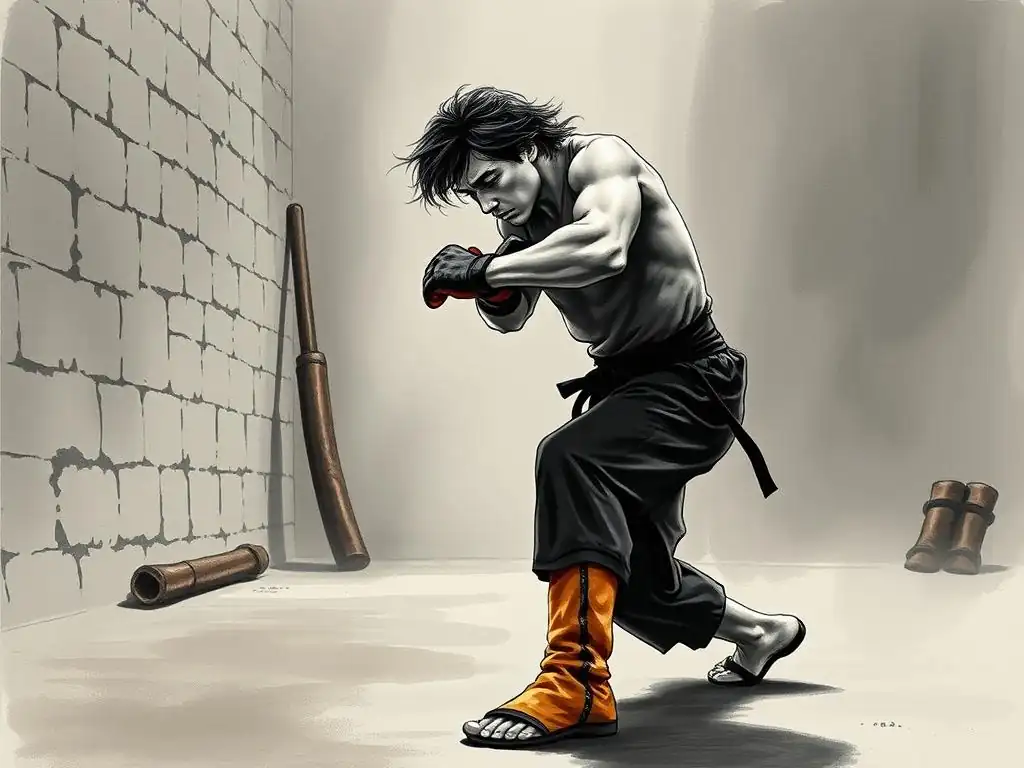
Overextending and Losing Balance
One of the most common and detrimental mistakes when attempting Muay Thai clinch transition techniques is overextending, particularly during a strike or sweep attempt. Throwing a knee with too much force without maintaining core stability can cause you to lose balance, making you vulnerable to being swept yourself. Similarly, committing fully to a sweep without a secure grip or proper off-balancing of the opponent can result in you ending up on the ground or losing a dominant position.
Overextension often stems from trying to force a technique that isn't fully set up or executed with poor mechanics. It's far better to maintain control and posture, even if the strike or sweep isn't successful, than to compromise your base and give the opponent an easy counter opportunity. Practicing techniques with a focus on balance and control, even at reduced power, is essential for avoiding this pitfall in Muay Thai clinch transition techniques.
Telegraphing Sweeps and Strikes
Telegraphing your intentions is another major error that negates the effectiveness of Muay Thai clinch transition techniques. Telegraphing means giving away your strike or sweep attempt through obvious preparatory movements – tensing up, taking a large step, or making a visible shift in weight just before attacking. A skilled opponent will read these cues and defend or counter accordingly.
To avoid telegraphing, focus on making your movements subtle and integrated. Your strikes should flow naturally from your control, and your sweep setups should be disguised within other movements, like feints or small adjustments in pressure. Drills that focus on executing techniques with minimal tells are crucial. Developing fluid Muay Thai clinch transition techniques means making the switch from control to attack almost imperceptible to the opponent.
Failing to Maintain Control of the Opponent
A critical mistake that undermines any attempt at Muay Thai clinch transition techniques is failing to maintain control of the opponent during the transition. Whether you're transitioning from strikes to a sweep or vice versa, losing your grip or dominant position mid-sequence significantly reduces the likelihood of success and often puts you in a worse position. For example, releasing neck control too early when attempting a dump sweep allows the opponent to regain posture and defend.
Maintaining control means keeping your grips secure, your posture strong, and your connection to the opponent stable throughout the movement. This requires grip strength, body awareness, and the ability to adjust your hold as the opponent reacts. Drills should emphasize holding control while performing techniques, reinforcing the principle that control is the constant foundation upon which all effective Muay Thai clinch transition techniques are built.
Training Drills for Seamless Clinch Transitions: Improving Reaction Time and Technique
Partner Drills for Developing Clinch Awareness
Partner drills are indispensable for developing the crucial awareness needed for effective Muay Thai clinch transition techniques. One effective drill is the "Pressure and React" drill: partners start in a neutral clinch, and one applies varied pressure (pushing, pulling, circling). The other partner's task is solely to maintain balance, posture, and control without initiating offense, learning to feel and respond to shifts in weight and leverage. This builds sensitivity to the opponent's movements, which is key for identifying sweep opportunities.
Another drill is "Grip Fighting and Transition": partners focus purely on hand fighting, attempting to establish dominant grips (double collar tie, underhooks) and break the opponent's grips. Once a dominant grip is held for a few seconds, the partner holding the grip must immediately execute a specific pre-determined Muay Thai clinch transition technique (e.g., knee-to-sweep). This drill hones the ability to transition instantly upon achieving a favorable position.
Sparring Scenarios Focused on Clinch Transitions
Integrating sparring scenarios specifically focused on the clinch is vital for applying Muay Thai clinch transition techniques under pressure. "Clinch Only Sparring" removes striking outside the clinch and ground fighting, forcing participants to work solely within the clinch range. This allows for extended practice of clinch entries, control, striking, and sweep attempts without the distraction of other ranges.
"Transitional Sparring" starts with partners at punching or kicking range, with the explicit goal being to enter the clinch, execute a series of Muay Thai clinch transition techniques (strikes and sweeps), and then perhaps disengage or continue. This simulates the flow of a real fight, where clinch exchanges are often brief but intense. Setting goals like "land 3 knees and attempt one sweep" within a round encourages active application of the learned techniques.
Strength and Conditioning for Clinch Dominance
Strength and conditioning play a significant role in mastering Muay Thai clinch transition techniques. Grip strength is paramount for maintaining control; exercises like dead hangs, farmer's walks, and towel pull-ups are highly beneficial. Core strength is essential for posture, balance, and generating power for strikes and sweeps; planks, Russian twists, and medicine ball work are valuable.
Leg strength and endurance are needed for maintaining a strong base and executing powerful sweeps; squats, lunges, and calf raises are foundational. Shoulder and back strength are required for pulling and controlling the opponent; pull-ups, rows, and rear delt flies help. Incorporating conditioning that mimics the sustained isometric tension and explosive movements of the clinch, such as circuit training with clinch-specific movements, enhances a fighter's ability to execute Muay Thai clinch transition techniques effectively throughout a round.
The Importance of Sparring for Mastering Muay Thai Clinch Transition Techniques
Applying Learned Techniques in Live Sparring
Live sparring is the crucible where theoretical knowledge of Muay Thai clinch transition techniques is tested and forged into practical skill. It's one thing to perform drills against a compliant partner; it's entirely different to apply those techniques against a resisting, unpredictable opponent. Sparring provides the realistic pressure needed to develop timing, speed, and adaptability. It reveals which techniques work best against different body types and styles, and under what circumstances your setups are most effective.
Through sparring, you learn to execute Muay Thai clinch transition techniques not in isolation, but as part of a dynamic exchange. You practice entering the clinch from various ranges, fighting for position, delivering strikes while maintaining control, identifying sweep opportunities in real-time, and pulling the trigger on the sweep attempt. This live application is non-negotiable for true mastery.
Analyzing and Adjusting Your Clinch Game
Sparring provides invaluable feedback for analyzing and adjusting your Muay Thai clinch transition techniques. Reviewing sparring footage or getting feedback from coaches and training partners helps identify weaknesses:
- Are you losing control when you strike?
- Are your sweep attempts being easily defended?
- Are you missing opportunities to transition?
- Are you getting consistently swept yourself?
Based on this analysis, you can refine your technique, modify your setups, or focus on specific areas in subsequent drilling. Perhaps you discover that your knee strikes aren't disrupting your opponent's balance enough, requiring more power or better hip drive. Or maybe your timing on the sweep transition is slightly off, needing quicker execution after the strike. This iterative process of applying, analyzing, and adjusting is key to continuous improvement in Muay Thai clinch transition techniques.
Developing Fight IQ in the Clinch
Sparring is fundamental to developing "fight IQ" within the clinch – the intuitive understanding of positions, leverage, timing, and strategy in a live scenario. It's where you learn to feel when an opponent is off-balance, anticipate their reactions, set subtle traps, and make split-second decisions on which Muay Thai clinch transition techniques are appropriate. This goes beyond technical execution; it's about the strategic application of techniques in a fluid, unpredictable environment.
Through consistent clinch sparring, you build a library of experiences that inform your decision-making. You learn to recognize patterns in opponents, understand the consequences of different grips, and develop the confidence to commit to transitions when the opening appears. This fight IQ is what separates proficient technicians from masterful clinch fighters who can dominate opponents through superior strategy and seamless execution of their Muay Thai clinch transition techniques.
Conclusion: Elevating Your Muay Thai Game with Fluid Clinch Transitions
Integrating Strikes and Sweeps for a Complete Clinch Game
Mastering the art of seamlessly integrating strikes and sweeps is the pinnacle of developing a complete Muay Thai clinch game. It moves beyond treating knees, elbows, and sweeps as separate techniques and views them as interconnected components of a fluid, multi-faceted attack system. Effective Muay Thai clinch transition techniques leverage the strengths of striking (damage, disruption, scoring) to create openings for sweeps (scoring, control, potential knockdowns), and vice versa. This synergy makes a fighter incredibly difficult to defend against at close range.
By focusing on smooth, unpredictable transitions, fighters can overwhelm opponents, keep them constantly reacting, and exploit even fleeting moments of vulnerability. This integrated approach is what defines the highest level of clinch fighting in Muay Thai, allowing practitioners to dominate exchanges, wear down opponents, and secure victories through a relentless combination of damage and control.
Continuing Your Journey in Mastering the Art of Eight Limbs
The journey to mastering Muay Thai clinch transition techniques is ongoing, requiring dedication, rigorous training, and continuous learning. It involves breaking down complex movements into fundamental components, drilling transitions until they become second nature, and testing these skills under the realistic pressure of sparring. Understanding the principles of balance, control, leverage, and timing specific to the clinch is paramount.
Embracing the integration of strikes and sweeps within the clinch is a significant step in elevating your overall Muay Thai game. It embodies the "Art of Eight Limbs," utilizing knees and elbows in conjunction with the grappling elements of the clinch to create a truly formidable close-range arsenal. Continue drilling, sparring, and analyzing your performance, and you will steadily improve your ability to execute seamless Muay Thai clinch transition techniques, becoming a more complete and dangerous fighter.
Frequently Asked Questions
What is the Muay Thai clinch, and why is it important?
The Muay Thai clinch is a close-quarters grappling range where fighters control their opponent's head and neck. It's important because it allows for knee strikes, elbow strikes, and sweeping techniques that can lead to scoring opportunities or knockouts.
What are some common striking techniques used within the Muay Thai clinch?
Common striking techniques in the clinch include knee strikes to the body and head, elbow strikes to the head and face, and short punches to disrupt balance. These strikes are often used to set up transitions and sweeps.
What does it mean to "transition" within the Muay Thai clinch?
Transitioning in the clinch refers to shifting from one position to another, or from striking to grappling techniques. This could involve moving from a double collar tie to a single collar tie, or from throwing knees to attempting a sweep.
How can sweeps be effectively incorporated into a Muay Thai clinch strategy?
Sweeps can be incorporated by using strikes to disrupt the opponent's balance and then utilizing leverage to off-balance and take them down. Effective sweeps often follow a flurry of strikes, catching the opponent off guard.
What are some key considerations for safely and effectively practicing Muay Thai clinch transition techniques?
Practice with a qualified instructor is essential to ensure proper technique and avoid injury. Start slowly and focus on mastering the fundamentals before attempting more complex transitions. Always use appropriate safety gear during training.
Final Reflection: Mastering the Art of Flow
The techniques explored within this article, detailing the intricate dance of strikes and sweeps in the Muay Thai clinch, are not merely a collection of movements; they represent a pathway to unlocking fluidity and dominance within the clinch. In a sport defined by controlled aggression, the ability to seamlessly transition between offense and defense is what separates the proficient from the truly masterful. The principles discussed here offer a framework for achieving that level of mastery.
The Muay Thai clinch, often perceived as a chaotic struggle, reveals itself as a space for strategic control and calculated disruption when approached with a focus on transitions. This understanding has profoundly shaped my own appreciation for the clinch, transforming it from a position of vulnerability to one of immense opportunity. The best fighter is never angry.
- Bruce Lee. This quote highlights the importance of maintaining composure and strategic thinking, even in the heat of battle, a principle directly applicable to mastering the fluidity of clinch transitions.
Now, armed with this knowledge of Muay Thai clinch transition techniques, I encourage you to embrace the challenge of incorporating these principles into your own training. Visualize the flow, practice the transitions, and cultivate the awareness necessary to anticipate and exploit openings. The journey to mastering the clinch is a continuous process of refinement, but with dedication and a focus on seamless transitions, you can unlock a new dimension of power and control in your Muay Thai game.
Elevate Your Clinch Game Now!
Thanks for exploring the dynamic world of Muay Thai clinch transitions with us! You've gained valuable insights into combining strikes and sweeps to dominate your opponents. Now, it's time to put that knowledge into action!
- Commit to dedicating 15 minutes each training session to practice these clinch transitions. Drills make perfect!
- Share this article with your training partners and spar together, experimenting with different combinations.
- Try filming your clinch work, and analyze it frame-by-frame, comparing it to the techniques demonstrated in the article to identify areas for improvement.
What's one unexpected clinch transition you're excited to experiment with in your next sparring session?