
Acrobatic Warriors: The Unique History and Evolution of Shaolin Monkey Style (Hou Quan)

Welcome to Martial Arts Mastery, your portal to the world's diverse fighting traditions.
Delve into the captivating realm of Hou Quan, or Shaolin Monkey Style, a discipline renowned for its acrobatic agility and deceptive movements. What secrets lie within its historical roots and unique training methodologies? Uncover the story of this fascinating art in our in-depth exploration of Shaolin Monkey Style History and discover how its playful exterior masks a formidable fighting system. Are you ready to swing into action and uncover the mysteries of this extraordinary martial art?
What is Hou Quan? Defining Shaolin Monkey Style
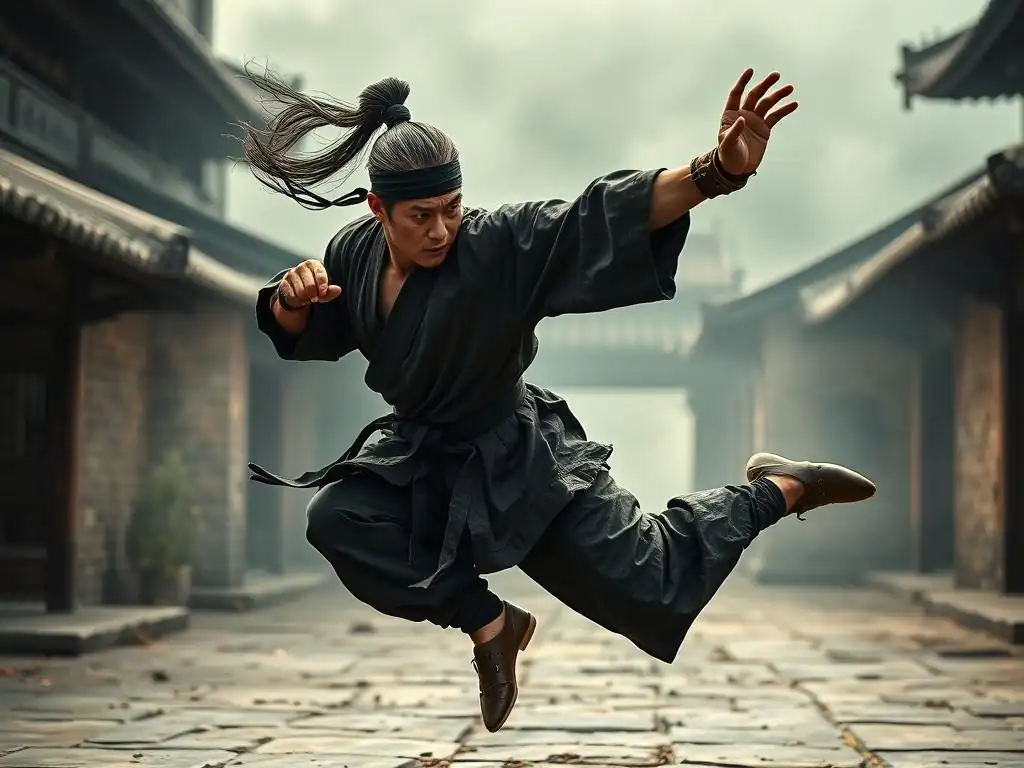
Hou Quan, often translated as Monkey Fist or Monkey Style, is a dynamic and highly acrobatic system of Chinese martial arts deeply rooted in the rich tradition of Shaolin Kung Fu. Unlike many other animal styles that emphasize brute force or rigid stances, Hou Quan distinguishes itself through its emphasis on agility, deception, and mimicry of monkey movements and behaviors. The style incorporates a wide range of techniques including leaps, tumbles, low stances, rapid footwork, feints, and surprising attacks, designed to disorient and overwhelm opponents. Practitioners aim to embody the playful, unpredictable, and often mischievous nature of a monkey.
This unique system utilizes a diverse repertoire of hand techniques, kicks, sweeps, joint locks, and pressure point strikes, all executed from unusual angles and often from low or ground positions. The core philosophy revolves around adaptability and opportunistic fighting, mirroring the way a monkey might evade danger or seize an advantage.
Training often involves extensive groundwork, tumbling, and flexibility exercises, preparing the practitioner to move seamlessly between standing and ground fighting. The intricate nature of Hou Quan requires significant physical conditioning and a deep understanding of timing and distance, making it one of the more physically demanding Shaolin animal styles.
The Allure of Monkey Style: Agility, Deception, and Unpredictability
The enduring appeal of Shaolin Monkey Style lies in its captivating combination of physical prowess and psychological strategy. Its emphasis on extreme agility allows practitioners to evade attacks and position themselves advantageously, often appearing where the opponent least expects them. This physical nimbleness is complemented by a strong element of deception. Monkey Style fighters use feints, exaggerated movements, and playful antics to draw opponents off-balance or lure them into traps, embodying the trickster spirit of a monkey.
Furthermore, the inherent unpredictability of Hou Quan makes it a formidable system. While other styles might follow more linear or structured patterns, Monkey Style thrives on chaos and spontaneity. Techniques can shift rapidly from evasive maneuvers to sudden, aggressive strikes, often executed from unconventional stances or while transitioning between movements. This constant flux keeps the opponent guessing and makes it difficult to anticipate the next move. The blend of acrobatics, cunning, and surprise is central to the effectiveness and visual spectacle that defines Shaolin Monkey Style.
- What is Hou Quan? Defining Shaolin Monkey Style
- The Allure of Monkey Style: Agility, Deception, and Unpredictability
- What are the defining characteristics of Shaolin Monkey Style (Hou Quan)?
- Where did Shaolin Monkey Style originate, and what is its connection to Shaolin Temple?
- What are some of the key historical influences that shaped the evolution of Shaolin Monkey Style?
- How does Shaolin Monkey Style differ from other Kung Fu styles, particularly in its approach to combat?
- What are some practical self-defense applications of Shaolin Monkey Style, despite its seemingly playful nature?
The Origins and Historical Roots of Shaolin Monkey Style (Hou Quan)
Tracing the Lineage: From Legend to Shaolin Temple
The precise origins of Shaolin Monkey Style history are somewhat shrouded in legend, as is common with many ancient martial arts. Popular folklore often attributes the creation or refinement of Hou Quan to individuals who observed and imitated the movements of monkeys in the wild, integrating these observations into combat techniques.
One prominent tale speaks of a martial artist, possibly connected to the Shaolin Temple, who spent years observing monkeys in the surrounding forests, translating their natural behaviors into a fighting system. While specific dates are difficult to pinpoint reliably, the development of animal imitation styles within Chinese martial arts, including the precursors to Hou Quan, is generally believed to have occurred over centuries, with significant refinement potentially happening during the Ming and Qing dynasties.
Within the context of the Shaolin Temple, known for its synthesis of martial arts and Chan (Zen) Buddhism, animal styles like Hou Quan are often seen as later developments compared to more foundational systems. Historical records and texts from the Shaolin Temple, though sometimes fragmented regarding specific styles, indicate a continuous process of innovation and incorporation of various fighting methods.
The integration of animal forms into Shaolin Kung Fu likely served multiple purposes: practical combat application, physical conditioning, and embodying specific characteristics or energies (Qi) associated with the animal. The specific lineage of Shaolin Monkey Style history within the temple is often traced through specific masters and disciples, though detailed written records from earlier periods can be scarce, relying heavily on oral tradition passed down through generations of monks and lay practitioners.
The Influence of Real-World Monkey Behavior on Hou Quan Techniques
A defining characteristic of Shaolin Monkey Style is its direct inspiration from the observation of real-world monkey behavior. Practitioners study how monkeys move, interact, fight, and react to their environment. This includes observing their agility in trees, their low, compact postures on the ground, their quick, darting movements, and their use of hands and feet for gripping and balance. Techniques like "Monkey Steals the Peach" (a groin strike) or "Monkey Grips the Branch" (a sweeping leg technique while low) are direct translations of observed actions into combat applications.
The psychological aspects of monkey behavior are equally important. Monkeys are known for their curiosity, quick temper, and ability to be both playful and aggressive. Hou Quan incorporates this duality, using feigned vulnerability or playful antics to create openings, which are then exploited with sudden, aggressive bursts of energy.
The unpredictable nature of a monkey, its ability to leap, roll, and change direction instantly, forms the foundation for the style's evasive footwork and surprising attack angles. This deep connection to nature is a hallmark of many traditional Chinese martial arts, and in Shaolin Monkey Style history, it is perhaps the most visually and functionally evident.
Key Figures in Shaolin Monkey Style History: Kou Sze
While the early history of Shaolin Monkey Style is often attributed to anonymous observers and Shaolin monks, one figure frequently cited in the modern lineage of Hou Quan is Kou Sze (also spelled Kou Si) from the early 20th century. Kou Sze was a renowned practitioner and teacher of Monkey Style, particularly active in northern China.
He is credited with popularizing and further developing the style, bringing it to wider attention beyond potentially isolated village or temple traditions. His contributions are considered significant in shaping the form of Hou Quan as it is practiced today, particularly the Northern style variations.
Kou Sze's teachings emphasized the core principles of agility, flexibility, and the practical application of monkey-like movements for combat. He is often associated with specific forms and training methodologies that are still practiced by his lineage holders. While detailed biographical information and specific dates regarding Kou Sze's life can be challenging to verify definitively across all sources, his name consistently appears when discussing the modern history and transmission of Shaolin Monkey Style. His influence helped ensure the survival and spread of this unique system during a period of significant change and disruption in China.
Distinctive Characteristics and Techniques of Monkey Style Kung Fu
The Core Principles of Hou Quan: Imitation, Agility, and Speed
The foundation of Shaolin Monkey Style rests on three interconnected core principles: imitation, agility, and speed. Imitation is the literal cornerstone, involving the detailed study and physical embodiment of monkey movements and behaviors. This goes beyond simple mimicry; it requires internalizing the spirit and essence of the monkey – its quick wit, its adaptability, its sudden shifts from stillness to explosive action. Practitioners learn to move with the fluidity and low center of gravity characteristic of a monkey, using their hands like paws for balance, gripping, and striking.
Agility is paramount in Hou Quan. The style demands exceptional flexibility, balance, and coordination to execute its signature leaps, rolls, tumbles, and low stances. Training focuses heavily on developing the ability to move quickly and seamlessly across different levels, from standing to ground level and back up.
This agility allows practitioners to evade attacks effectively, navigate complex terrain, and launch attacks from unexpected positions. Speed complements agility, enabling rapid transitions, lightning-fast strikes, and the ability to overwhelm an opponent before they can react. The combination of these principles creates a fighting system that is highly evasive, deceptive, and capable of launching surprising, multi-directional attacks.
The Four Primary Monkey Styles: Drunken Monkey, Lost Monkey, Standing Monkey, Stone Monkey
Within the broader category of Shaolin Monkey Style, several distinct sub-styles exist, often described as the "Four Monkeys." These variations emphasize different facets of monkey behavior and fighting strategy. Drunken Monkey (Zui Hou Quan) is perhaps the most famous, characterized by movements that mimic intoxication, using feigned stumbling and imbalance to create openings and disguise powerful strikes. Lost Monkey (Shi Lian Hou Quan) focuses on appearing disoriented and confused, luring the opponent into a false sense of security before launching a sudden, precise attack.
Standing Monkey (Mi Hou Quan), also known as Clever Monkey, emphasizes upright postures more than the other styles, focusing on quick, agile movements, evasions, and intricate hand techniques from a more conventional standing base, though still incorporating low transitions. Stone Monkey (Shi Hou Quan) is characterized by solid, rooted stances, powerful, direct attacks, and a more aggressive, less overtly deceptive approach compared to the other styles.
It embodies the sturdy, unyielding nature sometimes seen in older or dominant monkeys. While these four are frequently cited, other variations or interpretations of Shaolin Monkey Style also exist, each offering a unique perspective on the core principles.
Signature Moves and Techniques: Monkey Grips the Branch
Shaolin Monkey Style is rich with distinctive techniques that draw directly from its namesake. Many moves are named after specific monkey actions, highlighting their origin. For instance, "Monkey Steals the Peach" is a common low strike targeting the groin or knee. "Monkey Rolls on the Ground" involves using tumbles and rolls to evade attacks, recover balance, or launch ground-based sweeps and strikes. "Monkey Climbs the Tree" might refer to movements that involve leaping or gaining height, though in combat this is often translated into powerful upward strikes or leaps over obstacles/opponents.
"Monkey Grips the Branch" is a particularly illustrative technique. It typically involves a low stance or even being on the ground, using one or both hands to mimic gripping a branch (often the opponent's leg or arm, or simply the ground for stability) while simultaneously executing a sweeping kick or leg block with the lower body.
This move highlights the style's reliance on low-level fighting, using the hands for balance and control while the legs deliver power, directly reflecting how a monkey might hang from a branch while using its legs for leverage or interaction. Other signature elements include rapid-fire hand strikes from low guards, deceptive facial expressions, and sudden changes in rhythm and tempo.
Training Methods and Drills for Mastering Shaolin Monkey Style
Foundational Training: Flexibility, Agility, and Core Strength Development
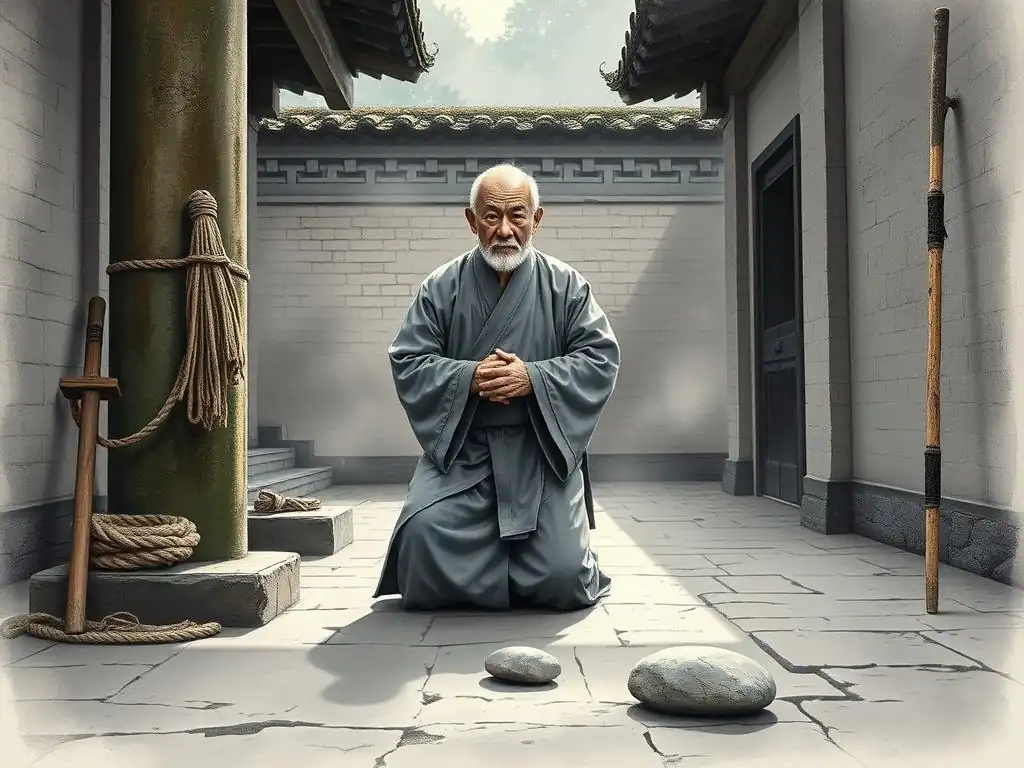
Mastering Shaolin Monkey Style demands a rigorous approach to foundational physical conditioning. The style's reliance on low stances, tumbles, leaps, and rapid transitions necessitates exceptional flexibility, particularly in the hips, legs, and spine. Training regimens heavily incorporate stretching exercises, dynamic movements, and techniques aimed at increasing range of motion. Deep squats, splits, and various forms of tumbling are central to developing the required flexibility.
Agility is cultivated through drills that improve balance, coordination, and quick changes in direction. This includes extensive footwork drills, learning to move swiftly and unpredictably across various surfaces, and practicing complex sequences of steps, jumps, and rolls. Core strength is equally vital, providing stability for low stances, power for explosive movements, and resilience for absorbing impacts. Exercises like planks, sit-ups, leg raises, and specific abdominal conditioning are integrated to build a strong core, essential for maintaining balance during acrobatic techniques and generating power from low positions.
Specialized Drills: Monkey Walks, Leaps, and Ground Fighting Techniques
Beyond general conditioning, Shaolin Monkey Style training involves specialized drills that mimic and refine the characteristic movements of the style. "Monkey Walks" are fundamental, teaching practitioners to move low to the ground using hands and feet in coordinated, often uneven patterns, simulating a monkey scuttling. These walks develop leg strength, hip flexibility, and the ability to maintain balance in unstable positions.
Leaping drills focus on developing explosive power in the legs for quick vertical and horizontal jumps, essential for evading attacks or closing distance rapidly. This includes practicing various types of jumps, landing softly, and immediately transitioning into another movement. Ground fighting techniques are extensively practiced, covering rolls, tumbles, sweeps, locks, and strikes delivered from lying, sitting, or low kneeling positions. These drills are crucial because a significant portion of Shaolin Monkey Style combat occurs at or near ground level. Practicing transitions between standing, low stances, and ground positions is also a key part of mastering the style's fluidity.
Partner Training and Sparring in Hou Quan
Partner training is indispensable for applying the unique principles of Shaolin Monkey Style in a dynamic context. Drills involve practicing evasions against incoming attacks, focusing on using low stances, rolls, and quick shifts to avoid strikes. Students practice trapping and controlling limbs from low positions, simulating how a monkey might grasp and manipulate. Sensitivity drills help practitioners develop the ability to feel an opponent's energy and intentions, crucial for the style's reactive and opportunistic nature.
Sparring in Hou Quan is often characterized by its unpredictability. Practitioners are encouraged to integrate deception and fluid transitions between high and low attacks. Unlike sparring in more linear styles, Monkey Style sparring can involve sudden drops to the ground, quick rolls, and attacks from unexpected angles. The focus is on applying the principles of agility, deception, and speed to overwhelm the opponent, rather than simply trading blows. Ethical considerations and control are paramount, especially given the deceptive and sometimes awkward angles involved in the techniques, ensuring safety while allowing for realistic application of the style's unique strategies.
The Philosophy and Spiritual Underpinnings of Shaolin Monkey Style
The Zen Buddhist Influence on Monkey Style: Mindfulness and Adaptability
As a Shaolin art, Hou Quan is profoundly influenced by Chan (Zen) Buddhism. This influence extends beyond mere physical technique to encompass a philosophical and spiritual dimension. Mindfulness, a core tenet of Zen, is crucial in Shaolin Monkey Style. Practitioners are encouraged to be fully present in the moment, observing their opponent and the environment with heightened awareness, much like a cautious yet curious monkey observing its surroundings. This heightened awareness allows for rapid adaptation to changing circumstances during combat.
Adaptability is another key principle rooted in Zen philosophy. Just as a monkey navigates complex environments with ease, a Hou Quan practitioner must be able to adapt their strategy and techniques instantly based on the opponent's actions. This requires a mind that is not rigidly fixed but fluid and responsive.
The Zen concept of "no-mind" (mushin) is relevant, referring to a state of spontaneous action without conscious deliberation, allowing the practitioner to react instinctively and creatively, embodying the unpredictable nature of the monkey spirit. Training cultivates not just physical skills but also mental discipline and emotional control, essential for harnessing the often chaotic energy of the style effectively.
Beyond Imitation: Developing the "Monkey Mind" for Combat
While physical imitation is the starting point, mastering Shaolin Monkey Style involves developing the "Monkey Mind" – a state of mental agility, creativity, and unpredictability in combat. This goes beyond simply mimicking movements; it's about adopting the strategic thinking and psychological approach of a monkey. A true Monkey Style practitioner doesn't just perform techniques; they embody the monkey's cunning, using feints, distractions, and playful energy to confuse and manipulate the opponent.
Developing the Monkey Mind means being able to shift tactics instantaneously, exploit the smallest opening, and use the environment to one's advantage. It involves a willingness to be unconventional and to surprise the opponent, sometimes even appearing weak or clumsy to draw them in. This mental aspect is arguably as important as the physical training. It requires shedding ego and embracing the trickster archetype, using intelligence and wit as much as physical prowess. Cultivating this mindset is a significant part of the Shaolin Monkey Style journey, turning physical techniques into a dynamic and intelligent fighting strategy.
The Ethical Considerations of Using Deception in Martial Arts
The heavy reliance on deception in Shaolin Monkey Style raises interesting ethical considerations within the context of martial arts, which often emphasize honor and directness. The style's use of feints, false vulnerability, and misleading movements could be seen as contrary to a straightforward approach to combat. However, within the philosophy of Hou Quan, deception is viewed not as dishonesty, but as a tactical tool to overcome a potentially stronger or larger opponent, minimizing harm by creating opportunities for decisive strikes rather than prolonged exchanges of force.
From a practical self-defense perspective, deception can be a highly effective strategy for survival, allowing a smaller person to neutralize a threat quickly. The ethical framework within which Shaolin Monkey Style was traditionally taught often included strict codes of conduct, emphasizing that these skills were for self-defense or the defense of others, not for aggression or malicious intent.
The unpredictable nature and deceptive tactics were intended to end conflicts swiftly and efficiently, sometimes even deterring an attacker through sheer confusion. Thus, the ethical use of deception in Hou Quan is tied to its application within a defensive or necessary context, guided by the practitioner's moral compass shaped by the underlying Zen principles.
The Evolution of Shaolin Monkey Style in Modern Martial Arts
Hou Quan in Contemporary Kung Fu Competitions
Shaolin Monkey Style has found a place in contemporary martial arts competitions, particularly within Wushu (contemporary Chinese martial arts). Competitive Wushu often features highly acrobatic and visually spectacular forms (taolu), and Hou Quan forms are popular choices due to their dynamic movements, leaps, rolls, and imitative techniques. Competitors perform choreographed sequences judged on difficulty, execution, and artistic impression. This competitive arena has helped preserve and promote the acrobatic aspects of Shaolin Monkey Style, showcasing its physical demands and aesthetic appeal to a global audience.
However, the competitive Wushu format typically emphasizes performance over practical combat application. While athletes display incredible agility and precision, the requirements of competition forms may differ significantly from the original self-defense methods. Nevertheless, participation in Wushu competitions provides practitioners with goals, encourages rigorous training, and keeps the visual tradition of Shaolin Monkey Style alive. It serves as a platform for cultural exchange and introduces the style to new generations who might then seek out more traditional or application-focused training.
The Application of Monkey Style Principles in Self-Defense Scenarios
Despite its often stylized appearance in modern forms, the core principles of Shaolin Monkey Style remain highly applicable in real-world self-defense scenarios. Agility and evasiveness are crucial for avoiding confrontation or creating distance from an attacker. The ability to drop low, roll, or quickly change position can be effective against grappling attempts or strikes aimed at higher targets. The unpredictable nature of Hou Quan movements can disorient an assailant who expects a more conventional response.
The deceptive tactics can be used to gain an advantage; feigning injury or confusion might cause an attacker to hesitate, providing an opportunity to escape or counter. Low-level attacks, sweeps, and ground fighting techniques are particularly useful in close quarters or if the encounter goes to the ground. While the full acrobatic repertoire might not be necessary or advisable in every self-defense situation, the underlying principles of opportunistic movement, adaptability, and using surprise are invaluable for self-protection. Shaolin Monkey Style equips practitioners with a diverse toolkit for navigating unpredictable physical threats.
Preserving the Legacy: The Future of Shaolin Monkey Style
The future of Shaolin Monkey Style history and practice depends on the dedicated efforts of practitioners and organizations committed to its preservation and transmission. Like many traditional martial arts, Hou Quan faces challenges from modernization and the rise of more sport-oriented or simplified fighting systems. Preserving the full scope of the style requires maintaining the rigorous physical training, understanding the philosophical underpinnings, and practicing the practical applications, not just the performance forms.
Organizations and schools dedicated to traditional Kung Fu play a vital role in teaching the complete system, including foundational exercises, combat drills, and the cultural context. International workshops, seminars, and cultural exchanges help spread awareness and connect practitioners globally. Documenting traditional forms and training methods through video and written materials is also crucial. By emphasizing both the physical mastery and the strategic intelligence of the style, the legacy of Shaolin Monkey Style can continue to thrive, attracting new students who appreciate its unique blend of athleticism, cunning, and historical depth.
Conclusion: The Enduring Appeal of Shaolin Monkey Style (Hou Quan)
Shaolin Monkey Style: A Unique and Effective Kung Fu System
Shaolin Monkey Style, or Hou Quan, stands out as a truly unique and effective system within the vast landscape of Chinese martial arts. Its distinct emphasis on agility, deception, unpredictability, and the imitation of monkey behavior sets it apart from more common styles. It challenges practitioners physically, demanding exceptional flexibility, strength, and coordination, while also engaging them mentally through its strategic use of cunning and adaptability. The style's rich history, though sometimes intertwined with legend, reflects centuries of observation and refinement, resulting in a complex and dynamic fighting art.
From its acrobatic movements and low stances to its deceptive tactics and rapid transitions, Hou Quan offers a comprehensive approach to combat that can be surprisingly effective in various situations. Its application ranges from traditional forms and competitive Wushu to practical self-defense scenarios. The blend of physical prowess and psychological strategy, rooted in Zen principles, makes it more than just a collection of techniques; it is a holistic discipline that cultivates both body and mind. The enduring appeal of Shaolin Monkey Style lies in its captivating nature and its proven ability to turn apparent weakness into strategic advantage.
Resources for Further Study of Hou Quan: Books, Videos, and Organizations
For those interested in delving deeper into the world of Shaolin Monkey Style history and practice, numerous resources are available. Traditional martial arts books and texts often contain sections on animal styles, including Hou Quan, detailing forms, techniques, and historical context. While specific historical data can be spread across various sources, dedicated books on Monkey Style offer focused insights.
Videos, both instructional and documentary, provide invaluable visual aids for understanding the complex movements and flow of Hou Quan. Many masters and schools have produced training videos showcasing forms, drills, and applications. Seeking out reputable martial arts organizations and schools that teach traditional Shaolin Kung Fu or specific Monkey Style lineages is perhaps the most effective way to learn the art directly.
These institutions provide structured training, guidance from experienced instructors, and access to the living tradition of Shaolin Monkey Style. Exploring these resources offers a pathway to appreciating the depth, history, and unique effectiveness of this fascinating Kung Fu system.
Frequently Asked Questions
What are the defining characteristics of Shaolin Monkey Style (Hou Quan)?
Shaolin Monkey Style, or Hou Quan, emphasizes acrobatic movements, deceptive footwork, and mimicking monkey behavior to confuse opponents. It focuses on agility and evasion rather than direct power.
Where did Shaolin Monkey Style originate, and what is its connection to Shaolin Temple?
Hou Quan is believed to have originated within the Shaolin Temple in China. Monks, inspired by observing monkeys, developed it as a unique and unconventional fighting style utilizing flexibility and deceptive tactics.
What are some of the key historical influences that shaped the evolution of Shaolin Monkey Style?
The style's evolution was influenced by observation of monkey behavior, integration with Shaolin Kung Fu principles, and adaptation through generations of practitioners, refining its techniques and strategies.
How does Shaolin Monkey Style differ from other Kung Fu styles, particularly in its approach to combat?
Unlike many Kung Fu styles that emphasize direct force, Hou Quan prioritizes evasion, agility, and unpredictable movements. It uses deception to exploit weaknesses and disrupt the opponent's balance.
What are some practical self-defense applications of Shaolin Monkey Style, despite its seemingly playful nature?
While appearing playful, Hou Quan provides effective self-defense through its unpredictable movements, making it difficult for opponents to target. It focuses on disrupting the opponent's balance and creating openings for counterattacks.
Final Reflection: Embracing the Agile Spirit of Hou Quan
The journey through the history and evolution of Shaolin Monkey Style, or Hou Quan, reveals more than just a martial art; it unveils a philosophy of adaptability and resilience. This exploration of Hou Quan's origins and development underscores its enduring relevance in a world that demands both physical prowess and mental agility. The lessons learned from the monkey's movements – its cunning, its speed, and its unwavering spirit – resonate deeply even today, offering a unique perspective on overcoming challenges and embracing change.
The influence of Hou Quan extends beyond the dojo, shaping our understanding of movement, strategy, and the power of imitation. It reminds us that true strength lies not just in brute force, but in the ability to adapt and improvise. As Bruce Lee famously said, Be like water making its way through cracks. Do not be assertive, but adjust to the object, and you shall find a way around or through it. If nothing within you stays rigid, outward things will disclose themselves.
This philosophy, so central to Hou Quan, encourages us to find our own unique path, mimicking the monkey's ability to navigate any obstacle with grace and ingenuity.
Now, consider the lessons of Hou Quan in your own life. How can you embrace the agility and adaptability of the monkey to overcome the challenges you face? How can you find strength in imitation and innovation? Let the spirit of Hou Quan inspire you to move with purpose, to think with cunning, and to face the world with the unwavering spirit of a Shaolin warrior.
Unleash Your Inner Monkey: Master the Art of Hou Quan!
Thank you for delving into the fascinating world of Shaolin Monkey Style! We hope this exploration has ignited your curiosity and provided valuable insights into this unique and acrobatic martial art. Now, it's time to take action and further your journey!
Here are a few ways to embrace the spirit of Hou Quan:
- Find a Qualified Instructor: Seek out a reputable martial arts school or instructor specializing in traditional Shaolin Kung Fu or, specifically, Monkey Style. This hands-on experience is crucial for understanding the nuances of the art.
- Explore Animalistic Movements: Spend some time observing and mimicking the movements of monkeys. Pay attention to their agility, balance, and playful nature. Try incorporating these observations into your own physical practice!
- Share Your Thoughts: What aspects of Hou Quan resonated with you the most? Share your experiences and insights with fellow martial arts enthusiasts in the comments below!
Ready to swing into action and discover the hidden depths of Monkey Style?