
The Future of Judo: Will Kano's Original Teachings Survive?

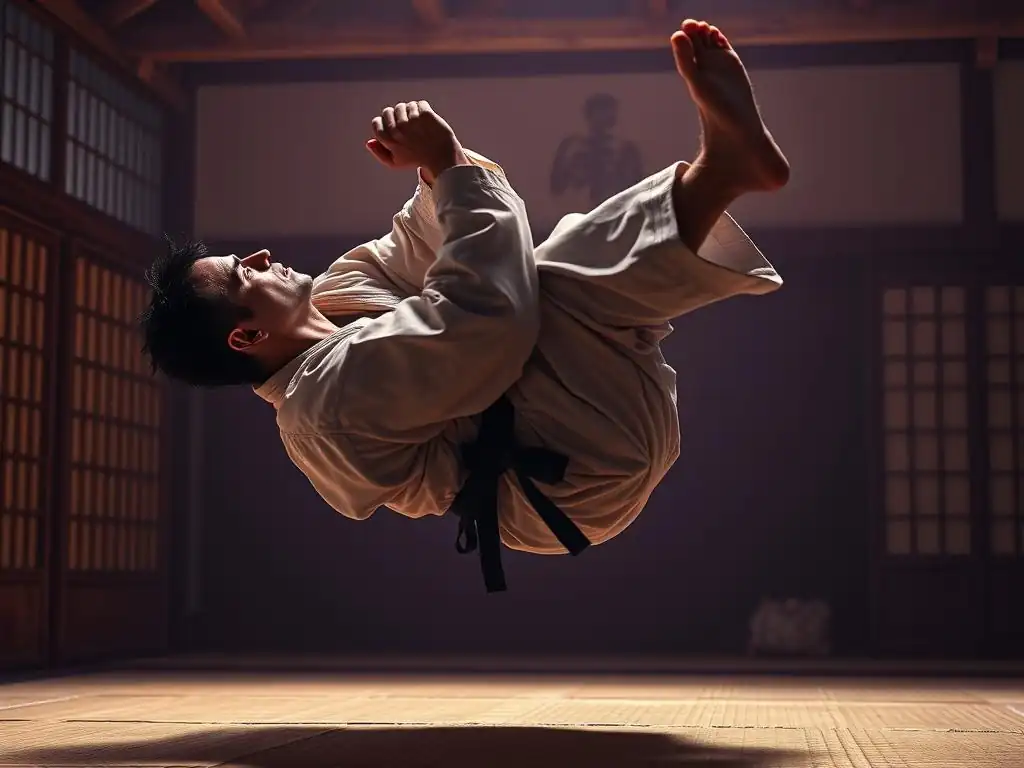
Welcome to Martial Arts Mastery, your gateway to the rich and multifaceted world of combat traditions. Dive deep with us as we explore the history, techniques, and philosophies that have shaped martial arts for centuries. Are you ready to unravel the fascinating story of Judo's evolution and its historical impact? Join us as we ask: Can Kano's original vision truly survive in the modern era? The answer, and much more, awaits within.
Exploring the Judo Evolution Historical Impact on Martial Arts Mastery
Judo, founded by Jigoro Kano in 1882, represents a pivotal moment in the history of martial arts. Kano's vision went beyond simple combat techniques; he sought to create a discipline ("Do") that fostered physical education, mental discipline, and ethical development. The Judo evolution historical impact is profound, transitioning from the feudal-era jujutsu systems of Japan into a modern pedagogical method.
This transformation laid the groundwork for Judo's eventual global spread and its inclusion in international sports, notably the Olympic Games since 1964 for men and 1992 for women. This journey highlights how a traditional practice can adapt and thrive in a changing world while grappling with the challenge of preserving its core philosophical underpinnings.
The study of Judo's development offers valuable insights for understanding the broader landscape of martial arts mastery. By examining how Judo adapted to different cultural contexts and competitive demands, we can better appreciate the forces shaping martial arts today. The tension between preserving historical techniques and embracing modern training methodologies is a common theme across many disciplines.
Judo's experience, from its initial adoption in Japanese schools in the early 20th century to its current status as a global sport practiced by millions (estimated over 20 million practitioners worldwide), provides a rich case study of this dynamic. The Judo evolution historical impact is not just about techniques; it's about the journey of a philosophy and its resilience against the pressures of modernization and globalization.
- What were some of Jigoro Kano's original teachings in Judo, and how do they differ from modern competitive Judo?
- How has Judo's historical impact influenced other martial arts and combat sports?
- Is the philosophical underpinnings of Judo, particularly Jita Kyoei ( mutual welfare and benefit), still relevant in contemporary Judo practice and competition?
- What are the biggest challenges facing the preservation of Judo's original teachings in the face of increasing commercialization and competitive pressures?
- What are some strategies for preserving the historical significance and philosophical depth of Judo while still allowing it to evolve and remain relevant in the 21st century?
Introduction to Judo Evolution and Its Historical Impact
Overview of Jigoro Kano’s Foundational Teachings in Judo
Jigoro Kano's establishment of the Kodokan Judo Institute in 1882 marked the birth of modern Judo. His foundational teachings synthesized elements from various koryu (old schools) of jujutsu, such as Kito-ryu and Tenjin Shin'yo-ryu, but critically, he removed the most dangerous techniques and introduced a systematic pedagogical approach. Kano categorized techniques into Nage-waza (throwing techniques) and Katame-waza (grappling techniques), organizing them into structured kata (pre-arranged forms) and randori (free practice). This systematic approach was revolutionary for its time, moving martial arts training away from often secretive, lineage-based transmission towards a more open, educational model accessible to a wider public.
Beyond the physical techniques, Kano embedded deep philosophical principles within Judo. His primary tenets included Seiryoku Zen'yo (Maximum Efficiency with Minimum Effort) and Jita Kyoei (Mutual Welfare and Benefit). These principles were not merely abstract concepts but were intended to guide both the physical practice and the practitioner's life outside the dojo. Kano envisioned Judo as a means of physical, mental, and moral development, contributing to the betterment of individuals and society. This focus on character building and societal contribution distinguishes Judo from many purely combative systems and forms a significant part of the Judo evolution historical impact.
The Significance of Kano’s Philosophy in Modern Martial Arts
Kano's philosophy of using physical training as a vehicle for character development has had a lasting impact that extends far beyond Judo itself. The concept of "Do" (way or path), which emphasizes lifelong learning and self-improvement through dedicated practice, became a template for other modern Japanese martial arts like Kendo, Aikido, and Karate, which also adopted the "Do" suffix. This philosophical underpinning encourages practitioners to view their training not just as skill acquisition but as a journey of personal growth.
In modern martial arts, where the emphasis can often lean heavily towards sport competition or self-defense applications, Kano's holistic philosophy serves as a reminder of the deeper purpose martial arts can serve. The principles of efficiency and mutual benefit are directly applicable to contemporary challenges, encouraging practitioners to seek optimal solutions with minimal harm and to consider the well-being of others. This philosophical depth contributes significantly to the enduring appeal and the broad Judo evolution historical impact on how martial arts are taught and perceived globally.
Defining the Historical Impact of Judo Evolution on Global Martial Arts
The historical impact of Judo evolution is multifaceted, influencing martial arts on several levels. Firstly, Judo pioneered the transition of traditional combat systems into modern sports and educational disciplines. Its successful integration into schools and universities in Japan, and later globally, provided a model for other arts seeking legitimacy and broader acceptance. By creating a safe, standardized system for practice and competition, Kano made martial arts accessible to a mass audience.
Secondly, Judo's techniques and training methodologies have been adopted and adapted by numerous other martial arts and combat sports. The emphasis on throws and grappling provided a counterpoint to striking-focused arts and proved highly effective in various competitive and self-defense scenarios. Elements of Judo's ground work (newaza) are foundational in Brazilian Jiu-Jitsu, for instance, which was developed from techniques taught by Mitsuyo Maeda, a student of Kano's Kodokan. This cross-pollination of techniques and training principles underscores the significant Judo evolution historical impact on the global martial arts landscape.
Jigoro Kano’s Original Teachings: Philosophy and Principles
Core Philosophical Tenets Behind Kano’s Judo
Jigoro Kano rooted Judo in a profound educational philosophy, aiming to cultivate individuals who could contribute positively to society. At its core were two main principles: Seiryoku Zen'yo (精力善用) and Jita Kyoei (自他共栄). Seiryoku Zen'yo, often translated as "Maximum Efficiency with Minimum Effort," applies to both physical technique and daily life. In randori, it means using an opponent's force and movement against them rather than meeting strength with strength. Philosophically, it encourages finding the most efficient way to achieve goals, whether in study, work, or personal relationships, optimizing energy and resources.
Jita Kyoei, meaning "Mutual Welfare and Benefit," represents Kano's vision for the ethical dimension of Judo practice. It posits that through mutual respect, cooperation, and assistance in training, practitioners develop themselves and contribute to the well-being of others and society as a whole. This principle elevates Judo beyond individualistic pursuit of skill or victory, framing it as a collective endeavor aimed at societal improvement. These core tenets were not mere add-ons but were intrinsic to Kano's concept of Judo as a "way" of life, deeply influencing its structure and purpose and driving the initial Judo evolution historical impact.
The Role of “Maximum Efficiency” and “Mutual Welfare and Benefit” in Judo Evolution
Kano's principles were instrumental in shaping the early evolution of Judo and its subsequent global spread. Seiryoku Zen'yo directly influenced the technical development, favoring throws and joint locks (in certain contexts) over direct strikes, as these often required less brute force and leveraged biomechanics. This focus on efficiency made Judo accessible to people of varying physical statures and strengths, contributing to its widespread appeal. The development of specific techniques and training drills was guided by this principle, constantly seeking the most effective application of force.
Jita Kyoei provided the ethical framework necessary for Judo's integration into educational systems. By emphasizing cooperation and mutual respect in practice, Kano created a safe and constructive learning environment. This principle encouraged students to help each other improve, fostering a sense of community within the dojo. As Judo spread internationally, the principle of Jita Kyoei helped bridge cultural divides, promoting understanding and cooperation among practitioners from different backgrounds. This ethical foundation is a key aspect of the lasting Judo evolution historical impact.
How Kano’s Teachings Shaped Judo’s Early Development
Kano's teachings fundamentally structured Judo's early development. He established the kyu/dan ranking system, borrowed from the game of Go, to provide a clear progression path for students – a system widely adopted by other martial arts. He also formalized the practice uniform (judogi) and the training area (dojo), creating a distinct identity for Judo. The introduction of randori as a primary training method, allowing for dynamic, albeit controlled, application of techniques against a resisting opponent, was a departure from the more rigid kata-focused training prevalent in many older jujutsu schools.
Furthermore, Kano actively promoted Judo's integration into the Japanese educational system. He believed Judo was an ideal form of physical and moral education. By 1910, Judo was included in the curriculum of Japanese middle schools, significantly boosting its profile and ensuring its transmission to future generations. This institutionalization, driven by Kano's vision and principles, cemented Judo's place in Japanese society and provided the foundation for its eventual global expansion, showcasing the early and significant Judo evolution historical impact.
Historical Timeline of Judo Evolution and Its Global Spread
Early Development and Institutionalization of Judo under Kano
Judo's journey began earnestly with the founding of the Kodokan in 1882, initially a small dojo in Tokyo. Jigoro Kano meticulously developed the curriculum, refining techniques and formalizing the philosophical principles. Within a few decades, the Kodokan grew significantly, attracting students from across Japan and eventually from overseas. A crucial moment in Judo's early history was its inclusion in the curriculum of Japanese schools starting around the turn of the 20th century. This institutionalization provided a stable environment for growth and dissemination, ensuring a steady stream of practitioners and instructors.
By the early 1900s, Judo was being demonstrated and taught in various parts of the world by Kano's students and other pioneers. Figures like Mitsuyo Maeda, who traveled extensively and eventually taught in Brazil (leading to the development of Brazilian Jiu-Jitsu), and Gunji Koizumi, who established the Budokwai in London in 1918, played vital roles in planting the seeds of Judo internationally. The Judo evolution historical impact began spreading globally even within Kano's lifetime, driven by the dedication of his students and the appeal of the system itself.
Post-Kano Era: Changes in Techniques and Competition Rules
Following Jigoro Kano's death in 1938, Judo continued to evolve, particularly as it gained prominence as a competitive sport. The post-war era saw a significant push towards internationalization and standardization, culminating in Judo's inclusion in the 1964 Tokyo Olympics. This elevated status brought changes, primarily focusing on techniques suitable for regulated competition. Emphasis shifted towards effective throwing techniques (nage-waza) and pins (osaekomi-waza), with certain joint locks (kansetsu-waza) restricted and striking techniques (atemi-waza), present in kata but generally excluded from randori, becoming even less prominent in mainstream practice.
Competition rules underwent numerous revisions over the decades, influencing strategy and technique. Changes regarding grip fighting (kumi-kata), leg grabbing (initially allowed, then banned, with recent minor relaxations in some contexts), and scoring criteria (ippon, waza-ari) have continuously shaped how Judo is practiced competitively. For instance, the banning of direct leg grabs in 2010 dramatically altered competitive approaches. While these changes fostered Judo's growth as a sport, they also created a divergence between sport Judo and the broader, more complete system Kano originally envisioned, impacting the perception of Judo evolution historical impact.
The Influence of International Judo Federations on Teaching and Practice
International bodies, most notably the International Judo Federation (IJF), have played a crucial role in standardizing and promoting Judo globally since their formation. The IJF oversees international competitions, establishes ranking systems, and sets the rules that govern sport Judo worldwide. This standardization has been essential for facilitating international competition and making Judo an accessible global sport practiced in over 200 countries.
However, the focus on competitive rules by federations has also inevitably influenced teaching methodologies. Dojos often prioritize training methods and techniques that are effective in competition, potentially at the expense of exploring the full breadth of Kano's system, including less competition-relevant techniques or a deeper focus on kata and philosophical study. While federations promote Judo's reach and visibility, their emphasis on the sporting aspect is a significant factor in the ongoing Judo evolution historical impact, creating a dynamic tension between sport and traditional values.
Contemporary Challenges to Preserving Kano’s Original Judo Philosophy
The Impact of Sportification and Competitive Pressures on Judo Evolution
The increasing focus on Judo as a high-performance competitive sport presents significant challenges to preserving Kano's original, holistic philosophy. In the pursuit of Olympic medals and international titles, training often becomes highly specialized, prioritizing techniques and strategies that score points under current IJF rules. This can lead to less time dedicated to kata practice, which embodies many of the fundamental principles and historical techniques, and a reduced emphasis on philosophical discussions or the principle of Jita Kyoei outside the context of bowing and mutual respect in randori.
Competitive pressure can also sometimes foster an environment where winning becomes paramount, potentially overshadowing the values of mutual welfare and moral development that Kano championed. While competition is a valid and important part of Judo, an exclusive focus on it risks reducing Judo to a mere physical contest, potentially losing sight of its deeper purpose as a path for personal and societal improvement. This shift is a major factor shaping the contemporary Judo evolution historical impact.
Balancing Traditional Judo Values with Modern Training Demands
Modern training demands, driven by sports science and the need for peak physical conditioning, also pose a challenge. Athletes often incorporate extensive strength and conditioning, plyometrics, and specialized drills that were not part of Kano's original curriculum. While these methods are effective for enhancing physical performance, the time and resources dedicated to them can detract from time spent on traditional technical refinement, kata, or philosophical study.
Finding a balance between these modern training imperatives and traditional Judo values is crucial. Some dojos and instructors consciously make efforts to integrate philosophical lessons and kata practice alongside rigorous physical training and randori. For instance, some national federations include kata requirements for dan gradings to encourage their study. However, maintaining this balance requires deliberate effort and a commitment to Kano's broader vision in the face of pressures that favor immediate, measurable results in competition. This tension is central to understanding the current state of Judo evolution historical impact.
The Role of Commercialization and Media in Shaping Judo’s Public Perception
Commercialization and media coverage also influence Judo's evolution and public perception, often emphasizing the spectacular throws and competitive drama. Major tournaments are broadcast with focus on highlight reels and athlete personalities, which, while great for visibility, can inadvertently portray Judo primarily as a sport of physical combat rather than a comprehensive system of physical, mental, and moral education.
The financial incentives associated with competitive success can further push practitioners and organizations towards a sport-centric model. Sponsorships, prize money (though relatively modest compared to some other sports), and funding often depend on competitive results. While necessary for supporting athletes and events, this commercial aspect can subtly shift the focus away from the non-competitive, philosophical aspects of Judo. Managing the influence of commercialization while upholding Kano's principles is an ongoing challenge for the future trajectory of the Judo evolution historical impact.
The Role of Judo Evolution in Martial Arts Mastery Today
Integrating Kano’s Teachings with Modern Martial Arts Training Techniques
The principles and practices developed during Judo's evolution offer valuable lessons for contemporary martial arts mastery. Kano's systematic approach to categorizing techniques (Nage-waza, Katame-waza) and structuring practice (kata, randori) provides a robust framework that can be adapted by other disciplines. Many modern martial arts, particularly those with Japanese roots or those focused on grappling, have adopted similar pedagogical structures. For example, the belt ranking system is now ubiquitous across numerous styles.
Furthermore, the principle of Seiryoku Zen'yo is directly applicable to refining techniques in any martial art, encouraging practitioners to seek efficiency and leverage rather than relying solely on brute force. This focus on intelligent application of power is a cornerstone of effective martial arts practice. Integrating Kano's emphasis on continuous improvement and the journey of the "Do" can also enrich modern training, providing practitioners with a deeper sense of purpose beyond just learning self-defense or winning competitions. The Judo evolution historical impact on training methodologies is evident in the structured approach seen in many dojos today.
Judo as a Foundation for Practical Self-Defense in Contemporary Contexts
Despite the emphasis on sport, the core techniques of Judo remain highly relevant for practical self-defense. The ability to effectively throw an opponent, control them on the ground, or apply joint locks and chokes are invaluable skills in real-world confrontations. Unlike striking arts, which can escalate violence quickly, Judo techniques often allow for control or neutralization of a threat without necessarily causing severe injury, aligning with a self-defense philosophy of using minimum necessary force.
While sport Judo rules limit certain techniques (like striking or finger locks) and scenarios (like multiple attackers), the fundamental skills developed through randori – balance, timing, kuzushi (breaking balance), spatial awareness, and adaptability – are highly transferable to self-defense situations. A practitioner skilled in Judo's core throws and ground control techniques possesses a formidable skillset for handling physical altercations. The Judo evolution historical impact on self-defense is seen in how grappling skills, heavily influenced by Judo, are now considered essential in comprehensive self-defense training programs.
The Contribution of Judo’s Historical Impact to Other Martial Arts Disciplines
Judo's historical impact extends significantly to the development and practice of numerous other martial arts disciplines. As mentioned, Brazilian Jiu-Jitsu directly evolved from Judo taught by Maeda. Aikido, founded by Morihei Ueshiba, a student of Kano's contemporary and friend, incorporates many principles of movement and balance found in Judo's throwing techniques. Even striking arts have sometimes adopted Judo's structured ranking systems and competitive models.
Beyond direct technical influence, Judo's success as an educational system and sport provided a blueprint for the modernization and global spread of other Asian martial arts. The model of establishing a central organization (like the Kodokan), standardizing techniques and pedagogy, and promoting the art through demonstrations and competitions was emulated by organizations promoting Karate, Taekwondo, and others. This broader influence on structure, philosophy, and global dissemination is a testament to the profound Judo evolution historical impact on the martial arts world.
Future Prospects: Will Kano’s Original Teachings Survive the Evolution of Judo?
Predictions for the Preservation of Traditional Judo Philosophy
Predicting the exact future is challenging, but the survival of Kano's original teachings likely depends on dedicated efforts by practitioners, instructors, and organizations. While sport Judo will continue to evolve and dominate the public perception, there is a strong undercurrent of traditionalists who are committed to preserving the philosophical depth and the complete technical syllabus, including kata and self-defense applications (goshin-jutsu). The Kodokan itself continues to serve as a stronghold for traditional Judo, offering instruction that emphasizes Kano's original intent.
The growth of non-competitive or 'traditional' Judo clubs and associations around the world, although smaller than sport-focused ones, indicates a desire among some practitioners for a more holistic practice. Education is key; ensuring that new generations of judoka are exposed to Kano's history, philosophy, and the full range of techniques is vital. Online resources and historical research are also making Kano's writings and the history of Judo more accessible than ever. The future suggests a likely coexistence: a large, dynamic sport Judo landscape alongside a smaller, dedicated traditional Judo community, both contributing to the ongoing Judo evolution historical impact.
Emerging Trends in Judo Training and Their Alignment with Kano’s Vision
Emerging trends in Judo training show a mixed alignment with Kano's original vision. On one hand, the increasing application of sports science, data analytics, and specialized physical conditioning in competitive Judo represents a move towards optimizing performance, which could be seen as an application of Seiryoku Zen'yo in a modern context. Techniques continue to evolve, with new grips, transitions, and sequences constantly being developed, reflecting a dynamic adaptation that Kano himself encouraged.
On the other hand, there is a growing recognition within some parts of the Judo community of the need to reconnect with the art's roots. More emphasis is being placed on fundamental movement skills, posture, and traditional grips, sometimes as a counter-response to highly specialized sport techniques. There's also increasing interest in the self-defense aspects and kata among recreational practitioners. These trends suggest a potential for convergence, where modern training methods are used to enhance proficiency in techniques and principles aligned with Kano's original intent, potentially strengthening the philosophical aspects of the Judo evolution historical impact.
The Importance of Education and Philosophy in Sustaining Judo’s Legacy
Sustaining Kano's legacy hinges significantly on the deliberate effort to educate practitioners about the philosophy and history of Judo, not just its techniques and rules. Instructors play a critical role in this, integrating discussions about Seiryoku Zen'yo and Jita Kyoei into regular classes, explaining the purpose of kata, and providing context for the techniques learned. Simply going through the physical motions without understanding the underlying principles risks reducing Judo to a mere physical activity.
Organizations, from local clubs to international federations, also have a responsibility to promote the educational and philosophical dimensions of Judo. This could involve incorporating philosophical elements into coaching certifications, developing educational materials on Kano's teachings, and hosting events that celebrate Judo's history and cultural heritage. By prioritizing education and philosophy alongside technical and competitive training, the Judo community can ensure that Kano's profound vision continues to guide the art's evolution and maintain the richness of the Judo evolution historical impact for generations to come.
Conclusion: The Lasting Historical Impact of Judo Evolution on Martial Arts
Reflecting on Kano’s Enduring Influence in the Face of Change
Jigoro Kano's influence on martial arts is undeniable and enduring. He took disparate, sometimes brutal, systems and forged them into a cohesive discipline with a clear educational and ethical purpose. His genius lay not just in technical synthesis but in creating a framework – the Kodokan, the ranking system, the uniform, the pedagogy – that allowed Judo to adapt, spread, and thrive across cultures and eras. While the pressures of sportification, commercialization, and modernization have undoubtedly pulled Judo in directions Kano might not have fully envisioned, the core principles he espoused continue to resonate.
The continued practice of Judo by millions globally, its status as an Olympic sport, and its influence on grappling arts worldwide are all direct outcomes of Kano's foundational work. The tension between tradition and modernity within Judo is not a sign of decline but rather a dynamic process reflecting the art's vitality and its ongoing struggle to balance different facets of its identity. Kano's vision of Judo as a means for individual and societal improvement remains a powerful ideal, providing a compass even as the art navigates the complexities of the 21st century.
The Path Forward for Judo Within the Broader Martial Arts Community
The path forward for Judo within the broader martial arts community involves embracing its multifaceted identity. Sport Judo will continue to push the boundaries of physical performance and technical innovation within its rule set. Simultaneously, traditional Judo practitioners will continue to preserve and explore the historical techniques, kata, and philosophical depth. Both aspects are valuable and contribute to the richness of Judo.
For Judo to maintain its unique Judo evolution historical impact, it is crucial for the different facets of the community to respect and learn from each other. Sport judoka can benefit from understanding the historical context and philosophical underpinnings of their techniques, while traditionalists can learn from the rigorous training methodologies developed in the sport arena. By fostering dialogue and mutual appreciation, the Judo community can ensure that Kano's comprehensive vision, encompassing physical prowess, mental discipline, and moral character, remains central to the art's identity as it continues its journey of evolution.
Frequently Asked Questions
What were some of Jigoro Kano's original teachings in Judo, and how do they differ from modern competitive Judo?
Kano emphasized Seiryoku Zenyo (maximum efficiency, minimum effort) and Jita Kyoei (mutual welfare and benefit). Modern competition often prioritizes shiai (competitive randori) rules and scoring above these principles.
How has Judo's historical impact influenced other martial arts and combat sports?
Judo's emphasis on grappling and throws significantly impacted the development of mixed martial arts (MMA) and influenced techniques in disciplines like Brazilian Jiu-Jitsu and wrestling. Its randori (free practice) method also became a model.
Is the philosophical underpinnings of Judo, particularly Jita Kyoei ( mutual welfare and benefit), still relevant in contemporary Judo practice and competition?
While some argue it's diminished, many instructors still emphasize respect, discipline, and ethical conduct. Jita Kyoei (mutual welfare and benefit) remains a core ideal, though its practical application can be debated.
What are the biggest challenges facing the preservation of Judo's original teachings in the face of increasing commercialization and competitive pressures?
The focus on winning at all costs can lead to a neglect of fundamental techniques and principles. Maintaining a balance between sport and self-improvement is a critical challenge.
What are some strategies for preserving the historical significance and philosophical depth of Judo while still allowing it to evolve and remain relevant in the 21st century?
Integrating historical study, philosophical discussions, and traditional training methods alongside modern techniques can help. Encouraging a broader understanding of Judo beyond just competition is crucial.
Final Reflection: Preserving the Essence of Judo
The journey through Judo's evolution, from its historical roots to its modern iterations, reveals a crucial question: Can the core principles of Jigoro Kano's vision endure in the face of evolving competition and global adaptation? The answer, while complex, hinges on our collective commitment to understanding and upholding the philosophical underpinnings that distinguish Judo from mere sport.
This exploration has underscored the profound impact Judo has had, and continues to have, on shaping not just physical prowess, but also character and ethical conduct. My own engagement with Judo, even from afar, has instilled a deep respect for its emphasis on mutual welfare and benefit. Judo is the way to the most effective use of both physical and spiritual strength. By training one to control one's own body and mind, it makes one strong and brave and, at the same time, modest and gentle.
- Jigoro Kano. This quote encapsulates the enduring power of Judo's original teachings, a power that transcends the dojo and permeates all aspects of life.
As we look to the future, let us not merely focus on refining techniques and strategies for competitive advantage. Instead, let us actively cultivate a deeper appreciation for the values of respect, discipline, and mutual aid that Kano so passionately championed. Consider how you can embody these principles in your own life, both on and off the mat, and contribute to preserving the true essence of Judo for generations to come.
Ignite Your Judo Journey: Reconnect with the Roots!
Thank you for exploring the fascinating evolution of Judo with us. We hope this journey into Kano's original teachings has inspired a deeper appreciation for the art. Now, let's translate that inspiration into action!
- Reconnect with the essence of Judo: Actively seek out opportunities to practice nage-waza and katame-waza, emphasizing fluidity and technique over sheer strength.
- Explore Judo's philosophical underpinnings: Delve into Kano's writings and lectures to understand the moral and ethical dimensions of the art.
- Share your insights: Engage with fellow Judo enthusiasts online and in your dojo to foster a deeper understanding of the art's rich history and potential future.
How will you personally contribute to preserving and evolving the spirit of Judo in your practice and teaching?