
The Red Belt: Helio Gracie's Journey to Grandmaster Status

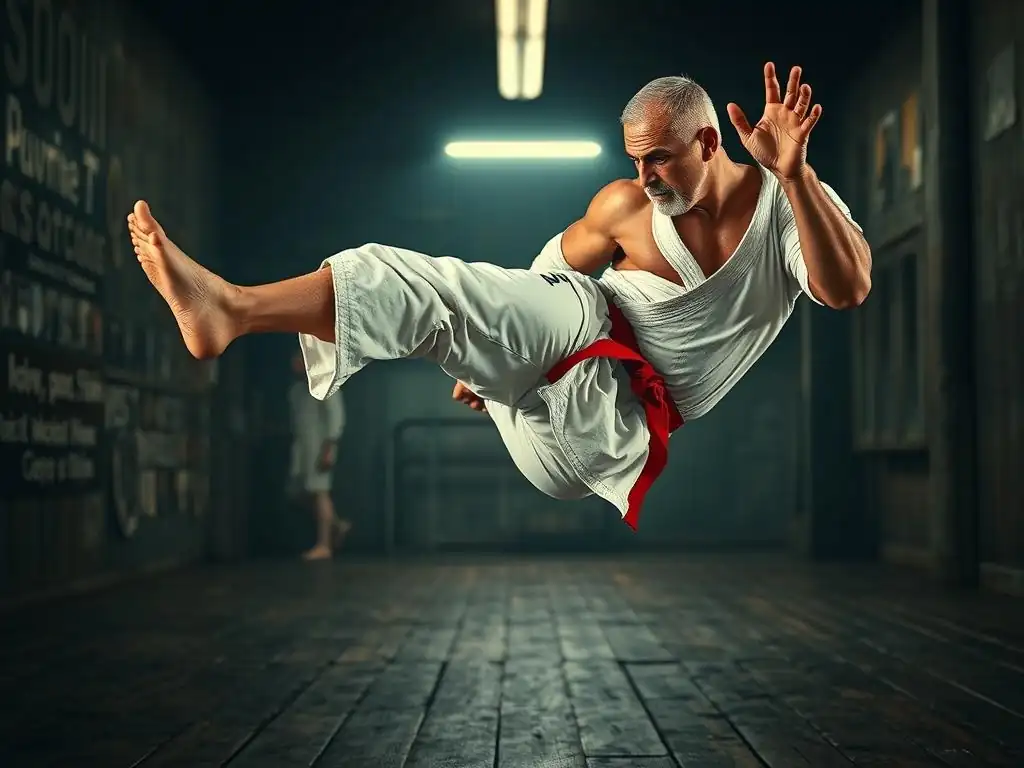
Welcome to Martial Arts Mastery, your ultimate resource for exploring the rich tapestry of martial arts worldwide. Ever wondered what it truly takes to achieve the highest level of mastery? Delve into the extraordinary life and accomplishments of a true legend as we unravel Helio Gracie's red belt journey, a testament to dedication, innovation, and the relentless pursuit of perfection within the art of Brazilian Jiu-Jitsu. Prepare to be inspired by the story of a Grandmaster whose legacy continues to shape the landscape of martial arts.
- Introduction: The Legacy of Helio Gracie and the Red Belt in BJJ
- The Early Years: Helio Gracie's Introduction to Jiu-Jitsu
- The Gracie Challenge: Proving the Effectiveness of Gracie Jiu-Jitsu
- The Evolution of Gracie Jiu-Jitsu: From Challenge to Global Phenomenon
- Earning the Red Belt: A Symbol of Jiu-Jitsu Mastery
- Helio Gracie's Contributions to Brazilian Jiu-Jitsu: Beyond the Red Belt
- The Gracie Family Legacy: Continuing Helio Gracie's Vision
- Helio Gracie: A Lasting Impact on Martial Arts
- Conclusion: The Enduring Legacy of Helio Gracie's Red Belt Journey
-
Frequently Asked Questions
- What is the significance of a red belt in Gracie Jiu-Jitsu?
- How did Helio Gracie earn his red belt?
- How long does it typically take to achieve a red belt in Gracie Jiu-Jitsu?
- What were Helio Gracie's most notable contributions to Gracie Jiu-Jitsu?
- Where can I learn more about the history and techniques of Gracie Jiu-Jitsu, particularly those developed by Helio Gracie?
- Final Reflection: The Enduring Legacy of a Red Belt
- Embrace the Gracie Legacy: Start Your Journey Today!
Introduction: The Legacy of Helio Gracie and the Red Belt in BJJ
Brazilian Jiu-Jitsu, known globally for its effective ground fighting techniques, owes much of its existence and distinctive character to one man: Helio Gracie. Born in 1913, Helio was a key figure in developing the art from its Japanese roots into the unique system known today as Gracie Jiu-Jitsu or BJJ. His legacy is intertwined with the very fabric of the martial art, emphasizing leverage and technique over brute strength, making it accessible to people of all sizes and physical capabilities. This fundamental principle became the cornerstone of his teachings and the driving force behind the art's global spread.
The red belt in Brazilian Jiu-Jitsu is the highest rank attainable by active practitioners, symbolizing a level of mastery and contribution so significant that it is often referred to as the "grandmaster" belt. Achieving this rank requires decades of dedication, profound technical knowledge, and substantial influence on the art's development. Helio Gracie's journey to the red belt is not just a story of rank progression; it is the narrative of innovation, perseverance, and the creation of a martial art that has impacted millions worldwide. Understanding the path Helio took illuminates the core values and history of BJJ itself.
The Early Years: Helio Gracie's Introduction to Jiu-Jitsu
Helio Gracie was the youngest of the five Gracie brothers, born in Rio de Janeiro, Brazil. His introduction to Jiu-Jitsu came through his older brother, Carlos Gracie, who had learned the art from Mitsuyo Maeda, a Japanese judoka and jiu-jitsu expert who emigrated to Brazil in 1914. Carlos became a dedicated student of Maeda and eventually opened his own academy in Rio. However, Helio's early involvement was limited due to his frail health. Doctors advised against strenuous physical activity, preventing him from training intensely alongside his brothers.
Despite his physical limitations, Helio was deeply fascinated by Jiu-Jitsu. He spent countless hours watching his brothers and Carlos teach classes, absorbing the techniques and principles from the sidelines. This period of observation proved crucial, allowing him to analyze the movements and mechanics without the pressure of physical execution. He began to notice that some techniques, as taught traditionally, relied heavily on the practitioner's strength and athleticism, which would be difficult for someone of his slight build to perform effectively against larger or stronger opponents. This observation sparked the initial ideas that would later redefine the art.
Overcoming Physical Limitations: Helio Gracie's Adaptive Approach
Helio Gracie's physical frailty was not a barrier but a catalyst for innovation. While observing classes, he began to mentally adapt the techniques he saw. He realized that many movements could be modified to utilize leverage and body mechanics more efficiently, reducing the need for raw power. This was a radical departure from the traditional, more strength-dependent approach of early 20th-century Jiu-Jitsu. He experimented with these adaptations in his mind and, when he had the opportunity, applied them gently, finding that they allowed him to control and submit opponents with minimal physical exertion.
This adaptive approach led Helio to meticulously refine existing techniques and develop entirely new ones based on principles of leverage, timing, and angles. He focused on creating a system where a smaller, weaker person could effectively defend themselves against a larger, stronger attacker. This philosophy was revolutionary and directly addressed his own physical constraints. Techniques were modified to use an opponent's weight against them, to apply pressure points and joint locks with precision, and to control distance and position strategically. This focus on accessibility became a defining characteristic of what would become known as Gracie Jiu-Jitsu.
Developing Gracie Jiu-Jitsu: A Focus on Leverage and Technique
The evolution of Gracie Jiu-Jitsu under Helio Gracie was characterized by a relentless focus on practical application and effectiveness, particularly for self-defense. Moving away from the more sport-oriented or judo-influenced aspects of traditional Jiu-Jitsu, Helio emphasized ground fighting and submissions that could neutralize an attacker in a real-life scenario. He systematically analyzed every technique, asking: "Can a 130-pound person perform this against a 200-pound person?" If the answer was no, he would modify it or discard it.
This process of refinement over several years resulted in a distinct style of Jiu-Jitsu. Key developments included a sophisticated guard system designed to protect the smaller practitioner and create opportunities for sweeps and submissions, as well as a deep understanding of positional control on the ground. Helio's innovations were not just theoretical; they were born from constant practical experimentation and sparring. This pragmatic approach ensured that Gracie Jiu-Jitsu remained grounded in its core mission: providing effective self-defense for everyone, regardless of size or strength.
The Gracie Challenge: Proving the Effectiveness of Gracie Jiu-Jitsu
To demonstrate the practical effectiveness of their refined Jiu-Jitsu system, the Gracie family initiated what became known as the "Gracie Challenge." This was an open invitation to practitioners of any martial art – boxers, wrestlers, judoka, capoeiristas, and others – to fight under minimal rules. The goal was to prove that Gracie Jiu-Jitsu, with its emphasis on ground fighting and leverage, was the most effective martial art for real combat situations, particularly for a smaller person facing a larger opponent.
Helio Gracie himself was a central figure in these challenges, often facing opponents significantly larger and stronger than himself. These public demonstrations were crucial in building the reputation of Gracie Jiu-Jitsu. They weren't just fights; they were live exhibitions of the system's principles. The Gracies aimed to show that technique and strategy could overcome brute force, validating Helio's adaptive approach and solidifying the foundation upon which his students, and later his sons, would build.
Early Challenges and Victories: Establishing Dominance
The early decades of the Gracie Challenge saw numerous matches, many involving Helio Gracie himself. While not every fight resulted in a victory – notably, his loss to the much heavier Japanese judoka Masahiko Kimura in 1955, which still showcased his incredible toughness and defensive skill – the overall record overwhelmingly favored the Gracies. They consistently demonstrated that skilled ground fighting was a critical, often neglected, component in most martial arts.
These matches, often held in packed arenas in Brazil, created a buzz around Gracie Jiu-Jitsu. Helio and his brothers successfully used these challenges to dismantle the mystique surrounding other martial arts and prove the practical applicability of their system. Defeating practitioners from diverse backgrounds, often much larger than themselves, provided undeniable proof of the effectiveness of the leverage-based techniques Helio had developed. This period was vital in establishing Gracie Jiu-Jitsu's dominance in the Brazilian martial arts landscape.
Refining the System: Continuous Improvement and Innovation
The Gracie Challenge was not just about proving the art; it was also a critical feedback loop for refining it. Every challenge match, win or lose, provided valuable insights into the strengths and weaknesses of the system against various fighting styles. Helio and his family meticulously analyzed these encounters, identifying techniques that worked well under pressure and those that needed modification or improvement.
This constant process of testing and refining ensured that Gracie Jiu-Jitsu remained a living, evolving art. Techniques were adapted based on real-world application, and new strategies were developed to counter specific opponents or styles encountered in the challenges. This commitment to continuous improvement, driven by the practical demands of the Gracie Challenge, was instrumental in solidifying the techniques that are now considered fundamental to modern BJJ and was a key part of Helio Gracie's red belt journey.
The Evolution of Gracie Jiu-Jitsu: From Challenge to Global Phenomenon
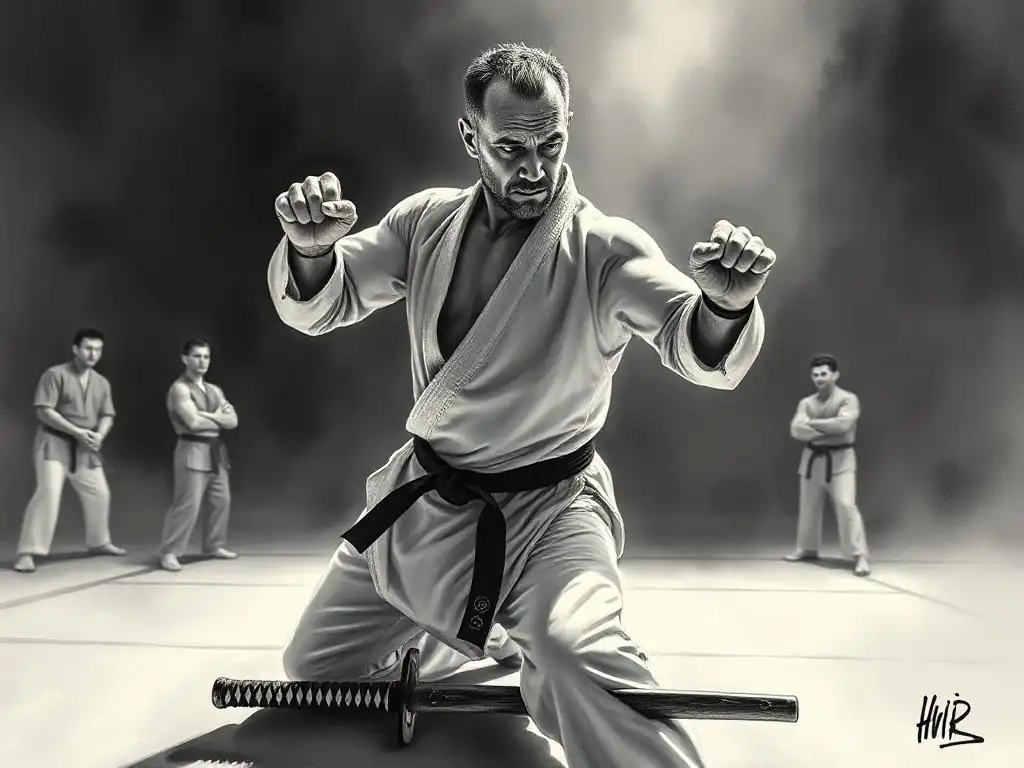
Following the success and lessons learned from the Gracie Challenges, the focus shifted to formalizing and spreading the art. The Gracie family, particularly Helio and his sons, dedicated themselves to teaching their system to new generations of practitioners. Academies were established, and a structured curriculum began to take shape, moving beyond the challenge match format to systematic instruction.
This period marked the transition of Gracie Jiu-Jitsu from primarily a family-guarded secret to a recognized martial art taught to the public. The core principles developed by Helio – self-defense, leverage, and technique – remained central to the teaching methodology. As more students trained, the art continued to evolve through collective experience and refinement, laying the groundwork for its eventual explosion onto the international stage.
Spreading the Art: Teaching and Mentoring the Next Generation
Helio Gracie was a prolific teacher and mentor, personally instructing many of his children and grandchildren, who would go on to become prominent figures in the BJJ world. He instilled in them the core philosophy of Gracie Jiu-Jitsu, emphasizing its effectiveness for self-defense and its principles of leverage and efficiency. His sons, including Rorion, Rickson, Royce, Royler, and Rolker, among others, were direct beneficiaries of his extensive knowledge and practical experience.
These second and third generations of Gracies took their father's and grandfather's teachings and spread them far beyond Brazil. They opened academies in the United States and other countries, organized seminars, and competed in various combat sports. This global expansion was a direct result of Helio's dedication to passing on his knowledge and the undeniable effectiveness of the system he helped create, continuing the Helio Gracie red belt journey through his lineage.
Notable Students: Rolls Gracie, Rickson Gracie, Rorion Gracie
Among Helio's most significant students were his sons and nephews who carried the torch. Rolls Gracie, a nephew whom Helio considered like a son, was a pivotal figure in the 1970s and early 80s, bridging the gap between the older generation and the new. Rolls was known for integrating techniques from other martial arts, bringing a more athletic dimension while respecting the core Gracie principles. His untimely death was a significant loss to the family and the art.
Rickson Gracie, widely regarded by many as the greatest BJJ practitioner of all time, inherited his father's emphasis on efficiency and "invisible" Jiu-Jitsu. He maintained a near-perfect record in various competitions and challenge matches, further solidifying the art's reputation. Rorion Gracie was instrumental in bringing Gracie Jiu-Jitsu to the United States and co-founding the Ultimate Fighting Championship (UFC), which served as the ultimate Gracie Challenge on a global scale, proving the system's dominance in mixed martial arts.
Earning the Red Belt: A Symbol of Jiu-Jitsu Mastery
In Brazilian Jiu-Jitsu, the belt system signifies a practitioner's technical skill, knowledge, and contribution to the art. While the journey through colored belts (white, blue, purple, brown, black) represents increasing proficiency, the red belt stands apart. It is not merely a rank achieved through time and training; it is a recognition of a lifetime dedicated to BJJ, marked by exceptional technical contribution and profound influence on the art's development and dissemination.
The red belt is typically the 9th degree for those promoted from black belt, or in extremely rare cases, the 10th degree for the founders of the art. It signifies a grandmaster, a living legend whose impact is foundational. Earning this belt is the culmination of decades of practice, teaching, and often, innovation. It is a symbol of unparalleled knowledge, wisdom, and the embodiment of the Jiu-Jitsu spirit.
The Significance of the Red Belt in Brazilian Jiu-Jitsu
The red belt holds immense symbolic weight within the BJJ community. It represents the highest level of technical and theoretical knowledge in the art. Grandmasters holding the red belt are considered the custodians of Jiu-Jitsu's heritage and future. They are expected to possess not only exceptional physical and technical skills but also a deep understanding of the art's philosophy, history, and its application in various contexts.
Furthermore, the red belt is a symbol of contribution. Those promoted to this rank have typically spent 40-50 years or more dedicated to BJJ since receiving their black belt. Their journey has involved not just personal mastery but also significantly contributing to the art through teaching, developing techniques, writing, or spreading BJJ globally. It is a recognition by the community of their unique and lasting impact.
Helio Gracie's Red Belt Promotion: A Historic Moment
Helio Gracie was recognized as one of the very few individuals to achieve the 10th-degree red belt in Brazilian Jiu-Jitsu. This rank is reserved for the founders of the art. While the exact date of his formal promotion to the 10th degree might be less emphasized than the achievement itself, his status as a 10th-degree red belt grandmaster was universally acknowledged within the BJJ world. He was one of the last surviving links to the art's direct lineage from Mitsuyo Maeda and its subsequent development in Brazil.
Helio's red belt was more than just a piece of fabric; it was the physical embodiment of his life's work. It represented his revolutionary adaptations, his unwavering commitment to testing the art through challenges, his dedication to teaching, and his role in shaping the future of BJJ. His journey to this ultimate rank was the story of the art's evolution itself, a path paved with innovation, resilience, and a profound understanding of leverage and human mechanics.
Helio Gracie's Contributions to Brazilian Jiu-Jitsu: Beyond the Red Belt
Helio Gracie's impact on Brazilian Jiu-Jitsu extends far beyond his technical innovations and his status as a red belt grandmaster. He instilled a core philosophy in the art that remains central to its identity today. This philosophy emphasizes practicality, self-defense, and the belief that Jiu-Jitsu is not just a fighting system but a way of life that fosters personal growth, discipline, and respect.
He viewed Jiu-Jitsu as a means for individuals to gain confidence and empowerment, particularly those who might feel physically vulnerable. His teachings went beyond just showing techniques; he aimed to cultivate a mindset of perseverance, strategic thinking, and humility. This holistic approach is a significant part of the Helio Gracie red belt journey legacy.
Philosophical Underpinnings of Gracie Jiu-Jitsu: Self-Defense and Personal Growth
For Helio Gracie, the primary purpose of Jiu-Jitsu was self-defense. He believed that everyone, regardless of size, should possess the ability to defend themselves against a larger aggressor. This principle was the driving force behind his focus on ground fighting and leverage, as statistically, most real-life altercations end up on the ground. He designed the system to be effective in survival situations, prioritizing control and submissions over striking.
Beyond physical self-defense, Helio saw Jiu-Jitsu as a powerful tool for personal growth. The discipline required to learn and practice the art, the challenges faced during training, and the humility gained from tapping out all contribute to developing character. He taught that overcoming difficulties on the mat builds resilience that translates to overcoming challenges in life. This dual focus on practical self-defense and personal development is a hallmark of the Gracie philosophy.
Philosophical Tenets: Respect, Discipline, and Continuous Learning
Helio Gracie emphasized several key philosophical tenets within his teaching. Respect was paramount – respect for the instructor, training partners, the art itself, and ultimately, respect for oneself. Discipline was essential, not just in showing up to train but in the rigorous practice required to internalize techniques and principles. He believed that consistent, disciplined effort was the key to mastery.
Continuous learning was another core value. Helio himself never stopped refining the art, constantly seeking better ways to apply techniques or develop new ones. He instilled this mindset in his students, encouraging them to always be students of the art, regardless of their rank. These tenets – respect, discipline, and continuous learning – form the ethical and intellectual foundation of Gracie Jiu-Jitsu as envisioned by its co-creator.
The Gracie Family Legacy: Continuing Helio Gracie's Vision
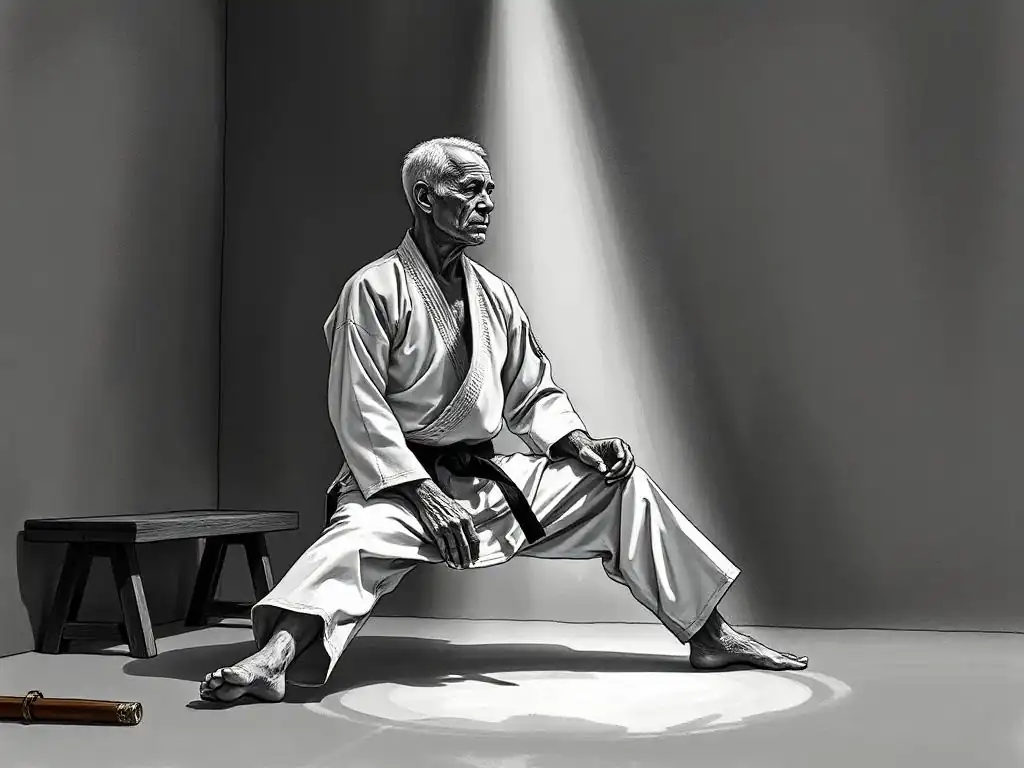
Helio Gracie's vision did not end with his red belt achievement or his passing. His legacy lives on through his extensive family, who have continued to teach, evolve, and spread Gracie Jiu-Jitsu across the globe. The Gracie family has become synonymous with BJJ, and many of its members are prominent instructors, competitors, and innovators in the art today.
The responsibility of carrying forward the principles and techniques developed by Helio and his brother Carlos rests with the subsequent generations. They face the challenge of preserving the art's core while adapting it to the changing landscape of martial arts and combat sports.
The Next Generation of Gracie Jiu-Jitsu Practitioners
Helio Gracie's children and grandchildren have played a vital role in propagating his teachings. Figures like Renzo Gracie, Kyra Gracie, Roger Gracie, and many others have excelled in competition (both BJJ tournaments and MMA) and established successful academies worldwide. They teach the same fundamental principles of leverage and self-defense that Helio championed, ensuring that the core of Gracie Jiu-Jitsu remains intact.
This new generation also faces the task of making BJJ relevant in the 21st century. While honoring the past, they also adapt training methods and techniques to reflect modern understanding of sports science and the evolution of competition rules. Their work ensures that the art remains vibrant and effective for both self-defense and sport.
Modern BJJ: Adaptation and Expansion by the Gracie Family
Modern Brazilian Jiu-Jitsu, influenced heavily by the Gracie family's continued efforts, is a dynamic martial art. While preserving the self-defense roots championed by Helio, it has also grown into a sophisticated global sport with numerous competitions and rule sets. The Gracie family has been at the forefront of this expansion, establishing international federations and organizing major tournaments.
Adaptations include the development of new techniques and positions, particularly in the sport context, where specific rule advantages can be exploited. However, the underlying principles of leverage, positional control, and submission effectiveness, refined by Helio over his long Helio Gracie red belt journey, remain the bedrock of the art, ensuring its continued success on mats around the world.
Helio Gracie: A Lasting Impact on Martial Arts
Helio Gracie's influence extends beyond the confines of Brazilian Jiu-Jitsu. His relentless pursuit of a system effective for the smaller person fundamentally altered the perception of what constitutes effective martial arts. The success of Gracie Jiu-Jitsu in challenge matches and later in mixed martial arts demonstrated the critical importance of ground fighting, a dimension previously underdeveloped in many traditional striking-based arts.
His emphasis on leverage and technique over strength provided a blueprint for developing efficient martial arts systems. The principles he championed have been studied and adopted by practitioners of various combat sports and self-defense disciplines, acknowledging the profound impact of his work.
The Influence of Gracie Jiu-Jitsu on Modern MMA
Perhaps the most significant testament to Helio Gracie's impact is the rise of modern mixed martial arts (MMA). The early Ultimate Fighting Championship events, co-founded by his son Rorion, served as a proving ground where Gracie Jiu-Jitsu, represented primarily by Royce Gracie (another son of Helio), dominated opponents from diverse martial arts backgrounds. Royce, often outweighed significantly, used his family's system of ground fighting and submissions to achieve victory after victory.
This demonstrated unequivocally that effective ground skills were essential for real combat, forcing practitioners of striking arts to incorporate grappling into their training. The landscape of martial arts competition was forever changed, leading to the integrated training methods seen in modern MMA fighters today. This transformation is a direct consequence of the effectiveness of the system Helio Gracie dedicated his life to refining.
Remembering Helio Gracie: His Teachings and Philosophy
Helio Gracie passed away in 2009 at the age of 95, but his teachings and philosophy remain alive. Academies around the world continue to teach the principles he developed, emphasizing self-defense, leverage, and the importance of continuous learning. His life story, particularly his overcoming physical challenges to create a revolutionary system, serves as an inspiration to practitioners globally.
Remembering Helio Gracie involves more than just acknowledging his technical contributions; it means embracing the philosophy he embodied – that Jiu-Jitsu is for everyone, that technique conquers strength, and that the pursuit of mastery is a lifelong journey of physical, mental, and ethical development. His Helio Gracie red belt journey symbolizes this profound and lasting impact on martial arts.
Conclusion: The Enduring Legacy of Helio Gracie's Red Belt Journey
Helio Gracie's journey to the red belt is a compelling narrative of innovation, resilience, and dedication. Starting from a position of physical disadvantage, he revolutionized a martial art, adapting it to become one of the most effective self-defense systems in the world. His emphasis on leverage, his willingness to test his system through challenges, and his commitment to teaching shaped Brazilian Jiu-Jitsu into the global phenomenon it is today.
The red belt he earned was not just a recognition of his decades in the art; it was a symbol of his profound contribution as a co-creator and grandmaster. The principles he championed continue to guide practitioners, and his legacy lives on through his family and the countless individuals worldwide who have benefited from the art he helped forge. The Helio Gracie red belt journey is a testament to the power of ingenuity and perseverance in the pursuit of martial arts mastery.
Frequently Asked Questions
What is the significance of a red belt in Gracie Jiu-Jitsu?
A red belt in Gracie Jiu-Jitsu represents the highest level of achievement and is reserved for those who have dedicated their lives to the art. It signifies not only technical mastery but also leadership and significant contributions to the development of the art.
How did Helio Gracie earn his red belt?
Helio Gracie earned his red belt through decades of dedication, innovation, and the development of Gracie Jiu-Jitsu. His continuous refinement of techniques and his impact on the martial art's philosophy led to this prestigious recognition.
How long does it typically take to achieve a red belt in Gracie Jiu-Jitsu?
Achieving a red belt in Gracie Jiu-Jitsu is a very long process, typically taking a lifetime of dedication, usually 40 years or more after earning a black belt. It's a testament to unwavering commitment.
What were Helio Gracie's most notable contributions to Gracie Jiu-Jitsu?
Helio Gracie is renowned for adapting Judo techniques to suit a smaller, weaker physique, emphasizing leverage and technique over brute strength. He also developed the philosophical underpinnings of Gracie Jiu-Jitsu, focusing on self-defense.
Where can I learn more about the history and techniques of Gracie Jiu-Jitsu, particularly those developed by Helio Gracie?
MartialArtsMastery.org offers a wealth of information on Gracie Jiu-Jitsu, including historical overviews, training techniques, and profiles of legendary practitioners like Helio Gracie. The site delves into the art and science of the discipline.
Okay, here's a final reflection that fits your article, structure, and keyword focus:
Final Reflection: The Enduring Legacy of a Red Belt
The journey of Helio Gracie to Grandmaster status, culminating in the coveted red belt, is more than just a martial arts narrative; it's a testament to unwavering dedication and the power of innovation. Even today, the principles he championed – leverage over strength, technique over brute force – resonate deeply within the global Jiu-Jitsu community and beyond, influencing training methodologies and philosophical approaches to self-improvement.
Helio Gracie's influence extends far beyond the mats. His story is a powerful reminder that limitations can be overcome with ingenuity and perseverance, a lesson that resonates across all aspects of life. There is no losing in Jiu-Jitsu. You either win or you learn.
This quote encapsulates the spirit of continuous improvement and resilience that Helio instilled in his students and which continues to inspire practitioners worldwide.
As you reflect on Helio Gracie's red belt journey, consider how his principles of adaptability and relentless pursuit of knowledge can be applied to your own life. Embrace challenges as opportunities for growth, and remember that true mastery lies not just in achieving a rank, but in the continuous evolution of your skills and character. Let Helio's legacy inspire you to embark on your own journey of self-improvement, striving for excellence in all that you do.
Embrace the Gracie Legacy: Start Your Journey Today!
Thank you for exploring the incredible journey of Helio Gracie and his profound impact on martial arts. Now it's your turn to step onto the mat and discover your own potential. Ready to be inspired?
Here are a few things you can do now:
- Begin your exploration of Gracie Jiu-Jitsu at a local academy. Experience firsthand the techniques and philosophies that shaped a legend.
- Delve deeper into the Gracie family's history by researching other notable figures and their contributions to martial arts. Uncover hidden gems!
- Share this article with fellow martial arts enthusiasts. Spark a conversation and inspire others to appreciate the art and dedication behind Helio Gracie's legacy.
What aspects of Helio Gracie's story resonate most with you and how will you apply his principles to your own training or life?