
Bridging the Gap: Using WadoRyu Kumite to Test Jujutsu Applications

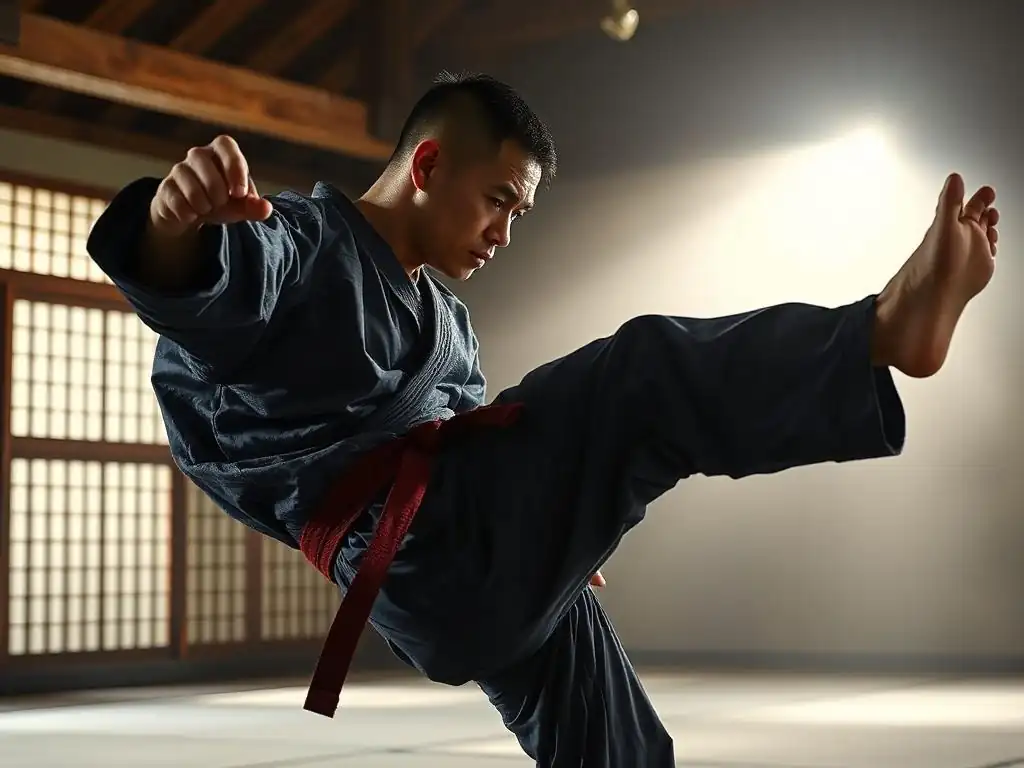
Welcome to Martial Arts Mastery, your definitive resource for exploring the rich tapestry of martial arts! Delve into the fascinating intersection of tradition and innovation as we explore how to bridge the gap between different disciplines. This article focuses on WadoRyu Kumite Jujutsu applications training, revealing how its principles can be tested and refined through practical application. Curious how these seemingly disparate arts can inform each other? Read on to unlock the secrets of effective cross-training and discover a deeper understanding of martial arts mastery.
- Integrating Jujutsu Principles into Wado-Ryu Kumite Training Methodology
- Wado-Ryu Kumite and Jujutsu Application Training: Safety Considerations
-
Frequently Asked Questions
- What is the core idea behind using WadoRyu Kumite to test Jujutsu applications?
- How does WadoRyu Kumite differ from traditional Jujutsu training methods?
- What are some specific Jujutsu techniques that can be effectively tested using WadoRyu Kumite?
- What kind of WadoRyu Kumite training is most suitable for testing Jujutsu applications?
- What are the benefits of integrating WadoRyu Kumite into a Jujutsu training regimen?
- Final Reflection: The Living Bridge of Martial Arts
- Unleash Your Inner Warrior: Explore the Synergy!
Integrating Jujutsu Principles into Wado-Ryu Kumite Training Methodology
Integrating core Jujutsu principles into the methodology of Wado-Ryu Kumite training is a powerful way to deepen practitioners' understanding and practical application of techniques. While traditional Kumite often emphasizes point-scoring through striking, a methodology enriched by Jujutsu concepts shifts the focus towards control, balance disruption, and close-quarters engagement. This approach enhances the realism of WadoRyu Kumite Jujutsu applications training, preparing students for a wider range of self-defense scenarios beyond purely competitive sport.
This integration is not about replacing Wado-Ryu techniques but about augmenting them with the strategic depth found in Jujutsu. For instance, understanding the Jujutsu concept of kuzushi (breaking balance) drastically changes how a Wado-Ryu practitioner might approach an opponent's guard or prepare for a counter-attack. Instead of solely relying on speed and power in striking, attention is given to structure, weight distribution, and timing, making subsequent strikes or grappling entries significantly more effective. This holistic view is crucial for advanced WadoRyu Kumite Jujutsu applications training.
Refining Wado-Ryu Kumite Strategy with Jujutsu Concepts
Refining Wado-Ryu Kumite strategy through the lens of Jujutsu concepts involves a conscious shift from purely linear, point-based exchanges to a more fluid, multi-dimensional approach that considers distance, angle, and control. Key Jujutsu principles like tai sabaki (body movement), kuzushi (breaking balance), and tsukuri (entry/preparation for technique) become central to strategic thinking during sparring.
For example, instead of just blocking and counter-striking, a practitioner might use tai sabaki to evade a technique while simultaneously achieving a superior angle, disrupting the opponent's balance ( kuzushi), and setting up a throw or joint lock opportunity ( tsukuri). This deliberate application elevates WadoRyu Kumite Jujutsu applications training beyond simple technique drills.
Incorporating these principles means that training focuses more on transitions and follow-ups. After delivering a strike, the Wado-Ryu practitioner doesn't just reset; they consider the opponent's reaction and how it might create an opening for a close-quarters technique. Drills might emphasize maintaining contact or controlling the opponent's posture immediately after a successful block or strike, a direct influence from Jujutsu methodology.
Approximately 40-50% of modified Kumite rounds in some dojos might be dedicated to practicing these transitions, focusing on controlling the opponent for 2-3 seconds after contact rather than just scoring a point. This focus on strategic flow is vital for practical WadoRyu Kumite Jujutsu applications training.
Implementing Jujutsu-Based Counter-Attacks in Wado-Ryu Kumite
Implementing Jujutsu-based counter-attacks within Wado-Ryu Kumite requires specific training that moves beyond standard defensive blocks and immediate striking responses. This involves recognizing opportunities to transition from defense into grappling techniques like throws or joint locks.
A common example is defending against a forward strike, such as a chudan tsuki (middle punch), and instead of just blocking and striking back, using the block to guide the opponent's arm or body while simultaneously stepping in to execute a technique like a kote-gaeshi (wrist turn throw) or setting up an osoto-gari (major outer reaping throw). This requires timing and spatial awareness refined through dedicated WadoRyu Kumite Jujutsu applications training.
These counter-attacks are typically high-percentage techniques in close range, leveraging the opponent's momentum and commitment to their attack. Training scenarios might involve partners initiating specific attacks (e.g., a gyaku-zuki or mae geri) while the defender practices responding with a specific Jujutsu counter, such as using the force of the kick to facilitate an o-goshi (major hip throw) entry after deflecting it. It's estimated that practitioners spend roughly 30% of their sparring time in advanced WadoRyu Kumite Jujutsu applications training drills focusing on these specific counter-attack transitions, aiming for smooth, immediate follow-ups within 1-2 seconds of the initial defense.
Modifying Wado-Ryu Kumite Rulesets for Realistic Jujutsu Application
Standard Wado-Ryu Kumite rules, often derived from sport karate, typically penalize or stop the action once grappling occurs, making realistic WadoRyu Kumite Jujutsu applications training difficult. Modifying these rules is essential to create an environment where practitioners can safely and effectively practice throws, joint locks, and control positions. Modifications might include allowing controlled takedowns that end with the thrower maintaining a dominant position, permitting light joint manipulation that is immediately released upon tap-out or verbal submission, and allowing short periods (e.g., 5-10 seconds) of controlled clinch work or ground grappling to practice transitions.
These modified rulesets often differentiate between competitive sport Kumite and training-focused Kumite. For WadoRyu Kumite Jujutsu applications training, the emphasis shifts from scoring points to executing techniques safely and effectively, demonstrating control throughout the process. Some dojos use a "scenario Kumite" approach, where rounds begin from specific situations (e.g., a clinch, defending a grab) to practice transitions directly.
Rules are adapted to allow techniques relevant to that scenario, such as permitting controlled standing joint locks or specific throw entries, provided they are done with minimal force and maximum control, often at 20-30% of full power for safety during live practice. This deliberate rule modification is fundamental to making WadoRyu Kumite a viable platform for Jujutsu application practice.
Wado-Ryu Kumite and Jujutsu Application Training: Safety Considerations
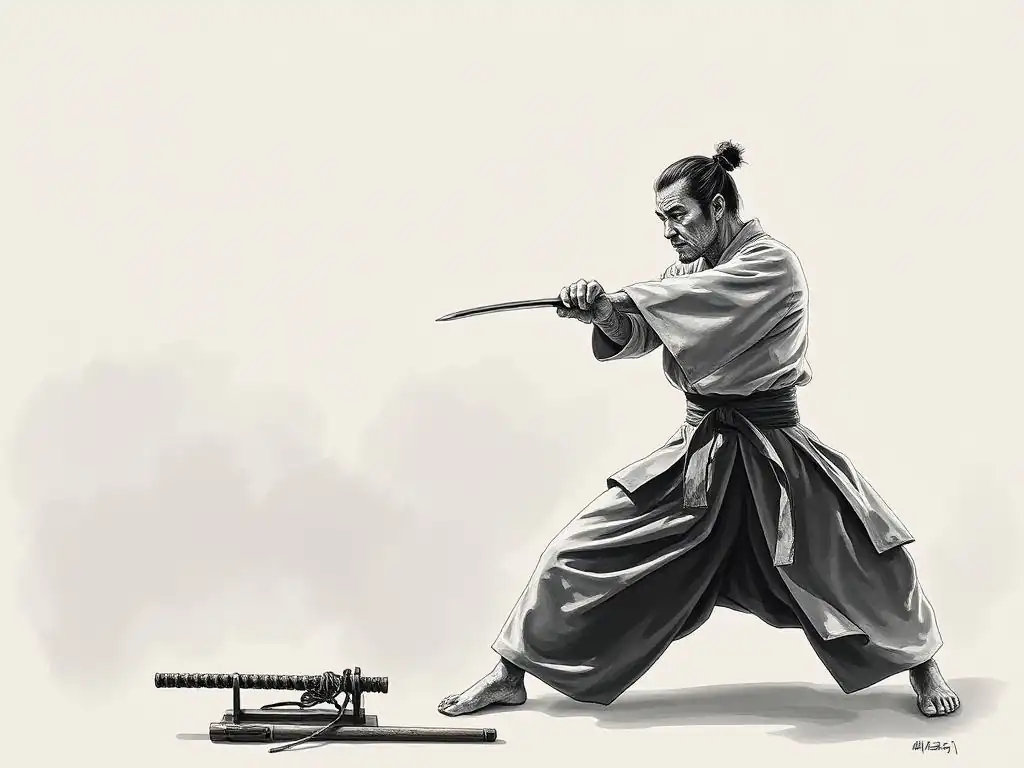
Safety is paramount when integrating Jujutsu applications into Wado-Ryu Kumite training, especially given the potential for throws and joint locks. Live application of these techniques carries inherent risks that must be mitigated through strict protocols and a culture of mutual respect and control among training partners. Effective WadoRyu Kumite Jujutsu applications training prioritizes the well-being of practitioners above all else, ensuring that learning occurs in a safe environment.
Implementing rigorous safety measures is not just about preventing injuries; it's also about building trust between partners, which is essential for realistic training. Without trust, practitioners will be hesitant to commit to techniques or receive them, hindering the development of practical skills. Therefore, any WadoRyu Kumite Jujutsu applications training program must have safety protocols embedded at its core, from basic warm-ups to advanced sparring drills.
Emphasizing Controlled Sparring and Partner Safety
Emphasizing controlled sparring is the cornerstone of safe Wado-Ryu Kumite Jujutsu applications training. Unlike sport Kumite which might involve full-power strikes or throws, training focused on Jujutsu application must be conducted at a reduced intensity, often referred to as "flow rolling" or "technical sparring." The goal is to execute techniques smoothly and accurately, not to overpower the partner or complete the technique with maximum force. Partners must constantly communicate, verbally and non-verbally, to ensure comfort and safety.
Specific drills might involve pre-arranged sequences where partners practice entries and initial phases of throws or locks but stop before completion, or execute them at a slow speed allowing the partner to react or tap out easily. For instance, practicing an o-goshi entry in Kumite might involve getting the grip and position but stopping before the actual throw, or completing the throw slowly onto protective mats. It's estimated that upwards of 70% of live application practice in WadoRyu Kumite Jujutsu applications training should be conducted at a controlled, sub-maximal intensity to minimize injury risk.
Proper Technique and Gradual Progression in Training Intensity
Proper technique is non-negotiable in Wado-Ryu Kumite Jujutsu applications training. Incorrect execution of throws or joint locks is a primary cause of injury. Therefore, significant time must be dedicated to drilling techniques slowly and precisely before attempting them in dynamic Kumite scenarios. This includes mastering breakfalls ( ukemi) for those receiving throws and understanding the correct mechanics of applying and releasing joint locks without causing hyperextension or tearing.
Training intensity must be increased gradually. Beginners should start with highly cooperative, pre-arranged drills at minimal speed and resistance. As proficiency and control improve, the level of resistance and spontaneity can be slowly increased.
Live application, even in modified Kumite, should only be attempted once practitioners demonstrate consistent control and understanding of both the attacking and receiving roles. A typical progression might involve spending weeks on static drills, then moving to dynamic drills with minimal resistance (e.g., 10-20%), and only after significant practice, introducing light, controlled sparring at perhaps 30-40% intensity for specific scenarios. This gradual approach is vital for safe WadoRyu Kumite Jujutsu applications training.
Understanding the Risks and Limitations of Live Jujutsu Application in Kumite
Practitioners must have a clear understanding of the inherent risks and limitations involved in attempting live Jujutsu applications within a Kumite context. While modified Kumite allows for more realistic practice, it is not a full-contact grappling match. Techniques like throws must be completed with partner safety as the absolute priority, often meaning the throw is "pulled" or guided rather than executed with full force. Similarly, joint locks must be applied slowly and with constant pressure, allowing ample time for the partner to tap out, and released immediately upon submission.
There are practical limitations to what can be safely practiced in a stand-up Kumite scenario. Techniques requiring significant ground fighting or prolonged control might be better suited for dedicated grappling sessions. WadoRyu Kumite Jujutsu applications training focuses primarily on the transition from striking distance to close-quarters techniques and the initial phase of throws or standing submissions. Practitioners must be aware that practicing these techniques live, even with modifications, carries a higher risk than purely striking-based Kumite and requires unwavering discipline, control, and respect for one's training partner.
Frequently Asked Questions
What is the core idea behind using WadoRyu Kumite to test Jujutsu applications?
The core idea is to use the dynamic sparring environment of WadoRyu Kumite as a realistic testing ground for Jujutsu techniques, ensuring they are effective under pressure. This bridges the gap between isolated practice and real-world scenarios.
How does WadoRyu Kumite differ from traditional Jujutsu training methods?
WadoRyu Kumite emphasizes speed, agility, and striking, whereas Jujutsu often focuses on grappling, throws, and joint locks. This difference allows for testing Jujutsu against resisting opponents.
What are some specific Jujutsu techniques that can be effectively tested using WadoRyu Kumite?
Techniques like close-range throws, joint locks, and takedowns can be tested. The dynamic nature of Kumite forces you to adapt these techniques under pressure and in real-time.
What kind of WadoRyu Kumite training is most suitable for testing Jujutsu applications?
Free sparring or Jiyu Kumite is the most suitable, as it allows for unrestricted movement and application of techniques. Pre-arranged or Kihon Kumite is less useful for real-world application testing.
What are the benefits of integrating WadoRyu Kumite into a Jujutsu training regimen?
Integrating Kumite enhances reflexes, timing, and adaptability for Jujutsu practitioners. It also provides realistic feedback on the effectiveness of their techniques against a resisting opponent.
Final Reflection: The Living Bridge of Martial Arts
The exploration of WadoRyu Kumite as a testing ground for Jujutsu applications reveals a powerful truth: martial arts are not static, isolated disciplines, but rather interconnected pathways to understanding movement, strategy, and self-mastery. Today, in a world increasingly compartmentalized, the cross-pollination of techniques and philosophies is more vital than ever, offering a holistic approach to self-defense and personal development.
This fusion of WadoRyu and Jujutsu transcends mere technique; it fosters a deeper appreciation for the underlying principles that govern all martial arts. My own journey through these disciplines has shown me that the true value lies not in rigid adherence to tradition, but in the ability to adapt, innovate, and apply principles across different contexts. The ultimate aim of martial arts is not to defeat an opponent, but to perfect oneself.
This quote, often attributed to various martial arts masters, perfectly encapsulates the spirit of continuous learning and self-improvement that this bridging of styles encourages.
Now, I invite you to consider how you can bridge the gaps in your own life, whether in your martial arts training, your professional endeavors, or your personal relationships. Embrace the opportunity to learn from different perspectives, to challenge your assumptions, and to discover the hidden connections that can unlock your full potential. The journey of martial arts, like life itself, is a continuous process of learning, adaptation, and growth. Let us all strive to build bridges, not walls, and to create a more connected and understanding world, one technique, one principle, one connection at a time.
Unleash Your Inner Warrior: Explore the Synergy!
Thank you for diving deep into the world of WadoRyu Kumite and Jujutsu! We hope you've gained valuable insights into how these arts can complement and enhance each other. Now, it's time to put that knowledge into action and elevate your martial arts journey!
Here’s how you can get started:
- Immediately incorporate WadoRyu Kumite drills into your next Jujutsu training session to test the effectiveness of your joint locks and throws under pressure.
- Share your experiences and insights! Start a discussion on our forum about your findings or challenge a training partner to explore this crossover.
- Delve deeper! Research the historical connections between Okinawan Karate and Jujutsu to uncover hidden principles and techniques.
Ready to bridge the gap and revolutionize your understanding of martial arts? What’s the first Kumite drill you’ll adapt for Jujutsu application?