
Distance, Timing, and Angle (Geo Ri, Shi Gi, Gak Do): The Geometry of Hapkido Mastery

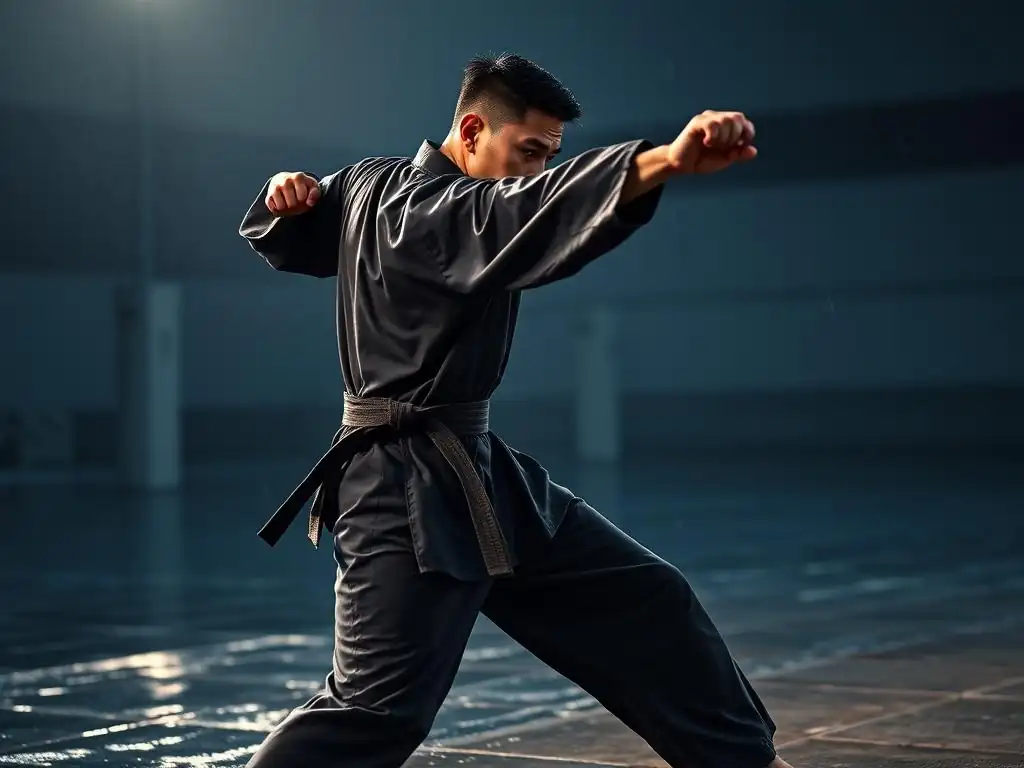
Welcome to Martial Arts Mastery, your gateway to unlocking the secrets of combat and self-cultivation. Ever wondered how a seemingly smaller practitioner can overcome a larger opponent? Delve into the fascinating world of Hapkido, where the principles of distance, timing, and angle – Geo Ri, Shi Gi, Gak Do – transform theoretical knowledge into practical mastery. Explore the geometry behind this dynamic Korean martial art and discover how these key concepts can elevate your understanding of self-defense and martial arts strategy. Are you ready to unravel the science of Hapkido?
The Importance of Geo Ri (Distance) in Hapkido Techniques
Geo Ri, the concept of distance, is a foundational pillar in Hapkido, sitting alongside Shi Gi (timing) and Gak Do (angle) to form the essential Hapkido distance timing angle triad. Mastery of Geo Ri dictates whether a technique is even possible, let alone effective. It involves understanding the optimal range for executing strikes, joint locks, throws, and defensive maneuvers, as well as the strategic positioning relative to an opponent.
Incorrect Geo Ri can render a powerful strike ineffective or leave a practitioner vulnerable to counter-attack. For instance, attempting a joint lock from too far away makes it impossible to achieve the necessary leverage, while being too close might prevent the full extension or power required for a throw.
Controlling Geo Ri is not merely about static positioning; it's a dynamic process that constantly adjusts based on the practitioner's intent and the opponent's movement. In a self-defense scenario, maintaining appropriate distance is often the first line of defense, allowing time to react and choose the most suitable Hapkido technique.
Conversely, the ability to quickly and safely bridge distance is crucial for initiating offensive actions. The effective application of any Hapkido technique, from a simple wrist grab escape to a complex throwing sequence, hinges directly on the practitioner's ability to manage Geo Ri within the broader context of the Hapkido distance timing angle principles.
Establishing Optimal Distance for Hapkido Kicks
The effectiveness of Hapkido kicks is heavily reliant on establishing and maintaining the correct Geo Ri. Different kicks require distinct distances for optimal power generation and execution speed. For example, a Hapkido front snap kick (ap chagi) is often most effective at close to medium range, allowing for quick extension and retraction. In contrast, a turning kick (dollyo chagi) or a side kick (yop chagi) typically requires slightly more distance to allow for proper hip rotation and full body involvement, maximizing kinetic energy transfer.
Consider the roundhouse kick. Executing it too close limits hip rotation and reduces power, making it easier to block or counter. Attempting it from too far away results in the kick falling short or requiring an exaggerated lunge, compromising balance and opening up defensive gaps. Experienced Hapkido practitioners understand these nuances and use subtle footwork adjustments to constantly gauge and control the Geo Ri, ensuring their kicks land with maximum impact and minimal risk within the dynamic flow of a situation, integrating it with their understanding of Hapkido distance timing angle.
Maintaining Safe Distance in Hapkido Self-Defense Against Grappling
In Hapkido self-defense, maintaining Geo Ri is critical to prevent an opponent from closing the distance to initiate grappling, clinching, or takedowns. The goal is often to keep the opponent outside of their effective grappling range, which is typically arm's length or closer. This requires constant awareness and strategic movement. Using straight-line movements backward or angular steps can help create separation when an opponent attempts to rush in.
Hand fighting techniques, such as using palms or straight arm extensions to 'frame' against an opponent's chest or shoulders, are also employed to physically maintain distance. Imagine a scenario where an attacker attempts a double-leg takedown.
A Hapkido practitioner skilled in Geo Ri would immediately step back and to the side, using their hands to push the attacker's head or shoulders away, disrupting their balance and preventing them from establishing a secure grip or getting low enough for the takedown. This proactive management of Geo Ri is a fundamental aspect of Hapkido's self-defense strategy, working in concert with Hapkido distance timing angle awareness.
Geo Ri and Footwork Drills for Closing Distance Effectively
While maintaining distance is vital defensively, the ability to quickly and safely close Geo Ri is essential for initiating offensive Hapkido techniques. This requires precise and efficient footwork. Drills focusing on forward movement, such as the 'step-and-slide' (where one foot steps forward and the other slides up to meet it), are fundamental for smooth, controlled forward motion without compromising balance.
More advanced drills involve angled footwork, such as triangular stepping or circular movements, which allow a practitioner to close distance while simultaneously gaining a strategic angle (Gak Do) on the opponent. For example, stepping diagonally forward and to the outside of an opponent's lead leg can quickly bridge distance while positioning the practitioner off the center line, making them a harder target and setting up techniques like throws or joint locks. Consistent practice of these Geo Ri-focused footwork drills is paramount for developing the agility and control needed to effectively manage the Hapkido distance timing angle in live situations.
- What does Geo Ri, Shi Gi, Gak Do mean in Hapkido, and why are they important?
- How does understanding distance contribute to effective Hapkido techniques?
- Why is timing considered so crucial in Hapkido self-defense?
- How do angles play a role in maximizing the effectiveness of Hapkido techniques?
- Can mastering Geo Ri, Shi Gi, Gak Do significantly improve a Hapkido practitioner's self-defense capabilities?
Frequently Asked Questions
What does Geo Ri, Shi Gi, Gak Do mean in Hapkido, and why are they important?
Geo Ri translates to distance, Shi Gi to timing, and Gak Do to angle. These three elements are fundamental to Hapkido, forming the geometric foundation upon which all techniques are built.
How does understanding distance contribute to effective Hapkido techniques?
Proper distance management allows a Hapkido practitioner to control the engagement, dictate the flow of combat, and effectively deliver strikes or execute throws while minimizing their own vulnerability. It's all about maintaining safe and effective spacing.
Why is timing considered so crucial in Hapkido self-defense?
Timing is essential for intercepting attacks, exploiting openings, and delivering techniques with maximum impact. Precise timing can negate an opponent's strength and allow a smaller practitioner to overcome a larger one. Perfect execution relies on it.
How do angles play a role in maximizing the effectiveness of Hapkido techniques?
Utilizing optimal angles allows for efficient force application, avoidance of direct attacks, and the creation of advantageous positions for joint locks, throws, and strikes. Understanding angles creates strategic advantages.
Can mastering Geo Ri, Shi Gi, Gak Do significantly improve a Hapkido practitioner's self-defense capabilities?
Absolutely! A deep understanding and skillful application of distance, timing, and angle dramatically enhances a practitioner's ability to effectively defend themselves by controlling the engagement, exploiting vulnerabilities, and maximizing the power of their techniques. It's the key to mastery.
Final Reflection: The Harmonious Dance of Hapkido
The intricate interplay of distance, timing, and angle isn't merely a technical aspect of Hapkido; it's a fundamental principle that echoes throughout life. Understanding and mastering these geometric elements within the art transcends the dojang, offering a framework for navigating challenges and opportunities with greater precision and awareness in all aspects of our existence. The lessons learned in Hapkido, therefore, are not confined to self-defense, but extend to a more nuanced and effective approach to life itself.
The pursuit of Hapkido mastery has profoundly shaped my understanding of the interconnectedness of space, time, and perspective. It's a constant reminder that success often hinges on our ability to perceive and adapt to the dynamic relationships between these elements. The art of war teaches us to rely not on the likelihood of the enemy's not attacking, but rather on our own readiness to meet him; not on the chance of his not attacking, but rather on the fact that we have made our position unassailable.
- Sun Tzu. This quote resonates deeply, highlighting the importance of proactive preparation and strategic positioning, mirroring the core principles of Hapkido's geometric dance.
Now, I invite you to consider how the principles of distance, timing, and angle might apply to your own life. Are you strategically positioning yourself for success? Are you attuned to the timing of opportunities? Are you viewing challenges from multiple angles to gain a more comprehensive understanding? Embrace the geometry of Hapkido, not just as a martial art, but as a philosophy for living a more balanced, effective, and ultimately, more fulfilling life.
Unleash Your Hapkido Potential: Begin Your Journey Today!
Thank you for diving into the intricacies of Hapkido geometry. We hope this exploration has given you new perspectives on enhancing your technique and understanding the art. Now, it's time to put this knowledge into action and deepen your Hapkido practice.
Here's how you can take the next step:
- Commit to incorporating Geo Ri, Shi Gi, and Gak Do principles into your next training session, focusing on precise movements and efficient energy transfer.
- Share your insights! Discuss these geometric concepts with your training partners and instructor to foster a deeper understanding within your dojang.
- Challenge yourself: Can you identify these geometric principles in other martial arts forms or everyday movements?
What small adjustment, inspired by this article, will you make in your next Hapkido session to amplify your technique?