
Zou Zhang Explained: The Continuous Stepping Method of Baguazhang

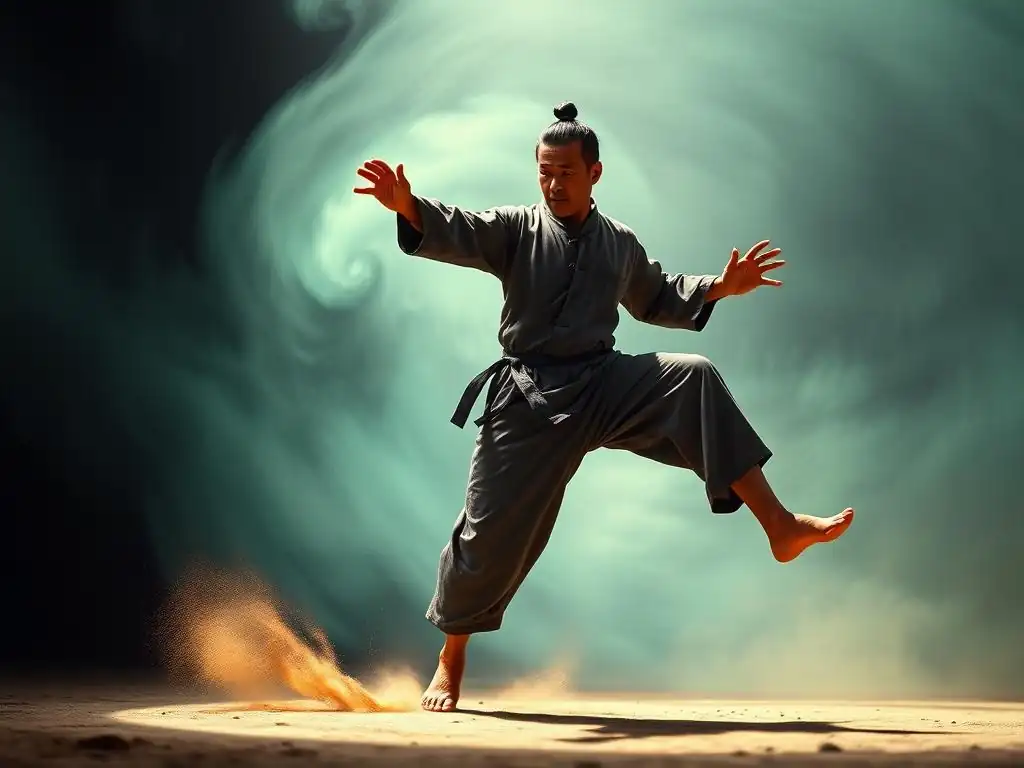
Welcome to Martial Arts Mastery, your gateway to unlocking the secrets of combat traditions worldwide! Journey with us as we delve into the rich history, demanding training, and profound philosophies behind these powerful arts. This time, we're untangling the complexities of Baguazhang, specifically focusing on the Baguazhang continuous stepping technique – but how does this circular movement translate into devastating power and unparalleled agility? Prepare to discover the nuances of Zou Zhang and its crucial role in mastering this intricate art. The secrets await...
- Baguazhang's Continuous Stepping Method: Mud Stepping (Tang Ni Bu)
- Introduction to Baguazhang's Mud Stepping (Tang Ni Bu)
- Core Principles of Mud Stepping: Adherence and Responsiveness
- Breaking Down the Mud Stepping Technique
- Benefits of Mastering the Mud Stepping Technique
- Common Mistakes to Avoid in Mud Stepping Practice
- Advanced Applications of Mud Stepping in Baguazhang Forms and Combat
- Drills and Exercises for Developing Mud Stepping Proficiency
- The Historical Context of Mud Stepping in Baguazhang
- Conclusion: The Enduring Legacy of Mud Stepping
-
Frequently Asked Questions
- What is the Zou Zhang in Baguazhang?
- Why is the continuous stepping technique so important in Baguazhang?
- How does the circular walking pattern benefit a practitioner in combat?
- What are some common challenges beginners face when learning the Zou Zhang?
- Does the Zou Zhang have variations, and how do they impact its application?
- Final Reflection: Embracing the Unfolding Path
- Unleash Your Inner Circle Walker!
Baguazhang's Continuous Stepping Method: Mud Stepping (Tang Ni Bu)
Introduction to Baguazhang's Mud Stepping (Tang Ni Bu)
Baguazhang, a unique internal martial art, is characterized by its distinctive circular stepping patterns, most famously known as "circle walking" or Zou Zhang. At the heart of this movement lies a fundamental technique referred to as Mud Stepping, or Tang Ni Bu. This stepping method is far more than just a way to move; it is a comprehensive training method that cultivates internal energy, develops balance and coordination, and serves as the foundation for all Baguazhang techniques, including palm changes and evasive maneuvers. Understanding and mastering Tang Ni Bu is paramount for any serious practitioner of this intricate art.
This foundational stepping technique is designed to build a specific type of leg strength, rootedness, and fluid motion that is distinct from linear martial arts. The continuous, flowing nature of the Baguazhang continuous stepping technique through Tang Ni Bu allows practitioners to constantly shift angles, evade attacks, and generate power from the ground up, spiraling through the body. It is the engine room of Baguazhang, enabling the seamless transitions and dynamic footwork that define the style, making it a crucial element for both health cultivation and practical self-defense applications.
Understanding the Significance of Mud Stepping in Baguazhang Training
Mud Stepping ( Tang Ni Bu) holds profound significance within the Baguazhang curriculum, acting as the primary method for developing foundational body mechanics and internal energy ( Nei Jin). Unlike static stances or linear movement drills found in many other styles, Tang Ni Bu requires constant, controlled motion, training the practitioner to maintain balance, structure, and awareness while continuously shifting weight and direction. This constant engagement cultivates deep strength in the legs and core, often described as "rooting," allowing the practitioner to remain stable while in motion and generate powerful, connected movements.
Furthermore, the repetitive nature of circle walking using the Baguazhang continuous stepping technique is a form of moving meditation. Practicing Tang Ni Bu helps calm the mind, improve focus, and harmonize the breath with movement. This meditative aspect is considered vital for developing internal cultivation, linking the physical practice with mental and energetic discipline. Many schools emphasize spending significant time, often months or even years, solely on circle walking before learning complex forms, underscoring its fundamental importance in building the necessary physical and energetic infrastructure for advanced Baguazhang practice.
Tang Ni Bu: The Foundation of Baguazhang Movement and Power Generation
Tang Ni Bu is not merely a way to traverse space; it is the very mechanism by which Baguazhang practitioners generate and express power. The low, shuffling steps, kept close to the ground as if stepping through thick mud, ensure that the body's center of gravity remains stable and connected to the earth.
This connection is crucial for "rooting," allowing power to be drawn from the ground up through the legs, torso, and into the arms and palms. The continuous, spiraling motion inherent in the Baguazhang continuous stepping technique further enhances this power generation, allowing force to be channeled and released dynamically from any angle.
The constant, subtle weight shifts and adjustments required by Tang Ni Bu train the practitioner to move the entire body as a unified unit. The movement originates from the kua (hips/pelvis) and dan tian (lower abdomen), driving the legs and coordinating with the upper body.
This integrated motion is essential for developing Chan Si Jin (Silk Reeling Energy), the spiraling, connected power characteristic of internal martial arts. Without a solid foundation in Tang Ni Bu, the ability to generate this intricate, whole-body power in Baguazhang palm changes and applications would be severely limited, highlighting its role as the indispensable bedrock of the art.
Core Principles of Mud Stepping: Adherence and Responsiveness
The effectiveness of Tang Ni Bu relies heavily on adhering to core principles that govern body mechanics and energy flow. Two paramount principles are "adherence" (often related to sticking or following) and "responsiveness" (the ability to react and adapt instantly). Adherence in stepping means maintaining a constant connection to the ground and a unified structure throughout the body.
Each step flows smoothly into the next, without jarring stops or breaks in continuity. The feet feel heavy and grounded, yet the movement is fluid, like water flowing over pebbles, ensuring that the practitioner is always rooted and stable, even when changing direction rapidly.
Responsiveness is the principle that allows the practitioner to instantaneously adjust their movement based on external stimuli, whether it's an opponent's movement or a change in terrain. Because the Baguazhang continuous stepping technique keeps the body integrated and the weight constantly shifting in a controlled manner, the practitioner is always in a state of readiness. This constant preparedness, built through hours of repetitive Tang Ni Bu practice, enables lightning-fast evasions, angle changes, and transitions into techniques, making the Baguazhang fighter incredibly elusive and unpredictable.
"Walking the Circle": The Circular Path and Spiraling Energy of Mud Stepping
Circle walking is the defining practice method for Tang Ni Bu in Baguazhang. Practitioners walk repeatedly around a circular path, typically 6 to 12 feet in diameter, maintaining a low stance and the characteristic mud-stepping gait. This circular movement is not arbitrary; it is deeply symbolic and functional.
The circle represents the continuous change and interconnectedness found in nature and the Daoist philosophy that influenced Baguazhang. Training on a circle develops the ability to move equally well in any direction, constantly presenting the side of the body to an opponent, which minimizes the target area while maximizing offensive potential through angles.
Beyond the physical path, the Baguazhang continuous stepping technique on the circle cultivates spiraling energy ( Chan Si Jin). As the practitioner walks, the body is encouraged to move with rotational force originating from the dan tian and extending through the limbs. The legs spiral inward or outward with each step, the torso gently rotates, and the arms follow this spiraling motion. This internal spiraling motion, coordinated with the circular external path, allows for efficient power generation and redirection, enabling Baguazhang techniques to flow seamlessly from defensive evasion to offensive striking or joint locks.
Maintaining Spinal Alignment and Rooting in Continuous Stepping
Critical to effective Tang Ni Bu is the maintenance of proper spinal alignment and deep rooting. The spine should remain upright and relaxed, allowing energy to flow freely from the ground up and down. Any stiffness or misalignment in the spine disrupts the connection between the upper and lower body, hindering the development of integrated power. Practitioners are taught to imagine a string pulling them gently upwards from the crown of the head while simultaneously sinking their weight downwards, creating a balanced tension that promotes both rootedness and mobility.
Rooting in Tang Ni Bu is the feeling of being deeply connected to the earth with every step, even while moving. This isn't achieved through brute force or stiffness, but through relaxed sinking and proper weight distribution. As one foot steps, the weight transfers smoothly to the supporting leg, which sinks deeply into the ground through the sole of the foot.
The standing leg's kua is relaxed and sunk, allowing the energy to flow. This constant process of sinking and transferring weight while maintaining spinal alignment ensures stability, allows for powerful pushes and changes in direction, and is a core component of the Baguazhang continuous stepping technique.
Breaking Down the Mud Stepping Technique
Deconstructing Tang Ni Bu reveals specific footwork mechanics that are essential for proper execution. While the overall impression is one of smooth, continuous motion, the technique involves precise movements of the feet and legs, coordinated with the rest of the body. The steps are generally low, with the feet staying close to the ground throughout the movement, avoiding lifting the feet high. This low profile helps maintain balance and connection to the earth, crucial for generating power and remaining stable during rapid changes in direction or while applying techniques.
The coordination of the entire body is paramount. The movement is initiated from the kua and dan tian, not just the legs. The hands and arms, even in basic circle walking postures, are held in specific positions that encourage proper body alignment and facilitate the flow of qi (energy) and jin (power). The eyes typically look forward or slightly inward towards the center of the circle, maintaining awareness of the environment while cultivating internal focus. Breaking down these components allows practitioners to refine each aspect of the Baguazhang continuous stepping technique before integrating them into a seamless whole.
The Hook Step (Gou Bu) and Toe-In Step (Bai Bu) in Baguazhang Footwork
Two primary steps define the footwork pattern in Baguazhang circle walking: the Hook Step ( Gou Bu) and the Toe-In Step ( Bai Bu). When walking the circle, one foot performs the Gou Bu as it steps forward, angling slightly towards the center of the circle. The toe "hooks" inward, and the foot is placed down smoothly, often heel first or flat, depending on the specific style and emphasis. This inwardly angled step helps maintain the circular path and facilitates the body's rotation towards the center.
The other foot performs the Bai Bu, the Toe-In Step, as it moves to follow the Gou Bu. This foot typically steps past the other foot, with the toe pointing significantly inward, often almost perpendicular to the line of travel. The degree of toe-in varies among styles and is crucial for rotating the body, closing the kua, and enabling the continuous spiraling motion. Mastering the precise angles and smooth execution of Gou Bu and Bai Bu is fundamental to the Baguazhang continuous stepping technique, allowing for tight turns, evasive maneuvers, and the generation of rotational power.
The Role of the Kua (Hips) and Dan Tian (Lower Abdomen) in Tang Ni Bu
The kua (inguinal creases, hips, and pelvis) and dan tian (area roughly two inches below the navel) are considered the primary power centers in internal martial arts like Baguazhang, and their role in Tang Ni Bu is critical. Movement in Tang Ni Bu should initiate from the dan tian, which acts as the body's core engine. A slight rotation or shift in the dan tian leads the movement, guiding the kua.
The kua must remain relaxed and sunk, allowing the legs to move freely and powerfully. A stiff or raised kua disconnects the upper body from the lower body and prevents proper rooting and power generation.
The coordination between the dan tian and kua drives the Baguazhang continuous stepping technique. As one steps forward with Gou Bu, the kua on that side sinks and rotates slightly. As the Bai Bu follows and turns inward, the kua on that side also rotates and closes. This constant interplay of opening and closing the kua, driven by the dan tian, creates the characteristic spiraling motion that permeates all Baguazhang techniques. Training the kua and dan tian to lead the stepping ensures that the entire body moves as a connected unit, maximizing efficiency and power.
Weight Distribution and Spiraling Energy (Chan Si Jin) in Continuous Stepping
Precise weight distribution is a hallmark of skilled Tang Ni Bu. As the practitioner steps, the weight is transferred smoothly and continuously from one leg to the other. There should be no point where weight is equally distributed on both feet for any length of time; one leg is always supporting the majority of the weight while the other is stepping or transitioning.
This dynamic weight shifting allows for constant readiness and the ability to change direction or apply force instantly. The feeling is often described as "separating the clear from the turbid," where one leg is solid and rooted while the other is light and mobile.
This continuous weight transfer, combined with the coordinated movement of the dan tian and kua, generates Chan Si Jin (Silk Reeling Energy). Chan Si Jin is a spiraling, twisting force that travels through the body like silk being reeled off a cocoon. In Tang Ni Bu, this energy is generated through the legs and waist and spirals up the spine and out through the hands.
The inward and outward rotation of the legs during Gou Bu and Bai Bu, coupled with the rotation of the torso, creates this spiraling tension and release. Mastering the weight distribution and coordinating it with the body's rotation is essential for developing this powerful and elusive Chan Si Jin through the Baguazhang continuous stepping technique.
Benefits of Mastering the Mud Stepping Technique
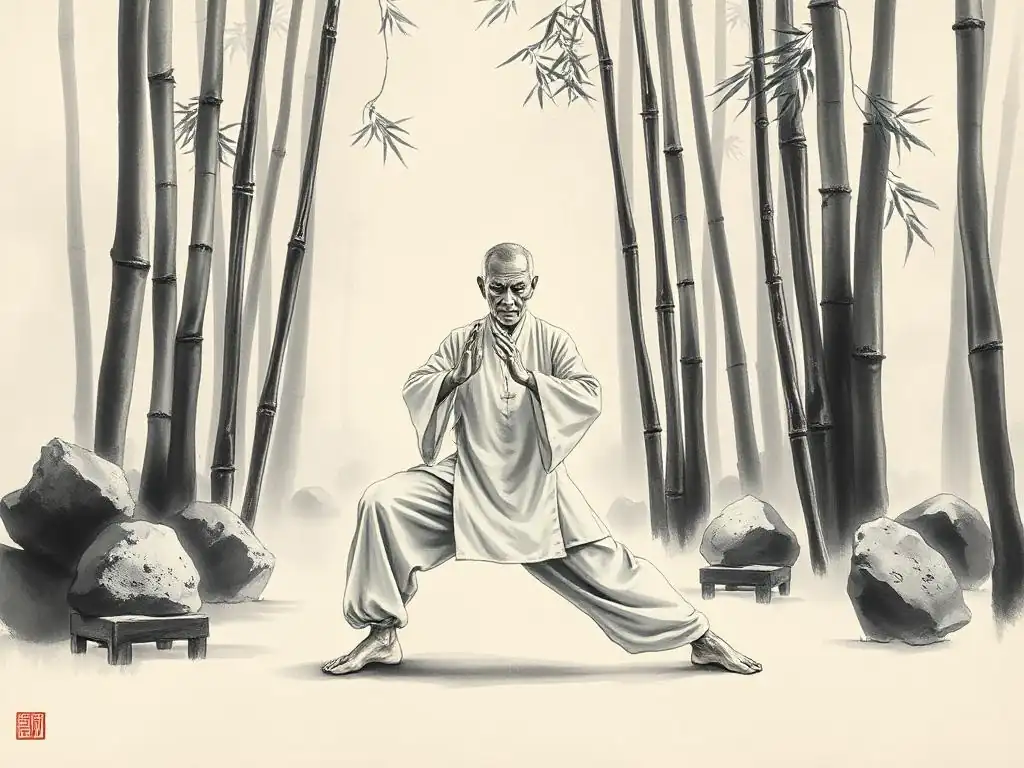
Mastering Tang Ni Bu yields a wide array of benefits, impacting physical health, martial prowess, and internal development. Physically, the low stances and continuous motion build incredible leg strength, endurance, and flexibility in the hips and ankles. The constant balancing act improves proprioception and core stability. Internally, the coordinated movement and focus cultivate qi (vital energy) and improve circulation, leading to better overall health. The meditative aspect reduces stress and improves mental clarity.
Martially, Tang Ni Bu provides the fundamental footwork necessary for all Baguazhang applications. It teaches the practitioner to move off the line of attack, create advantageous angles, and generate power while evading. The ability to constantly shift and spiral makes the Baguazhang fighter a difficult target and allows them to penetrate an opponent's defense with fluid, unpredictable movements. These multifaceted benefits underscore why the Baguazhang continuous stepping technique is considered the cornerstone of the art.
Enhancing Agility, Evasion, and Footwork Speed
One of the most immediate martial benefits of diligent Tang Ni Bu practice is a significant enhancement in agility, evasion, and footwork speed. The constant practice of shifting weight, changing direction on a small radius, and coordinating the entire body's movement trains the practitioner to move with remarkable fluidity and speed. The low stance and grounded steps allow for quick bursts of movement and sudden changes in velocity, making it difficult for an opponent to track or predict the practitioner's next move.
The circular and spiraling nature of the Baguazhang continuous stepping technique is inherently evasive. By constantly moving off the direct line of attack, the practitioner avoids incoming force while simultaneously gaining a positional advantage. This isn't just passive evasion; the movement is active and prepares the body for an immediate counter-attack or transition into a joint lock or throw. Hours spent cultivating the smooth, responsive motion of Tang Ni Bu directly translates into the ability to evade strikes and grappling attempts with surprising ease and speed.
Developing Internal Strength (Nei Jin) and Spiraling Power (Chan Si Jin) through Tang Ni Bu
Tang Ni Bu is a primary method for developing both Nei Jin (Internal Strength) and Chan Si Jin (Spiraling Power). Nei Jin is cultivated through the coordinated use of the skeletal structure, muscles, tendons, and fascia, integrated and powered by the breath and intention ( Yi).
The constant, controlled tension and relaxation required to maintain the low stance and smooth motion of the Baguazhang continuous stepping technique build deep, resilient strength throughout the body, particularly in the legs, hips, and core. This strength is different from external muscular force; it is rooted, connected, and capable of generating significant power with minimal perceived effort.
Chan Si Jin, as discussed earlier, is the spiraling power generated by the coordinated rotation of the body's segments. Tang Ni Bu emphasizes this spiraling movement in every step, from the turning of the feet to the rotation of the kua and torso. This continuous spiraling motion loads the body's connective tissues like springs, allowing for explosive release of power in any direction. The ability to generate Chan Si Jin through the Baguazhang continuous stepping technique makes Baguazhang techniques highly effective, capable of penetrating defenses and disrupting an opponent's structure with relatively little force.
Improving Coordination, Body Awareness, and Whole-Body Connection
The intricate mechanics of Tang Ni Bu demand a high degree of coordination and cultivate exceptional body awareness. Coordinating the Gou Bu and Bai Bu with the movement of the kua, dan tian, torso, and arms, all while maintaining a low stance and smooth, continuous motion, requires intense focus and precise control over different body parts simultaneously. This practice refines proprioception, the body's sense of its position and movement in space, to a very high level.
Through dedicated practice of the Baguazhang continuous stepping technique, practitioners develop a profound sense of whole-body connection. The body learns to move as a single, integrated unit, rather than a collection of separate limbs. Power generated in the legs is efficiently transmitted through the core and out to the hands. This seamless connection is essential for executing Baguazhang forms and applications effectively. The heightened body awareness also allows for greater sensitivity to one's own structure and movement, as well as the ability to sense and respond to an opponent's energy and intentions.
Common Mistakes to Avoid in Mud Stepping Practice
While the concept of walking in a circle seems simple, proper Tang Ni Bu is physically demanding and requires attention to detail. Several common mistakes can hinder progress and even lead to injury. Recognizing and correcting these errors is crucial for effective training and developing the true benefits of the Baguazhang continuous stepping technique. Often, these mistakes stem from trying to use external muscular force instead of cultivating internal connection and relaxation.
A primary pitfall is impatience, rushing through the foundational Tang Ni Bu practice to get to the more visually complex forms. The depth of Baguazhang is built step by slow step on the circle. Another common issue is neglecting the internal principles – focusing only on the external shape of the steps without cultivating the sinking, spiraling, and connection through the kua and dan tian. Avoiding these errors requires mindful practice and often guidance from an experienced instructor.
Over-Striding, Losing Balance, and Breaking the Circle
One of the most frequent mistakes is over-striding, taking steps that are too long or too wide. This leads to several problems: it makes it difficult to maintain a low stance, disrupts the smooth, continuous flow, and compromises balance. Over-striding causes the center of gravity to shift too much, making the practitioner vulnerable and less able to change direction quickly. The steps in Tang Ni Bu should be relatively short and controlled, allowing for seamless transitions.
Losing balance is a direct consequence of improper stepping and poor body alignment. If the weight transfer is jerky, the spine is stiff, or the kua is raised, stability is compromised. The goal is to be constantly balanced while moving, which is different from being balanced while standing still. Breaking the circle, deviating from the intended circular path, indicates a loss of control and often stems from improper Gou Bu and Bai Bu angles or failing to lead the movement from the dan tian. Maintaining the integrity of the circle is fundamental to the Baguazhang continuous stepping technique.
Stiffening the Body, Restricting Movement, and Blocking Energy Flow
A major obstacle in Tang Ni Bu is stiffness. Beginners often tense their muscles, particularly in the legs, back, and shoulders, in an attempt to maintain the low stance or generate power. This muscular tension is counterproductive in internal martial arts. It restricts the free flow of qi and jin, prevents the development of Chan Si Jin, and makes the movement jerky and inefficient. The body should be relaxed, with the joints open and the muscles used efficiently, not rigidly held.
Stiffening the body restricts the natural, fluid movement that is the hallmark of Baguazhang. It prevents the coordinated action of the kua, dan tian, and spine, essential for generating whole-body power. This blockage of energy flow not only hinders martial effectiveness but also diminishes the health benefits associated with Tang Ni Bu practice. Cultivating relaxation and using the body's structure and internal connection for support and power is a key aspect of mastering the Baguazhang continuous stepping technique.
Neglecting the Importance of the Kua, Dan Tian, and Spinal Alignment
Another critical mistake is treating Tang Ni Bu as purely a leg exercise and neglecting the central role of the kua, dan tian, and spinal alignment. If movement is initiated solely from the legs, the body will be disconnected, and the practitioner will fail to develop integrated power and fluidity. The kua might remain locked or raised, preventing the sinking and spiraling motion. The dan tian might be ignored as the center of movement, leading to fragmented body mechanics.
Failing to maintain proper spinal alignment, either slouching or arching the back, disrupts the channel for energy flow and compromises structural integrity. The spine acts as a conduit, and any kinks or stiffness prevent the efficient transmission of force from the legs to the upper body. Correcting this requires constant attention to posture and consciously initiating movement from the dan tian and kua, ensuring that the Baguazhang continuous stepping technique is a whole-body practice, not just leg work.
Advanced Applications of Mud Stepping in Baguazhang Forms and Combat
Once the foundational Tang Ni Bu is established, its principles are integrated into all aspects of Baguazhang practice, from complex forms to dynamic combat applications. The smooth, continuous, and evasive movement cultivated through circle walking becomes the underlying engine for every technique. Advanced practitioners utilize Tang Ni Bu not just to move around but to actively evade, control distance, generate power for strikes and throws, and transition seamlessly between offensive and defensive actions.
In advanced practice, the Baguazhang continuous stepping technique becomes almost subconscious, allowing the practitioner to focus on the interaction with an opponent while the body naturally employs the principles of Tang Ni Bu for optimal positioning and power generation. The ability to change direction and speed instantly, coupled with the rootedness and spiraling power, makes Baguazhang a formidable and highly adaptable martial art in realistic combat scenarios.
Integrating Continuous Stepping into Palm Changes and Linking Movements
Baguazhang forms are characterized by "palm changes," transitions between different hand techniques and postures, often occurring at the end of a circular path or after changing direction. Tang Ni Bu is indispensable for these transitions. As the practitioner walks the circle, the Baguazhang continuous stepping technique maintains fluidity and balance, allowing for seamless shifts into specific palm postures or sequences. The spiraling energy cultivated during the walk is channeled and released through the palm changes.
Linking movements, sequences of steps and techniques, rely entirely on the smooth, continuous flow developed through Tang Ni Bu. There are no static pauses; movement flows into movement, technique into technique. The ability to step, turn, and change posture simultaneously while maintaining rootedness and generating power is a direct result of mastering the Baguazhang continuous stepping technique. Whether executing complex linking forms or simple transitions, the underlying Tang Ni Bu provides the necessary foundation for speed, power, and fluidity.
Using Tang Ni Bu for Evasive Maneuvers, Closing Distance, and Angling
In combat, the Baguazhang continuous stepping technique is primarily used for sophisticated evasive maneuvers and positioning. Instead of blocking or meeting force head-on, the Baguazhang practitioner uses Tang Ni Bu to step offline, circle around the opponent, and avoid incoming attacks. This constant lateral and circular movement makes the practitioner a moving target, frustrating direct linear attacks. For example, a simple sidestep using Tang Ni Bu principles can evade a punch while simultaneously setting up an angle for a counter-attack.
Beyond evasion, Tang Ni Bu is used to close distance rapidly or maintain optimal range. The sudden acceleration and deceleration possible with controlled mud stepping allow the practitioner to dart in and out of range effectively. Crucially, Tang Ni Bu facilitates angling – moving to the opponent's blind spots or weak angles (like their side or rear). By constantly shifting position using the Baguazhang continuous stepping technique, the practitioner can attack from unexpected directions, disrupting the opponent's structure and balance.
Applying Tang Ni Bu in Sparring and Self-Defense Scenarios for Power and Control
In sparring and self-defense, the practical application of Tang Ni Bu becomes evident. The ability to move fluidly and evasively makes grappling attempts difficult for an opponent. A well-timed step using Tang Ni Bu can neutralize a grab or throw attempt by changing the practitioner's angle and structure relative to the attacker. The rootedness developed through the Baguazhang continuous stepping technique provides a solid base for resisting force and executing throws or joint locks.
Furthermore, the power generated through the spiraling motion of Tang Ni Bu can be channeled into strikes, pushes, or throws. A seemingly simple step can suddenly unleash significant force as the body's rotational energy is directed into a technique. The constant movement and angling also allow the practitioner to maintain control over the engagement, dictating the distance and position. Ultimately, applying Tang Ni Bu in a dynamic situation is about using fluid, rooted movement to evade, gain position, generate power, and maintain control.
Drills and Exercises for Developing Mud Stepping Proficiency
Developing proficiency in Tang Ni Bu requires consistent and focused practice using specific drills. These exercises break down the core components of the Baguazhang continuous stepping technique and gradually build the necessary strength, coordination, and internal connection. While solo practice is fundamental, partner drills can help refine sensitivity and responsiveness. Patience is key, as mastery of Tang Ni Bu is a long-term endeavor.
Initial drills focus on the basic mechanics of the step and maintaining the low stance and circular path. As proficiency grows, drills incorporate more complex elements like changes in direction, speed variations, and coordination with upper body movements. The goal is for the Baguazhang continuous stepping technique to become natural and effortless, the body moving correctly without conscious thought.
Circle Walking Drills with Varying Stances and Speeds
The most fundamental drill is simply walking the circle using the basic Tang Ni Bu gait. This is typically done for extended periods, ranging from 15 minutes to an hour or more in a single session. Practitioners focus on maintaining the low stance, smooth weight transfer, proper foot angles ( Gou Bu and Bai Bu), spinal alignment, and initiating movement from the dan tian and kua. The speed is usually slow and consistent initially.
As the practitioner progresses, variations are introduced. This includes walking the circle with different hand postures (e.g., single palm change posture, double palm change posture), varying the height of the stance (lower stances increase difficulty and build strength), and changing speed (alternating between slow, deliberate steps and faster, more evasive ones). Practicing the Baguazhang continuous stepping technique with these variations helps build versatility and endurance.
Incorporating Palm Changes and Spiraling Exercises into Tang Ni Bu Practice
Once the basic step is solid, practitioners begin integrating palm changes and spiraling exercises into their circle walking. This involves executing specific hand techniques or changing hand postures at designated points on the circle (e.g., every half circle or full circle). This drill trains the coordination between the lower body stepping and upper body movements, ensuring that techniques are powered by the whole body moving together via the Baguazhang continuous stepping technique.
Spiraling exercises focus specifically on enhancing Chan Si Jin. This might involve exaggerated torso rotation, specific arm movements that emphasize twisting, or focusing on the inward/outward rotation of the legs and kua with each step. These drills help the practitioner feel and control the spiraling energy throughout the body, connecting it directly to the Tang Ni Bu movement. For instance, a drill might involve keeping the palms fixed in position while the body rotates around them using stepping, highlighting the independent motion generated by the footwork.
Partner Drills to Enhance Footwork, Coordination, and Sensitivity
Partner drills add another layer of refinement to Tang Ni Bu. Simple exercises might involve one partner walking the circle while the other gently pushes or applies light pressure to test their balance and rooting, requiring the walker to adjust their Baguazhang continuous stepping technique without breaking structure. More advanced drills involve one partner providing a light, continuous contact (e.g., on the arm or shoulder) while the other walks, practicing maintaining connection and using the stepping to yield or redirect force.
Other partner drills might focus on evasive footwork, where one partner attempts simple, linear movements (like a straight push or step) while the other uses Tang Ni Bu to step offline and evade, without using hands to block. These drills develop responsiveness and the ability to apply the principles of the Baguazhang continuous stepping technique in a dynamic, interactive setting. They help transition the solo practice into practical application by adding external stimulus.
The Historical Context of Mud Stepping in Baguazhang
Understanding the historical context of Tang Ni Bu provides insight into its philosophical underpinnings and development. Baguazhang emerged in 19th-century China, attributed primarily to Dong Haichuan. While the exact origins of Tang Ni Bu are debated, it is widely believed to have been influenced by existing practices, notably Daoist circle walking meditation and potentially other martial arts footwork. This historical lineage links the physical practice of the Baguazhang continuous stepping technique to broader traditions of health cultivation and spiritual practice.
The development of Tang Ni Bu was not instantaneous but evolved over time through the practice and refinement of Dong Haichuan and his students. The specific mechanics, emphasis on internal principles, and integration with palm changes were likely shaped by Dong's synthesis of different skills and his unique understanding of body mechanics and energy flow. Tracing this history helps appreciate the depth and sophistication of the Baguazhang continuous stepping technique as a comprehensive training method.
The Influence of Daoist Circle Walking and Internal Alchemy on Mud Stepping
Daoist practitioners have long used various forms of walking meditation, often in circles or specific patterns, as a method for cultivating qi, promoting health, and achieving spiritual insight. These practices were often linked to internal alchemy ( Neidan), the process of cultivating and transforming energy within the body. The physical act of walking in a circle, combined with specific breathing techniques and mental focus, was believed to harmonize the body's energy and connect it with the natural cycles of the universe.
The strong resemblance between these Daoist walking practices and Baguazhang's circle walking with Tang Ni Bu suggests a significant influence. While Baguazhang is fundamentally a martial art, its emphasis on internal development, qi cultivation, and the philosophical principles of the I Ching (Book of Changes) aligns strongly with Daoist traditions. It is likely that Dong Haichuan adapted existing Daoist walking methods, integrating them with martial principles to create the Baguazhang continuous stepping technique as a unique system for developing both internal power and combat effectiveness.
Dong Haichuan and His Contributions to the Development of Tang Ni Bu
Dong Haichuan (c. 1797–1882) is universally recognized as the founder of Baguazhang. His background is somewhat legendary, involving travel, martial arts training in various regions, and possibly connections to Daoist mountains. While he likely drew upon existing martial and Daoist practices, his genius lay in synthesizing these elements into the distinct art of Baguazhang, centered around circle walking and palm changes.
Dong Haichuan's primary contribution was establishing the Baguazhang continuous stepping technique ( Tang Ni Bu) as the core training method and integrating it inextricably with his unique palm change system. He systematized the principles of low, continuous stepping, emphasizing the coordinated use of the kua, dan tian, and spine, and linking this movement directly to the generation of spiraling power for martial applications. His teachings, passed down through numerous prominent students, solidified Tang Ni Bu as the essential foundation of all Baguazhang styles that exist today, ensuring its enduring legacy.
Conclusion: The Enduring Legacy of Mud Stepping
Tang Ni Bu, or Mud Stepping, is far more than just a way to move in Baguazhang; it is the heart and soul of the art's training methodology. This continuous stepping technique cultivates the physical foundation of rootedness, balance, and agility, while simultaneously developing the internal power ( Nei Jin) and spiraling energy ( Chan Si Jin) that make Baguazhang so unique and effective.
From its possible roots in ancient Daoist practices to its systematic development by Dong Haichuan, Tang Ni Bu has remained the indispensable core of Baguazhang, essential for practitioners seeking proficiency in its martial applications or its health-cultivating benefits.
Mastering the subtle mechanics and internal principles of the Baguazhang continuous stepping technique requires dedication and patience, but the rewards are significant. Improved body mechanics, enhanced coordination, deep internal strength, and the ability to move with remarkable fluidity and power are all direct results of diligent Tang Ni Bu practice. As the foundation upon which all Baguazhang forms and applications are built, Mud Stepping ensures that the practitioner is always rooted, connected, and capable of dynamic, whole-body action, embodying the continuous change and circular flow that define this extraordinary martial art.
Mastering the Art of Continuous Stepping for Baguazhang Proficiency and Health
Achieving proficiency in Baguazhang hinges directly on the mastery of its continuous stepping method, Tang Ni Bu. This foundational practice builds the unique leg strength, balance, and coordination required for the art's dynamic movements. Hours spent walking the circle, focusing on the low stance, smooth weight transfer, and precise footwork, translate into the ability to execute complex palm changes and evasive maneuvers with power and fluidity. Without a solid grounding in Tang Ni Bu, advanced Baguazhang techniques lose their effectiveness and internal coherence.
Beyond martial skill, consistent practice of the Baguazhang continuous stepping technique offers significant health benefits. The low impact, continuous movement improves cardiovascular health, strengthens the lower body, and enhances flexibility in the joints, particularly the hips and ankles. The coordinated movement with breath and intention ( Yi) cultivates qi, improves circulation, and reduces stress. Many practitioners find that the meditative aspect of circle walking fosters mental clarity and emotional balance, making Tang Ni Bu a holistic practice for both physical vitality and internal well-being.
Resources for Further Study of Baguazhang Footwork and Internal Principles
For those seeking to deepen their understanding and practice of the Baguazhang continuous stepping technique, numerous resources are available, ranging from instructional books and videos to, most importantly, qualified instructors. Studying the principles of Tang Ni Bu requires more than just observing the external form; it necessitates understanding the underlying internal mechanics and energetic concepts. Seeking guidance from experienced teachers is invaluable for receiving personalized feedback and correcting subtle errors in posture, weight transfer, and internal connection.
Exploring texts on Baguazhang history, philosophy, and training theory can provide valuable context for the physical practice. Understanding the relationship between Tang Ni Bu and concepts like Chan Si Jin, Nei Jin, the dan tian, and the kua enriches the training experience. While no single resource can replace diligent practice, a combination of dedicated personal training, expert instruction, and theoretical study offers the most comprehensive path to mastering the Baguazhang continuous stepping technique and unlocking the full potential of this profound martial art.
Frequently Asked Questions
What is the Zou Zhang in Baguazhang?
The Zou Zhang, often translated as "walking palm" or "continuous stepping," is a fundamental movement method in Baguazhang. It involves a circular walking pattern and is crucial for generating power and maneuvering. This dynamic footwork is what sets Baguazhang apart.
Why is the continuous stepping technique so important in Baguazhang?
Continuous stepping allows for constant motion and evasiveness, making it difficult for opponents to target you. It also facilitates the generation of spiral force that is characteristic of Baguazhang techniques. This is a key element of the style.
How does the circular walking pattern benefit a practitioner in combat?
The circular pattern allows for constant angle changes and makes you a difficult target to predict. It also enables you to unbalance opponents and control the engagement distance. This creates tactical advantages.
What are some common challenges beginners face when learning the Zou Zhang?
Beginners often struggle with maintaining a consistent circle, coordinating their upper body movements with their footwork, and keeping their center of gravity low. Practice and patience are essential for improvement.
Does the Zou Zhang have variations, and how do they impact its application?
Yes, there are variations in the size of the circle, the stepping pattern, and the upper body postures. These variations allow for adaptability to different combat scenarios and emphasize different aspects of power generation and movement efficiency. Each variation is a tool for specific circumstances.
Final Reflection: Embracing the Unfolding Path
The intricate dance of Baguazhang, particularly its continuous stepping technique, is more than just a martial art; it's a metaphor for life's journey. As we've explored the nuances of Zou Zhang, its circular movements and constant adaptation, we see a reflection of the ever-changing landscape we navigate daily. Understanding this technique offers not only physical prowess but also a deeper understanding of adaptability and resilience in the face of life's challenges.
The continuous stepping method has profoundly influenced not only martial arts but also our understanding of movement and flow. Its emphasis on constant motion and redirection resonates deeply with the need for flexibility and adaptability in our modern world. The journey of a thousand miles begins with a single step.
This ancient proverb perfectly encapsulates the essence of Zou Zhang, reminding us that even the most complex endeavors are built upon consistent, deliberate action.
Now, as you contemplate the principles of Baguazhang's continuous stepping technique, consider how you can apply its lessons to your own life. Embrace the fluidity of change, adapt to the unexpected, and remember that every step, no matter how small, contributes to the unfolding path of your own unique journey. Let the spirit of Zou Zhang inspire you to move forward with grace, strength, and unwavering determination.
Unleash Your Inner Circle Walker!
Thank you for diving into the world of Zou Zhang! We hope you found the Continuous Stepping Method of Baguazhang as fascinating as we do. Now it's time to put that knowledge into action.
- Start today and dedicate 15 minutes to practicing the basic Zou Zhang stepping pattern. Feel the connection to the earth with each step!
- Research the lineage of your favorite Baguazhang teacher and discover how their teachings connect to the Zou Zhang foundation.
- Share your experience with Zou Zhang on social media using #MartialArtsMastery and inspire others to explore its power.
What subtle shift in your movement did you discover during your first Zou Zhang practice?