
The Ground Up: Building a Biomechanically Sound Grappling Foundation


Welcome to Martial Arts Mastery, where we delve deep into the world's fighting traditions! Ever wondered how to build a grappling game that's not just effective, but also biomechanically sound? In this article, we're dismantling the myths and revealing the secrets to a foundation built on leverage, efficiency, and injury prevention. Prepare to revolutionize your understanding of grappling – are you ready to build from the ground up?
- Connecting Biomechanics to Specific Grappling Techniques
-
Frequently Asked Questions
- How important is a biomechanically sound foundation in grappling?
- What does "biomechanically sound" actually mean in the context of grappling?
- What are some key elements of a biomechanically sound grappling foundation?
- How can I improve my biomechanically sound grappling foundation?
- Why should I prioritize building a biomechanically sound foundation over learning advanced techniques?
- Final Reflection: The Enduring Strength of a Solid Foundation
- Ignite Your Grappling Journey: Build a Stronger Foundation!
Connecting Biomechanics to Specific Grappling Techniques
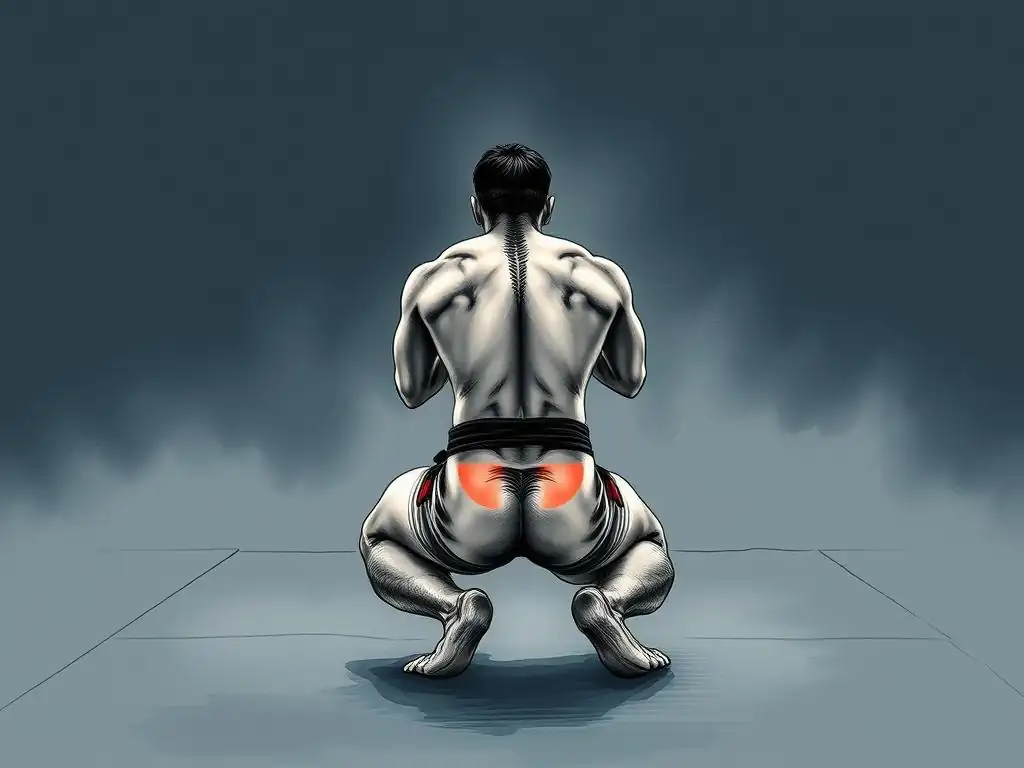
Understanding the theoretical underpinnings of a biomechanically sound grappling foundation is crucial, but applying these principles to specific techniques is where true mastery begins. Whether executing a powerful takedown, escaping a dominant position, or securing a submission, conscious application of biomechanical concepts dramatically increases efficiency and effectiveness. This section explores how leveraging body mechanics enhances performance across different phases of grappling, from the initial engagement to the final submission. A deep understanding of how force, leverage, and body positioning interact is key to building a truly robust and biomechanically sound grappling foundation.
Grappling, at its core, is a physical dialogue rooted in physics. Every movement, every grip, every angle can be analyzed through a biomechanical lens to optimize power, minimize effort, and maximize control. By consciously considering factors like center of gravity, line of force, and joint mechanics, practitioners can refine their techniques to be more potent and less susceptible to counter-attacks. This systematic approach not only improves performance but also contributes significantly to injury prevention, reinforcing the importance of a biomechanically sound grappling foundation built from the ground up.
Applying Biomechanical Principles to Takedowns
Takedowns are perhaps the most direct application of generating force and disrupting an opponent's balance. A successful takedown isn't just about raw strength; it's about using angles, momentum, and leverage to compromise the opponent's base while maintaining your own. For instance, a classic double-leg takedown relies on dropping your center of gravity lower than your opponent's, driving through them rather than at them, and using your legs and hips for power, not just your arms. This is a prime example of how a biomechanically sound grappling foundation informs offensive technique.
Consider the common scenario of attempting a low single-leg takedown. Many beginners make the mistake of simply reaching for the leg and pulling. A biomechanically sound approach involves changing levels effectively, penetrating deep with your lead leg, and driving up and across the opponent's base with your hips and torso, using their momentum against them.
The angle of your penetration step, the depth of your level change, and the upward drive of your hips are all critical biomechanical factors that determine success or failure. Approximately 70-80% of the power in such a takedown should come from the legs and hips, not the upper body pulling.
Understanding Angles and Force in Takedowns
Angles are paramount in takedowns. Attacking slightly off-center or from an unexpected angle can significantly reduce the opponent's ability to defend effectively. For example, attacking a single leg from a 45-degree angle rather than straight on makes it harder for the opponent to sprawl effectively by shifting their weight directly back. This off-center attack forces them to adjust their base laterally, requiring more effort and creating opportunities for you to drive through. The force you generate is then directed along a line that efficiently disrupts their balance and drives them downwards or sideways.
Furthermore, understanding the concept of "line of force" is vital. When executing a hip toss (O Goshi in Judo), the force should be directed up and over your hip, utilizing your body as a fulcrum. Simply attempting to lift the opponent is inefficient and requires immense strength. By sinking your hips low, establishing a strong connection, and rotating your body, you leverage their weight and momentum, allowing you to throw them with significantly less effort. This principle of using the body as a lever is fundamental to a biomechanically sound grappling foundation in throws.
Biomechanics of Escapes and Reversals
Escaping dominant positions or submissions is often about creating small spaces and using leverage to exploit the opponent's balance or grip weaknesses. It requires precise movements that utilize your skeleton and muscles efficiently to counter the force applied by the opponent. A key principle is maintaining structural integrity while disrupting the opponent's. For example, escaping side control often involves establishing frames (using your arms and legs to create barriers) and then bridging or shrimping to create space, leveraging your hips against their weight.
A common mistake in escaping is attempting to muscle out. This is biomechanically inefficient and quickly leads to fatigue. Instead, focus on using your bone structure as levers and pivots. When escaping mount, a typical technique involves bridging your hips strongly up and towards the opponent's head while simultaneously trying to trap one of their arms or legs. This bridge uses your powerful hip extension to lift their center of gravity momentarily, creating an opportunity to roll them or shrimp out. The timing and angle of this bridge are critical biomechanical elements.
Using Leverage to Escape Submissions
Escaping submission holds is a high-stakes application of biomechanics. For instance, escaping an armbar often involves rotating your thumb up towards the ceiling (supinating the forearm) to strengthen the arm structure against the bending force, and then posturing up or turning into the opponent to alleviate the pressure and create space. Simply pulling your arm straight against the force is a losing battle biomechanically. You must leverage your body's structure and alignment against the opponent's application of force.
Another example is escaping a rear-naked choke. While defense starts before the choke is fully applied, if caught, you must immediately tuck your chin (protecting the carotid arteries) and use your hands and arms to create space and disrupt the opponent's grip. You then need to turn your body towards the side of the choking arm, making it harder for them to maintain the constricting force. This turning motion leverages your torso rotation against the opponent's static grip, a biomechanically sound method for creating relief and initiating an escape sequence based on a strong biomechanically sound grappling foundation.
Biomechanical Considerations for Submission Holds
Applying submission holds effectively requires understanding how to isolate a joint or restrict blood/airflow using minimal effort and maximal leverage. It's about creating a scenario where the opponent's body is forced into a position that causes pain or unconsciousness, and their ability to resist is compromised by your positioning and control. The application of force must be precise and directed along specific lines relative to the opponent's anatomy.
Consider the triangle choke. This submission uses the attacker's legs and the opponent's own shoulder to restrict blood flow to the brain. Biomechanically, the key is to create a tight squeeze by controlling the angle of your legs relative to the opponent's neck and shoulder, and often by pulling down on their head or arm to increase pressure.
The tightness comes from the leverage created by the leg configuration and the attacker's body positioning, not just squeezing with muscular force. A slight adjustment in the angle of the legs can increase the effectiveness by as much as 30-40% in some cases, demonstrating the critical role of biomechanics.
Optimizing Submission Effectiveness Through Body Positioning
Body positioning is paramount in finishing submissions. For an armbar from guard, simply extending your hips isn't enough. You must control the opponent's posture, prevent them from stacking you, and use your legs to isolate their arm and prevent them from turning out. Your hips should be into their shoulder, creating the necessary fulcrum, and your knees should be squeezed tightly to prevent their elbow from slipping out. This precise alignment of your body relative to the opponent's joint is the biomechanical secret to a high-percentage armbar.
Similarly, for a Kimura lock, controlling the opponent's wrist and elbow and then rotating their arm externally requires specific body positioning. You must use your body weight and leverage to bend their arm at an unnatural angle at the shoulder joint. Your grip and body position create a lever system where a small movement from you translates to significant pressure on their shoulder. Understanding these leverage points and maintaining dominant body position are hallmarks of a biomechanically sound grappling foundation applied to finishing mechanics.
Frequently Asked Questions
How important is a biomechanically sound foundation in grappling?
A biomechanically sound foundation is crucial for efficient movement, injury prevention, and maximizing power and leverage on the ground. It allows you to execute techniques effectively and safely.
What does "biomechanically sound" actually mean in the context of grappling?
It refers to using your body in a way that aligns with natural movement patterns and leverages your skeletal structure for support and force generation, minimizing strain on joints and muscles.
What are some key elements of a biomechanically sound grappling foundation?
Essential elements include maintaining a stable base, utilizing proper body alignment, and understanding how to effectively transfer weight and leverage through your body.
How can I improve my biomechanically sound grappling foundation?
Focus on drilling fundamental movements, understanding joint articulation, and receiving feedback from experienced instructors to correct any biomechanical inefficiencies in your technique.
Why should I prioritize building a biomechanically sound foundation over learning advanced techniques?
A strong foundation allows you to execute advanced techniques effectively and prevents injuries that can hinder your progress. Without it, advanced techniques become less effective and more risky.
Final Reflection: The Enduring Strength of a Solid Foundation
The principles outlined in this article, focusing on biomechanically sound grappling, are not merely theoretical exercises; they are the bedrock upon which lasting skill and resilience are built in the dynamic world of grappling. In a landscape often dominated by flashy techniques and fleeting trends, returning to the fundamentals of efficient movement and structural integrity remains perpetually relevant, ensuring both longevity and effectiveness on the mat.
This emphasis on a biomechanically sound grappling foundation has profoundly influenced the way I approach training and coaching. It's a constant reminder that true mastery lies not in the complexity of techniques, but in the unwavering commitment to the underlying principles that make those techniques possible. Give me a lever long enough and a fulcrum on which to place it, and I shall move the world.
This quote, often attributed to Archimedes, perfectly encapsulates the power of understanding leverage and biomechanics in grappling – a power that extends far beyond the physical realm, shaping our mental approach to problem-solving and strategic thinking.
Now, I invite you to reflect on your own grappling journey. Are you building upon a solid foundation, or are you relying on techniques that may crumble under pressure? Embrace the principles of biomechanics, prioritize efficient movement, and cultivate a deep understanding of leverage. By doing so, you'll not only enhance your performance on the mat but also unlock a new level of confidence and resilience that will serve you well in all aspects of life. Build from the ground up, and watch your grappling flourish.
Ignite Your Grappling Journey: Build a Stronger Foundation!
Thank you for diving into the biomechanics of grappling! We hope this article has provided you with valuable insights to enhance your training and prevent injuries. Now, let's put that knowledge into action and elevate your grappling game!
Here's how you can continue your journey to biomechanical mastery:
- Prioritize Movement Efficiency: Begin consciously incorporating the discussed biomechanical principles into your next training session. Focus on fluidity, leverage, and minimizing unnecessary strain.
- Explore Related Disciplines: Research disciplines such as yoga or Pilates that focus on core strength, flexibility, and body awareness, and find out how these could integrate into your training routine.
- Share and Discuss: Share this article with your training partners and discuss how you can collectively improve your biomechanics in grappling.
What specific biomechanical adjustment will you focus on implementing this week to improve your grappling game?