
Chen Tai Chi's Silk Reeling: More Than Just Circles – The Essence of Connected Power

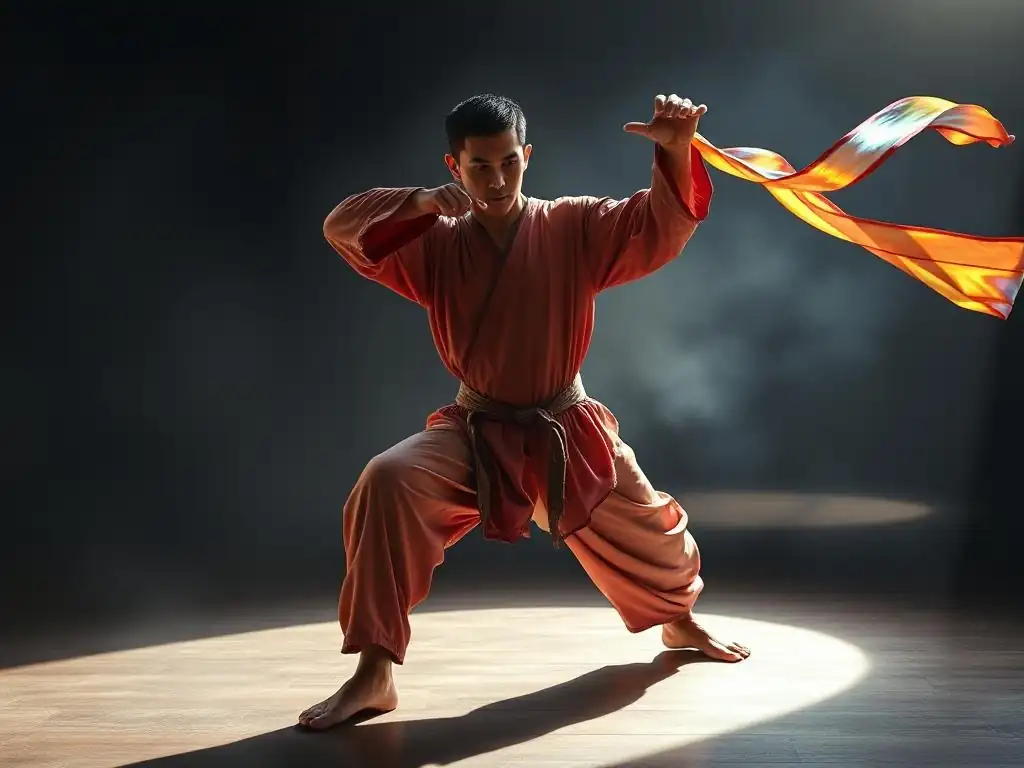
Welcome to Martial Arts Mastery, your gateway to unlocking the secrets of combat traditions worldwide. Are you ready to delve deeper than just the surface movements? This week, we explore the profound depths of Chen Tai Chi, focusing on the seemingly simple, yet incredibly potent, slow movement practice. Prepare to unravel the mysteries of "silk reeling" and discover how these deliberate motions cultivate connected power and inner strength. Intrigued? Let's begin your journey into the heart of Chen Tai Chi.
- Understanding Chen Style Tai Chi Silk Reeling: Introduction
- What is Chen Tai Chi Silk Reeling (Chan Si Gong)?
- The Core Principles of Chen Tai Chi Silk Reeling
- Benefits of Practicing Chen Style Silk Reeling Exercises
- Chen Tai Chi Silk Reeling Forms and Drills
- Common Mistakes in Chen Tai Chi Silk Reeling Practice and How to Avoid Them
- Linking Chen Tai Chi Silk Reeling to Fajin (Explosive Release of Power)
- Silk Reeling: A Pathway to Deeper Understanding of Chen Tai Chi
-
Frequently Asked Questions
- What is Silk Reeling in Chen Tai Chi and why is it important?
- How does the slow movement of Chen Tai Chi enhance self-defense skills?
- What are some key historical influences on Chen Tai Chi's development?
- Is Chen Tai Chi primarily focused on health benefits, or does it have practical combat applications?
- Where can I find resources for learning more about Chen Tai Chi's slow movement and Silk Reeling?
- Final Reflection: The Enduring Dance of Connected Power
- Unlock Your Tai Chi Potential: Embrace the Silk Reeling!
Understanding Chen Style Tai Chi Silk Reeling: Introduction
Chen Style Tai Chi Chuan, one of the oldest forms of Tai Chi, is renowned for its complex movements, alternating between slow, deliberate motions and sudden bursts of power (fajin). At the heart of its unique methodology lies Chan Si Gong, or Silk Reeling Practice. This foundational training method is not merely a set of exercises but the very language of movement that defines the style, teaching practitioners how to generate, guide, and control internal energy ( Qi) and physical force ( Jin) through continuous, spiraling motions. It's the invisible thread that weaves together the physical form, internal energy, and martial application.
The term "silk reeling" itself provides a vivid metaphor: the body moves with the smooth, continuous tension and yielding of drawing silk from a cocoon. This implies a constant, subtle tension and release, an unbroken flow of movement that originates from the core and extends to the extremities. Mastering Chan Si Gong is considered indispensable for unlocking the deeper levels of skill in Chen Tai Chi, enabling practitioners to move with unified body power, cultivate sensitivity, and develop the ability to issue explosive force without muscular strain.
The Significance of Silk Reeling in Chen Tai Chi Training
Silk Reeling is not just one component among many in Chen Tai Chi; it is the fundamental principle that underpins all movements within the forms, push hands, and applications. Without a solid understanding and practical mastery of Chan Si Gong, a practitioner's movements remain fragmented, lacking the characteristic unified, spiraling power of the style. It teaches the body how to move as a single, integrated unit, ensuring that force is generated from the ground, directed by the waist, and expressed through the limbs. This integration is critical for both health benefits and martial effectiveness.
Historically, mastering Silk Reeling was the primary focus for students in the early stages of learning Chen Tai Chi, often taking years of dedicated practice before progressing significantly in forms or applications. This emphasis highlights its profound importance; it builds the necessary internal connections and external coordination required for all subsequent training. It's the 'grammar' of Chen Tai Chi movement, without which fluent expression and true power remain elusive. The slow, repetitive nature of many Chan Si Gong drills allows for deep internal awareness and correction of subtle postural and movement errors.
Beyond Aesthetics: Unveiling the Power of Chen Tai Chi Slow Movement
While the slow, circular nature of Chen Tai Chi movements might appear purely aesthetic or geared solely towards relaxation, the underlying principles, particularly those embedded in Silk Reeling, reveal a profound method for developing internal power and martial capability. The emphasis on Chen Tai Chi slow movement is deliberate; it allows the practitioner to meticulously observe and coordinate the intricate connections throughout the body, ensuring that every part moves in harmony with the whole. This slow pace facilitates the development of Chan Si Jin – the spiraling, coiling force.
This deliberate pace is crucial for cultivating sensitivity and awareness of the flow of Qi and Jin. By moving slowly, practitioners can feel blockages, imbalances, and disconnections in their movement patterns. Over time, this practice refines the ability to maintain continuous, unbroken energy flow, which is the source of the style's characteristic power. It teaches the body to store and release energy efficiently, transforming seemingly gentle, circular motions into potent, unified force, far exceeding what muscular strength alone can produce.
What is Chen Tai Chi Silk Reeling (Chan Si Gong)?
Chan Si Gong translates directly from Chinese as "Silk Reeling Work" or "Silk Reeling Skill." It refers to a set of foundational exercises and principles within Chen Style Tai Chi Chuan that train the body to move in continuous, spiraling patterns. These spirals are not superficial; they represent the internal winding and unwinding of the body's structure – the joints, muscles, tendons, and fascia – all working in concert. This practice cultivates a specific type of internal strength and flexibility, enabling the generation of Chan Si Jin, the characteristic spiraling force.
The essence of Chan Si Gong lies in the concept of integrated, cyclical movement. Every motion involves simultaneous coiling and uncoiling, opening and closing, expanding and contracting. This constant interplay of opposing forces, guided by the intention and rooted in the lower body, creates a dynamic tension that can be smoothly transferred throughout the entire structure. It is the engine that drives all subsequent Chen Tai Chi movements, providing the framework for unified power and sensitive yielding.
Defining Silk Reeling: A Spiral Force
At its core, Silk Reeling defines Chan Si Jin – a spiraling force that travels throughout the body along specific pathways. This force is not linear or isolated; it is a continuous, three-dimensional spiral generated through the coordinated movement of the entire body, originating from the legs and waist. Think of twisting a rope or wringing out a towel; the force comes from the combined action along the length of the object, not just one point. Similarly, Chan Si Jin involves the coiling and uncoiling of the torso, limbs, and even the joints, creating a unified, powerful rotation.
This spiraling motion allows the practitioner to generate significant force without relying on brute muscular strength. By efficiently transferring energy through the body's structure along these spiral pathways, force can be amplified and directed precisely. This principle is evident in nature, from the growth of vines to the structure of seashells, and is applied in Chen Tai Chi to create movements that are both powerful and yielding, capable of neutralizing incoming force while simultaneously preparing to issue power. The subtle yet constant engagement of the muscles and connective tissues along these spirals builds resilience and internal strength over time.
The Purpose of Silk Reeling Exercises in Chen Tai Chi
The primary purpose of Silk Reeling exercises is to train the body and mind to move according to the core principles of Chen Tai Chi: whole-body connection, rootedness, central equilibrium, and the generation of spiraling force ( Chan Si Jin). These repetitive, often slow drills isolate specific types of spiraling motions found within the larger forms, allowing practitioners to focus on the intricate details of coordination and energy flow without the complexity of a full form. They are the fundamental building blocks upon which all other skills are built.
Beyond learning the mechanics of spiraling movement, Chan Si Gong aims to open and connect the body's internal pathways, improving circulation of blood and Qi. It trains the fascia and connective tissues to work together, creating a resilient and integrated structure. Furthermore, the focused, repetitive nature of the drills cultivates mental concentration and body awareness, essential qualities for advanced Tai Chi practice. It is through dedicated Silk Reeling practice that the practitioner learns to unify mind, body, and energy, transforming simple movements into expressions of integrated power.
The Core Principles of Chen Tai Chi Silk Reeling
Mastering Silk Reeling requires adherence to several core principles that govern the body's movement and energy flow. These principles are interconnected and must be applied simultaneously for the practice to be effective. They provide the framework for understanding and executing the spiraling motions correctly, ensuring that the body moves as a single, coordinated unit. Deviation from these principles leads to fragmented movement and diminished internal development.
These principles are not abstract concepts but practical guidelines for how the body should move and feel during practice. They demand constant attention to detail, internal sensation, and structural alignment. Developing sensitivity to these principles is a lifelong journey, requiring patience, persistence, and consistent practice, particularly focusing on the quality of the movement during the Chen Tai Chi slow movement segments of practice.
Whole-Body Connection: Integrating Movement from Head to Toe
A fundamental principle of Silk Reeling is that movement must originate from the ground, be guided by the waist ( Dan Tian), and flow continuously through the entire body to the extremities. There are no isolated movements; the hand does not move independently of the arm, torso, or legs. Instead, every action is a result of the coordinated effort of the entire structure. This principle ensures that the body's power is unified and rooted, rather than fragmented and weak.
This whole-body connection is cultivated by ensuring that all joints are relaxed and open, allowing energy and force to flow freely. The spine acts as the central axis, and the movements of the limbs are driven by the rotation and shifting of the waist and hips. When executed correctly, even a seemingly small movement of the hand involves subtle adjustments throughout the entire body, creating a powerful, connected chain reaction. This integrated motion is what allows a practitioner to generate significant force or neutralize powerful incoming forces with minimal effort.
Spiral Energy: The Dynamics of Chan Si Jin
Chan Si Jin is the unique spiraling force that defines Chen Tai Chi and is the direct product of correct Silk Reeling practice. This force is generated through the coordinated winding and unwinding of the body's structure, creating torque and tension that can be directed outwards. It is not simply circular motion but a three-dimensional spiral that engages muscles, tendons, and fascia along specific pathways, often described as moving from the large joints (shoulders, hips) to the smaller ones (elbows, knees, wrists, ankles).
The dynamics of Chan Si Jin involve the constant interplay of expansion and contraction, opening and closing. As one part of the body coils inwards, another part simultaneously unwinds outwards, maintaining a continuous, dynamic tension. This principle allows for the efficient storage and release of energy, enabling the sudden bursts of power ( Fajin) characteristic of Chen Style. Understanding and feeling this spiraling energy is key to moving with the characteristic fluidity and power of the style.
Intent and Awareness: Guiding the Qi Flow in Chen Tai Chi Practice
In Chen Tai Chi, physical movement is inseparable from mental intent ( Yi) and awareness. The mind leads the Qi, and the Qi leads the body. During Silk Reeling practice, it is not enough to perform the physical motions; the practitioner must cultivate a keen internal awareness of the movement of Qi and the structural connections within the body. The intention should guide the spiraling energy, ensuring it flows smoothly and continuously without blockages.
This principle emphasizes the internal aspect of Tai Chi training. By focusing the mind and cultivating awareness, practitioners can enhance the flow of Qi, deepen their connection to their center ( Dan Tian), and refine the coordination of their movements. It is through focused intent that the seemingly simple physical movements of Silk Reeling become a powerful method for cultivating internal energy and developing true skill. This internal focus is particularly important during the slow, deliberate phases of Chen Tai Chi slow movement practice.
Harmony of Yin and Yang: Balancing Opposing Forces
Silk Reeling embodies the fundamental Tai Chi principle of Yin and Yang – the balance and interplay of opposing forces. Every movement involves both Yin and Yang aspects: coiling and uncoiling, opening and closing, yielding and issuing, substantial and insubstantial. These opposing forces are not separate but are dynamically integrated and constantly transforming into one another. For example, as one arm coils (Yin), the other might be unwinding (Yang), or a movement might start with yielding (Yin) and transition seamlessly into issuing force (Yang).
Maintaining the harmony of Yin and Yang in Silk Reeling ensures that movements are balanced, fluid, and powerful. It prevents stiffness (too much Yang) or collapse (too much Yin). The continuous, cyclical nature of the spiraling motion naturally reflects this principle, with each phase transitioning smoothly into its opposite. Cultivating sensitivity to the balance of Yin and Yang is crucial for developing the ability to neutralize incoming force and generate responsive power.
Benefits of Practicing Chen Style Silk Reeling Exercises
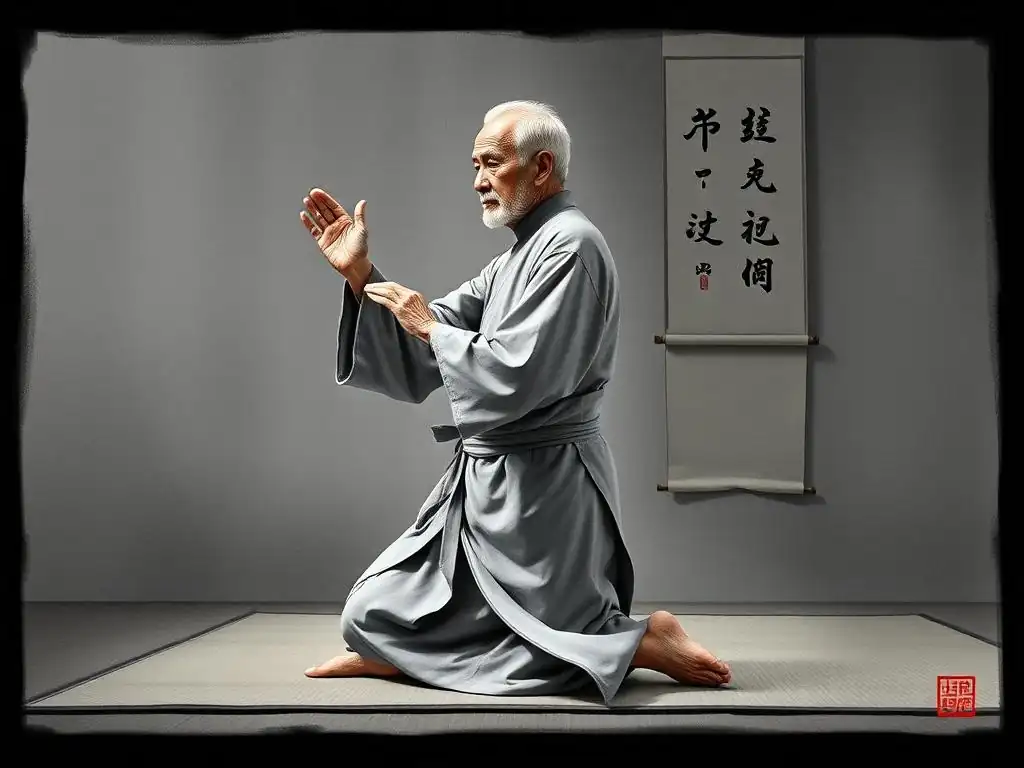
Regular and correct practice of Chen Style Silk Reeling exercises yields a wide range of physical, energetic, and internal benefits. These benefits accrue over time, transforming the practitioner's body mechanics, internal state, and overall martial capability. The repetitive, focused nature of the drills provides a powerful method for self-cultivation.
The cumulative effect of consistent Chan Si Gong practice is profound. It builds a strong foundation for all other aspects of Chen Tai Chi training, making forms practice more meaningful, push hands more effective, and martial applications more potent. It is often said that Chan Si Gong is 70-80% of Chen Tai Chi training, a testament to its foundational importance.
Improved Body Mechanics and Coordination
Silk Reeling practice meticulously trains the body to move in a coordinated, integrated manner. The emphasis on whole-body connection and the precise sequencing of movements through the spiral pathways correct common postural flaws and inefficient movement patterns. Practitioners develop a deeper understanding of how their body parts relate to each other and how to move from their center.
This leads to significantly improved coordination, balance, and proprioception (the body's awareness of its position in space). The continuous, fluid motions enhance joint mobility and flexibility while simultaneously strengthening the muscles and connective tissues involved in the spiraling action. Over time, the body learns to move with greater efficiency, power, and grace.
Enhanced Qi Circulation and Internal Energy
The continuous, undulating, and spiraling movements of Silk Reeling act like a gentle internal massage, promoting the smooth flow of Qi and blood throughout the body. The relaxation and opening of the joints, combined with the focused intention, help to clear blockages and stagnation, leading to improved energy levels and overall vitality.
By cultivating awareness of the Qi flow and guiding it with the mind, practitioners learn to gather, circulate, and store internal energy in the Dan Tian. This enhanced Qi circulation not only contributes to better health and well-being but also provides the energetic foundation for generating internal power ( Nei Gong) and explosive force ( Fajin). The Chen Tai Chi slow movement allows for greater internal focus, aiding this process.
Increased Flexibility and Range of Motion
While not solely focused on stretching, the continuous, circular, and spiraling motions of Silk Reeling naturally improve the flexibility and range of motion in the joints, particularly the shoulders, elbows, wrists, hips, knees, and ankles. The exercises encourage movement through the full, natural range of motion of these joints, guided by the principles of relaxation and rootedness.
The gentle tension and release inherent in the "silk reeling" metaphor help to lengthen and strengthen the muscles and connective tissues ( fascia), improving their elasticity and resilience. This increased flexibility, combined with core stability, allows for greater freedom and power in movement while simultaneously reducing the risk of injury.
Development of Rooting and Stability
Silk Reeling exercises are deeply rooted in the legs and waist. The spiraling movements originate from the ground, with the feet firmly connected to the earth and the weight centered and balanced. This constant engagement of the lower body, combined with the principle of maintaining central equilibrium, significantly enhances rooting and stability.
Practitioners learn to sink their weight, relax their upper body, and use the connection to the ground to generate power and maintain balance, even during complex spiraling motions. This strong foundation is essential for both martial applications (absorbing force, issuing power) and overall physical stability, contributing to improved balance and reduced risk of falls.
Generating Fajin (Explosive Power) Through Silk Reeling
One of the most significant benefits of mastering Silk Reeling is the development of the ability to issue Fajin, or explosive power. Fajin in Chen Tai Chi is not generated by isolated muscular contraction but by the sudden, coordinated release of the spiraling Chan Si Jin that has been cultivated and stored through Silk Reeling practice.
The continuous coiling and unwinding action inherent in Silk Reeling trains the body to store potential energy. Fajin occurs when this stored spiral energy is released rapidly and simultaneously through the entire body, directed towards a specific point. Without the foundation of integrated, spiraling movement provided by Chan Si Gong, true Fajin cannot be achieved; it would merely be muscular force.
Chen Tai Chi Silk Reeling Forms and Drills
Silk Reeling is practiced through a variety of specific exercises and is also integrated into the larger forms (Taolu). These drills range from simple, isolated movements focusing on a single joint or area to more complex patterns involving the entire body. Consistent practice of these drills is crucial for developing proficiency in Chan Si Gong.
The progression typically moves from simpler, more isolated drills to more complex, integrated movements. The emphasis remains on maintaining the core principles – whole-body connection, spiraling movement, relaxation, and rootedness – throughout all variations. The slow, deliberate pace is maintained to ensure quality over speed.
Single Hand Silk Reeling Exercises: Forearm Rotation (Nei/Wai Chan), Palm Up/Down Rotation, Wrist Circles
Single-hand drills isolate the spiraling movement in the arm, focusing on the coordination of the shoulder, elbow, and wrist. Forearm rotation ( Nei Chan - inward spiral, Wai Chan - outward spiral) involves rotating the forearm while keeping the elbow relatively stable, driven by subtle movements from the shoulder and waist. This trains the foundational spiral in the arm.
Palm Up/Down Rotation focuses on rotating the hand and forearm from the elbow joint, emphasizing the continuous, smooth transition between pronation and supination. Wrist circles, while seemingly simple, are practiced with the principle of whole-body connection, ensuring the movement originates from the core and travels through the arm, rather than being isolated at the wrist. These drills build foundational arm spirals.
Double Hand Silk Reeling Exercises: Horizontal Circles, Vertical Circles, Figure Eight Patterns
Double-hand drills coordinate the spiraling movements of both arms, often involving larger movements driven more explicitly by the waist and legs. Horizontal circles involve moving both hands in horizontal spirals, often in opposite directions (e.g., one hand inward, one hand outward), training the coordination of the left and right sides of the body and the rotation of the waist.
Vertical circles involve moving the hands in vertical spirals, either in front of the body or to the sides, emphasizing the up-and-down component of the spiral and the coordination of the torso's expansion and contraction. Figure eight patterns combine horizontal and vertical elements, creating complex, continuous movements that integrate the entire body and are found extensively within the Chen Tai Chi forms.
Integrating Silk Reeling into Chen Tai Chi Forms (Taolu)
Once the basic Silk Reeling drills are understood and practiced, the principles and movements are integrated into the solo forms ( Taolu). Every movement within a Chen Tai Chi form, whether slow and expansive or fast and explosive, is based on Silk Reeling principles. The forms are essentially sequences of interconnected spiraling movements.
Practicing the forms with a focus on Chan Si Gong means ensuring that every transition is smooth and continuous, every movement embodies the spiraling force, and the entire body moves as a single, unified unit. This integrated practice deepens the understanding of how Silk Reeling applies in dynamic sequences and prepares the practitioner for the martial applications inherent in the form's movements. The Chen Tai Chi slow movement within the forms provides ample opportunity to refine this integration.
Common Mistakes in Chen Tai Chi Silk Reeling Practice and How to Avoid Them
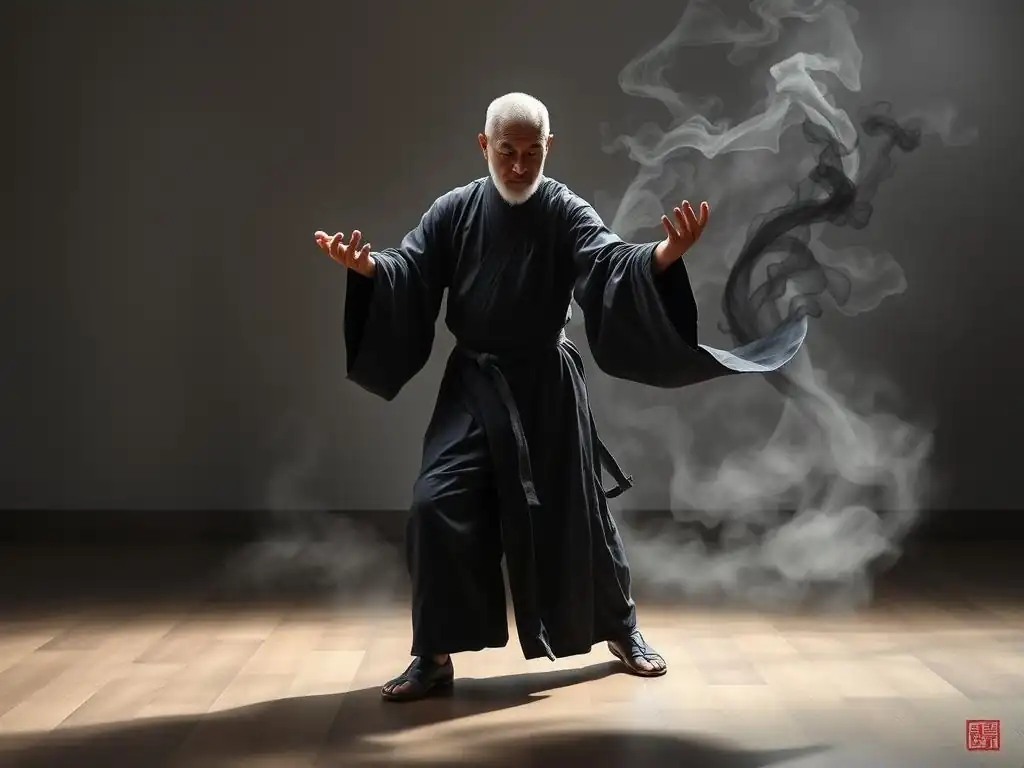
While the principles of Silk Reeling are clear, executing them correctly requires diligent attention and correction. Several common mistakes can hinder progress and prevent the development of true Chan Si Jin. Awareness of these pitfalls is the first step towards overcoming them.
Addressing these mistakes often requires slowing down, receiving feedback from an experienced instructor, and cultivating greater internal awareness. Patience and persistence are key; mastering Silk Reeling is a long-term endeavor.
Stiffness and Lack of Relaxation
One of the most common mistakes is practicing with excessive muscular tension or stiffness. Silk Reeling requires the body to be relaxed ( Song) yet connected. Stiffness prevents the smooth flow of Qi and Jin and inhibits the continuous, elastic quality of the spiraling movement. It turns the practice into external, muscular effort rather than internal, structural movement.
To avoid stiffness, consciously relax the shoulders, chest, and hips. Allow the joints to be open and supple. Focus on the feeling of the movement originating from the waist and flowing through relaxed limbs. Practice the Chen Tai Chi slow movement with the intention of letting go of unnecessary tension throughout the body, allowing gravity to assist in sinking the weight.
Disconnected Movement: Failing to Engage the Whole Body
Another frequent error is moving the limbs in isolation, rather than as part of a unified whole. This indicates a lack of whole-body connection. The waist is not leading the movement, or the connection to the legs and ground is broken. This results in weak, fragmented movements that lack the characteristic power and rootedness of Chen Tai Chi.
To ensure whole-body connection, constantly check that the movement of the hands and arms is initiated and supported by the rotation of the waist and the shifting of weight in the legs. Feel the connection from the feet through the legs, waist, spine, and out to the hands. Practice drills specifically designed to train waist-led movement and ensure the lower body is actively engaged in driving the spirals.
Focusing on the Form Over the Intent
Practitioners can sometimes get caught up in merely performing the external shape of the Silk Reeling movements without cultivating the necessary internal awareness and intention. This leads to empty movements that lack Qi and Jin. The mind is not guiding the energy, and the practitioner is not feeling the internal connections and the spiraling force.
To avoid this, practice with focused intention ( Yi). Visualize the Qi flowing through the body and the spiraling energy ( Chan Si Jin) coiling and uncoiling. Pay attention to internal sensations – the feeling of connection, expansion, contraction, and the flow of energy. The external form is a vehicle for the internal principles; the internal must lead the external.
Rushing the Movements: The Importance of Chen Tai Chi Slow Movement
Attempting to perform Silk Reeling movements too quickly is a significant impediment to developing internal skill. Speed masks errors, prevents the cultivation of sensitivity, and makes it difficult to coordinate the intricate whole-body connections. The essence of Chen Tai Chi slow movement is precisely to allow for deep internal observation and refinement.
Practice Silk Reeling exercises and forms at a slow, even pace. Focus on maintaining continuous, unbroken movement and feeling the spiraling energy throughout the entire range of motion. The ability to maintain unified, spiraling power at a slow speed is a prerequisite for generating power at higher speeds or issuing Fajin. Embrace the deliberate pace; it is where true skill is forged in Chen Tai Chi slow movement training.
Linking Chen Tai Chi Silk Reeling to Fajin (Explosive Release of Power)
While Silk Reeling is often characterized by its slow, continuous nature, its ultimate purpose from a martial perspective is to provide the foundation for Fajin, the sudden, explosive release of power. Fajin is not a separate skill but the culmination of refined Silk Reeling principles applied with sudden acceleration.
The ability to generate Fajin distinguishes Chen Tai Chi from styles that rely solely on muscular strength or linear force. It is the ability to transform relaxed, spiraling movement into a powerful, unified shockwave that can be delivered at close range.
Building the Foundation for Fajin Through Spiral Energy
Silk Reeling builds the structural integrity and internal connection necessary for Fajin. The repetitive spiraling motions train the body's fascia and connective tissues to store and release energy like a coiled spring. The whole-body connection ensures that the force generated from the ground and waist can travel efficiently and powerfully to the point of impact.
Without the ability to create and maintain Chan Si Jin through continuous, spiraling movement, Fajin attempts will result in isolated, muscular pushes or strikes that lack depth, penetration, and the characteristic internal vibration. Silk Reeling teaches the body how to coil and store energy; Fajin is the rapid uncoiling and release of that stored energy.
Transforming Silk Reeling into Practical Application
The transition from slow Silk Reeling to Fajin involves a change in timing and acceleration, not a change in principle. The same spiraling pathways and whole-body coordination used in slow practice are utilized, but the final phase of the movement is executed with sudden, coordinated speed. The energy that was cultivated and guided slowly is suddenly amplified and released.
This transformation requires significant practice, often involving specific Fajin drills that apply the spiraling principles to striking, pushing, or throwing actions. The key is to maintain relaxation and rootedness throughout the initial coiling phase and only tense the body momentarily at the precise point of release, ensuring the force is unified and directed.
Shoulder Strike: Utilizing spiral energy from the legs, waist, and shoulder to generate a powerful strike.
A classic example of Fajin derived from Silk Reeling is the shoulder strike, often seen in close-quarters applications. This is not a simple shove with the shoulder but a powerful impact generated by the unified force of the entire body, channeled through a spiraling motion.
To execute this Fajin, the practitioner typically coils the body inwards, sinking the weight and winding the torso and shoulder using the legs and waist as the engine – this is the Silk Reeling coiling phase. Then, with sudden, coordinated acceleration, the body unwinds rapidly, driving the shoulder forward along a spiraling path. The power originates from the ground, travels up through the legs, is amplified by the rotation of the waist, and is released through the shoulder in a unified, explosive burst. The impact comes from the integrated structure and rapid uncoiling of Chan Si Jin, not just the shoulder muscles.
Silk Reeling: A Pathway to Deeper Understanding of Chen Tai Chi
Silk Reeling is more than just a set of exercises; it is a key that unlocks the deeper mysteries of Chen Tai Chi. Consistent, dedicated practice reveals the interconnectedness of the body, mind, and energy, and provides a practical method for cultivating internal power and martial skill.
It is through the continuous refinement of Silk Reeling that practitioners gain a profound understanding of the principles that govern all aspects of Chen Tai Chi, from health cultivation to advanced martial application.
Connecting the Dots: From Basic Exercises to Advanced Applications
Silk Reeling provides the unifying principle that connects the seemingly disparate elements of Chen Tai Chi training. The basic single and double-hand drills lay the foundation for the more complex spiraling movements found within the forms. Mastery of the forms, in turn, reveals how Silk Reeling principles are applied in dynamic sequences.
Finally, understanding Silk Reeling is essential for effective push hands and martial applications, where the ability to generate and neutralize force through continuous, spiraling movement is paramount. The journey from basic drills to advanced application is one of deepening the understanding and practical application of Chan Si Gong.
The Role of Silk Reeling in Cultivating Internal Power (Nei Gong)
Nei Gong, or internal skill/power, in Chen Tai Chi is intrinsically linked to the cultivation of Qi and the integration of mind and body. Silk Reeling is a primary method for developing Nei Gong because it trains the smooth flow of Qi, opens the internal pathways, and requires deep mental focus and body awareness.
By practicing Silk Reeling with intention and sensitivity, practitioners learn to feel and guide their Qi, connect with their Dan Tian, and unify their physical structure with their internal energy. This internal cultivation is what gives Chen Tai Chi practitioners their characteristic rootedness, resilience, and the ability to generate power that seems to come from within.
The Future of Chen Style Tai Chi: Preserving the Essence of Silk Reeling
As Chen Style Tai Chi continues to spread globally, preserving the authentic understanding and practice of Silk Reeling is crucial for maintaining the integrity and effectiveness of the art. There is a risk that without proper guidance, practitioners may focus only on the external forms or the more dynamic Fajin aspects, neglecting the foundational Chan Si Gong.
Ensuring that new generations of practitioners understand the significance of Silk Reeling, dedicate sufficient time to its practice (including diligent Chen Tai Chi slow movement training), and learn from qualified instructors is vital for the future of the style. Silk Reeling is not just a historical curiosity; it is the living heart of Chen Tai Chi, providing the pathway to true mastery and unlocking its profound health and martial benefits.
Frequently Asked Questions
What is Silk Reeling in Chen Tai Chi and why is it important?
Silk Reeling, or Chan Si Gong, refers to the spiral movements fundamental to Chen Tai Chi. It's important because it cultivates connected power and whole-body integration.
How does the slow movement of Chen Tai Chi enhance self-defense skills?
The slow pace allows for precise body alignment and heightened awareness of internal energy (qi). This builds a foundation for powerful and efficient self-defense techniques.
What are some key historical influences on Chen Tai Chi's development?
Chen Tai Chi evolved from a blend of martial arts traditions and Daoist principles. It was developed within the Chen family village and is one of the oldest Tai Chi styles.
Is Chen Tai Chi primarily focused on health benefits, or does it have practical combat applications?
While it offers significant health and wellness benefits, Chen Tai Chi retains its practical combat applications. Silk Reeling specifically contributes to effective power generation.
Where can I find resources for learning more about Chen Tai Chi's slow movement and Silk Reeling?
MartialArtsMastery.org provides articles on Chen Tai Chi techniques, historical context, and the philosophical underpinnings of Silk Reeling.
Final Reflection: The Enduring Dance of Connected Power
The exploration of Chen Tai Chi's Silk Reeling, as we've seen, transcends mere physical exercise; it's a profound journey into understanding connected power. This concept of interconnectedness, of drawing strength from the entire body and mind, resonates deeply in our increasingly fragmented world. The principles of yielding, spiraling, and continuous movement offer a powerful antidote to the stresses and disconnections that plague modern life, providing a pathway to both physical and mental well-being.
The slow, deliberate practice of Chen Tai Chi slow movement has subtly, yet significantly, influenced the cultural landscape, promoting mindfulness and a deeper understanding of body mechanics. My own journey with this art has revealed the profound interconnectedness of mind, body, and spirit, a lesson that extends far beyond the training hall. The body is your temple. Keep it pure and clean for the soul to reside in.
This ancient wisdom, embodied in the practice of Silk Reeling, reminds us of the importance of cultivating inner harmony and strength.
As you conclude this exploration of Chen Tai Chi's Silk Reeling, I invite you to consider how you can integrate the principles of connected power into your own life. Embrace the slow movement, the yielding, and the spiraling, not just in physical practice, but in your thoughts, your actions, and your interactions with the world. Allow the essence of Silk Reeling to guide you towards a more balanced, grounded, and powerful existence.
Unlock Your Tai Chi Potential: Embrace the Silk Reeling!
Thank you for exploring the profound principles of Chen Tai Chi's silk reeling! We hope you've gained a deeper appreciation for how these spiraling movements cultivate internal power and connection. Now, let's translate this knowledge into action.
- Commit to 15 minutes of daily silk reeling practice. Focus on maintaining fluidity and intention in each movement. Feel the connection.
- Explore resources available at MartialArtsMastery.org to delve deeper into Chen style Tai Chi. Discover courses and connect with instructors in your area.
- Share this article with a fellow martial artist! Help them unlock the secrets of connected power.
What small, practical adjustment can you make in your next Tai Chi session to better embody the principle of silk reeling?