
Unsu: The "Cloud Hands" Kata – A Test of Shotokan Skill

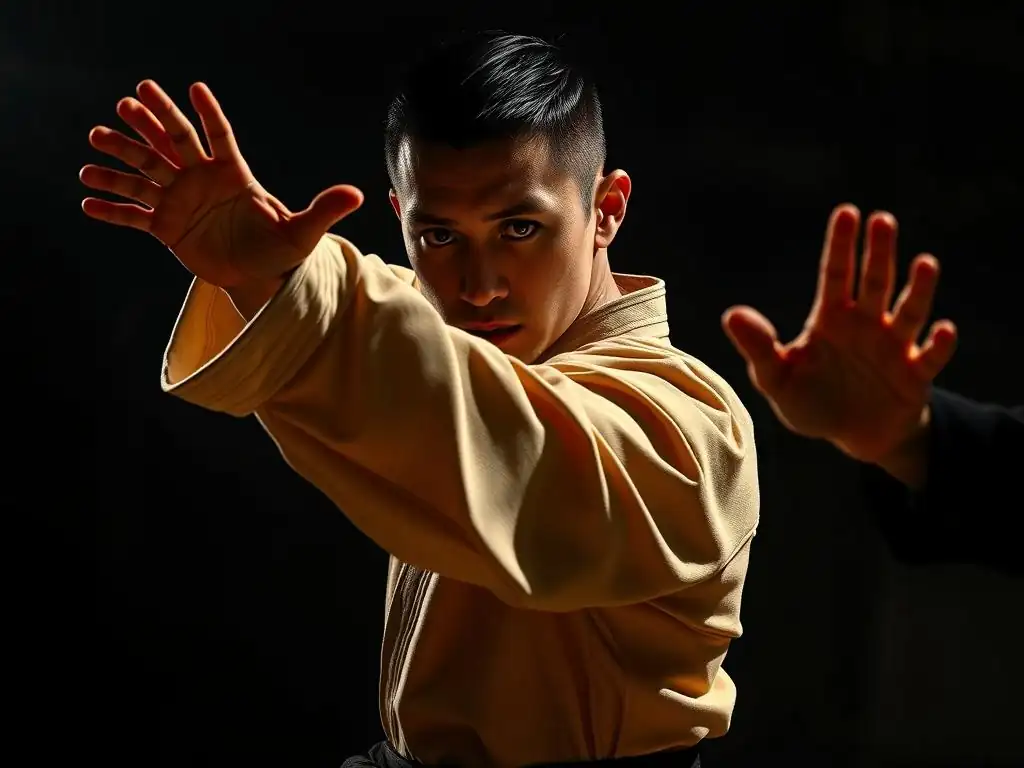
Welcome to Martial Arts Mastery, where we delve into the depths of combat traditions. Prepare to journey beyond basic stances and strikes! Ever wondered how a single kata could encapsulate the sheer power and fluidity of a storm? Today, we unravel the mysteries of Shotokan Unsu kata technique, a demanding sequence known as "Cloud Hands," that serves as a true crucible for any aspiring karateka. Read on to discover the hidden principles and unlock the secrets behind this advanced form.
- Introduction to Unsu Kata in Shotokan Karate
- The Meaning and History of "Unsu"
- Unsu Kata: A Step-by-Step Breakdown of Techniques
- Advanced Shotokan Techniques Highlighted in Unsu
- Common Mistakes and How to Improve Your Unsu Performance
- Unsu Kata: A Test of Physical and Mental Discipline
- Unsu Kata in Competition and Demonstration
- The Legacy of Unsu: Inspiring Future Generations of Karateka
-
Frequently Asked Questions
- What is Unsu and why is it considered a test of Shotokan skill?
- What are some of the key techniques featured in the Unsu kata?
- What is the historical significance of the Unsu kata within Shotokan karate?
- How does mastering the Unsu kata contribute to practical self-defense skills?
- Where can I learn more about the history, techniques, and philosophical underpinnings of Shotokan karate and the Unsu kata?
- Final Reflection: Mastering the Unseen Power
- Master Unsu: Elevate Your Shotokan Journey Now!
Introduction to Unsu Kata in Shotokan Karate
Unveiling the Secrets of Unsu: Advanced Shotokan Technique
Unsu, meaning "Cloud Hands," stands as one of the most advanced and technically demanding kata within the Shotokan karate curriculum. This kata is typically introduced to high-ranking brown belts or black belts (often Nidan or higher, depending on the organization), serving as a significant test of a practitioner's mastery over complex movements, dynamic transitions, and explosive power.
The Shotokan Unsu kata technique is characterized by its unique blend of high-speed sequences, intricate hand techniques, low stances, and the famously challenging 360-degree jump. Successfully performing Unsu requires not only physical prowess but also a deep understanding of timing, rhythm, and the application of kime (focus of power).
Practitioners dedicating themselves to the Shotokan Unsu kata technique find that it pushes the boundaries of their physical and mental capabilities. The kata incorporates a wide array of stances, including deep kiba dachi (horse stance) and kokutsu dachi (back stance), alongside rapid shifts into forward stances and dynamic single-leg balances. Hand techniques range from standard blocks and strikes to more complex actions like kake uke (hook block) and multi-directional empi uchi (elbow strikes). The sheer variety and difficulty of these movements make Unsu a comprehensive examination of one's cumulative Shotokan training.
The Significance of Unsu within the Shotokan Curriculum
Unsu holds a distinguished position within the advanced Shotokan syllabus, often considered one of the 'higher kata' or heian-jo (kata of high level). Its placement late in the curriculum signifies its role as a culmination of skills developed through the study of foundational kata (Heian series), intermediate kata (Tekki series, Bassai Dai, Kanku Dai), and other advanced forms. Mastering the Shotokan Unsu kata technique demonstrates a practitioner's ability to integrate power, speed, balance, and coordination into a fluid, yet powerful, sequence. It is a benchmark for assessing a karateka's technical proficiency and physical conditioning at a high level.
Furthermore, Unsu is frequently performed in competitive settings, including national and international tournaments, due to its dynamic and visually impressive nature. A well-executed Unsu can showcase a karateka's precision, strength, and spirit, making it a popular choice for high-level competitors. The kata's complexity means that even small errors are noticeable, requiring rigorous practice and attention to detail. Its significance extends beyond technique; it embodies the Shotokan principles of discipline, perseverance, and the pursuit of perfection, challenging the practitioner to transcend physical limitations through sheer will and focus.
The Meaning and History of "Unsu"
Decoding the Name: "Cloud Hands" and Its Symbolic Representation
The name "Unsu" translates to "Cloud Hands," a poetic and somewhat enigmatic title that reflects the kata's flowing yet powerful movements. The term "Cloud Hands" is often interpreted in several ways, alluding to the fluidity and evasiveness characteristic of certain sections of the kata. One interpretation suggests the hands moving like clouds, appearing soft and yielding but possessing immense underlying power, capable of changing shape and direction unpredictably. This relates to the principle of adapting to an opponent's movements rather than meeting force with force directly, a concept found in various martial arts.
Another symbolic representation tied to "Cloud Hands" is the idea of reaching up towards the clouds, which can be linked to the kata's upward movements, particularly the explosive jump. This suggests aiming for a higher level of skill or enlightenment.
The dynamic interplay between low, grounded stances and sudden, high movements, combined with fluid hand techniques, embodies the duality suggested by the name – stability versus fluidity, groundedness versus ethereal movement. Understanding this symbolism can add a deeper layer to the performance of the Shotokan Unsu kata technique, transforming it from a mere sequence of movements into a dynamic expression of martial principle.
Origins and Evolution of the Unsu Kata
The precise origins of the Unsu kata are somewhat debated, but it is widely believed to have roots in older Okinawan forms, possibly a kata known as Unshu, practiced in various Okinawan karate styles like Shito-ryu and Wado-ryu. These older versions share structural similarities with the Shotokan Unsu but may differ in specific techniques, stances, and overall performance feel. The transition from Okinawan Unshu to Shotokan Unsu occurred as karate was introduced to mainland Japan in the early 20th century by Gichin Funakoshi, the founder of Shotokan.
Within the Shotokan lineage, the kata underwent modifications and refinements. While Gichin Funakoshi brought the initial forms from Okinawa, his son, Yoshitaka Funakoshi (also known as Gigō), played a significant role in evolving many Shotokan kata, including potentially Unsu, towards more dynamic and physically demanding executions. The version of Unsu practiced today in Shotokan karate, particularly within the Japan Karate Association (JKA) and related lineages, is largely attributed to the post-war development of the style, emphasizing deeper stances, longer techniques, and powerful transitions, which are hallmark features of the Shotokan Unsu kata technique.
The Influence of Yoshitaka Funakoshi on Modern Unsu Performance
Yoshitaka Funakoshi, the third son of Gichin Funakoshi, was instrumental in shaping modern Shotokan karate during the 1930s and 1940s. Known for his innovative and sometimes radical approach, Yoshitaka introduced concepts like deeper stances ( fukaku) and more dynamic, explosive movements ( kime and nagashi). His influence is evident in the increased athleticism and power required in many advanced Shotokan kata, including Unsu. He emphasized driving power from the legs and hips, rapid transitions, and a focus on practical, powerful applications.
The challenging physical nature of the Shotokan Unsu kata technique, particularly its demanding stances, powerful strikes, and the signature jumping technique, strongly reflects Yoshitaka's emphasis on physical conditioning and dynamic execution. While Gichin Funakoshi focused on the philosophical and fundamental aspects, Yoshitaka pushed the physical boundaries, transforming the style into the dynamic, powerful system recognized today. His influence ensured that kata like Unsu became not just sequences of movements but rigorous physical tests demanding peak performance and embodying the spirit of intense training.
Unsu Kata: A Step-by-Step Breakdown of Techniques
Key Movements and Stances in the Unsu Form
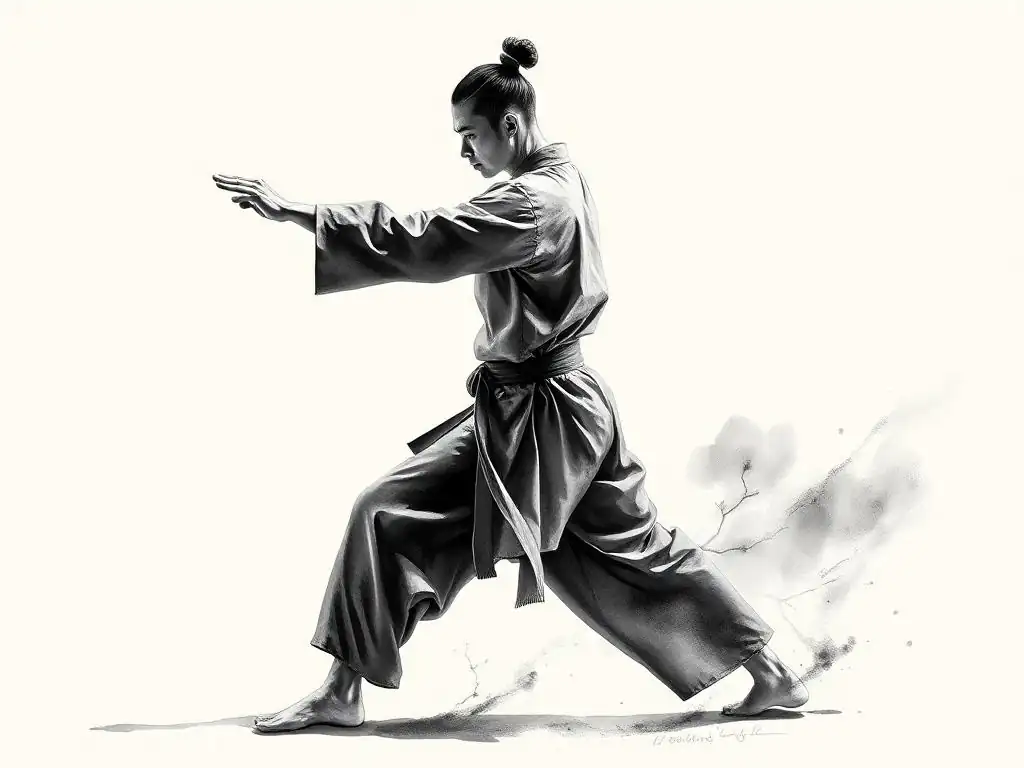
The Unsu kata is a complex tapestry of roughly 40 to 42 movements, depending on the interpretation, performed in various directions along an Embusen (performance line) that is primarily linear but includes diagonal and rotational movements. Key stances include the deep and powerful kiba dachi (horse stance), used in sequences emphasizing stability and lateral power; kokutsu dachi (back stance), for retreating and blocking; and dynamic transitions into zenkutsu dachi (front stance) and fudo dachi (immovable stance).
Unique to Unsu are moments of tsuru ashi dachi (crane leg stance), requiring significant balance, and the transition into the airborne state during the jump.
Specific movements that define the Shotokan Unsu kata technique include the opening sequence with simultaneous block and strike, the intricate "cloud hands" (likely referring to the complex hand techniques involving circular or evasive movements), kake uke (hook block), empi uchi (elbow strikes) at various angles, and a series of rapid-fire punches and blocks. The kata also features low-level techniques, such as sweeping movements and ground-level applications, adding to its technical diversity. Mastery requires not only executing each movement correctly but also understanding the precise timing and transition between them, which are often executed with surprising speed or deliberate slowness.
Mastering the "Cloud Hands" Technique: A Detailed Guide
The term "Cloud Hands" in Unsu specifically refers to a sequence of complex hand movements, often involving circular or sweeping motions that deflect or evade incoming attacks. While interpretations vary, one common sequence involves hands moving in a fluid, almost elusive manner, suggesting the ability to neutralize an opponent's power without direct collision. This might involve deflecting a punch with a circular block ( nagashi uke or similar) followed by a counter-attack, or using hand movements to control an opponent's limbs.
Mastering this aspect of the Shotokan Unsu kata technique requires developing fluidity and sensitivity in the hands and arms, coupled with precise body movement. It's not just about moving the hands but coordinating them with footwork and hip rotation to generate power and maintain balance. Practice involves slow, deliberate movements to understand the path and timing, gradually increasing speed and power. Drills focusing on uke (receiving/blocking) techniques that emphasize circular motion and redirection, rather than rigid blocking, are crucial for truly embodying the "Cloud Hands" principle.
Understanding the Applications (Bunkai) of Unsu's Complex Movements
Understanding the bunkai (application) of Unsu's movements is essential for performing the kata with intent and realism. Each technique, no matter how abstract it appears in the form, has a practical application against an imagined opponent. For instance, the opening sequence with the simultaneous downward block and upper strike can be interpreted as defending against a low kick or sweep while simultaneously attacking the upper body. The low, sweeping movements might represent defenses against leg attacks or even ground fighting scenarios.
The Shotokan Unsu kata technique includes several unique applications. The kake uke (hook block) can be used to trap or control an opponent's arm. The various empi uchi (elbow strikes) can be applied at close range to the ribs, head, or body. The challenging jump, often interpreted as an evasive maneuver or a sudden attack from an unexpected angle, could be applied to escape a grapple or surprise an opponent. Studying bunkai alongside the kata itself provides context, power, and depth to the performance, transforming it from a dance into a dynamic combat simulation.
Advanced Shotokan Techniques Highlighted in Unsu
Empi Uchi (Elbow Strike) Variations in Unsu
Unsu showcases several variations of empi uchi (elbow strike), demonstrating the versatility of this close-range technique. Unlike kata where empi uchi might be performed in a single direction, Unsu features elbow strikes aimed laterally, upwards, and potentially downwards, often following rapid transitions or blocks. For example, after a sequence of blocks, a sudden empi uchi to the side or rear might occur, requiring explosive hip rotation and body connection.
Mastering these empi uchi variations within the Shotokan Unsu kata technique demands strong core engagement and precise timing. The power of an elbow strike comes from the entire body, not just the arm. Practitioners must practice generating force from a stable stance or a dynamic transition, channeling it through the hips and torso into the elbow. The different angles and targets in Unsu's empi uchi sequences highlight the kata's emphasis on close-quarters combat and the ability to deliver devastating power from various positions.
Kake Uke (Hook Block) Mastery in the Unsu Kata
Kake uke (hook block or hooking block) is a distinctive technique featured prominently in Unsu. This is not a rigid block but rather a hand technique that involves hooking or scooping an opponent's attacking limb, often with the goal of controlling, deflecting, or setting up a counter-attack. In Unsu, kake uke is typically performed with a high level of tension and control, requiring significant forearm strength and dexterity.
Executing kake uke correctly within the Shotokan Unsu kata technique involves precise timing to meet the imagined attack and the ability to use the structure of the hand and forearm effectively. It's often followed immediately by a powerful counter-technique, demonstrating the principle of using a block to create an opening. Practicing kake uke improves grip strength, forearm conditioning, and the ability to transition quickly from a defensive action to an offensive one, making it a vital component of Unsu mastery.
The Unique Mawashi Geri (Roundhouse Kick) Application in Unsu
Unsu includes a unique execution of mawashi geri (roundhouse kick) that differs significantly from its application in many other kata or basic techniques. In Unsu, the roundhouse kick is often performed at a high level, sometimes targeting the head, and requires exceptional balance, flexibility, and control, especially considering the preceding and subsequent movements which can involve dynamic transitions or balances. The setup and execution within the Shotokan Unsu kata technique are designed for maximum speed and precision.
The challenge of the Unsu mawashi geri lies in its integration into the kata's flow. It's not an isolated technique but part of a complex sequence. Maintaining balance after the kick and transitioning smoothly into the next movement is crucial. This specific application tests the practitioner's ability to generate power from a dynamic position and recover instantly, highlighting the kata's demand for overall athletic ability and technical finesse.
Common Mistakes and How to Improve Your Unsu Performance
Identifying Errors in Stance and Technique
Common errors in performing the Shotokan Unsu kata technique often begin with fundamental issues in stance and technique. Losing the depth or stability of stances like kiba dachi or kokutsu dachi is frequent, undermining the power generation that relies on a strong base. Incorrect hand positions or angles in blocks like kake uke can render them ineffective in application ( bunkai). Lack of precision in strikes, missing the target area, or failing to apply kime at the point of impact are also common.
Another significant area for errors is the execution of rapid transitions. Moving too slowly or losing balance between techniques breaks the rhythm and flow of the kata. The unique techniques, such as the low sweeps or the transition into and out of tsuru ashi dachi, require specific practice to avoid stumbling or instability. Identifying these errors often requires video analysis or feedback from experienced instructors who can spot subtle flaws in posture, alignment, or timing.
Drills and Exercises to Enhance Unsu Precision
Improving precision in the Shotokan Unsu kata technique necessitates targeted drills. For stances, practicing holding deep kiba dachi and kokutsu dachi for extended periods strengthens the legs and improves stability. Transition drills, focusing on moving quickly and smoothly between different stances while maintaining a low center of gravity, are essential. For hand techniques like kake uke, practicing the movement slowly with tension, then gradually increasing speed, helps build muscle memory and control.
Specific exercises for techniques unique to Unsu include balance drills on one leg for the tsuru ashi dachi transition and practicing the low sweeping movements slowly to understand the mechanics. For the jump, breaking it down into stages – the setup, the vertical lift, the rotation, and the landing – and practicing each component separately can be beneficial. Focusing on individual difficult sequences repeatedly before attempting the full kata helps refine precision and build confidence in the Shotokan Unsu kata technique.
Tips for Generating Power and Speed in Unsu
Generating power and speed are critical components of a strong Shotokan Unsu kata technique. Power comes from connecting the entire body – feet, legs, hips, core, and arms – in a coordinated movement. Emphasizing hip rotation ( koshi kaiten) in strikes and blocks is key. Practicing basic techniques like oi zuki (lunge punch) and gyaku zuki (reverse punch) with maximum kime helps develop the ability to focus power explosively.
Speed in Unsu isn't just about moving fast; it's about changing speed dynamically – periods of explosive movement contrasted with moments of stillness or deliberate slowness. Practicing transitions with increasing speed, focusing on relaxing muscles just before the explosive contraction, is vital. Drills that involve rapid-fire techniques, like a sequence of quick punches or blocks, help build speed and stamina. Combining strength training for the legs and core with plyometric exercises can also significantly enhance the power and speed required for Unsu's demanding movements.
Unsu Kata: A Test of Physical and Mental Discipline
The Importance of Balance, Coordination, and Timing
Unsu kata is an exceptional test of balance, coordination, and timing, demanding a high level of physical control. The kata features numerous instances requiring balance on one leg, rapid shifts in direction, and movements that involve multiple body parts acting simultaneously or in rapid succession. The signature jump is perhaps the ultimate test of these attributes, requiring perfect balance on the takeoff, precise coordination during the rotation, and a stable landing.
Maintaining balance throughout the Shotokan Unsu kata technique, especially during dynamic transitions or after powerful techniques, is paramount. Poor balance leads to instability, loss of power, and potential errors. Coordination is needed to execute complex movements like kake uke or simultaneous blocks and strikes smoothly and effectively. Timing is critical for applying techniques at the right moment, generating maximum power through hip rotation, and performing the kata with the correct rhythm – knowing when to be fast, when to be slow, and when to pause.
Cultivating Focus and Mental Clarity Through Unsu Practice
Beyond the physical demands, Unsu kata is a profound exercise in mental discipline. The complexity of the form requires intense focus and concentration to remember the sequence of over 40 movements, execute each one correctly, and maintain awareness of direction and timing. Practicing the Shotokan Unsu kata technique demands that the practitioner clear their mind of distractions and be fully present in the moment, focusing solely on the kata.
This cultivation of focus and mental clarity extends beyond the dojo. The discipline required to master Unsu, to repeatedly practice difficult sections, and to push past physical fatigue builds mental resilience. The kata becomes a form of moving meditation, where the mind is sharpened through intense concentration. Successfully navigating the intricate path of Unsu fosters a strong connection between mind and body, enhancing self-awareness and mental fortitude.
Building Confidence and Self-Awareness with Advanced Kata
Mastering an advanced kata like Unsu significantly boosts a karateka's confidence. The journey from struggling with its complexity to performing the Shotokan Unsu kata technique with proficiency is a tangible demonstration of progress and perseverance. Each successful execution of a difficult section, particularly the challenging jump, reinforces the belief in one's ability to overcome obstacles through dedicated effort.
This process also enhances self-awareness. Practicing Unsu forces the practitioner to become acutely aware of their body's position, balance, and movement patterns. Identifying and correcting errors requires introspection and an honest assessment of one's strengths and weaknesses. As a karateka refines their Unsu, they gain a deeper understanding of their own physical capabilities and limitations, contributing to a more profound self-awareness both within and outside of the dojo.
Unsu Kata in Competition and Demonstration
Judging Criteria and Performance Standards
In Shotokan competition, the performance of kata like Unsu is evaluated based on several key criteria. Judges look for a strong understanding of the kata's rhythm and timing, demonstrating dynamic changes in speed and power. Technical correctness is paramount, including proper stances, hand and foot techniques, and body alignment. Power generation ( kime) at the end of techniques is crucial, showing focused energy. Balance and stability throughout the form, especially during challenging transitions and the jump, are heavily weighted.
Other standards include showing spirit ( kiai and overall presence), focus ( chakugan - eye focus), and a clear understanding of bunkai as expressed through the performance. A well-executed Shotokan Unsu kata technique in competition is not just a display of physical ability but also an expression of the karateka's spirit and years of dedicated training. Minor errors in technique, balance, or timing can result in deductions, making precision under pressure a vital skill.
Strategies for Presenting a Compelling Unsu Kata
Presenting a compelling Unsu kata in competition requires strategic preparation and performance. Beyond technical perfection, the karateka must convey confidence and spirit. This involves entering and exiting the performance area with presence, executing the kata with strong kime and clear transitions, and projecting focus throughout. The kiai (spirit shout) should be powerful and well-timed, marking key moments in the form.
Practitioners often focus on highlighting Unsu's most dynamic elements, such as the explosive opening sequence, the intricate "Cloud Hands" section, and the dramatic jump. Practicing these specific parts until they are flawless and executed with maximum power and control is essential. Visualizing the bunkai during the performance helps add realism and intent to the techniques. Ultimately, a compelling Shotokan Unsu kata technique is one performed with precision, power, perfect balance, and unwavering spirit.
The Role of Unsu in Showcasing Shotokan Skill
Unsu serves as a powerful showcase of advanced Shotokan skill. Its comprehensive nature incorporates a wide range of techniques, stances, and physical demands, making it an excellent demonstration of a karateka's overall proficiency. A practitioner capable of performing a strong Unsu demonstrates not only technical mastery but also the physical conditioning, mental discipline, and spirit that are hallmarks of high-level Shotokan training.
Performing the Shotokan Unsu kata technique effectively requires integrating speed, power, balance, and timing seamlessly. It highlights the practitioner's ability to execute complex sequences under pressure, maintain control during dynamic movements, and apply focused power ( kime) precisely. For spectators and judges, a strong Unsu is a clear indicator of a karateka who has dedicated significant time and effort to mastering the advanced principles and techniques of Shotokan karate.
The Legacy of Unsu: Inspiring Future Generations of Karateka
The Enduring Appeal of this Challenging Kata
The Unsu kata holds an enduring appeal among Shotokan practitioners despite its difficulty. Its reputation as one of the most challenging forms makes its mastery a highly sought-after achievement. The kata offers a continuous learning experience; even after years of practice, subtle refinements in timing, power, and balance can still be discovered. This ongoing challenge keeps practitioners engaged and motivated to push their limits.
Furthermore, the dynamic and visually striking nature of the Shotokan Unsu kata technique makes it exciting to perform and watch. The blend of low, grounded movements with sudden, explosive actions, culminating in the iconic jump, captures the imagination. Its complexity ensures that there is always room for improvement, providing a lifelong pursuit of perfection for dedicated karateka.
"Unsu tests the limits of balance and coordination, demanding a complete understanding of Shotokan principles."
This quote encapsulates the essence of the Unsu kata. It is not merely a sequence of physical movements but a profound test of the practitioner's integration of physical attributes and theoretical understanding. The intricate balances required, particularly during the single-leg stances and the jump, push physical limits. The rapid, coordinated movements demand a high level of body control.
Successfully navigating the complexities of the Shotokan Unsu kata technique necessitates a deep understanding of fundamental Shotokan principles, such as generating power from the hips, maintaining proper body alignment, applying kime, and understanding the flow of energy ( ki). Unsu serves as a crucible where these principles are tested under the pressure of executing a demanding sequence, revealing the practitioner's true grasp of the art.
Continuing the Tradition of Excellence in Shotokan Karate Through Unsu
By dedicating themselves to the mastery of Unsu, karateka contribute to the continuation of excellence within Shotokan karate. Each generation of practitioners who undertake the challenge of the Shotokan Unsu kata technique learns from those who came before, refining their technique and deepening their understanding. This process of learning, practicing, and striving for perfection is central to the Shotokan tradition.
Teaching and demonstrating Unsu to younger generations passes on not just the physical movements but also the spirit of perseverance and the pursuit of high standards that the kata embodies. As practitioners continue to explore the depths of Unsu, they keep the legacy of this powerful and complex form alive, inspiring future karateka to test their own limits and uphold the rigorous standards of Shotokan karate.
Frequently Asked Questions
What is Unsu and why is it considered a test of Shotokan skill?
Unsu is a Shotokan kata known as "Cloud Hands" and is considered advanced due to its complex techniques and demanding physical requirements. It tests a practitioner's overall skill.
What are some of the key techniques featured in the Unsu kata?
The Unsu kata features a variety of techniques, including jumping kicks, spinning techniques, and hand techniques designed to disorient and control an opponent. The most notable is the Unsu hand technique itself.
What is the historical significance of the Unsu kata within Shotokan karate?
The precise origins of Unsu are debated, but it is believed to have derived from Okinawan martial arts and was later incorporated into the Shotokan curriculum by Master Gichin Funakoshi.
How does mastering the Unsu kata contribute to practical self-defense skills?
Mastering Unsu improves balance, coordination, and power generation, which are all crucial for effective self-defense. The dynamic movements and varied techniques translate to real-world scenarios.
Where can I learn more about the history, techniques, and philosophical underpinnings of Shotokan karate and the Unsu kata?
You can explore resources on websites like MartialArtsMastery.org, which provides historical overviews, training tips, and philosophical insights into various martial arts disciplines, including Shotokan karate.
Final Reflection: Mastering the Unseen Power
The journey through Unsu, the "Cloud Hands" kata, reveals more than just a sequence of movements; it unveils a profound understanding of Shotokan karate. The true impact of Unsu lies not just in its complex techniques, but in its ability to cultivate a deeper connection between mind, body, and spirit, a connection that remains vitally relevant in today's fast-paced world. By demanding precision, balance, and explosive power, Unsu serves as a constant reminder of the dedication and discipline required to master any art, both within and beyond the dojo.
The influence of Unsu extends far beyond the physical realm. It teaches us the importance of adaptability, resilience, and the ability to find strength in unexpected places, qualities that are essential for navigating the challenges of modern life. The kata's fluid transitions and dynamic changes reflect the ever-shifting nature of reality, urging us to embrace change and find our footing amidst uncertainty. The ultimate aim of karate lies not in victory nor defeat, but in the perfection of the character of its participants.
- Gichin Funakoshi, the founder of Shotokan karate. This quote encapsulates the true essence of Unsu, reminding us that the journey of self-improvement is far more important than any external achievement.
Now, as you step away from this exploration of Unsu, I invite you to reflect on the lessons it imparts. Consider how the principles of balance, precision, and adaptability can be applied to your own life. Embrace the challenge of mastering your own "cloud hands," finding strength in unexpected places and navigating the complexities of your own journey with grace and determination. Let the spirit of Unsu guide you towards a deeper understanding of yourself and the world around you.
Master Unsu: Elevate Your Shotokan Journey Now!
Thank you for diving deep into the intricacies of the Unsu kata! We hope you've gained a newfound appreciation for its complexity and the skill it demands. Ready to take your Shotokan to the next level?
Here's how you can continue your journey:
- Dedicate your next training session entirely to practicing just one complex sequence from Unsu. Focus on precise technique and powerful execution.
- Explore the historical context of Unsu. Research its potential Okinawan origins and how it evolved into the form practiced today. Understanding its roots will enrich your understanding.
- Share your favorite Unsu performance (YouTube, competition, etc.) with a fellow Shotokan practitioner and discuss what makes it stand out.
What is one specific element of Unsu that you find most challenging, and how do you plan to overcome it?