
Nikyo, Sankyo, Yonkyo: How Basic Locks Enhance Irimi Nage & Kokyu Nage Setups

Welcome to Martial Arts Mastery, your gateway to the profound world of combat arts. Ever wondered how a seemingly simple wrist lock could amplify the power of Irimi nage and Kokyu nage? Prepare to unlock the secrets as we delve into the fundamental Nikyo, Sankyo, and Yonkyo techniques, revealing how these basic locks become the cornerstone for mastering advanced throws. Intrigued? Discover how these principles transcend mere mechanics and embody the very essence of martial arts mastery.
- Introduction: Leveraging Joint Locks for Enhanced Aikido Throws
- Irimi Nage and Basic Locks: A Synergistic Approach
- Kokyu Nage and Joint Lock Integration: Control and Unbalancing
- Nikyo: Detailed Breakdown for Irimi Nage and Kokyu Nage
- Sankyo: Mastering the Technique for Effective Throwing
- Yonkyo: Strengthening Your Control in Aikido Throws
- Integrating Joint Locks into Irimi Nage and Kokyu Nage Training
- Advanced Applications of Basic Locks in Aikido Throwing
- Conclusion: The Power of Basic Locks in Enhancing Irimi Nage & Kokyu Nage
-
Frequently Asked Questions
- How does nikyo enhance an irimi nage setup?
- What role does sankyo play in setting up kokyu nage?
- Why are basic joint locks considered fundamental to these nage-waza (throwing techniques)?
- How can understanding the omote and ura variations of these locks improve irimi nage effectiveness?
- Does the website "MartialArtsMastery.org" offer more than just lock techniques related to irimi nage?
- Final Reflection: Unlocking Potential Through Foundational Techniques
- Unlock Your Irimi Nage Potential Now!
Introduction: Leveraging Joint Locks for Enhanced Aikido Throws
The Importance of Joint Manipulation in Irimi Nage and Kokyu Nage
In the practice of Aikido, throws like Irimi Nage (entering throw) and Kokyu Nage (breath power throw) are central to the curriculum. While seemingly distinct, their effectiveness is often profoundly enhanced by the strategic application of joint manipulation techniques.
Joint locks, even the foundational ones like Nikyo (second technique), Sankyo (third technique), and Yonkyo (fourth technique), serve not merely as standalone controls but as powerful tools for disrupting an attacker's balance (kuzushi) and creating openings for dynamic throws. A well-executed joint control can immobilize a limb, redirect force, and position the attacker (uke) precisely where Nage (the thrower) needs them for a successful throw, making the understanding of how these locks integrate with throws crucial for developing proficient Aikido skills.
The synergy between basic joint locks and core throws like Irimi Nage and Kokyu Nage lies in their shared principles of timing, distance, and connection. By applying a subtle Nikyo grip or a controlling Sankyo pressure during the entry or as uke attempts to resist, Nage can maintain control, disrupt uke's structure, and guide them into the throw with minimal force. This approach moves beyond simply executing a lock then a throw; it's about using the process of applying or threatening a lock to facilitate the throw itself.
For instance, an attempt by uke to pull their wrist away from a light Nikyo application can be instantly redirected into an Irimi Nage entry, leveraging uke's own reaction. This intricate interplay highlights why mastering Irimi nage basic lock techniques is fundamental to advancing in Aikido.
Understanding Nikyo, Sankyo, and Yonkyo as Foundational Aikido Techniques
Nikyo, Sankyo, and Yonkyo are typically introduced early in Aikido training, forming part of the core technical vocabulary. Nikyo primarily targets the wrist and elbow, creating a painful twist that can easily unbalance or control. Sankyo focuses on a spiral twist of the wrist and forearm, often used to lead uke's movement or collapse their structure.
Yonkyo applies pressure to a specific nerve point on the forearm, causing discomfort and facilitating control or compliance. While each technique has distinct mechanics and applications as standalone controls, their true depth is revealed when seen as dynamic tools within the larger Aikido system.
These foundational techniques are not static holds but fluid movements that adapt to uke's resistance and posture. For example, a basic Nikyo wristlock can be applied in various ways – palm-up, palm-down, or even combined with a forearm control – each variation presenting different opportunities for follow-up techniques, including throws. Similarly, Sankyo's spiraling action can be used to turn uke or draw them off-balance, setting the stage for a Kokyu Nage.
Yonkyo, with its potent pain compliance, can freeze uke momentarily, providing the window needed for a decisive Irimi Nage entry. Understanding the dynamic nature and variations of these techniques is essential for effectively integrating them into throwing techniques.
Irimi Nage and Basic Locks: A Synergistic Approach
Irimi Nage Mechanics: Creating the Opportunity for Joint Locks
Irimi Nage is characterized by its direct entry into uke's space, moving past their initial line of attack. The core mechanics involve stepping inside uke's guard (irimi), controlling their head or neck, and turning to throw them past your own body. This process inherently disrupts uke's balance and posture. As Nage enters, they are in close proximity to uke's arms and torso, creating numerous points of contact that can be exploited. The moment of entry, the subsequent turning motion, and uke's reaction to being invaded are all critical junctures where joint manipulation can be seamlessly integrated.
Consider a standard Shomen Uchi (overhead strike) attack. As Nage enters with irimi, simultaneously redirecting the striking arm, the opportunity arises to secure a grip on uke's wrist or elbow. This simultaneous action means the joint lock isn't a separate technique applied after the entry, but part of the entry itself. The control gained through the lock helps guide uke's body during the turn, preventing them from recovering balance or resisting effectively. This natural intersection of movement and control underscores why integrating Irimi nage basic lock techniques is so effective.
How Nikyo Complements Irimi Nage Entries
Nikyo, with its focus on wrist and elbow control, is a natural fit for enhancing Irimi Nage entries. As Nage enters past uke's leading arm, securing a palm-down Nikyo grip on that wrist provides immediate control over uke's upper limb structure. This grip can be applied lightly initially, using the threat of pain or the slight twist to disrupt uke's balance and forward momentum. For instance, in response to a Katate Dori (single-hand grab), Nage can step irimi, simultaneously securing a Nikyo grip on the grabbed wrist.
The advantage here is twofold: the Nikyo control prevents uke from pulling back or stabilizing their base, and the discomfort or structural compromise it causes encourages uke to move in a way that facilitates the throw. As Nage continues the Irimi Nage turn, the pressure from the Nikyo guides uke's body around. If uke tries to resist the Nikyo by twisting away, Nage can amplify the turn, using uke's own resistance to power the throw. This fluid transition from control to throw exemplifies the power of combining Irimi nage basic lock techniques.
Sankyo's Role in Controlling Uke After Irimi Nage
While Nikyo often aids the entry, Sankyo can be particularly effective in controlling uke during or immediately after the Irimi Nage turn, especially if the initial throw doesn't fully complete or if Nage wants to maintain control for a follow-up. If, during the turn, uke manages to maintain some balance or posture, transitioning to a Sankyo grip on their arm can collapse their structure and prevent them from standing upright or counter-attacking. This often occurs if the Irimi Nage entry wasn't deep enough or the timing was slightly off.
Imagine an Irimi Nage attempt where uke is being turned but hasn't fully lost their base. As Nage maintains contact, they can shift their grip to apply a Sankyo on uke's leading arm. The spiraling pressure of Sankyo forces uke's elbow to bend and their shoulder to drop, effectively breaking their posture and making it difficult for them to resist the downward or forward force of the continuing throw or transition into a pin. This adaptability demonstrates how Irimi nage basic lock techniques can be used not just for setup, but also for mid-technique adjustment and control.
Utilizing Yonkyo for Stabilization and Follow-Through in Irimi Nage
Yonkyo, while primarily a control technique utilizing nerve pressure, can be used in Irimi Nage scenarios for stabilization or to ensure compliance if the throw doesn't immediately result in a fall. If Nage has entered with Irimi Nage and has uke in a controlled position – perhaps kneeling or bent over – but the throw isn't complete, applying Yonkyo to uke's forearm can provide immediate pain compliance and prevent them from recovering. This is less about using Yonkyo to set up the throw and more about using it to maintain control during or after the throw's execution.
For example, after an Irimi Nage entry, Nage might find themselves with uke's arm controlled and uke partially thrown but still on their feet or knees. By shifting their grip to apply Yonkyo pressure to uke's forearm (often near the elbow crease or wrist), Nage can cause sufficient discomfort to prevent uke from pushing back or standing up. This allows Nage to stabilize the situation, complete the throw with less resistance, or transition into a pinning technique like Kote Gaeshi or a different control. This application highlights the versatility of Irimi nage basic lock techniques in managing dynamic situations.
Kokyu Nage and Joint Lock Integration: Control and Unbalancing
Kokyu Nage Principles: Leading Uke's Center of Gravity
Kokyu Nage, often translated as "breath power throw," relies less on structural leverage and more on leading uke's energy and center of gravity until they are fundamentally off-balance and easily thrown. This requires a deep connection (musubi) with uke and precise timing to redirect their force or movement. Nage doesn't necessarily enter into uke's space as aggressively as in Irimi Nage; instead, they blend with uke's movement, extending their own energy (kokyu) to guide uke off their base. The hands and arms are used to connect and lead, not necessarily to grab or lock tightly from the outset.
Because Kokyu Nage is about leading and unbalancing, joint locks serve a slightly different purpose compared to Irimi Nage. Here, the locks are primarily tools for kuzushi (unbalancing) or maintaining connection and control as uke is led. They aren't always applied as full, painful locks, but rather as subtle controls or points of connection that disrupt uke's equilibrium and facilitate the extension of Nage's energy. The fluidity of Kokyu Nage means the joint lock application must also be fluid, often transitioning in and out of the control seamlessly.
Nikyo as a Kuzushi (Unbalancing) Tool for Kokyu Nage
Nikyo can be an excellent tool for initiating kuzushi in preparation for Kokyu Nage. Instead of applying a full, painful wristlock, Nage can use a light Nikyo grip to subtly disrupt uke's structure and connection to the ground. As uke reaches or grabs, Nage can secure a loose Nikyo grip that focuses on twisting uke's wrist or forearm just enough to break their posture or forward intention. This slight disruption creates a momentary imbalance that Nage can then exploit with a Kokyu Nage movement.
For example, against a Morote Dori (two hands grabbing one wrist), Nage can blend with uke's forward pressure, securing a light Nikyo on the grabbed wrist. The subtle twist prevents uke from having a solid connection to Nage and causes them to adjust their balance. This adjustment, or the resulting instability, provides the opening for Nage to extend their energy and execute a Kokyu Nage, leading uke's off-balance body in the desired direction. This demonstrates how Irimi nage basic lock techniques, even when applied lightly, are crucial for unbalancing in Kokyu Nage.
Sankyo for Enhanced Control During Kokyu Nage Execution
Sankyo's spiraling action is particularly useful in Kokyu Nage for maintaining control and guiding uke during the throw. As Nage blends with uke and begins to lead their center, securing a Sankyo grip on uke's arm allows Nage to control uke's upper body structure and prevent them from regaining balance or posture. The Sankyo forces uke's arm into a position that compromises their ability to resist the circular or linear movement of the Kokyu Nage.
Consider a Ryote Dori (two hands grabbing both wrists) attack. As Nage redirects uke's force and begins a circular Kokyu Nage movement, securing a Sankyo on one of uke's wrists allows Nage to control that side of uke's body. The Sankyo forces that arm to collapse or twist, pulling uke's shoulder and hip out of alignment.
This structural compromise makes it significantly easier for Nage to lead uke's center of gravity and execute the throw, often resulting in uke spinning or falling under their own momentum. This highlights how Irimi nage basic lock techniques provide essential control points in dynamic throws.
Yonkyo Applications in Kokyu Nage Variations
While less common as a primary setup for Kokyu Nage compared to Nikyo or Sankyo, Yonkyo can be applied in certain Kokyu Nage variations, particularly those that involve guiding uke downwards or into a kneeling position. If a Kokyu Nage leads uke's energy downwards, and Nage has control of uke's arm, a transition to Yonkyo can be used to ensure uke remains off-balance and compliant as they are guided to the ground. This is often seen in variations where uke is brought down in front of Nage.
In a specific Kokyu Nage variation where uke is led downwards and forward, Nage might end up with uke's arm extended. By securing a Yonkyo grip and applying pressure, Nage can ensure uke stays bent over and unable to stand up, allowing Nage to complete the throw by guiding them further down or forward. This application is less about the initial unbalancing and more about maintaining control and ensuring the throw's completion, showcasing the adaptability of Irimi nage basic lock techniques within different throwing dynamics.
Nikyo: Detailed Breakdown for Irimi Nage and Kokyu Nage
Nikyo Grip Variations for Throw Setups
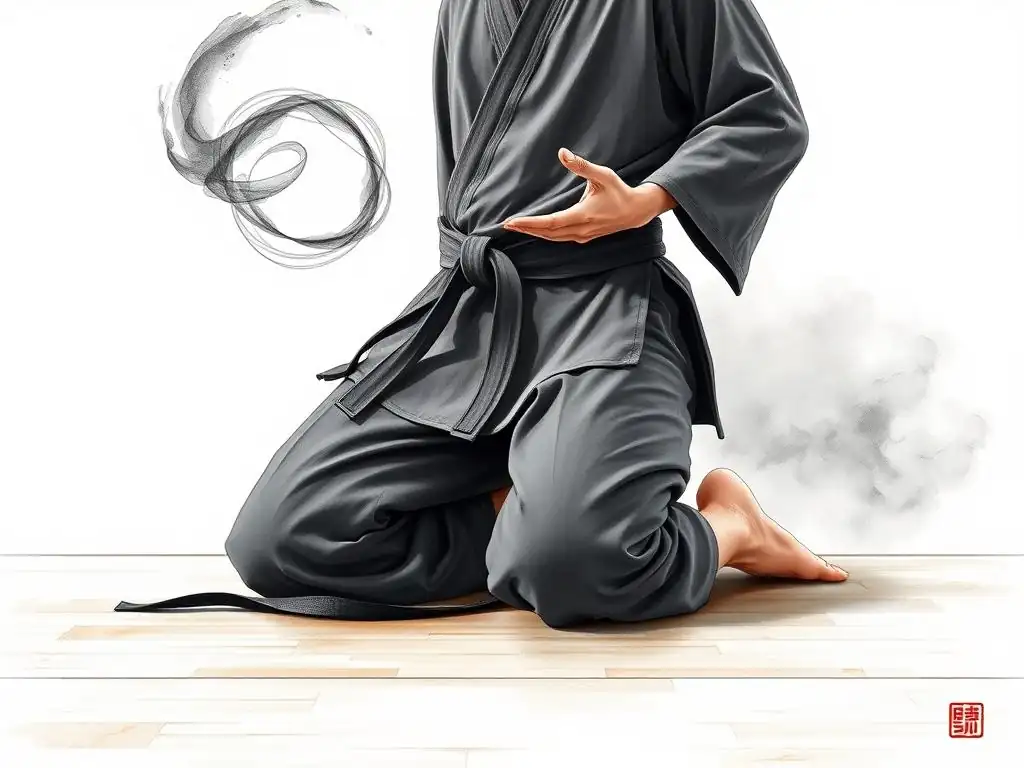
Nikyo, or the "second technique," primarily involves a twist of the wrist and forearm, creating pain and control. For Irimi Nage and Kokyu Nage setups, the most common Nikyo grip variations involve controlling uke's wrist with Nage's hand, often palm-down on the back of uke's hand or palm-up on uke's palm side, while using the other hand to support uke's elbow or forearm to create the leverage for the twist.
A key variation for throw integration is the fluid application during entry or blending, rather than a static, deep lock. For example, a light palm-down Nikyo grip applied as Nage enters for Irimi Nage controls uke's forward reaching arm without fully locking it, allowing for immediate transition into the throw's turning motion.
Another useful variation for Kokyu Nage setups is securing a palm-up Nikyo grip on uke's attacking wrist. As uke pulls or pushes, Nage blends, and the Nikyo grip is used not necessarily for pain, but to disrupt uke's wrist alignment and connection to their center. Nage's other hand might support uke's elbow lightly. This creates a point of control from which Nage can lead uke's energy. The key is that the Nikyo grip is dynamic, adapting to uke's movement and serving as a conduit for Nage's kokyu, making these Irimi nage basic lock techniques highly adaptable.
Common Mistakes to Avoid When Applying Nikyo in Conjunction with Irimi Nage
One common mistake when integrating Nikyo into Irimi Nage is applying the lock too deeply or too early. A full, painful Nikyo lock tends to freeze uke or cause them to resist strongly against the lock itself, making the transition to the throw difficult. The Nikyo should be a control, a disruption, or a guide, not a final lock. Applying it too stiffly also prevents Nage from moving fluidly into the Irimi Nage turn. The control should be just enough to break uke's posture or redirect their energy, allowing Nage's body movement to complete the technique.
Another error is neglecting body positioning. Simply grabbing uke's wrist and applying Nikyo pressure without proper entry and body alignment will be ineffective for setting up Irimi Nage. Nage's body must move simultaneously with the hand control, stepping irimi while securing the Nikyo grip. The power comes from the coordinated body movement and connection, not just the strength of the wrist lock. Mastering Irimi nage basic lock techniques requires integrating the lock application with the fundamental body mechanics of the throw.
Drills for Integrating Nikyo into Kokyu Nage Practice
Effective integration of Nikyo into Kokyu Nage requires drills that emphasize blending and leading, not just locking. A useful drill involves uke making a simple grab (e.g., Katate Dori). Nage practices blending with the force, securing a light palm-up Nikyo grip on the grabbed wrist without applying significant pressure. The focus is on maintaining a connection and using the grip to feel and guide uke's energy as Nage executes a basic Kokyu Nage movement, like stepping offline and extending forward or circularly. The Nikyo grip is a point of contact and control, not a painful restraint.
Another drill involves uke walking forward. Nage practices meeting uke's forward movement, securing a light palm-down Nikyo on one of uke's wrists as they step past. Nage then uses this minimal control to lead uke into a simple Kokyu Nage, focusing on extending energy through the connection established by the Nikyo grip. These drills help practitioners understand how Irimi nage basic lock techniques can function as dynamic controls within the fluid context of Kokyu Nage, rather than just static holds.
Sankyo: Mastering the Technique for Effective Throwing
Sankyo Hand Placement and Body Positioning for Irimi Nage
Sankyo, the "third technique," involves a spiraling twist of the wrist and forearm. For Irimi Nage setups, Sankyo is often applied as Nage enters past uke's arm. Nage secures uke's wrist, typically with one hand gripping the hand/wrist and the other hand controlling the forearm near the elbow.
The key is to initiate the spiral twist while simultaneously moving into the Irimi Nage entry. For instance, against a Yokomen Uchi (side-face strike), as Nage enters and redirects the strike, they can secure a Sankyo grip on the striking arm, applying the spiral twist to disrupt uke's shoulder and balance as they turn for the throw.
Proper body positioning is crucial. Nage's body must be inside uke's line of attack (irimi). The Sankyo application should align with Nage's direction of movement for the throw. As Nage turns, the Sankyo grip helps pull uke's arm into the necessary position, forcing their body to follow. The power of the Sankyo in this context comes from the coordinated movement of Nage's hips and center, not just the strength in the arms applying the twist. This integration of Sankyo mechanics with Irimi nage basic lock techniques is fundamental.
Troubleshooting Sankyo: Adapting to Uke's Resistance
Uke might resist Sankyo by straightening their arm, pulling away, or collapsing their structure. When using Sankyo to set up a throw like Irimi Nage, adapting to this resistance is key. If uke straightens their arm, Nage can transition the Sankyo pressure to focus more on the elbow joint or use the extended arm to facilitate a different throw variation or pin. If uke pulls away, Nage can blend with that energy, using the pulling force to amplify the Irimi Nage turn, maintaining the Sankyo grip as a point of control as uke spins past.
If uke collapses their structure, Nage can follow the collapsing energy, often transitioning the Sankyo into a technique that takes uke downwards, which might still be a form of Irimi Nage (ending low) or lead to a pin. The ability to adapt the Sankyo application based on uke's reaction ensures that the technique remains fluid and effective as a setup or control during the throw. Understanding these adaptations is part of mastering Irimi nage basic lock techniques in dynamic situations.
Sankyo as a Transition Technique in Kokyu Nage Scenarios
Sankyo's spiraling nature makes it an excellent transition technique within Kokyu Nage, particularly for guiding uke's movement. If a Kokyu Nage entry doesn't immediately result in a throw, but Nage has control of uke's arm, applying Sankyo can break uke's posture and facilitate further leading. For example, in a scenario where Nage is blending with uke's forward movement, securing a Sankyo grip allows Nage to control uke's shoulder and torso alignment. By continuing the spiral and leading uke's energy, Nage can guide uke into a throw or off-balance them significantly.
The transition is often subtle. As Nage leads uke's arm for Kokyu Nage, the hand position might naturally lend itself to a Sankyo grip. Nage then applies the Sankyo pressure not as a painful lock, but as a means to disrupt uke's structure and make them easier to lead.
This might involve stepping offline while maintaining the Sankyo, causing uke to spin or fall. Sankyo acts as a 'handle' that allows Nage to manipulate uke's structure and guide their center of gravity during the Kokyu Nage execution. This fluid use is vital for effective Irimi nage basic lock techniques in blending throws.
Yonkyo: Strengthening Your Control in Aikido Throws
Yonkyo Nerve Pressure Points and their Impact on Irimi Nage
Yonkyo, the "fourth technique," involves applying pressure to a specific nerve point on the forearm, typically near the elbow crease or closer to the wrist, often combined with a wrist control. This pressure can be quite uncomfortable and cause uke to instinctively react by withdrawing or collapsing. When used in conjunction with Irimi Nage, Yonkyo is less about setting up the initial entry and more about securing control once Nage is already in close proximity or has partially executed the throw. The nerve pressure provides a strong incentive for uke to comply with Nage's movement.
If Nage has entered with Irimi Nage and has control of uke's arm, applying Yonkyo pressure can prevent uke from resisting the subsequent turn or maintaining their balance. For example, if uke is being turned but tries to stiffen their arm or pull back, applying sharp Yonkyo pressure can cause them to momentarily freeze or collapse, allowing Nage to complete the throw. The impact is primarily psychological and neurological, overriding uke's physical resistance and strengthening Nage's control during the critical phase of the throw, making it a potent addition to Irimi nage basic lock techniques.
Using Yonkyo for Pain Compliance and Throw Execution in Kokyu Nage
In Kokyu Nage, Yonkyo is similarly used more for control and compliance than initial unbalancing. If a Kokyu Nage leads uke into a position where their arm is controlled, applying Yonkyo pressure can ensure they are unable to resist the final phase of the throw or transition to a pin. This is particularly useful in variations where uke is guided downwards. As uke is being led off-balance, securing a Yonkyo grip and applying pressure can prevent them from posting or recovering their base.
For instance, in a Kokyu Nage that brings uke down in front, Nage might end up with control of uke's arm. Applying Yonkyo pressure ensures uke remains bent over and unbalanced, allowing Nage to complete the throw by guiding uke further down or forward. The pain compliance from Yonkyo makes uke's body less resistant to Nage's leading energy, facilitating a smoother and more controlled throw. This application demonstrates how Irimi nage basic lock techniques can be integrated to enhance control during Kokyu Nage execution.
Safety Considerations When Practicing Yonkyo with Throwing Techniques
Practicing Yonkyo in combination with throws requires significant care due to the pain compliance aspect. The pressure can be intense, and transitioning into a throw while applying it increases the risk of injury if uke doesn't respond appropriately or if Nage is not sensitive. Practitioners should always start with minimal pressure, focusing on the form and the potential for pressure, rather than applying full force. Uke must learn to react safely to the pressure, indicating discomfort or yielding to the technique.
Communication between partners is paramount. Uke should be encouraged to tap or verbally signal if the pressure is too much. Nage must develop sensitivity (Aiki) to feel uke's reaction and release pressure or adjust the technique accordingly. When practicing throws like Irimi Nage or Kokyu Nage with Yonkyo integration, the emphasis should be on the setup and control aspect, not the maximal pain application. Safe practice of Irimi nage basic lock techniques involving Yonkyo ensures effective learning without undue risk.
Integrating Joint Locks into Irimi Nage and Kokyu Nage Training
Partner Drills for Seamless Transition Between Locks and Throws
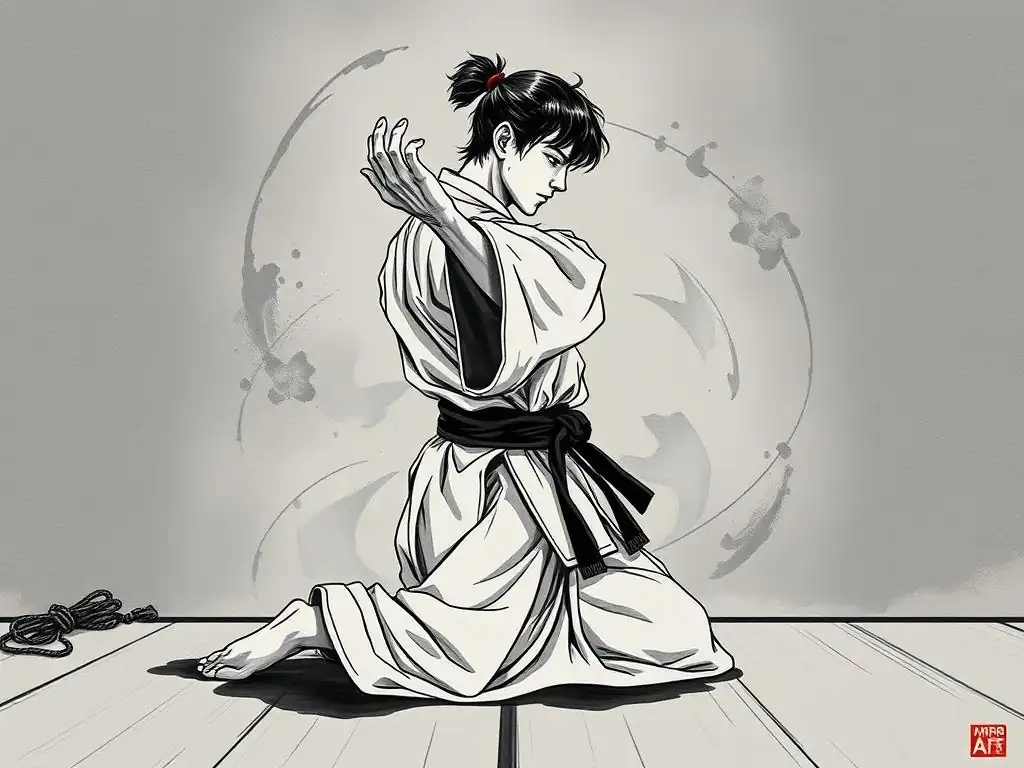
Integrating basic joint locks like Nikyo, Sankyo, and Yonkyo into Irimi Nage and Kokyu Nage training requires specific partner drills that focus on fluidity and transition. A core drill involves uke initiating a standard attack (e.g., Katate Dori, Shomen Uchi). Nage practices their standard throw entry (Irimi Nage or Kokyu Nage) but focuses on securing the appropriate joint lock grip during the entry or blend, rather than executing the throw immediately.
The partners then pause, checking the grip and body position, before Nage completes the throw, ensuring the lock facilitates the movement. This slow, deliberate practice helps engrain the connection.
Another drill focuses on dynamic flow. Uke initiates the attack, and Nage blends or enters, securing the lock grip. Instead of pausing, Nage immediately transitions into the throw, maintaining control via the lock. Uke is instructed to react realistically but safely, allowing the throw to occur if the control is effective. If the throw isn't working, Nage practices smoothly transitioning to a pin or another technique, often still utilizing the initial lock grip. This teaches adaptability and the seamless integration of Irimi nage basic lock techniques within dynamic exchanges.
Developing Sensitivity (Aiki) for Effective Application
Effective integration of joint locks and throws is heavily reliant on developing sensitivity, or Aiki. This means being able to feel uke's intention, balance, and resistance through physical contact. When applying a Nikyo, Sankyo, or Yonkyo grip as part of a throw setup, Nage shouldn't just apply force; they should feel uke's reaction to the control. Is uke pulling away? Stiffening? Collapsing? This feedback dictates how Nage proceeds with the throw. For example, feeling uke pull away from a light Nikyo during an Irimi Nage entry allows Nage to redirect that energy into a powerful turn.
Training sensitivity involves focused practice where partners give subtle feedback. Uke might slightly resist the lock or shift their weight, and Nage must learn to adjust their control and subsequent throw based on these subtle cues. This isn't about brute force; it's about reading and leading uke's energy. Developing this sensitivity allows practitioners to use Irimi nage basic lock techniques not as rigid applications, but as fluid controls that enhance the effectiveness and adaptability of their throws, making Aikido truly dynamic.
Advanced Applications of Basic Locks in Aikido Throwing
Variations and Combinations for Experienced Practitioners
For advanced Aikido practitioners, the basic Nikyo, Sankyo, and Yonkyo grips become starting points for numerous variations and combinations within throwing techniques. Instead of just applying a standard Sankyo, experienced practitioners might apply a reverse Sankyo or combine Sankyo with pressure on a different point. They might transition seamlessly from a Nikyo grip into an Irimi Nage, and if the throw doesn't complete, shift the control to a Kote Gaeshi (wrist return) pin, all while maintaining connection and control.
Advanced applications also involve combining these locks with more complex throws or using them against multiple attackers. For example, using a subtle Nikyo control on one attacker's arm while executing a Kokyu Nage on another. The basic Irimi nage basic lock techniques are no longer isolated movements but building blocks that can be combined and adapted creatively based on the situation, distance, and uke's reaction, showcasing the depth and versatility of Aikido.
Adapting Joint Locks to Different Body Types and Attack Styles
Experienced practitioners learn to adapt the application of Nikyo, Sankyo, and Yonkyo based on uke's body type and attack style. A large, strong uke might require a different angle or point of pressure for a Nikyo setup than a smaller, faster uke. Against a stiff, linear attack, a Sankyo might be applied differently than against a yielding, circular attack. The core principles remain the same, but the specific hand placement, angle of pressure, and timing are adjusted.
For example, using Yonkyo against a very muscular forearm might require slightly shifting the pressure point or combining it with other controls to be effective. Against a very flexible wrist, a standard Nikyo might not provide enough control, necessitating a deeper grip or faster transition into the throw. This ability to adapt basic Irimi nage basic lock techniques to the nuances of different partners and attacks is a hallmark of advanced Aikido skill.
Conclusion: The Power of Basic Locks in Enhancing Irimi Nage & Kokyu Nage
Mastering the Fundamentals for Advanced Aikido Skill
The journey towards advanced Aikido proficiency is deeply rooted in the mastery of fundamental techniques, and the basic joint locks – Nikyo, Sankyo, and Yonkyo – are no exception. While often taught as separate control techniques, their true power is unlocked when they are understood and practiced as integral components of dynamic throws like Irimi Nage and Kokyu Nage.
These basic locks provide essential tools for unbalancing, controlling, and guiding uke throughout the execution of these core throws. Without a solid understanding and fluid application of Irimi nage basic lock techniques, the effectiveness and versatility of Irimi Nage and Kokyu Nage are significantly limited.
By diligently practicing how to seamlessly transition between securing a lock grip and executing a throw, practitioners develop the sensitivity, timing, and body coordination necessary for higher-level Aikido. The principles learned in applying a simple Nikyo for control are directly transferable to more complex techniques and spontaneous situations. Mastering the fundamentals ensures that practitioners build a strong foundation upon which all subsequent learning and advanced applications are based.
The Ongoing Journey of Refining Your Joint Lock and Throwing Techniques.
The integration of basic joint locks with throws like Irimi Nage and Kokyu Nage is not a static skill but an ongoing process of refinement. Even experienced practitioners continue to hone their timing, sensitivity, and adaptability in applying Nikyo, Sankyo, and Yonkyo within the context of dynamic throwing. Each practice session, each new partner, and each different attack presents an opportunity to deepen one's understanding of how these fundamental controls can enhance the effectiveness and fluidity of throws.
Continuously drilling Irimi nage basic lock techniques in various scenarios, focusing on blending, control, and transition, is key to this refinement. It involves moving beyond the mechanical application of techniques and developing the intuitive understanding of distance, timing, and connection that allows for seamless integration. The journey of refining these skills leads to a deeper appreciation of the interconnectedness of all techniques in Aikido and unlocks greater potential in both control and throwing applications.
Frequently Asked Questions
How does nikyo enhance an irimi nage setup?
Nikyo (wrist lock) creates immediate pain and imbalance, forcing the opponent to react. This reaction creates an opening for a smooth transition into irimi nage. The control afforded by nikyo is key.
What role does sankyo play in setting up kokyu nage?
Sankyo (elbow lock) severely limits the opponent's range of motion and posture. This destabilization makes them vulnerable to the circular motion of kokyu nage, allowing for a more effective throw with less resistance.
Why are basic joint locks considered fundamental to these nage-waza (throwing techniques)?
Basic joint locks like nikyo, sankyo, and yonkyo provide precise control over an opponent's body. This control is essential for creating the necessary conditions for successfully executing irimi nage and kokyu nage.
How can understanding the omote and ura variations of these locks improve irimi nage effectiveness?
Mastering both the omote (front) and ura (rear) variations of each lock provides adaptability in combat. This allows you to exploit weaknesses regardless of your opponent's position, maximizing irimi nage's impact.
Yes, MartialArtsMastery.org provides historical overviews, training techniques, philosophical underpinnings, and profiles of legendary practitioners across various martial arts disciplines, including self-defense strategies. They offer a holistic approach to martial arts knowledge.
Final Reflection: Unlocking Potential Through Foundational Techniques
The exploration of Nikyo, Sankyo, and Yonkyo as foundational elements for Irimi Nage and Kokyu Nage reveals a profound truth: mastery of the basics unlocks exponential potential in advanced techniques. These seemingly simple locks, when understood and applied with precision, provide the crucial leverage and control necessary to execute complex throws with fluidity and power. This isn't just about Aikido; it's a testament to the power of fundamentals in any discipline.
The influence of these basic locks extends far beyond the dojo. They represent a deeper understanding of leverage, balance, and connection – principles applicable to communication, problem-solving, and even personal relationships. The ability to subtly shift someone's equilibrium, to guide their movement with minimal force, is a skill that transcends physical application. As Morihei Ueshiba, the founder of Aikido, said: True victory is victory over oneself.
This quote resonates deeply, reminding us that mastering the fundamentals is not just about physical prowess, but about cultivating inner strength and control.
Now, consider how you can apply these principles of foundational mastery in your own life. Are there areas where a deeper understanding of the basics could unlock new levels of skill or understanding? Embrace the discipline of revisiting the fundamentals, of refining your understanding of the core principles. The potential for growth and transformation lies within the mastery of the seemingly simple.
Unlock Your Irimi Nage Potential Now!
Thank you for delving into the intricacies of Nikyo, Sankyo, and Yonkyo and discovering how these locks can revolutionize your Irimi Nage and Kokyu Nage setups. Now, it's time to put theory into practice and elevate your martial arts journey.
Here's how you can take the next step:
- Dedicate this week's training session exclusively to integrating one of these locks (Nikyo, Sankyo, or Yonkyo) into your Irimi Nage drills. Focus on smooth transitions and maintaining balance.
- Explore related grappling techniques on our website to deepen your understanding of joint manipulation and control.
- Share this article with fellow martial artists and discuss which lock feels most natural for you and why.
Which of these locks will you master first to elevate your Irimi Nage game?