
"Asking Hands": Initiating and Controlling Exchanges in Southern Mantis Close Combat

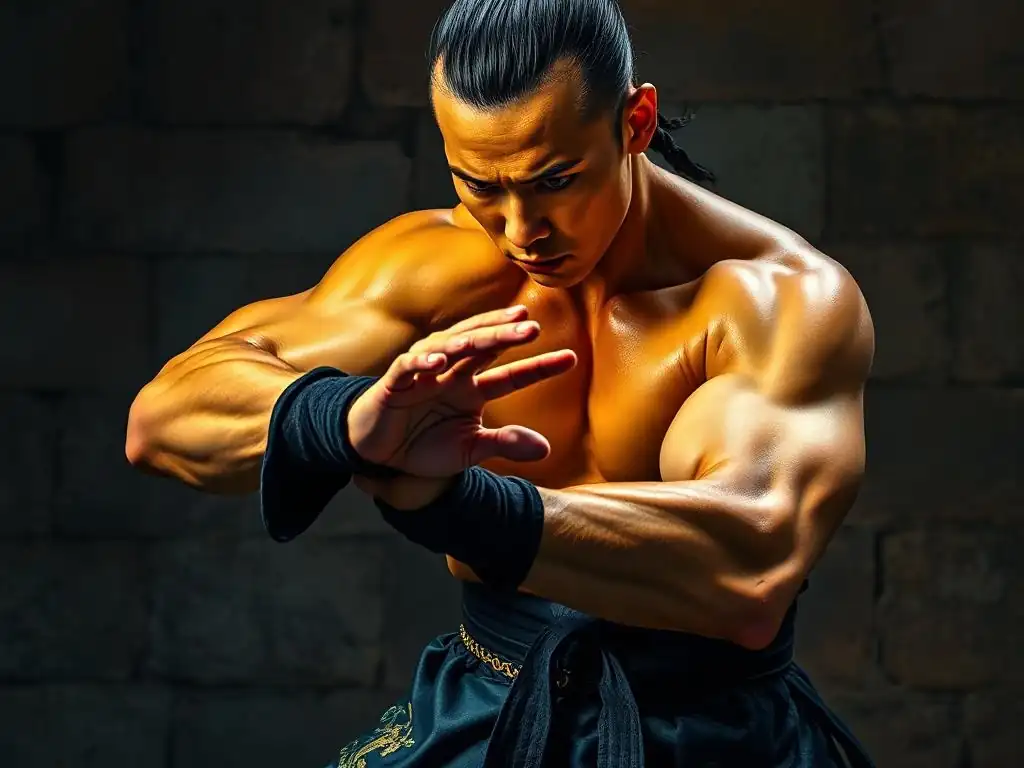
Welcome to Martial Arts Mastery! Delve into the captivating world of combat, philosophy, and self-discovery. This month, we're exploring the intricate strategies of Southern Mantis. Intrigued by the "Asking Hands" principle? Discover how this unique approach to initiating and controlling exchanges can revolutionize your close combat game. Prepare to unlock the secrets of Southern Mantis hand techniques and elevate your martial arts journey!
- Introduction to Southern Praying Mantis Hand Techniques
- Understanding the "Sticky Hands" Concept
- Initiating Combat with "Sticky Hands"
- Controlling the Exchange: Hand Trapping and Joint Locking
- Specific Southern Mantis Hand Forms and Their Applications
- Integrating "Sticky Hands" into Sparring and Self-Defense
- The Importance of Footwork and Body Mechanics
- Training and Development of "Sticky Hands"
- Conclusion: Mastering the Art of "Sticky Hands" in Southern Mantis
-
Frequently Asked Questions
- What is the primary focus of "Asking Hands" in Southern Mantis?
- How does "Asking Hands" relate to the overall philosophy of Southern Mantis?
- What are some key advantages of using "Asking Hands" in self-defense?
- What kind of training is required to effectively utilize "Asking Hands" techniques?
- Where can I learn more about "Southern Mantis hand techniques" beyond "Asking Hands"?
- Final Reflection: The Art of Controlled Exchange
- Unleash Your Inner Mantis: Take the Next Step!
Introduction to Southern Praying Mantis Hand Techniques
The Essence of Southern Mantis Kung Fu: Close-Range Dominance
Southern Praying Mantis, or Nam Siu Lum Tong Long Quan, is a distinct martial art known for its compact structure, rapid-fire hand techniques, and devastating close-range power. Unlike some longer-range styles, its core philosophy revolves around immediately closing distance and overwhelming an opponent within their personal space. This emphasis stems from its historical development, often cited as originating in Southern China, perhaps around the 19th century, adapted for fighting in confined areas such as narrow alleys or crowded markets. The style prioritizes efficiency and directness, seeking to end confrontations swiftly through precise strikes, joint control, and disruption of balance.
The essence lies not just in the techniques themselves, but in their application within this close-quarters paradigm. Practitioners focus on developing explosive power ( Fa Jing) delivered from a relaxed state, often described as 'whipping' or 'shock' power. This is coupled with a highly sensitive tactile awareness developed through specific training drills. The goal is to control the opponent's structure and movement through constant contact and pressure, preventing them from generating power or executing their own techniques effectively. This foundational approach sets the stage for the unique Southern Mantis hand techniques that define the style.
"Sticky Hands": A Foundational Principle of Southern Mantis
Central to mastering Southern Mantis hand techniques is the concept of "Sticky Hands," or Chi Sau in some related Southern styles, though Southern Mantis has its own specific methodologies. This principle is not merely a drill but a fundamental method of interaction and sensing. It involves maintaining tactile connection with an opponent's limbs, primarily the arms, to read their intentions, balance, and force. Through this continuous contact, practitioners develop sensitivity to pressure, direction of force, and subtle shifts in body mechanics.
"Sticky Hands" training is designed to cultivate reflexes that are faster than visual reaction time. By feeling the opponent's movement through the hands, the practitioner can respond instantly, often redirecting force or exploiting openings the moment they occur. This constant physical dialogue allows the Southern Mantis practitioner to stick to the opponent, control their structure, and apply disruptive Southern Mantis hand techniques without disengaging, making it incredibly effective in the close-range encounters the style specializes in.
Understanding the "Sticky Hands" Concept
What are "Sticky Hands" in Southern Mantis?
In Southern Mantis, "Sticky Hands" refers to a sophisticated method of tactile sensitivity and limb control developed through specific partner training exercises. It's not about literally sticking to someone with adhesive force, but rather maintaining a dynamic, yielding, and sometimes aggressively controlling contact with the opponent's arms or body. The aim is to become acutely aware of the opponent's energy, tension, and intended direction of movement through physical touch. This constant feedback loop allows the practitioner to anticipate attacks, neutralize incoming force, and simultaneously launch their own Southern Mantis hand techniques.
This tactile sensitivity is often described as learning to "listen" with your hands. By maintaining contact, you can feel the subtle shifts in muscle tension that precede a strike, the direction of incoming power, or the commitment to a particular technique. This allows for instantaneous reactions – yielding to overwhelming force, redirecting weaker force, or instantly attacking an opening created by the opponent's commitment. It is a cornerstone for applying the diverse range of Southern Mantis hand techniques effectively in live situations.
The Role of Sensitivity and Evasion in "Sticky Hands"
Sensitivity is the cornerstone of effective "Sticky Hands." It is the ability to perceive the opponent's force and intention through touch alone, often before they fully commit to a technique. This acute awareness allows the Southern Mantis practitioner to react preemptively. For instance, feeling a sudden increase in pressure might indicate an incoming push or strike, prompting an immediate yielding or redirection. Feeling a limb retract slightly could signal preparation for a pull or hook, enabling a trapping or counter-attack.
Evasion in the context of "Sticky Hands" isn't necessarily about stepping away, but often involves subtle shifts in angle, structure, and pressure while maintaining contact. The practitioner might yield slightly, change the angle of their limb relative to the opponent's, or shift their weight to redirect or dissipate incoming force without breaking contact.
This 'yielding without breaking contact' is a key aspect, allowing the practitioner to stay connected and continue applying pressure or launching Southern Mantis hand techniques the moment the opponent's force is neutralized or redirected. This dynamic evasion ensures the practitioner remains in a dominant position while the opponent's attack fails to land effectively.
Principles of Force Generation and Delivery
Southern Mantis places significant emphasis on generating explosive power, known as Fa Jing, from a relaxed, grounded structure. This power is not brute muscular force but rather a coordinated release of energy originating from the ground, channeled through the body, and expressed through the hands or other striking surfaces. The principle is to move the whole body behind the strike, even for seemingly small hand movements. This allows a practitioner, even of smaller stature, to generate significant impact capable of disrupting a larger opponent's balance and structure.
Delivery of this force is often described as 'shocking' or 'whipping'. Techniques are typically short, sharp, and delivered with maximum acceleration over a very short distance. The power is concentrated at the point of impact, designed to penetrate or shatter the opponent's structure rather than pushing them away. "Sticky Hands" training helps refine this delivery by teaching the practitioner when and where to release this explosive energy – often at the precise moment an opening is felt or created through tactile sensitivity, making the Southern Mantis hand techniques incredibly potent.
Initiating Combat with "Sticky Hands"
Setting the Stage: Stance and Posture for Offensive Maneuvers
Initiating combat effectively in Southern Mantis relies heavily on adopting a stable yet mobile stance and a compact, protective posture. The typical stance, often a variation of the Sinking Bridge Stance ( Chim Kiu Ma) or Cat Stance ( Ding Ji Ma), provides a low center of gravity, rootedness for generating power, and readiness for explosive movement. The posture is usually upright but relaxed, with elbows held close to the body and hands positioned defensively yet ready to launch rapid attacks. This compact structure minimizes targets while keeping the limbs coiled and ready for action.
The hands are typically held forward, often in a position ready to make contact or intercept. This forward hand position is not just defensive; it's the platform for initiating the 'asking' or 'probing' phase of "Sticky Hands." By presenting the hands, the practitioner invites contact or is ready to initiate it themselves. The stable stance ensures that when contact is made, the practitioner is not easily moved or unbalanced, providing a solid foundation from which to apply Southern Mantis hand techniques and begin controlling the exchange.
Probing and Testing: Using "Sticky Hands" to Gauge the Opponent
Once in position, the Southern Mantis practitioner often initiates contact through "Asking Hands" – a direct application of the "Sticky Hands" principle. This involves gently or subtly making contact with the opponent's guard or lead limbs. This isn't a committed attack, but rather a probe designed to gather information. Through this initial touch, the practitioner begins to gauge the opponent's reaction speed, strength, tension levels, and preferred lines of defense or attack.
This probing allows the practitioner to feel for openings or weaknesses in the opponent's structure or strategy. For example, a light touch might reveal if the opponent is overly tense (making them slow to react) or too relaxed (making them easy to unbalance). It helps identify which arm is stronger, how they react to pressure, or if they have blind spots in their defense. This tactile intelligence gathered through proactive "Asking Hands" is invaluable, informing the practitioner on the best path to transition from probing to a decisive application of Southern Mantis hand techniques.
Creating Openings: Unbalancing and Disrupting the Opponent's Structure
The information gained from probing is immediately used to create openings. By applying subtle pressure, yielding to the opponent's reaction, or using specific Southern Mantis hand techniques like Fook Sau (controlling hand), the practitioner aims to disrupt the opponent's balance and structure. This disruption can be physical, causing them to shift weight awkwardly, or energetic, causing them to commit force in a way that creates an opening elsewhere.
For instance, a slight pressure downwards on the opponent's arm might elicit an upward reaction, lifting their guard slightly and exposing their head or body. A sudden yield might draw them forward off-balance. The goal is to manipulate the opponent's structure through contact, forcing them out of their stable fighting posture. Once the opponent is even momentarily unbalanced or their structure compromised, the Southern Mantis practitioner exploits the resulting opening with rapid, explosive Southern Mantis hand techniques, transitioning from tactile sensing to decisive attack within fractions of a second.
Controlling the Exchange: Hand Trapping and Joint Locking
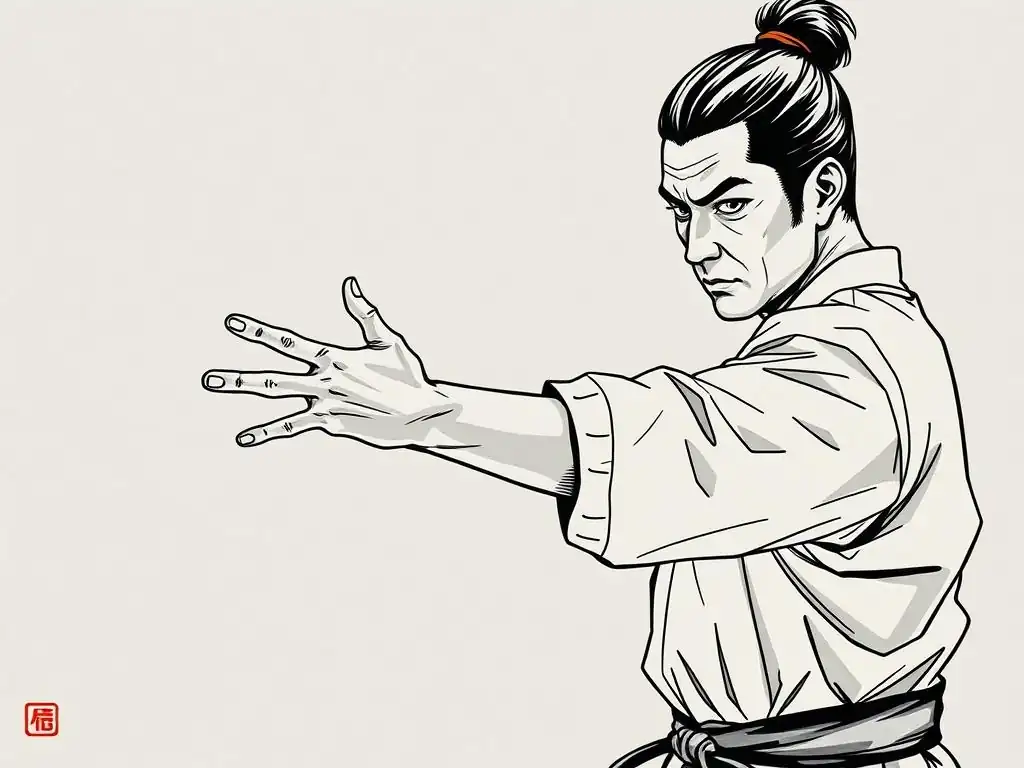
Close-Range Control: The Art of Chin Na in Southern Mantis
Within the close-quarters domain of Southern Mantis, Chin Na (joint locking and seizing techniques) plays a vital role, often integrated seamlessly with "Sticky Hands" principles. While not solely a locking art, Southern Mantis incorporates a range of painful and disruptive joint manipulations and seizing methods designed to control, subdue, or incapacitate an opponent at very close range. These techniques are typically applied when maintaining contact through "Sticky Hands" allows the practitioner to feel the precise angle and timing to attack a joint effectively.
Chin Na applications in Southern Mantis often target the wrists, elbows, shoulders, and even fingers. They are rarely standalone techniques but rather follow-ups to strikes or trapping maneuvers. For example, after trapping an opponent's arm using Southern Mantis hand techniques, the practitioner might immediately transition into a wrist lock or elbow control. The sensitivity developed through "Sticky Hands" is crucial here, as it allows the practitioner to feel the opponent's resistance and adjust the application of the lock instantly for maximum effectiveness or to counter their attempts to escape.
Hand Trapping Techniques: Controlling Limbs and Movement
Hand trapping is a core component of the close-range battle in Southern Mantis, directly utilizing the principles of "Sticky Hands." Trapping involves using one's own limbs to control or restrict the movement of the opponent's limbs, particularly their arms. This prevents them from striking, grappling, or defending effectively. Techniques range from simple presses and controls ( Fook Sau) to more complex entanglements and seizing methods.
Examples of trapping include pinning the opponent's arm against their body or your own, using circular motions to wrap around their limbs, or applying downward or sideways pressure to disrupt their guard. The goal is to neutralize the opponent's primary weapons (their hands and arms) while simultaneously creating opportunities for strikes or Chin Na applications. The constant contact of "Sticky Hands" allows the practitioner to maintain control, feeling the opponent's attempts to free their limbs and adjusting the trap instantly, ensuring continuous dominance in the close-range exchange.
Joint Locking Applications: Subduing and Neutralizing Threats
Joint locking applications in Southern Mantis are potent tools for subduing an opponent without necessarily causing severe injury (though they can be applied with disabling force if needed). By applying pressure against the natural range of motion of a joint, the practitioner can inflict pain, break structure, or render a limb temporarily useless. These techniques are particularly effective in self-defense scenarios where control is paramount.
A common application might involve trapping an opponent's wrist during a "Sticky Hands" exchange and immediately rotating it against its natural movement while applying downward or upward pressure, forcing compliance or creating intense pain. Elbows can be controlled by bending them against their natural angle or applying leverage. The key is the close proximity and control achieved through trapping and "Sticky Hands," which provides the leverage and stability needed to apply the lock effectively before the opponent can react or generate significant counter-force. These Southern Mantis hand techniques for locking are precise and require significant sensitivity and timing.
Specific Southern Mantis Hand Forms and Their Applications
Bong Sau (Wing Arm), Tan Sau (Palm Up Block), Fook Sau (Controlling Hand)
Southern Mantis Kung Fu utilizes a specific lexicon of hand techniques, often practiced within forms, that embody the principles of "Sticky Hands" and close-range combat. Three fundamental techniques frequently encountered are Bong Sau, Tan Sau, and Fook Sau.
- Bong Sau (Wing Arm): This is a yielding, outward-moving arm technique often used to redirect or deflect incoming force. It's not a hard block but a circular, wing-like motion that allows incoming energy to pass by while maintaining contact and control. It's crucial for staying 'sticky' and preventing the opponent's force from crashing directly into your structure. For instance, against a straight punch, Bong Sau might be used to circle the forearm outwards, guiding the punch past the body while keeping the hand connected to the opponent's arm.
- Tan Sau (Palm Up Block): Tan Sau involves the palm facing upwards, typically used as a short, sharp rising or forward motion. It can be used to deflect incoming strikes, particularly those coming downwards or inwards, or as a probing or controlling hand. Its structure allows for quick transitions to trapping or striking. A common application is using Tan Sau to intercept an incoming hook punch, using the upward palm to deflect it while simultaneously positioning for a follow-up strike or trap with the other hand.
- Fook Sau (Controlling Hand): Fook Sau is perhaps the epitome of the "Sticky Hands" principle. It is a hand held with fingers pointing slightly downwards, used to apply pressure, feel for openings, or control the opponent's limb by 'listening' to their force. It's a versatile technique used for probing, maintaining contact, trapping, and setting up other attacks. When the opponent pushes, Fook Sau might yield and redirect; when they pull, it might follow and control. It's the primary tool for tactile feedback and limb management in close range.
These three, along with many other Southern Mantis hand techniques, form the foundation for controlling the close-range exchange. They are practiced extensively in forms and partner drills to build the necessary structure, sensitivity, and reflexes.
Analyzing the Biomechanics of Key Techniques
Analyzing the biomechanics of key Southern Mantis hand techniques reveals their efficiency and power generation methods. Techniques like Bong Sau and Tan Sau utilize circular or yielding movements that leverage the structure of the forearm and the rotation of the body. Bong Sau's outward circle uses the bone structure to redirect force, minimizing muscular effort. Tan Sau's upward angle presents a strong structural barrier capable of deflecting force upwards or outwards. Both techniques are designed to maintain a connected structure back to the core, ensuring stability and allowing for immediate transitions.
Fook Sau's effectiveness lies in its relaxed structure and sensitivity. The slightly cupped hand and downward-pointing fingers allow for subtle manipulation and feeling of the opponent's limb. The power, when applied through Fook Sau for trapping or pressing, comes from the whole body weight and root, not just isolated arm strength.
This ensures that even seemingly gentle Southern Mantis hand techniques have the potential for significant control or disruption. The rapid, explosive power ( Fa Jing) delivered through strikes, like a Chop Sau (chopping hand) or Biu Sau (thrusting fingers), relies on rapid acceleration from a relaxed state, engaging the core and hips to generate maximum force over a short distance, often measured in mere inches, capable of delivering hundreds of pounds of force on impact in expert demonstrations.
Drills and Exercises to Develop Hand Sensitivity and Control
Developing proficiency in Southern Mantis hand techniques requires dedicated training, particularly drills focused on sensitivity and control. Partner drills are paramount for cultivating "Sticky Hands."
- Single Hand Sticky Hands: Two partners maintain contact with one hand each (e.g., right hand to right hand), feeling each other's pressure and attempting to subtly control or unbalance. This develops basic sensitivity.
- Double Hand Sticky Hands: Similar to single hand, but with both hands engaged, allowing for more complex interactions, trapping, and transitions between techniques like Bong Sau, Tan Sau, and Fook Sau. This drill directly practices applying these core Southern Mantis hand techniques in a dynamic environment.
- Rolling Hands (Lui Sau): A continuous, circular pattern of contact that teaches yielding, following, and redirecting force while maintaining connection. This is a fundamental "Sticky Hands" exercise.
- Specific Technique Drills: Practicing the application of individual techniques like Bong Sau against a specific attack (e.g., a straight punch) repeatedly to refine structure, timing, and power delivery.
- Force Testing Drills: Partners apply varying levels of pressure, and the recipient must respond appropriately by yielding, redirecting, or countering, honing the ability to 'read' force through touch.
These exercises, practiced diligently, build the tactile awareness, structural integrity, and reflexive application necessary for effective Southern Mantis hand techniques in close combat.
Integrating "Sticky Hands" into Sparring and Self-Defense
Live Sparring Application: Applying "Sticky Hands" Under Pressure
Integrating "Sticky Hands" principles into live sparring is the crucial step from theoretical understanding and drilling to practical application. Sparring under pressure requires the practitioner to apply sensitivity and control against a non-compliant, actively resisting opponent. Initially, this might feel awkward, as the dynamic is faster and less predictable than drills. However, the core principles remain: maintain contact where possible, feel the opponent's energy, use tactile feedback to anticipate actions, and exploit openings with rapid Southern Mantis hand techniques.
In sparring, "Sticky Hands" isn't about clinging to the opponent, but using brief moments of contact to gain information and control. A parry might instantly transition into a trap, a blocked punch might lead to feeling the opponent's balance, or a clinch situation becomes an opportunity for Chin Na. Successful application under pressure requires the reflexes built in drills to become instantaneous, allowing the practitioner to flow seamlessly between feeling, yielding, controlling, and striking. The ability to remain relaxed and sensitive while under the stress of sparring is key to making these Southern Mantis hand techniques effective.
Adapting "Sticky Hands" to Different Combat Scenarios
The principles of "Sticky Hands" and Southern Mantis hand techniques are highly adaptable to various combat scenarios, from one-on-one stand-up to grappling range, though the style specializes in the close-range striking/trapping distance. In a stand-up scenario, the focus is on using "Asking Hands" to initiate contact, probe defenses, and disrupt structure for striking or trapping.
If the situation moves into a clinch, the sensitivity developed through "Sticky Hands" becomes even more critical for controlling posture, feeling for throws or takedowns, and applying close-quarters strikes or Chin Na. While Southern Mantis isn't primarily a ground-fighting art, the principles of maintaining contact, feeling pressure, and controlling limbs can still offer advantages if the fight goes to the ground, allowing for control or transitions back to standing.
The core idea is that tactile sensitivity is a universal tool for understanding and manipulating an opponent's force and structure, regardless of the specific context. The practitioner learns to apply the intent and principle of Southern Mantis hand techniques even when the physical form might slightly adapt to the situation.
Self-Defense Strategies Utilizing Southern Mantis Hand Techniques
In real-world self-defense, the directness and close-range focus of Southern Mantis hand techniques are highly practical. Encounters often happen at close quarters, negating the need for long-range footwork and favoring immediate, decisive action. "Asking Hands" can be used defensively to intercept incoming attacks and transition immediately into control or counter-strikes.
Strategies include:
- Immediate Entry and Control: Using probing Southern Mantis hand techniques to close distance safely and establish control over the opponent's arms.
- Disruption and Striking: Employing techniques like Fook Sau or Bong Sau to disrupt the opponent's balance or guard, followed by rapid, powerful strikes to vulnerable targets (eyes, throat, groin, solar plexus).
- Chin Na for Control: Utilizing joint locks and seizing techniques to quickly incapacitate an aggressor or gain compliance, particularly useful in situations where causing minimal injury is preferred or necessary. A swift wrist lock or finger bend can deter or control an attacker without a full-force strike.
- Maintaining Contact in a Struggle: Using "Sticky Hands" sensitivity to manage a struggle, preventing the opponent from gaining a dominant position or effectively striking, while looking for opportunities to escape or counter.
These strategies leverage the core strengths of Southern Mantis hand techniques: sensitivity, control, and explosive close-range power, making them highly effective tools for personal safety.
The Importance of Footwork and Body Mechanics
Coordinating Hand Techniques with Agile Footwork
While Southern Mantis is renowned for its hand techniques, effective application is inextricably linked to precise and agile footwork. Footwork provides the foundation for structure, power generation, and mobility. Southern Mantis footwork is typically compact and rooted, allowing for rapid, short-range movements necessary in close combat. Stances provide stability, but footwork allows the practitioner to adjust distance, change angles, and follow or evade the opponent while maintaining optimal striking or controlling range for their Southern Mantis hand techniques.
Techniques like Chim Kiu Ma (Sinking Bridge Stance) allow for rooted power, while transitions like the Ding Ji Ma (Cat Stance) enable quick shifts in weight and position. Coordinating hand techniques with footwork means that as the hands probe or control, the feet simultaneously adjust the distance to maintain the critical close range. As an opening is created, a small, explosive step might accompany the strike to add body weight and power.
Conversely, footwork can be used to evade incoming force felt through "Sticky Hands" while staying close enough to counter immediately. The hands and feet work in concert, a principle often trained through specific forms and movement drills.
Utilizing Body Mechanics for Power and Stability
The power behind Southern Mantis hand techniques comes primarily from efficient body mechanics, not just arm strength. The concept of Fa Jing (explosive power) relies on the coordinated movement of the entire body, from the ground up. Power is generated by rooting through the legs, rotating the hips and torso, and releasing energy through the striking limb. This makes strikes incredibly potent, capable of significant impact even when delivered from short distances.
Stability is maintained through a low center of gravity and proper skeletal alignment. The compact posture and rooted stances ensure that the practitioner can absorb or redirect force without being easily unbalanced. Body mechanics also dictates how force is received; yielding movements in "Sticky Hands" utilize skeletal structure and whole-body shifting to dissipate energy rather than relying solely on muscular resistance. Mastering Southern Mantis hand techniques involves understanding how to harness and control the body's structure and movement to generate maximum force and maintain unwavering stability.
Combining Hand and Foot Techniques for Fluid Combinations
True mastery of Southern Mantis close combat lies in the fluid combination of hand techniques, footwork, and body mechanics. These elements are not isolated but work together in seamless transitions. "Sticky Hands" contact informs the footwork – if the opponent pushes, the feet might shift back slightly while the hands yield and redirect. If the opponent pulls, the feet step forward to maintain contact and close distance.
Strikes are delivered with the full support of body weight, driven by footwork and hip rotation. Trapping techniques are often accompanied by subtle shifts in stance or weight to gain leverage. Forms training emphasizes these combinations, linking sequences of Southern Mantis hand techniques with specific steps and body movements. Live drilling and sparring then challenge the practitioner to apply these learned combinations spontaneously and effectively against resistance, ensuring that the hands, feet, and body move as a single, coordinated unit in the heat of combat.
Training and Development of "Sticky Hands"
Partner Drills for Developing Sensitivity and Reflexes
Partner drills are the cornerstone of developing "Sticky Hands" sensitivity and the rapid reflexes needed for Southern Mantis hand techniques. These exercises provide the essential tactile feedback that cannot be replicated through solo training. Drills progress from simple, structured movements to more complex, free-flowing interactions.
Basic drills like single and double hand rolling hands teach the fundamental feeling of yielding and following. More advanced drills introduce variations in force, direction, and speed, challenging the practitioner to adapt instantly. Drills specifically focused on applications might involve one partner simulating a specific attack (e.g., a punch or grab), and the other using "Sticky Hands" principles to neutralize and counter with appropriate Southern Mantis hand techniques. Regular, consistent practice with a skilled partner is vital for calibrating one's sensitivity and developing the instinctive, split-second reactions that define high-level "Sticky Hands" proficiency.
Solo Training Methods for Refining Hand Techniques
While partner drills are crucial for sensitivity, solo training is essential for refining the structure, power generation, and coordination of individual Southern Mantis hand techniques. Solo practice allows the practitioner to focus on their own body mechanics without external resistance.
Methods include:
- Form Practice: Repeating Southern Mantis forms diligently to internalize the sequences, stances, footwork, and the specific shapes and movements of the hand techniques. Forms build the muscle memory and structural integrity.
- Target Practice: Striking padded targets or heavy bags to develop power generation ( Fa Jing) and accuracy for techniques like palm strikes, knuckle strikes, and chopping hands. This helps translate the body mechanics into physical impact.
- Air Techniques: Practicing techniques in the air, focusing on speed, relaxation, and the proper release of power. This helps refine the whipping motion and timing without the need for a partner or target.
- Structure Holding: Maintaining specific hand positions and stances for extended periods to build isometric strength and structural integrity required for techniques like Fook Sau or Bong Sau.
Solo training complements partner work, ensuring that the practitioner's own tools – their body and techniques – are sharp and ready for application during "Sticky Hands" exchanges.
Gradual Progression: From Basic Drills to Advanced Applications
The development of "Sticky Hands" and effective Southern Mantis hand techniques follows a logical, gradual progression. Training typically begins with mastering fundamental stances and basic hand shapes. This is followed by introductory partner drills like single-hand rolling, focusing solely on feeling and following. As sensitivity develops, double-hand drills are introduced, incorporating core techniques like Bong Sau, Tan Sau, and Fook Sau in structured patterns.
Progression then moves to less structured drills, introducing variations in force, timing, and opponent reactions. Application drills focus on using "Sticky Hands" to set up strikes, traps, and Chin Na. Finally, the practitioner integrates these principles into live sparring, starting with light contact and gradually increasing intensity. This systematic approach ensures that the foundational sensitivity and structural principles are deeply ingrained before attempting to apply complex Southern Mantis hand techniques under the dynamic conditions of combat. Mastery is a journey of continuous refinement, constantly linking the tactile feedback of "Sticky Hands" to instantaneous, effective action.
Conclusion: Mastering the Art of "Sticky Hands" in Southern Mantis
The Path to Proficiency: Dedication and Continuous Learning
Mastering the art of "Sticky Hands" and the sophisticated Southern Mantis hand techniques is a lifelong endeavor requiring dedication, patience, and continuous learning. It is not a technique that can be learned superficially; it demands deep physical and mental engagement. Proficiency comes from countless hours spent in solo practice refining structure and power, and even more hours in partner drills cultivating sensitivity and reflexive responses.
The path involves consistently returning to the fundamentals, even as advanced applications are explored. The ability to remain relaxed under pressure, to feel the opponent's subtle intentions, and to react spontaneously with appropriate Southern Mantis hand techniques are skills honed over years. A dedicated practitioner seeks feedback from experienced teachers and training partners, constantly identifying areas for improvement and refining their understanding of timing, distance, and energy management within the close-range sphere of Southern Mantis.
The Legacy of "Sticky Hands": A Timeless Principle of Close Combat
The principle of "Sticky Hands" stands as a timeless legacy within Southern Mantis Kung Fu and related Southern Chinese martial arts. It represents a highly refined method of engaging in close combat that transcends brute force. In an era of increasing emphasis on sport fighting, the core principles of tactile sensitivity, structure control, and explosive short-range power remain incredibly relevant for self-defense and a deeper understanding of martial arts mechanics.
The ability to feel and adapt to an opponent's energy, rather than simply meeting force with force, offers a sophisticated approach to combat that is efficient and effective. The Southern Mantis hand techniques, guided by this principle, provide a comprehensive toolkit for controlling and overcoming an opponent in the critical zone where most physical altercations occur. The legacy continues through dedicated practitioners who preserve and evolve these profound methods.
Integrating Fa Jing (Explosive Power) with Sticky Hands
The ultimate expression of effective Southern Mantis hand techniques lies in the seamless integration of "Sticky Hands" sensitivity with Fa Jing (explosive power). "Sticky Hands" provides the 'when' and 'where' – the instantaneous awareness of an opening or opportunity. Fa Jing provides the 'how' – the ability to deliver devastating power instantly through that opening.
Without "Sticky Hands," Fa Jing strikes might be powerful but mistimed or misdirected. Without Fa Jing, "Sticky Hands" might provide excellent control and sensitivity but lack the decisive force needed to end the encounter. The synergy between the two is what makes Southern Mantis close combat so formidable. The practitioner feels the precise moment of imbalance or exposure through touch and simultaneously unleashes coiled, explosive energy through a short, sharp Southern Mantis hand technique, overwhelming the opponent before they can recover or react. This integration is the pinnacle of Southern Mantis training, turning tactile awareness into decisive, powerful action.
Frequently Asked Questions
What is the primary focus of "Asking Hands" in Southern Mantis?
The "Asking Hands" technique focuses on initiating and controlling close-combat exchanges. It emphasizes sensitivity and rapid response to an opponent's movements.
How does "Asking Hands" relate to the overall philosophy of Southern Mantis?
It embodies the Southern Mantis principle of sticking and following, using subtle movements to feel an opponent's force and exploit weaknesses. Close-range control is paramount.
What are some key advantages of using "Asking Hands" in self-defense?
"Asking Hands" allows for preemptive control, disrupting an attacker's balance and creating openings for strikes. It's effective in confined spaces due to its close-quarters nature.
What kind of training is required to effectively utilize "Asking Hands" techniques?
Training involves developing sensitivity through partner drills, focusing on correct posture and power generation from the entire body, not just the arms.
Where can I learn more about "Southern Mantis hand techniques" beyond "Asking Hands"?
MartialArtsMastery.org offers a wealth of information on Southern Mantis, including historical overviews, training tips, and practical self-defense strategies related to the discipline.
Final Reflection: The Art of Controlled Exchange
The intricate dance of Southern Mantis close combat, as explored in this article, transcends mere physical engagement; it reveals a profound understanding of initiating and controlling exchanges. The techniques discussed are not just historical relics, but a living testament to the power of strategic thinking and precise execution, principles that resonate deeply in today's fast-paced and competitive world.
The enduring influence of Southern Mantis hand techniques lies in their ability to teach us about leverage, timing, and the importance of anticipating our opponent's moves. This study has reinforced my own appreciation for the discipline and mental fortitude required to master such a complex art. The supreme art of war is to subdue the enemy without fighting.
- Sun Tzu. This quote perfectly encapsulates the essence of Southern Mantis, where the goal is not simply to strike, but to control the flow of combat and dictate the outcome.
Now, consider how the principles of controlled exchange can be applied beyond the martial arts. How can you initiate and control the "exchanges" in your own life – in your relationships, your career, your personal growth? Embrace the strategic thinking, the precise execution, and the unwavering discipline that define Southern Mantis, and you will find yourself mastering not just a fighting style, but the art of living a more purposeful and impactful life.
Unleash Your Inner Mantis: Take the Next Step!
Thank you for exploring the fascinating world of Southern Mantis close combat with us. We hope this article has ignited your passion and provided valuable insights into initiating and controlling exchanges. Now, it’s time to translate theory into action.
- Begin immediately by practicing the fundamental Asking Hands techniques. Focus on fluidity and precision in your movements.
- Delve deeper into Southern Mantis: Research the lineage and philosophy to contextualize your training and broaden your comprehension.
- Share this article with your martial arts community and spark a discussion about its principles – spread the knowledge!
What are the Asking Hands techniques you are going to start with right now?