
Choy Li Fut's "Circles and Lines": How Sacred Geometry Defines Long and Short Techniques

Welcome to Martial Arts Mastery!
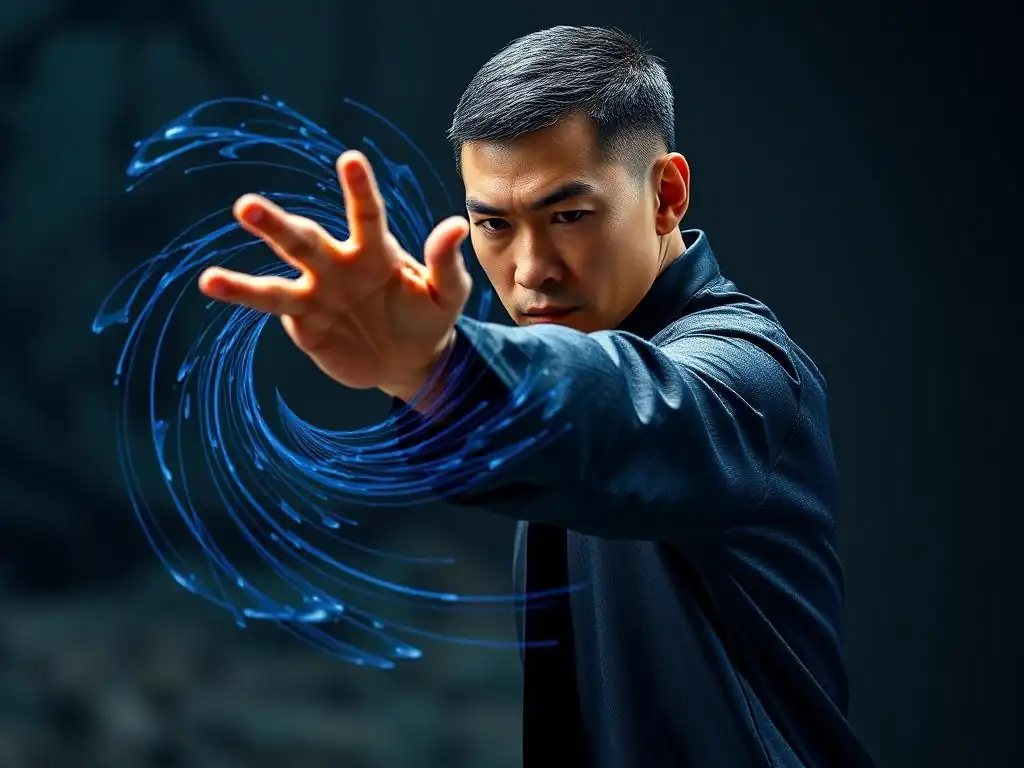
Dive into the fascinating world where geometry meets combat. Ever wondered how seemingly simple circles and lines can define the devastating power of a martial art? In this article, we explore the intricate Choy Li Fut circle techniques, uncovering the secrets behind their effectiveness and how they integrate into both long-range and close-quarters combat. Prepare to unlock the hidden geometry within this captivating art form and discover how these principles can elevate your understanding of martial arts. Are you ready to master the circle?
- Choy Li Fut's "Circles and Lines": How Geometric Principles Define Offensive and Defensive Strategies
- Understanding Choy Li Fut's Geometric Principles in Combat
- Choy Li Fut Circle Techniques: A Deep Dive
- Choy Li Fut Line Techniques: Directness and Efficiency
- Offensive Strategies: Maximizing Attack with Circles and Lines
- Defensive Strategies: Evasion and Control Through Geometry
- The Interplay of Circles and Lines in Choy Li Fut Forms
- Mastering the Choy Li Fut System: Integrating Circles and Lines for Combat Effectiveness
-
Frequently Asked Questions
- What is the significance of "circles and lines" in Choy Li Fut?
- How does Choy Li Fut's use of circles relate to its self-defense applications?
- Can you give an example of a Choy Li Fut technique that exemplifies the "circle and line" principle?
- How does understanding sacred geometry enhance one's understanding of Choy Li Fut circle techniques?
- Does Choy Li Fut's emphasis on "circles and lines" make it more effective for long-range or short-range combat?
- Final Reflection: Embracing the Flow of Choy Li Fut
- Unleash Your Inner Choy Li Fut Master!
Choy Li Fut's "Circles and Lines": How Geometric Principles Define Offensive and Defensive Strategies
Understanding Choy Li Fut's Geometric Principles in Combat
Choy Li Fut, a dynamic and versatile Southern Chinese martial art, distinguishes itself through its unique blend of long-range techniques and close-quarter combat. At the heart of its methodology lies a sophisticated understanding of geometry, specifically the interplay between circular and linear movements. This dualistic approach allows practitioners to adapt fluidly to various combat ranges and situations, making the system highly effective for both offense and defense. The strategic application of these geometric principles is fundamental to generating power, maintaining balance, evading attacks, and controlling an opponent.
The founders and masters of Choy Li Fut recognized that natural movement often involves arcs and straight lines. By consciously incorporating these shapes into their techniques, they created a system that leverages natural body mechanics for maximum efficiency and power. Whether delivering a devastating blow from a distance or navigating the chaotic space of close-quarters fighting, the practitioner relies on these underlying geometric concepts to guide their actions, ensuring every movement serves a purpose and contributes to the overall combat strategy.
The Significance of Circular Motion in Choy Li Fut
Circular motion is a cornerstone of Choy Li Fut, permeating everything from hand techniques and footwork to body mechanics. These sweeping, arcing movements are not merely aesthetic; they serve crucial practical purposes. Circular techniques excel at generating centrifugal force, allowing strikes to build momentum and deliver powerful, whipping impacts, often surpassing the power generated by pure linear force alone over a specific range. Furthermore, the continuous nature of circular movement facilitates flow and transitions, enabling practitioners to chain techniques together seamlessly and adapt quickly to changing circumstances.
Beyond power generation, Choy Li Fut circle techniques are vital for defense and control. They are highly effective for deflecting incoming attacks, trapping limbs, and disrupting an opponent's balance. The circular nature allows for redirection of force rather than direct opposition, conserving the practitioner's energy while simultaneously creating openings. This emphasis on circularity distinguishes many Choy Li Fut styles and provides a unique framework for understanding its combat applications, particularly in techniques designed to control the space around the practitioner.
Linear Movements and Power Generation in Choy Li Fut
While celebrated for its circularity, Choy Li Fut also heavily relies on direct, linear movements. These straight-line attacks and defenses provide speed, precision, and penetrative power. Linear techniques are essential for closing distance rapidly, launching surprise attacks, and delivering focused force to specific targets. They represent the shortest distance between two points, making them inherently efficient for direct engagements.
The power in linear Choy Li Fut techniques often comes from explosive hip rotation, forward body mass commitment, and the principle of 'fa jing' (explosive power). Unlike the whipping power of circular strikes, linear techniques emphasize piercing or driving force. Combining the rooted stability of low stances with a sudden, linear extension of a limb allows practitioners to project significant force forward, capable of overwhelming an opponent's guard or breaking through their structure. This duality of employing both circular and linear forces provides Choy Li Fut practitioners with a comprehensive arsenal.
Choy Li Fut Circle Techniques: A Deep Dive
Choy Li Fut's reputation for powerful, sweeping movements is largely built upon its extensive repertoire of circle techniques. These methods are integral to both offense and defense, enabling practitioners to manage range, generate force, and control the flow of combat. Mastering these circular principles is key to unlocking the full potential of the system.
Exploring the "Circle Hand" (Wun Sao) in Choy Li Fut
The "Circle Hand" or Wun Sao is one of the most fundamental and versatile Choy Li Fut circle techniques. It involves a continuous, circular motion of the arm, typically originating from the shoulder or elbow. This technique is not a single static block but a dynamic, flowing movement used for myriad purposes, including parrying, trapping, deflecting, and even striking. Its circular path allows it to intercept attacks coming from various angles and redirect their force away from the practitioner's center line.
Wun Sao can be executed horizontally, vertically, or diagonally, adapting to the angle of the incoming attack. A typical application might involve using a downward circular motion to deflect a high punch or an outward circle to parry a side strike. The power and effectiveness of Wun Sao stem from its continuous motion; it's not just about stopping a blow but about blending with it, redirecting it, and immediately transitioning into a counter-attack or control technique. This technique exemplifies how Choy Li Fut circle techniques prioritize fluidity and control.
Applications of Wun Sao for Deflection and Redirection
Wun Sao is primarily renowned for its defensive applications, particularly in deflection and redirection. When an opponent launches a strike, the practitioner meets the incoming force with the circular motion of their arm. Instead of a hard block that meets force with equal force, the circular path guides the opponent's limb away from the target area. This redirection requires less energy than a direct block and simultaneously disrupts the opponent's balance and structure.
For instance, a practitioner might use an outward Wun Sao to deflect a straight punch, causing the opponent's arm to continue past their body, leaving them vulnerable. This redirection can be quite powerful; skilled practitioners can use the opponent's own momentum against them, amplifying the effect. This principle is a core component of many Choy Li Fut circle techniques used in close range, providing continuous protection while setting up offensive opportunities.
Utilizing Circular Footwork for Evasion and Positioning
Circular footwork is as critical as circular hand techniques in Choy Li Fut. Footwork, particularly the various circular steps, allows practitioners to move efficiently around their opponent, changing angles, creating distance, or closing in. This type of movement is essential for evading linear attacks and positioning oneself advantageously for launching Choy Li Fut circle techniques or linear power strikes.
The concept of moving "off-line" is paramount. Instead of retreating or advancing directly, circular footwork enables the practitioner to step to the side or around the opponent, moving out of the line of fire while simultaneously gaining a superior angle for attack or control. This dynamic positioning keeps the opponent guessing and makes it difficult for them to land effective linear strikes.
Mastering the Choy Li Fut Circle Step (Yuen Bo)
The "Circle Step," known as Yuen Bo (or variations depending on the lineage), is a fundamental Choy Li Fut circle technique for footwork. It involves stepping in a circular path around the opponent, often maintaining a relatively constant distance or closing in from an angle. This step allows practitioners to pivot and shift weight smoothly, facilitating transitions between stances and techniques.
Mastering Yuen Bo enables evasive maneuvers like circling away from a powerful attack or circling in to jam an opponent's long-range techniques. For example, a practitioner might use a Yuen Bo to step outside the arc of a wide hook punch, simultaneously positioning themselves to counter-attack with a short-range strike or a circular hand technique like Wun Sao for control. Consistent practice of this footwork is crucial for developing the fluidity and adaptability required in Choy Li Fut combat.
Choy Li Fut Line Techniques: Directness and Efficiency
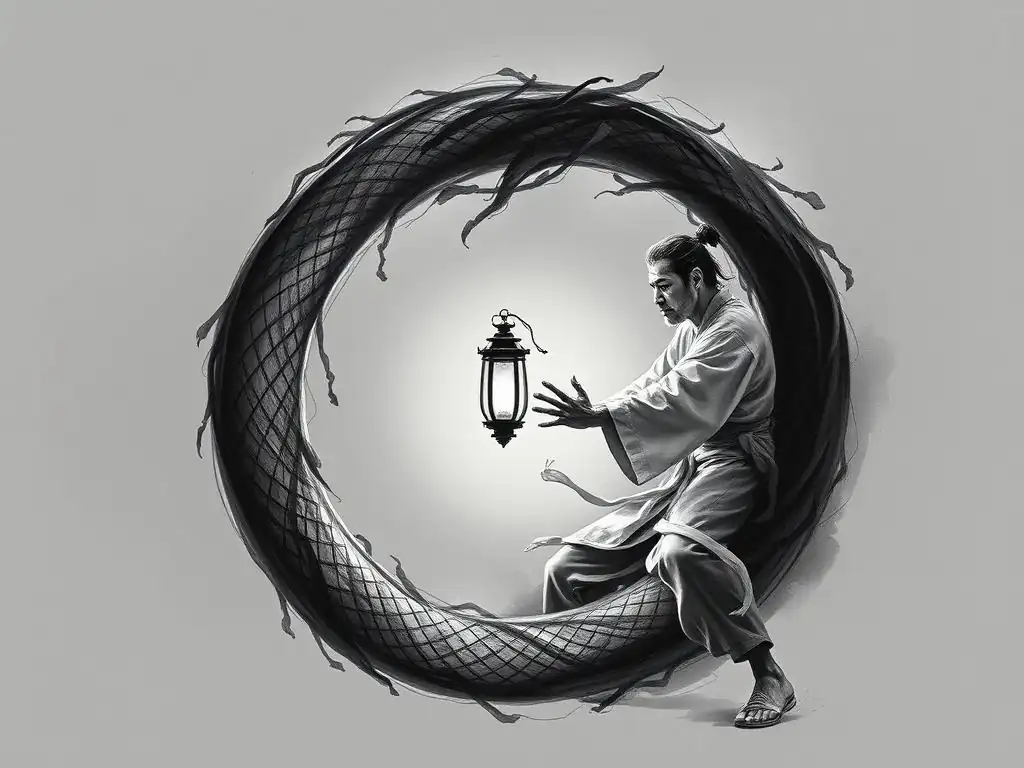
While circularity is distinctive, Choy Li Fut's effectiveness is equally dependent on its direct, linear attacks. These techniques provide the necessary force and speed for closing distance and delivering impactful strikes, complementing the strategic advantages offered by circular movements.
The Importance of Straight Punches (Chung Kuen) in Choy Li Fut
The straight punch, or Chung Kuen, is a foundational linear technique in Choy Li Fut. While appearing simple, its execution involves precise body mechanics to generate maximum penetrative power. Unlike some boxing straight punches, Choy Li Fut's straight punch often incorporates a powerful hip rotation and forward weight transfer from a solid stance, driving the force directly through the fist to the target.
Chung Kuen is the shortest distance between two points and is invaluable for rapid, direct attacks. It can be used to probe the opponent's defense, stun them, or set up more complex combinations. Its linear nature makes it difficult to deflect with simple blocks, often requiring more sophisticated evasive or circular defensive maneuvers from the opponent. The speed and focus of the straight punch make it a critical component of Choy Li Fut's offensive arsenal.
Variations of the Straight Punch for Different Ranges
Choy Li Fut employs variations of the straight punch adapted for different combat ranges. At long range, the Chung Kuen might involve a slight forward step or lunge to extend reach, leveraging the full extension of the arm and body weight. The power is generated through a whip-like motion from the ground up, through the legs, hips, and torso.
At medium range, the straight punch is often delivered with less step but still significant hip rotation, focusing on speed and accuracy. In close quarters, a short, sharp, linear 'inch punch' or Chung Kuen variation can be delivered with minimal visible movement but explosive internal power generated through focused muscle contraction and body alignment. Understanding these variations allows the practitioner to apply the appropriate linear force regardless of the distance to the opponent.
Linear Kicks for Striking and Maintaining Distance
Linear kicks are another vital element of Choy Li Fut's long-range game. Techniques like the front kick, side kick, and piercing kick ( Chuen Tui) provide powerful options for striking targets at a distance, interrupting an opponent's advance, or creating space. Their linear trajectory makes them fast and direct, aiming to penetrate the opponent's guard or structure.
These kicks are launched with explosive power, often from a stable stance, driving the force directly forward. They are particularly useful for controlling the distance in a fight, preventing an opponent from closing in effectively. A well-timed linear kick can halt an attack, create an opening, or even end the confrontation outright due to its focused impact.
The Power of the Piercing Kick (Chuen Tui) and its Applications
The Chuen Tui, or "Piercing Kick," is a prime example of a powerful linear technique in Choy Li Fut. It is typically delivered as a straight thrusting kick, often targeting the opponent's midsection or lower body. The power comes from driving the leg straight forward, leveraging the body's mass and hip extension behind the kick.
Chuen Tui is effective for maintaining distance or disrupting an opponent's balance and forward momentum. For instance, a practitioner might use a Chuen Tui to the stomach to stop a rushing opponent or to the knee to disrupt their base. Its linear nature means it follows a direct path, making it difficult to evade laterally. This kick embodies the direct, penetrative force characteristic of Choy Li Fut's line techniques.
Offensive Strategies: Maximizing Attack with Circles and Lines
Effective Choy Li Fut offense lies in the intelligent combination of circular and linear movements. This synergy allows practitioners to attack from multiple angles, generate varied types of power, and overwhelm an opponent's defenses.
Combining Circular and Linear Movements for Powerful Strikes
The true genius of Choy Li Fut offensive strategy is the seamless integration of circles and lines. A practitioner might use circular footwork ( Yuen Bo) to gain an angle, then launch a linear straight punch ( Chung Kuen). Conversely, a sweeping circular punch might be followed by a quick, linear backfist. This constant shifting between geometric principles makes the attacks unpredictable and difficult to defend against.
For example, a common combination might involve a circular hand technique like a whipping outward strike to distract or open the guard, immediately followed by a penetrating linear strike to a vital point. This blend ensures that the practitioner can adapt their attack based on the opponent's reaction, leveraging the strengths of both geometric approaches. Choy Li Fut circle techniques are often used to create openings for powerful linear finishers.
The Role of Body Mechanics in Generating Force
Generating maximum force in Choy Li Fut, whether through circular or linear techniques, relies heavily on proper body mechanics. The system emphasizes rooting oneself through solid stances, coordinating the movement of the entire body – from the feet driving into the ground, through the legs and hips rotating, to the torso twisting and the arm extending.
This coordinated movement allows the practitioner to harness their entire body weight and muscular power, projecting it through the strike. Principles like 'waist power' (using the rotation of the hips and torso) are crucial. A simple straight punch, when executed with proper body mechanics, can deliver hundreds of pounds of force, while a circular whipping strike can generate immense momentum and kinetic energy through its arc. This holistic approach to power generation is fundamental to all Choy Li Fut techniques.
Specific Choy Li Fut Strikes Utilizing Combined Motion
Many signature Choy Li Fut strikes inherently combine circular and linear elements. These techniques often start with a circular motion to build momentum or bypass a guard and finish with a linear, penetrating force.
Consider techniques like the 'Phoenix Eye' punch or various palm strikes. While the final impact point might be linear, the path taken to reach the target often involves a subtle arc or rotation, adding power and making the strike harder to track. This fusion is where the system's power and complexity truly shine, embodying the dynamic interplay of geometry.
Analyzing the "Tiger Claw" (Fu Jow) Technique
The "Tiger Claw" ( Fu Jow) is an excellent example of a Choy Li Fut technique that can utilize combined motion, although its final application is often a linear raking or gripping action. While the primary motion might be perceived as linear (tearing downwards or raking forward), the setup and execution often involve a circular chambering or a slight circular path to generate momentum and bypass defenses.
A Fu Jow attack might begin with a short, inward circular motion to chamber the hand, then explode forward or downward in a linear or slightly arcing path aimed at tearing flesh or gripping muscle. The power comes from the forward drive of the body combined with the focused, linear force applied through the fingertips or palm heel. While not exclusively a Choy Li Fut circle technique, its setup often demonstrates how circular principles can enhance the power and effectiveness of a seemingly linear attack.
Defensive Strategies: Evasion and Control Through Geometry
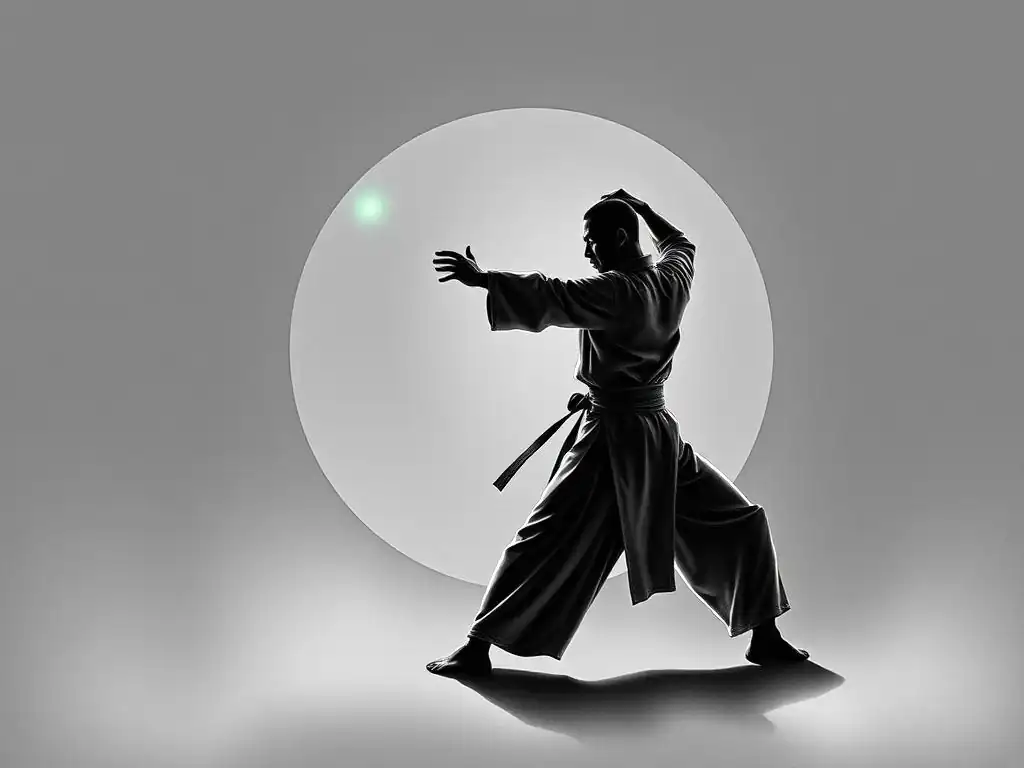
Defense in Choy Li Fut is not merely about blocking; it's about using geometric principles to evade, redirect, and control. Both circular and linear movements are crucial for creating openings and positioning oneself for counter-attack.
Adapting Circular Techniques for Close Proximity Defense
In close quarters, Choy Li Fut circle techniques become invaluable for managing the chaotic space and preventing an opponent from gaining a dominant position. Techniques like Wun Sao and various forms of arm circling are used to deflect, parry, and trap incoming strikes and grabs within a very short range.
The continuous, flowing nature of these circular defenses allows the practitioner to maintain a constant guard around their body, adapting instantly to multiple attacks. Instead of hard, jarring blocks that can lead to injury or a locked-up position, the circular motion absorbs and redirects force, keeping the hands and arms free to transition into offensive or controlling actions. This continuous flow is a key aspect of Choy Li Fut circle techniques in close range.
Using Wun Sao for Trapping and Controlling Opponent's Limbs
Beyond deflection, Wun Sao and similar Choy Li Fut circle techniques are highly effective for trapping and controlling an opponent's limbs. As an opponent's limb is deflected by the circular motion, the practitioner can transition the movement to 'stick' to the limb, preventing its withdrawal or use for further attack.
For instance, after deflecting a punch with an outward Wun Sao, the practitioner can continue the circular motion slightly to wrap around the opponent's forearm, effectively trapping it against their own body or redirecting it for a joint lock or throw setup. This control aspect allows the Choy Li Fut practitioner to dictate the flow of the close-range engagement, neutralizing the opponent's weapons and creating opportunities for follow-up attacks.
Incorporating Short, Sharp Linear Blocks in Close Combat
While circularity dominates close-range defense, short, sharp linear blocks are also essential in Choy Li Fut for quick, decisive interceptions. These are often small, economical movements designed to check or deflect a close-range strike with minimal energy expenditure.
These linear blocks are typically executed with speed and focus, using the forearm or hand to meet the incoming force directly and abruptly. They are useful for dealing with rapid-fire attacks or when there isn't enough space or time for a larger circular deflection. They provide a quick, solid barrier to protect vital targets.
The Power of the "Bridge Hand" (Kiu Sao) in Deflecting Attacks
The "Bridge Hand," or Kiu Sao, while a broad term encompassing various arm applications in Southern Chinese martial arts, in Choy Li Fut context can refer to strong, structural linear blocks or bridging movements. A powerful linear Kiu Sao might involve extending the forearm with structural integrity to meet and deflect an incoming limb, using body alignment to back up the block.
This type of linear deflection is about creating a strong 'bridge' with the arm that cannot be easily pushed aside, often used against powerful linear attacks or when needing to establish control over an opponent's limb or posture. It provides a robust, direct defense that contrasts with the yielding nature of many Choy Li Fut circle techniques, offering a different tool for managing force.
The Interplay of Circles and Lines in Choy Li Fut Forms
Choy Li Fut forms (Kuen) are living encyclopedias of the system's techniques and principles. They meticulously integrate circular and linear movements, providing practitioners with a structured way to learn and internalize the dynamic interplay between these geometric concepts.
Analyzing How Forms Integrate Geometric Principles
Each Choy Li Fut form is a carefully choreographed sequence that demonstrates how circular and linear techniques are used in combination. Forms teach practitioners not just individual movements but also the transitions between them, highlighting how to shift seamlessly from circular defense to linear attack, or from circular footwork to powerful linear strikes.
For example, a form might feature a series of sweeping circular blocks ( Wun Sao) followed immediately by an explosive linear straight punch ( Chung Kuen), then transition into circular footwork ( Yuen Bo) before launching a powerful circular strike like a whipping hook punch. The forms train the body and mind to recognize and execute these geometric shifts instinctively under pressure, developing fluidity and adaptability.
Analyzing "Ping Kuen" (Level Fist) Form
"Ping Kuen" (平拳), often translated as "Level Fist" or "Balanced Fist," is a foundational Choy Li Fut form that effectively demonstrates the integration of circular and linear movements. This form typically features a balanced mix of both types of techniques. It includes basic stances, straightforward linear punches and kicks, alongside fundamental Choy Li Fut circle techniques like Wun Sao and various circular blocks and parries.
The form progresses through sequences that show how to use linear attacks to advance, circular movements to evade or defend, and combinations that transition smoothly between the two. For instance, a section might involve a linear front kick followed by a circular parry and then a linear ridge hand strike. The form emphasizes maintaining balance and structure throughout these transitions, highlighting how the geometric principles support overall stability and power generation. Studying "Ping Kuen" provides a solid understanding of the basic geometric vocabulary of Choy Li Fut.
Drills for Developing Circle and Line Coordination
Beyond forms, specific drills are essential for developing the coordination needed to effectively combine circular and linear movements in live application. These drills often involve partner work or solo exercises focused on specific transitions and combinations.
- Circle-to-Line Striking Drill: Practice executing a circular block or parry immediately followed by a linear counter-strike (e.g.,
Wun SaotoChung Kuen). - Line-to-Circle Evasion Drill: Practice launching a linear attack (e.g., front kick) and immediately transitioning into circular footwork (
Yuen Bo) to evade a hypothetical counter. - Flow Drills: Practice continuous sequences of circular and linear hand techniques with a partner, focusing on fluidity and adapting to the partner's movements.
- Geometric Footwork Patterns: Practice moving through predefined circular and linear patterns on the floor, combining different Choy Li Fut circle techniques for footwork.
Partner Exercises for Mastering Geometric Movement
Partner exercises are invaluable for developing sensitivity and adaptive movement based on geometric principles. Drills like "sticking hands" (though distinct from Wing Chun's Chi Sao, Choy Li Fut has similar sensitivity training methods) allow practitioners to feel the force and direction of an opponent's movements and respond instinctively using circular or linear techniques.
For example, one partner might apply linear pressure while the other practices using Wun Sao to redirect it, then immediately follow up with a linear strike. Another exercise could involve one partner attacking with a mix of linear and circular strikes while the other defends using appropriate Choy Li Fut circle techniques for deflection and linear blocks for direct interception, focusing on smooth transitions between the two defensive approaches. These interactive drills are crucial for translating theoretical geometric principles into practical combat skills.
Mastering the Choy Li Fut System: Integrating Circles and Lines for Combat Effectiveness
True mastery of Choy Li Fut lies in the ability to seamlessly integrate its circular and linear principles, applying the appropriate geometric approach instinctively based on the combat situation.
Developing a Comprehensive Understanding of Geometric Principles
Achieving mastery requires more than just learning techniques; it demands a deep understanding of the underlying geometric principles. This means understanding why a circular motion is effective in one situation and a linear one in another, and how to transition smoothly between them. It involves recognizing the geometric shapes inherent in an opponent's attacks and responding with the most effective counter-geometry.
This comprehensive understanding allows practitioners to move beyond rote execution of forms and drills, enabling spontaneous, adaptive application of Choy Li Fut circle techniques and linear strikes in dynamic combat scenarios. It's about seeing the fight not just as a series of techniques but as an interplay of forces and movements described by geometric paths.
The Importance of Consistent Practice and Application
Like any martial art, consistent practice is non-negotiable for mastering Choy Li Fut's geometric principles. Repetition of forms, drills, and partner exercises builds muscle memory and refines body mechanics. Regular sparring or controlled application practice is crucial for testing the learned principles against live resistance and developing the ability to apply the right technique at the right time.
It's through consistent, dedicated training – estimated at several hours per week over many years – that the practitioner develops the fluidity, power, and adaptability that define high-level Choy Li Fut. This practice solidifies the connection between the theoretical geometric concepts and their practical application in combat.
Developing Sensitivity (Ting Ging) and Adaptive Movement
Beyond physical techniques, mastering Choy Li Fut requires developing sensitivity, often referred to as Ting Ging (listening force). This is the ability to feel and interpret the opponent's energy, intention, and direction of force through physical contact. This sensitivity allows the practitioner to react intuitively, using the principles of circles and lines to yield, redirect, or counter based on tactile information.
Combined with sensitivity, adaptive movement is the ultimate goal. It's the ability to flow effortlessly between circular and linear techniques, adjusting stance, distance, and angle in response to the ever-changing dynamics of a fight. This high level of adaptability, guided by sensitivity and rooted in the fundamental geometric principles of Choy Li Fut circle techniques and linear power, is the hallmark of a truly skilled practitioner.
Frequently Asked Questions
What is the significance of "circles and lines" in Choy Li Fut?
The "circles and lines" philosophy in Choy Li Fut represents the fundamental principles of movement and energy flow. Circles allow for deflection and redirection of force, while lines provide direct and efficient attacks.
How does Choy Li Fut's use of circles relate to its self-defense applications?
Circular movements in Choy Li Fut are crucial for evading attacks and creating openings. They allow practitioners to control the opponent's center of gravity and set up counter-attacks.
Can you give an example of a Choy Li Fut technique that exemplifies the "circle and line" principle?
The whipping punch is a good example. It starts with a circular motion to generate power and then transitions into a linear strike for impact.
How does understanding sacred geometry enhance one's understanding of Choy Li Fut circle techniques?
Sacred geometry provides a framework for understanding the mathematical and philosophical underpinnings of the movements. This understanding can help practitioners refine their technique and improve efficiency.
Does Choy Li Fut's emphasis on "circles and lines" make it more effective for long-range or short-range combat?
Choy Li Fut is effective in both. Circles facilitate transitions between long and short ranges, while lines allow for direct attacks at any distance.
Final Reflection: Embracing the Flow of Choy Li Fut
The exploration of Choy Li Fut's "Circles and Lines" reveals more than just fighting techniques; it unveils a profound understanding of sacred geometry woven into the very fabric of the art. This fusion of martial skill and geometric principles offers a unique perspective on movement and power, resonating even today as practitioners seek deeper meaning within their training. The principles discussed are not merely historical relics, but living blueprints for efficient and effective combat, applicable to self-defense and personal development alike.
The enduring influence of Choy Li Fut lies in its ability to connect the physical with the philosophical. The constant interplay of circular and linear movements mirrors the ebb and flow of life itself, teaching us adaptability and resilience. This connection is not just theoretical; it's felt in every stance, every strike, every flowing transition. The circle is a symbol of eternity, of wholeness, of the universe itself. To understand the circle is to understand the flow of energy, the interconnectedness of all things.
This quote encapsulates the essence of Choy Li Fut, reminding us that the art is not just about fighting, but about understanding the universe within ourselves.
Now, as you reflect on the "Circles and Lines" of Choy Li Fut, consider how these principles can extend beyond the training hall. How can you apply the fluidity of circular motion and the directness of linear action to navigate the challenges in your own life? Embrace the flow, find your center, and move forward with purpose and precision. Let the wisdom of Choy Li Fut guide you not only in combat, but in the art of living a balanced and fulfilling life.
Unleash Your Inner Choy Li Fut Master!
Thank you for exploring the fascinating world of Choy Li Fut and its connection to sacred geometry! Now that you've grasped the principles behind "circles and lines," it's time to put this knowledge into action.
- Dedicate this week to practicing transitioning between circular and linear movements in your forms. Feel the flow and power born from these geometric principles.
- Explore other martial arts that incorporate geometric concepts, such as Wing Chun's centerline theory or Aikido's circular movements, and compare them to Choy Li Fut.
- Share your insights and experiences applying geometric principles to your training in the comments below!
What specific Choy Li Fut form will you focus on applying these "circles and lines" principles to this week, and what do you hope to achieve?