
The Development of Taekwondo for Children: A Historical Overview

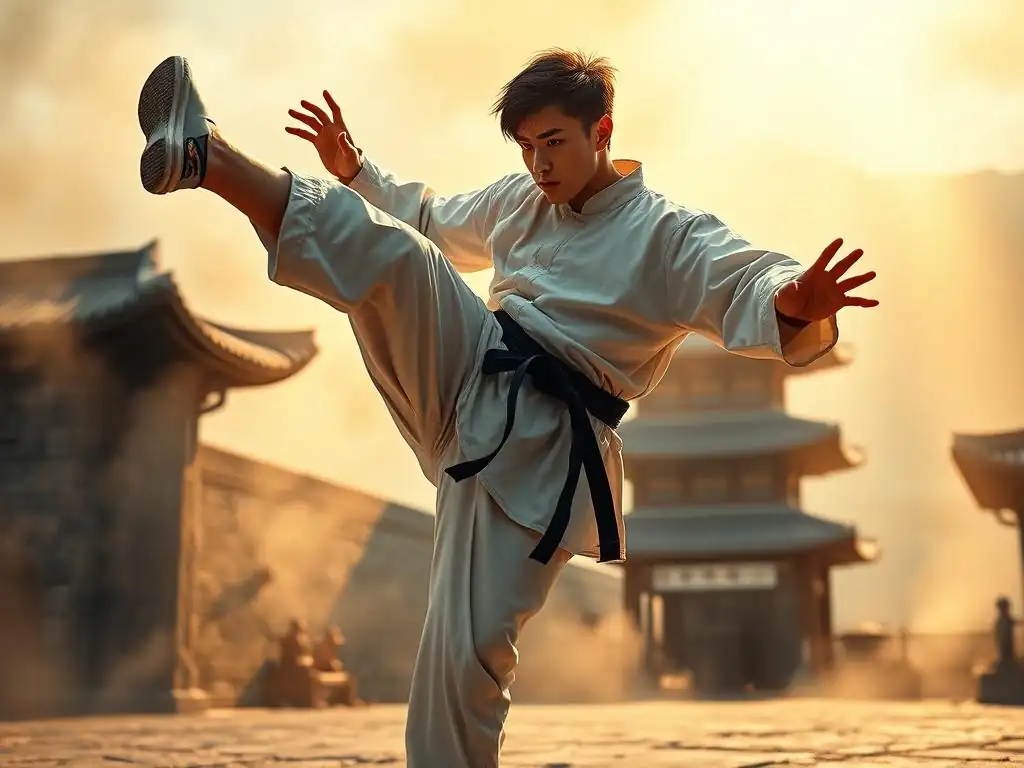
Welcome to Martial Arts Mastery, your gateway to the world's most compelling fighting traditions!
Delve into the rich tapestry of martial arts, where discipline meets history and technique intertwines with philosophy. Ever wondered how a Korean martial art became a global phenomenon, especially for young practitioners? In this article, we unravel the fascinating historical development of Taekwondo for kids, exploring its origins, evolution, and the enduring impact it has on children around the world. Prepare to uncover the secrets behind this powerful discipline and discover how it shapes young lives - the journey to mastery begins now!
- Introduction: Taekwondo for Children - A Journey Through Time
- Early Global Expansion and Adaptation for Children (1960s-1980s)
- The Rise of Structured Taekwondo Programs for Youth (1990s-Present)
- Modern Taekwondo for Children: Current Trends and Future Directions
- Case Studies: Notable Figures and Programs in the Development of Taekwondo for Children
- Benefits of Taekwondo Training for Children: A Historical Perspective
- Challenges and Controversies in the History of Taekwondo for Children
- Conclusion: The Enduring Legacy of Taekwondo for Children
-
Frequently Asked Questions
- What are the key historical influences on the development of Taekwondo for children?
- How did the establishment of kwans (martial arts schools) contribute to Taekwondo's development for kids?
- What adaptations were made to Taekwondo techniques to make it suitable for children?
- When did Taekwondo become a recognized sport, and how did this affect its training for children?
- How has the philosophical aspect of Taekwondo been integrated into children's training programs?
- Final Reflection: The Enduring Spirit of Taekwondo in Children
- Ignite Their Taekwondo Journey!
Introduction: Taekwondo for Children - A Journey Through Time
Understanding the Growing Popularity of Taekwondo Among Children
The appeal of martial arts, particularly Taekwondo, to children has grown significantly over the decades. Parents often seek activities that promote physical fitness, discipline, and self-confidence, and Taekwondo historically has been perceived as fulfilling these needs. Its dynamic nature, featuring high kicks and fast movements, captured the imagination of young people, while the structured environment of the dojang (training hall) offered a sense of order and respect that resonated with parental goals for character development. This dual appeal fueled its initial expansion into youth markets globally.
Beyond the physical aspects, the clear progression through the belt system provides tangible goals and recognition, which is highly motivating for children. The journey from white belt to black belt, broken down into numerous intermediate steps, offers frequent opportunities for achievement and builds perseverance. This structured path, combined with the inherent excitement of learning self-defense techniques, made Taekwondo a compelling alternative or supplement to traditional team sports for many families looking at Taekwondo kids historical development.
Defining the Scope: Historical Development of Taekwondo Training for Young Practitioners
This article traces the evolution of how Taekwondo has been taught and organized specifically for younger students. Initially, Taekwondo, in its formative years post-Korean War, was primarily designed for adults, particularly military personnel. Techniques, training intensity, and philosophy were geared towards combat effectiveness. The idea of adapting this relatively new martial art for the unique physical, mental, and emotional needs of children was a gradual process that unfolded as Taekwondo spread beyond Korea.
Understanding the Taekwondo kids historical development involves looking at how techniques were modified for safety and age-appropriateness, how curriculum and ranking systems were adapted, the emergence of youth-specific competitions, and the changing pedagogical approaches used by instructors. It's a history of refinement and specialization, moving from a simple scaled-down version of adult training to sophisticated programs designed with child development principles in mind, which is central to grasping the Taekwondo kids historical development.
Early Global Expansion and Adaptation for Children (1960s-1980s)
Adapting Adult Taekwondo Techniques for Younger Practitioners
As Taekwondo began its global spread in the 1960s and 1970s, pioneers faced the challenge of teaching dynamic, sometimes forceful, techniques to young bodies. The high-impact nature of adult sparring and power breaking was clearly unsuitable for children. Early adaptations included modifying stances to be less strenuous, reducing the intensity of physical conditioning, and focusing more on basic movements, balance, and coordination before introducing complex or powerful techniques. The emphasis shifted from immediate combat readiness to building a foundation of fundamental skills and physical literacy.
Furthermore, the dangerous aspects of full-contact sparring were mitigated for children. While adult training often involved significant contact, early youth programs introduced controlled point sparring, where techniques were stopped or lightly tagged upon contact, and points were awarded. Protective gear, initially minimal, began to be introduced and mandated for children's classes and competitions, including headgear, chest protectors, and shin guards, marking a crucial step in the Taekwondo kids historical development focused on safety.
The Role of Community Dojangs and Organizations in Shaping Taekwondo for Kids
In the early decades of Taekwondo's global presence, the local dojang served as the primary hub for its dissemination, including to children. These community-based schools, often run by pioneering masters, were instrumental in introducing Taekwondo to families. Without extensive formal guidelines from nascent international federations regarding youth training, these individual schools largely experimented with and developed their own approaches to teaching children, based on their understanding of the art and the needs of their local students.
While organizations like the Korea Taekwondo Association (KTA), the International Taekwon-Do Federation (ITF), and the World Taekwondo Federation (WTF, now WT) were forming and standardizing adult practices and international competition rules, their focus on specific, detailed curriculum and safety standards for children was less developed in these early years. The adaptation for children was often a grassroots effort by dedicated instructors, who recognized the potential benefits but also the necessity of modifying the art for a younger demographic, contributing significantly to the Taekwondo kids historical development.
Early Competitions and Demonstrations Featuring Young Taekwondo Students
While adult Taekwondo competitions, particularly sparring and forms (poomsae/tul), gained prominence in the 1970s and 1980s, the inclusion of young students in formal tournaments was a slower process. Initially, children might participate in in-house demonstrations or informal events showcasing basic techniques and forms. As youth programs grew, specific divisions for children were introduced in larger tournaments, often with modified rules focusing on safety and technical execution rather than power.
Sparring divisions for children typically employed strict point-fighting rules to minimize injury, requiring light contact and immediate stops upon scoring. Forms competitions provided a non-contact avenue for children to demonstrate technical proficiency and memory. These early youth competitions, while perhaps less standardized than today, played a vital role in motivating young students and integrating them into the broader Taekwondo community, illustrating a key phase in the Taekwondo kids historical development.
The Rise of Structured Taekwondo Programs for Youth (1990s-Present)
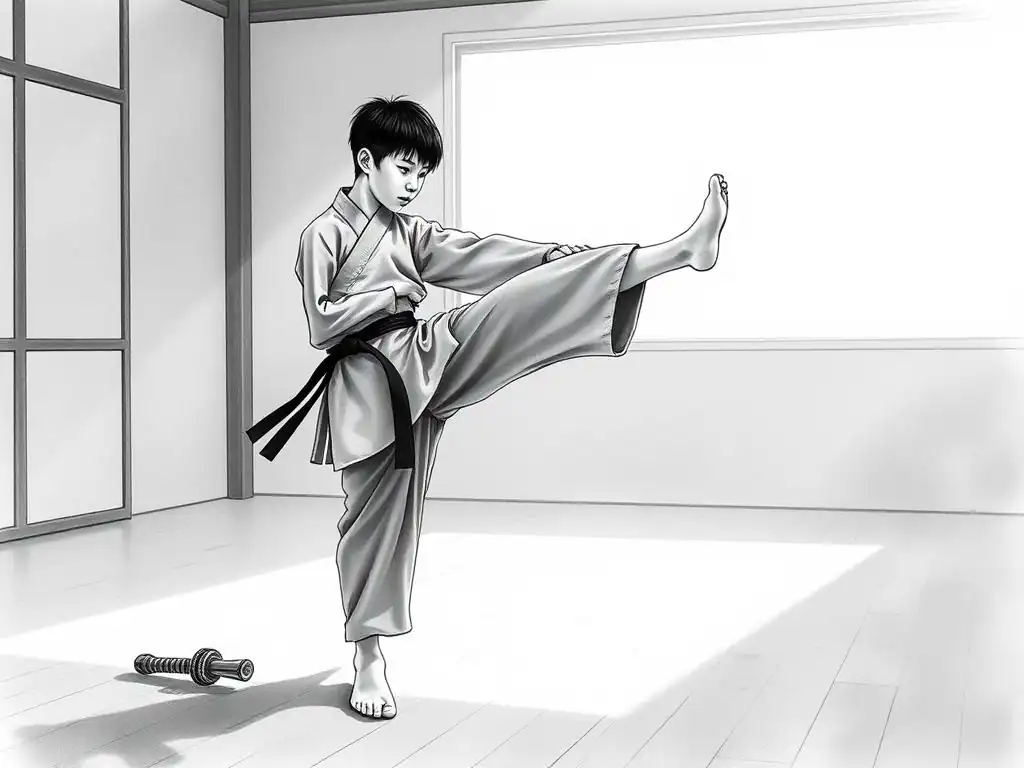
The Influence of National and International Taekwondo Federations on Youth Programs
Beginning more prominently in the 1990s and accelerating into the 21st century, national and international Taekwondo federations took a more active role in regulating and standardizing youth programs. Organizations like World Taekwondo (WT) and national governing bodies developed comprehensive guidelines for children's safety, competition rules tailored for different age groups (e.g., Poomsae divisions by age, cadet/junior sparring categories), and even recommended curriculum structures. This shift provided a framework that ensured a greater level of consistency and safety across affiliated schools.
These federations also began implementing coaching certification programs that included modules on teaching children, child safety, and appropriate pedagogy. This move aimed to professionalize youth instruction and move away from a model where any skilled practitioner could teach children without specific training in child development or safety protocols. The increased oversight and structure from these bodies significantly impacted the evolution of Taekwondo kids historical development.
The Development of Standardized Curriculum and Rank Systems for Taekwondo Kids
Recognizing the unique learning pace and developmental stages of children, specific Taekwondo curricula were developed. These curricula often broke down techniques into smaller, more manageable steps, incorporated games and activities to make learning fun, and placed a greater emphasis on character development alongside physical skills. Age-specific programs, such as "Little Dragons" for preschoolers (typically ages 3-5) and separate programs for elementary and middle schoolers, became common, each with tailored content and expectations.
The traditional adult belt system was often expanded for children to provide more frequent testing opportunities and positive reinforcement. Instead of progressing through only a few colors before black belt, children's systems introduced intermediate ranks, often denoted by stripes on a belt or entirely separate colored belts (like orange, green stripe, etc.). This provided visible milestones every few months, maintaining engagement and motivation over the several years it takes to reach black belt, a significant factor in Taekwondo kids historical development.
The Integration of Coaching Education Programs Focused on Teaching Taekwondo to Children
The recognition that teaching adults is different from teaching children led to the development of specialized coaching education programs. These programs cover topics such as child psychology, age-appropriate teaching methods, classroom management, positive reinforcement techniques, and crucial child protection and safety protocols. Many national federations now require instructors who teach children to hold specific certifications demonstrating competence in these areas.
Organizations like the WT have implemented coach certification systems that include specific levels and requirements, encompassing knowledge of rules, techniques, but also pedagogical skills relevant to different age groups, including youth. This focus on training the trainers has been pivotal in improving the quality and safety of Taekwondo instruction for the youngest practitioners, ensuring that instructors are equipped not just with technical skill but also with the understanding needed for effective and safe Taekwondo kids historical development.
Modern Taekwondo for Children: Current Trends and Future Directions
The Impact of Professional Taekwondo Academies and Franchises on Youth Development
The landscape of Taekwondo instruction has seen the rise of larger, more professional academies and franchise operations. These schools often have standardized curricula, professional facilities, and robust business models focused heavily on attracting and retaining young students. They typically offer multiple classes daily, segmented strictly by age and rank, providing structure and convenience for parents. Their marketing often highlights benefits like discipline, focus, and bully prevention.
While these professional models have expanded access and brought consistency to youth programs, they also raise questions about commercialization influencing the art. Some critics argue that a focus on rapid rank progression or excessive fees can detract from the deeper philosophical aspects of Taekwondo. However, their ability to invest in facilities, equipment, and marketing has undeniably played a major role in making Taekwondo accessible and appealing to a broad base of children in the modern era, shaping current Taekwondo kids historical development trends.
Incorporating Sports Science, Child Development, and Injury Prevention Strategies
Modern Taekwondo for children increasingly incorporates principles from sports science and child development. Training programs are designed with a better understanding of children's physical limitations, growth patterns, and psychological stages. Warm-ups and cool-downs are structured based on physiological knowledge, and conditioning exercises are tailored to be age-appropriate. Injury prevention is paramount, with stricter rules on contact in sparring, mandated high-quality protective gear, and instructors trained to recognize and prevent common injuries.
Furthermore, modern pedagogy emphasizes positive reinforcement, building intrinsic motivation, and fostering a growth mindset. Instructors are trained to communicate effectively with children and parents, address behavioral issues constructively, and create a supportive learning environment. This integration of scientific understanding into traditional martial arts training represents a significant evolution in Taekwondo kids historical development.
The Use of Technology and Modern Pedagogical Approaches in Taekwondo Training for Children
Technology is beginning to play a role in modern youth Taekwondo. While not as data-intensive as professional sports, some schools use video analysis for forms correction, online portals for parents to track progress and schedule classes, and digital resources for students to practice techniques or learn about Taekwondo history. Gamification techniques, using points, badges, and leaderboards, are also employed to make learning more engaging for younger students, particularly in foundational classes.
Beyond technology, modern pedagogical approaches borrowed from mainstream education are influencing how Taekwondo is taught. This includes differentiated instruction to cater to varying learning styles, collaborative exercises, and an increased focus on critical thinking and problem-solving within the context of Taekwondo techniques and scenarios. These methods aim to make Taekwondo training not just about physical skill but also about cognitive and social development, reflecting the ongoing evolution of Taekwondo kids historical development.
Case Studies: Notable Figures and Programs in the Development of Taekwondo for Children
Influential Taekwondo Masters and Educators in Youth Development
While pinpointing a single "pioneer" solely focused on children's Taekwondo is challenging, masters who successfully introduced Taekwondo to Western cultures and adapted it for families played a key role. Grandmaster Jhoon Rhee, often called the "Father of American Taekwondo," was influential in promoting Taekwondo in the United States from the 1960s.
His emphasis on safety ("Safety is first, second, and third") and his development of protective gear, while not exclusively for children, made Taekwondo more accessible and less intimidating for parents considering the art for their kids. His focus on the philosophical tenets alongside physical training also resonated with parents seeking character education.
Other masters, like those who founded some of the earliest and largest dojangs outside Korea, contributed by sheer volume and by developing practical systems for managing and teaching large numbers of young students. Their efforts in structuring classes, creating child-friendly testing procedures, and integrating families into the dojang community were foundational to the growth of Taekwondo kids historical development.
Innovative Taekwondo Programs and Curricula for Young Practitioners
The development of age-specific programs like "Little Dragons" or "Tiny Tigers" for preschool children (ages 3-5) represents a significant innovation. These programs, which gained popularity from the late 1990s onwards, drastically simplified techniques and focused heavily on gross motor skills, coordination, listening skills, and basic discipline through games and fun activities. They acknowledged that very young children require a fundamentally different approach than older kids or adults.
Similarly, specialized curricula for elementary-aged children (ages 6-12) evolved to incorporate more complex techniques and forms but still within a framework that prioritized safety, positive reinforcement, and character building. Some innovative programs integrated anti-bullying strategies, stranger danger awareness, and life skills training directly into the Taekwondo lessons, demonstrating a move towards a holistic approach to youth development through the martial art, a key aspect of Taekwondo kids historical development.
Benefits of Taekwondo Training for Children: A Historical Perspective
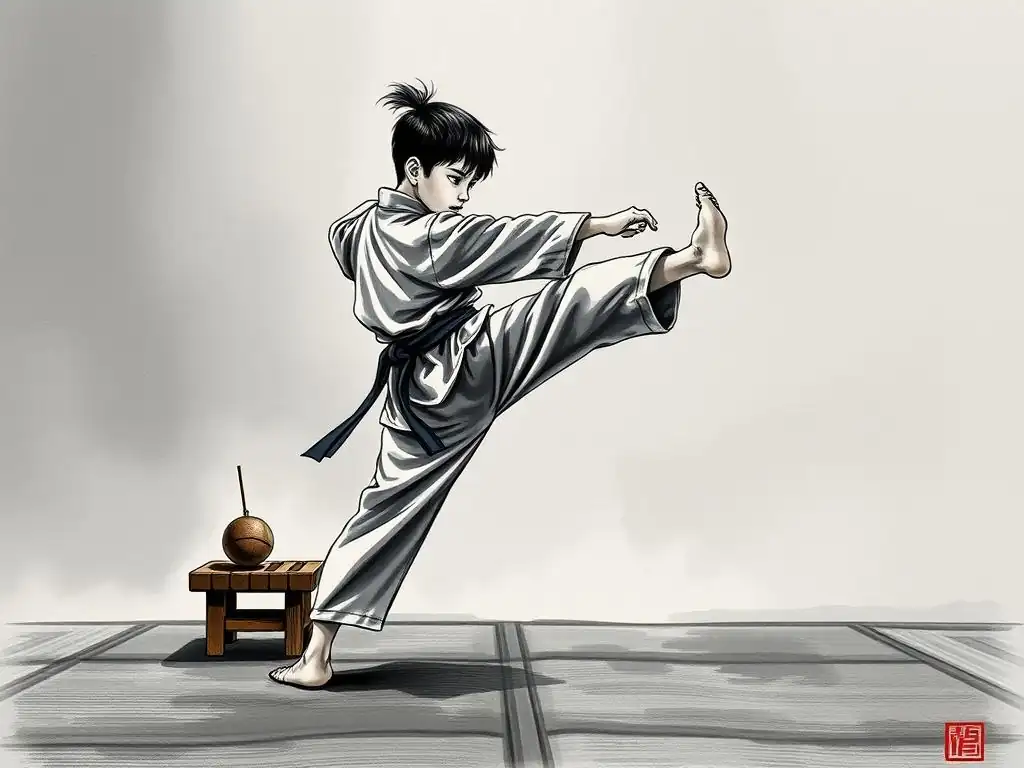
Physical Development and Motor Skills Enhancement Through Taekwondo
Historically, one of the primary benefits of Taekwondo training for children has been its impact on physical development. The extensive use of kicking techniques from various stances naturally develops balance, leg strength, and flexibility. Practicing forms (poomsae/tul) improves coordination, spatial awareness, and memory. The dynamic movements inherent in Taekwondo, even in early adapted forms for children, provided a comprehensive physical workout that enhanced cardiovascular health and muscular development compared to less structured physical activities available historically.
From the early days, Taekwondo offered a structured environment for children to develop fundamental motor skills – running, jumping, balancing, kicking – in a progressive manner. The repetitive nature of drilling techniques helped refine these skills, contributing to overall physical literacy. This focus on physical conditioning and skill development has been a consistent benefit throughout the Taekwondo kids historical development.
Character Building and Discipline: Historical Emphasis in Taekwondo for Kids
The emphasis on discipline and character building has been a cornerstone of Taekwondo training for children since its early days. Rooted in traditional martial arts philosophy, the dojang environment historically instilled respect for instructors and seniors, self-control, and perseverance. Students learned to bow, follow instructions precisely, and maintain focus during training, fostering discipline that often extended beyond the training hall.
The tenets of Taekwondo – Courtesy, Integrity, Perseverance, Self-Control, and Indomitable Spirit – were traditionally recited and discussed, serving as moral guidelines. Instructors used the challenges of training, such as repeating difficult techniques or enduring physical conditioning, as lessons in perseverance and overcoming obstacles. This historical focus on moral and ethical development through rigorous training is a defining characteristic of Taekwondo kids historical development.
The Taekwondo dojang has historically served as a significant social environment for children. Training alongside peers of different ages and ranks taught valuable social skills, including teamwork during partner drills, healthy competition, and respect for others regardless of skill level. The hierarchical structure of the dojang, with senior students assisting juniors, fostered a sense of responsibility and mentorship.
Beyond the classes, dojangs often organized social events, demonstrations for the community, or participation in local festivals, providing opportunities for young students to interact outside of training and feel connected to a larger group. This sense of community and shared purpose reinforced social bonds and contributed to a positive developmental environment for children involved in Taekwondo, playing a role in the Taekwondo kids historical development as a community activity.
Challenges and Controversies in the History of Taekwondo for Children
Balancing Traditional Discipline and Modern Pedagogical Approaches
A historical challenge in Taekwondo for children has been balancing the traditional emphasis on strict discipline and hierarchy with modern understanding of child-friendly pedagogy. Early Taekwondo instruction could sometimes be overly rigid or even harsh, reflecting military origins or traditional Asian teaching styles that relied heavily on rote learning and strict obedience. This approach, while instilling discipline, could potentially stifle creativity or be intimidating for some children.
The controversy often centered on the line between strict discipline and potentially harmful practices. As awareness of child psychology and positive reinforcement grew, there was a pushback against overly authoritarian methods. Modern Taekwondo education has sought to find a balance, maintaining respect and discipline while employing more encouraging, understanding, and developmentally appropriate teaching strategies, a significant shift in Taekwondo kids historical development.
Addressing Accessibility and Affordability in Taekwondo Programs
Historically, and to some extent still today, the cost associated with Taekwondo training has presented a barrier to accessibility for children from lower socioeconomic backgrounds. Tuition fees, along with the cost of uniforms, testing fees, and necessary protective equipment, can be substantial. This has meant that the benefits of Taekwondo training have not always been equally available to all children, creating disparities in access to quality martial arts education.
While some community centers or non-profit organizations have offered subsidized or free Taekwondo programs, these have historically been less widespread than private dojangs. The issue of making Taekwondo more affordable and accessible to a broader demographic remains a challenge, though efforts are being made by some federations and schools to offer scholarships or community-based programs, reflecting an ongoing discussion in Taekwondo kids historical development regarding inclusivity.
Ensuring Player Welfare and Preventing Injury/Burnout in Young Practitioners
In the early days of Taekwondo's spread, standardized safety protocols for children were less developed. This sometimes led to inappropriate levels of contact in sparring for young students or insufficient use of protective gear, increasing the risk of injury. As competition became more prominent for youth, concerns also arose about the pressure placed on young athletes, potentially leading to physical or psychological burnout from excessive training or parental/instructor expectations.
Addressing these issues has been a crucial part of the evolution of Taekwondo for children. The introduction and strict enforcement of age-appropriate competition rules, mandatory safety equipment standards, and coaching education focused on child welfare and injury prevention have been key developments. Recognizing the signs of burnout and promoting a balanced approach to training that prioritizes long-term development and enjoyment over immediate competitive success are ongoing efforts in modern Taekwondo kids historical development.
Conclusion: The Enduring Legacy of Taekwondo for Children
Summarizing Key Milestones in the Historical Development of Taekwondo for Kids
The Taekwondo kids historical development journey is marked by several key milestones. It began as a martial art primarily for adults, undergoing a necessary adaptation process as it spread globally from the 1960s onwards. Early stages involved individual instructors modifying techniques and class structures. The 1990s and beyond saw increased standardization driven by national and international federations, leading to formalized youth curricula, age-specific ranking systems, and safer competition rules. The professionalization of dojangs and the integration of modern pedagogical approaches and sports science further shaped the modern landscape of Taekwondo for children.
From simple physical training, Taekwondo for children evolved into a holistic developmental activity. The historical focus on discipline and character building remained, complemented by increased attention to physical safety, age-appropriate learning, and fostering a positive and engaging environment. This evolution reflects a growing understanding of child development and a commitment to making Taekwondo a beneficial experience for young practitioners, illustrating the rich Taekwondo kids historical development.
The Future of Taekwondo Training for Children: A Look Ahead
Looking ahead, the future of Taekwondo training for children is likely to see further integration of technology, personalized training approaches based on individual needs and learning styles, and an even greater emphasis on the psychological and social benefits alongside the physical. There is a growing trend towards adaptive Taekwondo programs catering to children with disabilities, making the art more inclusive. Increased collaboration between dojangs, schools, and community health organizations could also become more common.
Ensuring accessibility, maintaining the balance between traditional values and modern methods, and prioritizing the well-being and enjoyment of the child will continue to be central themes. As research in child development and sports science advances, Taekwondo instruction for children will likely continue to evolve, striving to provide the best possible environment for physical growth, character formation, and personal development, building upon the strong foundation laid by the Taekwondo kids historical development.
Frequently Asked Questions
What are the key historical influences on the development of Taekwondo for children?
The development is rooted in traditional Korean martial arts like Taekkyon and Subak, later influenced by Japanese martial arts during the Japanese occupation. These influences were adapted and modified to suit children's training.
How did the establishment of kwans (martial arts schools) contribute to Taekwondo's development for kids?
The kwans played a crucial role in establishing standardized training methods and curriculums. Different kwans offered varied approaches, some focusing more on forms and others on sparring, all catering to children's learning.
What adaptations were made to Taekwondo techniques to make it suitable for children?
Techniques were often simplified and scaled down to accommodate children's physical capabilities. Emphasis shifted from power to precision and proper form, reducing the risk of injury.
When did Taekwondo become a recognized sport, and how did this affect its training for children?
Taekwondo gained official recognition as a sport in the late 20th century, which led to a greater focus on competition-oriented training. This impacted children's training by emphasizing sparring techniques and tournament preparation.
How has the philosophical aspect of Taekwondo been integrated into children's training programs?
The philosophical aspect, emphasizing respect, discipline, and self-control, is integrated to instill positive character development in young practitioners. It is achieved through structured classes and moral lessons.
Final Reflection: The Enduring Spirit of Taekwondo in Children
The journey through the historical development of Taekwondo for children reveals more than just a martial art's evolution; it illuminates the profound impact of discipline, respect, and self-control on young lives. From its roots in ancient Korean martial arts to its modern adaptation for children, Taekwondo's principles remain powerfully relevant in a world increasingly demanding resilience and focus.
This historical perspective underscores how Taekwondo has consistently shaped the cultural and social landscape for generations of children. Witnessing its evolution, and the positive influence it has had on countless young individuals, reinforces the importance of providing structured activities that foster physical and mental well-being. The goal of Taekwondo is perfection of character, not just physical prowess.
This quote encapsulates the enduring philosophy that has made Taekwondo a valuable tool for child development across cultures and time.
As we conclude this exploration of Taekwondo's historical development for children, consider the lessons embedded within its journey. How can we, as parents, educators, and community members, embrace the spirit of Taekwondo – its emphasis on discipline, respect, and personal growth – to empower the next generation? Let us strive to cultivate environments where children can not only learn physical skills but also develop the inner strength and character necessary to navigate the challenges and opportunities that lie ahead.
Ignite Their Taekwondo Journey!
Thank you for exploring the history and evolution of Taekwondo for children. We hope this journey has inspired you to consider the positive impact this martial art can have. Now, it's time to translate that inspiration into action!
- Find a local Taekwondo school specializing in children's programs and schedule a trial class to see if it's a good fit for your child.
- Share this article with other parents interested in enriching their children's lives through martial arts.
- Brainstorm three ways you can incorporate Taekwondo principles like respect and discipline into your child's daily routine.
What specific aspects of Taekwondo's history resonate with you, and how might you use them to further inspire your child's interest in this discipline?