
Understanding the Aggressor's Mind: Advanced Aikido Scenarios

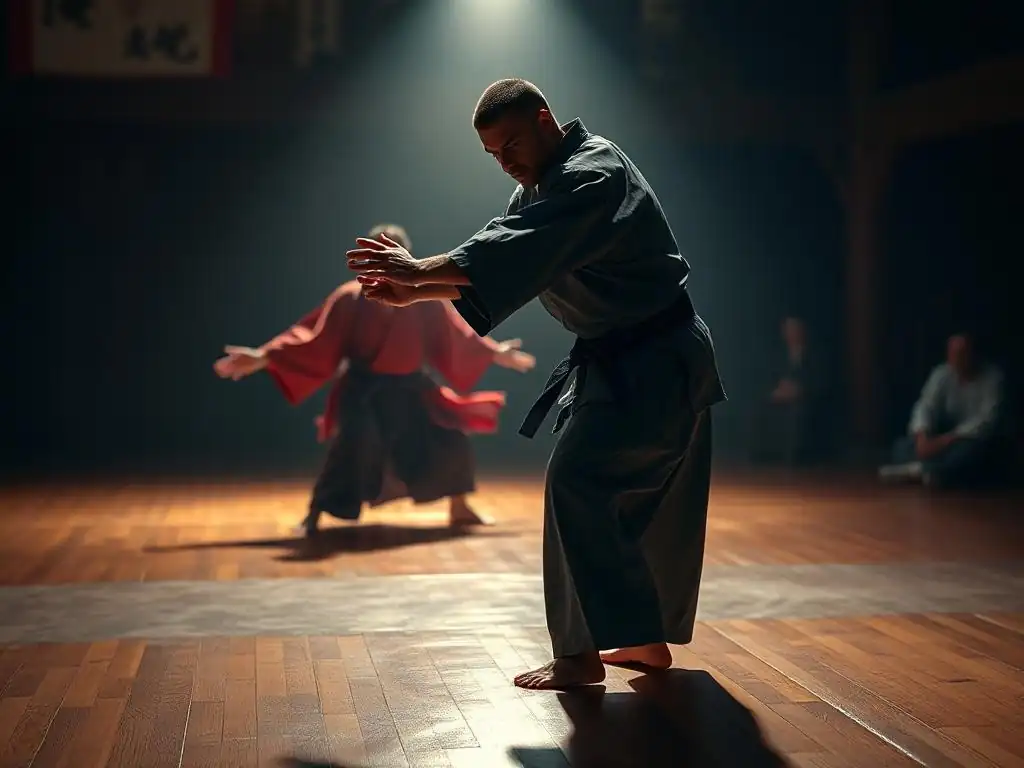
Welcome to Martial Arts Mastery, your gateway to understanding the depth and breadth of martial arts. Ever wondered how to truly anticipate and neutralize an attacker's movements? This week, we delve into the intricacies of Aikido attacker response techniques, offering a unique perspective on reading your opponent's intentions and transforming aggression into control. Discover the subtle cues and advanced strategies that separate mastery from mere technique. Prepare to unlock a deeper understanding, starting now...
- Introduction: Beyond Technique - The Psychology of the Aikido Attacker
- Deconstructing Aggression: Identifying Attacker Archetypes in Aikido
- Aikido Attacker Response Techniques: A Scenario-Based Approach
- Advanced Aikido Strategies for Psychological De-escalation
- Integrating Psychological Awareness into Aikido Practice: Drills and Exercises
- The Ethical Considerations of Understanding the Aggressor's Mind
- Conclusion: Mastering the Art of Aikido Through Psychological Insight
-
Frequently Asked Questions
- How does Aikido differ from other martial arts in its approach to dealing with an attacker?
- What role does understanding an aggressor's intent play in effective Aikido attacker response techniques?
- Can Aikido attacker response techniques be effective against larger, stronger opponents?
- What are some common mistakes practitioners make when learning Aikido attacker response techniques?
- How does Aikido's philosophy influence its approach to self-defense and attacker response?
- Final Reflection: Embracing Harmony Amidst Conflict
- Unleash Your Inner Flow: Take the Next Step in Aikido Mastery!
Introduction: Beyond Technique - The Psychology of the Aikido Attacker
Why Understanding the Attacker is Crucial for Effective Aikido
Effective Aikido attacker response techniques extend far beyond mere physical execution. A deep comprehension of the aggressor's motivations, fears, and psychological state is paramount for truly mastering the art of conflict resolution.
Knowing why someone is attacking, what their likely next move might be based on their demeanor, and how their emotional state impacts their physical actions allows an Aikidoka to anticipate, adapt, and respond with greater precision and less effort. This psychological insight enables proactive strategies like de-escalation or pre-emptive positioning, often preventing the need for forceful physical techniques altogether, aligning with Aikido's core principles of harmony and non-violence.
Moreover, understanding the attacker's mind informs crucial decisions in dynamic situations. Is the attack a desperate lunge driven by panic, or a calculated strike from a trained individual? The answer dictates the appropriate Aikido attacker response techniques.
A panicked attacker might be erratic but less skilled, while a calculated aggressor might employ feints or follow-up attacks. Recognizing these nuances allows the practitioner to select the most suitable iriminage, kotegaeshi, or other technique, or even choose a non-physical approach, significantly increasing the likelihood of a successful resolution that minimizes harm to all parties. This psychological edge is often cited by experienced practitioners as the true difference between a merely competent technician and a master of conflict.
The Limitations of Purely Physical Aikido Training
Training Aikido solely as a physical discipline, focusing only on posture, movement, and technique application against compliant partners, presents significant limitations when facing a real, non-compliant aggressor. Without understanding the unpredictability and psychological drivers of violence, even perfectly executed techniques can fail. A real attacker doesn't stand still or fall predictably; they react based on adrenaline, fear, anger, or calculation. Training that neglects the psychological element leaves the practitioner unprepared for the emotional intensity and irrationality that often accompanies actual aggression, making practiced responses rigid and ineffective against dynamic resistance.
Furthermore, a purely physical approach can inadvertently escalate conflict. If the practitioner's mindset is solely focused on applying a technique to "defeat" the attacker, they may miss opportunities for de-escalation or fail to recognize when a less forceful response is appropriate. This can turn a manageable situation into a more dangerous confrontation.
For example, applying a strong wrist lock ( kotegaeshi) against someone driven by fear might provoke a desperate, unpredictable counter-attack, whereas recognizing their fear might suggest a different Aikido attacker response technique focused on control or evasion, or even verbal calming. Effective Aikido requires integrating physical skill with psychological awareness to navigate the complexities of human conflict.
Deconstructing Aggression: Identifying Attacker Archetypes in Aikido
The Impulsive Attacker: Responding to Spontaneous Aggression
The impulsive attacker is characterized by sudden, often explosive, bursts of aggression driven by immediate emotion – anger, frustration, or panic. Their attacks tend to be less structured, perhaps a wild swing, a sudden push, or an unrefined lunge. They often lack tactical planning and may telegraph their intentions clearly through body language or verbal outbursts just prior to or during the attack. This type of aggressor is typically reactive rather than strategic, making their initial action predictable in its suddenness, but their subsequent actions less so as they might react unpredictably if the initial attack fails.
Responding to the impulsive attacker requires Aikido attacker response techniques that prioritize immediate control and redirection. Techniques like iriminage (entering throw) or a swift tenkan (turning movement) to get offline are highly effective as they capitalize on the attacker's forward momentum and lack of refined balance.
Since their aggression is often a peak emotional state, quickly breaking their physical connection and center can disrupt their psychological drive. Training drills against sudden, unpredictable movements, like being unexpectedly pushed or grabbed from different angles, help prepare the Aikidoka to respond instinctively to this type of spontaneous aggression, emphasizing quick, decisive movement and maintaining one's own balance and center.
The Calculated Attacker: Anticipating Premeditated Violence
The calculated attacker approaches aggression with a degree of planning and intent. They might observe their target, choose a moment of vulnerability, and employ techniques they have practiced, such as a specific type of strike, a targeted grab, or even a feint to set up a more damaging attack.
Their movements may appear calmer or more deliberate than an impulsive aggressor, and they are less likely to telegraph their initial attack with overt emotional displays. This type of attacker poses a different challenge, as their actions are based on a conscious decision and potentially some level of training or experience.
Effective Aikido attacker response techniques against a calculated aggressor involve heightened awareness and strategic positioning. Since their attack is often premeditated, there might be subtle pre-attack cues to observe, such as changes in posture, eye contact, or breathing. Responding requires not just reacting to the physical attack, but potentially anticipating the type of attack and being ready to move before the technique fully materializes.
Techniques that control the attacker's structure and limit their options, like seizing their center early or disrupting their base with precise footwork before they can fully commit to their planned action, are crucial. Training against partners simulating specific, pre-planned attacks, perhaps varying speed and intensity, helps develop the sensitivity and timing needed to counter this more deliberate form of aggression.
The Fearful Attacker: Recognizing and Addressing Defensive Aggression
The fearful attacker is driven by a sense of threat or vulnerability, and their aggression is often a defensive reaction rather than an offensive intent. This can manifest as striking or pushing to create distance, grabbing to prevent escape, or even lashing out when cornered. Their actions stem from a desire to protect themselves or escape the perceived danger, and their aggression level might fluctuate based on how threatened they feel. Recognizing fear as the primary motivator is critical, as treating their actions as purely malicious aggression can lead to an inappropriate or overly forceful response.
Responding to the fearful attacker requires Aikido attacker response techniques that prioritize de-escalation and control without causing unnecessary harm. The goal is often to neutralize the perceived threat, allowing the aggressor to calm down or disengage. Techniques that emphasize blending and redirection, like kokyunage (breath throw) or gentle controls that guide rather than force, are often more effective.
Applying painful locks or forceful throws can exacerbate their fear and provoke a more desperate, unpredictable struggle. Recognizing the signs of fear – wide eyes, tense posture, rapid breathing, defensive posturing – allows the Aikidoka to choose a response that addresses the underlying emotion while ensuring safety, potentially using verbal calming techniques in conjunction with physical control or evasion.
Aikido Attacker Response Techniques: A Scenario-Based Approach
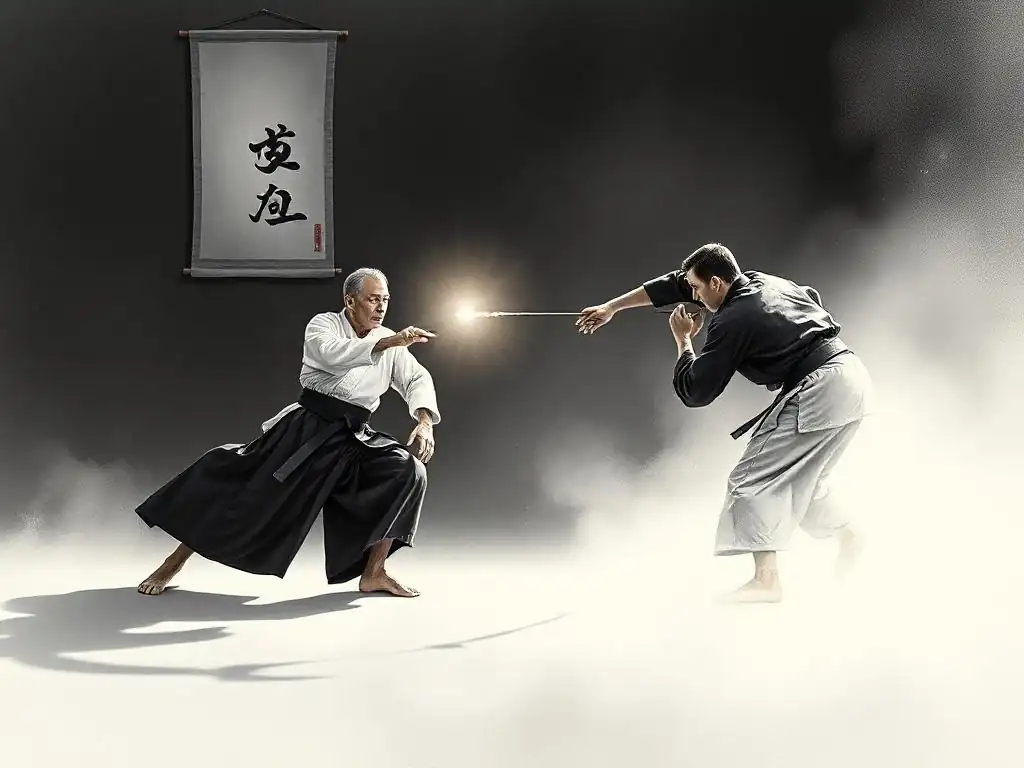
Scenario 1: Dealing with the Overzealous Striker
Aikido Techniques for Redirecting and Neutralizing Striking Attacks
When faced with an attacker throwing punches or kicks, the primary Aikido attacker response techniques focus on entering the attacker's space and disrupting their balance and structure before the strike can land with full force, or immediately as it is launched. Instead of blocking force with force, Aikido employs blending ( aiki) and entering ( irimi). For a straight punch like tsuki, entering techniques like iriminage or moving offline with tenkan and applying shihonage (four-direction throw) are highly effective.
The goal is to move through the line of attack or just outside it, using the attacker's forward momentum to facilitate a throw or control. Against a wider strike like yokomenuchi, entering inside the arc of the attack and applying techniques like kotegaeshi (wrist return) or kokenage (forearm throw) allows the Aikidoka to control the attacker's arm and center.
Crucially, these Aikido attacker response techniques require precise timing and distance management. Entering too early means meeting the force head-on; entering too late means getting hit. Training involves learning to read the subtle pre-movements of a strike, such as weight shifting or shoulder tension, and initiating movement simultaneously with the attacker's commitment to the strike.
For example, Sensei Morihiro Saito detailed specific irimi movements to enter against various strikes, emphasizing stepping past the attacker's lead foot to gain a superior position for throws. Practical application often involves starting with slow, committed strikes and gradually increasing speed and realism, focusing on maintaining one's own balance while disrupting the attacker's.
Maintaining Composure Under Pressure: Mental Strategies for Striking Scenarios
Facing strikes, even in training, can trigger a natural fear response – the desire to flinch, tense up, or retreat. Maintaining composure is perhaps the most critical mental strategy for effective Aikido attacker response techniques against striking. This involves cultivating a state of calm awareness, often referred to as fudoshin (immovable mind). Instead of focusing on the perceived threat of being hit, the mind is centered on the principles of movement, timing, and connection. This allows for clear perception of the attacker's intentions and the initiation of appropriate responses without hesitation or panic.
Developing this composure involves specific training methods. Regular exposure to controlled, non-injurious striking drills helps desensitize the practitioner to the stimulus. Practice under pressure, such as multiple attackers or slightly increased intensity, forces the practitioner to rely on trained responses rather than reactive fear.
Additionally, techniques like mindfulness meditation, focusing on breath and body awareness, help cultivate the ability to remain present and calm even when adrenaline is high. O Sensei Ueshiba often spoke of the importance of a clear, quiet mind to perceive the attacker's ki (energy or intent); this mental state is essential for the fluid, non-resistant responses characteristic of advanced Aikido attacker response techniques against strikes.
Scenario 2: Addressing the Grappling Aggressor
Aikido Principles for Defending Against Grappling Holds and Takedowns
Grappling aggression involves attempts to grab, hold, wrestle, or take the practitioner to the ground. Aikido attacker response techniques here differ significantly from striking defense. The core principles involve blending with the force of the grab or pull, using circular movements to break the attacker's structure and balance, and applying joint controls or throws that utilize leverage rather than brute strength. When grabbed, the instinct might be to pull away or tense up, but Aikido teaches blending by moving with the force in a circular path, adding one's own motion to create instability in the attacker's base.
For example, against a two-hand grab to the wrists ( morotedori), instead of pulling back, the Aikidoka steps forward and to the side, turning their hands in a specific way ( tenkan or irimi movement) to leverage the attacker's grip against their own joints or balance, leading into techniques like kokyunage or shihonage. Against a bear hug or body grab, dropping one's weight, stepping to the side, and applying pressure to sensitive points or using rotational movements to disrupt their center are key.
The focus is on using the attacker's commitment to the hold against them, leveraging their body weight and structure through precise movement and connection, rather than trying to muscle out of the grip.
Utilizing Body Mechanics to Break Holds and Create Separation
Effective Aikido attacker response techniques against holds rely heavily on superior body mechanics and leverage. Simply pulling or pushing against a strong grip is often ineffective. Instead, the Aikidoka utilizes principles like kokyu (breath/power coordination), using the entire body's power generated from the hips and core, not just the arms.
By shifting weight, changing posture, and applying rotational force, a seemingly unbreakable hold can be disrupted. For instance, a tight rear bear hug can be countered by dropping weight sharply, turning the hips, and using an elbow strike or headbutt as a distraction while simultaneously working to create space to rotate and apply a control.
Breaking a hold often involves targeting the attacker's weak points or lines of imbalance created by their own grip. A common tactic is to step in close, neutralizing their reach, and then use rotational body movement combined with a specific hand or arm action to exploit a weakness in their hold, such as turning the wrist against the thumb or using hip rotation to create separation.
The principle is to move one's center powerfully, causing the attacker's connection to break or their balance to be compromised, creating the opportunity to apply a throw or control technique. Training emphasizes developing a strong connection to one's own center and learning to move from the hips and core, enabling powerful yet fluid responses to grappling attempts.
Scenario 3: Responding to Multiple Attackers in Aikido
Principles of Movement and Positioning for Multi-Opponent Scenarios
Facing multiple attackers is one of the most challenging scenarios in any martial art. In Aikido, the fundamental principle is to avoid being surrounded and to keep opponents in a line or cluster, if possible. This is achieved through constant, fluid movement ( tenshin and tenkan) and strategic positioning. Staying on the outside of the group, using one attacker to screen another, and continuously moving to maintain a favorable angle are critical. The goal is not to fight each attacker individually in sequence, but to manage the space and their positions relative to you and each other.
Effective Aikido attacker response techniques in this context prioritize mobility and creating openings. Techniques used are often those that require minimal commitment and allow for quick transitions, such as kokyunage or simple irimi movements that disrupt an attacker's balance and potentially cause them to collide with another. The focus is on disrupting the attackers' coordination and preventing them from mounting a unified assault.
Training drills involve simulating attacks from different directions simultaneously or in rapid succession, forcing the practitioner to develop acute spatial awareness and the ability to move and reposition constantly while dealing with threats. Maintaining a wide field of vision (soft focus) to be aware of all opponents simultaneously is also a key mental skill.
Prioritization and Efficient Technique Selection Under Duress
In a multiple attacker scenario, there is no time for complex or lengthy techniques. Prioritization is essential: address the most immediate threat first, while simultaneously moving to a position that mitigates threats from other directions. Aikido attacker response techniques employed must be highly efficient, requiring minimal energy and allowing for quick recovery or transition to the next threat. Techniques like iriminage, which quickly takes an attacker out of the line of conflict and positions the Aikidoka favorably, or kokyunage, which disrupts balance with minimal physical engagement, are highly valuable.
The selection of techniques is also influenced by the need to keep moving and avoid being pinned down. Ground techniques, for instance, are generally avoided unless absolutely necessary, as going to the ground leaves the practitioner vulnerable to other attackers. The emphasis is on standing techniques that maintain mobility and control the space.
Training for multiple attackers often involves high-intensity, continuous drills where the practitioner must flow from one interaction to the next, making split-second decisions about movement, positioning, and technique selection under significant pressure. This develops the necessary efficiency and decisiveness required for such demanding Aikido attacker response techniques.
Advanced Aikido Strategies for Psychological De-escalation
Verbal Judo: Using Communication to Influence the Attacker's State of Mind
Verbal Judo, a term popularized by Dr. George Thompson, refers to the strategic use of communication to de-escalate conflict and influence an aggressor's behavior. In advanced Aikido attacker response techniques, verbal skills are as important as physical ones. This involves active listening to understand the attacker's grievances or state of mind, empathetic responses to acknowledge their feelings (without necessarily agreeing with their actions), and calm, assertive language to set boundaries and guide the interaction towards a non-violent resolution. The goal is to lower the emotional temperature and open a channel for rational communication.
For instance, acknowledging an attacker's anger ("I understand you're very upset") can sometimes diffuse their intensity more effectively than challenging them. Using calm, measured tones projects confidence and can be calming. Asking clarifying questions ("What is it you want?")
can shift their focus from pure aggression to articulation. Aikido training can incorporate role-playing scenarios where practitioners practice these verbal techniques, learning to speak clearly and calmly even when confronted with aggressive language or behavior. This integrates the psychological aspect directly into practice, recognizing that many potential physical conflicts can be resolved through skilled communication before any physical technique is necessary.
Beyond verbal communication, non-verbal cues play a significant role in influencing an attacker's state of mind and potential Aikido attacker response techniques. Projecting confidence and calm authority can deter aggression or make an attacker reconsider their actions. This involves maintaining a balanced, stable posture ( kamae), making appropriate eye contact (not challenging, but aware), keeping hands visible and in a non-threatening position (like hanmi relaxed posture), and moving with deliberate, unhurried grace. Avoiding fidgeting, slumping, or showing overt signs of fear or panic are crucial.
An attacker often looks for signs of vulnerability. A practitioner who stands tall, moves fluidly, and maintains calm eye contact is less likely to be perceived as an easy target. This non-verbal projection can create a psychological barrier.
Training in Aikido, which emphasizes centered posture, balanced movement, and relaxed readiness, inherently cultivates many of these non-verbal cues. Specific drills can focus on maintaining composure and projecting calm even when being verbally challenged or approached aggressively, reinforcing the link between physical training and psychological presence. Studies in non-verbal communication suggest that body language accounts for a significant portion of perceived communication (often cited as over 50%); mastering this aspect is vital for de-escalation.
Recognizing Trigger Points: Avoiding Actions that Escalate Conflict
Understanding what might escalate a situation is as important as knowing how to respond physically. Recognizing an aggressor's potential psychological trigger points allows the Aikidoka to avoid actions that could turn a tense situation into a violent one. Common triggers include feeling disrespected, cornered, humiliated, or having personal space invaded aggressively. Actions such as aggressive eye contact, pointing fingers, yelling, sudden rapid movements towards the attacker, or dismissive body language can inadvertently provoke an attack, even if the initial intent wasn't purely physical.
Advanced Aikido attacker response techniques involve sensitivity to these potential triggers. Maintaining respectful distance, using open hand gestures, avoiding direct confrontation unless necessary, and providing an "out" or escape route for the aggressor (psychologically or physically) can prevent escalation. For example, in a verbal confrontation, stepping slightly off-line or creating space rather than closing distance can signal non-aggression.
Training includes analyzing scenarios to identify potential triggers and practicing alternative, non-escalatory responses. This involves developing empathy and the ability to see the situation from the aggressor's perspective, allowing the practitioner to navigate interactions with greater intelligence and reduce the likelihood of needing physical force.
Integrating Psychological Awareness into Aikido Practice: Drills and Exercises
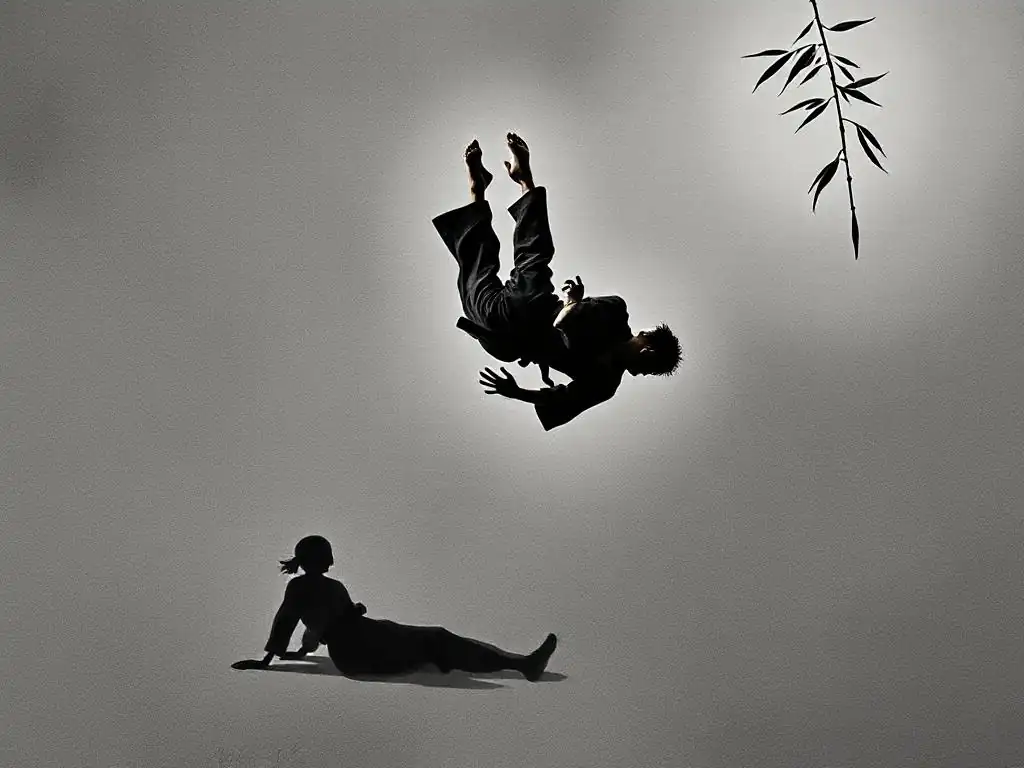
Simulated Combat Scenarios: Training Under Realistic Pressure
Integrating psychological awareness into Aikido practice requires moving beyond static, pre-arranged techniques. Simulated combat scenarios, often involving multiple non-compliant partners, varying levels of aggression (from verbal threats to physical attacks), and unpredictable timing, are essential. These scenarios force practitioners to make split-second decisions under pressure, applying Aikido attacker response techniques not just based on physical cues, but also on the perceived psychological state and intent of the "attackers."
Training might involve one partner acting as the primary physical aggressor while another provides verbal distractions or attempts to flank. Or, scenarios could start with a verbal dispute that could escalate to physical confrontation, requiring the practitioner to attempt de-escalation first before resorting to physical Aikido techniques.
The key is realism – partners should not be overly compliant and should react naturally based on the practitioner's response. This type of training, sometimes referred to as randori or free-form practice with specific objectives, helps bridge the gap between the dojo environment and the unpredictable nature of real-world conflict, making Aikido attacker response techniques more adaptable and effective.
Role-Playing Exercises: Developing Empathy and Understanding
Role-playing exercises are invaluable for developing the psychological aspect of Aikido. Practitioners take turns playing the role of the aggressor, exploring different motivations (anger, fear, calculation, desperation) and experiencing what it feels like to initiate an attack from that mindset. This provides crucial insight into body language, common reactions, and potential trigger points from the other side of the interaction. When playing the role of the defender, the practitioner focuses on observing these cues and practicing verbal and non-verbal de-escalation techniques in conjunction with physical readiness.
For example, one exercise might involve a scenario where the "aggressor" is acting purely out of fear, perhaps cornered. The "defender" must recognize this fear and choose Aikido attacker response techniques that involve creating space or offering a non-threatening path of retreat, rather than aggressive entry. Another scenario might involve a "calculated" aggressor using feints, requiring the defender to read intentions and not overcommit prematurely. Debriefing after these exercises, discussing what was felt and observed from both perspectives, is crucial for deepening understanding and refining both psychological and physical Aikido attacker response techniques.
Mindfulness and Meditation: Cultivating Calmness and Focus
Cultivating a calm and focused mind is foundational to advanced Aikido, particularly when dealing with the psychological complexities of conflict. Mindfulness and meditation practices help develop the ability to remain present, observe thoughts and emotions without being overwhelmed by them, and maintain a state of relaxed alertness. This mental discipline translates directly to the ability to remain composed under pressure, read an attacker's state, and execute Aikido attacker response techniques with clarity and precision.
Regular practice of mindfulness meditation, focusing on breath and body awareness, helps quiet the internal dialogue and reduce reactivity. This allows the practitioner to perceive external stimuli – an attacker's movement, tone of voice, or emotional state – more clearly and respond thoughtfully rather than instinctively reacting out of fear or anger.
O Sensei Ueshiba himself emphasized the spiritual and mental aspects of Aikido, viewing it as a path to self-mastery. Integrating practices like misogi (purification training, often involving intense physical or meditative elements) or simply dedicating time to seated meditation helps build the mental resilience and clarity essential for effective Aikido attacker response techniques in real-world scenarios.
The Ethical Considerations of Understanding the Aggressor's Mind
Using Aikido Skills Responsibly: Avoiding Abuse of Power
Understanding the aggressor's mind provides a significant advantage in conflict situations. This knowledge, combined with effective Aikido attacker response techniques, bestows a considerable power upon the practitioner. With this power comes a profound ethical responsibility. The core philosophy of Aikido is harmony and reconciliation, not domination or punishment. Therefore, the ability to read and influence an attacker's psychological state must be used solely for the purpose of de-escalation, self-defense, and the protection of self and others, never for manipulation, intimidation, or unnecessary harm.
The ethical Aikidoka uses their understanding to find the minimum necessary intervention to resolve a conflict safely. This means prioritizing verbal de-escalation, using non-violent physical control only when necessary, and ceasing any physical technique the moment the threat is neutralized.
Knowledge of an attacker's vulnerabilities, whether physical or psychological, is not a license to exploit them but a tool to facilitate a safe resolution. Training must reinforce this ethical framework, emphasizing that the ultimate goal of Aikido attacker response techniques is to end violence, not perpetuate it, and that true mastery lies in the ability to resolve conflict with compassion and minimal harm.
The Importance of De-escalation and Non-Violent Conflict Resolution
Aikido places a strong emphasis on aiki – blending and harmony – which manifests in the principle of de-escalation and non-violent conflict resolution whenever possible. Understanding the aggressor's mind is the cornerstone of this approach. By recognizing the underlying causes of aggression, whether it's fear, anger, or a perceived threat, the Aikidoka is better equipped to address the root of the problem rather than just reacting to the physical manifestation. This might involve providing reassurance, creating space, or simply listening, depending on the situation and the aggressor's state.
The most advanced Aikido attacker response techniques are often the ones that are never physically applied because the situation is resolved through psychological understanding and de-escalation. This aligns with the ideal of masakatsu agatsu ("true victory is self-victory"), meaning the greatest triumph is over one's own ego, fear, and desire to retaliate.
Training should heavily feature scenarios where de-escalation is the primary objective, and physical techniques are a last resort. This reinforces the ethical imperative to seek peaceful solutions first, reserving physical Aikido attacker response techniques only for situations where there is an imminent threat of harm that cannot be resolved otherwise.
Conclusion: Mastering the Art of Aikido Through Psychological Insight
The Ongoing Journey of Learning and Refinement in Aikido
Mastering Aikido is a lifelong journey that involves continuous refinement of both physical technique and psychological insight. Understanding the aggressor's mind is not a separate study but an integral part of developing truly effective Aikido attacker response techniques. As practitioners advance, they move beyond merely learning forms and techniques to understanding the underlying principles of conflict, human behavior, and energy dynamics. This deeper understanding allows for more fluid, adaptable, and compassionate responses in any confrontation.
The path involves persistent training, seeking feedback, and reflecting on experiences, both in the dojo and potentially in real-world interactions. It means continually challenging one's own assumptions about conflict and aggression, and developing greater empathy and awareness. Integrating psychological study, role-playing, and mindfulness with rigorous physical practice creates a well-rounded Aikidoka capable of navigating the complexities of human aggression with skill, wisdom, and ethical responsibility. True mastery lies not just in executing perfect technique, but in the ability to understand, connect with, and ultimately harmonize with the energy of conflict itself, often resolving it before physical force is needed.
Frequently Asked Questions
How does Aikido differ from other martial arts in its approach to dealing with an attacker?
Aikido emphasizes redirecting an attacker's energy rather than directly confronting it. This focuses on harmonizing with the attacker's movement to unbalance and control them.
What role does understanding an aggressor's intent play in effective Aikido attacker response techniques?
Understanding the aggressor's intent allows for anticipatory action. This enables a practitioner to respond preemptively and more effectively disrupt the attack.
Can Aikido attacker response techniques be effective against larger, stronger opponents?
Yes, when properly executed. Aikido relies on technique and leverage, not brute strength, to overcome a larger opponent's advantage.
What are some common mistakes practitioners make when learning Aikido attacker response techniques?
Common mistakes include resisting the attacker's force, failing to maintain balance, and lack of focus on the attacker's center of gravity.
How does Aikido's philosophy influence its approach to self-defense and attacker response?
Aikido's philosophy promotes non-violence and conflict resolution. It aims to neutralize the attacker without causing unnecessary harm, focusing on controlling and redirecting their aggression.
Okay, here's a final reflection designed for your article "Understanding the Aggressor's Mind: Advanced Aikido Scenarios," optimized for the keyword "Aikido attacker response techniques," and following the structure you provided:
Final Reflection: Embracing Harmony Amidst Conflict
The exploration of Aikido attacker response techniques, as detailed throughout this article, transcends mere physical maneuvers; it's a profound journey into the psychology of aggression. Understanding the aggressor's mindset is not just about self-defense, but about fostering de-escalation and ultimately, preventing violence before it begins. In today's world, where conflict often arises from misunderstanding and fear, the principles of Aikido offer a valuable framework for navigating challenging interactions with grace and control.
The philosophy embedded within Aikido continues to resonate deeply, influencing not only martial arts practitioners but also those seeking peaceful resolutions in everyday life. This journey into understanding the attacker's mind has personally reinforced the importance of empathy and non-violent communication as powerful tools for defusing tense situations. True victory is victory over oneself; that is, over one's own ego.
This quote perfectly encapsulates the essence of Aikido's approach to conflict, urging us to look inward and cultivate inner peace as the foundation for effective response.
As you reflect on the techniques and principles discussed, consider how you can apply them beyond the dojo. How can you cultivate a deeper understanding of the motivations behind aggression in your own life? How can you use empathy and skillful communication to de-escalate conflict and promote harmony? Let the lessons of Aikido guide you towards becoming not just a skilled martial artist, but a force for peace and understanding in a world that desperately needs it.
Unleash Your Inner Flow: Take the Next Step in Aikido Mastery!
Thanks for diving deep into the aggressor's mindset with us! We hope you've gained valuable insights into applying advanced Aikido principles to real-world scenarios. Now it’s time to put that knowledge into action!
- Commit to mastering one technique discussed today: Dedicate your next training session to perfecting a specific counter-attack strategy. Focus on understanding the underlying principles rather than just memorizing the movements.
- Share your insights! Discuss your thoughts and newfound understanding with your dojo partners or on our Martial Arts Mastery forum. Teaching is learning!
- Explore complementary arts: Consider how principles from other martial arts like Judo or Jujutsu might enhance your Aikido understanding of leverage and control.
What specific Aikido technique are you most excited to refine, and how will you integrate the aggressor's mindset into your practice?