
The Undeniable Influence of K1 Techniques on Modern MMA Striking

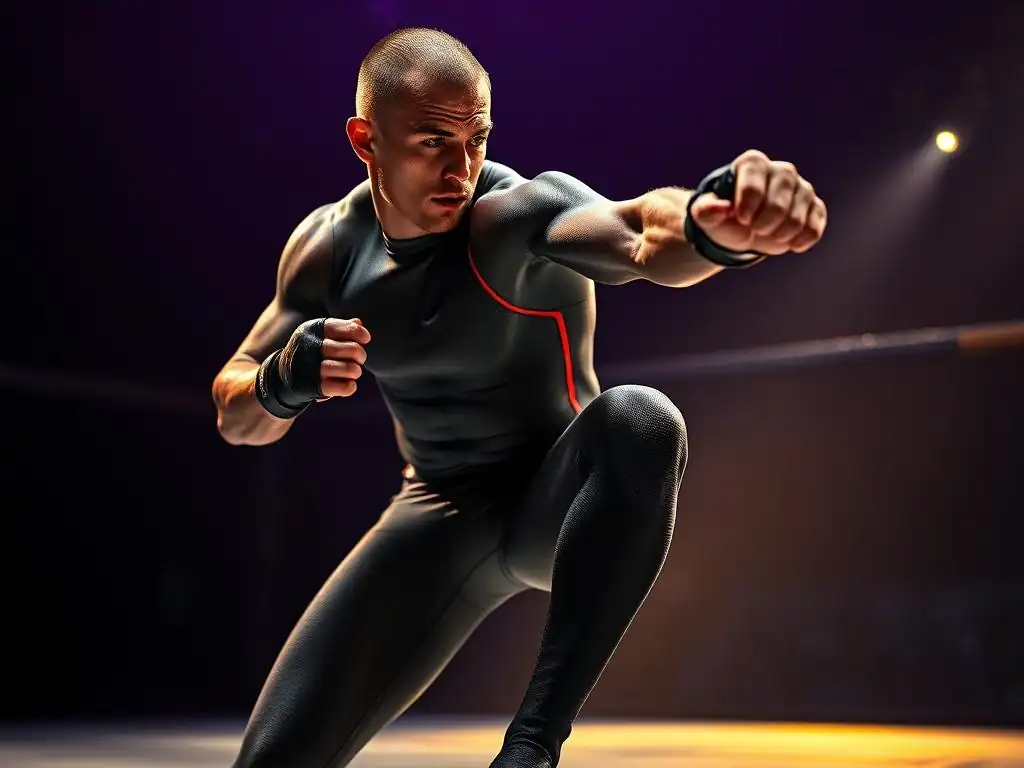
Welcome to Martial Arts Mastery, where we delve into the rich tapestry of combat disciplines! Ever wondered how the raw power and precision of K1 striking have reshaped the landscape of modern MMA? This is more than just a fight; it's an evolution. Uncover the secrets behind the K1 techniques that are now essential tools for MMA's elite, and prepare to see the cage with fresh eyes. Let's explore how these impactful techniques have revolutionized striking in modern MMA.
- The Undeniable Influence of Kickboxing Techniques on Modern MMA Striking
- Introduction: Kickboxing's Lasting Legacy in Mixed Martial Arts
- Understanding the Core Kickboxing Techniques Adopted by MMA Fighters
- Key Kickboxers Who Influenced Modern MMA Striking
- How MMA Fighters are Adapting and Evolving Kickboxing Techniques
- Case Studies: Kickboxing Techniques in Action in MMA
- The Future of Kickboxing Techniques in MMA Striking
- Conclusion: Kickboxing's Enduring Impact on the MMA Striking Landscape
-
Frequently Asked Questions
- How has K1 influenced the striking game in modern MMA?
- What specific K1 techniques are most commonly seen in modern MMA?
- Why were K1 techniques so readily adopted by MMA fighters?
- Are there any disadvantages to solely relying on K1 techniques in MMA?
- How has the integration of K1 changed the overall strategy in MMA fights?
- Final Reflection: The Enduring Legacy of K-1
- Ignite Your Striking Potential Now!
The Undeniable Influence of Kickboxing Techniques on Modern MMA Striking
Introduction: Kickboxing's Lasting Legacy in Mixed Martial Arts
Defining Kickboxing Striking and its Key Principles
Kickboxing, in its various forms, represents a stand-up combat sport centered around striking techniques using hands and feet. While styles like Dutch Kickboxing, Muay Thai, and Savate have distinct rules and nuances, they share core principles that emphasize powerful, efficient striking and strategic movement. The foundation typically involves a strong stance, often bladed or square depending on the style, designed for both power generation and defensive stability.
Key principles revolve around striking economy, utilizing maximum power with minimal effort, and maintaining balance for seamless transitions between offense and defense. Combinations are central, linking punches and kicks fluidly to overwhelm opponents or set up finishing blows. Control of distance and ring/cage generalship are also paramount, dictating the pace and placement of the fight. These foundational elements of kickboxing striking in MMA provide a robust framework that translates effectively into the multi-disciplinary environment of mixed martial arts.
From Kickboxing Ring to the MMA Cage: A Crossover Story
The transition of kickboxing techniques in MMA from the ring to the cage was a natural evolution as the sport sought effective stand-up methodologies. Early MMA often pitted specialists against each other, and pure strikers, particularly those with kickboxing or Muay Thai backgrounds, quickly demonstrated the potency of their skills against less experienced stand-up fighters.
Fighters like Bas Rutten, Marco Ruas, and later, the influx of athletes from organizations like Pride FC and K-1, showcased how disciplined, powerful striking could dominate fights. The effectiveness of techniques like low kicks, devastating knee strikes, and sophisticated punch-kick combinations became undeniable. This early success prompted non-striking specialists, such as wrestlers and grapplers, to adopt and adapt kickboxing principles, recognizing their necessity for success in the stand-up phase of a mixed martial arts bout. The cross-pollination rapidly accelerated the development of modern MMA striking, making a strong kickboxing base almost a prerequisite for elite-level competition.
Understanding the Core Kickboxing Techniques Adopted by MMA Fighters
The Devastating Power of Kickboxing Style Low Kicks in MMA
Low kicks, aimed at the opponent's thighs or calves, are a staple of kickboxing striking in MMA and have proven to be fight-ending weapons. These techniques, perfected in disciplines like Dutch and Japanese kickboxing, target the opponent's mobility and balance, accumulating damage over time. Unlike head kicks which often seek immediate knockouts, low kicks systematically break down an opponent's base, hindering their movement, power generation, and even their ability to stand.
Fighters renowned for their low kicks, such as Jose Aldo or Edson Barboza, have demonstrated their fight-altering potential. Aldo, for instance, frequently used brutal leg kicks to dismantle opponents, significantly reducing their ability to check takedowns or generate power for their own strikes. In some cases, cumulative low kick damage has led to opponents being unable to continue, resulting in TKO victories. A fighter absorbing just a dozen powerful low kicks to the thigh can experience severe bruising and nerve damage, drastically impacting their performance and highlighting the effectiveness of this fundamental kickboxing technique in MMA.
Kickboxing Inspired Punching Combinations: Enhancing MMA Striking Offense
While boxing provides a strong foundation for hand striking, kickboxing techniques modern MMA often incorporates punching combinations designed to flow seamlessly into kicks or clinch work. Kickboxing emphasizes using punches to set up more powerful leg or head kicks, or to close distance for knees and elbows. This differs slightly from pure boxing, which focuses solely on hand combinations.
Typical kickboxing sequences seen frequently in MMA include the jab-cross-low kick, or the double jab-straight right-head kick. These combinations leverage the opponent's reaction to punches – often covering their head – to open up targets lower on the body or for high kicks. Furthermore, kickboxing drills often integrate defensive movements like slips and blocks within combinations, making fighters harder to hit while they are attacking. This layered approach to offense and defense within striking sequences enhances the overall effectiveness and unpredictability of a fighter's stand-up game in MMA.
The Importance of Knee Strikes and Clinch Work: A Kickboxing Import
Knee strikes, particularly in the clinch, are a hallmark of Muay Thai and other kickboxing styles and have become indispensable K1 techniques in modern MMA. While wrestling features clinch work primarily for takedowns, the kickboxing clinch is a dominant position for delivering punishing strikes. Fighters utilize various knee strikes – straight knees to the body or head, or round knees to the thighs or ribs – to inflict significant damage at close range.
Beyond knee strikes, the kickboxing clinch, often involving neck ties or plum holds, provides control that limits an opponent's movement and striking options. This control allows fighters to land multiple powerful knees or elbows, wear down opponents, and even set up trips or throws. Fighters like Anderson Silva and Valentina Shevchenko have effectively used the kickboxing clinch to control opponents against the cage or in open space, delivering devastating knee and elbow strikes that have led to numerous finishes, underscoring the vital role of this specific kickboxing technique in MMA.
Adapting Kickboxing Footwork and Ring Generalship for MMA
Effective footwork and strategic movement, known as ring generalship in combat sports, are crucial kickboxing principles in MMA. Kickboxing footwork often involves lateral movement, circling, and cutting off the ring, aiming to position oneself advantageously while limiting the opponent's escape routes. This differs from some boxing footwork focused primarily on linear movement.
In the MMA cage, this translates to controlling the octagon space, trapping opponents against the fence, and maintaining optimal striking distance. Fighters with strong kickboxing backgrounds excel at dictating where the fight takes place on the feet. They use feints and footwork to draw reactions, create angles, and manage distance to land their preferred strikes while avoiding the opponent's.
This strategic movement is key not only for striking but also for defending against takedowns, as good footwork allows a fighter to sprawl effectively or circle away from wrestling entries. The ability to control the cage using kickboxing-inspired generalship is a significant advantage in modern MMA striking.
Key Kickboxers Who Influenced Modern MMA Striking
Ernesto Hoost: A Pioneer of Leg Kicks and Combinations in MMA
Ernesto Hoost, a four-time K-1 World Grand Prix champion, is widely regarded as one of the most technically sound heavyweights in kickboxing history. His influence on K1 techniques modern MMA is profound, particularly through his mastery of low kicks and fluid punch-kick combinations. Hoost's leg kicks were legendary, delivered with pinpoint accuracy and immense power, often leading to opponents' legs being severely compromised or forcing stoppages.
His approach demonstrated that systematically attacking the base could be as effective, if not more so, than solely targeting the head. MMA fighters studying striking adopted his methods of breaking down opponents from the ground up. Furthermore, Hoost's ability to seamlessly blend boxing combinations with powerful kicks provided a blueprint for MMA strikers looking to create varied and unpredictable offense. Fighters like Alistair Overeem, who transitioned from kickboxing to MMA, brought this Hoost-inspired emphasis on powerful leg kicks and integrated combinations directly into the cage, showcasing their effectiveness at the highest levels.
Semmy Schilt: Revolutionizing Striking Range and Defense in MMA
Standing at 6'11", Semmy Schilt, another multiple K-1 World Grand Prix champion, brought a unique perspective on striking range and defense that has influenced modern MMA striking. Schilt leveraged his extraordinary reach to keep opponents at distance, utilizing long-range kicks and straight punches while making it incredibly difficult for opponents to close the distance effectively.
His defensive strategy often involved using his length to maintain distance and absorb blows on his arms or shoulders while setting up counter-attacks. This emphasis on controlling the fight from the outside and utilizing reach as a primary defensive tool has been adopted by taller MMA fighters across various weight classes. Fighters like Stefan Struve or Jon Jones, though not pure kickboxers, have shown elements of using their reach and distance control in ways reminiscent of Schilt's dominance, proving that mastering range, a key kickboxing principle in MMA, is vital regardless of style.
Mirko Cro Cop: The Impact of High Kick Knockouts on MMA
Mirko "Cro Cop" Filipović, a K-1 veteran and Pride/UFC star, left an indelible mark on kickboxing striking in MMA primarily through his devastating left high kick. While high kicks existed in martial arts before him, Cro Cop popularized the fight-ending power of a perfectly timed and executed head kick in the MMA arena. His famous phrase, "Right leg, hospital; left leg, cemetery," though referring to both legs, became synonymous with the knockout power of his left high kick.
Cro Cop's success demonstrated that a single, well-set-up kick could instantly change the course of a fight, leading to spectacular finishes that captivated audiences. This inspired countless MMA fighters to drill high kicks and integrate them into their striking arsenals, often setting them up with punches or feints just as Cro Cop did. The highlight-reel knockouts achieved via head kicks by fighters like Gabriel Gonzaga (against Cro Cop himself), Lyoto Machida, and others are a direct legacy of the emphasis Cro Cop placed on this potent kickboxing technique in MMA.
How MMA Fighters are Adapting and Evolving Kickboxing Techniques
Blending Kickboxing Striking with Wrestling and Grappling in MMA
One of the most significant evolutions in modern MMA striking is the integration of kickboxing techniques with wrestling and grappling. Elite MMA fighters no longer operate in silos of single disciplines; they seamlessly transition between stand-up and ground fighting. Kickboxing strikes are often used strategically to facilitate takedowns or create space for grappling exchanges.
For example, fighters might throw a combination of punches and kicks to force an opponent to cover up, momentarily distracting them and opening an opportunity to shoot for a takedown. Conversely, a fighter might use footwork derived from kickboxing to circle away from an opponent attempting to clinch or shoot.
Strikes are also used to set up clinch entries, as seen with knees and elbows, blurring the lines between striking and grappling range. This intelligent blending of kickboxing techniques in MMA with wrestling and jiu-jitsu is a hallmark of contemporary mixed martial arts, requiring fighters to be proficient across multiple ranges and disciplines.
Modifying Kickboxing Techniques for the Smaller MMA Gloves
The shift from padded kickboxing gloves (typically 10-16 oz) to the much smaller, open-fingered MMA gloves (typically 4 oz) necessitates significant modifications to striking techniques. The reduced padding increases the risk of hand injuries when punching, particularly to the knuckles and wrists. It also changes defensive strategies, as guarding with the hands becomes less protective.
As a result, K1 techniques in modern MMA striking have adapted. Punches are often thrown with greater emphasis on accuracy and avoiding impact with the hardest parts of the opponent's skull. Fighters may use tighter guards, rely more on head movement and footwork for defense, or utilize palm blocks and parries.
Furthermore, the open fingers allow for strikes that are less common in traditional boxing or kickboxing, such as palm strikes or finger jabs, though these are less prevalent than core techniques. The smaller gloves also mean that strikes that land cleanly have a higher probability of causing knockouts or cuts, making defensive precision derived from kickboxing footwork even more critical.
The Evolution of Kickboxing Style Kickboxing in MMA Training Camps
MMA training camps have evolved dramatically, moving away from single-discipline focus towards integrated training methodologies. Kickboxing techniques modern MMA are not just taught in isolation but are drilled specifically within the context of potential transitions to wrestling or grappling. Striking coaches work closely with wrestling and jiu-jitsu coaches to create sequences that flow naturally between phases of the fight.
This involves drills that practice striking entries into takedowns, striking defense against takedown attempts, using the clinch for both striking and grappling, and transitioning from ground positions back to striking. Furthermore, sparring in MMA camps often incorporates rounds with specific rulesets that mimic different phases of a fight or focus on transitions. This integrated approach ensures that fighters can apply their kickboxing knowledge effectively within the complex and dynamic environment of an MMA bout, adapting traditional kickboxing principles in MMA to the unique demands of the cage.
Case Studies: Kickboxing Techniques in Action in MMA
Israel Adesanya vs. Alex Pereira: A Showcase of Kickboxing Inspired Striking
The rivalry between Israel Adesanya and Alex Pereira is perhaps the most prominent recent example showcasing the impact of kickboxing techniques in MMA. Both fighters transitioned from elite kickboxing careers (Pereira famously defeated Adesanya twice in kickboxing, including a knockout) and brought highly refined striking skills into the octagon. Their fights were often stand-up clinics, demonstrating high-level striking defense, feints, timing, and power.
In their MMA encounters, both fighters utilized core kickboxing principles: maintaining distance, using feints to draw reactions, setting up powerful strikes with combinations, and leveraging their length. Pereira's devastating left hook, a weapon honed in K-1, proved effective in knocking out Adesanya in their first UFC fight. Adesanya, in turn, showcased brilliant defensive footwork and counter-striking, ultimately knocking out Pereira in their rematch. Their bouts highlighted how pure, high-level K1 techniques modern MMA can still dominate, provided they are applied with nuance and adaptability within the MMA ruleset.
Analyzing Conor McGregor vs. Jose Aldo - The Role of Counter Striking
Conor McGregor's stunning 13-second knockout of long-reigning featherweight champion Jose Aldo is a classic example of the effectiveness of well-timed counter-striking, a principle central to many kickboxing styles in MMA. Aldo, known for his powerful low kicks and aggressive combinations, stepped in with a jab-cross combination. McGregor, utilizing footwork and distance management honed through his striking background (including boxing and elements of traditional martial arts), pulled back and delivered a perfectly timed counter left hook.
This knockout wasn't a wild exchange but a precise application of a counter-striking principle: baiting an opponent, creating a reaction, and capitalizing on the opening. While McGregor's style is diverse, the focus on timing, distance, and delivering powerful single shots or short, explosive combinations is highly compatible with kickboxing principles in MMA that prioritize efficiency and power. The fight demonstrated that against an aggressive, forward-moving striker like Aldo, a well-executed counter from a fighter with a solid striking base can be fight-ending, even in the opening seconds.
Valentina Shevchenko's Success: Attributing it to Kickboxing Roots
Valentina Shevchenko, a dominant force in the women's flyweight division, attributes much of her success to her extensive background in kickboxing and Muay Thai, where she achieved multiple world championships. Her MMA striking arsenal is a testament to the effectiveness of kickboxing techniques modern MMA. Shevchenko displays exceptional technical proficiency in all ranges of striking: powerful low kicks, accurate punch combinations, devastating clinch knees and elbows, and slick head kicks.
Her fights often feature her systematically breaking down opponents using a varied striking attack. She uses feints and footwork to control the center of the cage and dictate the pace. Her clinch work against the fence is particularly noteworthy, utilizing body locks and neck ties to land unanswered strikes, often leading to finishes. Shevchenko's ability to seamlessly blend her stand-up (derived heavily from kickboxing) with her strong grappling defense makes her a challenging puzzle for any opponent and serves as a prime example of a fighter whose elite kickboxing striking in MMA forms the cornerstone of her overall game.
The Future of Kickboxing Techniques in MMA Striking
Emerging Kickboxing Striking Trends in Modern MMA
The evolution of modern MMA striking continues, with new trends emerging as fighters and coaches refine existing techniques. One noticeable trend is the increased use of oblique kicks and calf kicks, techniques that target the lower leg to disrupt balance and mobility, drawing heavily from Muay Thai and Savate influences. These are proving highly effective and less risky than traditional thigh kicks in some scenarios.
Another trend is the further integration of sophisticated feints and rhythm changes, making strikers harder to read. This involves using subtle movements of the head, shoulders, or feet to draw reactions or mask intentions, a high-level application of kickboxing principles in MMA. Furthermore, defensive striking is becoming more sophisticated, with fighters utilizing more intricate head movement, parries, and evasive footwork to avoid damage, reflecting the emphasis on defense found in various kickboxing disciplines. These emerging trends highlight the dynamic nature of kickboxing techniques modern MMA and their continuous adaptation.
The Continued Evolution of Kickboxing in MMA
Kickboxing's role in MMA is not static; it is constantly evolving alongside the sport itself. As grappling defense improves, stand-up exchanges are becoming longer and more technical, placing a higher premium on refined striking skills. This drives fighters to seek out high-level striking coaches, many of whom have backgrounds in kickboxing or Muay Thai, further embedding kickboxing techniques in MMA training.
The analytical approach to fight preparation also leads to the development of specific kickboxing techniques modern MMA tailored to counter common MMA strategies. For example, practicing strikes specifically designed to land as an opponent is shooting for a takedown, or utilizing clinch strikes to break grips. As cross-training becomes the norm, the fusion of disciplines creates hybrid techniques and strategies that push the boundaries of what's possible in striking within the cage environment. The core principles of power, efficiency, and strategy from kickboxing will remain relevant, but their application will continue to adapt.
The Importance of Cross-Training in Kickboxing and MMA for Aspiring Fighters
For aspiring MMA fighters, cross-training with a strong emphasis on kickboxing is no longer optional; it is essential. A solid foundation in kickboxing striking in MMA provides the fundamental tools for stand-up exchanges: powerful strikes, effective defense, movement, and combination work. Without this base, a fighter is severely disadvantaged in the striking realm, which constitutes a significant portion of most MMA fights.
Training in both disciplines allows fighters to understand how to apply their striking against opponents who may want to grapple, and how to defend against takedowns using striking principles. It also teaches them how to transition effectively between striking and grappling ranges, a key skill in modern MMA. Aspiring fighters who dedicate themselves to mastering K1 techniques modern MMA, alongside their grappling skills, build a more complete and versatile skill set, significantly increasing their chances of success in the competitive landscape of mixed martial arts.
Conclusion: Kickboxing's Enduring Impact on the MMA Striking Landscape
The Indelible Mark of Kickboxing on Mixed Martial Arts
Kickboxing has left an undeniable and permanent mark on the landscape of mixed martial arts. From the devastating power of low kicks to the strategic application of clinch strikes and the sophistication of punch-kick combinations, techniques originating from kickboxing disciplines are now fundamental components of modern MMA striking. Early pioneers demonstrated their effectiveness, and subsequent generations of fighters have refined and integrated these skills into a cohesive multi-disciplinary approach.
The influence extends beyond individual techniques to encompass broader strategic principles like distance management, cage generalship, and the importance of striking defense. As the sport continues to evolve, the foundational elements of kickboxing techniques in MMA will remain crucial, constantly being adapted and blended with other martial arts to create increasingly complex and effective fighting styles.
Mastering Kickboxing Techniques for MMA Success
For any fighter aiming for success in contemporary MMA, mastering kickboxing techniques modern MMA is paramount. It provides the essential tools needed to compete effectively in the stand-up phase of the fight, which is where many bouts are decided. Developing powerful and accurate strikes, learning how to defend against incoming attacks, and understanding how to control the striking range are all skills directly derived from kickboxing training.
Furthermore, proficiency in kickboxing allows fighters to set up their grappling, transition smoothly between phases, and exploit opponents' weaknesses in the stand-up. The continuous evolution of kickboxing striking in MMA ensures that fighters must stay abreast of the latest developments and constantly refine their skills. Ultimately, a deep understanding and mastery of kickboxing principles are indispensable for navigating the complex and demanding world of mixed martial arts competition.
Frequently Asked Questions
How has K1 influenced the striking game in modern MMA?
K1's influence is undeniable, bringing a focus on powerful striking combinations and leg kicks that significantly impacted MMA. It emphasized stand-up fighting, which was adopted by many MMA fighters.
What specific K1 techniques are most commonly seen in modern MMA?
Common techniques include devastating leg kicks, powerful punches, and effective knee strikes in the clinch. The focus on these techniques added a new dimension to MMA striking.
Why were K1 techniques so readily adopted by MMA fighters?
K1 techniques provided a direct and effective method for striking, offering clear advantages in stand-up exchanges. The results were evident in fights, prompting widespread adoption.
Are there any disadvantages to solely relying on K1 techniques in MMA?
Yes, solely relying on K1 can leave fighters vulnerable to takedowns and grappling. A well-rounded MMA game requires more than just stand-up skills.
How has the integration of K1 changed the overall strategy in MMA fights?
The integration of K1 has led to a greater emphasis on striking, often leading to faster and more exciting fights. Fighters now need to be proficient in both striking and grappling to compete at the highest level.
Final Reflection: The Enduring Legacy of K-1
The techniques honed in the crucible of K-1 competition, initially designed for stand-up battles, have undeniably permeated the modern MMA landscape. The fusion of K-1 striking with wrestling and grappling has revolutionized the sport, creating a dynamic and unpredictable fighting style that demands versatility and adaptability from every competitor. This evolution is not merely a trend; it's a testament to the effectiveness and enduring power of K-1's foundational principles.
The influence of K-1 extends beyond just specific techniques; it has shaped the very mindset of MMA strikers. It has instilled a greater emphasis on footwork, angles, and explosive combinations, transforming the stand-up game into a more nuanced and strategic art. This shift is perhaps best summarized by the legendary Ernesto Hoost: It's not about how hard you can hit, but how hard you can be hit and keep moving forward.
This resilience and strategic approach, central to K-1, are now hallmarks of successful MMA strikers.
As we witness the continued evolution of MMA, let us not forget the profound impact of K-1. Consider how these principles of precision, power, and strategic movement can be applied not only in the ring or cage, but also in your own life. Embrace the spirit of continuous improvement, adapt to new challenges with unwavering determination, and strive for excellence in all that you do. The legacy of K-1 is a reminder that with dedication and the right techniques, anything is possible.
Ignite Your Striking Potential Now!
Thank you for diving deep into the world of K1 and its profound impact on MMA striking. We hope you've gained valuable insights into refining your stand-up game. Now, it's time to translate that knowledge into action.
Here's how you can elevate your striking skills:
- Commit to implementing at least one K1 technique in your next sparring session, focusing on precision and timing.
- Analyze fight footage of MMA fighters who effectively utilize K1 techniques, paying attention to their setups and combinations.
- Share this article with a fellow martial artist and discuss your favorite K1 techniques applicable to MMA!
What K1 technique are you most excited to incorporate into your training, and how do you plan to adapt it for MMA?