
Unlocking Grappling Power: How Biomechanics Trumps Brute Strength

Welcome to Martial Arts Mastery!
Dive deep into the science behind superior grappling. Ever wondered how a smaller opponent can dominate a larger one? This article, Unlocking Grappling Power: How Biomechanics Trumps Brute Strength, explores the crucial role of biomechanics grappling technique training in maximizing your effectiveness on the mat. Discover the principles that will transform your approach and elevate your grappling game. Intrigued? Let's unlock your potential.
- Introduction: The Science Behind Superior Grappling
- The Core Principles of Grappling Biomechanics
- Optimizing Your Grappling Technique with Biomechanics
- Advanced Biomechanical Concepts for Grappling Mastery
- Applying Biomechanics to Specific Grappling Styles
- Biomechanics in Grappling Training: Practical Application
- Conclusion: Mastering the Biomechanics of Grappling
-
Frequently Asked Questions
- What exactly is biomechanics in the context of grappling?
- How can understanding biomechanics improve my grappling technique training?
- Is biomechanics training only useful for smaller grapplers?
- Where does the "Unlocking Grappling Power" article on MartialArtsMastery.org fit in with overall martial arts training?
- What specific self-defense strategies can be improved through biomechanics grappling technique training?
- Final Reflection: Embracing Intelligent Leverage
- Unleash Your Inner Grappler: Transform Knowledge into Action!
Introduction: The Science Behind Superior Grappling
Why Biomechanics Matters in Grappling Arts
In the dynamic world of grappling, where opponents strive to control, submit, or pin one another, success often hinges on more than just raw physical power. While strength and conditioning are undoubtedly important, a deep understanding of biomechanics provides a significant edge. Biomechanics is essentially the study of mechanical laws relating to the movement or structure of living organisms. When applied to grappling, it reveals how leverage, force, and angles can be manipulated to overcome a stronger adversary. This scientific approach to movement efficiency is a cornerstone of effective grappling technique training.
Mastering biomechanics allows practitioners to execute techniques with maximum efficiency and minimal wasted energy. Consider the difference between someone muscling through an armbar versus someone applying precise pressure at the correct angle. The latter, utilizing biomechanical principles, requires less effort from the attacker while generating significantly more pain and pressure on the defender's joint, leading to a higher probability of success or submission. This principle is universally applicable across different grappling styles, from the mat work of Brazilian Jiu-Jitsu to the throws of Judo and the pins of Wrestling.
Beyond Brute Force: Understanding Leverage and Efficiency
Grappling at its core is a constant battle for positional dominance and control. While brute force can sometimes overpower a less skilled opponent, it is often inefficient and unsustainable, especially against someone equally strong or more technically proficient. This is where the principles of leverage and efficiency come into play, forming the heart of biomechanics grappling technique training. Leverage allows a smaller force applied at a greater distance from a pivot point to overcome a larger force closer to that pivot point, much like using a lever to lift a heavy object.
Efficiency in grappling biomechanics means achieving the desired outcome (control, sweep, submission) with the least amount of energy expenditure. This is accomplished by aligning your body and applying force in ways that exploit your opponent's structural weaknesses and imbalances, rather than directly confronting their strength.
For example, a well-executed sweep in BJJ isn't about lifting your opponent's entire weight, but rather disrupting their base by applying force in a specific direction relative to their center of gravity, causing them to fall with minimal effort on your part. This focus on smart application of force, rather than sheer power, is what truly unlocks grappling potential.
The Core Principles of Grappling Biomechanics
Leverage: Amplifying Force with Proper Positioning
Leverage is perhaps the most fundamental biomechanical principle in grappling. It is the mechanical advantage gained by applying force at a distance from a fulcrum (a pivot point, often a joint). In grappling, practitioners constantly seek to establish leverage points – using their body, or grip, to create a fulcrum and apply force to an opponent's limb or body part.
For instance, in an armbar, the attacker uses their hip or forearm as a fulcrum against the defender's elbow joint, applying force to the wrist to hyperextend the arm. The further the attacker's force is applied from the elbow (e.g., closer to the defender's wrist), the greater the leverage and the less force required to achieve the desired effect.
Optimizing leverage is key to effective biomechanics grappling technique training. This involves understanding how to position your body relative to your opponent's joints and limbs to maximize your mechanical advantage. A common example is establishing cross-side control in BJJ; by using your weight and positioning correctly, you create leverage points that make it incredibly difficult for your opponent to bridge or escape, effectively "pinning" them with relatively little muscular effort compared to simply trying to hold them down with pure strength. This strategic application of leverage allows smaller, weaker individuals to control and submit larger, stronger opponents consistently.
Base and Posture: Maintaining Stability and Control
A strong base and stable posture are critical for both offense and defense in grappling, representing vital elements of applied biomechanics. Your base is the area of contact between your body and the ground (or your opponent's body). A wide base, with points of contact spread out, generally provides more stability, making it harder for an opponent to off-balance or sweep you.
Conversely, a narrow or unstable base makes you vulnerable. Posture refers to the alignment of your body, particularly your spine and hips, which affects your balance, ability to generate force, and resistance to being manipulated. Maintaining good posture, often with a straight back and hips low, keeps your center of gravity stable and allows for efficient movement.
Consider the difference between standing upright with feet close together versus adopting a low, wide stance with bent knees, like a wrestler's shooting stance. The latter demonstrates excellent base and posture for grappling; the low center of gravity and wide base make it extremely difficult to be pushed over or taken down.
In ground grappling, maintaining good posture while inside someone's guard, for example, involves keeping your back straight and hips low to prevent sweeps and maintain control. Training drills that focus on balance, hip movement, and maintaining a strong core are essential components of biomechanics grappling technique training aimed at developing superior base and posture.
Center of Gravity: Manipulating Your Opponent's Balance
Understanding and manipulating the center of gravity (CoG) is a cornerstone of effective grappling biomechanics, particularly in throws, sweeps, and takedowns. The CoG is the average location of the weight of an object or person. For a standing human, it's typically around the pelvic area. When this point is moved outside the area of their base, they lose balance and fall. Grappling techniques often aim to disrupt an opponent's CoG, forcing it outside their base of support. This is much more efficient than trying to lift or push their entire weight.
In Judo, for example, many throws like Ogoshi (major hip throw) involve getting close to the opponent, lowering your own CoG below theirs, and using your hip as a fulcrum to lift and rotate them, projecting their CoG over your hip and outside their base. Similarly, a simple push-pull drill demonstrates this principle: if you pull an opponent whose weight is primarily on their heels, their CoG is already close to the edge of their base in that direction, making them easy to pull off balance.
Effective biomechanics grappling technique training incorporates drills and concepts specifically designed to help practitioners identify their opponent's CoG and learn to manipulate it efficiently through various movements and grips.
Optimizing Your Grappling Technique with Biomechanics
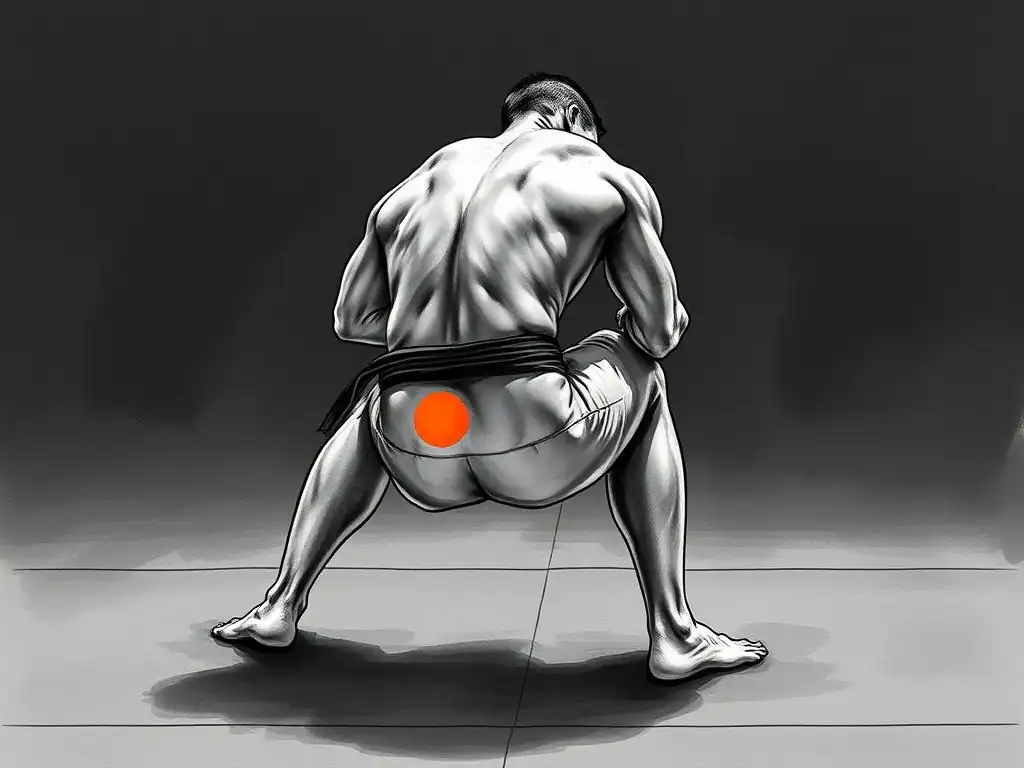
Biomechanical Analysis of Common Grappling Techniques
Analyzing common grappling techniques through a biomechanical lens reveals the underlying principles that make them effective. This isn't just about knowing the steps of a technique, but understanding why it works from a physics perspective. This analytical approach enhances biomechanics grappling technique training by providing deeper insight into execution and troubleshooting.
The Armbar: A Biomechanical Breakdown
The armbar (Juji Gatame in Judo, Armlock in Wrestling) is a classic example of leverage applied to a joint. The technique targets the elbow, a hinge joint designed to bend in one direction. The attacker secures the opponent's arm, isolating the elbow joint. They then use their hips or chest as the fulcrum, positioned directly against the posterior side of the elbow.
Force is applied by extending the attacker's hips upwards while controlling the opponent's wrist, applying pressure to hyperextend the joint. The efficiency comes from targeting the joint's natural limitations and applying force at a mechanical disadvantage for the defender. A common mistake is trying to muscle the arm straight; biomechanically, success comes from precise positioning of the fulcrum and controlled, directed force, often applied at a roughly 90-degree angle relative to the arm's length when fully extended across the hips.
The Triangle Choke: Maximizing Compression
The triangle choke (Sankaku Jime in Judo, Triangle in BJJ) is a submission that relies on constricting blood flow to the brain by compressing the carotid arteries on the neck. Biomechanically, this is achieved by using the attacker's legs to form a triangular structure around the opponent's neck and one arm.
The attacker's leg acts as a powerful lever, using their hip as a pivot point. By tightening the legs and angling their body correctly, the attacker uses the opponent's own shoulder and their other leg to apply inward pressure on the neck.
The effectiveness is amplified by the angle and tightness of the triangle; a tighter angle, with the opponent's shoulder pulled across the neck and the attacker's shin pressed firmly against the other side, maximizes the compressive force on the arteries. The biomechanical advantage lies in using the strong leg muscles and skeletal structure to apply sustained, focused pressure.
The Kimura Lock: Efficient Shoulder Control
The Kimura lock (also known as a Reverse Ude Garami or Double Wristlock) targets the shoulder joint. This technique exploits the rotational limitations of the shoulder. The attacker isolates the opponent's arm, gripping their wrist with one hand and their own wrist with the other, creating a figure-four grip. This grip allows the attacker to use their entire body to apply powerful rotational force to the opponent's shoulder joint.
The attacker's body positioning, often perpendicular to the opponent, creates the necessary leverage. By rotating the opponent's arm upwards and away from their body while controlling their wrist, the attacker forces the shoulder into an unnatural rotation, leveraging the strength of their torso and hips against the relatively weaker shoulder joint. This biomechanical setup allows a smaller person to generate immense pressure on a larger opponent's shoulder.
Drills for Developing Biomechanically Sound Grappling
Effective biomechanics grappling technique training isn't just theoretical; it requires specific drills to internalize the principles. These drills focus on developing body awareness, balance, leverage application, and efficient movement patterns.
Hip Shifting Drill: Focusing on Leverage
This drill is fundamental for ground grappling and focuses on using hip movement to create angles and leverage. Starting from a seated guard position or side control, the practitioner practices shifting their hips laterally and vertically to create space, improve angles for attacks, or escape positions. The goal is to move the body efficiently using the hips as the primary driver, rather than relying on arm strength.
For instance, in side control, hip escaping (shrimping) involves driving off one foot and using the core and hip to create space, a classic example of using lower body power and leverage to shift weight and escape. Practicing this drill repeatedly builds the kinetic awareness necessary to apply leverage effectively in live rolling.
Sprawl Drill: Enhancing Base and Posture
The sprawl is a defensive movement crucial for stopping takedowns, and it heavily relies on good base and posture. The drill involves quickly dropping the hips back and down, extending the legs behind you, and landing on your hips and chest with a wide base. This rapid change in posture lowers your center of gravity and increases your base area, making it difficult for an opponent to penetrate for a takedown.
Repetitively practicing the sprawl builds explosive hip extension, core strength, and the instinctive reaction to establish a strong, low base under pressure. It's a prime example of how foundational movements in biomechanics grappling technique training build defensive stability.
Off-Balancing Drill: Controlling the Center of Gravity
This drill can be done standing or on the ground and focuses on feeling and manipulating an opponent's balance by subtly shifting their center of gravity. Partners stand or kneel opposite each other and gently push or pull, trying to make the other person take a step or lose balance without using excessive force.
The focus is on identifying when the opponent is most vulnerable (e.g., when transitioning weight) and applying minimal force at the right moment and in the right direction to disrupt their balance. This drill hones the sensitivity required to exploit an opponent's momentary lack of balance, a core skill in applying throws, sweeps, and transitions based on biomechanical principles.
Advanced Biomechanical Concepts for Grappling Mastery
Beyond the core principles, advanced biomechanical concepts further refine grappling prowess. Understanding these allows practitioners to generate more power, control movement more effectively, and execute techniques with even greater precision. These concepts are often interwoven in high-level biomechanics grappling technique training.
Kinetic Chains: Harnessing Full-Body Power
A kinetic chain refers to the interconnected segments of the body that work together to produce movement. In grappling, techniques rarely involve just one isolated body part; they are typically the result of coordinated movement through a kinetic chain, starting from the feet or hips and transferring force through the core, torso, and ultimately to the point of contact or application. For example, executing a powerful guard pass often involves driving off the legs, engaging the hips and core, and transferring that force through the arms and shoulders to break the opponent's guard or maintain pressure.
Understanding and optimizing kinetic chains is vital for generating maximum force efficiently. A broken link in the chain – such as a weak core or poor hip engagement – can significantly reduce the power and effectiveness of a technique. Advanced biomechanics grappling technique training emphasizes drills that link movements together, ensuring that force is transferred smoothly and powerfully from the lower body through the core to the upper body, maximizing the force applied during sweeps, throws, or submissions while minimizing strain on individual joints.
Angular Momentum: Generating Rotational Force
Angular momentum is the rotational equivalent of linear momentum and is critical in techniques involving rotation, such as throws, sweeps, and transitions. It depends on the mass of the object and how that mass is distributed relative to the axis of rotation, as well as the angular velocity (how fast it's spinning). In grappling, generating angular momentum allows practitioners to rotate themselves or their opponents powerfully and efficiently.
Consider a Judo throw like Uchi Mata (inner thigh throw). The throw involves rotating the opponent around the attacker's hip. By pulling the opponent close and rotating quickly, the attacker generates angular momentum that lifts and spins the opponent off their feet. Similarly, a powerful hip bump sweep in BJJ involves rotating the hips and torso to generate momentum that rolls the opponent over. Learning to initiate rotation from the hips and core, and controlling the distribution of weight, is a key part of advanced biomechanics grappling technique training focused on generating powerful rotational forces.
Force Vectors: Directing Energy for Maximum Impact
Force vectors are a way of representing forces with both magnitude (how strong the force is) and direction. In grappling, understanding force vectors is crucial for applying pressure precisely where it is most effective to break an opponent's posture, disrupt their balance, or apply a submission. It's not just about pushing or pulling hard, but pushing or pulling in the right direction relative to the opponent's structure.
For instance, to break an opponent's posture in guard, applying downward pressure directly on their shoulders might require significant strength. However, applying pressure slightly forward and downward, combined with pulling their arms up, targets the limits of their spinal flexibility and makes it much harder for them to maintain posture with less force. Similarly, a choke works by applying inward pressure on the neck from opposing directions. Advanced biomechanics grappling technique training teaches practitioners to visualize and apply force along optimal vectors to achieve maximum impact with minimal effort, making their attacks and defenses far more efficient and potent.
Applying Biomechanics to Specific Grappling Styles
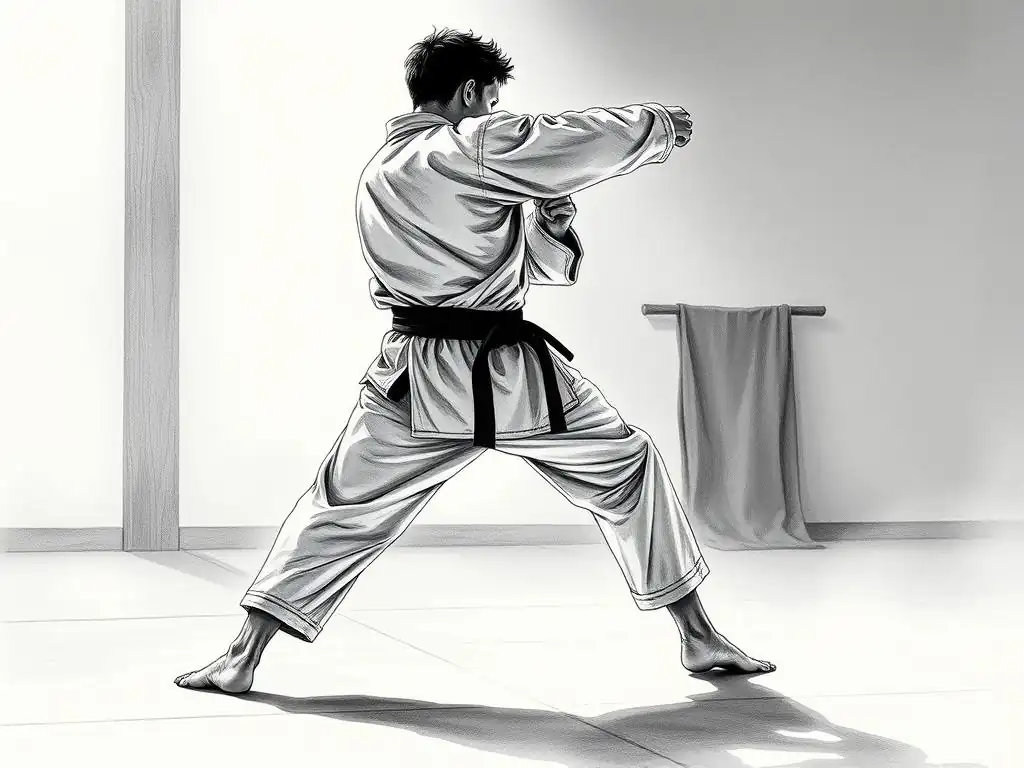
While the core principles of biomechanics are universal, their application varies slightly depending on the specific focus and ruleset of different grappling styles.
Biomechanics in Brazilian Jiu-Jitsu (BJJ)
Brazilian Jiu-Jitsu, with its heavy emphasis on ground fighting, is a prime example of biomechanics overcoming size and strength. BJJ techniques are fundamentally designed to maximize leverage and minimize the need for brute force, making it possible for smaller individuals to control and submit larger ones. The extensive use of guard positions, sweeps, and submissions like armbars, triangle chokes, and Kimura locks are all rooted in applying leverage, disrupting balance (CoG), and targeting joint mechanics or blood flow with precise force vectors.
Biomechanics grappling technique training in BJJ often focuses on maintaining a strong base from the bottom, using hip escapes and bridging to create space, and using the legs and hips as powerful levers in sweeps and submissions. The intricate positional hierarchy in BJJ is itself based on achieving positions that offer superior biomechanical control and leverage over the opponent.
Biomechanics in Wrestling
Wrestling, with its focus on takedowns, pins, and controlling an opponent from the top, utilizes biomechanics predominantly in standing exchanges and top control. Takedowns like single-leg and double-leg shots rely on lowering your center of gravity, penetrating with force, and using leverage to lift or drive the opponent off their feet by disrupting their base and CoG.
Maintaining control on the mat involves establishing a strong base and applying pressure strategically to flatten the opponent or prevent them from escaping. Biomechanics grappling technique training in wrestling heavily emphasizes powerful, explosive movements generated through kinetic chains, maintaining a low, stable stance (base and posture), and using body positioning and weight distribution to control the opponent's movement and balance, particularly during pinning situations where precise pressure application is key.
Biomechanics in Judo
Judo's philosophy, "maximum efficiency, minimum effort," directly aligns with biomechanical principles. Judo techniques (Waza) are largely based on using an opponent's movement and weight against them (Ju). Throws (Nage Waza) are classic examples of manipulating an opponent's CoG and using angular momentum and leverage to project them off their feet.
Techniques like Uchi Mata or Seoi Nage involve getting close, breaking the opponent's balance (Kuzushi), and using your body as a fulcrum to rotate and throw them. Ground techniques (Katame Waza) utilize pins, controls, and submissions that rely on isolating limbs or the neck and applying leverage and force vectors to achieve control or submission. Biomechanics grappling technique training in Judo focuses heavily on Kuzushi (breaking balance), Tsukuri (preparation for entry), and Kake (execution), all of which are deeply rooted in understanding and applying principles of base, posture, leverage, and CoG manipulation.
Biomechanics in Grappling Training: Practical Application
Integrating biomechanics into your regular training is essential for unlocking its full potential. This goes beyond simply drilling techniques; it involves analyzing movement, identifying inefficiencies, and training smart. Practical biomechanics grappling technique training involves a structured approach.
Developing a Training Plan Focused on Biomechanics
A training plan focused on biomechanics should incorporate specific elements:
- Movement Analysis: Regularly analyze your own movement and that of training partners. Where are you losing balance? Is your posture strong? Are you using leverage effectively?
- Principle-Based Drilling: Instead of just drilling a technique repeatedly, focus on the underlying biomechanical principle. For an armbar, drill hip positioning and leverage application. For a sweep, drill disrupting the opponent's base and CoG.
- Targeted Strength & Conditioning: Focus on exercises that support biomechanical efficiency, such as core strengthening, hip mobility drills, and exercises that build kinetic chain power (e.g., kettlebell swings, medicine ball throws).
- Positional Sparring with Specific Focus: Engage in sparring scenarios where the goal is to apply a specific biomechanical principle, like maintaining a low base in side control or consistently disrupting your opponent's balance before attempting a sweep.
Identifying and Correcting Biomechanical Deficiencies
Identifying deficiencies requires self-awareness and feedback. Common issues include:
Relying on upper body strength instead of hip/leg drive.Having a high or narrow base.Failing to control the opponent's posture.Applying force in the wrong direction.
Correcting these involves conscious effort and targeted drills. If you rely too much on upper body strength, focus on hip movement drills. If your base is weak, spend time in low stances and practice sprawling. Video analysis (see below) is an invaluable tool for spotting these issues. Instructors or experienced training partners can also provide crucial feedback. Consistent effort in refining these fundamental movements is key to improving biomechanics grappling technique training.
- [ ] Identify 1-2 specific biomechanical weaknesses in your game.
- [ ] Choose 1-2 drills targeting those weaknesses.
- [ ] Dedicate 10-15 minutes per training session to these drills.
- [ ] Seek feedback from an instructor or training partner on your progress.
Using Video Analysis to Improve Grappling Technique
Video analysis is a powerful tool for objective self-assessment in biomechanics grappling technique training. What feels right in the moment might look inefficient or incorrect when viewed on playback. By recording yourself sparring or drilling, you can visually analyze your body mechanics.
Look for specific points:
- Are your hips low enough when passing guard?
- Is your base wide and stable during scrambles?
- Are you using your legs and core to generate power, or just your arms?
- Is your fulcrum correctly positioned during submissions?
Comparing your technique to instructional videos or footage of skilled practitioners can highlight discrepancies. This objective feedback loop allows you to identify specific biomechanical flaws, understand why a technique might not be working, and make precise adjustments to improve efficiency and power. Even a short 5-10 minute review session after training can yield significant insights.
Conclusion: Mastering the Biomechanics of Grappling
The Path to Enhanced Grappling Performance
Mastering the biomechanics of grappling is a continuous journey that fundamentally changes how you approach martial arts. It shifts the focus from a battle of strength to a strategic application of physics. By understanding and applying principles like leverage, base, posture, center of gravity, kinetic chains, angular momentum, and force vectors, practitioners can dramatically enhance their effectiveness on the mat.
This approach allows for greater efficiency, reduced risk of injury from muscling techniques, and the ability to consistently challenge and overcome physically stronger opponents. It is the intellectual layer that elevates grappling from a physical contest to a strategic science.
Embracing the Science of Movement
Embracing the science of movement through dedicated biomechanics grappling technique training is perhaps the most impactful investment a grappler can make in their development. It involves a commitment to understanding why techniques work, not just how to perform them. This deeper knowledge unlocks the potential to modify techniques for different body types, troubleshoot problems in real-time, and develop a more intuitive feel for controlling an opponent's body. Ultimately, integrating biomechanics transforms grappling from an art of brute force into a sophisticated application of physics, leading to increased confidence, efficiency, and mastery on the mats.
Frequently Asked Questions
What exactly is biomechanics in the context of grappling?
Biomechanics, in grappling, refers to the study of how your body moves and applies force. It emphasizes using efficient leverage and optimal body positioning over raw strength for maximum effectiveness.
How can understanding biomechanics improve my grappling technique training?
Understanding biomechanics allows you to refine your techniques for greater efficiency and reduced risk of injury. You'll learn to maximize power output while minimizing wasted energy.
Is biomechanics training only useful for smaller grapplers?
No, biomechanics training is beneficial for grapplers of all sizes. It allows everyone to maximize their existing strength and leverage it more effectively.
Where does the "Unlocking Grappling Power" article on MartialArtsMastery.org fit in with overall martial arts training?
The article focuses on a specific aspect – biomechanics in grappling – which complements broader training in disciplines like Judo, Jiu-Jitsu, and Wrestling. It enhances understanding of force application and efficient movement.
What specific self-defense strategies can be improved through biomechanics grappling technique training?
Biomechanics principles enhance self-defense by teaching you to control an opponent's center of gravity and use their weight against them. This makes techniques like takedowns and escapes more effective, even against larger attackers.
Final Reflection: Embracing Intelligent Leverage
The journey through the biomechanics of grappling reveals a powerful truth: technique triumphs over raw power. What we've explored isn't just about winning matches; it's about understanding the fundamental principles that govern movement and leverage, principles that are as relevant on the mat as they are in everyday life. This understanding empowers us to move more efficiently, protect ourselves from injury, and ultimately, achieve more with less effort.
The impact of this biomechanical approach extends far beyond the competitive arena. It's about cultivating a deeper connection with our bodies and unlocking our potential through intelligent movement. This shift in perspective, from brute force to calculated leverage, is transforming the way we approach physical challenges, fostering a culture of mindful training and sustainable performance. Give me a lever long enough and a fulcrum on which to place it, and I shall move the world.
- Archimedes. This quote perfectly encapsulates the essence of biomechanics in grappling: finding the right leverage point to overcome seemingly insurmountable obstacles.
Now, as you step back onto the mat, or even as you navigate the challenges of your daily life, consider the principles we've discussed. Embrace the power of leverage, the efficiency of proper alignment, and the wisdom of listening to your body. Let this understanding guide your movements, not just in grappling, but in every aspect of your life. Unlock your potential by embracing intelligent leverage, and discover the strength that lies within.
Unleash Your Inner Grappler: Transform Knowledge into Action!
Thanks for delving into the world of grappling biomechanics! Now that you understand how leverage and technique can overcome size and strength, it’s time to put that knowledge to work.
Here are a few actionable steps to take your grappling game to the next level:
- Immediately implement one key biomechanical principle from this article into your next sparring session. Focus on feeling the difference, not just executing the move.
- Analyze a video of a high-level grappler and identify three instances where they are effectively using biomechanics to their advantage. Share your findings with a training partner.
- Research one lesser-known grappling technique that heavily relies on leverage and biomechanics, and try to integrate it into your game.
What specific biomechanical principle will you focus on implementing this week to revolutionize your grappling?