
Applying Aiki Principles to Weaponry: An Advanced Aikido Perspective

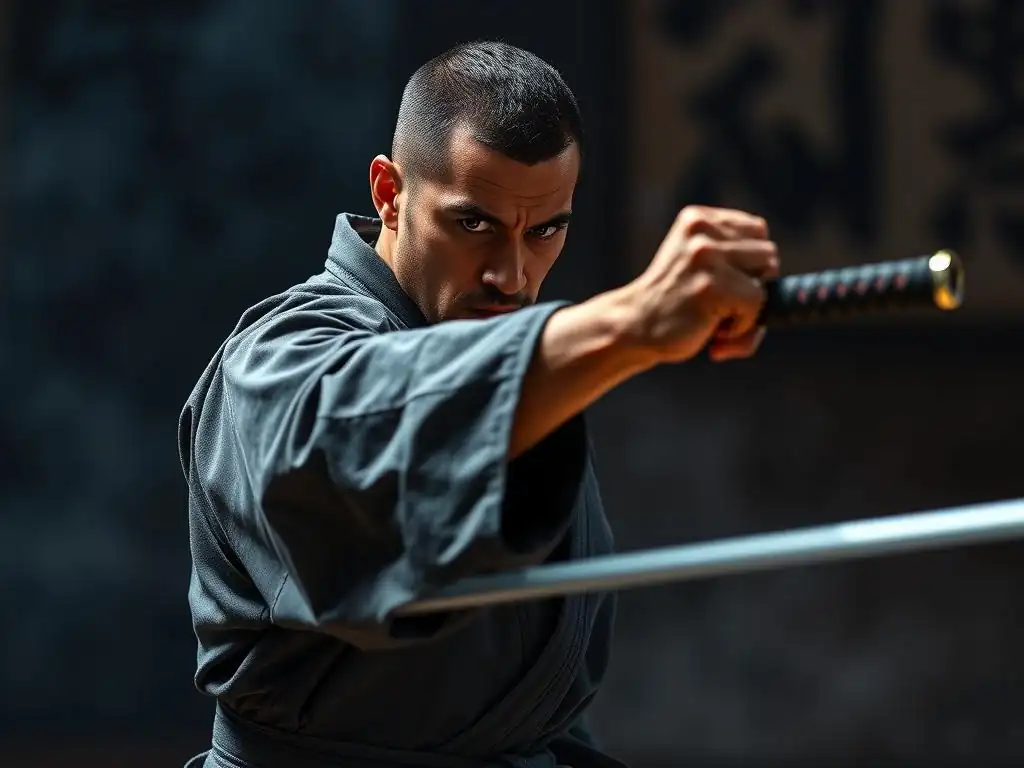
Welcome to Martial Arts Mastery, where the pursuit of excellence in combat arts is our guiding principle. Ever wondered how the core tenets of Aikido extend beyond empty-hand techniques? This article delves into the fascinating world of Aikido weapon techniques principles, revealing how the subtle concepts of aiki can be applied to weaponry for devastating effect. Prepare to unlock a deeper understanding of this elegant martial art and discover the secrets to wielding its power with precision and grace. Read on to begin your journey!
- Applying Aiki Principles to Kenjutsu: An Aikido Practitioner's Approach
- Introduction: Kenjutsu and Aiki Principles
- Understanding Core Aiki Principles for Kenjutsu Mastery
- Kenjutsu Techniques: Applying Aiki in Practice
- Advanced Aiki Concepts in Kenjutsu
- Drills and Exercises for Integrating Aiki and Kenjutsu
- The Mental and Spiritual Aspect of Aiki Kenjutsu
- Conclusion: Achieving Mastery Through Aiki-Based Kenjutsu
-
Frequently Asked Questions
- What are the core Aiki principles and how do they relate to Aikido weapon techniques?
- How does the history of Aikido influence its approach to weapon techniques?
- What are some common Aikido weapons and how are they used in practice?
- How does understanding Ma-ai (distance) impact the effectiveness of Aikido weapon techniques?
- How can someone begin learning Aikido weapon techniques, considering the advanced nature of the subject?
- Final Reflection: Embracing Harmony in Motion
- Unleash Your Inner Harmony: Aiki in Action!
Applying Aiki Principles to Kenjutsu: An Aikido Practitioner's Approach
Introduction: Kenjutsu and Aiki Principles
Exploring the Synergy Between Aikido and Kenjutsu Training
Aikido, founded by Morihei Ueshiba, draws heavily from traditional Japanese martial arts, including various forms of kenjutsu (swordsmanship) and jujutsu. While modern Aikido often focuses on empty-hand techniques, the underlying principles of aiki – blending, non-resistance, and harmonizing with the opponent's energy – are deeply rooted in the strategies employed by historical swordsmen.
Exploring Aikido weapon techniques principles through the lens of Kenjutsu reveals the practical, combative origins of many Aikido movements and concepts. This synergy allows Aikido practitioners to deepen their understanding of fundamental aiki dynamics, seeing how principles like entering (irimi) or turning (tenkan) function in a context where distance ( ma-ai) and timing are immediately critical due to the presence of a weapon.
Training with the sword, whether it's the bokken (wooden sword), shinai (bamboo sword), or even conceptualizing techniques against a sword, provides a tangible framework for applying abstract aiki concepts. For instance, maintaining proper posture and connection to one's center, vital in Aikido, becomes acutely important when handling a weapon that extends one's reach but also creates potential points of leverage for an opponent.
Understanding Aikido weapon techniques principles helps bridge the gap between the empty-hand art and its weapon-based heritage, offering practitioners a more complete picture of Ueshiba Morihei's vision. This cross-training can significantly improve an Aikidoist's body structure, footwork, and ability to perceive and manage distance, skills directly transferable back to empty-hand techniques.
The Importance of Aiki Principles in Kenjutsu Techniques
Applying aiki principles to Kenjutsu transforms mere sword mechanics into sophisticated martial strategy. Without aiki, Kenjutsu can become a contest of brute force and speed; with aiki, it becomes an art of timing, positioning, and energy management. Principles such as redirecting force rather than opposing it directly are paramount when facing a cutting weapon.
An opponent's powerful shomenuchi (vertical cut), for example, is incredibly difficult to block head-on without significant risk. However, by applying aiki principles like blending and entering (irimi), one can move offline, neutralize the power of the cut by controlling the weapon's line of force, and create an opening for a counter-attack or control, embodying the core of Aikido weapon techniques principles.
Furthermore, aiki emphasizes the importance of kuzushi (unbalancing) the opponent not just physically, but also mentally and energetically. In Kenjutsu, this might involve subtle shifts in ma-ai (distance), feints, or using breath power ( kokyu-ryoku) to disrupt the opponent's timing or intention before they can fully commit to an attack.
Mastering Aikido weapon techniques principles in Kenjutsu allows a practitioner to control the engagement from its inception, dictating the pace and position rather than simply reacting to incoming attacks. This proactive, principle-driven approach is far more efficient and less reliant on physical strength or speed, making it applicable across different body types and ages, much like the universality sought in Aikido itself.
Understanding Core Aiki Principles for Kenjutsu Mastery
Irimi: Entering and Controlling the Centerline with the Katana
Irimi, meaning 'entering', is a foundational aiki principle that involves moving into the opponent's space and past their line of attack. In Kenjutsu, applying irimi is critical for safely closing distance and disrupting the opponent's ability to utilize the full reach and power of their sword.
Instead of meeting a cut or thrust head-on, an irimi movement involves stepping off the line of attack while simultaneously advancing to an angle where the opponent is compromised and their weapon is less effective. This often means entering inside the opponent's effective cutting range, moving towards their side or even their back, controlling the space they need to maneuver their weapon effectively.
When executing irimi with a katana, the practitioner aims to control the seichusen (centerline) – both their own and the opponent's. By entering and gaining a dominant position relative to the opponent's center, one can dictate the subsequent action.
For example, against a strong tsuki (thrust), an irimi step might take the practitioner offline and to the side, allowing them to potentially control the opponent's sword arm or hilt, neutralizing the thrust's danger and setting up a counter-cut or control technique. This principle is a cornerstone of Aikido weapon techniques principles, providing a dynamic alternative to static blocking and emphasizing proactive positioning.
Tenkan: Pivoting and Redirecting Force in Kenjutsu
Tenkan, or turning, is the aiki principle of rotating the body, typically 180 degrees or more, to redirect the opponent's energy and momentum past oneself. In Kenjutsu, tenkan is an invaluable tool for dealing with powerful, committed attacks, particularly linear ones like a forceful cut or thrust.
Instead of absorbing or blocking the impact, the practitioner uses a turning motion to blend with the incoming force, guiding it harmlessly past their body while maintaining connection and control over the opponent or their weapon. This allows the practitioner to end up behind or to the side of the attacker, in a position of relative safety and advantage.
Applying tenkan effectively with a katana requires precise footwork and body rotation coordinated with the weapon. The sword itself might be used to guide the opponent's weapon during the turn, or it might be kept in a defensive or ready position while the body movement facilitates the redirection.
For instance, if an opponent attacks with a strong shomenuchi, a tenkan pivot allows the defender to move their head and body out of the attack line while simultaneously rotating to face the opponent's now exposed back or side. This principle is central to many Aikido weapon techniques principles, enabling smaller or weaker practitioners to overcome larger, stronger attackers by utilizing the attacker's own power.
Kokyu-ryoku: Utilizing Breath Power in Katana Maneuvering
Kokyu-ryoku, often translated as 'breath power', refers to the coordinated use of breath, posture, and physical structure to generate unified power from the body's center ( hara or tandem). It's not just about lung capacity, but about rootedness, relaxation, and the ability to project energy through a relaxed yet connected physical form.
In Kenjutsu, kokyu-ryoku is essential for generating powerful, fluid movements, cuts, and thrusts, as well as for maintaining stable posture and structure when receiving or redirecting force. A cut powered by kokyu-ryoku originates from the hips and core, transferring energy smoothly through the shoulders, arms, and into the sword, resulting in a cut that is both powerful and controlled, rather than relying solely on arm strength.
Beyond generating power, kokyu-ryoku is also vital for maintaining zanshin (alertness) and responding instantaneously. Proper breathing and centeredness allow the practitioner to remain calm under pressure and react instinctively. When defending, kokyu-ryoku enables the practitioner to maintain a solid structure to guide or receive an opponent's blade without collapsing or resisting rigidly. For example, using kokyu-ryoku, one can execute a subtle, explosive movement to disrupt an opponent's attack timing or create a sudden opening. Understanding and developing Aikido weapon techniques principles like kokyu-ryoku is fundamental for achieving efficiency and effortless power in Kenjutsu.
Kuzushi: Unbalancing the Opponent with Kenjutsu Techniques
Kuzushi is the principle of breaking the opponent's balance or posture, rendering them vulnerable and unable to mount an effective defense or attack. In Kenjutsu, kuzushi can be achieved through various means, including disrupting their physical structure, timing, or psychological state. Physical kuzushi might involve subtle movements that force the opponent to shift their weight awkwardly, stepping into a void, or extending their weapon or body in a way that compromises their base. This can be achieved through precise footwork, controlling the distance ( ma-ai), or applying pressure or pulling force through their weapon.
Psychological or temporal kuzushi involves disrupting the opponent's rhythm or intention. This could be through feints, sudden changes in speed, or attacking in a moment they are mentally preparing for something else. For instance, initiating a technique just as the opponent is inhaling or shifting their weight can throw off their entire movement chain. Applying Aikido weapon techniques principles like kuzushi in Kenjutsu is often the preparatory step for a finishing technique; once the opponent is unbalanced, their ability to defend or counter is severely diminished, allowing the practitioner to execute a decisive cut or thrust with minimal resistance.
Kenjutsu Techniques: Applying Aiki in Practice
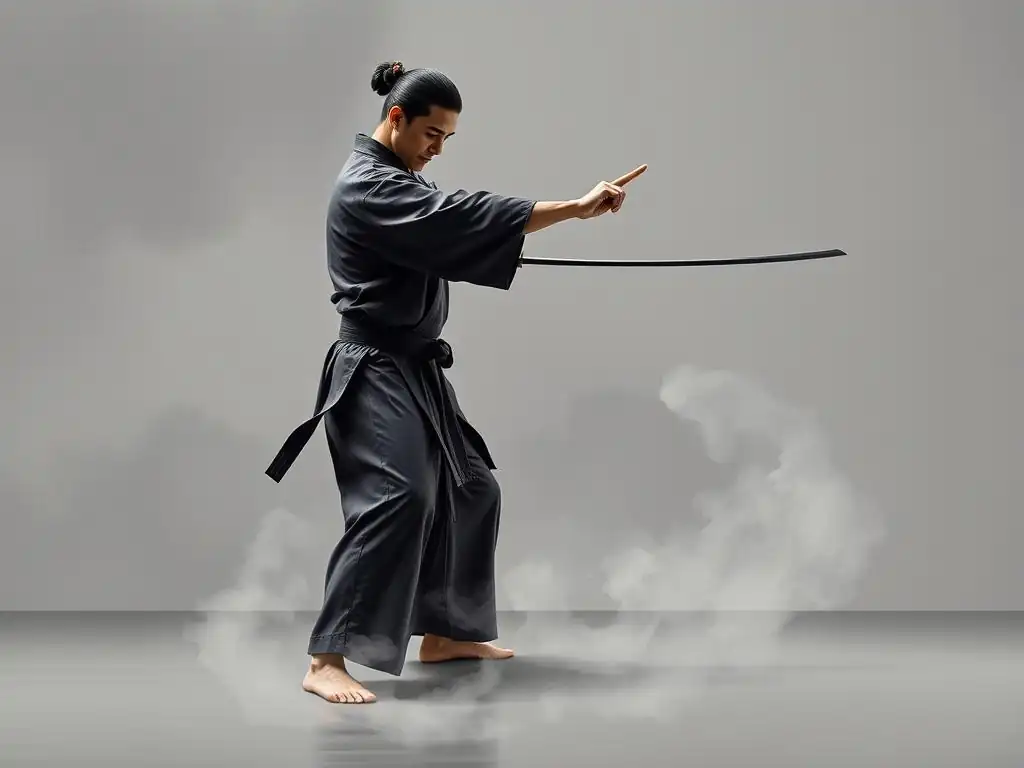
Shomenuchi, a vertical cut to the head or face, is a fundamental attack in many sword arts and a common attack form practiced in Aikido. When applying aiki principles to defending against or executing shomenuchi in Kenjutsu, the focus shifts from simply blocking to blending and controlling. Instead of a head-on block with one's own sword (which risks damaging the blades or overwhelming the defender), aiki-based defense utilizes movement and positioning.
Irimi-nage from Shomenuchi: Aiki Application Example
While irimi-nage is an empty-hand throw, the underlying principle of entering and leading the opponent's energy can be adapted to Kenjutsu. Against a shomenuchi attack, an aiki-inspired defense might involve an irimi step offline and forward, entering under the opponent's cutting arc. As the defender enters, they might use their own sword or empty hand to check or guide the attacking blade slightly, while their body movement leads the attacker's momentum past them.
The goal is to arrive in a position beside or behind the attacker, controlling their center and potentially their weapon arm, rendering their powerful vertical cut ineffective and setting up a counter. This embodies Aikido weapon techniques principles of entering and blending.
Tenkan-based Shomenuchi Defenses
A common aiki defense against shomenuchi in empty hand is a tenkan movement. In Kenjutsu, this translates to pivoting out of the line of attack as the cut descends. As the opponent initiates the shomenuchi, the defender performs a swift tenkan turn, allowing the opponent's blade to pass harmlessly.
The defender's sword might be held in a protective posture or used to subtly guide the opponent's blade during the turn. The key is timing the pivot with the attack's commitment, using the opponent's forward momentum to facilitate the turn. The defender ends the turn facing the opponent's back or side, having redirected the attack and gained a superior position, showcasing the power of Aikido weapon techniques principles in redirecting linear force.
Yokomenuchi, a diagonal cut to the side of the head or neck, presents a different challenge due to its arc and potential to wrap around defenses. Aiki principles provide effective strategies for dealing with this versatile attack, focusing on meeting the attack's line and controlling its energy.
Yokomenuchi Techniques Emphasizing Kokyu-ryoku
Defending against yokomenuchi using kokyu-ryoku involves more than just blocking with arm strength. It requires a rooted stance and unified body power to absorb or redirect the diagonal force.
When meeting a yokomenuchi with one's own blade (e.g., in a parry or block-like action), kokyu-ryoku ensures that the force is absorbed and channeled through the entire body to the ground, preventing the defender from being knocked off balance or having their guard easily overwhelmed. Alternatively, using kokyu-ryoku, a practitioner can execute a sudden, sharp movement off the line of attack combined with a subtle redirection of the opponent's blade, disrupting their cut at its inception using focused, centered power derived from proper breathing and posture – a key component of Aikido weapon techniques principles.
Kuzushi Drills from Yokomenuchi
Training drills focusing on kuzushi from a yokomenuchi attack help practitioners develop sensitivity and timing. One drill involves a partner executing a slow to medium speed yokomenuchi. The defender practices subtly shifting their weight or taking a small step just as the attacker commits to the cut, aiming to break the attacker's balance or disrupt their intended line.
Another drill might involve using the defender's sword to gently meet the attacking blade and, using minimal force but precise angle and timing, guide it in a way that causes the attacker to overextend or twist their body, thus achieving kuzushi. These drills highlight how understanding Aikido weapon techniques principles allows for sophisticated unbalancing strategies.
Aiki Principles in Tsuki (Thrust) Techniques
Tsuki, a direct thrust, is one of the fastest and most dangerous attacks in Kenjutsu, targeting the center of the body or throat. Dealing with a thrust requires immediate action and precise positioning, making aiki principles particularly applicable for defense and counter-attack.
Tsuki Defense: Blending and Redirecting with Aiki
Defending against a tsuki often involves blending with the linear force and redirecting it offline. A direct block can be risky due to the speed and force of a thrust. Instead, an aiki-based defense employs an irimi or tenkan movement combined with a subtle deflection or guidance of the incoming blade.
For example, stepping slightly offline with an irimi movement while using one's own sword to guide the opponent's thrust past one's body. The key is to move with the thrust's energy, not against it, establishing control over the opponent's weapon line. This requires precise timing and the ability to blend, a core Aikido weapon techniques principles application.
Utilizing Irimi in Tsuki Counter-Attacks
Irimi is highly effective for counter-attacking after defending a tsuki. Once the opponent's thrust has been evaded or redirected offline, the defender is often already in a position to enter the opponent's space. By continuing the irimi movement, the defender closes the distance rapidly, preventing the opponent from withdrawing their sword or initiating another attack effectively.
From this close range, the defender can execute a short, decisive cut or control the opponent's sword arm directly. For instance, after redirecting a thrust with an irimi step, the defender might enter further, moving past the opponent's sword tip and executing a rising cut ( kiriage) to the opponent's exposed side or arm. This aggressive, entering strategy is a hallmark of Aikido weapon techniques principles in offensive applications.
Advanced Aiki Concepts in Kenjutsu
Ma-ai (Distance) and Timing in Kenjutsu Techniques
Ma-ai, the concept of proper distance between opponents, is arguably the most critical element in Kenjutsu and is deeply intertwined with aiki principles. It's not just physical distance, but also the distance of opportunity and psychological advantage. A practitioner skilled in aiki uses ma-ai dynamically, constantly adjusting their position to maintain their optimal distance for attack or defense while disrupting the opponent's. This might involve subtle shifts, feints, or sudden explosive movements to enter or break distance. Understanding Aikido weapon techniques principles means understanding how to use ma-ai to facilitate blending, entering ( irimi), and redirecting ( tenkan).
Timing in Kenjutsu, often referred to as hyoshi, is equally vital. It involves striking or moving at the precise moment when the opponent is most vulnerable – perhaps during their inhalation, transition between steps, or just as their intention to attack solidifies. Aiki principles emphasize timing over speed.
By reading the opponent's energy and intentions, an aiki-based swordsman can act just as the opponent is about to move, effectively neutralizing their attack before it fully develops or using their initial movement against them. This mastery of ma-ai and timing is a sophisticated application of Aikido weapon techniques principles, allowing control of the engagement before physical contact occurs.
Blending with the Attack: Harmonizing Movement with the Opponent's Energy
Blending, or musubi, is the core aiki concept of harmonizing with the opponent's energy rather than opposing it. In Kenjutsu, this means joining with the force and direction of an incoming attack and guiding it, rather than meeting it with rigid force. If an opponent attacks with a strong downward cut, blending involves moving in the same direction as the cut's energy flow, perhaps stepping with it and slightly guiding the blade offline, rather than blocking it head-on. This requires sensitivity to the opponent's movement and intention.
By blending, the practitioner avoids a clash of forces, which is inefficient and dangerous with sharp weapons. Instead, they merge with the attack, redirecting its power and momentum to their advantage. This not only neutralizes the immediate threat but also often leaves the opponent off-balance or in a compromised position, ready for a counter. This principle is fundamental to understanding Aikido weapon techniques principles, allowing practitioners to handle powerful attacks with minimal physical effort.
Zanshin: Maintaining Awareness and Readiness with the Katana
Zanshin translates to 'remaining mind' or 'lingering spirit', signifying a state of continuous awareness and readiness. In Kenjutsu, zanshin is crucial from the moment the engagement begins until well after a technique is completed. It means being fully present, aware of one's own body, the opponent, the surrounding environment, and potential follow-up attacks or multiple opponents. With a katana in hand, zanshin involves maintaining a posture and mental state that allows for instantaneous reaction to any change in the situation.
Applying Aikido weapon techniques principles includes cultivating zanshin. After executing a technique, the practitioner does not relax but maintains a state of alert readiness, their sword in a position ready to defend or deliver another cut if necessary. This continuous awareness prevents surprise attacks and ensures that the practitioner remains in control of the situation. It is a state of calm, focused presence that underlies effective execution of all techniques and is a vital aspect of mastery in any weapon art.
Drills and Exercises for Integrating Aiki and Kenjutsu
Solo Practice Drills for Developing Aiki Awareness with the Katana
Solo practice, or suburi, with a bokken is fundamental for developing proper body mechanics and understanding how aiki principles relate to sword movement.
-
-
- [ ] Basic Cuts with Focus on Center: Practice shomenuchi, yokomenuchi, and tsuki focusing on initiating power from the hips and core ( hara), ensuring the movement is unified rather than just arm-driven. Visualize a line extending from your hara through the sword tip. Perform 50-100 repetitions of each cut daily.
-
-
-
- [ ] Irimi Footwork with Sword: Practice stepping offline and forward while maintaining sword posture. Start from a basic stance, step forward diagonally left or right as if evading a central attack while keeping the sword in a ready or defensive position. Focus on smooth, connected movement. Repeat 20-30 times on each side.
-
-
-
- [ ] Tenkan Pivots with Sword: Practice turning 180 degrees or more, keeping the sword in front or to the side. Focus on pivoting around your center, maintaining balance and posture throughout the turn. Ensure the sword movement is coordinated with the body turn. Perform 20-30 turns in each direction.
-
-
-
- [ ] Suburi with Breath Coordination: Execute basic cuts while coordinating the cut with a sharp exhalation, emphasizing kokyu-ryoku. Feel the power generating from your core and flowing through the movement.
-
Partner Drills for Applying Aiki Principles in Kenjutsu Interactions
Partner drills allow practitioners to apply aiki principles against a dynamic opponent, developing sensitivity and timing.
-
-
- [ ] Blending with Shomenuchi: Partner A performs a slow shomenuchi. Partner B practices stepping offline ( irimi) and slightly guiding A's blade past them, focusing on matching A's speed and energy rather than blocking. Repeat 10-15 times each.
-
-
-
- [ ] Tenkan against Yokomenuchi: Partner A performs a medium-speed yokomenuchi. Partner B practices timing a tenkan pivot to evade the cut, ending in a position behind A. Focus on precise timing of the pivot relative to the attack's commitment. Repeat 10-15 times each.
-
-
-
- [ ] Tsuki Redirect Drill: Partner A performs a controlled thrust ( tsuki). Partner B practices an irimi step and uses their sword to deflect or guide A's blade offline with minimal force, focusing on redirecting the energy. Repeat 10-15 times each.
-
-
-
- [ ] Kuzushi from Contact: Partners make light sword contact in a basic guard position. Practice subtle pressure or angle changes to try and break the opponent's posture or balance without using excessive force. Focus on sensitivity and reading the opponent's structure.
-
Kihon (Basic Form) Practice Emphasizing Irimi
Practicing Kihon (basic forms or paired kata) with a specific focus on irimi enhances the understanding of entering strategies. For example, in a basic bokken kata that involves receiving a shomenuchi, consciously emphasize the irimi step offline, ensuring the body enters past the line of attack before or as the opponent's cut arrives. This isn't just stepping; it's about taking control of the space and angle.
By dedicating specific practice sessions to analyzing Kihon through the lens of irimi, practitioners can refine their footwork, body alignment, and timing to make the entering movement more efficient and effective against a committed attack. This reinforces the practical application of Aikido weapon techniques principles within established Kenjutsu frameworks.
Partnered Kata Incorporating Kokyu-ryoku
Executing paired kata while consciously applying kokyu-ryoku adds depth and power to the movements. Rather than going through the motions mechanically, partners focus on maintaining centeredness and unified body power throughout the sequence. When delivering a cut or receiving one, the focus is on generating or managing the force from the hara, coordinating breath with movement.
For instance, during a sequence where one receives a cut and immediately counters, the receiving action utilizes kokyu-ryoku to maintain stable structure while blending, and the subsequent counter-cut is powered by a grounded, centered exhalation. This transforms the kata from a choreographed dance into a dynamic exercise in applied Aikido weapon techniques principles, cultivating internal power and connection.
The Mental and Spiritual Aspect of Aiki Kenjutsu
Mushin (No-Mind) and the Flow State in Kenjutsu Practice
Mushin, often translated as "no-mind," is a state of heightened awareness and spontaneity that is free from conscious thought, fear, anger, or ego. In Kenjutsu, achieving mushin allows the practitioner to react instinctively and appropriately to any situation without hesitation or deliberation. This is the state where techniques flow naturally, guided by intuition and extensive training, rather than being intellectually chosen. It is a state of being fully present in the moment, reacting directly to the opponent's energy and intentions.
Training in aiki principles within Kenjutsu helps cultivate mushin by emphasizing blending and non-resistance. By learning to move with the opponent's energy rather than fighting against it, the practitioner reduces internal conflict and mental chatter. This allows for a more fluid and adaptable response. Developing Aikido weapon techniques principles involves training the body and mind to work in unison, eventually leading to the effortless, spontaneous action characteristic of mushin and the flow state, where the practitioner is fully absorbed in the present action.
Cultivating Awareness and Presence in Kenjutsu Training
Beyond mushin, Kenjutsu training steeped in aiki principles cultivates general awareness ( zanshin) and presence. This involves not just seeing the opponent, but perceiving their intention, energy, and subtle shifts in posture or breathing. It's about being fully grounded in one's own body while remaining open and connected to the external environment. Training drills that focus on reading the opponent's subtle cues before they initiate an attack are crucial for developing this sensitivity.
Practicing Aikido weapon techniques principles encourages a holistic awareness. It's not just about the swords; it's about the space between practitioners ( ma-ai), the timing of their movements ( hyoshi), and the energetic connection between them ( musubi). This heightened state of presence allows practitioners to anticipate actions, perceive openings, and react with precision and calm, even in rapidly evolving situations. This cultivated awareness extends beyond the dojo, influencing daily life with increased focus and responsiveness.
The Importance of Calmness (Fudoshin) in High-Pressure Situations
Fudoshin, meaning "immovable mind," refers to a state of mental fortitude and calmness that remains undisturbed by fear, confusion, or external pressure. In the potentially lethal context of Kenjutsu, maintaining fudoshin is paramount. Panic or hesitation can be fatal. Aiki principles, particularly those emphasizing relaxation, centeredness ( hara), and harmonious movement, directly contribute to cultivating fudoshin.
By training to blend with force rather than resisting it, the practitioner learns to remain calm when faced with aggression. The focus shifts from personal danger to managing the flow of energy. Techniques like coordinating breath with movement ( kokyu-ryoku) help regulate the nervous system and maintain composure under stress. Understanding Aikido weapon techniques principles instills confidence in one's ability to handle dynamic situations, further reinforcing a state of calm readiness ( fudoshin), enabling clear decision-making and effective action when it matters most.
Conclusion: Achieving Mastery Through Aiki-Based Kenjutsu
The Path to Advanced Kenjutsu Skills for Aikido Practitioners
For Aikido practitioners, integrating Kenjutsu training through the lens of aiki principles offers a profound path to advanced skills. It provides tangible context for abstract concepts like irimi, tenkan, and kuzushi, revealing their direct combative application. Working with a weapon sharpens awareness of distance, timing, and the critical importance of positioning. It demands precision in movement and a deeper connection to one's center and body structure, as inefficiencies are immediately exposed by the unforgiving nature of sword dynamics.
By diligently practicing Aikido weapon techniques principles within Kenjutsu forms and drills, Aikidoists can significantly enhance their understanding of fundamental aiki mechanics. This cross-training refines footwork, improves hip and core engagement, and cultivates a more intuitive sense of blending with an opponent's energy. The skills developed with the sword are directly transferable back to empty-hand techniques, making throws more powerful, pins more stable, and evasions more fluid and effective.
Continual Refinement of Aiki Principles in Kenjutsu Training
Mastery in aiki-based Kenjutsu is not a destination but a continuous process of refinement. Each practice session offers an opportunity to deepen the understanding and application of core principles like irimi, tenkan, kokyu-ryoku, and kuzushi. As physical technique improves, the focus shifts to more subtle aspects: the precise timing of a step to break balance, the minimal effort required to redirect a powerful cut, the quality of zanshin maintained throughout an exchange.
Integrating Aikido weapon techniques principles means constantly seeking to embody effortlessness and efficiency in movement, using the opponent's energy whenever possible. This refinement is fueled by dedicated solo practice, sensitive partner work, and critical self-reflection. The sword becomes a mirror, reflecting the practitioner's strengths and weaknesses, guiding them towards a more complete integration of mind, body, and spirit within the martial context.
The Complementary Nature of Aikido and Kenjutsu
Ultimately, Aikido and Kenjutsu are deeply complementary arts, sharing a common lineage and fundamental principles. Aikido provides the philosophical framework and empty-hand applications of aiki, while Kenjutsu offers a rigorous environment to test and refine these principles with the added element of a weapon. Training in Aikido weapon techniques principles through Kenjutsu reveals the practical roots of Aikido's movements and strategies, illustrating how techniques designed to evade or control a sword can be adapted to empty-hand defense.
This symbiotic relationship enriches both disciplines. The Aikido practitioner gains a deeper appreciation for the martial effectiveness of aiki, while the Kenjutsu practitioner can soften rigid techniques with principles of blending and redirection. Together, they offer a comprehensive path to understanding the principles of conflict resolution, energy management, and self-mastery that lie at the heart of Japanese martial arts.
Frequently Asked Questions
What are the core Aiki principles and how do they relate to Aikido weapon techniques?
The core Aiki principles involve blending with an opponent's energy, maintaining balance, and utilizing circular movements. Weapon techniques extend these principles, emphasizing weapon control and efficient force redirection.
How does the history of Aikido influence its approach to weapon techniques?
Aikido's historical roots in Daito-ryu Aiki-jujutsu mean that weaponry was always integral. Modern Aikido maintains this link, adapting traditional sword and staff techniques to embody Aiki principles.
What are some common Aikido weapons and how are they used in practice?
Common Aikido weapons include the bokken (wooden sword), jo (short staff), and tanto (knife). Training focuses on controlling the weapon, maintaining proper distance, and executing flowing movements that blend with an opponent's attack.
How does understanding Ma-ai (distance) impact the effectiveness of Aikido weapon techniques?
Ma-ai is crucial because proper distance ensures effective defense and offense. With weapons, misjudging Ma-ai can lead to vulnerability, while mastering it enhances control and precision.
How can someone begin learning Aikido weapon techniques, considering the advanced nature of the subject?
Beginners should first establish a strong foundation in basic Aikido principles and body movements. Then, under qualified instruction, they can gradually incorporate weapon techniques, focusing on applying Aiki to each movement.
Final Reflection: Embracing Harmony in Motion
The exploration of Aiki principles within the realm of weaponry, as detailed in this article, reveals that true mastery transcends mere technique and delves into the very essence of harmonious movement. The principles of blending, centering, and extending, when applied to weapons training, are not just historical relics, but rather living strategies that offer profound insights into conflict resolution and personal development, even in our modern world.
This journey into Aikido weapon techniques has illuminated the enduring power of these principles, shaping not only martial arts practice but also influencing our understanding of conflict and cooperation. The ability to find balance and harmony, even in the face of opposition, is a skill that resonates far beyond the dojo. The art of peace begins with you. Work on yourself and your appointed task in the art of peace. Everyone has a spirit that can be refined, a body that can be trained in some manner, a suitable path to follow. You are here for no other purpose than to realize your inner divinity and manifest your inner enlightenment. Foster peace in your own life and then apply that peace to all that comes into your contact.
- Morihei Ueshiba
As we conclude this exploration of Aikido weapon techniques and their underlying principles, I invite you to reflect on how these concepts can be applied to your own life. Consider how you can cultivate a greater sense of balance, harmony, and extension in your interactions, your work, and your personal growth. Embrace the Aiki spirit, and discover the transformative power of blending with, rather than resisting, the forces around you.
Unleash Your Inner Harmony: Aiki in Action!
Thank you for exploring the advanced application of Aiki principles to weaponry. We hope this article has deepened your understanding and sparked a new appreciation for Aikido's versatility. Now, it's time to translate theory into practice!
Here are a few ways to continue your Aiki journey:
- Commit to mastering one Aiki principle with a specific weapon over the next month. Focus on fluidity and responsiveness, not just technique.
- Explore related martial arts philosophies! Delve into the Tao Te Ching and discover how its principles resonate with Aiki.
- Share this article with fellow martial artists and start a discussion about the integration of Aiki principles in different disciplines.
What unexpected connection did you find between Aiki and your weapon of choice? Share your insights below!