
The Gracie Legacy in Modern BJJ Competition Scene

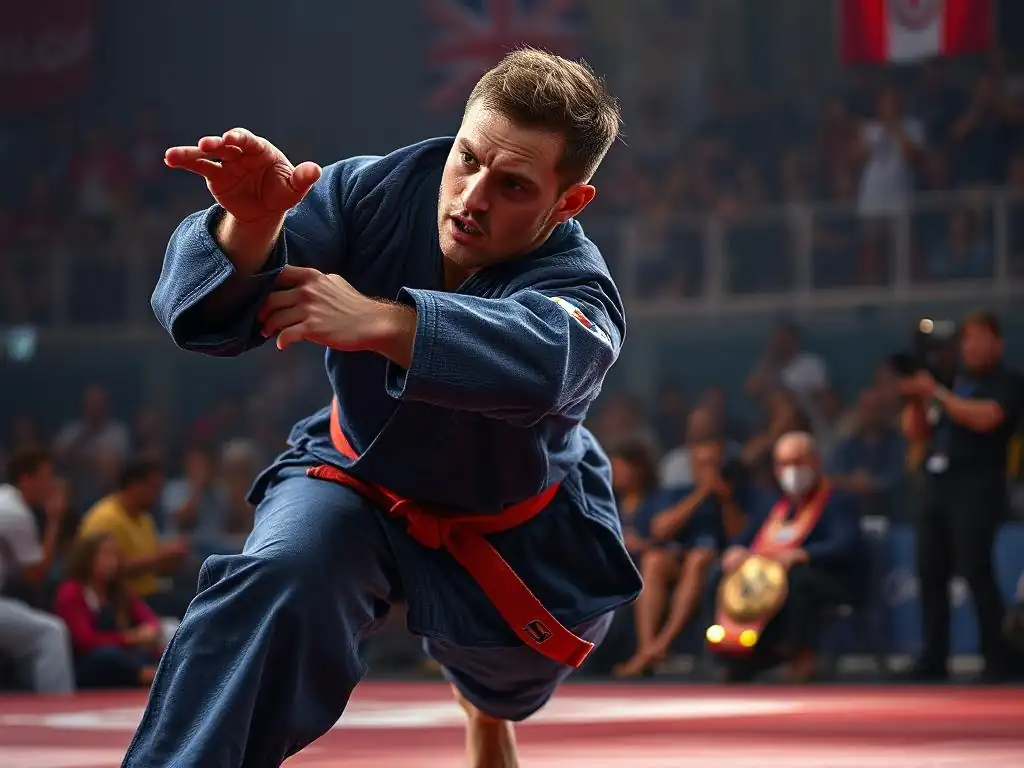
Welcome to Martial Arts Mastery, your gateway to unlocking the secrets and traditions of combat disciplines worldwide. Ever wondered how the principles of a century-old martial art translate to modern competition? Dive into our exploration of Individual Martial Arts Styles, starting with an in-depth look at Gracie BJJ competition strategies and how the Gracie family's legacy continues to shape the contemporary grappling landscape. Prepare to uncover the tactics, techniques, and mental fortitude that define champions – and discover how you can apply them to your own training. Let the journey begin!
- The Gracie Legacy in Modern BJJ Competition Scene: Evolution of Gracie BJJ Competition Strategies
- Development of Gracie BJJ Competition Strategies Through Generations
- Key Components of Gracie BJJ Competition Strategies in Modern BJJ
- The Gracie Influence on Contemporary BJJ Competition Rules and Tactics
- Profiles of Prominent Gracie Competitors Shaping Modern BJJ Strategy
- Training Methodologies for Mastering Gracie BJJ Competition Strategies
- The Future of Gracie BJJ Competition Strategies in Evolving BJJ Landscape
- Conclusion: Enduring Significance of the Gracie Legacy in Modern BJJ Competition
-
Frequently Asked Questions
- How has the Gracie family's philosophy impacted modern BJJ competition?
- What are some key Gracie BJJ competition strategies that are still relevant today?
- How does Gracie BJJ differ from other styles of BJJ used in competition?
- What role does jiu-jitsu history play in understanding Gracie BJJ competition strategies?
- How can a modern BJJ competitor incorporate Gracie BJJ principles into their game?
- Final Reflection: The Enduring Power of Gracie Principles
- Embrace the Gracie Way: Transform Your Game Now!
The Gracie Legacy in Modern BJJ Competition Scene: Evolution of Gracie BJJ Competition Strategies
Introduction to the Gracie Family's Influence on Brazilian Jiu-Jitsu Competitions
Brazilian Jiu-Jitsu, as it is known today, owes its existence and global proliferation largely to the Gracie family. Originating from Maeda Mitsuyo's Judo/Jujutsu instruction to Carlos Gracie in the early 20th century, the art was adapted and refined by the family, most notably by Helio Gracie, to emphasize leverage and technique over brute strength, making it effective for smaller practitioners against larger opponents.
This foundational philosophy heavily influenced not only the self-defense applications but also the nascent Gracie BJJ competition strategies as the art began to be tested against other fighting styles. The family's early challenges and competitive exploits laid the groundwork for the sport we see today, shaping its rules, techniques, and tactical approaches.
The early competitive landscape for Gracie Jiu-Jitsu was less about formal tournaments and more about proving the art's effectiveness in challenge matches, often referred to as "Vale Tudo" (anything goes) fights in Brazil. These contests served as crucial proving grounds, forcing the Gracies to develop Gracie BJJ competition strategies centered on survival, control, and efficient finishing techniques under real pressure. Figures like Carlos, Helio, and later generations like Rolls and Rickson, used these challenges to refine their system and demonstrate its superiority, establishing a reputation that would eventually lead to the formalization of sport BJJ and its global expansion.
Historical Foundations of Gracie Jiu-Jitsu and Its Competitive Philosophy
The core philosophy of Gracie Jiu-Jitsu is rooted in the principle that a smaller, weaker person can defend themselves against a larger, stronger assailant by using proper technique, leverage, and timing, taking the fight to the ground where size and strength are less dominant factors. This philosophy translated directly into their early competitive approach. Survival was paramount, followed by achieving dominant control positions from which submissions could be applied with maximum efficiency and minimal risk. Early Gracie BJJ competition strategies focused on weathering the initial storm, tiring the opponent, and then systematically advancing position to secure a finish.
The "Gracie Challenge" era is a prime example of this philosophy in action. Members of the Gracie family would publicly challenge practitioners of other martial arts – boxers, wrestlers, capoeiristas, judokas, karateka – to no-holds-barred matches. These contests were not merely fights; they were strategic demonstrations of Jiu-Jitsu's principles.
The Gracie fighter would typically seek the takedown, establish control on the ground, negate the opponent's strengths (like striking), and work towards a submission. This consistent application of their system in competitive scenarios solidified the foundational Gracie BJJ competition strategies: close the distance, take the fight down, control the opponent, and submit them.
Development of Gracie BJJ Competition Strategies Through Generations
Early Competitive Techniques Pioneered by Helio and Carlos Gracie
Helio Gracie's contributions were particularly significant for developing Gracie BJJ competition strategies focused on leverage for smaller individuals. Unable to perform some of the throws and techniques derived from Judo due to his frailty, Helio modified them to rely less on athleticism and more on timing and base. This led to the refinement of techniques like the guard, emphasizing its use as a defensive position to control distance and initiate attacks or sweeps, rather than just a transitional phase. Escapes from disadvantageous positions like mount and side control were also heavily developed, crucial for survival in early challenge matches.
Carlos Gracie, with his broader vision, focused on the overall preparation of the fighter. While Helio refined the technical aspects for the weaker individual, Carlos emphasized the importance of conditioning, diet, and mental discipline alongside the technical training. The early curriculum developed under Carlos included techniques essential for competition, focusing on fundamental movements, positional drills, and the application of leverage. These early training methodologies were designed to produce well-rounded fighters capable of implementing effective Gracie BJJ competition strategies in varied scenarios, laying the groundwork for future generations.
Transition from Traditional Gracie Jiu-Jitsu to Modern Sport BJJ
The evolution from the self-defense and Vale Tudo focus to the structured environment of sport BJJ necessitated a significant adaptation of Gracie BJJ competition strategies. As tournaments began to emerge with defined rules, time limits, and point systems (which would eventually lead to organizations like CBJJ and later IBJJF), competitors had to adjust their approach.
The emphasis shifted from simply surviving and finishing to strategically accumulating points and navigating rule-specific situations. The influence of figures like Rolls Gracie, who cross-trained in wrestling and Sambo, brought a more dynamic, athletic approach to the art, influencing the development of techniques like sweeps and transitions specifically for the sport context.
This transition saw the guard game evolve dramatically. While the original guard was primarily defensive and used to set up submissions or sweeps when the opponent committed, sport BJJ saw the development of complex open guards designed to off-balance opponents for sweeps or control distance for specific attacks, often with points in mind. Techniques for passing guard also became more refined and strategic, as passing became a key source of points. Gracie BJJ competition strategies began to incorporate the nuances of point accumulation and time management within the match.
Impact of Rickson Gracie and His Approach to Competition Strategy
Rickson Gracie is often cited as embodying the peak of traditional Gracie Jiu-Jitsu applied in a competitive context, particularly in Vale Tudo and early MMA. His approach was defined by an emphasis on perfect execution of fundamental techniques, seamless transitions, and an almost intuitive understanding of leverage and connection, often referred to as "invisible jiu-jitsu." Widely reported to have an undefeated record in Vale Tudo and MMA (11-0), and an extensive record of BJJ/submission wins (often estimated in the hundreds), Rickson's success demonstrated the devastating effectiveness of core Gracie BJJ competition strategies when executed with precision and pressure.
His strategy in competition was typically characterized by relentless pressure, achieving dominant positions (especially mount and back control), and finishing opponents with high-percentage submissions like the rear-naked choke or armbar. Rickson's fights, particularly in the Japanese Pride FC organization, showcased the application of classic Gracie principles – taking the fight to the ground, controlling the opponent, and patiently working for the finish – against top martial artists from various disciplines. His competitive career reinforced the value of mastering fundamentals and applying overwhelming pressure within the framework of Gracie BJJ competition strategies.
Key Components of Gracie BJJ Competition Strategies in Modern BJJ
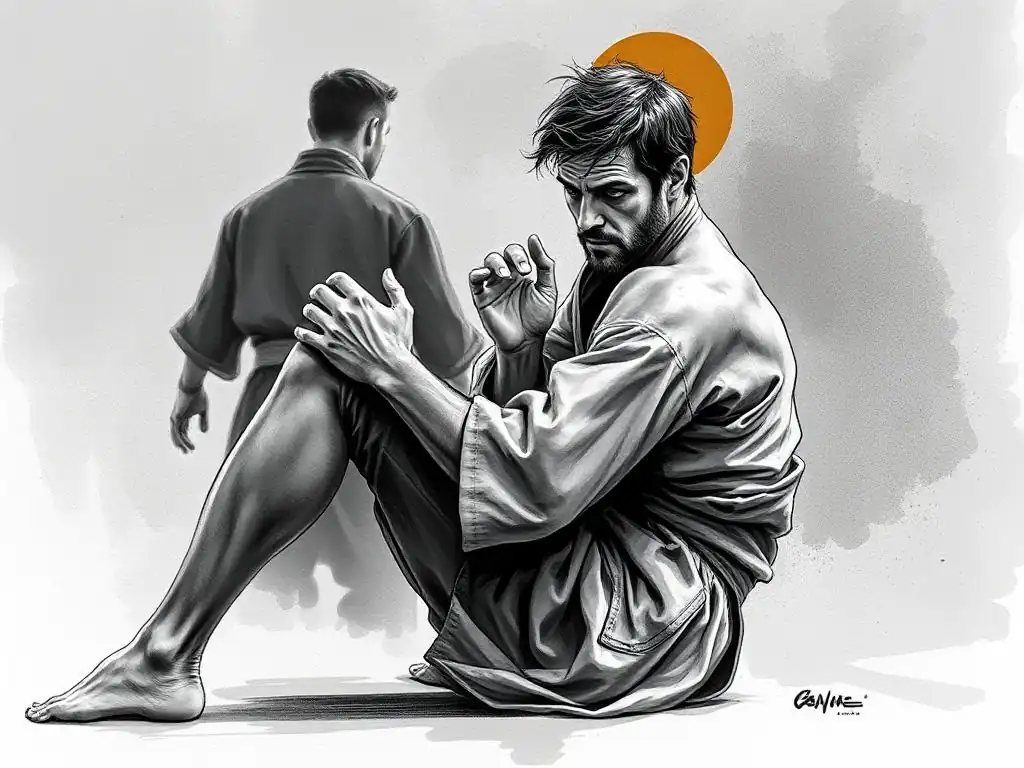
Guard Passing and Control Techniques Rooted in Gracie Legacy
A cornerstone of Gracie BJJ competition strategies is the systematic approach to passing the guard and establishing dominant control positions. Traditional Gracie Jiu-Jitsu teaches that passing the guard is essential to neutralize the opponent's primary offensive and defensive position on the ground. Techniques like the stack pass, knee slide pass, and various pressure passes were developed and refined to overcome the guard using leverage and weight distribution rather than relying solely on strength. These methods prioritize maintaining control throughout the passing sequence, minimizing opportunities for the opponent to sweep or submit.
In modern BJJ competition, these foundational passing concepts remain vital. While new, dynamic passes have emerged, the principle of using pressure, angles, and control to dismantle the guard is a direct legacy of the Gracie approach. Competitors who excel in guard passing often demonstrate a deep understanding of these core mechanics, utilizing them as the basis for more complex passing systems. Effective Gracie BJJ competition strategies in the passing game involve not just getting past the legs, but immediately securing a dominant position like side control, mount, or knee-on-belly to score points and set up submissions.
Submission Setups and Counters Emphasized by Gracie Practitioners
Gracie Jiu-Jitsu emphasizes finishing the fight with submissions, but strategically. The philosophy promotes achieving dominant positions before attempting submissions, significantly increasing the chance of success and reducing the risk of losing position or being countered. High-percentage submissions like the armbar, triangle choke, and rear-naked choke are staples taught from the earliest stages, often applied from mount, guard, or back control. Setting up these submissions involves patience, control, and capitalizing on opponent's reactions – hallmarks of Gracie BJJ competition strategies.
Equally important in the Gracie system is the emphasis on defense and counters. Understanding how to escape from submissions and disadvantageous positions is crucial for survival in competition and for creating opportunities to reverse the situation. This defensive mastery allows Gracie practitioners to take calculated risks and persevere through difficult moments in a match. The ability to defend, escape, and then counter-attack is a key component of effective Gracie BJJ competition strategies, reflecting the art's roots in self-defense where survival is the first priority.
Positional Hierarchy and Strategy: From Self-Defense to Points-Based Competition
The traditional Gracie positional hierarchy – mount, back, side control, knee-on-belly, guard – was initially developed based on the positions that offered the most control and striking advantage in a self-defense or Vale Tudo scenario. Mount and back control, for example, allow the top person to strike effectively while limiting the opponent's ability to defend. Side control and knee-on-belly offer significant control and pressure. The guard, while defensive, allows the bottom person to control distance and attack.
This hierarchy translated seamlessly into the point system of sport BJJ. IBJJF rules award the highest points for achieving and stabilizing mount (4 points) and back control (4 points), followed by passing the guard (3 points), and sweeps or takedowns that result in a dominant position (2 points). This aligns perfectly with the core Gracie BJJ competition strategies, which prioritize achieving these high-scoring, dominant positions. Competitors employing a Gracie-based strategy often focus on systematically progressing through this hierarchy, accumulating points while simultaneously working towards a submission, demonstrating the enduring relevance of the original positional framework.
The Gracie Influence on Contemporary BJJ Competition Rules and Tactics
Adaptation of Gracie Techniques to IBJJF and ADCC Rulesets
The formalization of BJJ competition through organizations like the IBJJF and ADCC significantly influenced how Gracie techniques were applied strategically. The IBJJF gi ruleset, with its emphasis on points for positional control and sweeps, encouraged the development of sophisticated guard games and passing systems designed specifically to score within the time limit.
While the Gracies initially focused on finishing, adapting to the points system meant strategizing around point accumulation and defense. Pulling guard, for instance, became a common tactic to immediately enter the ground game and work for sweeps or submissions, a strategic evolution from the original self-defense focus on takedowns.
The ADCC Submission Fighting ruleset, which emphasizes takedowns and allows leg locks and heel hooks (techniques historically viewed with caution or prohibited in some Gracie lineages due to injury risk), also required adaptation. Gracie competitors in ADCC needed to develop stronger takedown defense and offense, as well as proficient leg lock defense and attack. While the core principles of control and positional dominance remain, the specific techniques and strategic priorities shift under ADCC rules compared to IBJJF, showcasing the dynamic nature of Gracie BJJ competition strategies adapting to different competitive environments.
Strategic Evolution in Response to Modern BJJ Competitive Trends
Modern sport BJJ is characterized by rapid innovation, particularly in the guard game with the proliferation of complex positions like 50/50 guard, worm guard, and intricate leg lock entries. These trends have challenged traditional Gracie BJJ competition strategies. Competitors can no longer rely solely on fundamental passes; they must develop defenses and counters to these modern guards and attacks. This has led to an evolution where Gracie-influenced practitioners often integrate elements of these newer techniques while retaining their core emphasis on pressure, control, and fundamental positions.
The strategic evolution involves understanding how to effectively engage with, pass, or sweep from these modern guards, often by applying classic pressure and positional concepts in new ways. Similarly, developing robust defense against leg attacks is crucial. While some argue that the focus on complex sport-specific techniques deviates from the original Gracie philosophy, the adaptation demonstrates the system's resilience and the ability of practitioners to evolve their Gracie BJJ competition strategies to remain competitive at the highest levels.
Integration of Gracie BJJ Principles in Mixed Martial Arts (MMA) Competition
The most visible impact of Gracie Jiu-Jitsu on competition outside of BJJ tournaments was its integration into Mixed Martial Arts, famously demonstrated by Royce Gracie's victories in the early Ultimate Fighting Championship (UFC) events. Royce, often the smallest competitor, utilized the core Gracie BJJ competition strategies: taking the fight to the ground, achieving dominant positions like mount and back control, and finishing with submissions like the rear-naked choke and armbar. His success against opponents from diverse martial arts backgrounds validated the effectiveness of the Gracie system in a real-fight scenario.
While MMA ground fighting has evolved significantly since the early UFC days, becoming a blend of wrestling, judo, and various BJJ styles, the foundational principles introduced by the Gracies remain critical. Control from top position, guard retention and passing, and the strategic application of submissions are still key components of effective MMA ground strategy. The Gracie legacy ensures that these fundamental Gracie BJJ competition strategies continue to underpin the ground game of virtually every successful MMA fighter today.
Profiles of Prominent Gracie Competitors Shaping Modern BJJ Strategy
Analysis of Marcelo Garcia’s Use of Gracie-Based Competition Tactics
Marcelo Garcia, though not a member of the Gracie family, is a prime example of a competitor whose revolutionary approach is deeply rooted in Gracie principles, demonstrating the widespread influence of Gracie BJJ competition strategies. Known for his innovative X-guard and devastating guillotine choke, Marcelo's success (5x BJJ World Champion, 4x ADCC World Champion) stemmed from an incredible ability to transition between positions and finish fights with efficiency from dominant or near-dominant spots. His game emphasized connection, timing, and exploiting openings, hallmarks of the leverage-based Gracie approach.
Marcelo's strategic genius lay in his ability to apply immense pressure and transition seamlessly, often finishing opponents quickly once he achieved a favorable position like the back or mount, or even from unique positions like the X-guard leading to sweeps or submissions. His approach, while featuring unique techniques, embodied the Gracie principle of efficiency – achieving the maximum result with minimum effort, focusing on high-percentage finishing opportunities rather than forcing techniques. His impact shows how Gracie BJJ competition strategies can be a foundation for innovative and highly effective modern games.
Roger Gracie: Mastering Traditional Gracie Strategies in Sport BJJ
Roger Gracie is widely regarded as one of the greatest competitors in BJJ history, and his success is a powerful testament to the enduring effectiveness of traditional Gracie BJJ competition strategies in the modern sport. With an unparalleled record (10x BJJ World Champion, 2x ADCC World Champion), Roger achieved dominance primarily through mastery of foundational techniques: the mount, back control, armbar, and rear-naked choke. His strategic approach was deceptively simple yet incredibly effective: achieve a dominant position, apply crushing pressure, and finish with a high-percentage submission.
Roger's matches often showcased a systematic dismantling of his opponents' defenses through relentless pressure passing, securing mount or back control, and then patiently working for the submission. He rarely relied on complex or flashy techniques, instead demonstrating that perfect execution of fundamental Gracie BJJ competition strategies could overcome even the most specialized modern games. His career serves as a powerful reminder that the core principles of control, position, and high-percentage finishing remain paramount in competitive BJJ.
Emerging Gracie Family Members and Their Competitive Impact
The Gracie legacy continues through younger generations who are actively competing and shaping modern BJJ strategy. Competitors like Kyra Gracie and Kron Gracie have made significant impacts. Kyra Gracie, a multiple-time world champion (5x BJJ World Champion, 3x ADCC World Champion), brought a dynamic, athletic style to the women's divisions, known for her aggressive guard and submission attacks, blending traditional Gracie principles with modern sport BJJ techniques. Kron Gracie, known for his aggressive, submission-only focused approach in both BJJ and MMA, embodies the direct-to-the-point, finishing-oriented aspect of traditional Gracie BJJ competition strategies.
These emerging competitors demonstrate the ongoing evolution of the Gracie approach. They face a global pool of highly skilled, specialized opponents and must adapt their strategies while honoring the core principles of their lineage. Their competitive careers highlight the family's continued commitment to testing and evolving their art in the competitive arena, ensuring that Gracie BJJ competition strategies remain relevant and effective in the ever-changing landscape of Brazilian Jiu-Jitsu.
Training Methodologies for Mastering Gracie BJJ Competition Strategies
Drilling Classic Gracie Techniques for Competition Success
Mastering Gracie BJJ competition strategies requires a strong foundation in the classic techniques and principles. Drilling is a critical component of this training methodology. Repetition of fundamental movements like mount escapes, guard retention drills, basic sweeps, and transitions between dominant positions helps build the muscle memory and efficiency needed under the pressure of competition. Focusing on a relatively smaller number of high-percentage techniques, as emphasized in the Gracie system, allows for deeper mastery.
Specific drilling protocols can include positional sequences, such as drilling the transition from guard pass to side control, then to mount or knee-on-belly, and finally to a submission attempt. Drilling submission chains from dominant positions – for example, transitioning from an armbar attempt to a triangle choke or omoplata if the opponent defends – reinforces the strategic link between control and finishing. This focus on perfecting the core techniques is essential for developing reliable Gracie BJJ competition strategies.
Incorporating Positional Sparring and Strategy Sessions
Positional sparring, where training partners start from specific positions (e.g., guard, side control, mount, back control), is invaluable for developing Gracie BJJ competition strategies. This allows practitioners to focus intensely on the dynamics and techniques relevant to common competitive scenarios without the chaos of free rolling from standing. It helps refine guard passing and retention, escaping from bad positions, and maintaining control from dominant ones – all key elements of the Gracie approach.
Dedicated strategy sessions complement physical training. This involves analyzing opponent types, understanding rule nuances, and planning how to apply Gracie BJJ competition strategies in specific match scenarios. Discussing common competitive problems and working through solutions based on the principles of leverage, position, and control helps develop the strategic mindset needed for success. This blend of focused physical practice and tactical analysis is crucial for applying Gracie principles effectively in competition.
Mental Preparation and Philosophical Approach Inspired by the Gracie Legacy
The Gracie legacy emphasizes a profound philosophical approach to Jiu-Jitsu, which is integral to their competition strategies. Patience, perseverance, humility, and controlling one's emotions are paramount. In competition, this translates to not rushing techniques, conserving energy, understanding that positions must be earned, and maintaining composure under duress. The ability to remain calm and think clearly when in a bad position, relying on defensive technique rather than panic, is a direct result of internalizing this philosophy.
Building confidence through the mastery of fundamentals is another key mental aspect. The belief in the effectiveness of the Gracie system provides a psychological edge. Competitors trained in this philosophy understand that their technique and strategic approach, focused on leverage and position, can overcome physical disadvantages. This mental fortitude, combined with physical preparation, is a powerful asset in executing effective Gracie BJJ competition strategies.
The Future of Gracie BJJ Competition Strategies in Evolving BJJ Landscape
Innovations Building on Gracie Foundations for Next-Gen Competitors
The landscape of BJJ competition is constantly evolving with new techniques and strategies emerging rapidly. However, many of these innovations are built upon the foundational principles established by the Gracies. Modern guard systems, dynamic transitions, and even sophisticated leg lock entries often rely on the core concepts of leverage, balance disruption, and control that are central to Gracie Jiu-Jitsu. Next-generation competitors are finding new ways to apply these old principles.
For example, while the specific mechanics of a modern lasso guard or reverse De La Riva sweep might look different from traditional techniques, their underlying goal is the same: disrupt the opponent's balance and base to achieve a sweep or create an opening for a pass or submission, using leverage. This demonstrates that the fundamental Gracie BJJ competition strategies provide a flexible framework upon which new techniques can be developed and integrated, ensuring the art remains dynamic and effective.
Potential Shifts in Competition Strategy Influenced by Gracie Philosophy
In response to the increasing complexity and specialization in modern sport BJJ, there might be a strategic shift towards re-emphasizing the core Gracie principles of simplicity, efficiency, and dominant positional control. As competitors become highly specialized in niche areas, a mastery of fundamental Gracie BJJ competition strategies – focusing on strong pressure passing, solid positional control, and high-percentage submissions from classic positions – can become a powerful counter-strategy.
The success of competitors like Roger Gracie in recent years, relying on these fundamentals against highly specialized opponents, suggests that mastering the basics is not just a foundation but can be an advanced strategy in itself. Future Gracie BJJ competition strategies might see a renewed focus on these enduring principles as a way to cut through the complexity and athleticism of the modern game, proving that simple, well-executed techniques can still dominate.
Preserving the Gracie Legacy Amidst Global BJJ Evolution
As BJJ has spread globally and diversified, there is an ongoing discussion about preserving the core Gracie legacy while embracing the evolution of the sport. Some worry that the focus on points, specific rule exploitation, or highly athletic techniques in modern competition might dilute the original emphasis on self-defense, efficiency, and the philosophical aspects of the art. Maintaining the integrity of the core Gracie BJJ competition strategies is a key concern for traditionalists.
Efforts are being made by members of the Gracie family and academies committed to the original teachings to ensure that the foundational curriculum remains central to training, even for those focused on sport. This involves teaching the self-defense applications alongside the sport techniques and emphasizing the strategic and philosophical underpinnings. Preserving the Gracie legacy in competition means ensuring that practitioners understand why certain techniques and strategies are effective, connecting the modern sport back to its roots in leverage, control, and efficiency – the heart of Gracie BJJ competition strategies.
Conclusion: Enduring Significance of the Gracie Legacy in Modern BJJ Competition
Summary of Gracie BJJ Competition Strategies’ Role in Shaping Today’s BJJ
The Gracie family's contributions are fundamental to the development and practice of Brazilian Jiu-Jitsu competition as we know it. They established the critical importance of ground fighting, introduced a systematic positional hierarchy based on control and leverage, and developed a strategic approach focused on achieving dominant positions to apply high-percentage submissions. The early Gracie Challenge matches and Vale Tudo fights forced the refinement of Gracie BJJ competition strategies centered on survival, control, and efficient finishing, proving the art's effectiveness.
As the sport evolved, these foundational strategies adapted to rule changes and the emergence of points systems, leading to the development of refined guard passing, positional play, and submission setups tailored for competition. Despite the rapid innovation in modern BJJ, the core principles introduced by the Gracies continue to form the bedrock of effective competitive strategy, emphasizing position over submission and efficiency over brute force.
The Gracie Family’s Continued Influence on Competitive Brazilian Jiu-Jitsu.
The influence of the Gracie family on competitive Brazilian Jiu-Jitsu remains profound and ongoing. Through the continued participation of family members in competition, the global network of Gracie-affiliated academies, and the widespread adoption of their core principles by practitioners worldwide, the Gracie legacy endures. Their foundational Gracie BJJ competition strategies continue to provide a powerful framework for competitors at all levels, from beginners learning the basics to world champions refining their game.
The family's emphasis on leverage, technique, patience, and positional control provides a timeless approach to overcoming larger, stronger opponents, a principle as relevant in a modern sport tournament as it was in the original challenge matches. The evolution of Gracie BJJ competition strategies reflects the dynamic nature of the art, adapting to new challenges while staying true to the core philosophy that has made Brazilian Jiu-Jitsu one of the most effective martial arts in the world.
Frequently Asked Questions
How has the Gracie family's philosophy impacted modern BJJ competition?
The Gracie family's emphasis on practical self-defense and submission-focused grappling has profoundly shaped modern BJJ. Many competition strategies still prioritize positional dominance and efficient submissions over purely athletic maneuvers.
What are some key Gracie BJJ competition strategies that are still relevant today?
Strategies like controlling the distance, securing takedowns, and maintaining top position remain crucial. The focus on basic, effective techniques and exploiting weaknesses is a hallmark of Gracie BJJ.
How does Gracie BJJ differ from other styles of BJJ used in competition?
Gracie BJJ often emphasizes self-defense applications alongside sport BJJ, focusing on practical techniques. This can lead to a more conservative approach compared to styles prioritizing flashy techniques or point accumulation.
What role does jiu-jitsu history play in understanding Gracie BJJ competition strategies?
Understanding the historical emphasis on street-effectiveness and overcoming larger opponents informs Gracie BJJ strategies. This background explains the focus on leverage, technique, and positional control in competition.
How can a modern BJJ competitor incorporate Gracie BJJ principles into their game?
Focus on mastering fundamental techniques, developing a strong guard retention and passing game, and prioritizing submissions over points. Emphasize efficiency and effectiveness over purely athletic maneuvers.
Okay, here's a final reflection designed to close your article "The Gracie Legacy in Modern BJJ Competition Scene," optimized for the keyword "Gracie BJJ competition strategies" and following your specified structure:
Final Reflection: The Enduring Power of Gracie Principles
The journey through the Gracie family's influence on modern BJJ competition reveals that fundamental principles triumph over fleeting trends. While the landscape of competitive Jiu-Jitsu continues to evolve with new techniques and athletic advancements, the core strategies pioneered by the Gracies – leverage, positional dominance, and efficient energy expenditure – remain undeniably relevant and effective. These aren't just historical footnotes; they are the bedrock upon which many contemporary champions build their success.
The Gracie legacy isn't just about techniques; it's about a philosophy of self-defense and a strategic approach to combat. This holistic perspective, emphasizing adaptability and problem-solving, is what truly resonates with me and continues to shape the way I approach not only BJJ but also challenges in life. > As Helio Gracie famously said, "There is no losing in Jiu-Jitsu. You either win or you learn." This mindset, focused on continuous improvement and strategic adaptation, is the true inheritance of the Gracie lineage.
Now, consider how you can integrate these enduring Gracie BJJ competition strategies into your own training and approach to life. Embrace the principles of leverage, efficiency, and strategic thinking. Analyze your weaknesses, adapt your game, and remember that every challenge, whether on the mat or off, is an opportunity to learn and grow. The Gracie legacy is not just a history lesson; it's a blueprint for success, waiting to be applied.
Embrace the Gracie Way: Transform Your Game Now!
Thanks for diving into the legacy of the Gracies and their impact on modern BJJ! We hope you've gained a deeper appreciation for their contributions and are feeling inspired to elevate your own practice. Now, let's put that inspiration into action!
- Commit to implementing at least one fundamental Gracie Jiu-Jitsu principle (like leverage or distance control) into your next sparring session.
- Explore footage of early UFC events and analyze how the Gracie strategies played out in real fights. Pay special attention to how Royce Gracie adapted.
- Share your favorite Gracie technique or insight with a training partner this week and discuss its practical applications.
Which Gracie principle will you prioritize in your training this week, and how do you plan to make it a core part of your game?