
Taekwondo's Tech Edge: Has Electronic Scoring Eliminated Judging Errors?

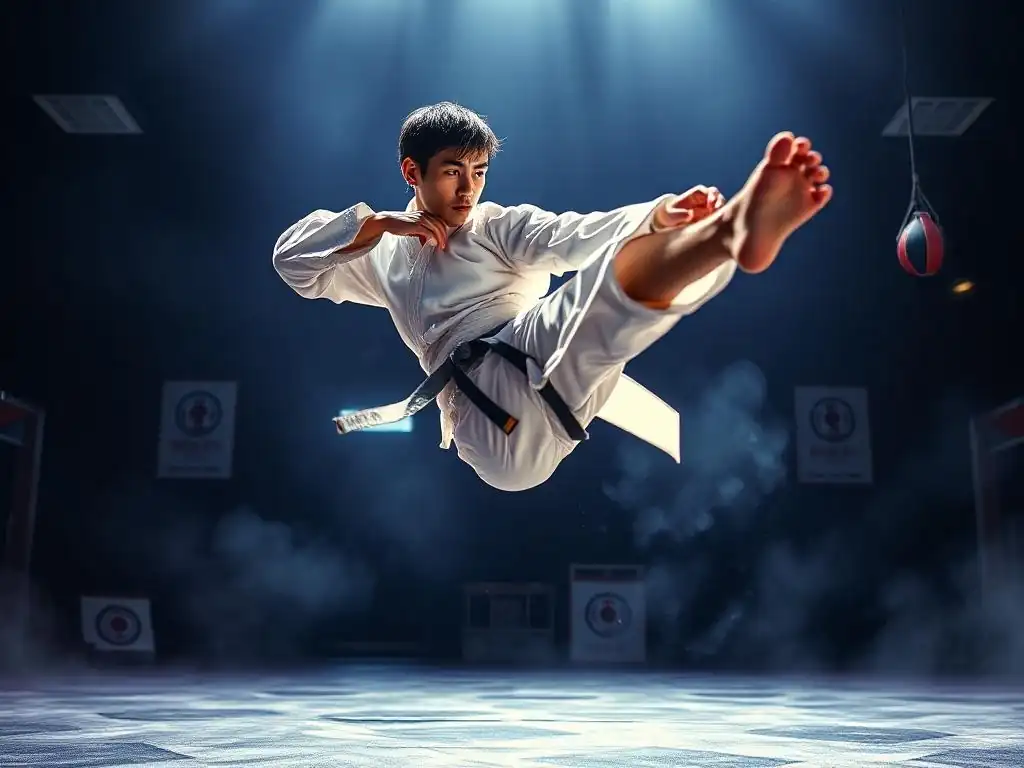
Welcome to Martial Arts Mastery, where we delve into the heart and soul of combat traditions! Ever wondered if technology can truly perfect an ancient art? Today, we're exploring the cutting-edge world of Taekwondo electronic scoring accuracy, questioning whether these advancements have finally eradicated judging errors and brought a new era of fairness to the sport. Join us as we examine the data, analyze the impact, and uncover the truth behind this technological transformation.
- Introduction: The Evolution of Scoring in Taekwondo
- The Mechanics of Taekwondo Electronic Scoring Systems
- Has Electronic Scoring Reduced Judging Errors in Taekwondo?
- The Remaining Challenges in Taekwondo Scoring Accuracy
- Advantages of Electronic Scoring in Taekwondo
- The Impact of Electronic Scoring on Taekwondo Techniques
- Expert Opinions on Taekwondo Scoring Accuracy
- The Future of Judging in Taekwondo: Innovations and Improvements
- Conclusion: Electronic Scoring – A Step Forward, But Not a Perfect Solution for Taekwondo
-
Frequently Asked Questions
- How has the introduction of electronic scoring impacted Taekwondo competitions?
- Does electronic scoring guarantee perfect accuracy in Taekwondo?
- What are some limitations of relying solely on electronic scoring in Taekwondo?
- How does the implementation of electronic scoring vary across different Taekwondo organizations?
- What steps are being taken to further improve the accuracy and reliability of electronic scoring in Taekwondo?
- Final Reflection: Embracing Precision, Preserving Essence
- Unleash Your Inner Champion: Step onto the Digital Mat!
Introduction: The Evolution of Scoring in Taekwondo
From Subjective Judgments to Electronic Precision
For decades, scoring in Taekwondo competitions relied heavily on the subjective judgment of corner judges and a center referee. Points were awarded based on visual observation of techniques landing cleanly and with sufficient power on designated scoring areas. This system, while steeped in tradition, was frequently criticized for inconsistency and bias, leading to numerous disputes and impacting the perceived fairness of major tournaments. The call for greater objectivity grew louder as Taekwondo gained international prominence and became an Olympic sport.
The transition towards electronic scoring began as an ambitious attempt to mitigate these human-related inconsistencies. By integrating sensors into protective gear, the aim was to create a system where scoring became a quantifiable, data-driven process rather than solely dependent on a judge's viewpoint. This shift represented a fundamental change in how Taekwondo matches were officiated and how athletes approached competition, setting the stage for a new era where technology played a crucial role in determining the outcome.
The Promise of Electronic Scoring: A Fairer Taekwondo Competition?
The primary motivation behind adopting electronic scoring systems was to enhance the fairness and transparency of Taekwondo competitions. Proponents argued that removing the subjective element of human judgment from the act of point scoring would drastically reduce errors related to bias, misinterpretation of techniques, or simply missing a scoring action amidst the speed of a match. The promise was a level playing field where points were awarded consistently based on the physical impact registered by sensors, ensuring that the most effective techniques, rather than the most visually impressive ones or those favored by specific judges, determined the winner.
This technological leap was expected to instill greater confidence in the results among athletes, coaches, and spectators alike. By providing an objective standard for point awarding, the system aimed to minimize the post-match controversies that often overshadowed the athletic performance. The goal was clear: leverage technology to elevate the Taekwondo electronic scoring accuracy and ensure that competition outcomes were a true reflection of the athletes' skill and execution within the rules.
The Mechanics of Taekwondo Electronic Scoring Systems
How Electronic Body Protectors (Hogus) Work
At the heart of modern Taekwondo electronic scoring systems are the electronic body protectors, known as hogus, and electronic headgear. These pieces of protective equipment are embedded with sensitive sensors designed to detect the impact of a legitimate Taekwondo technique, specifically kicks and punches delivered to the designated scoring areas (the torso and head). When a strike connects with sufficient force and accuracy on these sensor-equipped areas, it triggers a signal.
This signal is wirelessly transmitted from the hogu or headgear to a central scoring computer. Each competitor's gear is linked to their specific side (red or blue). The system then processes the signal, and if the impact meets a pre-set sensitivity threshold, points are automatically registered on the scoreboard. This automatic registration is intended to provide an immediate, objective record of scoring actions, reducing the possibility of a point being missed by human officials.
Sensor Sensitivity and Impact Thresholds in Taekwondo Scoring
The accuracy of Taekwondo electronic scoring heavily relies on the calibration of sensor sensitivity and the defined impact thresholds. The system is designed to distinguish between glancing blows, pushes, or accidental contact and a legitimate scoring technique delivered with power. World Taekwondo (WT) sets specific standards for the sensitivity of the sensors and the minimum force required for a strike to register as a point. These thresholds can sometimes be adjusted slightly based on the age and weight division of the competitors, aiming to ensure fairness across different physical capabilities.
For example, a threshold might be set at a certain Newton force (N) for a kick to the body to score. A strike below this threshold, even if visually appearing significant, will not register a point electronically. This reliance on a physical force measurement is intended to reward techniques executed with both speed and power, moving away from systems where light 'touch scoring' was sometimes sufficient. However, setting the correct threshold is a delicate balance – too high, and legitimate points are missed; too low, and points are awarded for ineffective techniques, impacting the Taekwondo electronic scoring accuracy.
Instant Replay and Video Review in Modern Taekwondo
While electronic sensors handle the automatic awarding of points for registered impacts, modern Taekwondo competitions also incorporate instant replay and video review systems. These systems serve as a crucial layer of oversight and are primarily used to address situations not covered by the electronic scoring, such as penalties, techniques landing outside sensor areas (like face punches in WTF rules), or disputes over the validity of an electronically registered point (e.g., questioning if a point was registered due to a fall rather than a legal technique).
Coaches are typically allowed a limited number of video replay requests per match to challenge specific calls or non-calls by the referee and judges. A review jury or the center referee, in consultation with other officials, examines the video footage to make a final decision. This human element of video review complements the electronic system, providing a mechanism to correct potential errors or address complex situations that technology alone cannot resolve, thereby contributing to the overall quest for Taekwondo electronic scoring accuracy.
Has Electronic Scoring Reduced Judging Errors in Taekwondo?
Analyzing Data: Error Rates Before and After Electronic Scoring Adoption
Anecdotal evidence and initial studies suggest that the introduction of electronic scoring has significantly reduced certain types of judging errors, particularly those related to missing clear scoring impacts to the body. Before electronic hogus, judges might fail to see a fast kick land, or disagree on whether it had sufficient power. The electronic system largely automates this, registering points based on a quantifiable impact.
For instance, reports from major tournaments following the widespread adoption around 2009-2010 indicated a decrease in protests specifically related to body shot point awards compared to the purely manual system. Some analyses presented at coaching seminars suggested a reduction in disputes over torso kicks by as much as 60-70% in events utilizing the full electronic system compared to previous manual judging.
However, it's crucial to note that while some errors decreased, new challenges emerged. The Taekwondo electronic scoring accuracy, while improved in some areas, introduced errors related to equipment malfunction, calibration issues, and the subjective interpretation of actions that didn't register electronically but arguably should have. Therefore, while the nature and frequency of specific errors changed, the system did not eliminate errors entirely; it arguably redistributed them, requiring officials and coaches to adapt to a new set of potential issues.
Case Studies: High-Profile Controversies Despite Electronic Scoring
Despite the implementation of electronic scoring, high-profile controversies have continued to punctuate major Taekwondo events, demonstrating that the technology is not a panacea for judging accuracy. A notable example occurred during a major international championship match where a competitor's kick appeared to land cleanly to the head, a high-point technique, but did not register electronically. Video replay was used, but interpreting whether the contact met the electronic threshold or was a disallowed technique remained subjective and debated, leading to significant disagreement over the final decision.
Another instance involved a match where points were seemingly awarded electronically for impacts that appeared questionable on review, possibly due to a fighter falling or contact with the arm rather than a legal scoring area. These cases highlight situations where the interaction between the electronic system, the referee's calls (like gamjeom/penalties), and the video review process can still lead to contentious outcomes. They serve as reminders that achieving perfect Taekwondo electronic scoring accuracy remains an ongoing challenge, requiring careful human oversight and interpretation alongside the technology.
The Remaining Challenges in Taekwondo Scoring Accuracy
The Human Element: Referee Interpretation of Rules
Even with electronic scoring handling point registration for certain techniques, the human element remains critical and is a primary source of remaining challenges to Taekwondo electronic scoring accuracy. Referees are responsible for identifying and penalizing illegal actions (gamjeom), such as falling, stepping out of bounds, holding, pushing, or striking illegal areas. These subjective calls can significantly influence the match outcome, potentially negating points scored electronically or shifting momentum.
For example, a referee's decision on whether a fighter intentionally fell to avoid a technique or lost balance naturally is a judgment call that impacts penalties and thus the score. Similarly, interpreting whether contact was a legal block or an illegal push requires human discretion. Disagreements over these subjective referee calls are frequent sources of protest and debate, illustrating that while point registration for body/head kicks might be automated, the overall fairness and accuracy still depend heavily on competent and consistent human officiating of the rules.
Technical Glitches and Equipment Malfunctions
Electronic systems, by their nature, are susceptible to technical glitches and equipment malfunctions, which can directly impact Taekwondo electronic scoring accuracy. Issues can range from sensors failing to register a legitimate impact, to falsely registering points due to unintended contact (like gear hitting the mat during a fall), to communication errors between the gear and the scoring console. While manufacturers and event organizers strive for reliability, these problems do occasionally occur.
During a high-stakes match, a sensor failure on a competitor's hogu could mean powerful, legal techniques simply don't score, fundamentally altering the match's progression and result. Conversely, a phantom point registered incorrectly can be equally disruptive. Although video review can sometimes correct these errors, the process itself can be disruptive and relies on clear visual evidence aligning with the technical issue. Ensuring robust, reliable equipment and having clear protocols for dealing with malfunctions are essential for maintaining confidence in the system's accuracy.
Tactical Fouls and Intentional Exploitation of the System
The introduction of electronic scoring has, in some instances, led to athletes and coaches developing tactics aimed at exploiting the system's nuances or limitations. This includes intentionally pushing or clinching to prevent opponents from generating enough power for sensors to register, or using movements that might inadvertently trigger sensors (though this is less common with current thresholds). Some fighters have become adept at executing techniques with just enough power to register electronically, sometimes at the expense of traditional power or form.
Furthermore, strategic use of penalized actions (gamjeom) can become a tactical tool. A fighter leading on points might intentionally commit minor fouls to run down the clock, accepting the penalty points against them if they believe it's the safest path to victory. While technically within the rules, these tactics can sometimes detract from the dynamic nature of the sport and highlight how athletes adapt their strategies not just to their opponent, but to the scoring technology itself, posing ongoing challenges to the perceived fairness and purity of competition.
Advantages of Electronic Scoring in Taekwondo
Increased Transparency and Objectivity
One of the most significant advantages of electronic scoring is the increased transparency and objectivity it brings to point awarding for body and head kicks. When a point registers, it is based on a quantifiable impact detected by sensors, rather than a judge's potentially obscured or biased view. This provides a clear, immediate reason for a point being awarded. Spectators and athletes can see the score change in real-time as impacts occur, making the scoring process feel less mysterious than the previous system where judges held up cards after a flurry of action.
This transparency builds trust in the system. Athletes and coaches can often review match data showing when and where impacts registered, providing concrete feedback on their performance and the effectiveness of their techniques in meeting scoring criteria. While human judgment remains for penalties and some review situations, the core act of scoring strikes to the torso and head is now governed by technology, which is inherently impartial, thereby significantly improving the perceived Taekwondo electronic scoring accuracy in these specific areas.
Real-Time Feedback and Improved Spectator Experience
Electronic scoring provides instantaneous feedback to athletes, coaches, and spectators. The score updates immediately when a point is registered, allowing everyone to follow the match's progression in real-time. This contrasts sharply with the old system where scores might only be updated after a pause in action, sometimes leading to confusion about the current state of the match. The immediate feedback allows fighters to adjust their strategy on the fly based on whether their techniques are registering points.
For spectators, this real-time scoring enhances the viewing experience. Coupled with graphic overlays showing which fighter scored and how many points, it makes the match easier to understand and more engaging, especially for newcomers to the sport. While the speed of Taekwondo can still make it challenging to follow every action, the electronic system ensures that the most critical event – a point being scored – is clearly and immediately communicated, contributing positively to the sport's presentation and accessibility.
Encouraging Dynamic and Aggressive Fighting Styles
The calibration of electronic scoring systems, particularly the requirement for a certain impact threshold to register a point, has arguably encouraged fighters to adopt more dynamic and aggressive styles. Light, 'touch' kicks that might have scored under the old system are less effective now. Fighters must commit to their techniques, generating sufficient power to activate the sensors. This emphasis on powerful, well-executed strikes can lead to more exciting exchanges and visually impressive techniques.
Furthermore, the clear link between impact and scoring can incentivize fighters to actively seek out scoring opportunities rather than relying on defensive strategies or hoping subjective calls go their way. While some argue it has changed the nature of techniques, it has undeniably placed a premium on effective offensive actions that land with force on target, potentially leading to matches with higher scoring and more continuous action, which many find more exciting to watch.
Potential for Over-Reliance on Technology
A significant disadvantage is the potential for over-reliance on the electronic system, sometimes at the expense of fundamental Taekwondo principles or the referee's authority. There can be a tendency to trust the electronic score implicitly, even when visual evidence or the flow of the match suggests an error. This can lead to frustration when the technology seems to contradict what is happening in the ring.
Moreover, athletes might focus excessively on scoring 'electronic points' rather than executing techniques with proper form, power, and intent as traditionally taught. This could subtly shift the emphasis away from the holistic development of a martial artist towards optimizing performance for a specific technological system. While the aim is improved Taekwondo electronic scoring accuracy, an over-dependence can sometimes reduce the sport to merely triggering sensors, potentially diminishing the appreciation for the skill and artistry involved in traditional Taekwondo techniques.
High Costs of Implementation and Maintenance
The implementation and maintenance of electronic scoring systems represent a considerable financial burden, particularly for smaller tournaments or less affluent national federations. The specialized electronic hogus, headgear, transmitters, receivers, scoring computers, and associated software are expensive to purchase and require ongoing maintenance, calibration, and periodic replacement.
This high cost can create disparities in access to competition technology. Athletes in regions or clubs that cannot afford regular access to electronic sparring gear may be at a disadvantage when competing at events where it is used exclusively. While major international events mandate the use of approved systems, the cost remains a barrier to entry and equitable training opportunities globally, impacting the widespread adoption and consistent application of the technology.
The Debate Over "Touch Scoring" vs. "Power Scoring"
The calibration of impact thresholds has sparked an ongoing debate within the Taekwondo community regarding "touch scoring" versus "power scoring." Early electronic systems were sometimes criticized for being too sensitive, allowing light, fast kicks (perceived as 'touch scoring') to register points even without significant power or effect on the opponent. Adjustments were made to require more force ('power scoring'), aiming to reward more impactful techniques.
However, finding the right balance remains controversial. Some argue that the current thresholds are still too high, penalizing fast, accurate techniques delivered by lighter fighters, while others feel they are too low, still allowing points for glancing blows. This debate reflects different philosophies within the sport about what constitutes a truly effective scoring technique and highlights the difficulty in using a single technological threshold to capture the nuance and variety of Taekwondo strikes, directly affecting the perceived Taekwondo electronic scoring accuracy.
The Impact of Electronic Scoring on Taekwondo Techniques
Has it Changed the Way Taekwondo is Taught and Practiced?
The advent of electronic scoring has undeniably influenced how Taekwondo is taught and practiced, particularly at the competitive level. Coaches and athletes now analyze techniques not just for traditional form and power, but also for their effectiveness in consistently triggering electronic sensors. Training regimens often include drills specifically designed to practice landing strikes on the sensor areas of electronic gear with the required force.
This has led to a greater emphasis on certain types of kicks and delivery methods that are highly effective in registering points electronically. While fundamental techniques remain crucial, there is a practical adaptation in training to maximize scoring potential within the electronic system's parameters. This adaptation reflects the sport's evolution, driven partly by the need to succeed under the current scoring rules, and has become an integral part of preparing athletes for modern competition.
The Rise of Specific Techniques Optimized for Electronic Scoring Systems
Certain techniques have seen increased prominence or adaptation due to their effectiveness with electronic scoring. Fast, whip-like kicks such as the fast turning kick (dollyo chagi) or back kick (dwi chagi) delivered to the body protector with sufficient snap and power are highly favored for their ability to register points quickly. The strategy often involves stringing together multiple rapid strikes to the torso, aiming to accumulate points before the opponent can react or counter.
Head attacks (requiring electronic headgear) also remain high-value techniques, and fighters practice precise delivery to the sensor areas. While traditional Taekwondo encompasses a vast array of techniques, the competitive landscape under electronic scoring has narrowed the focus somewhat on those techniques that reliably score points electronically, leading to a stylistic shift in top-level competition. The need for Taekwondo electronic scoring accuracy has thus shaped the techniques prioritized in training.
The Future of Taekwondo Techniques in the Age of Electronic Scoring
Looking ahead, the evolution of Taekwondo techniques will likely continue to be influenced by scoring technology, but perhaps with adjustments. As systems become more sophisticated, they might potentially distinguish between different types of impacts or even incorporate other factors. However, for the foreseeable future, techniques optimized for triggering current-generation electronic sensors will remain prevalent in competition.
There is also a desire among some practitioners to ensure that the sport doesn't lose sight of its traditional roots and the broader range of techniques and principles. Balancing the demands of electronic scoring with the comprehensive art of Taekwondo is an ongoing discussion. The future may see refinements in scoring technology or rules that attempt to better integrate traditional effectiveness with electronic measurement, ensuring that the pursuit of Taekwondo electronic scoring accuracy supports, rather than dictates, the full expression of the art.
Expert Opinions on Taekwondo Scoring Accuracy
Quotes from Taekwondo Masters and Coaches
Many experienced Taekwondo masters and coaches hold varied opinions on electronic scoring accuracy. Some acknowledge its positive impact on reducing blatant judging errors on body shots. As one veteran coach, who has seen the sport evolve over decades, might say, "Before, you'd lose a match because a judge simply didn't see your clear point. The electronic hogu fixed a lot of that."
However, many also express concerns about the nuances missed by sensors. "It scores the impact, yes, but does it score the quality of the technique? Does it recognize a perfectly executed traditional kick versus a jarring push that happens to register? That's where the art gets lost," another master might lament.
There is a common sentiment that while the system provides a base level of objectivity, it has also changed the strategic game, sometimes prioritizing sensor activation over tactical superiority or defensive skill. Coaches often focus training on 'scoring kicks' specifically tailored to the system, which some see as a necessary adaptation for competition, while others view it as a departure from fundamental Taekwondo principles. The consensus is often that it's a step forward, but not without its trade-offs.
Perspectives from Referees and Judging Officials
Referees and judging officials who work with the electronic system have a unique perspective on its accuracy and challenges. They no longer have the burden of subjectively scoring body points, which is a relief for many, reducing the pressure and potential for accusations of bias in that specific area. "The electronic hogu takes away the guesswork on body shots. That's a huge improvement for consistency," a long-time international referee might state.
However, their role has shifted to focusing intensely on penalties, boundaries, and head attacks (where video review is crucial), as well as managing the technical aspects of the match. They face the challenge of making quick, accurate subjective calls on fouls while simultaneously monitoring the electronic score.
Officials also deal directly with equipment issues and coach protests related to the system. They understand that achieving true Taekwondo electronic scoring accuracy requires the technology to work flawlessly and the human officials to maintain vigilance and apply rules consistently, acknowledging that the system is a tool, not a replacement for their expertise.
Athlete Experiences with Electronic Scoring Systems
Athletes' experiences with electronic scoring are often mixed. Many appreciate the objective nature of point scoring for body shots, feeling that clear, powerful techniques are more reliably rewarded. "If I land a good kick, I know it's going to score. I don't have to worry if the judge saw it," an athlete might say after a match. This can reduce anxiety and allow them to focus purely on performance.
Conversely, athletes also voice frustrations when techniques that feel powerful and accurate don't register, leading to confusion and disappointment. They must constantly adapt their kicking style to meet the sensor requirements, which can sometimes feel unnatural or limit their technical repertoire. Dealing with potential equipment malfunctions or controversial video review decisions based on electronic data can also be stressful. Overall, athletes see electronic scoring as a necessary part of modern competition, recognizing its benefits in certain areas while still navigating its limitations and impact on strategy and technique.
The Future of Judging in Taekwondo: Innovations and Improvements
Exploring Artificial Intelligence (AI) and Machine Learning
The future of Taekwondo judging may involve exploring advanced technologies like Artificial Intelligence (AI) and Machine Learning. These technologies could potentially analyze video footage in real-time, identifying techniques, assessing their validity based on a vast database of examples, and perhaps even evaluating the quality or effectiveness of a strike beyond just raw impact force. An AI system could potentially assist referees by flagging potential fouls or scoring actions that the electronic sensors might miss or misinterpret, offering another layer of review.
Machine learning algorithms could also be used to analyze historical match data, including instances of controversial calls or system errors, to refine the rules, calibrate sensor thresholds more effectively, or even predict potential issues. While still in early conceptual stages for Taekwondo, AI holds promise for enhancing the accuracy and consistency of officiating, potentially addressing some of the subjective areas where current electronic scoring falls short and contributing to greater Taekwondo electronic scoring accuracy overall.
Refinements to the Electronic Scoring System
Ongoing refinements to the electronic scoring system itself are expected. This includes improving sensor technology to be more accurate, durable, and less susceptible to interference or false positives. Future versions might incorporate more sensors across different areas or be better able to distinguish between legal techniques and incidental contact. The communication protocols between the gear and the scoring system could also be enhanced for greater reliability and speed.
Software improvements could lead to more sophisticated algorithms for processing sensor data, perhaps taking into account the context of the impact (e.g., fighter's movement, angle of attack) to reduce errors. The goal of these refinements is to make the core electronic scoring function even more precise and reliable, minimizing the technical issues that currently challenge Taekwondo electronic scoring accuracy and reducing the need for manual intervention in clear-cut scoring situations.
Balancing Technology with Human Judgment: A Hybrid Approach?
The most likely future scenario for Taekwondo judging involves a continued hybrid approach, seeking the optimal balance between technology and human judgment. While electronic scoring provides objective data for certain actions, human officials remain essential for interpreting rules, assessing subjective situations (like intentionality in fouls), ensuring competitor safety, and managing the overall flow of the match.
Future systems might integrate technology more seamlessly to assist human judges rather than completely replace them. For example, augmented reality displays for judges could highlight sensor activations or potential rule infringements detected by AI, allowing the human official to make the final, informed decision. The aim is to leverage the strengths of technology for speed and objectivity in quantifiable areas while retaining the critical thinking, context awareness, and ethical judgment that only human officials can provide, working together to achieve the highest possible Taekwondo electronic scoring accuracy.
Conclusion: Electronic Scoring – A Step Forward, But Not a Perfect Solution for Taekwondo
The Ongoing Pursuit of Fair and Accurate Taekwondo Competitions
The introduction of electronic scoring systems marked a significant and necessary step forward in the pursuit of fairer and more accurate Taekwondo competitions. By automating the scoring of body and head kicks based on quantifiable impact, the technology successfully addressed many of the subjective inconsistencies that plagued the manual judging system. It brought a new level of transparency and real-time feedback to the sport, benefiting athletes, coaches, and spectators alike. The intent was clear: to elevate the Taekwondo electronic scoring accuracy and reduce human error.
However, as this analysis has shown, electronic scoring is not a perfect solution. It has introduced new challenges, including technical malfunctions, the potential for strategic exploitation, and a continued reliance on crucial, sometimes controversial, human judgment for penalties and video review. The debate over sensor calibration and its impact on technique also persists. While a major improvement in certain aspects of scoring, the technology hasn't eliminated controversy entirely; it has simply shifted the focus of potential disputes.
The Importance of Continuous Evaluation and Improvement of Scoring Methods
The journey towards truly fair and accurate Taekwondo competition is ongoing. The experience with electronic scoring highlights the critical importance of continuous evaluation and improvement of all scoring methods, both technological and human. This involves refining the electronic systems based on real-world performance data, addressing technical vulnerabilities, and ensuring consistent calibration standards across all events.
Equally important is the ongoing training and development of human officials – referees and judges – to ensure they consistently and accurately apply the rules, manage matches effectively, and utilize video review systems judiciously. Future innovations, potentially incorporating AI or more sophisticated sensor technology, should be explored cautiously, always with the goal of serving the sport and upholding its integrity. Ultimately, achieving the highest level of Taekwondo electronic scoring accuracy and overall fairness requires a commitment to refining both the technological tools and the human processes involved in judging the dynamic and complex art of Taekwondo.
Frequently Asked Questions
How has the introduction of electronic scoring impacted Taekwondo competitions?
Electronic scoring systems aim to reduce subjective judging, leading to more consistent and objective results in Taekwondo competitions. This aims to improve fairness and transparency.
Does electronic scoring guarantee perfect accuracy in Taekwondo?
While electronic scoring significantly reduces human error, it's not foolproof. Technical glitches and sensor malfunctions can still occur, potentially affecting the outcome.
What are some limitations of relying solely on electronic scoring in Taekwondo?
Electronic systems primarily detect impact force, potentially overlooking subtle techniques or strategies. This can lead to a focus on power over technical finesse in competition.
How does the implementation of electronic scoring vary across different Taekwondo organizations?
Different organizations may use different electronic scoring systems with varying levels of sensitivity and features. This can lead to discrepancies in scoring between events.
What steps are being taken to further improve the accuracy and reliability of electronic scoring in Taekwondo?
Ongoing research and development are focused on enhancing sensor technology, refining algorithms, and implementing robust error-checking protocols to minimize inaccuracies and ensure fair scoring practices.
Final Reflection: Embracing Precision, Preserving Essence
The evolution of Taekwondo, particularly the adoption of electronic scoring, highlights a relentless pursuit of fairness and accuracy in competition. This quest for objectivity, while significantly reducing blatant judging errors, simultaneously raises questions about the very soul of the sport. Has the technological advancement truly eliminated human bias, or has it simply shifted the arena of interpretation to the algorithms and sensors themselves? The answer, as we've explored, is complex and demands ongoing scrutiny.
The impact of electronic scoring extends far beyond the competition mat. It has reshaped training methodologies, emphasizing techniques that register reliably on the sensors, and influencing the strategic approach to matches. This transformation, while arguably enhancing the sport's accessibility and appeal to a wider audience, also necessitates a constant reevaluation of what constitutes true Taekwondo skill and artistry. Technology is a useful servant but a dangerous master.
- Christian Lous Lange. This quote resonates deeply as we navigate the delicate balance between leveraging technological advancements and safeguarding the intrinsic values of Taekwondo.
As we stand at this intersection of tradition and technology, let us not blindly embrace progress without critical reflection. Consider how you, as a practitioner, coach, or fan, can contribute to a future where electronic scoring enhances, rather than diminishes, the spirit of Taekwondo. Let us strive to ensure that the pursuit of accuracy does not overshadow the beauty, discipline, and profound human connection at the heart of this ancient martial art.
Unleash Your Inner Champion: Step onto the Digital Mat!
Thank you for diving deep into the world of electronic scoring in Taekwondo. We hope you've gained a new appreciation for how technology is shaping the future of martial arts. Now, it's time to take action!
- Embrace the change: Dive into a local Taekwondo class and see the electronic scoring system firsthand!
- Share this article with your martial arts community and spark a discussion about the pros and cons of technology in sports.
- Explore other martial arts disciplines and research how they are incorporating technology to enhance fairness and performance.
What innovative technologies do you envision improving martial arts in the future? Share your thoughts in the comments below!