
Understanding Your Opponent's Mechanics: A Path to Grappling Control


Welcome to Martial Arts Mastery, your definitive resource for unlocking the secrets of combat!
Dive deep into the fascinating world of grappling with this comprehensive analysis of opponent mechanics. This exploration goes beyond mere technique, revealing the underlying principles that govern effective grappling control. Are you ready to elevate your game and gain a decisive edge? Begin your journey with our article on Grappling opponent mechanics analysis techniques and discover the science behind submission!
- Grappling Opponent Mechanics Analysis Techniques: A Detailed Breakdown
-
Frequently Asked Questions
- What does "grappling opponent mechanics analysis" actually mean in martial arts?
- Why is understanding opponent mechanics important in grappling?
- What are some key things to look for when analyzing an opponent's mechanics during grappling?
- How can I improve my ability to analyze an opponent's mechanics in real-time during a grappling match?
- Besides just winning, what are some other benefits of understanding grappling opponent mechanics analysis techniques?
- Final Reflection: Mastering the Dance of Control
- Dominate Your Next Roll: Begin Your Mastery Now!
Grappling Opponent Mechanics Analysis Techniques: A Detailed Breakdown
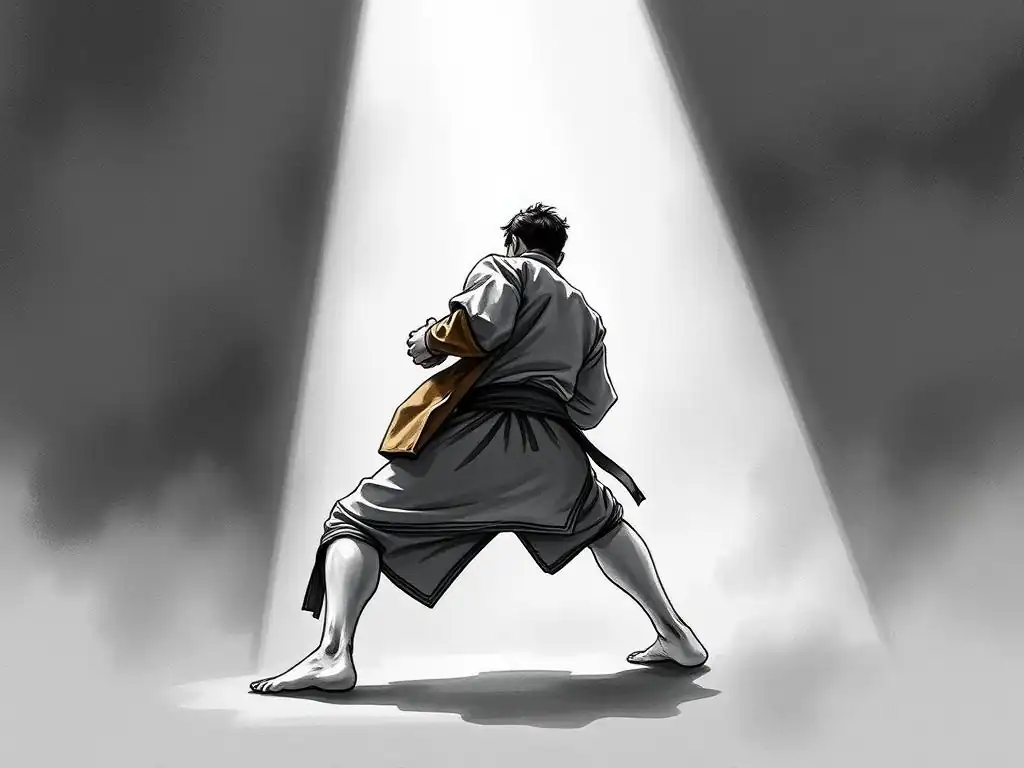
Analyzing your opponent's mechanics in grappling is a multifaceted skill that involves observing, interpreting, and predicting their physical actions and intentions. It's not just about watching what they do, but understanding how and why they do it, focusing on the biomechanical principles underlying their movements. Mastery of grappling opponent mechanics analysis techniques allows a practitioner to anticipate attacks, exploit vulnerabilities, and maintain superior control throughout an exchange, whether standing or on the ground. This level of insight moves beyond rote technique application into a deeper strategic understanding of the physical chess match that is grappling.
Effective grappling opponent mechanics analysis requires focused attention and a systematic approach. It begins with fundamental observations like posture and stance, progresses through dynamic movement patterns, and culminates in understanding intricate details like grip fighting and submission setups. By breaking down an opponent's physical language into these core components, grapplers can build a comprehensive profile of their habits, strengths, and weaknesses, significantly enhancing their ability to react effectively and implement their own game plan. This analytical process is an ongoing one, constantly refined through training and live application.
Observing Posture and Stance: The Foundation of Opponent Analysis
The initial assessment of an opponent's grappling mechanics often begins with their posture and stance, particularly in standing exchanges like wrestling or Judo, but also subtly influencing ground positions. A low, wide stance typically indicates a strong base and readiness for takedown defense or attacks, while a more upright posture might suggest agility but potentially less stability.
Observing how weight is distributed between their feet or hips provides crucial clues about their balance and potential direction of movement. For instance, a common observation in wrestling is that an opponent leaning heavily on one leg might be vulnerable to attacks on the opposite side, like a single-leg takedown targeting the unweighted leg, or a sweep if on the ground.
Furthermore, subtle shifts in posture can serve as significant tells, or "telegraphs," for impending actions. Before initiating a shot for a takedown, many individuals exhibit a slight dip or a shift in weight forward. Similarly, preparing for a powerful hip escape from side control might involve a subtle bridge or rotation of the hips.
Recognizing these pre-movement cues is a vital aspect of grappling opponent mechanics analysis techniques. For example, a Brazilian Jiu-Jitsu practitioner consistently pulling their elbows tight to their ribs might be indicating a defensive posture against arm attacks, while someone with flared elbows could be more susceptible to armbars or kimuras. Over time, recognizing these posture-based tells becomes almost instinctive, allowing for quicker reactions and counter-strategies.
Identifying Weight Distribution and Balance Issues
Analyzing an opponent's weight distribution is fundamental to understanding their balance and identifying opportunities for off-balancing attacks. In standing grappling, a fighter with uneven weight distribution, perhaps favoring one leg due to injury or habit, presents a prime target for leg attacks or throws in the direction of their instability.
On the ground, observing where an opponent's weight is concentrated – on their hands, knees, or hips – is critical for planning sweeps, transitions, and escapes. For instance, if an opponent in side control is leaning heavily towards your head, they are likely lighter on your hip side, making a hip escape or bridging motion more effective in that direction.
Balance issues can manifest in various ways, from a narrow stance that's easily pushed or pulled off-center to habitual leaning during specific movements. A grappler who consistently overextends when reaching for grips might be prone to being pulled off-balance forward. Someone who struggles to maintain a stable base when being pushed laterally indicates a weakness in their lateral balance.
Identifying these balance vulnerabilities through careful observation of their weight distribution and movement patterns is a core component of effective grappling opponent mechanics analysis techniques. For example, a common tell in guard passing is an opponent placing too much weight on their arms when trying to stack, making them vulnerable to sweeps that target their base like the tripod sweep.
Recognizing Telegraphs in Movement
Recognizing telegraphs – small, often involuntary movements that precede a larger action – is a crucial skill in grappling opponent mechanics analysis. These tells can be subtle, such as a slight tensioning of muscles before a burst of energy, a specific hand placement before attempting a grip break, or a head position indicating the direction of a forthcoming throw. For example, many wrestlers will slightly lower their head and shoulders before initiating a shot; recognizing this fractional movement allows a defender to react milliseconds sooner, potentially stuffing the takedown.
These telegraphs are deeply rooted in an individual's learned motor patterns and biomechanics. They are often unconscious habits developed through repetition. A judoka might always shift their weight onto one leg and rotate their torso in a specific way just before attempting a particular throw like Ouchi Gari.
A BJJ player might consistently grip fight in a certain sequence or exhibit a particular hip movement before attempting a sweep from guard. Learning to identify these personal tells through observation and practice is a powerful aspect of grappling opponent mechanics analysis techniques, providing a window into your opponent's immediate intentions and giving you a predictive edge.
Analyzing Movement Patterns: Recognizing Common Grappling Sequences
Beyond individual tells, understanding an opponent's typical movement patterns and preferred sequences is a key aspect of advanced grappling opponent mechanics analysis techniques. Grapplers often rely on a repertoire of techniques and transitions that they favor and perform efficiently. Observing how they typically move from one position to another, how they enter into attacks, or how they attempt to escape unfavorable situations reveals their strategic preferences and technical strengths. For example, some practitioners consistently seek dominant grips and transition directly to high-percentage submissions like armbars or chokes, while others prefer dynamic scrambling and positional advancements.
Analyzing these patterns involves recognizing common chains of techniques. Does the opponent always attempt a guard pass by circling to one side? Do they typically try to escape side control by bridging and rolling, or by shrimping away?
How do they react when their initial attack is defended – do they transition to a different attack, or reset the position? Identifying these habitual sequences allows you to not only anticipate their next move but also potentially disrupt their entire chain of action. For instance, if an opponent consistently attempts a specific sweep from closed guard, knowing their setup movements allows you to preemptively adjust your base or posture to neutralize the attack before it gains momentum.
Studying Entries and Takedowns
Analyzing how an opponent enters into standing exchanges and attempts takedowns provides critical insights into their preferred methods and potential vulnerabilities. Do they favor power-based double legs, quick single legs, trips, or throws? Do they rely on specific grip fighting sequences to set up their entries, such as snapping the head down or controlling an arm?
Observing their footwork, level changes, and timing during these entries reveals their comfort zones and areas where they might be less proficient or predictable. For example, a wrestler who always shoots from a distance might be vulnerable to sprawl and cross-face defense, while one who relies on close-range trips might be susceptible to being pulled into guard.
Detailed analysis of takedown mechanics includes looking at their head position, hand fighting, penetration step depth, and finishing mechanics. Do they typically drive straight through, or do they rely on changing directions? Do they secure the legs high on the hips or lower at the ankles?
Understanding these mechanical nuances allows you to tailor your defense and counter-offense. For instance, if an opponent consistently finishes their double leg by driving forward with their head low, a well-timed switch or whizzer defense might be highly effective. This granular level of grappling opponent mechanics analysis techniques applied to entries and takedowns is vital for success in the standing phase.
Identifying Escape Techniques and Counters
How an opponent attempts to escape from disadvantageous positions is highly revealing of their training background, priorities, and physical capabilities. Do they prioritize creating space and returning to guard from side control or mount? Do they attempt dynamic rolls or bridges?
Do they focus on hand fighting to break grips and create openings? Observing their habitual escape patterns allows you to anticipate their reactions when you achieve a dominant position and preemptively shut down their escape routes. For example, if an opponent consistently tries to hip escape from under side control, maintaining heavy pressure on their hips and blocking their movement becomes a priority.
Furthermore, analyzing their common counters to your attacks provides insight into their defensive strategy. If you attempt an armbar from mount, do they typically bridge and roll, or do they focus on tucking their arm and defending the grip? If you attempt a specific guard pass, how do they usually defend it?
Identifying these preferred counters allows you to set traps or chain attacks that exploit their predictable reactions. For instance, if an opponent always defends a certain sweep by posting a hand, you might set up a follow-up attack targeting that posting arm, like an arm drag or a kimura. This predictive aspect is a powerful application of grappling opponent mechanics analysis techniques.
Understanding Guard Retention Strategies
The guard is a complex position in grappling, and an opponent's guard retention strategy offers significant insights into their defensive and offensive preferences from their back. Do they favor a dynamic guard like butterfly or spider guard, relying on hooks and grips to control distance and off-balance?
Or do they prefer a more static, defensive guard like closed guard or half guard, focused on control and slowing down the pass? Observing their hip movement, leg placement, and grip fighting from guard reveals their priorities – are they primarily trying to prevent the pass, or are they actively seeking sweeps and submissions?
Analyzing their guard retention mechanics involves watching how they use their legs and hips to maintain distance and recover guard when it's compromised. Do they rely heavily on shrimping, or do they use knee shields and frames? Do they actively break grips, or do they use their leg structure to negate pressure?
Understanding these details allows you to tailor your guard passing approach. For example, against an opponent who relies heavily on knee shields, focusing on leg drags or smashing passes might be effective, while against a dynamic open guard player, controlling grips and maintaining distance might be paramount. This detailed understanding of guard mechanics is a key element of sophisticated grappling opponent mechanics analysis techniques.
Assessing Grip Strength and Control: A Key Element of Grappling Analysis
Grip fighting is a fundamental, often underestimated, aspect of grappling that significantly influences positional control and attack setups. Analyzing an opponent's grip strength, preferred grips, and grip fighting strategies provides crucial information. Some grapplers possess exceptionally strong grips, making it difficult to break their hold, while others may rely more on technique and leverage than sheer strength.
Observing where they prefer to grip – lapels, sleeves, wrists, or pant legs – indicates their favored techniques and positions. For example, an opponent who consistently seeks sleeve and collar grips in BJJ is likely setting up gi-dependent techniques like spider guard or specific chokes.
Furthermore, analyzing their grip fighting strategy reveals how they initiate exchanges and defend against your attempts to establish control. Do they immediately seek dominant grips? Do they constantly break your grips? Do they use specific sequences to establish their preferred holds?
Identifying these habits allows you to anticipate their grip fighting intentions and counter them effectively. For instance, if an opponent always tries to establish a specific collar grip, you can preemptively defend that grip or use their attempt as an opportunity to secure your own control. Understanding grip dynamics is a subtle yet vital part of grappling opponent mechanics analysis techniques.
Identifying Grip Preferences and Weaknesses
As mentioned, an opponent's grip preferences are strong indicators of their game plan. A judoka is likely to prioritize collar and sleeve grips for throws, while a no-gi grappler will focus on wrist, neck, and body control grips. Within a specific art like BJJ, preferences can vary widely – some may favor pistol grips on sleeves for control, others may prefer cross-collar grips for chokes, and still others might avoid gi grips altogether, preferring wrist or body control.
Identifying these preferences quickly allows you to predict their immediate technical intentions. For example, an opponent constantly fighting for a cross-collar grip from closed guard is clearly signaling their intent to attack with collar chokes.
Conversely, identifying grip weaknesses is equally important. Does the opponent struggle to maintain grips when their posture is broken? Are they easily stripped of grips from specific positions? Do they lack strength in particular grip types? Observing instances where their grips are easily broken or ineffective provides opportunities. For example, if an opponent consistently loses their collar grip when you posture up forcefully from closed guard, this is a weakness you can exploit repeatedly. Targeting these grip vulnerabilities is a practical application of grappling opponent mechanics analysis techniques.
Recognizing Grip Fighting Strategies
Beyond individual grip preferences, understanding an opponent's overall grip fighting strategy is crucial. Do they employ a highly aggressive strategy, constantly attacking your grips while defending their own? Do they use a more passive approach, waiting for you to establish grips before reacting? Do they have specific sequences they use to break grips or establish control, such as using two hands to strip one of yours, or circling away while pulling? Recognizing these strategic patterns allows you to engage in the grip battle more effectively.
For instance, against an opponent with a very aggressive grip fighting strategy, you might focus on establishing fewer, stronger grips that are harder to break, or use feints to bait them into predictable reactions. Against a more passive grip fighter, you have more time and opportunity to establish your desired grips. Observing how they fight for grips – their hand fighting techniques, use of posture and movement to aid grip breaks, and preferred grip exchanges – provides valuable tactical information. Mastering the analysis of these grip fighting strategies is a refined aspect of grappling opponent mechanics analysis techniques.
Evaluating Submission Setups: Anticipating and Defending Attacks
Analyzing an opponent's submission setups is arguably the most critical application of grappling opponent mechanics analysis techniques, as it directly relates to defending against fight-ending attacks. This involves recognizing the positions, grips, and sequences they typically use to initiate submissions. Do they favor armbars from guard, triangles from mount, or leg locks from open guard?
Understanding their go-to submissions allows you to be on high alert when they enter the preparatory phases for those attacks. For example, an opponent known for triangle chokes from guard will likely attempt to control your posture and secure an arm and the opposite side of your head; recognizing these early steps allows you to defend before the position is locked down.
This analysis also extends to understanding their preferred submission chains and transitions. If their initial armbar attempt is defended, do they typically transition to a triangle, an omoplata, or sweep? Recognizing these follow-up attacks allows you to defend not just the first attempt, but the subsequent options as well.
For example, many practitioners who attack armbars from mount will transition to a triangle if the opponent defends by pulling their arm free and tucking it; anticipating this transition allows you to adjust your defense accordingly. Identifying these patterns is a high-level application of grappling opponent mechanics analysis techniques that significantly increases your defensive effectiveness.
Recognizing Common Submission Entries
Submission entries are the specific movements and positional adjustments an opponent uses to initiate a submission attempt. These entries often follow recognizable patterns. For example, a common entry into an armbar from guard involves securing an arm, controlling the posture, and swinging a leg over the head. An entry into a rear-naked choke from back control involves securing seatbelt control and then transitioning to control of the head and neck. Observing these common entries allows you to identify a potential submission attempt in its nascent stages, giving you precious time to react and defend.
Analyzing an opponent's preferred entries involves watching for specific grips, body alignments, and shifts in weight or posture that precede the attack. Does the opponent consistently try to isolate an arm by pulling it across their body before attempting an armlock? Do they always establish a specific hand fighting grip on the neck before shooting for a guillotine? Recognizing these specific entry mechanics is a direct application of grappling opponent mechanics analysis techniques to submission defense. By identifying the entry, you can often defend the submission much more effectively than waiting until the hold is fully locked on.
Identifying Submission Chains and Transitions
Skilled grapplers rarely rely on a single submission attempt. They often chain attacks together, transitioning from one potential submission to another based on your defensive reactions. Analyzing these submission chains is a crucial, albeit more advanced, aspect of grappling opponent mechanics analysis techniques. For example, a common chain from mount might be S-mount armbar -> triangle choke -> omoplata. If an opponent favors this chain, you know that defending the armbar might lead directly into a triangle attempt, and defending the triangle might lead to an omoplata.
Identifying these preferred chains allows you to anticipate not just the initial attack, but the likely follow-ups. This enables a more strategic defense, where your reaction to the first attack is designed not only to escape that specific hold but also to put you in a better position to defend or counter the next attack in their sequence. Observing patterns in how opponents transition between submission attempts – which attacks they link together, and how they adjust their body mechanics during these transitions – is a powerful way to enhance your defensive strategy through grappling opponent mechanics analysis.
Frequently Asked Questions
What does "grappling opponent mechanics analysis" actually mean in martial arts?
It refers to the process of observing and understanding your opponent's movements, posture, and weight distribution during a grappling exchange to anticipate their actions and gain a tactical advantage.
Why is understanding opponent mechanics important in grappling?
By analyzing your opponent's mechanics, you can identify weaknesses in their stance, predict their next move, and exploit openings for submissions or positional improvements, ultimately achieving greater grappling control.
What are some key things to look for when analyzing an opponent's mechanics during grappling?
Focus on their weight distribution, posture, and the way they move their limbs. Look for signs of imbalance, tension, or telegraphing, which can indicate their intentions and vulnerabilities, impacting defensive and offensive capabilities.
How can I improve my ability to analyze an opponent's mechanics in real-time during a grappling match?
Consistent training drills that focus on observational skills and reacting to different movement patterns are crucial. Sparring regularly with a variety of partners will also help develop your ability to analyze and adapt.
Besides just winning, what are some other benefits of understanding grappling opponent mechanics analysis techniques?
Understanding opponent mechanics allows for safer training by anticipating dangerous movements. It also facilitates a deeper understanding of grappling principles and promotes more efficient and effective techniques.
Final Reflection: Mastering the Dance of Control
The preceding analysis of grappling opponent mechanics isn't merely an academic exercise; it's a critical pathway to achieving dominance and control on the mat. In a world where physical strength can only take you so far, understanding the subtle nuances of your opponent's movements, posture, and reactions becomes the ultimate advantage. This knowledge empowers you to anticipate, adapt, and ultimately, dictate the flow of the match.
The ability to dissect and interpret an opponent's mechanics has profoundly shaped the evolution of grappling arts. It's a constant reminder that physical prowess is amplified exponentially by intellectual understanding. This understanding extends beyond the mat, teaching us to observe, analyze, and adapt in all aspects of life. The best fighter is never angry,
Bruce Lee famously said. This sentiment underscores the importance of calm, calculated observation, a cornerstone of effective opponent analysis.
Now, consider how you can apply these principles beyond the confines of grappling. How can you better understand the "mechanics" of your colleagues, your competitors, or even yourself? Embrace the spirit of observation, cultivate a mindset of continuous learning, and remember that true mastery lies not just in physical skill, but in the profound understanding of the forces at play. The path to control, in any arena, begins with understanding.
Dominate Your Next Roll: Begin Your Mastery Now!
Thank you for diving deep into the nuances of grappling mechanics! We hope this article has given you valuable insights into anticipating and countering your opponent's moves. Now, it's time to put that knowledge into action and elevate your game.
Here’s how you can continue your journey toward grappling excellence:
- Record and Analyze: Film your next sparring session and meticulously dissect your opponent's movement patterns. Identify their go-to transitions, preferred grips, and telltale signs of fatigue.
- Shadow Drill: Experiment with countering those moves you discovered in the recorded sparring sessions. Perform shadow drills for 15 minutes a day, focusing on fluid transitions and precise reactions.
- Challenge a Training Partner: Intentionally seek out partners whose style challenges you. Work on implementing the techniques and strategies discussed in this article in a controlled training environment.
What surprising movement patterns have you noticed in your training partners that have changed your grappling style?