
LongRange Fajin Techniques and Training in Chen Style Tai Chi

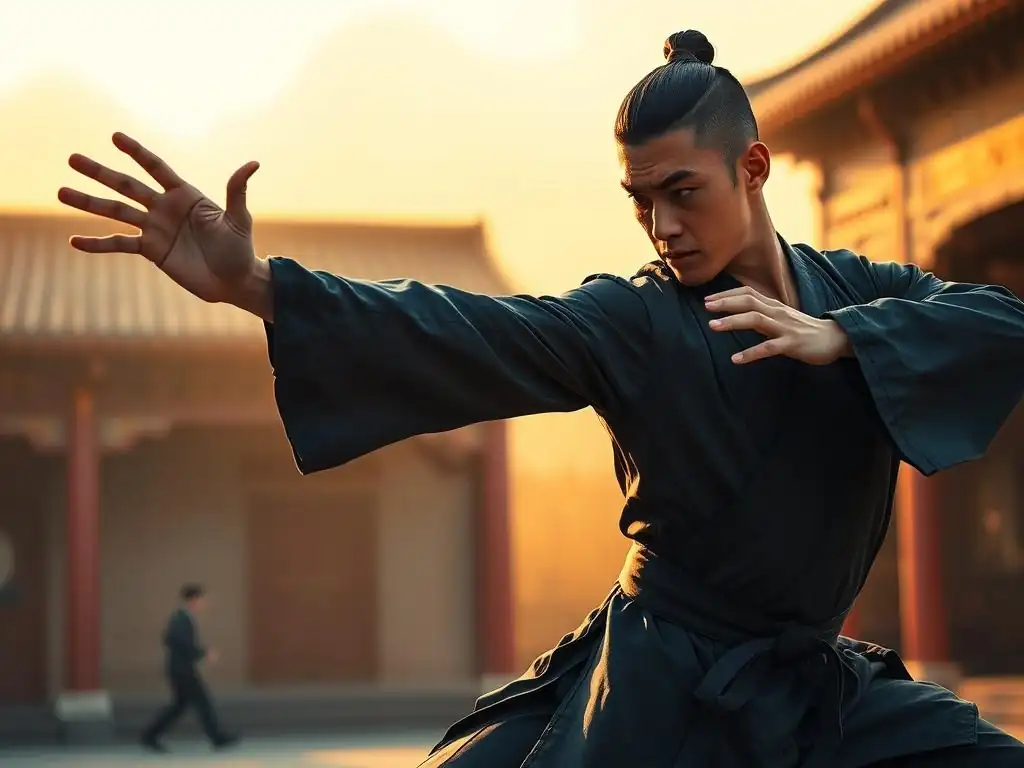
Welcome to Martial Arts Mastery, where tradition meets technique!
Delve into the fascinating world of martial arts, exploring their rich histories and practical applications. Are you ready to unlock the secrets of Chen style Tai Chi? This article unveils the power of Chen style fajin range, exploring the long-range techniques that make this art form so devastatingly effective. Discover the training methods and principles that will help you harness this explosive energy. Intrigued? Let's begin your journey to martial arts mastery!
- Understanding Fajin in Chen Style Tai Chi Chuan
- Principles of Long-Range Fajin in Chen Style
- Key Techniques for Developing Long-Range Fajin
- Training Methods for Enhancing Long-Range Fajin
- Fajin and the Chen Style Tai Chi Forms
- Common Mistakes in Long-Range Fajin Training
- Advanced Concepts in Long-Range Fajin
- The Importance of Proper Instruction for Mastering Chen Style Fajin Range
-
Frequently Asked Questions
- What is fajin in the context of Chen Style Tai Chi, and how does it relate to long-range techniques?
- How does Chen Style Tai Chi specifically train for long-range fajin?
- What are some key training principles to improve long-range fajin in Chen Style Tai Chi?
- How does understanding the history and philosophy of Chen Style Tai Chi contribute to mastering long-range fajin?
- Are there specific self-defense strategies within Chen Style Tai Chi that rely on long-range fajin?
- Final Reflection: Unlocking Power Across Distance
- Unleash Your Fajin Power!
Understanding Fajin in Chen Style Tai Chi Chuan
Fajin (發勁), often translated as "issuing energy" or "explosive power," is a core component of Chen Style Tai Chi Chuan. Unlike the purely soft and yielding image often associated with Tai Chi, Chen Style explicitly incorporates powerful, sudden releases of force. This dynamic interplay between softness (rou) and hardness (gang) is fundamental to its effectiveness as a martial art. Developing fajin allows practitioners to generate significant power from subtle movements, utilizing the entire body in a coordinated manner.
This explosive energy is not brute muscular force but rather the result of specific internal mechanics and body alignment cultivated through diligent training. It involves gathering potential energy through relaxation and coordinated movement, and then releasing it instantaneously through a unified bodily action. Mastering fajin, especially its application over distance, is a significant milestone in a practitioner's journey within the Chen style fajin range. It requires a deep understanding of body mechanics, internal principles, and consistent practice of specific exercises and forms.
The Essence of Fajin: Explosive Power in Tai Chi
The essence of fajin lies in its ability to generate maximum power with minimal apparent effort. It is the culmination of accumulated energy, rooted in the ground, channeled through the body's structure, and released in a whip-like or wave-like motion. This power is not static or rigid; it is dynamic and adaptable, capable of penetrating or disrupting an opponent's structure. It's the difference between pushing with a stiff arm and delivering a sudden, jarring strike that travels through the target.
Achieving this explosive power requires the integration of several key internal principles: rooting, relaxation, whole-body connection, and intent (yi). The power originates from the feet, is directed by the waist (kua), and expressed through the hands or other points of contact. A well-executed fajin strike feels like being hit by a heavy object moving at high speed, even if the physical movement appears relatively small. This unique power generation is a defining characteristic of Chen style fajin range applications.
Distinguishing Long-Range Fajin from Short-Range Fajin
Fajin can be applied at various distances, but the mechanics and feeling differ significantly between short-range and long-range applications. Short-range fajin, sometimes called "寸勁" (cun jin - inch energy), is typically used in close-quarters combat or grappling scenarios. It involves generating a sudden burst of power over a very short distance, often just a few inches, to disrupt balance or deliver a sharp strike without significant wind-up. Think of a sudden, connected jolt from chest proximity.
Long-range fajin, on the other hand, involves projecting power over a greater distance, perhaps an arm's length or more. This requires a different emphasis on body mechanics, particularly the coordinated use of the spine, waist, and limbs to create a wave of power that travels effectively across space. Developing proficiency in the Chen style fajin range for longer distances necessitates training methods that enhance the body's ability to transmit energy without dissipation over the extended path. The focus shifts from a localized burst to a propagated wave.
Chen Style Tai Chi's Unique Approach to Power Generation
Chen Style Tai Chi distinguishes itself through its explicit training of both silk reeling (chan si jin) and fajin. While other Tai Chi styles may emphasize yielding and sensitivity, Chen Style integrates these with dynamic, powerful movements. The power generation in Chen Style is rooted in the concept of "silk reeling," a spiraling, twisting energy that connects the entire body. This continuous, undulating motion allows for the efficient storage and release of kinetic energy.
The Chen style fajin range is particularly effective because it leverages this silk reeling principle. The spiraling motion ensures that the joints remain open and connected, allowing the force generated from the ground to travel smoothly up the legs, through the kua and spine, and out to the extremities. This whole-body integration, combined with the sudden acceleration characteristic of fajin, creates a powerful, penetrating force that can be projected across a considerable distance, making the Chen style fajin range a formidable aspect of its martial application.
Principles of Long-Range Fajin in Chen Style
Mastering long-range fajin in Chen Style Tai Chi hinges on understanding and embodying specific principles that govern the efficient generation and transmission of power through the body. These principles are not abstract concepts but tangible feelings and connections that are cultivated through dedicated practice. They ensure that the power originates from the correct source (the ground) and travels through the body in a unified, coordinated manner, allowing it to reach the target with maximum impact, defining the effectiveness of the Chen style fajin range.
Without a solid grasp of these foundational principles, attempts to generate long-range power will likely result in disconnected, muscular effort that lacks depth and penetrative force. The body must function as a single, integrated unit, a kinetic chain that allows energy to flow unimpeded. This requires relaxation, proper alignment, and the development of specific internal energies like peng jin and chan si jin, which are crucial for extending the range and efficacy of fajin applications.
Whole-Body Connection: The Foundation of Long-Range Power
The fundamental principle behind effective long-range fajin is whole-body connection (全身一家 - quanshen yijia). This means that the entire body – from the soles of the feet to the fingertips – must move and act as a single, unified unit. The power does not come from the arm or the shoulder alone; it originates from the ground, travels up through the legs, is directed by the waist and kua, channeled through the spine, and expressed through the limbs.
Think of the body as a whip: the power comes from the handle (the ground and legs), travels through the flexible body (the spine and torso), and is released at the tip (the hand or foot). If any part of the whip is stiff or disconnected, the power will dissipate before reaching the end. In Chen Style, this connection is facilitated by relaxation, proper alignment, and the continuous, subtle movements of silk reeling. Developing this intrinsic connection is vital for extending the Chen style fajin range.
Peng Jin (Ward-Off Energy) and its Role in Long-Range Projection
Peng Jin is often described as an expansive, outward-listening energy that allows the practitioner to maintain structure and root while sensing and neutralizing external forces. It is the feeling of being inflated or filled with energy, like a balloon, providing resilient structure. While often associated with yielding and neutralizing, Peng Jin is also crucial for generating and projecting power, particularly over distance, which is key to the Chen style fajin range.
For long-range fajin, Peng Jin provides the underlying structural integrity and resilience necessary to transmit power from the ground through the body without collapsing or losing connection. It allows the body to act as a stable yet dynamic conduit for energy. A strong Peng Jin helps to prevent the force from getting "stuck" in the joints and ensures it travels smoothly and powerfully outwards. Without sufficient Peng Jin, attempts at long-range projection will often feel weak and disconnected.
Silk Reeling Energy (Chan Si Jin) for Extended Reach and Power
Silk Reeling Energy (Chan Si Jin) is perhaps the most distinctive feature of Chen Style Tai Chi and is indispensable for developing effective long-range fajin. It is a complex, spiraling, twisting energy that permeates every movement, connecting the body's extremities to its center (dantian). This continuous, undulating motion allows for the efficient generation, storage, and release of kinetic energy, enabling the body to act like a coiled spring or a snapping towel.
The spiraling action of Silk Reeling ensures that the joints remain open, relaxed, and connected, facilitating the smooth flow of energy. It allows the practitioner to generate power through rotation and expansion/contraction, rather than just linear force. For long-range fajin, Silk Reeling provides the mechanism for propagating the power wave through the body and extending its reach. The coordinated spiraling of the limbs and torso creates a powerful, whipping action that can project force across a greater distance, effectively expanding the Chen style fajin range.
Key Techniques for Developing Long-Range Fajin
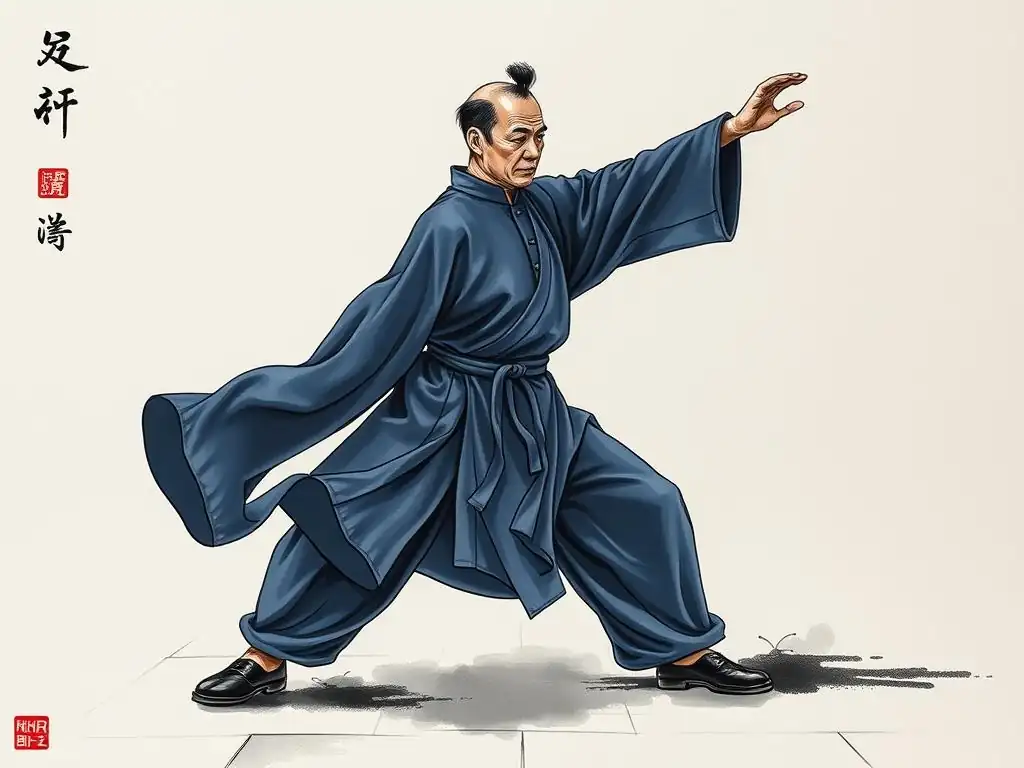
Developing proficiency in long-range fajin requires focused training on specific body mechanics and principles. These techniques are not isolated movements but integrated components of the overall Chen Style system. They must be practiced diligently and consistently, first individually, then integrated into the forms and partner work. Mastering these elements is crucial for unlocking the potential of the Chen style fajin range.
The emphasis is always on internal connection, rooting, and the coordinated use of the entire body. Simply trying to push harder with the arms will not produce true fajin. Instead, the focus is on cultivating the internal feeling and mechanics that allow for the efficient transfer of power from the ground to the point of application. This internal focus distinguishes Tai Chi fajin from external power generation methods.
Grounding and Rooting: Establishing Stability for Power Transfer
Grounding and rooting are the absolute prerequisites for generating any kind of power in Tai Chi, especially for long-range fajin. The power originates from the ground, travels up through the legs, and is directed by the waist. Without a strong connection to the earth, the body cannot act as a stable base for force generation and transmission. Rooting involves sinking the weight, relaxing the hips and knees, and feeling a solid connection through the soles of the feet into the ground.
A well-rooted stance provides the necessary stability to absorb incoming force and rebound with outgoing power. It's like having a strong foundation for a building; without it, the structure is weak and easily toppled. Training involves exercises like Zhan Zhuang (standing post) and focusing on feeling the weight sink down while maintaining an upright posture. This deep connection to the earth is the source from which the power for the Chen style fajin range is drawn.
Spinal Wave (Long) and its Application in Fajin
The movement of the spine, often described as a "spinal wave" or "dragon body" (龙身 - long shen), is critical for transmitting power through the torso. The spine should not be rigid but flexible and undulating, allowing the energy to flow up and down. This wave-like motion, combined with the rotation of the waist and hips, is essential for creating the whip-like action characteristic of powerful fajin.
In long-range fajin, the spinal wave helps to propagate the force generated from the lower body upwards and outwards. It provides the necessary flexibility and coordination to ensure that the power is not blocked or dissipated in the torso. Practicing movements that emphasize spinal articulation and flexibility, such as specific silk reeling drills and form movements, is vital for developing this crucial element of the Chen style fajin range.
Utilizing the Kua (Hip) for Efficient Power Generation at a Distance
The Kua (胯), the area of the hips and groin, is often referred to as the "engine" of Tai Chi power. Proper use of the kua is essential for directing the energy generated from the legs and transmitting it to the upper body. The rotation and sinking of the kua initiate the movement of the waist and spine, driving the entire body's motion. For long-range fajin, the efficient action of the kua is paramount for generating the rotational force needed for projection.
Training involves learning to relax and sink the kua, allowing for free rotation and movement. Exercises focusing on opening and closing the kua, and coordinating its movement with the legs and waist, are fundamental. The kua acts as a pivot point and a transmission hub, ensuring that the power developed from the ground effectively translates into outward projection, extending the reach and effectiveness of the Chen style fajin range.
Opening and Closing: Creating Space for Long-Range Strikes
The principles of opening (开 - kai) and closing (合 - he) are integral to generating and releasing power in Chen Style. Closing involves gathering energy, contracting the body slightly, and inhaling. Opening involves releasing energy, expanding the body outwards, and exhaling with force. This rhythmic alternation of expansion and contraction, integrated with the spiraling of silk reeling, allows for the efficient storage and sudden release of kinetic energy.
For long-range fajin, the "closing" phase involves sinking the body, rotating the kua, and gathering potential energy, often by drawing back slightly or coiling. The "opening" phase involves a sudden, unified extension and rotation of the entire body, projecting the gathered energy outwards. This coordinated opening and closing action creates the necessary acceleration and momentum for the power to travel effectively across the distance, enabling effective applications within the Chen style fajin range.
Training Methods for Enhancing Long-Range Fajin
Consistent and focused training is indispensable for developing potent long-range fajin. While understanding the principles is important, it is the physical embodiment through diligent practice that yields results. Chen Style offers a variety of specific training methods designed to cultivate the necessary internal connections, coordination, and power generation mechanics. These methods build upon each other, progressively refining the practitioner's ability to issue force effectively, especially within the Chen style fajin range.
Training should emphasize quality over quantity, focusing on internal feeling and correct body mechanics rather than simply performing movements. Patience and perseverance are key, as developing true fajin takes time and consistent effort. The methods range from static postures to dynamic drills and form practice, each contributing to different aspects of power development.
Silk Reeling Exercises (Chan Si Gong) for Coordination and Power
Silk Reeling exercises (Chan Si Gong) are foundational to all Chen Style training and are particularly vital for developing long-range fajin. These exercises involve continuous, spiraling movements that originate from the dantian and extend through the limbs, connecting the entire body. They teach the practitioner how to coordinate the movement of the waist, spine, and limbs in a fluid, integrated manner, cultivating the chan si jin.
Practicing various silk reeling patterns – single hand, double hand, forward, backward, horizontal, vertical – helps to open the joints, improve flexibility, and develop the body's ability to generate rotational and expansive force. This coordinated spiraling action is the engine that drives the power wave in long-range fajin. Without well-developed silk reeling, attempts at issuing power will lack the necessary fluidity and whole-body integration required for effective Chen style fajin range projection.
Zhan Zhuang (Standing Post) for Rooting and Energy Accumulation
Zhan Zhuang, or Standing Post training, is a fundamental exercise in many internal martial arts, including Chen Style Tai Chi. It involves holding specific postures for extended periods, focusing on relaxation, sinking the weight, and establishing a strong connection to the ground. While seemingly simple, Zhan Zhuang is incredibly effective for cultivating rooting, developing structural alignment, and accumulating internal energy (jing).
For long-range fajin, Zhan Zhuang builds the foundational stability and internal strength needed to withstand and generate powerful forces. By maintaining postures like Wuji (无极 - emptiness) or various Tai Chi stances, practitioners learn to relax unnecessary tension, sink their qi, and feel the body's connection to the earth. This static training develops the internal resilience and rootedness that serve as the essential base for dynamic power generation within the Chen style fajin range.
Specific Form Movements Emphasizing Long-Range Power (Cannon Fist Sequence)
The Chen Style forms, particularly the second form known as Er Lu or "Cannon Fist" (炮捶 - Pao Chui), contain numerous movements specifically designed to train and apply fajin, including techniques for the Chen style fajin range. Er Lu is characterized by faster, more explicit fajin releases compared to the first form (Lao Jia Yi Lu). Movements like the various punches, elbow strikes, and shoulder strikes often incorporate sudden, explosive power generation.
Training these specific movements involves practicing the coordinated sequence of rooting, rotation, spinal wave, and release with intent. For example, the "Cannon Fist" punch involves gathering power through a coiling motion, sinking the body, and then releasing the energy through a sudden, unified extension and rotation, projecting force outwards. Analyzing and practicing these specific form applications is crucial for learning how to integrate fajin into dynamic movement and apply it at varying distances, including the extended Chen style fajin range.
Partner Drills for Developing Fajin Sensitivity and Application
Partner drills, such as Pushing Hands (推手 - Tui Shou) and specific application drills, are invaluable for developing sensitivity, testing the effectiveness of fajin, and learning how to apply it against a resisting opponent. While introductory Pushing Hands often focus on yielding and neutralizing, more advanced drills incorporate fajin applications.
Specific drills might involve practicing a sudden fajin release from various points of contact or distances, focusing on disrupting the partner's balance or structure. This provides immediate feedback on whether the power is rooted, connected, and effectively transmitted. Practicing long-range fajin applications with a partner allows practitioners to refine their timing, distance, and the feeling of projecting force through another person, essential for practical application of the Chen style fajin range.
Fajin and the Chen Style Tai Chi Forms
The Chen Style Tai Chi forms are not merely aesthetic sequences but sophisticated training manuals that contain the principles and applications of the art, including the development and expression of fajin. Every movement, whether seemingly slow and yielding or fast and explosive, contributes to cultivating the internal mechanics necessary for issuing power. Integrating fajin into form practice is crucial for making the principles tangible and applicable within the context of continuous movement.
The forms provide a systematic way to practice the coordinated use of rooting, silk reeling, opening and closing, and the spinal wave. By understanding how these elements are embodied in each movement, practitioners can unlock the martial potential within the forms and learn to generate power efficiently at different ranges, including extending the reach of their Chen style fajin range.
Integrating Fajin into Form Practice
Integrating fajin into form practice goes beyond simply adding speed or tension to movements. It involves practicing the form with awareness of the internal mechanics of power generation and release. This means focusing on:
- Rooting: Feeling the connection to the ground in every stance and transition.
- Waist/Kua Rotation: Initiating movements from the waist and ensuring the hips are relaxed and mobile.
- Spinal Wave: Allowing the spine to undulate and transmit energy.
- Opening and Closing: Coordinating expansion and contraction with the breath and movement.
- Intent (Yi): Directing the mind to guide the energy and power.
Practicing the forms slowly helps build the foundational connections and sensitivity. Practicing faster sections, especially in Er Lu, allows for the specific training of explosive release. The goal is to perform the form with internal integrity, so that when a fajin movement occurs, the power is rooted, whole-bodied, and effectively projected, enhancing the practitioner's ability to apply power within the Chen style fajin range.
Identifying Fajin Applications Within the Chen Style Forms
The Chen Style forms are replete with hidden and explicit fajin applications. While some movements clearly resemble strikes or pushes, others contain more subtle fajin releases used for disruption, projection, or issuing power through seemingly soft techniques. Identifying these applications requires guidance from an experienced instructor and a deep understanding of the form's martial meaning.
For instance, movements involving sudden changes in direction, rapid rotations, or whip-like extensions often contain fajin. The various punches (like the "Cover Hand and Punch" in Lao Jia Yi Lu or the rapid punches in Er Lu), shoulder strikes, elbow strikes, and even certain pushes or throws utilize fajin. Learning to recognize where and how fajin is applied within the form allows practitioners to practice these specific instances with focused intent, thereby improving their ability to apply power across the Chen style fajin range.
The Role of Intent (Yi) in Directing Long-Range Power
In Tai Chi, Yi (意), or focused intent, is paramount. It is the mind that leads the qi (internal energy) and the qi that leads the force (jin). Simply going through the physical motions of fajin without focused intent will not produce true internal power. The practitioner must visualize the energy flowing through the body and being directed towards the target.
For long-range fajin, intent is crucial for ensuring that the power travels effectively across the distance. It's not just about physical mechanics; it's about projecting one's energy and focus outwards. The mind must be clear and directed, guiding the energy wave to the point of application. Cultivating strong, focused intent through form practice and meditation helps to unify the mind and body, making the power generation and projection within the Chen style fajin range more potent and effective.
Common Mistakes in Long-Range Fajin Training
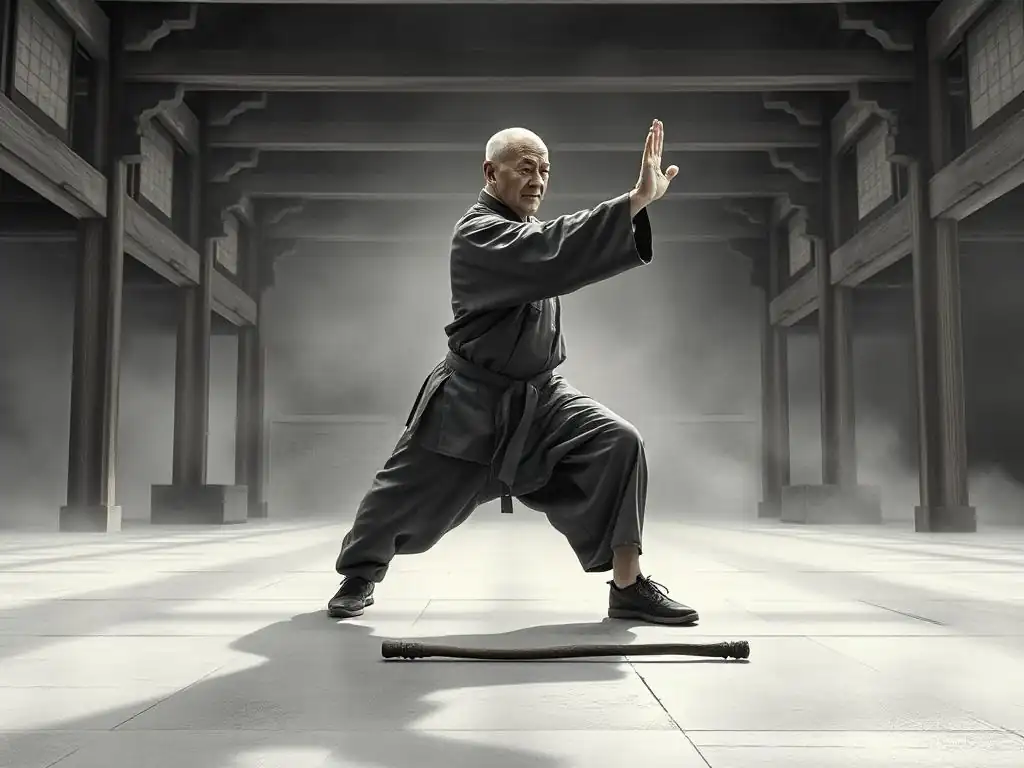
Training long-range fajin in Chen Style Tai Chi is a subtle and complex process. Practitioners often encounter common pitfalls that can hinder their progress or lead to the development of incorrect habits. Recognizing and correcting these mistakes is essential for effective learning and for truly developing the ability to issue power across the Chen style fajin range. Without addressing these issues, training can become stagnant or even counterproductive.
Many mistakes stem from trying to force the power using muscular strength or misunderstanding the internal principles. Tai Chi power is cultivated through relaxation and coordination, not tension. Therefore, paying close attention to body mechanics, internal feeling, and receiving guidance from a qualified instructor are crucial for avoiding these common errors.
Over-Reliance on Muscular Strength
One of the most frequent mistakes is attempting to generate fajin using brute muscular strength. This is counter to the principles of Tai Chi, which emphasize generating power from the ground and through coordinated whole-body movement. Using isolated muscle force leads to tension, stiffness, and a lack of rooted, penetrating power. It also dissipates energy quickly and lacks the resilience of true internal strength.
True fajin feels effortless from the outside but powerful upon contact. If a practitioner feels strain or significant muscular tension when attempting to issue power, they are likely relying too much on external strength. Correcting this involves focusing on relaxation, sinking the weight, and ensuring that the power originates from the legs and waist, flowing through a relaxed, connected body, which is key to developing the subtle power of the Chen style fajin range.
Insufficient Grounding and Rooting
As previously mentioned, grounding and rooting are the foundation of all Tai Chi power. A common mistake is neglecting this fundamental principle when attempting fajin. If the practitioner is not properly rooted, any force generated will lack stability and depth. It will feel "floaty" or easily disrupted. Attempts at long-range projection will be particularly ineffective if the power source isn't stable.
Insufficient rooting can manifest as lifting the heels, having stiff knees, or being easily pushed off balance. Training should always begin with establishing a strong root. Practicing Zhan Zhuang and focusing on sinking the weight and feeling the connection to the earth in every movement of the form are essential remedies. A strong root ensures that the power generated for the Chen style fajin range has a solid base from which to launch.
Lack of Whole-Body Coordination
Fajin requires the entire body to move as a single, integrated unit. A common mistake is for different parts of the body to move independently or out of sync. For example, the arm might extend before the waist rotates, or the spine might be rigid. This lack of coordination breaks the kinetic chain, preventing the efficient transfer of power from the ground to the point of application.
Correcting this involves focusing on initiating movements from the waist and ensuring that the rest of the body follows in a coordinated sequence, like a wave or a whip. Silk Reeling exercises are specifically designed to cultivate this whole-body coordination. Practicing the forms with attention to the feeling of energy flowing smoothly through the body helps to unify the movements and improve the ability to generate power across the Chen style fajin range.
Neglecting Silk Reeling Principles
Neglecting the principles of Silk Reeling is a significant barrier to developing effective Chen Style fajin, especially for long-range applications. If the joints are locked or the movements are linear rather than spiraling, the body cannot generate or transmit power efficiently. The energy will become stuck or dissipated in the joints, leading to weak or disconnected force.
Practicing Silk Reeling exercises diligently is crucial. This involves learning to move with continuous, spiraling motions, keeping the joints open and relaxed, and feeling the connection throughout the body. Integrating these spiraling mechanics into form practice ensures that the body acts as a flexible conduit for power, enabling the whip-like action necessary for projecting force effectively across the Chen style fajin range.
Advanced Concepts in Long-Range Fajin
Once the foundational principles and basic mechanics of long-range fajin are understood and practiced, practitioners can begin to explore more advanced concepts. These involve refining the timing, precision, and internal energy cultivation necessary to make fajin truly potent and adaptable to various situations. Mastery at this level requires years of dedicated practice and a deep understanding of the internal aspects of Chen Style Tai Chi.
Advanced training focuses on subtlety, sensitivity, and the ability to issue power with minimal visible effort, often surprising the opponent. It moves beyond simply generating force to understanding how to apply it effectively in dynamic, unpredictable combat scenarios, pushing the boundaries of the Chen style fajin range.
Fa Li (Issuing Power) Timing and Precision
Advanced fajin is not just about generating power; it's about issuing it at the precise moment and location for maximum effect. This is known as Fa Li (发力 - issuing force). The timing of the release relative to the opponent's movement and structure is critical. Issuing power too early or too late will significantly reduce its effectiveness.
Developing precise timing requires sensitivity to the opponent's balance and intentions, often cultivated through advanced Pushing Hands and application drills. The power should be released just as the opponent is rooted or committed, disrupting their structure at a critical point. This requires intuitive timing and the ability to instantly coordinate the whole body's power release, a hallmark of mastery in the Chen style fajin range.
Jing (Internal Energy) Cultivation for Increased Power
Beyond the physical mechanics, the depth and power of fajin are significantly influenced by the cultivation of Jing (劲 - internal energy or trained power). Jing is the refined, integrated power that results from years of consistent practice, combining physical strength, structural alignment, coordination, and focused intent. It's the difference between raw force and intelligent power.
Cultivating Jing involves deep relaxation, sinking the qi, and focusing the mind during training. Zhan Zhuang, meditation, and mindful form practice all contribute to building this internal reservoir of energy. As Jing develops, the practitioner's fajin becomes more potent, penetrating, and seemingly effortless, allowing for more significant force generation and projection across the Chen style fajin range.
Adapting Long-Range Fajin to Different Combat Scenarios
True mastery of long-range fajin involves the ability to adapt its application to a wide variety of combat scenarios. This means being able to issue power from different stances, against different types of attacks, and at varying distances and angles. The principles remain the same – rooted, whole-bodied, coordinated release – but the specific physical expression may vary.
This adaptability is developed through extensive partner training and application practice. Practitioners learn to sense the opponent's structure and vulnerabilities and apply fajin in the most effective way for that specific moment. This could involve a direct strike, a disruptive push, or a combination of movements. The ability to fluidly apply power across the Chen style fajin range in unpredictable situations is the ultimate goal of this advanced training.
The Importance of Proper Instruction for Mastering Chen Style Fajin Range
Given the subtlety and complexity of long-range fajin in Chen Style Tai Chi, proper instruction from a qualified teacher is not just beneficial, but essential. Learning from videos or books alone is insufficient to grasp the internal principles and correct body mechanics required. Fajin is an internal skill that must be felt, guided, and corrected by someone who has already achieved proficiency.
An experienced instructor can provide personalized feedback, correct subtle errors in posture or movement, and guide the practitioner through the necessary training methods in a systematic way. They can also teach the underlying principles and martial applications that give meaning to the physical techniques. Mastering the Chen style fajin range is a journey that requires expert guidance.
Finding a Qualified Instructor
Finding a qualified Chen Style Tai Chi instructor requires research and discernment. Look for teachers with a clear lineage back to recognized masters of the Chen family or prominent disciples. Observe their students' proficiency and the emphasis placed on foundational training like rooting, silk reeling, and form correction. A good instructor not only demonstrates powerful fajin but can also clearly explain and teach the process of developing it.
It is often beneficial to visit several schools, observe classes, and perhaps take a trial lesson. Ask about their teaching philosophy and approach to power generation. A qualified instructor will emphasize patience, consistency, and the importance of internal principles over purely external movements. Their guidance is invaluable for navigating the complexities of developing effective Chen style fajin range applications.
The Path to Mastery: Patience and Dedication in Fajin Training
Mastering long-range fajin in Chen Style Tai Chi is a long-term endeavor that requires significant patience, dedication, and consistent effort. There are no shortcuts. Developing the necessary internal connections, rooting, coordination, and sensitivity takes years of diligent practice. Progress may feel slow at times, and plateaus are common.
Success comes to those who are persistent and maintain a regular training schedule. It involves daily practice of forms, silk reeling exercises, and standing post. It also requires an open mind, a willingness to learn, and the humility to seek and accept correction. The journey of developing a powerful Chen style fajin range is as much about cultivating internal discipline and perseverance as it is about physical technique.
Fajin Application: Disrupting Opponent's Balance with a Long-Range Push.
A practical example of a long-range fajin application in Chen Style is using a sudden, rooted push or strike to disrupt an opponent's balance from arm's length. This isn't a simple shove; it's a unified body action. Imagine standing about three feet away from a partner. The application might start with a subtle shift of weight, sinking into the ground, followed by a rapid, coordinated rotation of the kua and waist, a wave-like motion through the spine, and a sudden extension of the arm, all powered by the legs.
The force travels through the body, propelled by the coordinated silk reeling action, and is released outwards at the point of contact (e.g., the opponent's chest or shoulder). The intent is not just to push them back but to send a shockwave through their structure, causing them to lose their root and balance. This requires precise timing and whole-body integration, demonstrating the power and reach achievable within the Chen style fajin range when the principles are correctly applied.
- [ ] Understand the principles of rooting and whole-body connection.
- [ ] Practice Silk Reeling exercises daily.
- [ ] Incorporate Zhan Zhuang into training routine.
- [ ] Focus on waist/kua rotation in all movements.
- [ ] Identify and practice fajin movements within the Chen Style forms.
- [ ] Seek feedback from a qualified instructor.
- [ ] Engage in partner drills to test and refine fajin application.
Frequently Asked Questions
What is fajin in the context of Chen Style Tai Chi, and how does it relate to long-range techniques?
Fajin refers to the explosive release of power within a short distance. In Chen Style Tai Chi, long-range fajin involves generating and transmitting that power effectively over a greater distance than typical close-quarters applications. It relies on coordinated body mechanics.
How does Chen Style Tai Chi specifically train for long-range fajin?
Training emphasizes whole-body connection, chan si jin (silk reeling energy), and precise structural alignment. Drills focus on transferring power from the ground through the legs, waist, and finally to the hands, maximizing the impact at a distance.
What are some key training principles to improve long-range fajin in Chen Style Tai Chi?
Focus on developing rooting, peng jin (ward-off energy), and spinal alignment. Practice slow forms with mindful intention, gradually increasing speed and power while maintaining structural integrity.
How does understanding the history and philosophy of Chen Style Tai Chi contribute to mastering long-range fajin?
The historical context provides insights into the martial applications of the movements. Understanding the philosophical principles, like yin and yang, informs the dynamic balance and efficient power generation necessary for effective fajin.
Are there specific self-defense strategies within Chen Style Tai Chi that rely on long-range fajin?
Yes, certain techniques aim to disrupt an opponent's balance or structure from a distance, creating openings for follow-up attacks. These strategies utilize the principles of borrowing force and redirecting energy to maximize impact and maintain a safe distance.
Final Reflection: Unlocking Power Across Distance
The exploration of Long Range Fajin Techniques and Training in Chen Style Tai Chi, as detailed in this article, underscores the enduring relevance of internal power projection in martial arts. While often perceived as a mystical or unattainable skill, the principles of Chen style fajin range, when understood and diligently practiced, offer a tangible pathway to harnessing and delivering force effectively, even across considerable distances. This understanding is not just for martial artists; it speaks to the potential for focused intention and efficient energy utilization in all aspects of life.
The pursuit of fajin, and specifically its long-range application, has profoundly influenced the cultural understanding of Tai Chi, moving it beyond mere exercise to a sophisticated system of self-cultivation and combat. Witnessing the subtle shifts in body mechanics and the explosive release of energy firsthand has been a transformative experience, highlighting the interconnectedness of mind, body, and spirit. The body is a temple, and as such, must be treated with respect and reverence. Only then can we unlock its true potential.
This quote, though not directly from Tai Chi, encapsulates the core principle: disciplined training and mindful awareness are essential for achieving mastery.
Now, consider the implications of this exploration. How can you apply the principles of focused intention and efficient energy utilization, learned through the study of Chen style fajin range, to your own endeavors? Whether it's mastering a new skill, achieving a personal goal, or simply navigating the challenges of daily life, remember the power of concentrated effort and the potential for impactful action, even from afar. Embrace the journey, cultivate your inner strength, and unleash your own unique form of "fajin" into the world.
Unleash Your Fajin Power!
Thank you for delving into the powerful world of LongRange Fajin in Chen Style Tai Chi! We hope this article has shed light on the techniques and training methods to unlock your hidden potential. Now, it's time to translate knowledge into action.
Here's how you can take your Fajin practice to the next level:
- Commit to a 15-minute daily drill focusing on the silk-reeling exercises described. Consistency is key!
- Explore related forms and applications within Chen Style Tai Chi, specifically focusing on those that emphasize spiral energy and explosive release.
- Share your training progress and challenges with a fellow Tai Chi practitioner or online forum, and invite them to train with you.
What small adjustment can you make to your current Tai Chi practice to more consciously incorporate the principles of LongRange Fajin?