
Physical Conditioning for Iaido: Strength and Flexibility for Sword Forms

Welcome to Martial Arts Mastery, your gateway to understanding the profound world of combat disciplines.
Delve into the intricate dance of Iaido, where precision and grace intertwine. Curious about how to build the strength and flexibility required to master its elegant sword forms? Prepare to unravel the secrets of Iaido sword form conditioning and discover the pathways to unlocking your full potential. The journey to mastering this ancient art begins here...
- Introduction to Iaido Conditioning: Mastering Sword Forms
- Strength Training for Iaido: Building Power for Precise Cuts
- Flexibility Training for Iaido: Enhancing Range of Motion and Preventing Injury
- Iaido-Specific Drills for Physical Conditioning
- Combining Strength and Flexibility Training for Optimal Iaido Performance
- Nutrition and Recovery for Iaido Training
- Conclusion: Achieving Mastery Through Dedicated Physical Conditioning for Iaido
-
Frequently Asked Questions
- What is the primary focus of Iaido sword form conditioning?
- Why is flexibility so important in Iaido?
- What kind of strength training is most beneficial for Iaido sword form conditioning?
- How does physical conditioning contribute to the philosophical aspects of Iaido?
- What are some practical self-defense benefits derived from Iaido sword form conditioning?
- Final Reflection: Honing Body and Spirit
- Unleash Your Inner Iaido Master!
Introduction to Iaido Conditioning: Mastering Sword Forms
Understanding the Physical Demands of Iaido
Iaido, the Japanese martial art of drawing the sword, is often perceived as purely mental or spiritual, focusing on presence and intention. However, executing precise iaido sword form conditioning requires significant physical capability. Unlike sports that emphasize explosive power or endurance over extended periods, Iaido demands a unique blend of isometric strength, dynamic movement control, balance, and fine motor skill. Practitioners must maintain stable kneeling or standing postures for extended durations, requiring considerable core and lower body isometric strength.
The dynamic phases of Iaido, such as the rapid draw ( Nukitsuke), the powerful cut ( Kirioroshi), and the controlled return of the sword to the scabbard ( Noto), necessitate dynamic strength, flexibility, and coordination. A single kata (form) involves transitions from stillness to sudden, precise movements, often requiring the body to generate significant force from a stable base while simultaneously controlling the path and angle of the sword. This intricate interplay of static stability and dynamic power underscores the necessity of targeted iaido sword form conditioning.
Why Physical Conditioning is Crucial for Iaido Performance
Optimal physical conditioning is not merely an adjunct to Iaido practice; it is fundamental to achieving technical proficiency and preventing injury. Without adequate strength, particularly in the core, legs, and back, practitioners struggle to maintain correct posture, execute powerful and controlled cuts, or transition smoothly between positions. This leads to compromised form, reduced effectiveness, and increased risk of strain or overuse injuries, particularly in the knees, shoulders, and wrists – areas frequently stressed in Iaido.
Furthermore, flexibility is paramount for executing the full range of motion required in various techniques, especially those involving kneeling ( Seiza or Tatehiza) or wide stances. Limited flexibility can restrict movement, forcing compensatory actions that deviate from the intended form and place undue stress on joints and muscles. Therefore, a comprehensive iaido sword form conditioning program that addresses both strength and flexibility is essential for developing a stable foundation, enhancing technique, increasing power output, and ensuring the longevity of a practitioner's journey in Iaido.
Strength Training for Iaido: Building Power for Precise Cuts
Core Strength: The Foundation for Stable Iaido Movements
A strong core is the bedrock of stable and powerful movements in Iaido. The core muscles, including the abdominals, obliques, lower back, and hips, act as the central link connecting the upper and lower body. In Iaido, they are constantly engaged to maintain upright posture, stabilize the trunk during dynamic sword movements, and control transitions between stances. Without sufficient core strength, energy generated from the legs cannot be efficiently transferred to the upper body for powerful cuts, leading to 'leaks' in power and instability.
Specifically, core strength is vital for techniques like Saya-biki, where the non-dominant hand manipulates the scabbard while the dominant hand draws the sword. This action requires significant oblique and rotational core stability. During Kirioroshi, the core muscles brace the spine to support the force transmitted through the arms and sword. Studies in biomechanics show that a stable core can improve force transmission efficiency by as much as 30% in rotational movements, directly impacting the power and precision of iaido sword form conditioning and execution.
Exercises for Core Stabilization in Iaido
To build core strength for Iaido, focus on exercises that emphasize stability and controlled movement. Planks, both standard and side variations, are excellent for developing isometric strength in the deep core muscles. Aim to hold planks for 30-60 seconds per set, focusing on maintaining a straight line from head to heels.
Bird-dogs are effective for improving core stability while coordinating opposite limb movements, mimicking the dissociation often required in Iaido. Perform 10-15 repetitions per side, ensuring the back remains stable without arching or rounding. Dead bugs target the deep abdominal muscles responsible for spinal stability; aim for 10-15 controlled repetitions per side. Integrating these exercises into your iaido sword form conditioning routine several times a week will significantly enhance your ability to maintain strong, stable postures and transitions.
Upper Body Strength: Powering the Sword Draw and Cuts
While Iaido isn't about brute force, sufficient upper body strength is necessary for controlling the weight of the iaito or bokken (typically 0.5 kg to 1.5 kg) with precision, executing the rapid draw, and delivering sharp, controlled cuts. The muscles of the back, shoulders, and arms are primarily engaged in these actions. The drawing motion ( Nukitsuke) heavily relies on the rhomboids and rear deltoids to bring the sword forward and the biceps for initial pull, while Kirioroshi engages the lats, triceps, and chest muscles for downward force.
Grip and forearm strength are also critical for maintaining a firm but not tense hold on the tsuka (handle) and controlling the sword's trajectory. Weak upper body muscles can lead to fatigue, loss of control, and the development of poor habits like using excessive arm strength instead of body mechanics, hindering effective iaido sword form conditioning. Developing balanced upper body strength ensures that the sword becomes an extension of the body, moving efficiently and powerfully according to the practitioner's intention.
Developing Upper Body Strength for Iaido Techniques
Targeted upper body exercises should focus on pulling and pushing movements that mimic Iaido actions. Rows (seated cable rows, bent-over rows) are excellent for strengthening the back muscles crucial for the drawing motion and controlling the sword during cuts. Aim for 3 sets of 8-12 repetitions. Shoulder presses (dumbbell or overhead press) build strength in the deltoids and triceps, supporting the raising of the sword overhead before Kirioroshi.
Push-ups are a versatile exercise that strengthens the chest, shoulders, and triceps, contributing to the downward force of a cut. Aim for 3 sets to near muscle failure. For grip strength, consider exercises like farmer's walks or dead hangs, holding onto a pull-up bar for as long as possible, repeating for 2-3 sets. Incorporating these exercises into your regular iaido sword form conditioning program will build the necessary muscular support for executing techniques with power and control.
Lower Body Strength: Grounding and Generating Power
The lower body provides the essential base of support and generates much of the power used in Iaido, even in seemingly upper-body-dominant techniques. Strength in the legs and hips is crucial for maintaining stable kneeling positions ( Seiza, Tatehiza), transitioning smoothly between stances, and generating upward or forward momentum during techniques. For instance, the power behind Nukitsuke often originates from a slight push off the rear leg or a coordinated movement of the hips and legs, not just the arm.
Maintaining a low center of gravity, particularly in stances like Hasso or during forward steps ( Ashi-sabaki), requires isometric strength in the quadriceps, hamstrings, and glutes. Weak lower body muscles can lead to instability, poor balance, and inefficient power transfer, limiting the effectiveness of iaido sword form conditioning and overall performance. Developing robust lower body strength ensures a solid connection to the ground, enabling powerful and controlled movements.
Lower Body Exercises for Enhanced Iaido Performance
Effective lower body iaido sword form conditioning should include exercises that build both dynamic and isometric strength. Squats and lunges are fundamental for developing overall leg and hip strength, directly improving the ability to maintain low stances and transition powerfully. Aim for 3 sets of 10-15 repetitions for each exercise.
Calf raises strengthen the calf muscles, important for stability in standing stances and generating push-off power. Perform 3 sets of 15-20 repetitions. For isometric strength, practice holding a deep squat or a lunge position for 30-60 seconds, repeating for 2-3 sets. These exercises will build the muscular endurance and dynamic power necessary for a strong foundation in all Iaido movements.
Flexibility Training for Iaido: Enhancing Range of Motion and Preventing Injury
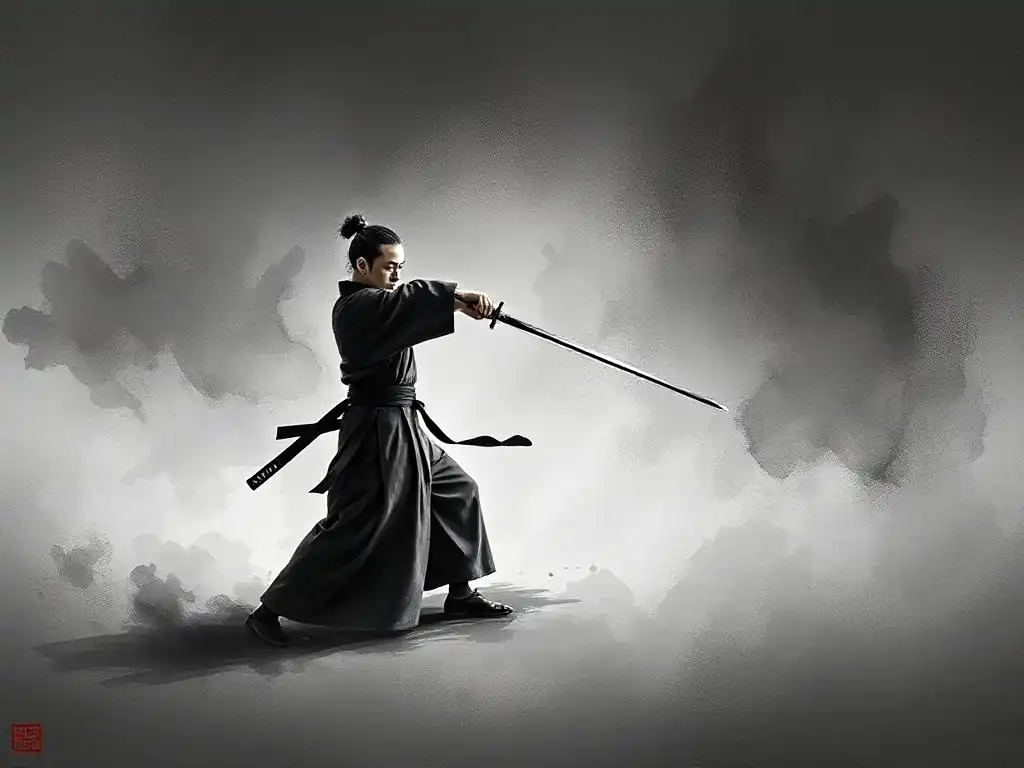
Importance of Flexibility in Iaido Sword Form Execution
Flexibility is just as critical as strength for effective iaido sword form conditioning and execution. Adequate range of motion is required in multiple joints, including the hips, knees, ankles, shoulders, wrists, and spine, to perform techniques correctly and efficiently. Limited flexibility can impede movement, forcing practitioners into awkward or strained positions that compromise form and increase the risk of injury. For example, tight hips can make kneeling positions uncomfortable or unstable, while restricted shoulder mobility can hinder the smooth, overhead movement required for Kirioroshi.
Moreover, good flexibility contributes to muscle health and recovery. Muscles that are flexible are less prone to strains and tears. They can also return to their resting length more efficiently after exertion, aiding in recovery between practice sessions. Incorporating flexibility training into your iaido sword form conditioning routine helps ensure that your body can move freely and naturally, allowing you to focus on the nuances of technique rather than being limited by physical restrictions.
Dynamic Stretching for Iaido: Preparing the Body for Practice
Dynamic stretching involves moving parts of your body through a full range of motion. Unlike static stretching, where a position is held for an extended period, dynamic stretching uses controlled leg and arm swings or gentle torso twists. This type of stretching is ideal as a warm-up before Iaido practice because it increases blood flow to the muscles, activates the nervous system, and prepares the joints for the movements they will perform.
Research indicates that a dynamic warm-up can improve performance in activities requiring power and range of motion, potentially enhancing the effectiveness of iaido sword form conditioning drills and kata practice. A dynamic warm-up should gradually increase in intensity, mimicking some of the movements you will perform during your session. It should last between 5 and 15 minutes, depending on the individual and the intensity of the upcoming practice.
Examples of Dynamic Stretches for Iaido
Include dynamic stretches that target the muscle groups and joints used extensively in Iaido. Leg swings (forward/backward and side-to-side) improve hip mobility, crucial for kneeling and stepping. Perform 10-15 swings per leg in each direction. Arm circles (forward and backward) and shoulder rotations prepare the shoulder joint for drawing and cutting movements.
Torso twists, performed gently from a standing or seated position, improve spinal mobility needed for various posture adjustments and drawing motions. Perform 10-15 repetitions per side. Ankle rotations are also important, especially if practicing in Seiza or Tatehiza. Incorporate 10-15 rotations in each direction for each ankle. These dynamic movements should be controlled and fluid, not forced, gradually increasing the range of motion.
Static Stretching for Iaido: Improving Flexibility and Recovery
Static stretching involves holding a stretch position for a period, typically 20-30 seconds. This type of stretching is best performed after Iaido practice or strength training, when muscles are warm. Its primary goal is to improve long-term flexibility and help muscles recover by promoting relaxation and potentially reducing post-exercise soreness.
Regular static stretching as part of your iaido sword form conditioning helps to increase the resting length of muscles and connective tissues, leading to a greater range of motion over time. Focusing on areas commonly tight in Iaido practitioners, such as the hips, hamstrings, shoulders, and wrists, can significantly improve comfort in kneeling positions and the fluidity of sword movements. Consistency is key with static stretching; even a few minutes daily can yield noticeable improvements in flexibility.
Recommended Static Stretches for Iaido Practitioners
Target key areas with static stretches relevant to Iaido. For hip flexibility, crucial for kneeling, perform stretches like the butterfly stretch (sitting with soles of feet together, gently pressing knees towards the floor) or a kneeling hip flexor stretch. Hold each for 30 seconds, repeating 2-3 times.
Shoulder flexibility can be improved with stretches like the cross-body arm stretch or triceps stretch. Hold each stretch for 30 seconds per arm. Wrist flexibility is vital for sword control; gentle wrist extensions and flexions, held for 20-30 seconds, can be beneficial. Hamstring stretches (seated or standing) and calf stretches help maintain lower body mobility for stances and transitions. Incorporate a variety of these static stretches after your training sessions to enhance flexibility and support your iaido sword form conditioning.
Iaido-Specific Drills for Physical Conditioning
Suburi: The Core of Iaido Strength and Endurance
Suburi, or solo cutting practice, is a fundamental Iaido drill that serves as a powerful form of iaido sword form conditioning. While primarily a technical exercise for learning proper cutting mechanics, the repetitive nature of suburi with a bokken or suburito (a heavier wooden sword) builds specific strength endurance in the shoulders, back, arms, and core. Performing dozens or even hundreds of cuts in a single session develops muscular stamina and reinforces correct body alignment.
The weight of the training sword provides resistance, effectively turning suburi into a strength training exercise. The focus on maintaining a stable core and proper posture throughout each cut further strengthens the muscles responsible for spinal stability. Regular suburi practice is indispensable for developing the physical capacity required for executing kata with power, precision, and endurance, making it a cornerstone of any iaido sword form conditioning program.
Variations of Suburi for Comprehensive Conditioning
Varying your suburi practice ensures more comprehensive physical conditioning and prevents monotony. Joge-buri (vertical cuts) is the most common, building overhead strength and downward power. Sayu-buri (horizontal cuts) works the obliques and rotational core muscles, essential for Nukitsuke and Noto. Naname-buri (diagonal cuts) combines elements of both vertical and horizontal movements.
Using a suburito, which can weigh from 1.5 kg up to 3 kg or more, significantly increases the strength demand compared to a standard bokken (around 500g). However, using a suburito requires careful attention to form to avoid injury. Incorporating sets of 20-50 repetitions of different suburi variations, perhaps with a standard bokken for speed and a suburito for strength, provides a balanced approach to iaido sword form conditioning through this essential drill.
Kata Practice: Integrating Strength and Flexibility into Sword Forms
While suburi builds foundational strength and endurance, practicing kata is where all elements of iaido sword form conditioning come together. Each kata is a sequence of movements that demands the simultaneous application of strength, flexibility, balance, and precise timing. Executing a kata correctly requires transitioning smoothly from stable, often low, postures to dynamic movements, controlling the sword's weight and path with power and accuracy, and returning to stillness.
Practicing kata reinforces the functional strength and flexibility developed through dedicated conditioning exercises. It teaches the body how to apply these physical attributes within the specific context of Iaido movements. Regular kata practice refines muscle memory, improves coordination, and builds the specific type of stamina needed for performing multiple forms in succession during practice or demonstrations. It is the ultimate test and application of effective iaido sword form conditioning.
Focusing on Proper Form and Body Mechanics
During kata practice, the focus should always be on proper form and body mechanics, which directly relates to efficient use of strength and flexibility. Rather than rushing through movements, concentrate on the transitions, maintaining a stable core throughout, utilizing power generated from the lower body and hips, and ensuring the sword moves along the correct path using controlled upper body strength and flexible joints.
Pay attention to details like maintaining Suriashi (sliding footwork), keeping the knees healthy during kneeling, and allowing the shoulders and wrists the necessary freedom of movement without compromising control. Filming your kata practice can help identify areas where strength or flexibility limitations might be causing deviations from correct form. Addressing these limitations through targeted iaido sword form conditioning exercises will lead to significant improvements in your kata execution.
Combining Strength and Flexibility Training for Optimal Iaido Performance
Integrating strength and flexibility training into a cohesive iaido sword form conditioning program is key to maximizing performance and minimizing injury risk. Neither component is sufficient on its own; Iaido requires both power and range of motion. A balanced approach ensures that muscles are strong enough to execute techniques forcefully but also flexible enough to move through the required ranges without strain.
For instance, strong core muscles provide stability, but hip flexibility is needed for deep kneeling postures. Powerful upper body muscles are necessary for cutting, but shoulder flexibility ensures the sword can be raised overhead smoothly. Combining these training modalities ensures that your physical preparation is holistic and directly supports the complex physical demands of iaido sword form conditioning and practice.
Sample Weekly Training Schedule for Iaido Practitioners
Here is a sample schedule illustrating how to combine Iaido practice with physical conditioning:
- Monday: Iaido Practice (Focus on Suburi and basic techniques) + Static Stretching
- Tuesday: Strength Training (Full Body, focus on Squats, Rows, Push-ups, Core)
- Wednesday: Active Recovery / Light Flexibility (Dynamic stretching, light walking)
- Thursday: Iaido Practice (Focus on Kata) + Static Stretching
- Friday: Strength Training (Focus on specific Iaido needs: Core, Shoulders, Grip)
- Saturday: Longer Iaido Practice / Open Practice (Integrating Suburi and Kata) + Static Stretching
- Sunday: Rest or Light Activity
This schedule provides a framework; adjust frequency and intensity based on your level, recovery needs, and specific training goals. The key is consistency and ensuring that conditioning complements your Iaido practice.
Avoiding Common Injuries in Iaido through Proper Conditioning
Proper iaido sword form conditioning is the most effective preventative measure against common Iaido injuries. Many injuries stem from insufficient strength or flexibility forcing the body into biomechanically unsound positions.
- Knee Pain: Often caused by prolonged kneeling ( Seiza, Tatehiza) without adequate strength in the surrounding muscles (quadriceps, hamstrings, glutes) or sufficient ankle/hip flexibility. Strengthening these areas and improving flexibility can significantly reduce strain on the knee joint.
- Shoulder/Wrist Strain: Can result from using excessive force or improper mechanics during drawing ( Nukitsuke) or cutting ( Kirioroshi) due to weak upper body muscles or limited flexibility. Strengthening the back and shoulders and improving wrist mobility helps distribute the load correctly.
- Lower Back Pain: Frequently linked to a weak core or poor posture. Strengthening the core muscles supports the spine and helps maintain correct alignment during all Iaido movements.
By addressing these potential weak points through targeted strength and flexibility work as part of your iaido sword form conditioning, you build a more resilient body capable of handling the stresses of practice safely.
Nutrition and Recovery for Iaido Training
Fueling Your Body for Iaido Practice
Proper nutrition provides the energy and building blocks necessary for effective iaido sword form conditioning and recovery. While Iaido may not burn calories at the rate of high-intensity cardio, practice sessions, especially those involving extensive suburi or multiple kata, do require sustained energy. A balanced diet rich in complex carbohydrates provides the primary fuel source. Lean proteins are essential for muscle repair and growth, supporting strength gains from conditioning and helping muscles recover from the demands of sword practice.
Hydration is also critical. Dehydration can lead to fatigue, reduced concentration, and increased risk of muscle cramps or injury. Drink water consistently throughout the day, especially before, during, and after training sessions. While specific dietary needs vary by individual, focusing on whole foods – fruits, vegetables, lean meats, fish, whole grains, and healthy fats – provides the necessary nutrients to support performance and recovery in your iaido sword form conditioning journey.
The Importance of Rest and Recovery in Iaido
Recovery is an often-overlooked but vital component of any iaido sword form conditioning program. Muscle growth and repair occur during periods of rest, not during training itself. Insufficient rest can lead to overtraining, increased injury risk, chronic fatigue, and plateaus or even regression in performance. Adequate sleep (7-9 hours per night for most adults) is fundamental for physical and mental recovery.
Allowing sufficient time between strength training sessions for muscle groups to recover (typically 48-72 hours) is crucial. Active recovery days, involving light activities like walking or gentle stretching, can help improve circulation and reduce muscle soreness. Listening to your body and taking rest days when needed is a sign of smart training, ensuring that your iaido sword form conditioning efforts lead to sustained progress and a long, injury-free practice career.
Conclusion: Achieving Mastery Through Dedicated Physical Conditioning for Iaido
The Path to Excellence in Iaido Sword Forms
Achieving mastery in Iaido is a lifelong journey that encompasses technical precision, mental fortitude, and spiritual depth. Yet, underpinning all these elements is the fundamental requirement of a physically capable body. Dedicated iaido sword form conditioning, focusing equally on developing functional strength and essential flexibility, provides the necessary physical foundation. Strength enables the power and stability required for precise cuts and controlled movements, while flexibility ensures the range of motion needed for correct form and helps prevent injury.
Integrating targeted strength exercises, dynamic and static stretching, and utilizing Iaido-specific drills like suburi within a structured training program allows practitioners to build the physical attributes necessary to execute kata with greater efficiency, power, and grace. This physical preparation not only enhances performance but also contributes significantly to injury prevention, allowing for consistent, long-term practice.
Embracing physical conditioning as an integral part of your Iaido training is not a deviation from the art's core principles, but rather a crucial step on the path to unlocking its full potential and deepening your understanding of iaido sword form conditioning and the sword itself.
Frequently Asked Questions
What is the primary focus of Iaido sword form conditioning?
The primary focus is on developing the physical attributes needed to perform Iaido techniques effectively. This includes strength, flexibility, and endurance specific to sword movements.
Why is flexibility so important in Iaido?
Flexibility allows for a greater range of motion during sword forms, reducing the risk of injury. It also contributes to fluid, graceful, and efficient movements, crucial for Iaido.
What kind of strength training is most beneficial for Iaido sword form conditioning?
Strength training should emphasize core stability, grip strength, and upper body power. Exercises that mimic sword drawing and cutting motions are particularly useful.
How does physical conditioning contribute to the philosophical aspects of Iaido?
Improved physical conditioning allows practitioners to achieve a deeper connection with the sword and the art. This leads to a greater understanding of self-discipline, focus, and mind-body unity.
What are some practical self-defense benefits derived from Iaido sword form conditioning?
While Iaido is primarily a martial art, the conditioning builds reaction time, spatial awareness, and mental fortitude. These can be valuable assets in real-world self-defense situations.
Final Reflection: Honing Body and Spirit
The journey through Iaido sword form conditioning reveals that physical prowess is inextricably linked to the art's spiritual depth. This connection between body and mind is more relevant than ever in our increasingly disconnected world, reminding us that true mastery requires a holistic approach, nurturing both our physical capabilities and our inner selves.
The pursuit of strength and flexibility in Iaido isn't merely about executing techniques flawlessly; it's about cultivating discipline, focus, and a profound respect for tradition. This dedication to self-improvement resonates deeply, reminding us that consistent effort, even in seemingly small increments, can lead to significant personal growth. The ultimate aim of martial arts is not for use in competition, but for the perfection of character.
- Gichin Funakoshi. This quote encapsulates the essence of Iaido, highlighting the transformative power of physical training when coupled with mindful intention.
Now, consider how you can apply these principles of Iaido to your own life. Embrace the challenge of physical conditioning, not as a mere chore, but as an opportunity to cultivate discipline, enhance your focus, and deepen your understanding of yourself. Let the spirit of Iaido guide you towards a more balanced and fulfilling existence, where strength and flexibility are not just physical attributes, but reflections of your inner resilience and unwavering commitment to growth.
Unleash Your Inner Iaido Master!
Thank you for exploring the path to enhanced physical conditioning for Iaido. We hope this article has provided valuable insights into improving your strength and flexibility for more fluid and powerful sword forms. Now, take the next step to elevate your practice!
Here are a few ways to put your newfound knowledge into action:
- Commit to implementing at least one new flexibility exercise from the article into your daily routine. Feel the difference in your form!
- Explore local dojos or online communities dedicated to Iaido. Share your insights and connect with fellow practitioners to enhance your learning journey.
- Document your progress! Keep a journal of your training, noting improvements in strength, flexibility, and Iaido performance.
What specific conditioning technique will you incorporate into your practice this week to amplify your Iaido skills?