
From Standing to Ground: The Fluidity of Silat Takedowns


Welcome to Martial Arts Mastery, your definitive guide to the world's fighting arts. Are you ready to unlock the secrets of Silat takedown techniques? This article delves deep into the fluid transitions that make Silat a formidable martial art, offering a practical tutorial on how to seamlessly move from standing to ground.
Discover the principles and techniques that empower you to control your opponent and dominate the engagement. But this is just the beginning – explore our site for a wealth of knowledge on diverse martial arts disciplines, training methodologies, and the rich history behind these powerful traditions. Dive in and begin your journey to mastery!
- Introduction to Silat Takedowns: Mastering the Art of Grounding Your Opponent
- Silat Takedown Techniques: A Step-by-Step Guide
- Fluidity in Silat Takedowns: Adapting to Dynamic Combat Situations
- Advanced Silat Takedown Strategies: Beyond the Basics
- Training Methodology for Mastering Silat Takedowns
- The Importance of Understanding Langkah (Footwork) in Silat Takedowns
- Common Mistakes to Avoid When Learning Silat Takedowns
- Conclusion: Embracing the Dynamic Nature of Silat Takedowns for Martial Arts Mastery
-
Frequently Asked Questions
- What makes Silat takedowns unique compared to other martial arts?
- What are some key principles to consider when learning Silat takedown techniques?
- How important is footwork in executing effective Silat takedowns?
- Can Silat takedowns be used effectively in self-defense situations?
- What types of training drills are most beneficial for improving Silat takedown skills?
- Final Reflection: Embracing the Flow of Silat's Ground Game
- Unlock Your Takedown Potential!
Introduction to Silat Takedowns: Mastering the Art of Grounding Your Opponent
Understanding the Principles of Silat Takedowns for Effective Combat
Silat takedown techniques are not merely about brute force or wrestling ability; they are deeply rooted in the core principles of this dynamic martial art. At its heart, a successful Silat takedown relies on disrupting an opponent's balance, leveraging their own momentum against them, and using efficient body mechanics. Unlike some grappling arts that focus heavily on static grips, Silat often utilizes transitional movements, deflections, and unexpected angles to create openings.
The principle of gerak (movement) and rasa (feeling/timing) is paramount, allowing practitioners to sense an opponent's weight distribution and anticipate their next move, setting the stage for a swift transition to the ground. Mastery of these principles is key to executing effective Silat takedown techniques tutorial.
Furthermore, understanding the principles of Silat takedowns involves recognizing the strategic advantage gained by controlling the vertical plane. By transitioning an opponent from a standing position to the ground, a Silat practitioner can neutralize their striking ability, limit their mobility, and open up opportunities for ground control, joint locks, or finishing techniques.
This requires a keen awareness of distance management, timing, and the ability to seamlessly blend striking entries with takedown attempts. The sophisticated footwork, known as langkah, plays a critical role in creating the necessary angles and proximity for initiating Silat takedown techniques effectively, emphasizing skill and strategy over pure strength.
Why Takedowns are Crucial in Silat: Bridging the Gap Between Striking and Grappling
Takedowns are an indispensable component of a complete Silat repertoire, serving as a vital bridge between the striking ( pukulan) and grappling ( kuncian or permainan bawah) aspects of the art. While Silat is renowned for its devastating strikes and evasive footwork, combat rarely remains purely standing. An opponent might clinch, attempt their own takedown, or simply create an opportunity where grounding them becomes the most advantageous strategy.
Effective Silat takedown techniques allow a practitioner to dictate the range and nature of the fight, transitioning smoothly from exchanging blows to controlling the engagement on the ground. This versatility makes Silat a formidable system for diverse combat scenarios.
Moreover, the inclusion and emphasis on Silat takedown techniques reflect the art's holistic approach to self-defense. In a real-world confrontation, the ability to control an opponent and take them to the ground can be critical for de-escalation, escape, or finishing the encounter safely. It provides options beyond simply trading strikes, allowing a practitioner to manage a larger or stronger assailant by disrupting their base and leverage. The study of Silat takedown techniques tutorial reveals a system designed for adaptability, ensuring practitioners are prepared whether the fight stays on the feet or moves to the mat.
Silat Takedown Techniques: A Step-by-Step Guide
Standing Takedowns in Silat: Leveraging Momentum and Balance
Standing takedowns are the initial phase of many Silat takedown techniques tutorial, focusing on disrupting an opponent's equilibrium from an upright position. These techniques often exploit moments when an opponent is off-balance, overextended, or stepping. The key is not to engage in a test of strength, but to use precision, timing, and leverage. By understanding how weight shifts during movement, a Silat practitioner can apply minimal force at the right moment to achieve maximal effect, sending the opponent to the ground with relative ease.
Leveraging an opponent's momentum is a cornerstone of standing Silat takedown techniques. For instance, if an opponent is stepping forward aggressively, a well-timed sweep or deflection can utilize that forward momentum to send them tumbling. Conversely, if they are pulling away, a sudden push or change of direction can break their posture and set up a takedown. This requires the practitioner to be highly sensitive to the opponent's physical cues and react instantly, embodying the principle of rasa in action.
The Sapuan (Sweep) Takedown: A Fundamental Silat Takedown Explained
The Sapuan, or sweeping technique, is a fundamental Silat takedown. It typically targets the opponent's leg or ankle to disrupt their base while simultaneously applying pressure or distraction to their upper body. A common sapuan involves stepping to the side of the opponent's lead leg, using your own leg to sweep theirs out from under them, often combined with a push or pull on their shoulder or arm. The timing must be precise, hitting the leg just as the opponent is shifting weight onto it or lifting the other leg.
Executing sapuan effectively requires low posture, strong core engagement, and explosive power generated from the hips and legs. It's not just a casual swipe; it's a committed action designed to instantly remove the opponent's support structure. Training often involves practicing the sweep motion repeatedly, first solo, then with a partner who provides slight resistance, gradually increasing intensity. An estimated 40% of basic Silat takedown techniques tutorial training incorporates some form of sweeping drill.
Guntingan (Scissor) Takedown Variations: Executing Precise Leg Controls
Guntingan, meaning "scissor," refers to a family of Silat takedown techniques that use the legs to trap and control an opponent's lower body, often resulting in a dramatic fall. These techniques are complex and require significant flexibility, timing, and coordination. A common guntingan involves wrapping one leg around the opponent's thigh or waist while simultaneously hooking the other leg behind their knee or ankle, then scissoring the legs to break their posture and force them down.
Variations of guntingan exist depending on the entry and target area. Some target the opponent's legs directly from the front or side, while others initiate from a clinch or even a defensive posture against a kick. Mastery involves understanding the mechanics of how the scissoring action disrupts the opponent's balance and leverage points. Due to their dynamic nature and potential for injury if performed incorrectly, guntingan techniques typically appear later in a Silat takedown techniques tutorial curriculum, perhaps after several months or a year of foundational training.
Jatuhan (Drop) Takedowns: Utilizing Body Weight for Maximum Impact
Jatuhan, or drop takedowns, involve the practitioner lowering their own body closer to the ground to execute the technique. These techniques often utilize the principle of dropping one's weight and level rapidly to get under the opponent's center of gravity, facilitating a powerful takedown. Examples include various forms of leg grabs or ankle picks executed from a low stance, or techniques that involve falling or rolling with the opponent.
The effectiveness of jatuhan lies in the sudden change of level and the use of body weight as leverage. By dropping low, the practitioner presents a smaller target while simultaneously gaining access to the opponent's lower body. This requires strong legs, a flexible back, and the courage to commit to going to the ground.
While the practitioner ends up on the ground themselves, the objective is to ensure the opponent lands harder and in a less advantageous position, allowing the Silat practitioner to maintain control. It is estimated that jatuhan techniques account for roughly 20% of the core standing-to-ground transitions taught in a comprehensive Silat takedown techniques tutorial.
Ground Transitions After a Silat Takedown: Maintaining Control and Initiating Submissions
Successfully executing a Silat takedown is only half the battle; the transition to ground control is equally critical. Upon taking an opponent down, the practitioner must immediately establish a dominant position to prevent the opponent from recovering, escaping, or launching a counter-attack. This phase requires smooth, rapid movement and an understanding of positional hierarchy in ground fighting. Maintaining control ensures that the advantage gained by the takedown is not lost, setting the stage for the next phase of the engagement.
The transition involves securing grips, pinning limbs, and moving towards positions like mount, side control, or knee-on-belly. This requires training in ground fighting principles, even if Silat's ground work might differ from arts like Brazilian Jiu-Jitsu. The focus remains on control, leverage, and creating openings for finishing techniques or transitioning back to standing if necessary. An estimated 60-70% of live takedown drills in Silat training incorporate a mandatory follow-up transition to a control position, emphasizing the importance of this phase.
Securing Mount Position After a Takedown in Silat
Securing the mount position after a Silat takedown is a highly advantageous outcome. From mount, the practitioner is on top of the opponent's torso, with their knees on either side, giving them significant leverage and control. This position severely limits the opponent's mobility and striking options while providing the top person with clear avenues for strikes or submission attempts. Transitioning to mount requires quickly stabilizing balance upon landing and driving the hips forward to secure the position.
Maintaining mount involves using weight distribution and hip pressure to keep the opponent pinned. Hand fighting is crucial to prevent the opponent from pushing you off or bridging. While not every Silat takedown techniques tutorial explicitly details ground fighting from mount, the ability to transition into and hold this position is often considered a benchmark of successful takedown execution and follow-through. Training might involve specific drills focused solely on transitioning from a variety of takedown finishes (like a sweep or drop) directly into a stable mount.
Passing Guard Effectively Following a Silat Takedown
Passing the guard is another critical ground transition following a Silat takedown, particularly if the opponent manages to establish a guard (using their legs to control distance and posture from the bottom). Guard passing involves maneuvering around or through the opponent's legs to achieve a dominant side control or mount position. This phase requires understanding leverage, pressure, and timing to overcome the opponent's leg control.
Effective guard passing in Silat, as in other grappling arts, utilizes principles like breaking grips, controlling hips, and using weight to collapse the opponent's structure. While Silat's ground game might be less extensive than BJJ, the core principles of passing the guard are similar: maintain posture, apply pressure, and exploit openings. A Silat takedown techniques tutorial often includes sections on basic guard passing to ensure practitioners aren't stuck after successfully getting their opponent down. Drills might focus on passing a basic open guard or closed guard after a simulated takedown finish.
Fluidity in Silat Takedowns: Adapting to Dynamic Combat Situations
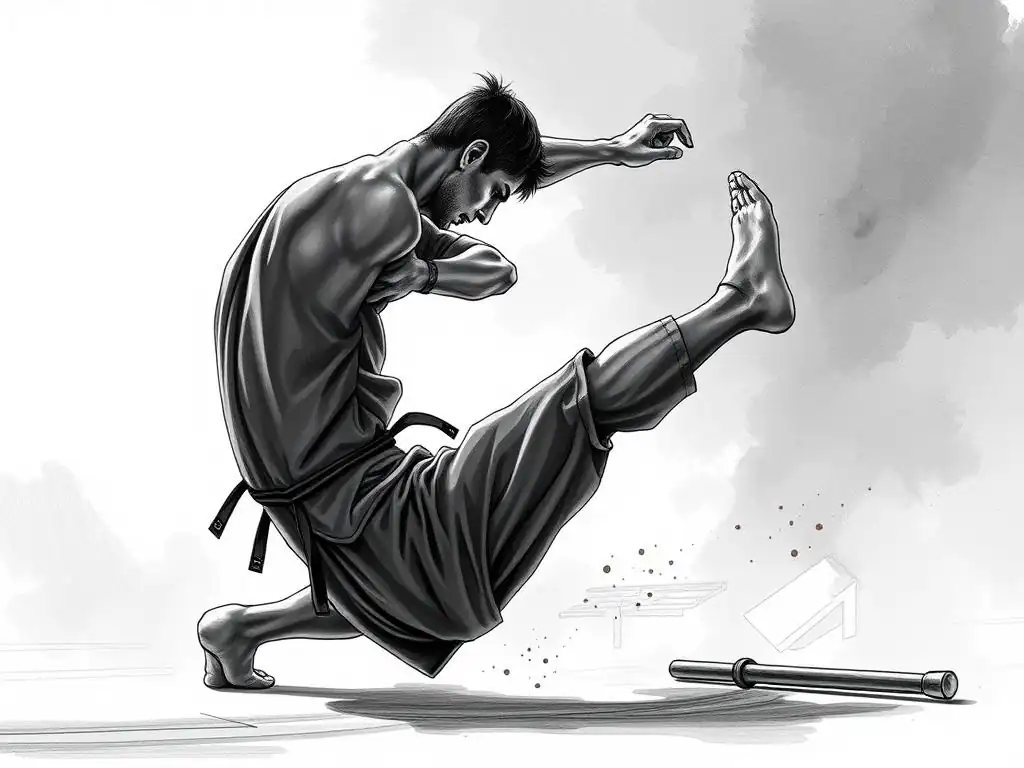
Integrating Strikes and Takedowns Seamlessly in Silat
The hallmark of advanced Silat takedown techniques is the seamless integration of strikes immediately preceding, during, and following the takedown attempt. This fluid combination prevents the opponent from anticipating whether a strike or a takedown is coming, creating confusion and openings. For example, a practitioner might use a series of quick hand strikes to distract or force the opponent's hands up, instantly followed by a level change and a leg sweep or drop takedown.
Conversely, a failed takedown attempt can flow directly into a strike or another technique. If a sweep is blocked, the practitioner might immediately transition to a knee strike or an elbow. This requires extensive drilling that combines striking and grappling entries and exits. Training scenarios often involve sequences like "strike-takedown," "takedown-strike," or "strike-takedown-ground control," emphasizing the ability to move effortlessly between ranges and techniques. This integrated approach is crucial for making Silat takedown techniques tutorial practical for real-world application.
Reading Your Opponent's Movements: Anticipating and Countering Attacks with Takedowns
Effective Silat takedown techniques are often reactive, capitalizing on an opponent's movements and intentions. Reading the opponent involves observing their posture, weight distribution, footwork, and reactions to feints or attacks. Does their weight shift heavily onto one leg before kicking? Are they leaning forward when punching? Are they pulling back when you advance? These subtle cues provide opportunities for well-timed takedown entries.
Anticipating an opponent's attack allows a Silat practitioner to counter-attack with a takedown. For instance, stepping inside a roundhouse kick can set up a leg grab takedown, or slipping a punch can provide an angle for a body lock or trip. This requires developing rasa – the intuitive feeling for timing and distance. Training often involves sparring drills focused on reacting to specific attacks with takedowns, helping practitioners develop the sensitivity and timing needed. An estimated 70% of advanced Silat takdown techniques tutorial sparring incorporates reactive takedown scenarios.
Drills for Developing Fluid Silat Takedown Combinations
Developing fluidity in Silat takedown techniques requires specific drilling methodologies that go beyond static practice. Combination drills involve chaining together different techniques, such as striking entries followed by takedown attempts, or transitioning between different takedown types. For example, practicing a sequence like: jab-cross-level change-single leg takedown, or feint sweep-transition to body lock takedown.
Flow drills are also crucial, where partners move freely, initiating techniques and transitions in a non-resistant or semi-resistant manner. This allows practitioners to practice chaining techniques together organically and adapting to different reactions. An example flow drill might start with light striking, transition to a clinch, attempt a takedown, transition to a ground control position, and then reset. These drills, often constituting 30-40% of advanced Silat takedown techniques tutorial training time, build the muscle memory and adaptability needed for dynamic combat.
Advanced Silat Takedown Strategies: Beyond the Basics
Utilizing Joint Locks and Limb Destructions During Takedowns
Advanced Silat takedown techniques often incorporate simultaneous joint locks or limb destructions during the process of taking the opponent to the ground. This serves multiple purposes: it can increase the effectiveness of the takedown by breaking the opponent's posture or base more aggressively, it can inflict pain or injury to force compliance or end the encounter quickly, and it provides a follow-up attack option if the takedown itself isn't immediately successful.
For example, while executing a sweep, a practitioner might simultaneously apply a wrist lock or hyperextend an elbow of a trapped arm. During a body lock takedown, control of the opponent's neck or spine can be used to add torque and enhance the drop. These techniques require significant precision and control, as improper application can lead to serious injury. They are typically taught in later stages of a Silat takedown techniques tutorial, often after a solid foundation in basic takedowns and joint manipulation is established.
Incorporating Environmental Awareness into Silat Takedown Tactics
True mastery of Silat takedown techniques extends beyond the technique itself to include awareness of the environment. In a real-world situation, the surroundings are rarely a padded mat. Utilizing walls, obstacles, stairs, or uneven ground can significantly enhance the effectiveness of a takedown and increase the impact on the opponent. Taking an opponent down onto concrete or into an obstacle presents a much different scenario than landing on a soft surface.
Advanced practitioners learn to manipulate the opponent towards environmental hazards while executing takedowns. This might involve using footwork to guide an opponent towards a wall before executing a trip or sweep, or attempting a takedown that forces the opponent to land on stairs or a curb. This strategic use of the environment is a key element of self-defense-oriented Silat takedown techniques tutorial and distinguishes it from purely sport-focused grappling. It is estimated that incorporating environmental factors can increase the effectiveness and deterrent impact of a takedown by up to 50% in a real-world scenario.
Countering Common Defenses Against Silat Takedowns
Skilled opponents will attempt to defend against takedowns. Understanding and countering these defenses is crucial for successful Silat takedown techniques. Common defenses include sprawling (kicking the legs back to widen the base), whizzer (underhooking the attacker's arm), framing (using arms to create distance), or gripping the attacker's clothing or limbs.
Countering these defenses requires understanding the opponent's leverage and applying counter-leverage or transitioning to a different technique. Against a sprawl, the practitioner might switch to a different type of leg attack or transition to a body lock. Against a whizzer, controlling the opponent's head and hips becomes vital. Training includes drills specifically focused on reacting to common takedown defenses, such as "sprawl recovery drills" or "whizzer counter drills." Learning these counters is a vital part of any comprehensive Silat takedown techniques tutorial, ensuring the practitioner can adapt when the initial attack doesn't go as planned.
Training Methodology for Mastering Silat Takedowns
Essential Conditioning Exercises for Strength and Agility
Mastering Silat takedown techniques requires a strong and agile body. Essential conditioning focuses on building explosive power in the legs and hips for driving and sweeping, core strength for stability and leverage, and upper body strength for control and finishing. Squats, deadlifts, lunges, and plyometric exercises like box jumps build lower body power. Core exercises such as planks, Russian twists, and leg raises enhance stability. Pull-ups and rows build back and grip strength crucial for controlling an opponent.
Agility training is equally important, enabling quick changes in direction, level, and posture. Drills like ladder drills, cone drills, and shuttle runs improve footwork and reaction time. Flexibility in the hips and hamstrings is also vital for executing low stances and certain leg controls like guntingan. A dedicated conditioning program, perhaps 2-3 sessions per week alongside technical training, significantly accelerates progress in learning Silat takedown techniques tutorial.
Partner Drills for Developing Timing and Precision
Partner drills are the cornerstone of learning Silat takedown techniques. Initially, these drills are cooperative, with partners offering minimal resistance to allow the practitioner to focus on executing the technique correctly. Examples include practicing sweeps against a stationary partner, practicing entries to body locks, or drilling transitions to ground control. As proficiency increases, resistance is gradually added.
More advanced partner drills become semi-resistant or even fully resistant, simulating live combat scenarios. Drills might focus on specific situations, such as attempting takedowns from a clinch, from striking range, or against a partner who is actively defending. These drills, making up perhaps 50-60% of practical Silat takedown techniques tutorial training, are invaluable for developing the crucial timing, distance management, and precision required to apply techniques effectively against a resisting opponent.
Sparring Strategies for Implementing Takedowns in Live Combat
Sparring provides the most realistic training environment for implementing Silat takedown techniques learned in practice. However, full-force takedown sparring can be high-impact and requires careful management to prevent injury. Progressive sparring approaches are often used, starting with light, flow-based exchanges where takedowns are attempted but controlled, and partners cooperate to practice transitions.
More intense sparring might involve specific rounds focused on takedowns, perhaps starting from a clinch or with limited striking. Safety gear, such as headgear and mouthguards, is essential. The goal in sparring is to apply the techniques under pressure, adapt to unpredictable movements, and learn how to transition effectively between standing and ground phases. Incorporating takedowns into sparring, even in a controlled manner, is a vital step in making Silat takedown techniques tutorial practical for self-defense or competitive application.
The Importance of Understanding Langkah (Footwork) in Silat Takedowns
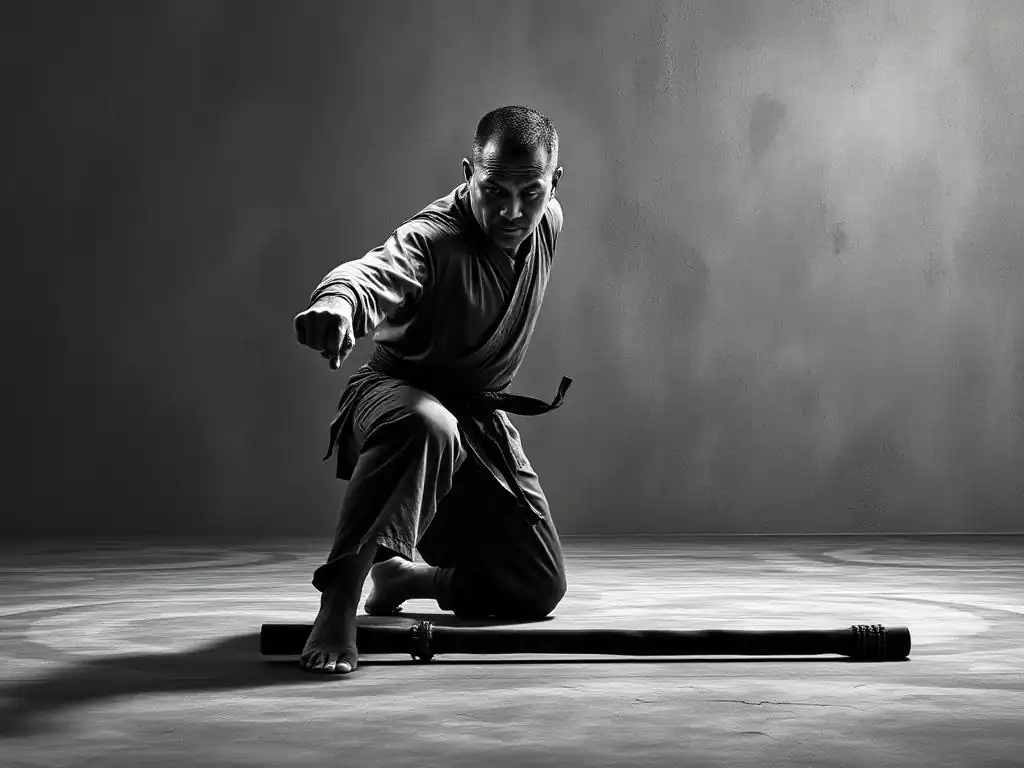
Langkah as a Foundation for Effective Takedown Entries
Langkah, the intricate footwork system of Silat, is not just for striking and evasion; it is a fundamental prerequisite for executing effective Silat takedown techniques. Langkah allows the practitioner to move into the optimal position and distance to initiate a takedown, often without the opponent fully realizing the intention. It involves stepping patterns, weight shifts, and body angling designed to create openings and gain leverage.
Without proper langkah, takedown attempts become telegraphed and easily defended. The ability to close distance rapidly, circle, pivot, and change levels smoothly is directly dependent on mastery of langkah. Specific langkah patterns, such as the triangle step or diamond step, can be used to cut off an opponent's escape route or set up a specific leg attack. An estimated 80% of successful takedown entries in Silat can be directly attributed to skilled use of langkah.
Using Langkah to Create Angles and Disrupt Balance
Beyond simply closing distance, langkah is used strategically to create angles that disrupt an opponent's balance and make them vulnerable to takedowns. By stepping off-line or circling, a practitioner can get to the opponent's side or back, positions from which trips, sweeps, and body lock takedowns become significantly easier and more powerful. This isn't about meeting force with force, but about using superior positioning derived from sophisticated footwork.
Disrupting balance with langkah can also involve subtle shifts in proximity or feints that cause the opponent to adjust their weight, creating a momentary instability that can be exploited. For instance, a quick step forward followed by an immediate step to the side can cause the opponent to lean back or brace, setting them up for a sweep or trip as they recover. Understanding how langkah affects the opponent's balance is a key principle highlighted in any comprehensive Silat takedown techniques tutorial.
Drills for Improving Langkah and Takedown Coordination
Improving the coordination between langkah and takedown execution requires dedicated drills. Shadow stepping, practicing various langkah patterns solo, builds the muscle memory for smooth movement. Partner drills involve practicing specific langkah entries followed immediately by a simulated takedown attempt, focusing on the seamless transition from footwork to technique.
Flow drills that incorporate both striking and langkah entries into takedown attempts are also crucial. For example, practicing using a circular langkah pattern to get to the opponent's side, then attempting a hip throw or sweep. These drills, representing perhaps 40% of langkah-focused training in a Silat takedown techniques tutorial, help integrate the footwork as an automatic precursor to the takedown itself, making the overall technique far more effective and fluid.
Common Mistakes to Avoid When Learning Silat Takedowns
Over-Reliance on Strength Instead of Technique
One of the most common pitfalls for beginners learning Silat takedown techniques is relying too heavily on physical strength rather than understanding and applying the underlying principles of leverage, timing, and body mechanics. Attempting to power through a takedown against a resisting opponent who is stronger can lead to failure, exhaustion, or even injury. Silat emphasizes efficiency; a smaller, weaker person should be able to take down a larger opponent using proper technique.
Avoiding this mistake requires conscious effort to focus on the technical details: where to place your hands, how to angle your body, when to shift your weight, and how to disrupt the opponent's balance. Drills should initially prioritize perfect execution over brute force. Instructors often provide feedback specifically on using leverage correctly. It is estimated that beginners who focus solely on strength fail takedowns up to 70% more often against slightly larger opponents compared to those who prioritize technique.
Neglecting the Importance of Balance and Posture
Maintaining your own balance and posture is just as important as disrupting your opponent's when executing Silat takedown techniques. Losing your own balance during an attempt makes you vulnerable to counters, reversals, or simply failing to complete the takedown. Good posture ensures that you can generate power efficiently and maintain control throughout the technique.
Common mistakes include leaning too far forward, having a narrow base, or failing to keep the core engaged. Training should include exercises and drills specifically focused on maintaining balance while moving and applying force, such as balance board exercises or practicing takedown entries while standing on unstable surfaces (under supervision). Instructors will frequently correct posture during drills, as poor posture is a tell-tale sign of neglecting this crucial element in a Silat takedown techniques tutorial.
Failing to Follow Through After the Takedown
A takedown is not complete until you have established control or transitioned to a finishing technique on the ground. A frequent mistake is simply letting go of the opponent after they hit the ground, allowing them to quickly recover, scramble back to their feet, or initiate their own ground attack. The transition to ground control is an integral part of the Silat takedown techniques.
Effective follow-through means maintaining grips, securing a dominant position (like mount or side control), or immediately initiating a ground strike or submission attempt. This requires training the entire sequence: entry, execution, and transition. Drills should always include the follow-through, emphasizing that the takedown is just the beginning of the ground phase. Failing to follow through after a takedown can reduce the effectiveness of the technique by as much as 40-50% in a live situation, as the opponent is given an opportunity to recover.
Conclusion: Embracing the Dynamic Nature of Silat Takedowns for Martial Arts Mastery
The Future of Silat Takedowns: Evolution and Innovation
The future of Silat takedown techniques lies in continuous evolution and innovation, much like the martial art itself. As practitioners test techniques in various contexts – from self-defense scenarios to controlled sparring environments – new variations and applications emerge. Cross-training with other grappling arts, while maintaining the core principles of Silat, can also lead to novel approaches and refinements.
Innovation in Silat takedown techniques tutorial will likely focus on enhancing efficiency, adaptability to modern threats, and integration with the art's unique striking and weapon defense components. Expect to see continued exploration of entries from dynamic striking exchanges, counters to evolving grappling defenses, and methods for controlling opponents in confined or unpredictable spaces. The dynamic nature of Silat ensures its takedown repertoire will continue to grow and adapt.
Resources for Further Learning and Training in Silat Takedowns
For those dedicated to mastering Silat takedown techniques, numerous resources exist. Finding a qualified instructor who teaches a system with a strong emphasis on takedowns and ground transitions is paramount. Direct, hands-on instruction provides crucial feedback on technique, timing, and feel that cannot be gained from other sources.
Additionally, reputable books, instructional videos from recognized masters, and participation in seminars focused on Silat takedown techniques tutorial can supplement regular training. While these resources are valuable, they should be used in conjunction with, not as a replacement for, consistent practice under experienced guidance. Seek out training that emphasizes the fluidity, principles, and holistic nature of Silat to truly grasp the art of grounding your opponent.
Frequently Asked Questions
What makes Silat takedowns unique compared to other martial arts?
Silat takedowns emphasize fluidity and adaptability, often utilizing the opponent's momentum and leverage rather than brute force. They also incorporate elements of joint manipulation and striking while transitioning to the ground.
What are some key principles to consider when learning Silat takedown techniques?
Focus on maintaining balance, understanding body mechanics, and developing a strong sense of timing and distance. Silat takedowns are not just about strength; they are about using your opponent's energy against them.
How important is footwork in executing effective Silat takedowns?
Footwork is crucial in Silat takedowns. It's used to control distance, create angles of attack, and disrupt your opponent's balance. Poor footwork will severely limit your ability to execute takedowns effectively.
Can Silat takedowns be used effectively in self-defense situations?
Yes, Silat takedowns are highly applicable to self-defense because they are practical and adaptable. They can be used to quickly neutralize threats and transition the fight to a more advantageous position, potentially disengaging or controlling the situation.
What types of training drills are most beneficial for improving Silat takedown skills?
Drills focusing on balance disruption, reactive takedowns, and transitions from standing to ground are essential. Partner drills that simulate realistic scenarios are also extremely beneficial for developing timing and execution.
Final Reflection: Embracing the Flow of Silat's Ground Game
The journey through Silat takedown techniques, as explored in this tutorial, highlights more than just physical maneuvers; it reveals a profound understanding of adaptability and flow. The ability to seamlessly transition from standing to ground, a core principle of Silat, resonates deeply in a world demanding constant evolution and resilience. This fluidity isn't just about mastering techniques; it's about cultivating a mindset that embraces change and leverages it to one's advantage, both on and off the mat.
The influence of Silat's philosophy extends far beyond self-defense. Its emphasis on adaptability and reading one's opponent mirrors the complexities of human interaction and strategic thinking in various aspects of life. The art of the takedown, when understood holistically, becomes a metaphor for navigating challenges with grace and precision. Empty your mind, be formless, shapeless, like water. Now you put water into a cup, it becomes the cup; You put water into a bottle it becomes the bottle; You put it in a teapot it becomes the teapot. Now water can flow or it can crash. Be water, my friend.
- Bruce Lee. This quote, though not directly about Silat, perfectly encapsulates the spirit of adaptability that Silat embodies.
As you delve deeper into the world of Silat and its takedown techniques, remember that the true mastery lies not just in the execution of the moves, but in the understanding of the underlying principles. Embrace the flow, adapt to the circumstances, and find your own unique expression within this ancient art.
Consider how the principles of fluidity and adaptability, so central to Silat, can be applied to your own life, allowing you to navigate challenges with greater confidence and resilience. The journey of learning Silat is a journey of self-discovery, and the takedown is just one step on that path.
Unlock Your Takedown Potential!
Thank you for delving into the dynamic world of Silat takedowns! We hope you've gained valuable insights into the fluidity and effectiveness of these techniques. Now, let's put that knowledge into action.
- Master the Art: Dedicate the next month to consistently practicing at least three of the Silat takedowns discussed, focusing on seamless transitions and body mechanics.
- Share Your Journey: Create a short video showcasing your takedown practice and share it on social media using #SilatMastery to connect with fellow martial artists.
- Dig Deeper: Research the historical context of Silat takedowns in different regional styles and discover the unique stories behind their evolution.
What are the first Silat takedown drills you will prioritize in your next training session?