
The Path to Shaolin Long Fist Mastery: A Lifelong Dedication

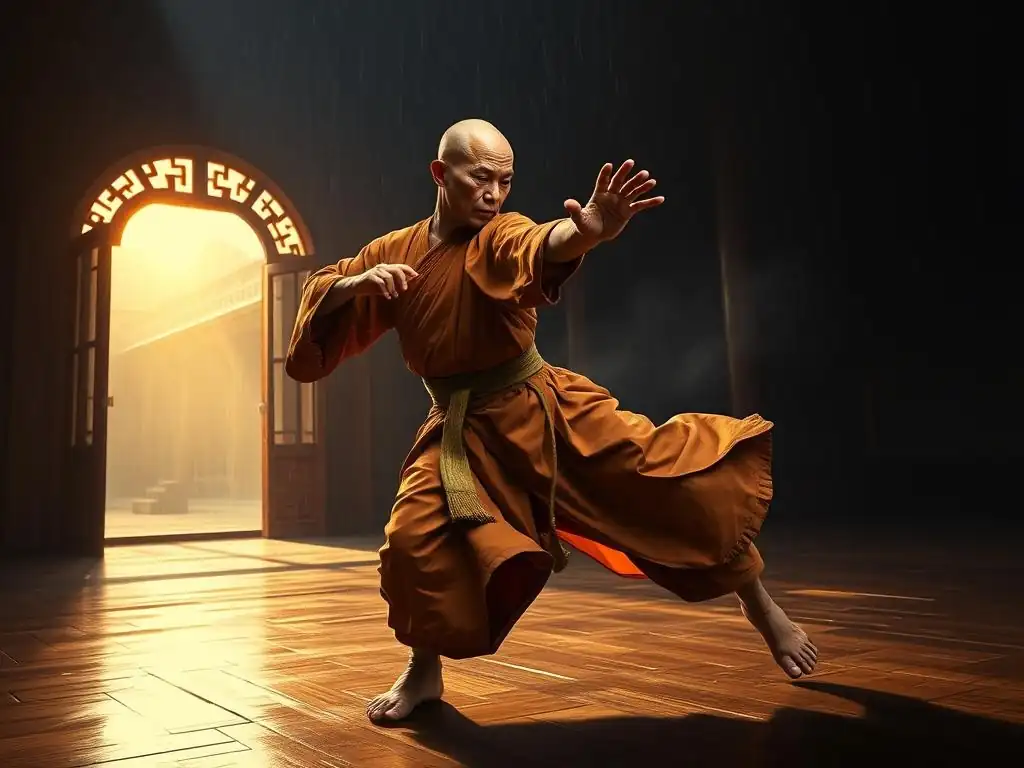
Welcome to Martial Arts Mastery, your portal to the world's fighting arts!
Delve into the rich tapestry of combat traditions, from ancient histories to modern techniques. Are you ready to unlock the secrets of a powerful and elegant art? Our comprehensive Shaolin Long Fist Training Guide awaits, offering a deep dive into this legendary style. Prepare to embark on a journey of discipline, skill, and unwavering dedication – a path that promises not just self-defense, but a profound transformation of mind and body. What are the key stances and movements that form the foundation of this powerful art?
- Introduction to Shaolin Long Fist: A Comprehensive Training Guide
- Foundations of Shaolin Long Fist Training: Building a Strong Base
- Mastering Shaolin Long Fist Forms: A Step-by-Step Approach
- Advanced Shaolin Long Fist Techniques: Elevating Your Skills
- The Philosophical Underpinnings of Shaolin Long Fist
- Shaolin Long Fist Conditioning: Physical and Mental Fortitude
- Practical Applications of Shaolin Long Fist: Self-Defense Strategies
- The Role of Sparring in Shaolin Long Fist Training
- Continuing Your Shaolin Long Fist Journey: Lifelong Learning and Refinement
- Frequently Asked Questions
- Final Reflection: Embracing the Endless Journey
- Unleash Your Inner Dragon: Embark on Your Long Fist Journey!
Introduction to Shaolin Long Fist: A Comprehensive Training Guide
Embarking on the journey of Shaolin Long Fist (Changquan) is a commitment to a martial art steeped in history and rich in dynamic movements. This comprehensive Shaolin Long Fist training guide explores the foundational principles, rigorous training methods, and profound philosophical insights that define this celebrated style of Chinese Kung Fu. Mastery is not merely about executing techniques flawlessly; it's about integrating mind, body, and spirit into a harmonious whole.
Understanding the Core Principles of Changquan (Long Fist) Kung Fu
Changquan, or Long Fist, is characterized by its extended, graceful movements, deep stances, and powerful, long-range techniques. The core principles emphasize fluidity, speed, and the generation of power through the coordinated action of the entire body, often described as "the whip effect." Unlike styles focusing on close-range combat, Long Fist excels at covering distance rapidly, utilizing kicks, punches, and sweeps from a greater reach. A fundamental concept is the idea of "length" – not just physical reach, but the extension of energy (Qi) through the limbs to the point of impact, ensuring maximum force is delivered.
Training in Changquan requires developing not only physical strength and flexibility but also a keen understanding of body mechanics and timing. Practitioners learn to move with explosive speed and agility, transitioning seamlessly between high and low postures. The focus is on developing strong legs for dynamic movements and powerful waist rotation to drive strikes. This holistic approach ensures that every movement is efficient and impactful, adhering to principles like "the hand arrives with the foot," which emphasizes coordinated, simultaneous action for optimal power and speed.
The Historical Significance of Shaolin Long Fist in Kung Fu History
The roots of Long Fist can be traced back through centuries of Chinese martial development, with strong connections to the Shaolin Temple, often considered the birthplace of many Chinese martial arts. While the term "Changquan" has historically referred to various long-range styles, the modern sport and performance-oriented Changquan draws heavily from traditional systems like Shaolin Quan, Cha Quan, Hua Quan, Pao Quan, and Hong Quan. These styles contributed foundational techniques, forms, and training methodologies that were later codified.
During the early 20th century, particularly with the establishment of the Central Guoshu Institute in Nanjing in 1928, efforts were made to standardize and promote Chinese martial arts nationally. Changquan emerged as a prominent style, synthesizing elements from various traditional long-range systems. This period saw the development of standardized forms and training curricula, solidifying Changquan's place as a representative style of Northern Chinese Kung Fu. Its emphasis on athleticism and aesthetic appeal also led to its inclusion in modern Wushu competitions, further cementing its historical evolution from battlefield practicality to a recognized martial art form globally.
Foundations of Shaolin Long Fist Training: Building a Strong Base
A solid foundation is paramount in Shaolin Long Fist training. Without strong stances, fluid movement, and physical conditioning, the more advanced techniques and forms will lack power and stability. Beginners in this Shaolin Long Fist training guide must dedicate significant time to mastering the basics before progressing.
Essential Stances for Shaolin Long Fist: Mabuu, Gongbui, Xubuu
Stances (Bù Fǎ) are the bedrock of Long Fist, providing stability, mobility, and the basis for generating power. The Mabuu (Horse Stance) is perhaps the most iconic, requiring the practitioner to stand with feet wide apart, parallel, and knees bent deeply as if riding a horse. This stance builds tremendous leg strength, endurance, and a low center of gravity, essential for powerful low kicks and stable transitioning. Holding Mabuu for extended periods, often several minutes or longer, is a fundamental exercise in developing rootedness and muscular fortitude in the lower body.
Another crucial stance is Gongbui (Bow-and-Arrow Stance), where one leg is bent forward at the knee (like a bow) and the rear leg is straight (like an arrow), with the body facing forward or slightly angled. This dynamic stance is used for forward movements, powerful punches, and straight kicks, allowing for rapid weight transfer and forward momentum. Xubuu (Empty Stance) involves placing most of the weight on one leg while the other foot lightly touches the ground, often on the ball of the foot. This stance is highly versatile, used for feints, quick retreats, side movements, and preparing for various kicks or sweeps, emphasizing balance and agile footwork. Mastering these and other stances, like Pubuu (Flat Stance) and Xiebuu (Cross Stance), is non-negotiable for effective Long Fist practice.
Fundamental Movements and Drills for Long Fist Development
Beyond stances, fundamental movements and drills are critical for developing the coordination, speed, and power characteristic of Long Fist. Basic punching techniques, such as the straight punch ( Chong Quan), hook punch ( Gou Quan), and uppercut ( Shang Chong Quan), are practiced repeatedly, focusing on generating force from the legs and waist. Kicking techniques, a hallmark of Long Fist, are also drilled extensively. Common kicks include the front kick ( Zheng Ti Tui), side kick ( Ce Ti Tui), roundhouse kick ( Sao Tui), and the dynamic flying kick ( Teng Kong Fei Jiao). Each kick requires specific body mechanics, balance, and flexibility, practiced hundreds, if not thousands, of times in isolation before being integrated into forms or applications.
Movement drills, such as stepping patterns ( Bu Fa) and transitional exercises, teach practitioners how to move quickly and efficiently between stances and positions. Drills like continuous stepping in Gongbui or practicing rapid transitions between Mabuu and Xubuu build agility and spatial awareness. Jumping and leaping drills are also integral, preparing the body for the aerial techniques found in many advanced forms. These foundational movements, practiced with precision and increasing speed and power, lay the groundwork for executing the complex sequences found in Long Fist forms and applications, making them a cornerstone of any serious Shaolin Long Fist training guide.
Developing Flexibility and Agility for Advanced Changquan Techniques
Flexibility is not just about being able to do splits; it's essential for executing the high kicks, deep stances, and wide-ranging movements of Long Fist without injury. Extensive stretching, particularly focusing on the hamstrings, hip flexors, and shoulders, is a daily requirement. Static stretches held for 30-60 seconds improve range of motion, while dynamic stretches like leg swings and torso twists prepare the muscles for activity and improve fluidity. Achieving a high degree of flexibility allows practitioners to kick higher, move into lower stances more easily, and perform complex transitions with greater ease and safety.
Agility, the ability to change direction and speed quickly, is equally vital. Long Fist combat often involves rapid advances, retreats, and circular movements to control distance and angle. Drills focusing on quick footwork, such as ladder drills, cone drills, and shadowboxing with emphasis on rapid changes in direction and tempo, enhance agility. Plyometric exercises, like jump squats and bounding, improve explosive power, crucial for jumping kicks and rapid bursts of speed. Combining flexibility and agility training ensures that the practitioner can move with the speed, grace, and explosive power that define high-level Changquan performance and application.
Mastering Shaolin Long Fist Forms: A Step-by-Step Approach
Forms (Tao Lu) are the traditional method of preserving and transmitting martial techniques and principles in Long Fist. They are sequences of movements that simulate combat scenarios, allowing the practitioner to train techniques, transitions, balance, and power generation in a structured manner. Learning forms is a critical part of any Shaolin Long Fist training guide.
Learning the Foundational Forms of Shaolin Long Fist
Beginners typically start with simpler, foundational forms that introduce basic stances, movements, and striking techniques. Forms like Lian Bu Quan (Continuous Stepping Fist) or Wu Bu Quan (Five Stance Fist) are excellent starting points. Lian Bu Quan, for example, is relatively short but packed with fundamental stepping patterns, hand strikes, and low kicks, emphasizing smooth transitions and coordinated body movement. Wu Bu Quan focuses explicitly on transitioning between the five basic stances while executing simple strikes.
The process of learning a form involves breaking it down into smaller sections or even individual movements. Initially, focus is placed on the correct posture, stance, and sequence of movements, often practiced slowly. As the sequence becomes familiar, the focus shifts to refining body mechanics, ensuring power is generated correctly from the ground up, and coordinating breathing with movement. Only after the form's structure and basic mechanics are solid does the practitioner begin to work on speed, power, and intent (Shen), transitioning from merely performing the movements to embodying the form.
In-Depth Analysis of Lian Bu Quan: Techniques and Applications
Lian Bu Quan is a cornerstone foundational form in many Long Fist curricula, including those influenced by Shaolin. Despite its relative simplicity, it contains essential elements for developing core Long Fist skills. The form typically starts with a basic bow, followed by movements like Gongbui stance transitions, Mabuu with punches, Xubuu leading into strikes, and low sweeping kicks. A key focus is the 'continuous stepping' implied by its name, drilling fluid transitions between stances while maintaining balance and preparing for the next technique.
Analyzing Lian Bu Quan reveals fundamental applications. For instance, the transition from a retreat into a Gongbui stance with a forward punch demonstrates closing distance and striking. The low sweep from a low stance teaches balance and disruption of an opponent's base. Practicing these movements within the form allows the student to internalize the timing and coordination required for these applications. A dedicated Shaolin Long Fist training guide will emphasize drilling these individual techniques and transitions within Lian Bu Quan repeatedly, understanding not just how to move, but why in a self-defense context.
Integrating Power and Speed into Your Long Fist Form Practice
Once the sequence and basic mechanics of a form are learned, the next step is to inject power and speed. This is where Long Fist truly comes alive, as the graceful movements transform into explosive actions. Power generation in Long Fist comes from the coordinated use of the entire body – the ground reaction force from the legs, the rotation of the waist, and the extension through the limbs. This is often visualized as a "wave" or "whip" effect traveling through the body.
To integrate power, focus on relaxing muscles until the moment of impact or extension, then tightening them abruptly. This tension-release mechanism is key to generating sharp, forceful movements. Speed is developed through repeated practice, gradually increasing the tempo while maintaining precision and control. Drills focusing on accelerating specific sections of the form, like a rapid punch or a quick kick, are beneficial. Practicing the form with intent, visualizing an opponent and the application of each technique, also helps imbue the movements with purpose and power, moving beyond mere choreography to effective martial training.
Advanced Shaolin Long Fist Techniques: Elevating Your Skills
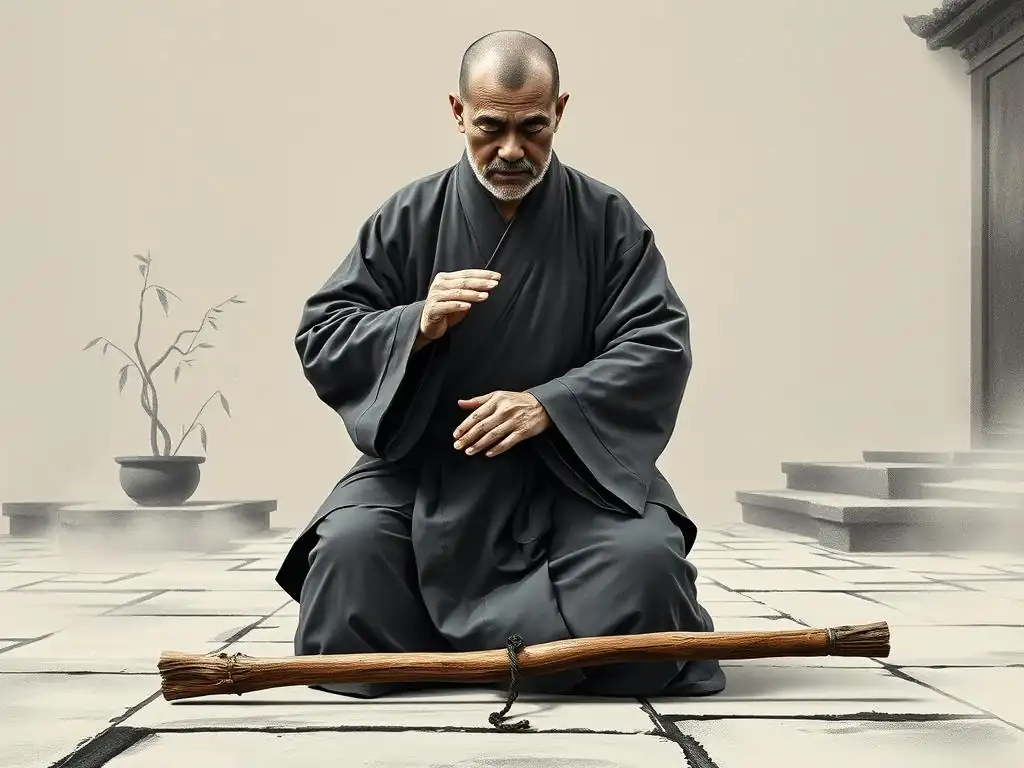
Beyond the fundamental stances and forms lies a vast array of advanced techniques that add complexity and depth to the Shaolin Long Fist practitioner's repertoire. These include joint locks, throws, and weapon usage, reflecting the comprehensive nature of traditional Kung Fu.
Qinna (Joint Locking) Techniques in Shaolin Long Fist
While known for long-range strikes, Shaolin Long Fist also incorporates close-quarters techniques, including Qinna (joint locking and seizing). These techniques are used to control an opponent, cause pain, or break joints. They often appear as transitions or follow-ups to strikes or blocks within forms. For example, a block might transition into a wrist lock, or a parry could lead to seizing an arm. The principles of Qinna involve understanding joint anatomy and applying leverage to manipulate the opponent's limbs.
Training in Qinna requires sensitivity and precise execution. Practitioners learn to feel the direction of force and apply counter-force to compromise a joint. Common techniques include wrist locks ( Chan Wan), elbow locks ( Ban Zhou), and finger locks ( Fen Zhi). While forms demonstrate the basic movements, dedicated Qinna drills with a partner are essential for developing the necessary tactile sensitivity and application timing. These techniques provide valuable options when the distance closes, complementing Long Fist's primary focus on striking from afar.
Shuai Jiao (Wrestling) Applications Within Long Fist Kung Fu
Shuai Jiao (Chinese wrestling or throwing techniques) is another component found within the broader Shaolin martial arts tradition, and its principles and techniques are often integrated into Long Fist. Throws and takedowns are effective ways to neutralize an opponent, especially if strikes are proving ineffective or if the situation requires control rather than disabling force. Long Fist's emphasis on strong legs and dynamic movement provides a solid base for executing throws.
Techniques might include sweeps ( Sao Tui, also a kick), trips ( Ban Tui), and various body throws ( Shuai). These are often initiated after closing the distance, perhaps following a failed strike or block. Practicing Shuai Jiao within a Long Fist context means understanding how to transition seamlessly from striking range to grappling range and back. Drills involve partner practice focused on balance disruption, gripping, and executing throws safely. While not the primary focus of Long Fist, these grappling elements add a crucial layer to the practitioner's ability to handle different combat scenarios.
Weaponry in Shaolin Long Fist: Gun (Staff), Dao (Broadsword), Jian (Straight Sword)
Weapon training is an advanced, yet integral, part of traditional Shaolin Kung Fu, including styles related to Long Fist. Weapons are seen as extensions of the body, and mastering them reinforces the principles of movement, power generation, and coordination learned in empty-hand forms. The Gun (staff) is often the first weapon learned, sometimes called the "father of all weapons," due to its foundational movements and principles applicable to others. Staff forms emphasize long-range striking, sweeping, and blocking techniques, requiring significant strength and coordination.
The Dao (broadsword) is a curved, single-edged sword known for its powerful chopping and slashing techniques. Dao forms are characterized by vigorous, flowing movements, often involving circular cuts and rapid changes in direction. The Jian (straight sword) is a double-edged sword requiring precision, agility, and intricate footwork. Jian forms are typically more elegant and fluid than Dao forms, emphasizing thrusting, cutting, and deflecting. Training with these weapons requires dedication, developing specific handling skills, and applying the core principles of Long Fist movement and power generation through the weapon.
The Philosophical Underpinnings of Shaolin Long Fist
Shaolin Long Fist is not just a collection of fighting techniques; it is deeply intertwined with philosophy, particularly Chan (Zen) Buddhism, which originated at the Shaolin Temple. This philosophical dimension guides the practitioner's attitude, training, and application of their skills.
Integrating Chan Buddhism Principles into Your Training
Chan Buddhism, with its emphasis on mindfulness, discipline, and the pursuit of enlightenment through practice, profoundly influences Shaolin martial arts. The rigorous physical training is seen as a form of moving meditation, a path to self-discovery and discipline. Principles like Jiē Lu (discipline and rules), Chí Jiè (moral conduct), and Dìng (concentration) are not separate from the physical practice but are cultivated through it. The repetitive nature of stance training or form practice, for instance, becomes an exercise in cultivating patience and focus, mirroring meditative practices.
Practitioners are encouraged to train with sincerity and humility, letting go of ego and focusing on the present moment. The concept of Wú Wéi (non-action or effortless action) is also relevant, suggesting that with sufficient training and understanding, techniques should flow naturally and spontaneously, without conscious effort. Integrating these principles means viewing training not just as acquiring fighting skills but as a path of personal development, cultivating virtues like perseverance, patience, and compassion, both inside and outside the training hall.
Cultivating Mindfulness and Focus in Long Fist Practice
Mindfulness and focus ( Zhuānzhù) are essential for effective Long Fist training and application. During training, the practitioner must be fully present, paying attention to their body mechanics, breathing, and the nuances of each movement. This heightened awareness allows for correction of errors, deeper understanding of principles, and more efficient learning. In the context of a Shaolin Long Fist training guide, emphasizing this mental aspect is crucial, as technique without presence lacks depth and effectiveness.
Focus is also critical for generating power and speed. A scattered mind leads to disjointed movements. By concentrating intent ( Yi) and energy ( Qi) into each technique, the practitioner maximizes its potential. This mental discipline is honed through various practices, including standing meditation ( Zhan Zhuang), form practice performed slowly with intense concentration, and drills designed to improve reaction time and awareness. The ability to maintain focus under pressure is also developed through sparring, where the practitioner must remain calm and alert while reacting to a dynamic situation.
The Ethical Code of a Shaolin Long Fist Practitioner
Traditional Shaolin Kung Fu includes a strong ethical code that governs the practitioner's behavior. This code emphasizes the responsible use of martial skills, humility, respect for others, and the pursuit of peace. Martial arts are trained for self-defense and physical/mental cultivation, not for aggression, bullying, or showing off. The practitioner is expected to uphold justice, protect the weak, and avoid unnecessary conflict.
Key tenets of the ethical code include respecting the master ( Shifu) and fellow students ( Siblings), never using martial arts to harm innocent people, and maintaining integrity in all actions. This moral dimension is considered as important as physical prowess. A true master of Shaolin Long Fist is not just a skilled fighter but also a person of strong character and ethical conduct. This philosophical foundation ensures that the power and skill developed through rigorous training are used wisely and compassionately, aligning with the broader goals of self-cultivation and contributing positively to society.
Shaolin Long Fist Conditioning: Physical and Mental Fortitude
Mastering Shaolin Long Fist requires peak physical condition and unwavering mental resilience. The training is demanding, pushing the limits of strength, endurance, and mental fortitude.
Iron Body Training for Shaolin Long Fist
While less emphasis might be placed on the extreme forms of "Iron Body" seen in some other Shaolin styles, Long Fist training still incorporates conditioning to toughen the body and make it more resilient to impact. This includes exercises to strengthen bones, tendons, and muscles, as well as desensitizing the striking surfaces. Techniques like striking padded surfaces, sandbags, or even progressively harder objects help condition the fists, forearms, shins, and other striking/blocking areas.
This conditioning is not about becoming impervious to pain but about increasing the body's ability to withstand and deliver force without injury. It also builds tremendous physical and mental toughness. Practices might involve hitting makiwara boards, striking sandbags filled with beans or sand, or performing conditioning drills like knuckle push-ups. While advanced Iron Body can be dangerous and requires expert guidance, basic conditioning of the limbs is a standard part of developing durable striking tools in Long Fist.
Developing Endurance and Stamina for Long Fist Combat
Long Fist combat and forms are dynamic and require sustained bursts of energy. Developing both aerobic and anaerobic endurance is crucial. Aerobic conditioning, through activities like running, swimming, or cycling, builds the foundational stamina needed for long training sessions and sustained effort. Anaerobic conditioning, through sprints, circuit training, and high-intensity form practice, develops the ability to generate explosive power repeatedly.
Training methods include practicing forms multiple times in succession without rest, sparring rounds that push the cardiovascular system, and drills that involve continuous movement and striking. Developing a strong core and powerful legs is also key to endurance, as these are the engines of Long Fist movement. This physical resilience allows the practitioner to maintain speed, power, and precision even under fatigue, which is vital in both training and potential self-defense situations.
Mental Toughness and Discipline in the Shaolin Long Fist Journey
Perhaps the most important conditioning is mental. The path to Shaolin Long Fist mastery is long and challenging, requiring immense discipline, perseverance, and mental fortitude. There will be plateaus, frustrations, and physical discomfort. Mental toughness is the ability to push through these challenges, maintain motivation, and stay committed to the training process.
This is cultivated through the inherent rigor of the training itself – holding difficult stances for extended periods, repeating movements thousands of times, and pushing physical limits. It is also fostered by the philosophical principles, which teach patience, humility, and the value of consistent effort. Overcoming physical pain and mental fatigue in training builds resilience that translates to other areas of life and prepares the practitioner to remain calm and focused in stressful or confrontational situations. Discipline is the bedrock, the commitment to show up and put in the work even when motivation wanes.
Practical Applications of Shaolin Long Fist: Self-Defense Strategies
While modern Long Fist is often associated with performance, its roots are in practical combat. Understanding the self-defense applications of Long Fist techniques is vital for a complete Shaolin Long Fist training guide.
Adapting Long Fist Techniques for Real-World Self-Defense Scenarios
Traditional Long Fist forms contain a wealth of techniques designed for combat, but they often require adaptation for unpredictable, real-world self-defense situations. The long-range strikes and kicks are highly effective for maintaining distance and striking before an opponent closes in. For instance, a powerful front kick or side kick can stop an attacker's forward momentum from several feet away. Rapid stepping and circular movements allow the practitioner to evade attacks and find advantageous angles.
However, real-world scenarios rarely involve a compliant opponent executing pre-arranged attacks. Practitioners must learn to recognize openings, react instinctively, and transition between techniques based on the situation. This involves simplifying complex form movements into their core applications and drilling them against realistic attack scenarios. For example, a sequence of movements in a form might be broken down into a block followed by a rapid counter-strike or a step-and-sweep to disrupt balance. The focus shifts from the aesthetic performance of the form to the raw effectiveness of the techniques within it.
Understanding Range and Positioning in Long Fist Combat
Range control is a fundamental concept in Long Fist. The style is optimized for fighting at medium to long range, where its powerful kicks and extended punches are most effective. Understanding and maintaining this distance is a key self-defense strategy. Training involves drills that teach spatial awareness, judging distance, and using footwork to quickly enter and exit striking range.
Positioning is equally important. Utilizing angles to attack an opponent's flanks or rear, or moving offline to avoid direct attacks, are crucial tactical skills. Long Fist's dynamic footwork, including rapid advances, retreats, and circular steps, is designed precisely for this purpose. Sparring and application drills help practitioners develop an intuitive sense of range and positioning, learning to move effectively in relation to a dynamic opponent rather than just executing techniques in a static environment.
Combining Long Fist with Other Martial Arts for Enhanced Effectiveness
Historically, martial artists often studied multiple styles to become well-rounded. While Long Fist is a complete system, understanding how its strengths complement or require elements from other arts can enhance effectiveness. For instance, while Long Fist includes Qinna and Shuai Jiao, a dedicated study of a grappling art like Shuai Jiao or Judo could significantly improve ground fighting and throwing capabilities, areas not as deeply emphasized as striking in pure Long Fist.
Similarly, integrating principles or techniques from shorter-range styles like Baguazhang or Wing Chun could provide more tools for infighting if the distance unexpectedly closes. However, it's crucial that any integration complements, rather than compromises, the core principles of Long Fist. The goal is to enhance versatility while maintaining the distinct power generation and movement patterns of Changquan. This approach allows the practitioner to be more adaptable to different opponents and situations, making the Shaolin Long Fist training guide relevant for modern self-defense needs.
The Role of Sparring in Shaolin Long Fist Training
Sparring ( San Da or San Shou, though San Da is more modern combat-oriented, San Shou refers to free hand) is an indispensable part of Long Fist training, providing a crucial bridge between theoretical knowledge from forms and practical application against a resisting opponent.
Safe Sparring Practices for Long Fist Development
Sparring must be conducted safely to be beneficial. This involves using appropriate protective gear, including gloves, headgear, mouthguard, and groin protector. Starting with light contact ( point sparring) allows practitioners to practice timing, distance, and technique without excessive force. As skill and control improve, contact can gradually increase, but the focus should always remain on learning and development, not just winning.
Clear rules and supervision by a qualified instructor are essential. Sparring partners must communicate and cooperate, ensuring a safe training environment. Techniques that are excessively dangerous in a training context (like certain joint locks or throws) may be excluded or practiced only under very close supervision. Safe sparring allows practitioners to test techniques, improve reaction time, develop tactical awareness, and build confidence without incurring serious injury, making it a vital component of any practical Shaolin Long Fist training guide.
Implementing Form Techniques in Sparring Scenarios
The ultimate goal of sparring in Long Fist is to apply the principles and techniques learned in forms against a live opponent. This is often challenging, as the structured movements of forms don't always translate directly into the chaotic environment of sparring. Practitioners must learn to recognize opportunities to use techniques like a specific kick, punch combination, or stepping pattern from their forms.
Drills can help bridge this gap, focusing on using specific form sequences in a semi-free environment. For example, practicing a particular entry and strike combination from Lian Bu Quan against a partner who is actively moving and blocking. Over time, the practitioner develops the ability to fluidly adapt and deploy techniques from their repertoire based on the opponent's actions. Sparring reveals which techniques are most effective for an individual and highlights areas where the translation from form to application needs more work.
Developing Tactical Awareness in Long Fist Sparring
Sparring is crucial for developing tactical awareness – the ability to read an opponent, anticipate their actions, and make strategic decisions in real-time. This includes understanding timing (when to attack, when to defend), distance management (staying at optimal range), and positioning (using angles). Long Fist's emphasis on mobility makes tactical positioning particularly important.
Through sparring, practitioners learn to observe an opponent's habits, weaknesses, and openings. They develop feints and deceptive movements to create opportunities. They also learn to manage their own energy and rhythm during an exchange. This tactical layer moves beyond simply executing techniques and involves the strategic use of the entire Long Fist system to control the engagement, which is invaluable for both competitive Wushu sparring and self-defense situations.
Continuing Your Shaolin Long Fist Journey: Lifelong Learning and Refinement
Mastery in Shaolin Long Fist is not a destination but a continuous journey of learning, practice, and refinement. The dedication required extends far beyond initial training.
Finding a Qualified Shaolin Long Fist Instructor
The importance of learning from a qualified instructor ( Shifu) cannot be overstated. A good Shifu provides not only technical guidance but also mentorship, correcting subtle errors in form and movement that are difficult to self-diagnose. They transmit the nuances of power generation, timing, and application that are not fully captured in books or videos. A traditional Shifu also embodies the philosophical and ethical principles of the art, guiding the student's character development.
Finding a Shifu who has a legitimate lineage and deep understanding of Shaolin Long Fist (or the specific Changquan style they teach) is crucial for authentic training. This often involves researching schools, visiting prospective instructors, and observing classes. A dedicated Shaolin Long Fist training guide emphasizes seeking out knowledgeable guidance as essential for avoiding bad habits and truly understanding the depth of the art.
Setting Realistic Goals and Maintaining Motivation
The path to mastery can take many years, even decades. Setting realistic, incremental goals helps maintain motivation and track progress. Goals might range from mastering a new stance, perfecting a specific form, improving flexibility in a particular area, or successfully applying a technique in sparring. Breaking down the vast scope of Long Fist into smaller, achievable steps makes the journey less daunting.
Maintaining motivation over the long term requires passion and discipline. Training partners can provide support and friendly competition. Attending seminars or workshops can introduce new perspectives and rekindle enthusiasm. Reflecting on progress made and appreciating the physical, mental, and spiritual benefits of training helps sustain commitment. The journey itself becomes the reward, fostering a lifelong love for the art.
Contributing to the Preservation and Evolution of Shaolin Long Fist
For advanced practitioners, contributing to the preservation and evolution of Shaolin Long Fist becomes part of their journey. This can involve teaching others, sharing knowledge, documenting techniques and history, or participating in cultural events. Passing down the art ensures its survival for future generations.
Evolution occurs as practitioners refine techniques, adapt them to modern contexts (like self-defense or competition), and integrate new understandings from sports science or other disciplines, while remaining true to the core principles. Contributing to the community through teaching or mentorship not only preserves the art but also deepens the practitioner's own understanding and mastery. It transforms the personal journey into a contribution to the wider martial arts world.
Frequently Asked Questions
What is Shaolin Long Fist?
Shaolin Long Fist (Changquan) is a Northern Shaolin martial art known for its extended range and dynamic movements, emphasizing agility and power generation through long, sweeping techniques.
What are the key benefits of Shaolin Long Fist training?
Training offers improvements in physical fitness, specifically flexibility, coordination, and strength. It also cultivates mental discipline and self-confidence.
How does Shaolin Long Fist differ from other martial arts?
Unlike some martial arts focused on close-quarters combat, Long Fist emphasizes long-range striking, using techniques like kicks and punches delivered from a distance.
What are some essential training tips for beginners in Shaolin Long Fist?
Beginners should focus on mastering fundamental stances and forms, emphasizing proper body mechanics and gradual progression to avoid injury.
What is the philosophical significance of Shaolin Long Fist?
The art embodies Chan Buddhism principles of mindfulness and discipline, fostering a connection between physical training and spiritual development.
Final Reflection: Embracing the Endless Journey
The journey into Shaolin Long Fist, as we've explored, is not a sprint but a marathon, a lifetime commitment to honing both body and spirit. This dedication to continuous improvement, to embracing the struggle and finding strength within, resonates deeply in a world often obsessed with instant gratification. The principles of Long Fist – discipline, perseverance, and mindful movement – offer a powerful antidote to the fleeting trends and superficial pursuits that can easily consume us.
The influence of Shaolin Long Fist extends far beyond the physical realm. It's a testament to the enduring power of tradition, a living embodiment of cultural heritage that continues to inspire discipline and respect across generations. The journey of a thousand miles begins with a single step.
This ancient proverb perfectly encapsulates the Long Fist philosophy: progress is made through consistent effort, one movement, one breath, one day at a time.
Now, as you close this guide, consider how the principles of Shaolin Long Fist can be applied to your own life. What "long fist" – what challenging, rewarding path – calls to you? Embrace the dedication, the discipline, and the unwavering spirit required to master it. The journey may be long, but the rewards – inner strength, unwavering focus, and a profound connection to something greater than yourself – are immeasurable.
Unleash Your Inner Dragon: Embark on Your Long Fist Journey!
Thanks for diving into the world of Shaolin Long Fist! We hope this glimpse into the dedication and intricacies of this martial art has inspired you. Now, it's time to take your passion a step further.
- Begin your exploration: Find a qualified Shaolin Long Fist instructor in your area and schedule an introductory class.:
- Delve deeper: Research the rich history and philosophy behind Long Fist and other Shaolin styles.
- Share the knowledge: Discuss the principles and benefits of Long Fist with fellow martial arts enthusiasts.
What aspect of Shaolin Long Fist most resonates with you, and how will you incorporate it into your training or life?