
The Unseen Forces: Applying Advanced Aiki Principles for Effortless Throws

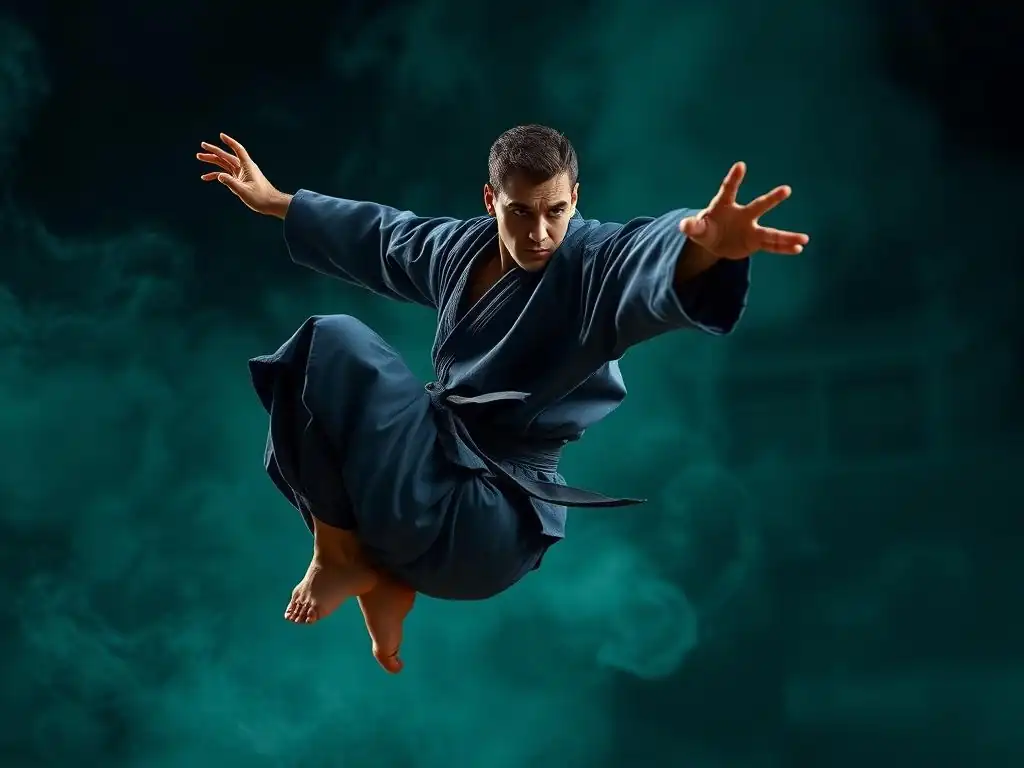
Welcome to Martial Arts Mastery, your gateway to unlocking the profound secrets of combat arts. Prepare to delve into the intricate world of martial disciplines, from historical roots to cutting-edge techniques. Curious about achieving effortless power? This week, we explore The Unseen Forces behind Aiki throws – discover how advanced principles can transform your technique and elevate your understanding of martial arts to a whole new level. Are you ready to unlock the potential within?
- Mastering Aikido Throws: Leveraging Aiki Principles for Enhanced Efficiency
- Introduction to Aiki-Based Throwing: Moving Beyond Brute Strength
- Key Aiki Principles for Superior Throwing Mechanics
- Practical Drills and Training Regimen for Aiki Throw Mastery
- Addressing Common Challenges in Aiki Throwing
- Continuous Improvement: The Journey to Aiki Throw Mastery
- Conclusion: Unlocking Effortless Power Through Aiki Principles
-
Frequently Asked Questions
- How does Aiki contribute to making throws feel effortless?
- What are some key principles of Aiki that are essential for mastering Aiki throws?
- How does training in Aiki differ from training in other martial arts focused on throws?
- What role does kuzushi (breaking balance) play in executing successful Aiki throws?
- Are Aiki throws practical for self-defense situations, and if so, why?
- Final Reflection: Embracing Effortless Power
- Unlock Your Inner Power: Become a Throwing Master Now!
Mastering Aikido Throws: Leveraging Aiki Principles for Enhanced Efficiency
Introduction to Aiki-Based Throwing: Moving Beyond Brute Strength
In martial arts, the concept of throwing an opponent often brings to mind images of raw power and physical struggle. However, within the art of Aikido, throws are approached from a fundamentally different perspective, one rooted in the profound principles of Aiki. This approach seeks not to overpower, but to harmonize with, redirect, and ultimately lead an attacker's energy, resulting in techniques that appear deceptively effortless. The goal is to achieve Aiki throws effortless technique, where the throw is a natural consequence of disrupted balance and controlled movement, rather than muscular force.
Moving beyond brute strength is the hallmark of advanced Aikido practice. While initial training often involves developing basic physical structure and coordination, the deeper levels focus on internal principles. An effortless technique in Aiki throws is not about weakness, but about efficiency – maximizing effect with minimal physical exertion. This is achieved by understanding and applying the core tenets of Aiki, transforming potentially strenuous actions into fluid, almost spontaneous movements that exploit the opponent's own momentum and structure.
Understanding Aiki: Harmony and Non-Contention
Aiki, often translated as "harmony with energy" or "joining energy," is the core philosophy and practical methodology underpinning effective Aikido. It is the principle of blending with an opponent's force rather than meeting it head-on. This non-contention is crucial for achieving Aiki throws effortless technique. Instead of blocking or resisting an attack, the Aikidoka learns to move with the incoming energy, guiding it in a way that destabilizes the attacker and creates an opening for a throw or joint lock. This requires a deep understanding of timing, distance, and sensitivity to the partner's movements and intentions.
Applying Aiki means cultivating a state of physical and mental readiness that allows for instantaneous, non-resistant responses. It involves a relaxed yet connected body, a calm mind, and the ability to perceive and react to subtle cues. In training, this is often practiced through exercises like kokyu ho (breathing method) and various blending drills, where partners learn to flow together. The aim is to internalize the principle so deeply that the response becomes intuitive, making Aiki throws effortless because the energy is never opposed, only redirected.
Achieving Fluidity: The Illusion of Effort in Aikido Technique
The apparent effortless technique seen in skilled Aikido practitioners performing Aiki throws is a direct result of mastering fluidity. Fluidity in Aikido is not just about graceful movement; it's about the seamless transition between techniques and the efficient use of the entire body as a unified unit. When the body moves as one, powered by the core and directed by intent, techniques flow naturally without the jerky, segmented actions that require excessive muscular effort. This integrated movement allows the Aikidoka to maintain balance while simultaneously disrupting the opponent's.
Developing this fluidity requires countless hours of dedicated practice, focusing on fundamental movements ( tai sabaki - body changing), posture, and the coordination of breath and action. Through consistent repetition of basic forms and partner drills, the body learns to move efficiently, eliminating wasted energy. The result is an effortless technique where throws seem to happen almost by themselves, as the opponent is led off-balance and guided into the throw's trajectory with minimal apparent force from the practitioner. This mastery creates the illusion of effortlessness, masking the sophisticated application of core Aiki principles.
Key Aiki Principles for Superior Throwing Mechanics
To truly understand and execute Aiki throws effortless technique, one must delve into the foundational principles that govern movement and interaction in Aikido. These principles – Centering, Connection, Extension, and Kuzushi – are not abstract concepts but practical methods that, when applied correctly, transform physical effort into efficient leverage and control. Mastering these principles allows the practitioner to move beyond relying solely on physical strength, enabling even smaller individuals to effectively throw larger opponents.
The integration of these key principles is what differentiates true Aiki application from mere physical technique. While a basic throw can be performed with strength, an effortless Aiki throw is the result of simultaneously applying these principles in harmony. For instance, maintaining your own center while using connection to disrupt your opponent's balance through extension, all leading to effective kuzushi, creates a chain reaction that makes the throw feel natural and powerful, yet requires surprisingly little muscular force from the thrower.
Centering (Chushin): Maintaining Stability and Control
Centering, known as Chushin in Japanese, refers to maintaining one's own stable center of gravity and internal alignment. This is paramount for achieving Aiki throws effortless technique. A strong, grounded center provides the practitioner with a stable base from which to move and apply technique, while simultaneously making them resistant to being easily unbalanced by an opponent. It involves more than just physical posture; it includes a mental focus rooted in the body's core, often described as the hara or lower abdomen.
Cultivating a strong center is a continuous process, often involving exercises that emphasize stable posture and movement from the core. When performing Aiki throws, maintaining your center allows you to pivot, step, and apply force without losing your own balance, which is essential for controlling the technique and preventing counter-attacks. A practitioner with a weak center will find their Aiki throws requiring excessive physical effort, as they are constantly fighting to maintain their own stability in addition to dealing with the opponent.
The Role of Grounding in Aikido Throwing
Grounding, or feeling deeply connected to the earth, is an essential aspect of centering in Aikido. It provides the practitioner with a solid foundation, allowing them to absorb and redirect force effectively. When grounded, the body's structure is aligned so that force travels efficiently through the legs and into the earth, rather than getting stuck or causing instability. This stability is critical for executing Aiki throws effortless technique, as it allows the practitioner to generate power from the ground up, transferring it through their connected structure into the opponent.
Developing grounding involves physical exercises that focus on posture, weight distribution, and rooting. Standing meditation, specific walking drills, and techniques practiced with a focus on sinking weight are all part of this process. For example, in a technique like Irimi Nage (entering throw), effective grounding allows the Aikidoka to enter deeply and maintain a stable base while turning and leading the opponent's center past their own, making the throw significantly more powerful and less physically taxing. Without grounding, the throw would likely feel unstable and require much more upper body strength.
Utilizing Centering to Break Opponent's Posture
A strong center is not only for self-stability but is also a key tool for disrupting an opponent's balance – a prerequisite for Aiki throws effortless technique. By maintaining your own stable center while moving around or connecting with an opponent, you create leverage. Your stable core acts as a fixed point or pivot around which you can guide the opponent's off-balance movement. For instance, by moving your center slightly offline during an attack while maintaining connection, you can pull the opponent's center past their base of support, initiating kuzushi.
This application of centering is often subtle. It might involve a small shift in weight, a rotation of the hips, or a step that positions your stable core strategically relative to the opponent. A classic example is during a basic ikkyo (first technique) entry; maintaining a strong center as you move irimi (entering) allows you to control the opponent's arm and posture from a position of stability, naturally leading to their off-balancing. This principle highlights that your own stability is the foundation from which you create instability in others, making Aiki throws effortless when executed correctly.
Connection (Musubi): Establishing and Maintaining Contact
Connection, or Musubi, is the principle of seamlessly linking with the opponent's energy and structure. It's about establishing a physical and energetic link that allows the Aikidoka to feel the opponent's intent, balance, and direction of force, and to lead them accordingly. Without effective connection, any attempt at an Aiki throw becomes a struggle against a disconnected mass, requiring brute force instead of leverage. Musubi enables the practitioner to become one with the opponent's movement, guiding it rather than resisting it.
Developing connection involves cultivating extreme sensitivity through touch. Drills like katate tori aiki age (single hand grasp, Aiki rising) or simple push/pull exercises where partners focus on maintaining a constant, sensitive link are fundamental. The goal is to feel the slightest shift in the opponent's weight or tension and respond instantly. This sensitivity allows the Aikidoka to anticipate the opponent's actions and apply Aiki throws effortless technique by blending with their incoming force and redirecting it along a path of least resistance, often before they can even fully commit to their attack.
Developing Sensitivity to Opponent's Intent
Sensitivity is a critical component of Musubi and essential for executing Aiki throws effortless technique. It goes beyond just feeling physical pressure; it involves perceiving the opponent's intention and energy flow the moment contact is made, or even before. This allows the Aikidoka to react proactively, blending with the initial impulse of an attack rather than waiting for it to fully materialize. This subtle perception enables the practitioner to initiate kuzushi and technique application at the optimal moment, maximizing efficiency.
Training exercises designed to enhance sensitivity often involve blindfolded practice or drills where the focus is solely on feeling the partner's movement without relying on sight. For example, in morote tori kokyu ho (two-on-one hand grasp breathing method), partners learn to feel the direction of pressure and respond with a coordinated body movement driven by breath, rather than muscular force.
This heightened sensitivity allows the Aikidoka to apply Aiki throws effortless by precisely timing their movements to coincide with and redirect the opponent's energy, making the technique feel less like a throw and more like a natural extension of the initial interaction.
Leading with Connection for Effective Technique Execution
Once connection is established, the principle of leading comes into play. Leading with connection means using the established link to guide the opponent's balance and movement into the desired position for a throw. This is not a forceful pull or push, but a subtle, continuous pressure or invitation that encourages the opponent to move in a way that disrupts their stability. Effective leading is key to Aiki throws effortless technique because it utilizes the opponent's own momentum and structure against them, requiring minimal force from the Aikidoka.
Leading is practiced through countless repetitions of basic techniques, focusing not just on the final throw but on the entire process from initial contact to completion. Drills that emphasize tsugi ashi (following footwork) and maintaining constant contact pressure help develop this skill. For example, in Shiho Nage (four-corner throw), leading with connection means maintaining a continuous link through the wrist and shoulder as you turn and pivot, guiding the opponent's entire body off-balance and into the throw's trajectory. This seamless leading makes the Aiki throw feel less like lifting or forcing and more like guiding a falling object.
Extension (Kokyu): Projecting Power Through Breath and Movement
Extension, or Kokyu (often translated as "breath power"), is the principle of projecting unified mind, body, and spirit through a technique. It's about generating power not from isolated muscles, but from a coordinated, relaxed body driven by focused intent and breath. Kokyu is vital for Aiki throws effortless technique because it allows the practitioner to amplify their physical output without relying on brute strength, enabling powerful techniques that seem to emanate from the core and extend outwards through the limbs and into the opponent.
Developing Kokyu involves specific breathing exercises ( kokyu ho) and practicing techniques with a strong emphasis on coordinated body movement and focused intent. It's about using the breath to unify the body and channel energy. For instance, a sharp exhalation coordinated with a physical movement, like the extension in Irimi Nage, projects unified force. This principle allows the Aikidoka to generate surprising power for Aiki throws effortless application, making the throw feel less like a physical struggle and more like an energetic projection that disrupts the opponent's structure.
Coordinating Breath and Movement for Maximum Impact
The synchronized coordination of breath and movement is fundamental to generating Kokyu power. Every technique in Aikido has an optimal point where breath and physical action should converge for maximum effect. Typically, an exhalation is timed with the moment of application of force or the completion of a movement that leads to kuzushi or the throw itself. This coordination unifies the body's energy and focuses it into the technique, amplifying its impact significantly more than muscular effort alone could achieve.
Training in Kokyu involves specific exercises where practitioners focus solely on timing their breath with simple movements, gradually integrating this into more complex techniques. For example, in a basic pushing exercise against a partner, coordinating a strong exhalation with the push allows the practitioner to feel how breath amplifies the projection of force from the core. Applying this to Aiki throws effortless technique means timing the breath to the pivotal moment of unbalancing or projection, ensuring that the entire body's power is channeled effectively into the throw, making it feel powerful yet physically non-strenuous for the thrower.
Amplifying Throwing Force Through Kokyu Power
Kokyu power is the key to amplifying the force of Aiki throws without resorting to brute strength. It allows the practitioner to generate significant force from their core and project it outwards through the connected link with the opponent. This projected energy disrupts the opponent's balance and structure much more effectively than localized muscular effort. The force feels different – less like a shove and more like an irresistible wave or current.
This amplification is evident in techniques like Kokyu Nage (breath power throw), which relies almost entirely on the timing and projection of Kokyu to unbalance and throw the opponent, often with minimal physical manipulation of their limbs. By coordinating breath, center, and extension through the connection, the Aikidoka creates a powerful, unified force that disrupts the opponent's stability at its root. This makes Aiki throws effortless because the power comes from internal coordination and projection, not external muscular struggle against the opponent's resistance.
Kuzushi: Unbalancing the Opponent for Seamless Execution
Kuzushi, the art of breaking the opponent's balance, is arguably the most critical prerequisite for executing Aiki throws effortless technique. An opponent who is firmly balanced is incredibly difficult to throw without significant strength. However, an opponent whose balance has been compromised requires minimal force to be taken down. Kuzushi is not a separate action but an integral part of the entry and blending process, achieved through strategic positioning, leading, and disruption of their base of support.
Effective kuzushi is the direct result of applying the previous principles: using your own stable center to maintain balance while using connection and extension ( Kokyu) to guide the opponent's energy and structure off their base. This subtle disruption makes the subsequent throw feel almost automatic. For example, leading an opponent slightly too far forward, backward, or to the side breaks their stable triangular base, making them vulnerable. Mastery of kuzushi means the Aiki throw becomes the natural conclusion of the opponent's loss of balance, requiring minimal effort from the thrower.
Subtle Body Movements for Effective Off-Balancing
Achieving effective kuzushi often relies on subtle, precise body movements rather than large, obvious ones. These small adjustments in angle, distance, or timing, combined with sensitive connection, are often enough to compromise an opponent's balance without alerting them to the danger until it's too late. This subtlety is key to Aiki throws effortless technique because it prevents the opponent from bracing or resisting before their balance is broken.
Examples of subtle kuzushi include shifting your weight slightly to lead the opponent's force in an unexpected direction, pivoting on the ball of your foot to change the angle of attack relative to their base, or using a slight, continuous pressure through the point of connection to encourage them to step in a destabilizing way. These small, precise movements, when timed correctly, create the opening necessary for an effortless Aiki throw by taking the opponent just past their point of stability.
Applying Kuzushi Prior to Technique Initiation
A fundamental principle in Aikido throwing is that kuzushi must occur before the main throwing action begins. Attempting to throw a balanced opponent is inefficient and requires excessive force. By first disrupting their balance through strategic entry and blending, the actual throwing motion becomes significantly easier and requires far less physical effort. This sequence is vital for achieving Aiki throws effortless technique.
In training, practitioners are constantly reminded to focus on the initial phase of kuzushi. For instance, before attempting the pivot and throw in Shiho Nage, the entry and raising of the opponent's arm must effectively break their balance upwards and forwards. Similarly, in Kotegaeshi (wrist return), the initial entry and manipulation of the wrist is designed to disrupt their posture and forward stability before the body turn executes the throw. Focusing on pre-throw kuzushi is the secret to making Aiki throws effortless and powerful.
Practical Drills and Training Regimen for Aiki Throw Mastery
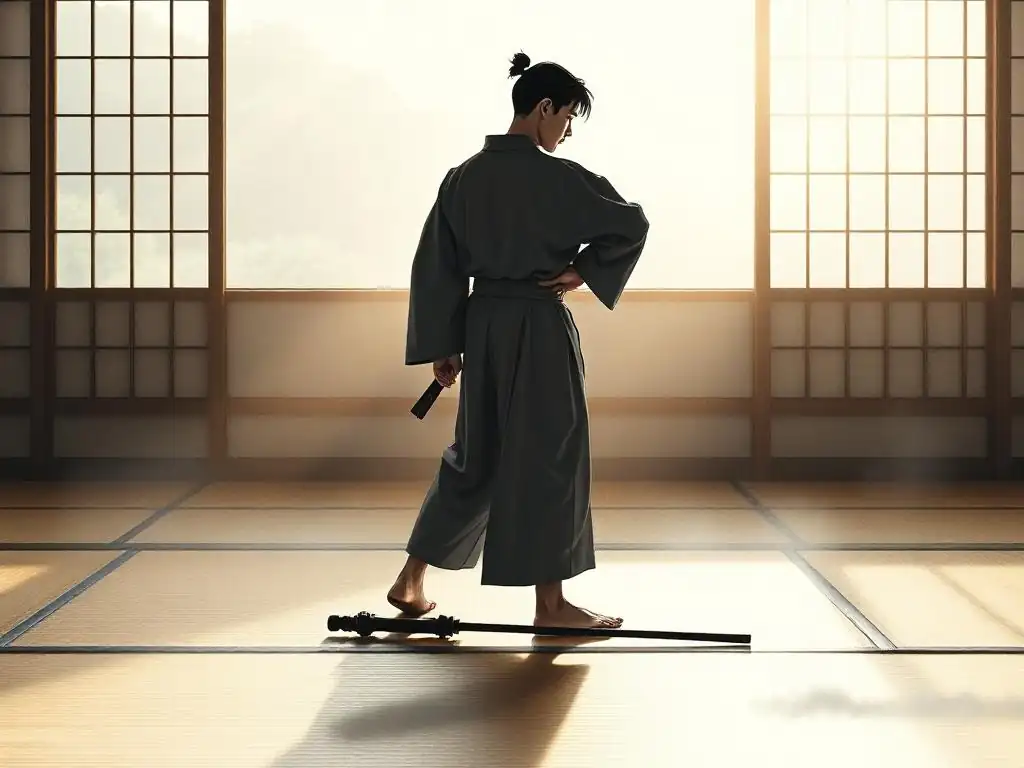
Mastering Aiki throws effortless technique requires consistent, dedicated training that focuses on internalizing the core Aiki principles. Repetition of fundamental movements, paired practice emphasizing connection and sensitivity, and solo exercises for body mechanics and Kokyu development are all essential components of a comprehensive training regimen. Simply practicing throws without understanding the underlying principles will lead to techniques reliant on strength, not Aiki.
A structured training program should progressively build the skills necessary for advanced Aiki throws. Beginning with basic blending and centering exercises, moving through fundamental techniques practiced slowly with a focus on connection and kuzushi, and finally integrating these principles into more dynamic scenarios is key. The goal is to make the application of Aiki principles second nature, so that executing Aiki throws effortless technique becomes an intuitive response.
Enhancing Sensitivity Through Paired Practice
Paired practice is indispensable for developing the sensitivity required for Musubi and effective kuzushi in Aiki throws. Working with a partner allows practitioners to receive immediate feedback on their connection, timing, and the effectiveness of their attempts to disrupt balance. These drills are not about resisting each other but about learning to feel and respond to the partner's energy and structure in a non-resistant, blending manner.
Drills often involve one partner providing a simple attack or pressure, and the other focusing solely on blending and establishing connection without applying a full technique. For example, a partner might grasp a wrist, and the defender focuses on maintaining a relaxed, connected arm while moving their body to lead the attacker's energy. This type of practice hones the ability to feel the partner's center and intent, which is crucial for initiating Aiki throws effortless technique at the precise moment of vulnerability.
Kotegaeshi Entry Drill: Focusing on Connection and Kuzushi
The Kotegaeshi (wrist return) technique provides an excellent drill for practicing connection and kuzushi essential for Aiki throws effortless technique. In a standard shomen uchi (overhead strike) or yokomen uchi (side-of-head strike) attack, the defender enters, blends with the attack, and secures the attacker's wrist. The drill focuses on this initial phase: maintaining a sensitive connection through the wrist and arm while using body movement ( tai sabaki) to disrupt the attacker's forward balance and posture.
The emphasis is not on forcing the wrist turn but on feeling the attacker's structure and using the connection to guide them off-balance. Partners practice this entry repeatedly, with uke (the attacker) providing realistic but controlled resistance, and nage (the thrower) focusing on feeling the connection and initiating kuzushi through subtle shifts in weight and angle. Mastering this entry makes the subsequent Kotegaeshi throw significantly easier and demonstrates the principle of achieving Aiki throws effortless by prioritizing pre-throw unbalancing.
Shiho Nage Entry Drill: Emphasizing Centering and Extension
The entry into Shiho Nage (four-corner throw) is a prime example for practicing centering and extension ( Kokyu), vital for powerful Aiki throws effortless technique. From a grasp (like aiki age or morote tori), the drill focuses on maintaining a strong, stable center while rotating and extending upwards through the arms, leading the opponent's energy above their head. This movement requires generating power from the core and projecting it outwards, embodying the principle of Kokyu.
Partners practice this raising and turning motion repeatedly, with uke providing pressure downwards or resistance. Nage focuses on staying grounded, moving from their core, and using unified body extension and breath to lead uke's center upwards and past their point of balance. This drill highlights how maintaining a strong center while applying upward extension through connection creates significant kuzushi, making the subsequent Shiho Nage pivot and throw feel powerful yet requiring minimal muscular effort from the arms, leading to Aiki throws effortless technique.
Solo Exercises for Aiki Development
While paired practice is crucial, solo exercises are equally important for developing the internal qualities necessary for Aiki throws effortless technique. Solo training allows the practitioner to focus purely on their own body mechanics, posture, breathing, and mental state without the external variable of a partner. These exercises build the physical and energetic foundation upon which effective Aiki application is built.
Solo practice strengthens the core, improves posture, refines footwork, and cultivates internal awareness. It allows for focused repetition of movements that are difficult to isolate in partner practice. By dedicating time to solo drills, practitioners can refine their own structure and movement patterns, making them more efficient and powerful, which directly translates into more effective and effortless Aiki throws when working with a partner.
Suburi Practice: Refining Body Mechanics and Posture
Suburi, or solo cutting/swinging exercises, particularly with a bokken (wooden sword) or jo (wooden staff), are invaluable for refining body mechanics, posture, and developing centered movement. Although seemingly simple, Suburi forces the practitioner to move their entire body as a single unit, generating power from the hips and core and projecting it through the weapon. This unified body movement is directly applicable to generating power for Aiki throws.
Practicing Suburi for even 15-20 minutes daily helps to engrain correct posture, improve hip rotation, and develop the feeling of unified extension. The focus is not on speed or force, but on precision, relaxation, and moving from the center. This solo work builds the physical structure and internal coordination that makes Aiki throws effortless technique possible, as the body becomes naturally aligned to generate and transfer power efficiently.
Breathing Exercises: Cultivating Kokyu Power and Focus
Specific breathing exercises ( Kokyu ho) are fundamental solo practices for cultivating Kokyu power and mental focus. These exercises often involve coordinated breath with simple pushing or extending movements, either against an imaginary opponent or simply projecting energy outwards. They teach the practitioner to unify their breath, intent, and physical action, generating internal power from the hara.
Regular practice of Kokyu ho helps to deepen the breath, relax the upper body, and strengthen the connection to the core. This cultivation of internal energy and focus directly enhances the ability to apply Kokyu in dynamic situations. By developing a strong, centered breath, the Aikidoka can project unified force through their connection with an opponent, making Aiki throws effortless by powering them from within rather than relying on muscular strain.
Integrating Aiki Principles into Free Sparring and Application
The ultimate test of understanding Aiki throws effortless technique is the ability to apply the principles in dynamic, unpredictable scenarios, such as randori (free practice or sparring). Integrating Aiki into free application requires moving beyond rehearsed techniques and responding spontaneously to an opponent's energy and intent using the core principles of centering, connection, extension, and kuzushi.
Randori provides a challenging environment to practice maintaining one's center under pressure, feeling and blending with incoming attacks, generating Kokyu power in unexpected moments, and creating kuzushi against a resisting opponent. It's where the theoretical understanding of Aiki throws effortless application is tested against real-time, unscripted interaction.
Adapting Aiki to Unpredictable Scenarios
Applying Aiki principles in unpredictable scenarios requires flexibility and adaptability. Attacks in randori don't come in neat, pre-arranged forms. The Aikidoka must learn to recognize the underlying energy and intention of any attack – a push, a grab, a strike – and respond using Aiki principles to blend and redirect, rather than trying to fit the attack into a specific technique shape. This fluid adaptation is key to making Aiki throws effortless in live situations.
This adaptability is trained by gradually increasing the freedom in practice, moving from static techniques to dynamic drills, and finally to randori. Practitioners learn to feel the type of energy (linear, circular, expanding, contracting) and respond with the appropriate Aiki movement – entering, turning, sinking, rising – to blend and create kuzushi. This dynamic application of principles allows for effortless Aiki throws against a wide range of attacks, as the response is based on the energy flow rather than a rigid technique sequence.
Responding to Diverse Attacking Styles with Aiki Principles
Different attackers will have different styles, speeds, and levels of resistance. Applying Aiki throws effortless technique effectively means being able to respond to this diversity using the fundamental principles. Aiki is not a set of rigid counter-techniques but a method of interacting with energy. Therefore, the principles of blending, centering, connection, and kuzushi can be applied whether the attacker is large and strong, fast and agile, or uses striking or grappling approaches.
Training should expose practitioners to partners with diverse physical attributes and attacking styles. The focus remains on applying the principles: feeling the opponent's center and balance, maintaining one's own stability, blending with their force, and using connection to guide them off-balance.
For example, against a strong linear push, the response might involve entering and turning to redirect the force ( irimi), while against a circular grab, the response might involve blending and leading the circle ( tenkan). The principles remain constant, allowing for effortless Aiki throws regardless of the specific attack, as long as the opportunity for kuzushi is created and exploited.
Addressing Common Challenges in Aiki Throwing
Even with a solid understanding of Aiki principles, practitioners often face common challenges in executing Aiki throws effortless technique. These challenges typically stem from reverting to physical strength when principles fail, losing one's own center, or failing to establish effective connection and kuzushi. Recognizing and addressing these issues is crucial for continued progress towards truly effortless Aiki throws.
Common problems include meeting force with force, tensing up under pressure, poor timing, and attempting techniques before the opponent's balance is sufficiently broken. Overcoming these challenges requires patience, self-awareness, and consistent focus on the internal principles rather than just the external form of the technique. It's a process of retraining the body and mind to prioritize blending and leverage over muscular effort.
Neutralizing Resistance: Redirecting Force with Aiki
One of the most frequent challenges is dealing with an opponent's resistance. When met with force, the natural inclination is to resist back. However, this directly opposes the principle of non-contention in Aiki and makes Aiki throws effortless technique impossible, turning the interaction into a strength contest. Neutralizing resistance with Aiki means not fighting the force, but blending with it and redirecting it.
This is achieved by maintaining a relaxed body, feeling the direction and intensity of the resistance through connection, and moving with it while subtly changing the angle or direction to disrupt the opponent's base. For example, if an opponent pushes strongly, instead of pushing back, the Aikidoka might relax, sink their weight, and pivot slightly, using the opponent's forward momentum to lead them past their point of balance. This redirecting action utilizes the opponent's own energy to create kuzushi, making the subsequent Aiki throw possible without needing to overcome their resistance head-on.
Maintaining Stability Under Pressure
Maintaining one's own stability (centering) under pressure is another significant challenge. When an opponent applies force or attempts to unbalance you, the tendency is to stiffen up or lose your rooted posture. Losing your center makes it difficult to apply Aiki principles effectively and prevents the execution of Aiki throws effortless technique. Your own instability becomes a liability.
Overcoming this requires consistent practice of centering exercises and deliberately training under increasing levels of pressure in a controlled environment. Drills where partners try to gently but persistently off-balance each other help develop the ability to stay relaxed yet connected and rooted. Learning to sink your weight, breathe deeply, and move from the core while under pressure allows you to absorb and redirect force, maintaining the stable base necessary for applying your own Aiki throws effortless.
Honing Timing and Precision in Aiki Application
Timing and precision are critical for Aiki throws effortless technique. Applying a principle or technique too early or too late, or with imprecise body positioning, significantly reduces its effectiveness and requires more physical effort to compensate. The optimal timing for kuzushi and technique execution is often a fleeting moment, and recognizing and acting upon it requires honed perception and responsiveness.
Developing timing and precision comes from countless repetitions and focused practice with a partner. Slow-motion practice, stopping at key points in a technique to check alignment and connection, and receiving detailed feedback from instructors are all vital. The goal is to develop an intuitive sense for the right moment to apply pressure, pivot, or extend, based on the opponent's movement and balance. When timing and precision are spot on, the Aiki throw feels incredibly smooth and effortless, as the technique flows naturally from the disrupted balance.
Continuous Improvement: The Journey to Aiki Throw Mastery
Mastering Aiki throws effortless technique is not a destination but a continuous journey of learning, refinement, and self-discovery. There is always a deeper level of understanding and application of the core Aiki principles to explore. Consistent practice, seeking guidance, and reflecting on the philosophical aspects of Aiki are essential for ongoing development.
The path to mastery involves moving beyond technical proficiency to embody the principles of Aiki in every movement. It requires patience, humility, and a willingness to constantly examine and improve one's own practice. This lifelong dedication leads not only to more effective Aiki throws but also to a deeper understanding of oneself and the nature of conflict and harmony.
The Significance of Consistent Practice and Constructive Feedback
Consistent practice is the bedrock of progress in any martial art, particularly one focused on subtle internal principles like Aikido. Regular training, ideally several times a week, is necessary to build the muscle memory, coordination, and sensitivity required for Aiki throws effortless technique. Short, frequent practice sessions are often more effective than infrequent, long ones.
Equally important is receiving constructive feedback from experienced instructors and senior students. An external perspective can identify subtle flaws in posture, timing, or application of principle that are difficult to spot oneself. Actively seeking and incorporating feedback accelerates the learning process and helps overcome plateaus, ensuring continuous refinement towards more effortless Aiki throws.
Seeking Mentorship from Experienced Instructors
Learning Aiki throws effortless technique from experienced instructors is invaluable. A qualified instructor can provide personalized guidance, correct subtle errors in form or principle application, and demonstrate the feeling of correct movement and connection. They have spent years, often decades, refining their own understanding and can transmit nuances that cannot be learned from books or videos alone.
Finding a dojo with instructors who emphasize the foundational Aiki principles, not just the techniques, is crucial. Learning directly from someone who embodies the effortless technique of Aiki throws provides inspiration and a clear example to follow. Their insights and adjustments can dramatically improve a practitioner's understanding and execution of the principles.
Exploring the Philosophical Dimensions of Aiki
Aikido is more than just a physical fighting system; it is a path ( do) that incorporates philosophical principles. Exploring these dimensions deepens the understanding of Aiki and its application, including Aiki throws effortless technique. Concepts like non-aggression, mutual respect, and the unification of mind and body are integral to the practice and influence how techniques are performed.
Understanding the philosophy helps the practitioner approach training with the right mindset – one focused on harmony and self-improvement rather than conflict and winning. This mental state allows for a more relaxed and receptive physical state, which is essential for blending and applying principles effectively. Embracing the philosophical aspects makes the pursuit of effortless Aiki throws a holistic endeavor that benefits not just martial skill but also personal growth.
Conclusion: Unlocking Effortless Power Through Aiki Principles
Achieving Aiki throws effortless technique is the result of deeply integrating the foundational principles of Centering, Connection, Extension ( Kokyu), and Kuzushi. It moves beyond the common perception of throwing as a feat of strength, revealing it instead as an elegant application of leverage, timing, and energy redirection. Mastery is found not in fighting an opponent, but in harmonizing with their movement and guiding them off-balance with minimal physical effort.
The path requires diligent training, focused on cultivating internal qualities and refining the subtle interactions with a partner. It is a journey of continuous learning, where each practice session offers an opportunity to deepen the understanding and application of Aiki. The goal is to make the principles so ingrained that the execution of Aiki throws becomes a natural, almost spontaneous response to an attack.
The Perpetual Pursuit of Refinement in Aikido Throwing
The pursuit of Aiki throws effortless technique is perpetual. There is no final endpoint where one has completely mastered the art. Even after decades of practice, practitioners continue to refine their movements, deepen their connection, and find more efficient ways to apply principles. This ongoing process of refinement keeps the art alive and the practitioner engaged in continuous self-improvement.
Each throw, each interaction with a partner, is an opportunity to learn more about balance, timing, and the application of Aiki. This dedication to perpetual refinement is what distinguishes true mastery from mere technical competence. It is the commitment to constantly seek greater efficiency and deeper understanding that drives the practitioner towards ever more effortless Aiki throws.
The Transformative Power of Aiki: Beyond Physical Technique
Ultimately, the transformative power of Aiki extends far beyond the physical techniques of throwing or joint locking. The principles cultivated in the pursuit of Aiki throws effortless technique – stability, connection, adaptability, non-resistance, and focused intent – are applicable to all aspects of life. They teach how to navigate conflict, both physical and interpersonal, with calmness, efficiency, and a focus on harmonious resolution.
The journey towards mastering effortless Aiki throws is a journey of self-mastery. It develops not only physical skill but also mental resilience, emotional calm, and a deeper connection to oneself and others. The ability to blend with and redirect energy, to remain centered under pressure, and to achieve powerful results with minimal struggle are profound lessons that resonate far beyond the dojo walls, demonstrating the true depth of Aiki.
Frequently Asked Questions
How does Aiki contribute to making throws feel effortless?
Aiki focuses on blending with an opponent's energy and using their own momentum against them. This reduces the need for brute strength and allows for smoother, more efficient throws. It's about redirecting force, not resisting it.
What are some key principles of Aiki that are essential for mastering Aiki throws?
Key principles include harmonizing with the opponent's movement, maintaining proper posture and balance (kuzushi), and understanding the concept of maai (distance). Mastering these aspects allows for seamless transitions into throws.
How does training in Aiki differ from training in other martial arts focused on throws?
Aiki emphasizes internal development and sensitivity to energy flow, whereas some other martial arts might focus more on purely physical strength and technique. Aiki training often involves more sensitivity drills and less direct force-on-force sparring.
What role does kuzushi (breaking balance) play in executing successful Aiki throws?
Kuzushi is fundamental to Aiki throws because it creates the opportunity to unbalance the opponent. By disrupting their center of gravity, even a small amount of force can be used to execute a powerful throw almost effortlessly.
Are Aiki throws practical for self-defense situations, and if so, why?
Yes, Aiki throws can be highly effective in self-defense because they rely on using an attacker's own aggression against them. This makes them suitable for situations where you might be outmatched in size or strength, allowing for control and neutralization.
Final Reflection: Embracing Effortless Power
The exploration of Aiki principles for effortless throws, as detailed throughout this article, isn't merely a theoretical exercise; it's a pathway to unlocking potential beyond physical strength. The ability to execute Aiki throws with minimal effort resonates deeply in a world often obsessed with brute force, offering a compelling alternative that prioritizes understanding and skillful application of force.
The journey into Aiki reveals a profound connection between mind, body, and spirit. This holistic approach, emphasizing sensitivity and adaptability, transcends the martial arts context and offers valuable lessons for navigating life's challenges with grace and efficiency. The ultimate aim of the art of Aikido is to harmonize human beings, not to defeat them.
- Morihei Ueshiba. This quote encapsulates the essence of Aiki, reminding us that true power lies not in domination, but in harmonious integration.
Now, I invite you to reflect on how you can apply these Aiki principles – sensitivity, adaptability, and the redirection of force – in your own life. Consider how you can move with greater fluidity and efficiency, not just in physical movements, but also in your interactions and endeavors. Embrace the unseen forces, and discover the effortless power that resides within you.
Unlock Your Inner Power: Become a Throwing Master Now!
Thank you for exploring the subtle yet powerful world of advanced Aiki principles! We hope you've gained valuable insights into achieving more effortless and effective throws. Ready to put these principles into action?
Here's how to take your training to the next level:
- Immediately apply one of the concepts you learned today during your next practice session – focus on just one area to really feel the difference.
- Share your experience with a training partner and teach them what you've learned; solidifying your understanding and theirs!
- Explore related articles on MartialArtsMastery.org and delve into other aspects of Aiki and efficient movement.
What's one small adjustment you can make in your next training session to feel more connected and balanced when performing a throw?