
Advanced Aikido Drills for Enhancing Randori Adaptability and Fluidity

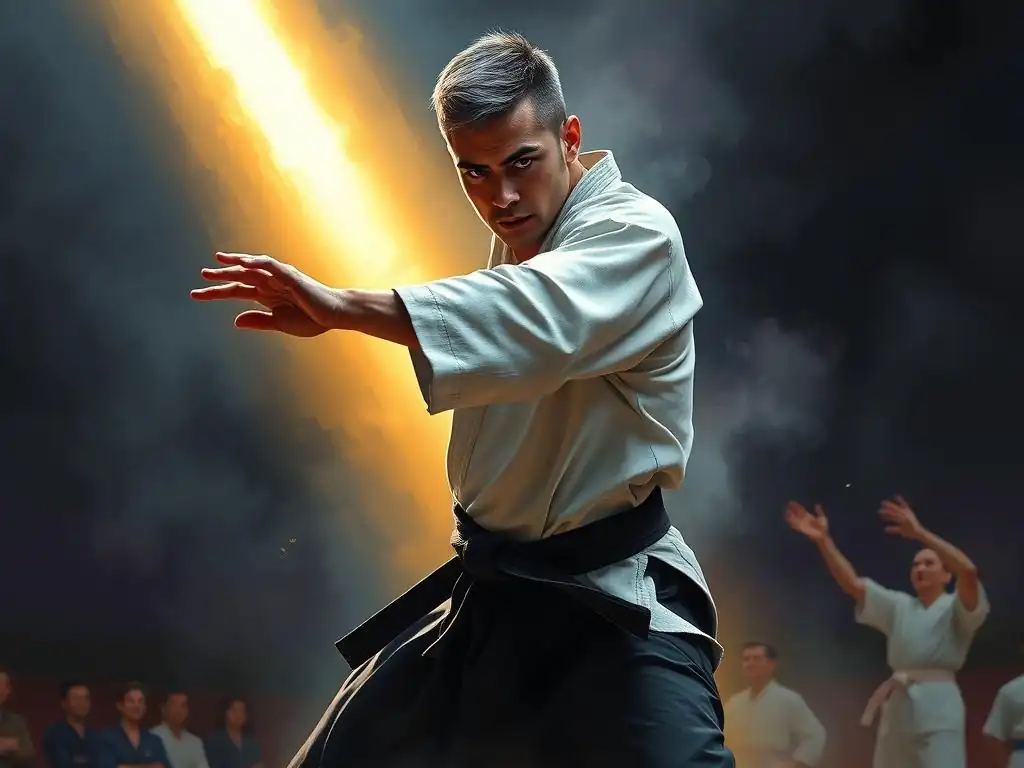
Welcome to Martial Arts Mastery, where we delve into the profound depths of combat traditions worldwide. Curious about how to elevate your Aikido practice? This week, we unlock the secrets to achieving unparalleled fluidity in Aikido randori through targeted drills. Discover how these advanced techniques can transform your adaptability and take your skills to the next level. Ready to move beyond static forms and embrace dynamic, flowing movement?
- Introduction to Aikido Randori and Fluid Movement
- Core Principles for Advanced Aikido Randori Drills
- Essential Aikido Drills to Improve Randori Performance
- Specialized Aikido Randori Drills for Fluid Transitions
- Developing Randori Adaptability Through Scenario-Based Training
- Enhancing Fluidity with Solo Aikido Practice (Tandoku Renshu)
- Advanced Concepts in Aikido Randori: Mind and Body Integration
- Common Mistakes in Aikido Randori and How to Avoid Them
- Conclusion: Mastering Aikido Randori Through Dedicated Practice
-
Frequently Asked Questions
- What is Randori in Aikido and why is it important for developing fluidity?
- How do these advanced Aikido drills specifically improve adaptability in Randori?
- What are some key principles to keep in mind when practicing Aikido Randori drills for fluidity?
- How often should I incorporate these advanced Randori drills into my Aikido training routine?
- Are these drills suitable for Aikido practitioners of all levels?
- Final Reflection: Embracing Fluidity in the Face of Chaos
- Elevate Your Aikido: Unleash Fluid Randori Mastery!
Introduction to Aikido Randori and Fluid Movement
Understanding Randori in Aikido Training
Randori, often translated as "grasping freedom" or "chaos practice," represents a dynamic and less predictable form of training in Aikido compared to structured technique practice ( kihon waza). It typically involves one practitioner (nage) defending against multiple attackers (uke) simultaneously or in rapid succession. While the exact format can vary between dojos, ranging from relatively cooperative to more resistance-based, the core purpose remains consistent: to develop the ability to apply Aikido principles and techniques spontaneously under pressure. Unlike pre-arranged scenarios where the uke's attack is known, randori requires the nage to perceive, process, and respond to unexpected inputs in real-time. This unpredictability is crucial for cultivating true martial adaptability.
In many traditional dojo settings, randori is introduced after a student has achieved a certain level of proficiency, perhaps around 1st kyu or shodan (black belt) level, though some instructors introduce simplified forms earlier. A typical randori session might last anywhere from 30 seconds to several minutes, depending on the intensity and the number of participants.
Practitioners often report that even a short period of intense randori can be physically and mentally exhausting, highlighting the significant demands it places on awareness, timing, and physical readiness. The goal isn't necessarily to "win" but to maintain composure, stay centered, and apply techniques effectively against diverse attacks, continuously moving and blending.
The Importance of Fluidity and Adaptability in Aikido
Fluidity in Aikido refers to the seamless, unbroken flow of movement and technique application. It's the ability to transition smoothly between stances, steps, and techniques without hesitation or stiffness. This fluidity is paramount in randori because attacks don't occur in isolation; they are often continuous or sequential, requiring the defender to constantly adjust their position and response.
A fluid practitioner can absorb an attack, redirect force, execute a technique, and immediately prepare for the next incoming threat, all in a single, integrated motion. Lack of fluidity often manifests as jerky movements, telegraphing intentions, or getting stuck in one position, making the practitioner vulnerable.
Adaptability, closely linked to fluidity, is the capacity to modify one's response based on the specific nature of the attack, the attacker's resistance, and the changing environment. In randori, attackers may vary their speed, angle, and intensity, or switch attacks unexpectedly. An adaptable Aikidoka doesn't rely on a single pre-programmed response but can instantly select and modify a technique or movement principle to fit the situation.
This requires a deep understanding of Aikido fundamentals, not just as rigid forms but as flexible concepts. Developing Aikido randori drills fluidity and adaptability is essential for translating theoretical knowledge into practical, dynamic self-defense skills.
Core Principles for Advanced Aikido Randori Drills
Maai (Distance) and Timing in Dynamic Aikido Exchanges
Maai, the concept of proper distance, is fundamental to effective Aikido, especially in the dynamic environment of randori. It's not a fixed measurement but a constantly adjusting relationship between you and your attacker(s), considering their reach, speed, and intent. In randori, maintaining optimal maai is crucial for safety and technique execution; being too close offers no space to maneuver, while being too far prevents effective engagement. Advanced training often involves drills specifically designed to challenge and refine maai perception under pressure, such as multiple attackers approaching from different vectors or changing speeds abruptly.
Timing, or timing, is equally vital. It involves harmonizing your movement with the attacker's energy and intention. In randori, this means entering ( irimi) or turning ( tenkan) at precisely the right moment to disrupt their balance ( kuzushi) or evade their attack. Developing acute timing allows a practitioner to intercept an attack at its weakest point or blend with its momentum rather than meeting force head-on. Advanced Aikido randori drills often emphasize split-second decision-making regarding maai and timing, such as reacting to a partner's subtle shift in weight or anticipating the trajectory of a strike or grab a fraction of a second before it fully commits.
Kuzushi (Breaking Balance) Strategies for Randori
Kuzushi is the art of breaking an opponent's balance, rendering them unstable and susceptible to throws or joint locks. While basic kuzushi involves simple pulling or pushing, advanced randori demands more nuanced and dynamic strategies. Against a resisting or multiple opponent, one cannot rely on static methods. Instead, kuzushi must be achieved through movement, timing, and leveraging the attacker's own force and momentum. This could involve drawing an attacker into a void, disrupting their base with subtle body shifts, or using their forward momentum against them.
Effective kuzushi in randori often requires simultaneous action – breaking balance while moving or entering. It's rarely a separate step but integrated into the overall flow. For example, as an attacker reaches, a well-timed step and turn ( tenkan) can use their extension to pull them off balance forward. Or, a sudden inward entry ( irimi) can jam their structure and break their balance backward. Advanced Aikido randori drills fluidity often focus on developing the sensitivity to feel an opponent's center and the ability to exploit even minor imbalances instantaneously, often against multiple points of contact or pressure.
Ukemi (Breakfalls) Proficiency for Safe Randori Practice
While the focus of randori is often on the nage's techniques, the uke's proficiency in ukemi (breakfalls) is absolutely critical for safe and effective training. Advanced randori involves dynamic throws and movements that can be unpredictable. Poor ukemi significantly increases the risk of injury, not only to the uke but potentially to the nage as well if the uke's fall is uncontrolled. Developing robust, adaptable breakfalls – forward rolls, backward rolls, side falls, and even high falls – allows the uke to receive techniques safely from various angles and intensities.
Furthermore, advanced ukemi isn't just about falling safely; it's also about being a good training partner. A skilled uke receives the technique in a way that allows the nage to fully explore the principle and execution, providing appropriate resistance without being overly stiff or completely passive. In randori, ukes must be highly aware of their surroundings and other attackers to avoid collisions and ensure a continuous, albeit chaotic, flow. Regular, dedicated practice of ukemi, including drills specifically focused on reacting to unexpected throws or falls from different directions, is non-negotiable for anyone participating in advanced randori.
Essential Aikido Drills to Improve Randori Performance
Footwork Drills for Enhanced Mobility and Agility
Footwork is the foundation of movement in Aikido and directly impacts fluidity and adaptability in randori. Static positions are liabilities; constant, controlled movement is key to maintaining balance, creating opportunities, and evading attacks. Drills focusing on agility and mobility build the necessary physical readiness.
Shifting and Pivoting Exercises for Dynamic Movement
Basic shifting ( taisabaki) and pivoting ( tenkan, irimi) exercises are fundamental, but advanced drills push these movements under increasing pressure and complexity. Imagine practicing pivots while a partner applies light, constant pressure, forcing you to maintain structure and balance. Another drill involves reacting to commands (like "front," "back," "left," "right") with immediate, precise steps or pivots, increasing speed over time. Practitioners often perform hundreds of repetitions of these basic movements during a typical training week, aiming for effortless, unconscious execution. Advanced variations might involve performing these movements on uneven surfaces (simulating real-world scenarios) or while maintaining contact with a partner to develop sensitivity.
Irimi and Tenkan Drills for Randori Adaptability
Irimi (entering) and Tenkan (turning) are core Aikido movements for blending with or avoiding attacks. Advanced drills for these movements focus on executing them from unexpected angles or against varied attacks. For example, practicing irimi not just straight forward, but diagonally, or even backward to create distance. Tenkan drills might involve pivoting not just 180 degrees, but 90 or 270 degrees, or chaining multiple pivots together. Partner drills can involve an uke applying varying levels of resistance or changing the angle of attack mid-movement, forcing the nage to adapt their irimi or tenkan instantaneously. Aiming to execute these movements within milliseconds of perceiving an attack is a goal of advanced training, significantly enhancing Aikido randori drills fluidity.
Partner Drills for Developing Sensitivity and Responsiveness
Randori is inherently interactive, making partner drills crucial for developing the sensitivity needed to feel an opponent's energy and respond effectively.
Kokyu-ho Drills for Enhanced Connection and Power
Kokyu-ho (breath power exercises) are foundational partner drills focusing on connecting with a partner's center and extending one's own energy. Advanced Kokyu-ho drills go beyond the basic seated or standing forms. They involve maintaining connection and extending power while both partners are moving, perhaps in a circular pattern or reacting to light pushes and pulls. These drills cultivate the ability to feel the partner's intention through physical contact, allowing for more intuitive responses in randori. Practicing variations where the partner offers subtle, unpredictable resistance helps refine the ability to apply Kokyu power dynamically and adaptably.
Multiple Attackers Drills for Realistic Randori Scenarios
These drills are specifically designed to simulate the environment of randori. Starting with two attackers and gradually increasing the number (e.g., to three or four simultaneously) challenges the nage's spatial awareness and ability to handle multiple inputs. Drills might involve attackers feeding specific types of attacks (grabs, strikes) in a non-sequential but controlled manner.
A variation involves attackers circling the nage, who must maintain a centered position and respond as each attacker commits. These drills, often practiced for short, intense bursts of 60-90 seconds, are invaluable for improving situational awareness and the ability to transition rapidly between techniques against different opponents, directly building Aikido randori drills fluidity.
Specialized Aikido Randori Drills for Fluid Transitions
Transitioning from Stand-Up to Ground Techniques in Randori
While Aikido is primarily known for stand-up techniques, randori can sometimes lead to ground situations, either intentionally or unintentionally. Drills focusing on fluid transitions between standing techniques and ground pins or controls are vital for comprehensive randori capability. This could involve practicing how to follow an opponent down after a throw, transitioning from a standing joint lock attempt to a ground pin like kote-gaeshi or ikkyo on the ground, or defending against an attacker who attempts a tackle. Such drills emphasize maintaining control and balance throughout the change in elevation and position.
A specific example involves practicing a failed stand-up throw attempt that naturally leads into a ground pin. The nage might attempt kokyu-nage, but if the uke resists effectively, the nage transitions their weight and leverage to secure a hold like sankyo or nikyo as they both move towards the ground. Practicing these transitions ensures that a technique doesn't end abruptly if the initial throw isn't successful but flows smoothly into a follow-up action, crucial for Aikido randori drills fluidity.
Combining Aikido Techniques for Seamless Flow
True fluidity in randori comes from the ability to combine techniques without pause, responding to the attacker's reaction. This means not seeing techniques as isolated events but as potential pathways.
Integrating Atemi (Strikes) into Randori Flows
Although Aikido is not primarily a striking art, atemi (strikes, typically to disrupt balance or focus) are part of its curriculum and can be effectively integrated into randori. Drills for this focus on using a strike as a setup for a throw or joint lock, or as a distraction. For instance, practicing a light, non-injurious strike to the face or ribs just before executing an irimi-nage. The strike isn't meant to cause damage but to momentarily break the attacker's posture or focus, creating an opening. Drills might involve a partner offering varied resistance to the atemi, forcing the nage to immediately transition to the follow-up technique based on the reaction. This adds another layer of unpredictability and requires fluid integration of different types of actions.
Blending Joint Locks and Throws for Dynamic Control
Advanced randori drills heavily emphasize the ability to transition between joint locks ( katame waza) and throws ( nage waza) based on the attacker's movement and resistance. If an attempt at a throw like shiho-nage is met with strong resistance, the nage might immediately transition to a joint lock like kote-gaeshi or nikyo using the same momentum and contact points. Conversely, if a joint lock attempt isn't fully securing the opponent, transforming it into a throw like kokyu-nage or irimi-nage can be highly effective. Practicing sequences like Ikkyo leading into Irimi-nage, or Kote-gaeshi transitioning into Shiho-nage as the uke tries to escape, builds the necessary muscle memory and decision-making speed for seamless transitions in randori, significantly improving Aikido randori drills fluidity.
Developing Randori Adaptability Through Scenario-Based Training
Simulating Realistic Attack Scenarios in Aikido Randori
Moving beyond generic grabs and strikes, scenario-based training introduces more realistic and varied attacks seen in potential real-world confrontations. This could involve simulating attacks from different postures (seated, standing), from behind, or in confined spaces. Practitioners might train in environments that mimic common locations like hallways or crowded areas, forcing them to consider their surroundings and potential obstacles. While still within the safe structure of the dojo, these scenarios add layers of complexity and unpredictability, pushing the practitioner to adapt their Aikido principles to less-than-ideal circumstances.
A specific drill could involve starting with the nage sitting on a chair, simulating being caught off guard, and then having an attacker approach from an unexpected angle. The nage must quickly regain posture, assess the threat, and apply an appropriate technique while considering their initial disadvantage. Such drills, sometimes practiced for periods longer than typical randori (e.g., 2-3 minutes), build resilience and the ability to think and act under varied forms of pressure, enhancing overall randori adaptability.
Adapting Aikido Techniques to Unpredictable Movements
Attackers in a real situation, and sometimes in advanced randori, do not move like compliant training partners. They might be awkward, unpredictable, or resist in ways not covered by basic technique forms. Drills designed to cultivate adaptability involve partners who intentionally move in unexpected ways – pulling back suddenly, dropping their weight, or changing the attack mid-motion. The nage cannot rely on executing a textbook technique but must adapt the underlying principles (like kuzushi, maai, and connection) to the attacker's dynamic state.
For instance, practicing ikkyo against a partner who suddenly goes limp or stiffens unexpectedly. The nage must feel this change and adjust their movement and application of force instantly. Another drill involves an attacker who feints or changes their attack type (e.g., a grab turns into a push). The nage must perceive this shift and respond appropriately, perhaps transitioning from an entry-based technique to a blending technique. This level of responsiveness is key to Aikido randori drills fluidity and effectiveness against non-compliant opponents.
Dealing with a Knife Attack
While Aikido is not a dedicated weapons art, basic defenses against common threats like knives are often part of the curriculum, especially at advanced levels. Randori scenarios can include a partner simulating a knife attack (using a training knife, of course). These drills are not about disarming in a static way but about surviving the initial attack, creating distance or controlling the weapon arm, and applying an Aikido principle to neutralize the threat.
Training might involve a partner making realistic stabbing or slashing motions, and the nage must use footwork and body movement ( taisabaki) to evade, then attempt to control the attacking arm using techniques like kote-gaeshi or nikyo applied to the wrist holding the weapon. These drills are typically practiced with extreme caution and focus on timing and precision under duress. The goal is to develop the ability to react instinctively to a high-stress threat, adapting standard Aikido movements for defense.
Responding to a Grab from Behind
Being grabbed from behind is a common scenario simulated in advanced randori training. This attack immediately puts the nage at a disadvantage as their primary tools (eyesight, forward mobility) are compromised. Drills focus on regaining balance, creating space, and using the attacker's grip and position against them.
Training for this scenario involves a partner securing a bear hug or shoulder grab from behind. The nage might practice techniques like dropping their weight ( sagari), turning sharply into the attacker ( irimi tenkan), or using wrist/finger pressure ( koshi nage setup) to create an opening or break the grip. The drill emphasizes reacting quickly to the physical sensation of being grabbed, using internal power ( kokyu) and body structure to disrupt the attacker's hold and transition into a control or throw. Practicing against different types of grabs (over or under the arms) builds versatility and adaptability in responding to rear attacks in randori.
Enhancing Fluidity with Solo Aikido Practice (Tandoku Renshu)
Even without a partner, solo training ( tandoku renshu) is invaluable for refining the fundamental movements and body mechanics that underpin fluidity in randori.
Suburi (Basic Cutting Exercises) for Improved Body Mechanics
Suburi, or basic cutting exercises, typically performed with a wooden sword ( bokken) or staff ( jo), are not just weapon practice; they are dynamic exercises that build core strength, coordination, and proper body alignment. Executing cuts like shomen uchi or yokomen uchi repeatedly, focusing on using the hips and core rather than just the arms, develops integrated body movement essential for powerful and fluid technique execution in randori.
Practicing hundreds of suburi repetitions daily or weekly helps engrain correct posture, weight distribution, and sequential body movement. This solo work translates directly to empty-hand techniques, making movements like ikkyo or shiho-nage more integrated and less segmented. The focus on breath control and focused intent during suburi also enhances the mental aspects needed for fluid randori performance.
Kihon Waza (Basic Techniques) Review for Fluid Execution
Regularly reviewing and practicing basic Aikido techniques ( kihon waza) like ikkyo, shiho-nage, kote-gaeshi, etc., in a solo format, focusing purely on form and flow, is crucial. Without the distraction of a partner's resistance, one can concentrate on smooth transitions between movements, proper weight transfer, and the continuous flow of energy.
This solo practice allows for meticulous attention to detail – ensuring the feet, hips, and hands move in coordination, that the center remains stable, and that the technique flows from beginning to end without hesitation. Practicing a sequence of basic techniques solo, transitioning from one to the next as if responding to an imaginary attacker, helps link individual movements into a continuous, fluid chain, directly improving Aikido randori drills fluidity when applied with partners.
Visualization Techniques for Mental Preparation and Flow State
Mental rehearsal and visualization are powerful tools for enhancing randori performance. Solo practice can include visualizing performing techniques flawlessly against various attackers, experiencing the feeling of smooth movement and perfect timing.
Practicing visualization involves sitting quietly and mentally running through randori scenarios. Imagine multiple attackers approaching, visualize evading, entering, blending, and executing techniques with complete fluidity and control. This mental training helps build confidence, improves reaction speed by pre-programming responses, and cultivates the ability to enter a flow state ( mushin) during actual practice. Dedicating even 5-10 minutes daily to focused visualization can significantly impact performance in dynamic randori situations.
Advanced Concepts in Aikido Randori: Mind and Body Integration
Mushin (No-Mind) and Zanshin (Remaining Mind) in Randori
Achieving Mushin (no-mind) is a state where the conscious thought process is bypassed, allowing for spontaneous, intuitive responses. In randori, this means reacting directly to the situation without hesitation or deliberate calculation. It's not about being mindless but about being so fully present and trained that the body and mind act as one, without the interference of fear, doubt, or overthinking.
Zanshin (remaining mind) is the state of continued awareness and readiness even after a technique is completed. In randori, this is vital because neutralizing one attacker does not end the threat; others may be immediately present. Maintaining zanshin means being instantly prepared for the next attack, scanning the environment, and retaining a relaxed but alert posture. Cultivating both mushin for spontaneous action and zanshin for continuous awareness is a hallmark of advanced randori practice and contributes significantly to Aikido randori drills fluidity.
Cultivating Awareness and Intuition for Adaptive Responses
Beyond physical technique, advanced randori relies heavily on heightened awareness ( ma-ai, spatial awareness, sensing intent) and intuition. Awareness allows the practitioner to perceive threats early and accurately; intuition allows them to respond effectively without conscious deliberation. Drills that challenge peripheral vision, the ability to sense presence without seeing, and reacting to subtle shifts in energy are crucial.
For example, a drill might involve standing blindfolded while partners move around and occasionally initiate a light touch or sound, requiring the practitioner to sense their location and potential attack vector. Another involves partners moving unpredictably, and the nage must simply evade or blend, focusing on feeling the energy rather than seeing the specific technique. These exercises train the nervous system to react instinctively and build the intuitive sense needed for fluid, adaptive responses in the chaos of randori.
Integrating Breath Control (Kokyu) for Power and Stability
Conscious and controlled breathing ( kokyu) is fundamental to generating power and maintaining composure in Aikido. In the high-pressure environment of randori, maintaining calm, deep breathing prevents tension and allows for sustained effort and clear thinking. Kokyu is also the source of internal power, enabling techniques to be executed with whole-body connection rather than isolated muscular force.
Advanced randori drills emphasize coordinating breath with movement and technique execution. Exhaling during entry or execution of a technique helps focus power and stabilize the core. Maintaining steady, deep breaths throughout a multi-attacker scenario helps manage stress and maintain fluidity. Practicing techniques while consciously focusing on kokyu, or even performing strenuous movements like continuous tenkan or irimi while regulating breath, builds the physical and mental capacity to integrate kokyu seamlessly into dynamic randori.
Common Mistakes in Aikido Randori and How to Avoid Them
Overthinking and Hesitation in Dynamic Situations
One of the most common pitfalls in randori is overthinking – trying to consciously decide which technique to use or analyzing the situation too much. This leads to hesitation, which is often punished instantly by the attackers. The delay breaks the flow and makes the practitioner vulnerable.
Avoiding this requires extensive repetition of basic movements and techniques ( kihon waza, taisabaki, suburi) so they become instinctual. Randori practice itself, particularly intense, short bursts, trains the ability to react spontaneously. Visualization and mindfulness practices also help quiet the analytical mind and cultivate mushin. Focusing on feeling the connection and energy flow, rather than naming the technique, promotes a more reactive state, enhancing Aikido randori drills fluidity.
Telegraphing Techniques and Losing Balance
Telegraphing occurs when a practitioner makes preparatory movements that signal their intended technique, giving the attacker time to react. Losing balance makes the practitioner easy to control or throw. These often go hand-in-hand; poor balance can lead to stiff, telegraphing movements.
Avoiding telegraphing involves practicing techniques with minimal, efficient motion, moving from the center ( hara), and integrating footwork smoothly. Balance is improved through core strengthening, proper posture ( shizentai), and dedicated balance drills (e.g., standing on one leg, walking on narrow lines). Partner drills where the uke is instructed to react specifically to signs of telegraphing help the nage become aware of their habits. Concentrating on maintaining a stable center throughout all movements is paramount for both avoiding telegraphing and preventing loss of balance in the dynamic environment of randori.
Lack of Awareness of Surroundings and Opponents
In randori, especially with multiple attackers, tunnel vision is a significant danger. Focusing solely on the immediate attacker leads to being blindsided by others.
Developing peripheral awareness and the ability to scan the environment constantly is crucial. Drills that involve attackers approaching from different directions, requiring the nage to respond to the one posing the most immediate threat while remaining aware of the others, are essential. Practicing techniques that naturally orient the nage towards potential threats (like shiho-nage which involves turning 360 degrees) also helps. Simple exercises like practicing basic movements while calling out the locations of people or objects in the dojo can build spatial awareness, a critical component for effective and fluid Aikido randori drills fluidity.
Conclusion: Mastering Aikido Randori Through Dedicated Practice
The Path to Fluid and Adaptable Aikido Movement
Mastering Aikido randori adaptability and fluidity is a journey that requires dedicated, consistent practice encompassing both solo and partner training. It is not about accumulating a vast repertoire of techniques but about deeply understanding and embodying Aikido principles – maai, timing, kuzushi, ukemi, and kokyu – and applying them spontaneously under pressure. The advanced drills discussed provide structured methods to challenge and refine these skills in a dynamic context. From fundamental footwork and body mechanics cultivated through suburi and kihon waza to the complex interactions of multiple attacker and scenario-based training, each element contributes to the development of seamless, intuitive movement.
The integration of mind and body, striving for mushin and maintaining zanshin, is the ultimate goal, allowing practitioners to react authentically and effectively without conscious deliberation. By identifying and correcting common mistakes like hesitation and telegraphing, practitioners smooth out rough edges and enhance their natural flow. Achieving true Aikido randori drills fluidity means moving beyond technique as a set of steps and embracing it as a continuous, adaptive response to the ever-changing environment of the dojo floor or a real-world situation.
Continuous Improvement and Lifelong Learning in Aikido
Aikido, and particularly randori, offers a path of lifelong learning. There is no final destination of perfect mastery, only continuous refinement. Even the most experienced practitioners regularly revisit basic drills and principles, finding new depth and nuance. The challenges presented in randori serve as a mirror, highlighting areas for further development – whether it's improving footwork, refining timing against faster opponents, or cultivating deeper calmness under pressure.
Embracing the challenges of advanced randori drills with a spirit of inquiry and persistence is key. Each session, each interaction, provides valuable feedback. By consistently engaging in rigorous training, focusing on the integration of mind and body, and approaching practice with humility and dedication, practitioners can steadily enhance their randori adaptability and fluidity, embodying the dynamic and harmonious spirit of Aikido in action. This ongoing process of self-discovery and refinement is at the heart of the martial art.
- [ ] Review core principles daily.
- [ ] Practice footwork drills 3-5 times per week.
- [ ] Engage in partner sensitivity drills regularly.
- [ ] Seek opportunities for multiple attacker practice.
- [ ] Dedicate time to solo technique review and visualization.
- [ ] Analyze randori performance for areas needing improvement.
Frequently Asked Questions
What is Randori in Aikido and why is it important for developing fluidity?
Randori in Aikido is a form of free practice against multiple attackers. It's crucial for developing fluidity because it forces practitioners to adapt to unpredictable situations, moving beyond pre-arranged forms.
How do these advanced Aikido drills specifically improve adaptability in Randori?
The drills focus on dynamic movement, opportunistic techniques, and seamless transitions. This helps practitioners react instinctively and effectively to the changing flow of Randori.
What are some key principles to keep in mind when practicing Aikido Randori drills for fluidity?
Focus on maintaining balance, connection, and awareness of your surroundings. Prioritize smooth, flowing movements over brute strength to achieve true fluidity.
How often should I incorporate these advanced Randori drills into my Aikido training routine?
Ideally, incorporate them at least twice a week to see noticeable improvements. Consistency is key to developing the necessary muscle memory and strategic thinking.
Are these drills suitable for Aikido practitioners of all levels?
While beneficial for all, these drills are best suited for intermediate to advanced Aikido students. Beginners should first master fundamental techniques before attempting these more complex exercises.
Final Reflection: Embracing Fluidity in the Face of Chaos
The exploration of advanced Aikido drills for enhancing randori adaptability and fluidity underscores a fundamental truth: true mastery lies not in rigid adherence to form, but in the ability to adapt and flow with the unpredictable nature of conflict. In a world increasingly characterized by uncertainty and rapid change, the lessons learned on the mat – the ability to remain centered, responsive, and fluid in the face of multiple attackers – resonate far beyond the dojo.
This journey into the nuanced world of Aikido randori has profoundly impacted my understanding of movement and connection. It has reinforced the idea that true strength comes not from brute force, but from yielding, redirecting, and harmonizing with the energy around us. This principle extends beyond physical combat and into the realm of interpersonal relationships and problem-solving. The ultimate aim of Aikido lies not in defeating others, but in defeating one's own ego and limitations.
This quote, often attributed to Morihei Ueshiba, perfectly encapsulates the spirit of continuous self-improvement and the pursuit of harmony that underlies the practice.
As you step off the mat and back into the world, I invite you to carry with you the lessons of fluidity and adaptability. Embrace the unexpected, find your center amidst the chaos, and remember that true strength lies not in resisting change, but in flowing with it. Cultivate the ability to adapt, to connect, and to find harmony in every interaction. Let the principles of Aikido guide you towards a more resilient, responsive, and ultimately, more fulfilling life.
Elevate Your Aikido: Unleash Fluid Randori Mastery!
Thank you for diving deep into the world of advanced Aikido drills! We hope this article has provided you with fresh insights and practical techniques to enhance your randori adaptability and overall fluidity on the mat. Now, it's time to translate that knowledge into action!
Here’s how you can take your Aikido practice to the next level:
- Prioritize integrating the Tenkan-based entries into your next randori session. Focus on maintaining a stable center while seamlessly blending with multiple attackers.
- Explore filming your randori sessions to objectively analyze your movement patterns and identify areas for refinement. Share it with your instructor for personalized feedback.
- Share this article with fellow Aikidoka and start a discussion on which drills they find most effective for improving randori adaptability.
What specific drill will you implement in your next training session to unlock greater fluidity and adaptability in randori?