
Utilizing Natural Cover and Concealment: A Ninjutsu Field Guide

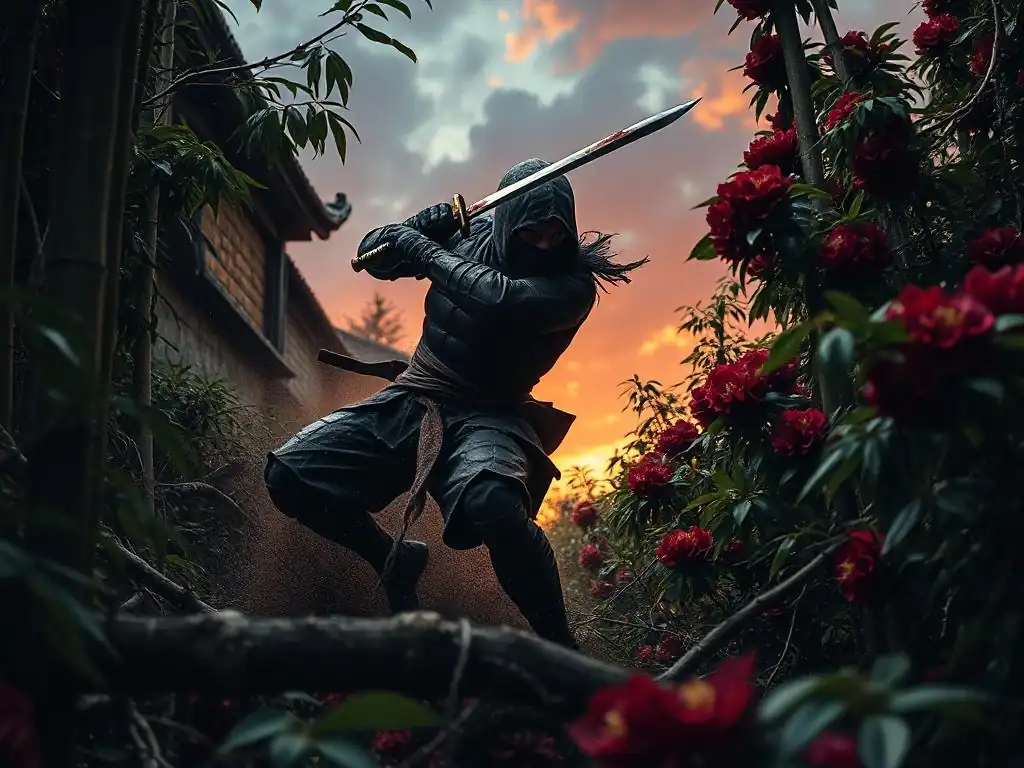
Welcome to Martial Arts Mastery, where we delve into the intricate world of combat disciplines. Ever wondered how ancient warriors vanished into thin air, becoming one with their surroundings? Today, we unlock the secrets of Ninjutsu field concealment techniques, exploring how these masters of stealth utilized natural cover to become virtually invisible. Prepare to unravel the art of becoming unseen and discover how these time-tested principles can be applied in modern contexts. Intrigued? The shadows await...
- Introduction to Ninjutsu Fieldcraft and Concealment
- Mastering Natural Cover: Blending with the Environment
- Concealment Techniques: Mimicking and Shadowing
- Camouflage and Blending: The Art of Disguise in Ninjutsu
- Movement Techniques for Enhanced Concealment
- Advanced Ninjutsu Field Concealment Techniques
- Practical Exercises for Developing Ninjutsu Concealment Skills
- Conclusion: The Path to Mastery in Ninjutsu Field Concealment
-
Frequently Asked Questions
- How does Ninjutsu field concealment differ from traditional camouflage?
- What are some examples of natural cover effectively used in Ninjutsu field concealment?
- Why is understanding the terrain so crucial for successful Ninjutsu field concealment?
- How important is movement discipline when practicing Ninjutsu field concealment techniques?
- Does Ninjutsu field concealment solely rely on visual deception, or are other senses considered?
- Final Reflection: Mastering the Art of Vanishing
- Master the Shadows: Begin Your Ninjutsu Journey Now!
Introduction to Ninjutsu Fieldcraft and Concealment
The Importance of Stealth and Evasion in Ninjutsu
Stealth and evasion form the bedrock of Ninjutsu's practical application, particularly in historical contexts where the ninja operated as spies, saboteurs, and information gatherers. Unlike direct confrontation often emphasized in other martial arts, the primary goal was often to achieve objectives without being detected or engaged in prolonged combat. This emphasis on unseen movement and non-detection required a deep understanding of the environment and the ability to blend seamlessly into it.
Mastering stealth and evasion techniques allowed the ninja to infiltrate guarded locations, observe enemy movements without being seen, and retreat safely when the mission was complete. Historical accounts, while often embellished, frequently describe ninja vanishing into thin air or moving through landscapes unnoticed. This wasn't magic, but a result of rigorous training in disciplines like intonjutsu (the art of disappearing or concealing oneself) and choho (espionage), which heavily relied on the practical application of Ninjutsu field concealment techniques.
Understanding Natural Cover and Concealment for Ninja Tactics
Natural cover and concealment are fundamental principles in Ninjutsu fieldcraft, providing the physical means for a practitioner to remain hidden from observation. Cover refers to anything that can stop or deflect incoming projectiles or block line of sight, offering protection. Examples include thick tree trunks, large rocks, or substantial terrain features. Concealment, on the other hand, only prevents observation; it hides you from view but offers no protection from attacks. Tall grass, dense bushes, or shadows are forms of concealment.
For the historical ninja, the ability to effectively utilize both cover and concealment was paramount for survival and mission success. Operating in diverse environments, from dense forests and rugged mountains to open fields and urban areas, required a versatile skill set. Understanding the properties of different natural elements – how light and shadow interact with foliage, the visual distortion provided by water, or the way sound carries across different terrains – was crucial for applying effective Ninjutsu field concealment techniques.
Mastering Natural Cover: Blending with the Environment
Identifying and Assessing Available Cover in the Field
Effective utilization of natural cover begins with keen observation and rapid assessment of the surrounding environment. A practitioner trained in Ninjutsu field concealment techniques must be able to quickly identify potential points of cover and concealment, evaluating their effectiveness based on factors such as density, size, location relative to potential threats, and how they interact with current light and weather conditions. This isn't just about spotting a bush; it's about understanding if that bush provides sufficient visual blockage from a specific angle, considering the time of day.
This assessment process is dynamic. As you move through an environment, the available cover changes. What provided excellent cover moments ago might now expose you as your angle of approach shifts.
Training involves exercises focused on scanning the environment constantly, mentally cataloging potential cover points, and anticipating how they might be used for movement or static concealment. For instance, during a simulated infiltration drill in a wooded area, a practitioner might identify a cluster of rocks that could serve as cover against observation from a specific direction, while simultaneously noting a dense thicket further ahead offering better concealment if the threat moves.
Utilizing Trees, Rocks, and Terrain Features for Concealment
Trees, rocks, and the natural contours of the terrain are primary elements in Ninjutsu field concealment techniques. Their effective use requires understanding their physical properties and how they can be leveraged to break up the human silhouette and block lines of sight. Simply hiding behind a tree trunk is a basic application; true mastery involves using these features in conjunction with movement and timing.
Terrain features like gullies, ditches, and even small depressions can offer significant concealment, especially when moving low to the ground. A historical ninja might use a dry creek bed to approach a target unseen, or a small rise in the ground to observe without being silhouetted against the skyline. Learning to 'read' the landscape and identify these subtle features is a critical skill developed through extensive field practice.
Using Tree Trunks for Partial Cover
Tree trunks offer effective partial cover, primarily useful for breaking up the silhouette and providing a solid obstacle against direct line of sight from one or two directions. When using a tree trunk, the practitioner positions themselves on the side away from the perceived threat, minimizing their exposed profile. The size and density of the tree are critical; a thin sapling offers minimal cover compared to a thick, old oak.
Effective use involves pressing close to the trunk, often using the natural texture of the bark to help blend in visually. Movement around the trunk must be smooth and deliberate, staying strictly within the 'shadow' or covered area provided by the tree. This technique is often used for brief pauses during movement, observation, or as temporary cover before moving to a more secure position, a core element in practical Ninjutsu field concealment techniques.
Leveraging Boulders and Rock Formations for Full Cover
Boulders and substantial rock formations can provide excellent full cover, offering both concealment from view and potential protection from certain projectiles, depending on their size and composition. These natural features are invaluable for establishing observation points or temporary hides, as they often offer multiple angles of cover.
When utilizing boulders, the practitioner seeks to position themselves completely behind the rock, ensuring no part of their body is visible from the direction of interest. The shape and texture of the rock can also aid in visual blending. Large rock formations, such as outcrops or scree slopes, can be navigated to provide a constantly changing series of cover points, making it difficult for an observer to track movement, embodying advanced Ninjutsu field concealment techniques.
Employing Terrain Depressions for Concealment
Even seemingly minor dips and depressions in the terrain can be effectively used for concealment, especially when combined with low-profile movement. A shallow ditch, a fold in the ground, or the low point of a small hill can hide a prone or low-crawling individual from observers at a higher elevation.
Using terrain depressions requires moving close to the ground, often employing techniques like the army crawl or leopard crawl. The key is to stay below the line of sight of potential observers. While these features typically offer only concealment, they are invaluable for crossing open areas or approaching targets where taller cover is unavailable. This highlights the nuanced application of Ninjutsu field concealment techniques in varied landscapes.
Adapting to Different Environments: Forest, Desert, Urban
Ninjutsu field concealment techniques must be adaptable to vastly different environments. The methods effective in a dense forest are largely useless in an open desert or a built-up urban area. A skilled practitioner understands the unique challenges and opportunities presented by each environment and adjusts their techniques accordingly.
Training in Ninjutsu involves experiencing and practicing in diverse landscapes. This builds the intuitive understanding needed to quickly assess and utilize whatever the environment offers, whether it's using shadows and alleyways in a city or navigating sand dunes and sparse vegetation in a desert. This adaptability is a hallmark of true mastery in Ninjutsu fieldcraft.
Forest Concealment Strategies
Forest environments offer abundant opportunities for concealment due to dense vegetation, varied terrain, and broken light conditions. Strategies focus on utilizing trees, undergrowth, fallen logs, and natural shadows. Movement is often slow and deliberate, mimicking the pace of natural animal movement to avoid drawing attention.
Blending involves using the natural colors and textures of the forest. Ghillie suits incorporating local vegetation are effective, but even simple techniques like applying mud and leaves to clothing can significantly enhance concealment. Understanding how sound travels through a forest – often muffled by foliage but amplified by dry leaves underfoot – is also crucial for silent movement, a vital component of Ninjutsu field concealment techniques in woodland.
Desert Camouflage Techniques
Desert environments present unique challenges: open terrain, limited vegetation, and intense sunlight creating harsh shadows during the day and clear visibility at night. Concealment techniques in the desert focus on using the contours of the land, such as dunes, wadis (dry riverbeds), and rocky outcrops. Color matching is critical, using shades of tan, brown, and grey that blend with sand and rock.
Movement often occurs during twilight or night to take advantage of reduced visibility. During the day, staying low to the ground, utilizing the sparse vegetation for cover, and minimizing any movement that could create dust are paramount. Understanding the direction of the wind is also vital to avoid leaving easily trackable footprints, refining Ninjutsu field concealment techniques for arid regions.
Urban Environment Infiltration Tactics
Urban environments replace natural features with buildings, vehicles, street furniture, and artificial light sources. Ninjutsu field concealment techniques in this setting focus on utilizing shadows cast by buildings, moving through alleys and side streets, and blending in with the visual clutter of the city. Disguise and blending in with the local population become more important than natural camouflage.
Movement is often based on timing, using moments when visibility is reduced (e.g., when a car passes, during crowd movements) to cross open areas. Utilizing structures like walls, fences, and parked cars for cover and concealment is key. Understanding patrol routes, security camera blind spots, and the rhythm of urban life are also essential for successful infiltration and evasion, adapting Ninjutsu principles to modern settings.
Concealment Techniques: Mimicking and Shadowing

Mimicry: Imitating Sounds and Movements of Nature
Beyond simply hiding, Ninjutsu field concealment techniques involve active efforts to blend in by mimicking the sounds and movements of the natural environment. This can involve imitating animal calls to distract or signal, or moving with the same slow, rustling pace as wind blowing through bushes to mask one's own noise.
This level of mimicry requires deep observation and understanding of the local flora and fauna. A ninja might spend hours observing birds, insects, and small animals to learn their typical patterns. By integrating these natural movements and sounds into their own actions, they become less alien to the environment and therefore less likely to be detected by alert guards or observers. For example, pausing movement during a strong gust of wind to let the natural sound cover their own footsteps is a classic application.
Shadowing: Moving Unseen in Low-Light Conditions
Shadowing is the art of using darkness and low-light conditions to move undetected. This is a fundamental aspect of Ninjutsu field concealment techniques, as many historical operations took place at night. It involves understanding how light sources (moon, stars, artificial lights) cast shadows and moving predominantly within those shadowed areas.
Effective shadowing requires training the eyes to see in low light and moving slowly and deliberately to avoid making noise or creating sudden movements that catch the eye. It also involves anticipating how shadows will shift as the light source moves or as you change position. Staying low to the ground often enhances the effectiveness of shadowing by keeping you within the deeper parts of shadows cast by objects.
Using Shadows and Light to Your Advantage
Mastering the interplay of light and shadow is crucial for advanced Ninjutsu field concealment techniques. It's not just about staying in the dark; it's about using the edges of shadows, the contrast between light and dark areas, and even brief moments in light to misdirect or confuse observers. A skilled practitioner can use a flash of movement in a lit area to draw attention away from their true path of travel within the shadows.
Understanding how different surfaces reflect or absorb light is also important. Wet surfaces, for example, can be highly reflective and give away a position. Moving during periods of changing light, such as dawn or dusk, can be particularly effective as the eye struggles to adjust to the shifting conditions. This tactical use of illumination is a sophisticated element of Ninjutsu fieldcraft.
Creating Diversions and Misdirection
Diversions and misdirection are integral to Ninjutsu field concealment techniques, designed to draw attention away from the practitioner's true location or objective. This can involve creating noise in one area while moving silently in another, using simple tools to trigger alarms remotely, or even leaving false trails.
Natural materials can be used to create simple diversions, such as throwing a stone to make a sound in a different direction, or using string to pull on a branch and create rustling noise. The goal is to temporarily focus the observer's attention elsewhere, creating a window of opportunity for movement or action. This requires not only technical skill but also psychological insight into how observers react to unexpected stimuli.
Camouflage and Blending: The Art of Disguise in Ninjutsu
Ghillie Suits and Natural Camouflage Materials
Modern Ninjutsu field concealment techniques often incorporate camouflage technology, such as ghillie suits, which are designed to break up the human silhouette and blend with specific environments. These suits are covered in strips of fabric or netting that mimic foliage or terrain features. Historically, ninja used simpler, but equally effective, natural materials.
This involved attaching local vegetation – leaves, twigs, grass, reeds – directly to their clothing or woven mats to create a form of natural ghillie suit. The key was to use materials that were actually present in the immediate environment, ensuring the camouflage matched perfectly. This required constant adaptation as the practitioner moved through different areas.
Understanding Color Theory and Environmental Matching
Effective camouflage relies on a fundamental understanding of color theory and the ability to match the dominant colors and patterns of the environment. Ninjutsu field concealment techniques emphasize observing the specific hues and textures present in the operational area – the green of foliage, the brown of earth, the grey of rocks – and replicating them in one's clothing and applied camouflage.
This isn't just about wearing green in a forest; it's about understanding the specific shades of green, the presence of browns and greys from bark and soil, and how these colors appear under different lighting conditions. Training involves exercises in color identification and matching in various natural settings to develop an intuitive sense for effective environmental blending.
Applying Mud, Leaves, and Other Natural Elements for Disguise
A simple yet highly effective Ninjutsu field concealment technique involves directly applying natural elements from the surroundings onto clothing and exposed skin. Mud can be used to dull bright colors and create irregular patterns. Leaves, grass, and small twigs can be attached to clothing to further break up the silhouette and add natural texture.
This method is particularly useful for close-range concealment and requires minimal preparation. It necessitates getting dirty and being willing to fully integrate oneself with the environment. The materials used must be fresh and match the immediate surroundings, requiring reapplication as the environment changes or materials wilt.
Adapting Your Camouflage to Changing Conditions
The environment is rarely static. Light changes throughout the day, weather conditions shift, and the practitioner moves through different micro-environments (e.g., from dense woods to a clearing, or from a rocky area to a grassy one). Effective Ninjutsu field concealment techniques require constant adaptation of camouflage.
This means being prepared to quickly add or remove natural materials, adjust clothing layers to change color profiles, or even alter the pattern of applied mud based on the immediate surroundings. A practitioner might carry a small kit of natural materials collected from previous areas to supplement what is available locally, ensuring they can maintain optimal blending regardless of changing conditions.
Movement Techniques for Enhanced Concealment
Silent Movement: Minimizing Noise and Footprints
Silent movement, or shinobi-aruki, is perhaps the most iconic aspect of Ninjutsu field concealment techniques. It involves moving in a way that minimizes the creation of sound and leaves behind minimal trace, such as footprints. This requires extreme body control, awareness of the terrain, and deliberate placement of each footstep.
Techniques include stepping on the balls of the feet or the outer edge to reduce pressure and noise, avoiding dry leaves or brittle twigs, and using natural features like soft earth or mossy rocks for quieter passage. Training involves practicing movement drills over various surfaces in silent conditions, focusing on balance and weight distribution to eliminate sound and minimize ground disturbance.
Low Crawling and Other Ground-Based Movement Techniques
Moving low to the ground is essential for utilizing low cover and concealment features effectively. Techniques like the army crawl (moving on elbows and knees/toes) and the leopard crawl (moving on elbows and knees, keeping the body very low) are fundamental in Ninjutsu field concealment techniques. These methods keep the silhouette low and allow movement through dense undergrowth or shallow depressions.
Mastery involves not only the physical technique but also the ability to move slowly and deliberately, avoiding sudden movements that might be detected. It also requires endurance, as ground-based movement is often slower and more physically taxing than upright walking. Practicing these techniques over varied terrain builds the necessary strength and coordination.
Utilizing Natural Pathways and Obstacles for Cover
The environment often dictates natural pathways – animal trails, dry creek beds, lines of dense bushes. Utilizing these existing features can enhance concealment and ease of movement. Animals often follow the path of least resistance and greatest cover, and a skilled practitioner can learn to do the same.
Obstacles like fallen trees, thickets, or rock formations can be used not just for static cover but as part of a movement strategy. Moving around or through obstacles can break up the line of sight and make tracking more difficult. Learning to flow through the environment, using its natural structure to guide and conceal movement, is a higher level of Ninjutsu field concealment techniques.
Maintaining Awareness and Observation Skills
Even while focusing on concealment and movement, maintaining high levels of awareness and observation ( sakki - perceiving intent or presence) is paramount. A practitioner must constantly scan their surroundings, listening for sounds, looking for signs of observation (e.g., disturbed vegetation, unnatural shapes), and assessing potential threats.
This requires training the senses to pick up subtle cues – a flash of color that doesn't belong, a sound that is out of place, a change in air currents. It's a constant process of gathering information about the environment and potential threats while simultaneously working to remain undetected. This dual focus is challenging but essential for effective Ninjutsu field concealment techniques.
Advanced Ninjutsu Field Concealment Techniques
Creating Concealed Positions and Hides
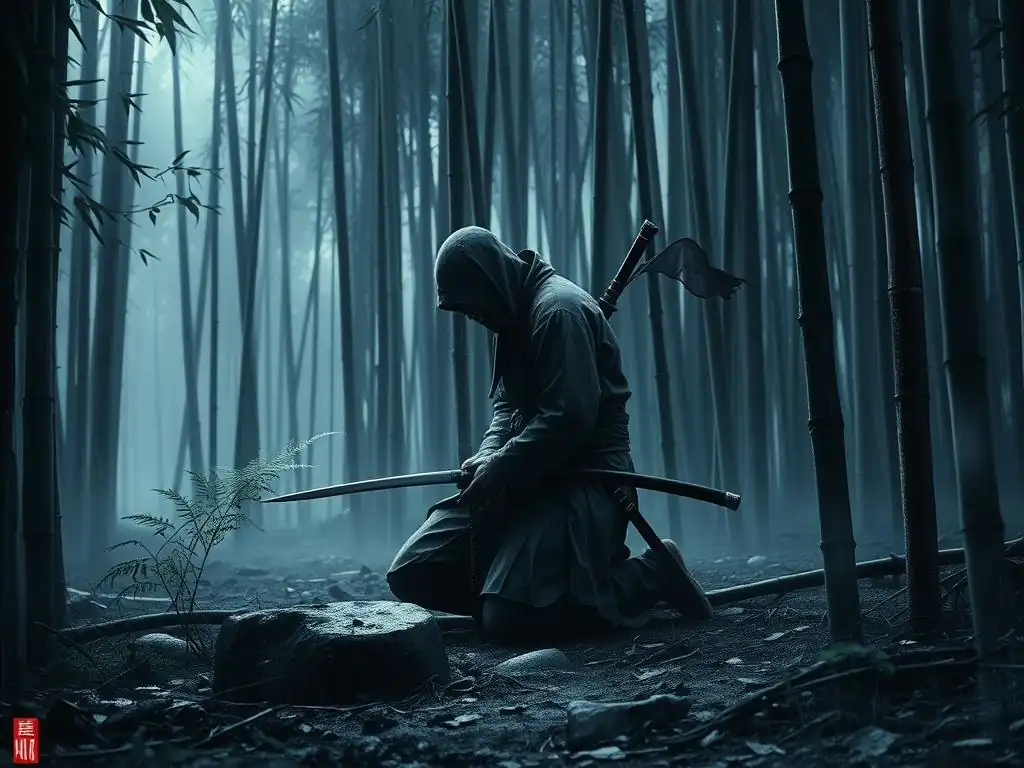
Advanced Ninjutsu field concealment techniques include the ability to create temporary or semi-permanent concealed positions or hides. This involves modifying the natural environment to enhance concealment, such as digging a shallow scrape, piling up natural materials to create a blind, or subtly weaving vegetation to create a hidden observation post.
These hides are often small and designed for a single person, providing a secure location for observation, rest, or waiting for an opportune moment. Creating them requires skill in minimal disturbance – leaving no obvious signs of construction – and selecting a location that offers both excellent concealment and a clear view of the area of interest.
Setting Traps and Alarms Using Natural Materials
While not strictly concealment, the ability to use natural materials to set simple traps or alarms enhances Ninjutsu field concealment techniques by providing early warning or deterring pursuit. This could involve setting tripwires made of natural fibers tied to noisy objects (like dry gourds or shells), or creating simple pitfalls disguised with foliage.
These techniques are designed to be subtle and blend into the environment. They serve to alert the practitioner to approaching threats, giving them time to adjust their concealment or prepare for evasion. Knowledge of local plant life and materials is crucial for constructing effective and discreet natural alarms.
Communicating Covertly with Hand Signals
Operating effectively while maintaining concealment often requires covert communication, especially when working with a partner or small group. Ninjutsu field concealment techniques include systems of hand signals and subtle body language to convey information silently.
These signals must be simple, easily visible at a distance (or in low light), and blend in with natural movements if possible. They cover essential information like 'stop', 'danger', 'all clear', 'move', and directional cues. Practicing these signals ensures smooth and silent coordination without breaking concealment.
Counter-Surveillance and Evasion Tactics
Advanced Ninjutsu field concealment techniques are not just about hiding; they also involve actively detecting if you are being observed and implementing counter-surveillance and evasion tactics. This includes techniques like the 'J-hook' or 'fishhook' (doubling back on your path to see if you are being followed) or observing reflective surfaces for signs of hidden observers.
If detection is suspected or confirmed, evasion tactics are employed. These might involve using sudden bursts of speed to move from one point of cover to another, utilizing diversionary tactics, or disappearing into complex terrain or urban environments where pursuit is difficult. The ultimate goal is to break contact and re-establish concealment.
Practical Exercises for Developing Ninjutsu Concealment Skills
Field Training Drills for Cover and Concealment
Developing proficiency in Ninjutsu field concealment techniques requires extensive practical training in the field. Drills can include 'hide and seek' exercises where practitioners take turns concealing themselves while others attempt to locate them, timed drills to move between points of cover undetected, and exercises focused on silent movement over varied terrain.
These drills should be conducted in diverse environments – forests, parks, rocky areas, even urban settings – to build adaptability. Starting in daylight conditions and progressing to twilight and night training increases the challenge and realism. Regular practice is key to developing the intuitive understanding and physical skills needed for effective concealment.
Scenario-Based Training for Realistic Application
Scenario-based training integrates multiple Ninjutsu field concealment techniques into realistic simulations of historical or modern situations. This could involve scenarios like infiltrating a 'guarded' area to retrieve an object, observing a target location without being seen, or evading pursuit after being 'detected'.
These scenarios force practitioners to combine movement, concealment, observation, and potentially diversionary tactics under pressure. They highlight the importance of quick decision-making and adapting techniques to unexpected circumstances. Realistic scenarios, even if simulated, are invaluable for testing and refining Ninjutsu field concealment techniques.
Self-Assessment and Improvement Strategies
Continuous self-assessment is vital for mastery in Ninjutsu field concealment techniques. After training drills and scenarios, practitioners should evaluate their performance: Were they detected? Why? What sounds did they make? Were their movements efficient and concealed? What could they have done differently?
Using feedback from instructors or training partners is also crucial. Video recording training sessions can provide objective insights into body language, movement patterns, and visibility. Identifying weaknesses allows for focused practice and refinement, ensuring ongoing improvement in the complex art of Ninjutsu field concealment.
Conclusion: The Path to Mastery in Ninjutsu Field Concealment
Integrating Concealment into Your Ninjutsu Practice
Mastery of Ninjutsu field concealment techniques is not a separate discipline but an integral part of the broader Ninjutsu practice. It complements physical techniques, weapon skills, and philosophical understanding. Concealment provides the means to avoid confrontation when possible, enhancing the effectiveness of other skills when engagement is unavoidable.
Integrating concealment means applying its principles not just in dedicated field training but also in regular practice sessions, even in the dojo. Understanding body mechanics for silent movement, developing awareness of surrounding space, and practicing focused observation can all be incorporated into standard training routines, building a foundation for field application.
Continued Learning and Refinement of Skills
The path to mastery in Ninjutsu field concealment techniques is one of continuous learning and refinement. The environment is constantly changing, and new challenges or technologies may require adapting traditional methods. Staying curious, observing the natural world, and practicing regularly are essential for maintaining proficiency.
This involves seeking out opportunities to train in new environments, learning from experienced practitioners, and consistently reviewing and refining one's own techniques. The art of Ninjutsu field concealment is a dynamic skill set that requires dedication and ongoing effort to truly master.
Frequently Asked Questions
How does Ninjutsu field concealment differ from traditional camouflage?
Ninjutsu concealment emphasizes utilizing natural surroundings for immediate tactical advantage, while camouflage focuses on blending with the environment over longer periods. It's about opportunistic hiding rather than permanent disguise.
What are some examples of natural cover effectively used in Ninjutsu field concealment?
Examples include using dense foliage, uneven terrain, and shadows to break up the silhouette and obscure movement. Natural features are leveraged for quick and effective visual obstruction.
Why is understanding the terrain so crucial for successful Ninjutsu field concealment?
Knowing the terrain allows for strategic positioning to maximize the effectiveness of natural cover. It enables a practitioner to exploit blind spots and lines of sight, crucial for remaining undetected.
How important is movement discipline when practicing Ninjutsu field concealment techniques?
Movement discipline is paramount. Slow, deliberate movements minimize the risk of detection, while avoiding unnecessary noise prevents auditory cues. Mastering this is essential for remaining unseen.
Does Ninjutsu field concealment solely rely on visual deception, or are other senses considered?
While visual deception is primary, Ninjutsu also incorporates strategies to minimize auditory and olfactory signatures. This comprehensive approach aims to avoid detection by all senses, enhancing overall concealment.
Final Reflection: Mastering the Art of Vanishing
The principles of blending with one's environment, as explored in this guide to Ninjutsu field concealment techniques, are not merely relics of a bygone era. In a world saturated with surveillance and information overload, the ability to observe without being observed, to move unseen, holds a profound and enduring relevance. These techniques, born from necessity and honed through generations, offer a pathway to reclaiming a sense of privacy and control in an increasingly transparent world.
The impact of Ninjutsu extends far beyond the battlefield, influencing our understanding of strategy, adaptability, and the power of subtle action. The enduring fascination with the ninja stems from their mastery of these principles, a testament to the human capacity for ingenuity and resilience in the face of adversity. The supreme art of war is to subdue the enemy without fighting.
- Sun Tzu. This quote encapsulates the essence of Ninjutsu, highlighting the importance of strategic thinking and minimizing conflict through skillful concealment and deception.
Now, consider how these lessons can be applied to your own life. How can you cultivate a greater awareness of your surroundings? How can you learn to blend in, to observe without being noticed, to move with intention and purpose? The art of vanishing is not just about physical concealment; it's about mastering your own presence, understanding your environment, and acting with mindful awareness. Embrace these principles, and you may discover a newfound sense of freedom and control in a world that often feels overwhelming.
Master the Shadows: Begin Your Ninjutsu Journey Now!
Thank you for exploring the art of concealment and natural camouflage with us! We hope you've gained valuable insights into the subtle power of Ninjutsu. Now, it's time to put theory into practice and truly embody the way of the shadow.
Here's how you can continue your path to mastery:
- Immediately apply one technique learned today in a low-stakes, real-world environment to solidify your understanding.
- Begin a nature journal documenting potential concealment spots in your local parks or even your backyard. Note the best times of day and seasons for optimal camouflage.
- Share this article with a friend who shares your interest in martial arts and challenge each other to find five distinct uses of cover within a one-mile radius.
What's the most unexpected place you've ever found effective natural cover? Share your experiences below!