
Twining and Spiraling: The Core of Chen Style Silk Reeling (Chan Si Jin) in Forms

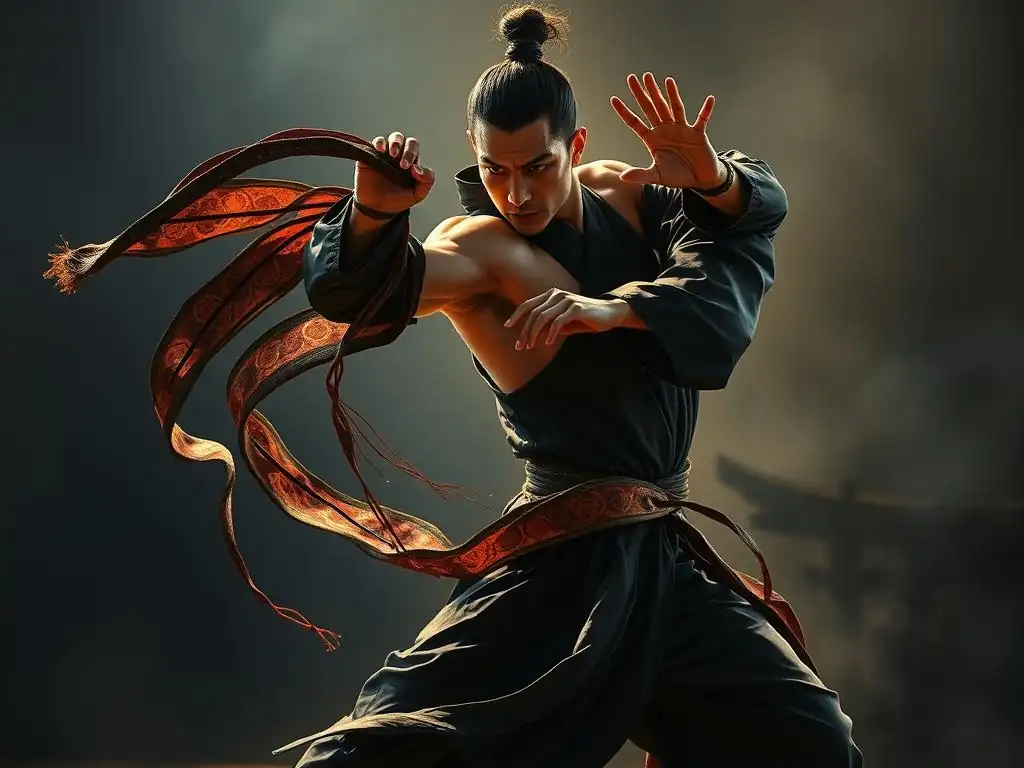
Welcome to Martial Arts Mastery, your gateway to understanding the depth and breadth of the martial arts world. Ever wondered about the inner workings of powerful techniques? Dive into the captivating world of Chen style silk reeling (Chan Si Jin) and discover how its twining, spiraling energy forms the very foundation of this dynamic style. Unlock the secrets within – prepare to be enlightened.
- Understanding Chen Style Taijiquan and the Essence of Silk Reeling
- Decoding Silk Reeling: Twining and Spiraling Movements in Chen Forms
- Silk Reeling in Chen Style Forms: A Practical Guide
- Chen Style Silk Reeling: Benefits for Martial Arts Practice
- Advanced Silk Reeling Techniques in Chen Style Taijiquan
- The Legacy of Chen Style Silk Reeling: Masters and Lineage
- Mastering Chen Style Silk Reeling: A Journey of Continuous Learning
-
Frequently Asked Questions
- What is Chen style silk reeling (Chan Si Jin) and why is it important?
- How does Chen style silk reeling differ from other martial arts techniques?
- What are the key principles behind mastering Chen style silk reeling?
- How does Chen style silk reeling relate to the forms (routines) in Chen style Taijiquan?
- Can someone with no prior martial arts experience learn Chen style silk reeling?
- Final Reflection: Embracing the Flow of Chen Style Silk Reeling
- Ignite Your Inner Power: Begin Your Chen Style Journey Today!
Understanding Chen Style Taijiquan and the Essence of Silk Reeling
Chen Style Taijiquan stands as one of the oldest and most dynamic styles of Tai Chi, deeply rooted in traditional Chinese martial arts. Unlike some later styles that emphasize purely health aspects, Chen style retains a pronounced martial character, evident in its powerful movements, explosive energy releases (Fa Jing), and intricate footwork. At the heart of its unique methodology lies the concept of Chan Si Jin, or Silk Reeling Energy.
This fundamental principle guides every movement within Chen style forms, ensuring continuity, efficiency, and the development of internal power. Mastering Chan Si Jin is not merely a technical requirement but a gateway to understanding the deeper mechanics and martial applications inherent in the style. It is the invisible thread connecting seemingly disparate movements into a unified, powerful whole.
Chen Style Tai Chi: A Historical Context within Kung Fu Forms
Chen Style Taijiquan is widely credited to Chen Wangting, a military general from the Chen village in Henan province, China, during the 17th century (late Ming, early Qing dynasty). Drawing upon his extensive martial experience, classical texts like the Huang Ting Jing (Yellow Court Classic), and existing martial arts practices, he synthesized a unique system that incorporated martial strategy, health cultivation, and philosophical principles.
This historical lineage distinguishes Chen style within the broader landscape of Chinese Kung Fu. While many martial arts evolved over centuries, Chen Taijiquan's origins in a specific time and place, linked to a prominent family and figure, provide a clear line of descent. Early forms like Lao Jia (Old Frame) are believed to be close to Chen Wangting's original teachings, embodying the foundational principles of Chan Si Jin that have been passed down through generations, influencing subsequent styles of Taijiquan.
The Significance of Chan Si Jin (Silk Reeling Energy) in Chen Taijiquan
Chan Si Jin, literally "coiling thread energy" or "silk reeling energy," is the defining characteristic of Chen Style Taijiquan. It describes a specific type of spiraling, continuous, and interconnected movement that flows through the entire body, from the feet, through the legs and waist, to the arms and hands. This energy is not raw muscular force but a cultivated internal power that is elastic, resilient, and highly adaptable.
The significance of Chan Si Jin lies in its multifaceted function. For health, it promotes circulation and flexibility. For martial application, it enables efficient force generation, absorption, and redirection. Every movement in Chen style forms, from the largest circle to the smallest adjustment, is imbued with this coiling, spiraling quality. Without the correct application of Chan Si Jin, Chen style movements lose their internal coherence, martial effectiveness, and health benefits, becoming mere external shapes.
Decoding Silk Reeling: Twining and Spiraling Movements in Chen Forms
Understanding Chan Si Jin requires dissecting its physical manifestation within the body's movements. The concept is often described through the actions of twining and spiraling, which are not just external movements but reflect an internal energetic pathway. These actions ensure that the body moves as a unified whole, preventing disconnected or isolated limb movements that dissipate power.
The continuous, circular, and spiraling nature of silk reeling energy allows for seamless transitions between defensive and offensive actions. It enables practitioners to stick to an opponent, neutralize incoming force, and issue power (Fa Jing) effectively. Decoding these movements within Chen style forms is crucial for developing the internal mechanics necessary for true Taijiquan skill.
The Mechanics of Twining: Rotating Limbs Around the Core
Twining in Chen style silk reeling refers to the rotational movement of the limbs, particularly the arms and legs, around their own axes and in coordination with the central axis of the body. Imagine a piece of silk being carefully unwound from a cocoon; the thread is continuous, and the rotation is smooth and controlled. Similarly, the limbs rotate with a sense of substance and connection, never floppy or rigid.
This rotation is always linked back to the body's core, the Dan Tian. For example, in an arm movement, the rotation doesn't just happen at the shoulder or elbow; it originates from the turning of the waist and torso, which then drives the coiling action down the arm. This ensures that the power comes from the entire body, not just isolated muscles. The legs also exhibit twining, spiraling inward or outward from the hips down to the feet, grounding the movement and facilitating the transfer of power from the earth.
Spiraling Actions: Integrating Body Rotation and Limb Movement
Spiraling is a more comprehensive description of Chan Si Jin, encompassing the integrated movement of the entire body. It involves the harmonious coordination of the waist turning, the spine twisting subtly, and the limbs coiling simultaneously. This creates complex, three-dimensional pathways of movement that are characteristic of Chen style forms.
Consider the movement of a wave: it builds energy from the depth (the feet and ground), travels through the body (waist and spine), and expresses itself outwards (limbs). Spiraling in Chen style mimics this, allowing energy to flow continuously and smoothly. This integrated spiraling action is what gives Chen style silk reeling its remarkable ability to generate torque for power and absorb force by yielding and redirecting. It's the difference between a simple push and a powerful, whole-body issuance of energy.
The Role of the Dan Tian in Power Generation
The Dan Tian, located in the lower abdomen, is considered the central engine and control center for generating and directing Chan Si Jin. It is the pivot point around which all spiraling and twining movements originate and return. The subtle rotation and settling of the Dan Tian are essential for initiating the silk reeling action that propagates throughout the body.
Developing awareness and control of the Dan Tian is paramount in Chen style practice. Through focused intention and specific breathing techniques coordinated with movement, practitioners learn to harness energy from the ground, channel it through the Dan Tian, and express it through the limbs in a coordinated spiraling manner. This internal connection is the source of the characteristic elastic and explosive power (Fa Jing) found in advanced Chen style practitioners, distinguishing it from purely muscular strength.
Silk Reeling in Chen Style Forms: A Practical Guide
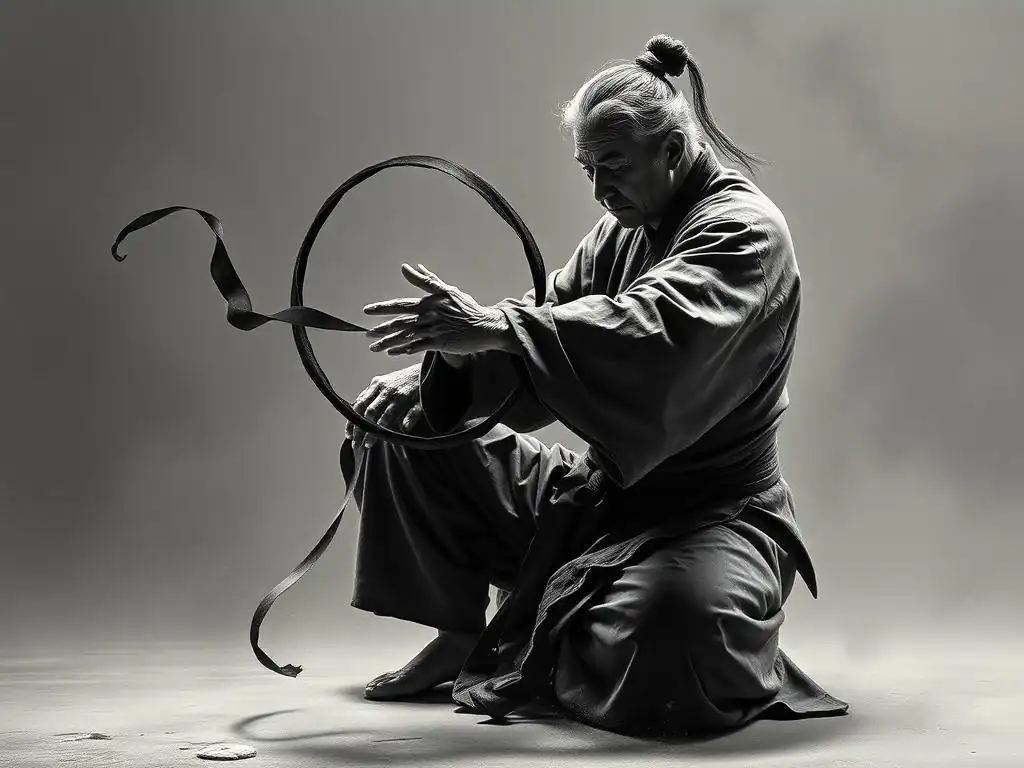
Applying the principles of Chan Si Jin effectively requires dedicated practice within the structured movements of Chen style forms. These forms, such as Lao Jia Yi Lu, Lao Jia Er Lu (Pao Chui), and Xin Jia (New Frame), are essentially textbooks for learning and refining silk reeling energy. Each posture and transition is designed to embody specific types and directions of coiling and spiraling.
A practical approach involves focusing on the continuity and interconnectedness of movements, rather than just hitting static postures. Understanding the direction and pathway of the silk reeling in each section of a form allows the practitioner to move with internal coherence and power. This section offers guidance on how to integrate these principles into training.
Integrating Chan Si Jin into Foundational Chen Tai Chi Forms
Foundational Chen Tai Chi forms, like Lao Jia Yi Lu, are specifically structured to teach the basic patterns of Chan Si Jin. Practitioners begin by learning the external shape of the movements, but the true training lies in refining the internal sensation and coordination of the silk reeling. This involves paying close attention to the subtle rotations of the waist, the spiraling of the arms and legs, and the connection to the ground.
A common starting point is practicing fundamental silk reeling exercises ( Chan Si Gong) that isolate specific coiling patterns before integrating them into the complex form sequences. For example, single-arm or double-arm reeling drills help develop the feeling of continuous, spiraling movement originating from the core. Once these basic patterns are understood, they are consciously applied to each movement within the form, ensuring that every transition involves smooth, unbroken Chan Si Jin.
Application of Silk Reeling Principles in Lao Jia Yi Lu
Lao Jia Yi Lu (Old Frame First Form) is the cornerstone of Chen style training and a prime example of applied silk reeling. From the opening posture, Yu Bei Shi (Preparation Form), where subtle spiraling occurs in the rising and settling, through complex sequences like Lan Zha Yi (Lazy About Tying Coat) and Liu Feng Si Bi (Six Sealings and Four Closings), Chan Si Jin is continuously present.
Take, for instance, the movement Jin Gang Dao Dui (Warrior Pounds Mortar). The powerful downward strike is not just a vertical drop; it's generated by a complex spiraling action originating from the feet and Dan Tian, coiling up through the body and down the arm, culminating in a focused release. Analyzing each movement in Lao Jia Yi Lu through the lens of Chan Si Jin reveals the underlying mechanics and martial intent, transforming the external shape into a dynamic flow of energy.
Common Mistakes in Silk Reeling and How to Correct Them
Several common mistakes hinder the proper development of Chen style silk reeling. One is using excessive muscular force instead of relying on the coordinated spiraling action. This leads to stiffness and breaks the continuity of the energy flow. Another error is disconnecting the upper and lower body, where the arms move independently of the waist and legs, violating the principle of whole-body unity.
Correcting these issues involves slowing down the movements to feel the internal connections, focusing on the rotation of the Dan Tian as the initiator of movement, and ensuring that the feet are firmly rooted and actively engaged in the spiraling process. Practicing silk reeling drills ( Chan Si Gong) specifically designed to isolate and correct these disconnections is highly beneficial. Receiving feedback from a qualified instructor is also crucial for identifying subtle errors in posture and movement patterns.
Chen Style Silk Reeling: Benefits for Martial Arts Practice
Mastering Chan Si Jin offers profound benefits that extend beyond the graceful execution of forms. It fundamentally changes how a practitioner moves, generates power, and interacts with an opponent. These benefits are directly applicable to self-defense and other martial arts disciplines.
The internal coordination developed through Chen style silk reeling enhances sensitivity, responsiveness, and overall physical efficiency. It cultivates a type of strength that is rooted and elastic, capable of both absorbing impact and delivering powerful strikes or throws.
Improved Body Mechanics and Coordination
Consistent practice of Chen style silk reeling inherently refines body mechanics. The emphasis on originating movement from the core and coordinating the entire body's spiraling action eliminates wasted movement and improves efficiency. This leads to better balance, stability, and fluidity.
For instance, the intricate footwork and waist turns required by Chan Si Jin develop exceptional coordination between the upper and lower body. This improved coordination translates directly to martial applications, allowing for faster transitions, more stable stances during force issuance, and the ability to move the entire body as a single, powerful unit.
Enhanced Internal Strength and Power Generation
Chan Si Jin is the primary method for developing Jin (internal power) in Chen style. Unlike external muscular strength, which is often rigid and limited, Jin is elastic, rooted, and capable of explosive release ( Fa Jing). The continuous spiraling movement builds tension and elasticity throughout the fascial lines and connective tissues, allowing for the storage and release of kinetic energy.
By learning to channel power from the ground up through the coordinated spiraling of the body, practitioners can generate force that is significantly greater than what purely muscular effort could produce. This internal strength is felt as a substantial, rooted power that can penetrate defenses and disrupt an opponent's structure.
Cultivating Mind-Body Connection through Chan Si Jin
The intricate nature of Chen style silk reeling demands a high degree of mental focus and body awareness. Practitioners must constantly feel the flow of energy, the connection between different body parts, and the subtle changes in weight distribution and rotation. This intensive internal focus cultivates a deep mind-body connection.
This enhanced awareness allows practitioners to become highly sensitive to their own body's movements and, eventually, to the force and intentions of an opponent. It fosters a state of active meditation in motion, where the mind is calm yet highly alert. This integrated state of physical and mental presence is invaluable in both martial arts and daily life.
Advanced Silk Reeling Techniques in Chen Style Taijiquan
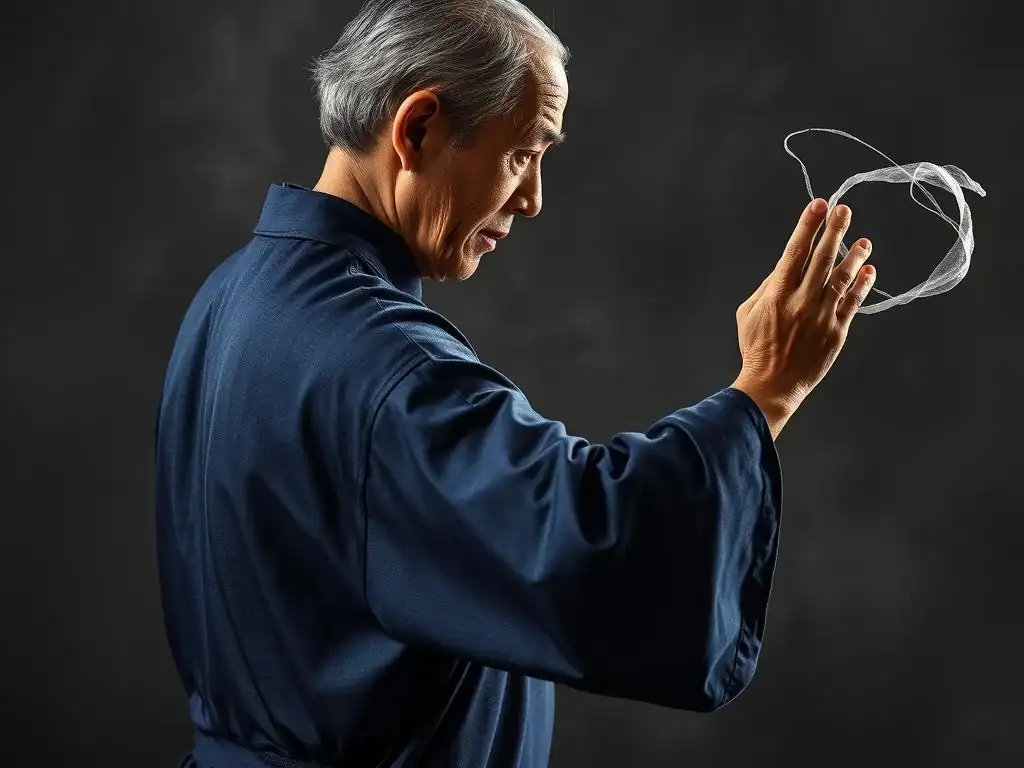
As a practitioner progresses in Chen Style Taijiquan, their understanding and application of Chan Si Jin deepen, leading to more sophisticated techniques. Advanced silk reeling moves beyond the basic patterns to incorporate whole-body integration, heightened sensitivity, and the ability to issue explosive power (Fa Jing) at any point in a movement.
These advanced techniques require years of dedicated practice and a refined internal awareness. They represent the pinnacle of Chan Si Jin development, where the coiling energy becomes effortless, powerful, and highly adaptable to dynamic situations.
Utilizing Whole-Body Movement for Maximum Efficiency
Advanced Chan Si Jin practice emphasizes the principle of "yi dong wu bu dong" (when one part moves, no part doesn't move). This means that every single part of the body, from the fingers to the toes, is integrated into the overall spiraling action. There are no isolated movements; the entire structure moves as one interconnected unit.
This level of whole-body integration maximizes the efficiency of force generation and transmission. Whether issuing a strike, executing a throw, or absorbing an impact, the entire body contributes to the action, ensuring maximum power with minimum wasted effort. This seamless integration is a hallmark of truly advanced Chen style practitioners.
Developing Sensitivity and Responsiveness to Opponent's Force
Refined Chan Si Jin cultivates exceptional Ting Jin (listening energy) and Hua Jin (neutralizing energy). The continuous, spiraling movement allows the practitioner to remain connected to an opponent's force, feeling its direction and intensity without meeting it head-on with rigid resistance.
By maintaining constant Chan Si Jin, the practitioner can yield to incoming force by spiraling along its direction, redirecting it while simultaneously preparing to counter. This sensitivity allows for instantaneous adjustments and responses, making the practitioner highly adaptable and difficult to unbalance or overpower. It's like being a skilled dancer who can follow any lead seamlessly.
Fa Jing: Explosive Release of Silk Reeling Energy
Fa Jing (issuing energy) is the explosive manifestation of cultivated Chan Si Jin. It is not a simple push or punch but a whip-like release of power generated through the coordinated, rapid unwinding of the spiraling energy stored throughout the body. The power originates from the Dan Tian and ground, travels through the integrated structure via Chan Si Jin, and is released with sudden, focused intensity through a limb or other point of contact.
Mastering Fa Jing requires perfect timing, coordination, and relaxation. The body must be relaxed and elastic to allow the silk reeling energy to flow freely and accelerate rapidly before the sudden, focused release. Examples in forms like the punch in Jin Gang Dao Dui or the striking movements in Lao Jia Er Lu demonstrate various types of Fa Jing, all powered by the underlying principle of Chan Si Jin.
The Legacy of Chen Style Silk Reeling: Masters and Lineage
The principles of Chen style silk reeling have been preserved and propagated through dedicated masters and established lineages. Understanding this legacy provides context for the art's development and highlights the importance of proper transmission.
The emphasis on Chan Si Jin is a consistent thread connecting past masters to contemporary practitioners, ensuring that the core essence of Chen Style Taijiquan is maintained across generations.
Influential Figures in Chen Taijiquan Silk Reeling
Numerous masters have played a crucial role in developing, refining, and popularizing Chen Style Taijiquan and its silk reeling principles. Chen Changxing (1771-1853), a descendant of Chen Wangting, is credited with refining the Lao Jia forms and teaching Yang Luchan, the founder of Yang Style Tai Chi. Chen Fake (1887-1957) was a pivotal figure in the 20th century, renowned for his deep understanding and powerful application of Chan Si Jin, particularly in the development of the Xin Jia (New Frame) forms.
His students, including figures like Feng Zhiqiang and Hong Junsheng, further developed and spread their interpretations of Chen style silk reeling, creating distinct branches while staying true to the core principles. These masters' emphasis on the internal mechanics of Chan Si Jin ensured its survival and prominence in modern Taijiquan practice.
Preserving and Promoting the Art of Chan Si Jin
Preserving the art of Chen style silk reeling involves rigorous training methods, adherence to traditional principles, and careful transmission from teacher to student. Many lineages maintain detailed requirements for form execution, push hands practice, and theoretical understanding to ensure the integrity of the Chan Si Jin training.
Promoting the art involves teaching both locally and globally, making foundational silk reeling exercises and forms accessible, while also emphasizing the depth and complexity of the internal work required. Workshops, seminars, and dedicated schools around the world continue to teach Chen style silk reeling, ensuring that this vital aspect of the style is not lost but continues to benefit new generations of martial arts practitioners.
Mastering Chen Style Silk Reeling: A Journey of Continuous Learning
Mastering Chen style silk reeling is not a destination but a continuous journey of exploration and refinement. It requires patience, dedication, and a willingness to delve deeply into the subtle internal mechanics of movement and energy flow.
True mastery involves integrating Chan Si Jin into every aspect of practice, from solo forms and push hands to potential self-defense applications. It's about cultivating a body that naturally moves with continuous, spiraling energy.
Resources for Further Study and Practice
For those serious about delving deeper into Chen style silk reeling, numerous resources are available. Traditional texts and commentaries on Chen style theory often contain insights into the principles of Chan Si Jin. Many schools and instructors offer detailed guides, instructional videos (while this article doesn't include links, such resources exist externally), and workshops specifically focused on silk reeling exercises and their application within forms.
Studying the history and philosophy behind Chen Taijiquan can also provide a deeper appreciation for the significance of Chan Si Jin. Consistent, diligent practice is the most essential resource; daily repetition and mindful execution of forms and silk reeling drills are key to internalizing the principles.
Finding a Qualified Instructor for Chen Taijiquan
Given the subtle and internal nature of Chan Si Jin, learning directly from a qualified instructor is highly recommended, if not essential. An experienced teacher can provide personalized feedback, correct subtle errors in body mechanics, and guide the practitioner through the stages of development.
Look for instructors with a clear lineage back to reputable Chen style masters, who emphasize foundational silk reeling work, and who can explain both the physical mechanics and the underlying principles. Finding a good teacher who embodies the qualities of rootedness, fluidity, and power derived from Chan Si Jin will significantly accelerate and deepen the journey towards mastering Chen style silk reeling.
Frequently Asked Questions
What is Chen style silk reeling (Chan Si Jin) and why is it important?
Chen style silk reeling (Chan Si Jin) refers to the spiral and twining movements that are the core of Chen style Taijiquan. It's important because it develops internal strength, body awareness, and efficient power generation.
How does Chen style silk reeling differ from other martial arts techniques?
Unlike linear movements in some martial arts, Chen style silk reeling emphasizes circular, spiraling motions. This allows for redirection of force, seamless transitions, and the development of whole-body power.
What are the key principles behind mastering Chen style silk reeling?
Key principles include relaxed body mechanics, connecting the body as a single unit, and understanding the internal spiraling pathways (meridians) to generate and circulate Qi (internal energy).
How does Chen style silk reeling relate to the forms (routines) in Chen style Taijiquan?
The forms are specifically designed to teach and refine the silk reeling movements. Each posture and transition reinforces the spiral and twining actions, building skill and understanding over time.
Can someone with no prior martial arts experience learn Chen style silk reeling?
Yes, absolutely. While prior experience may be helpful, Chen style Taijiquan and silk reeling are accessible to beginners. Patience, dedication, and a qualified instructor are crucial for learning the fundamentals.
Final Reflection: Embracing the Flow of Chen Style Silk Reeling
The intricate movements and principles of Chen Style Silk Reeling, as explored throughout this article, are not merely historical techniques; they represent a living philosophy of harmonious movement and internal power that resonates profoundly in today's fast-paced world. The ability to cultivate Chan Si Jin – the spiraling, twining energy – offers a pathway to enhanced physical awareness, improved coordination, and a deeper connection to one's own body and the surrounding environment.
The enduring influence of Chen Style Silk Reeling is evident in its continued practice and adaptation across diverse communities. It serves as a testament to the power of tradition to provide both physical and mental well-being. The dedication of practitioners worldwide underscores the timeless value of these principles, reminding us that true strength lies not just in brute force, but in the intelligent and efficient use of energy. The essence of Taijiquan is to use the mind to move the Qi, and the Qi to move the body. When the Qi flows smoothly, the body will be light and agile.
This quote encapsulates the very heart of Chan Si Jin and its transformative potential.
Now, consider how you can integrate the principles of Chen Style Silk Reeling into your own life. Whether through dedicated practice of Taijiquan or simply by cultivating greater awareness of your body's movements, embrace the spiraling, twining energy within you. Let the principles of Chan Si Jin guide you towards greater balance, strength, and a deeper understanding of the interconnectedness of mind, body, and spirit.
Ignite Your Inner Power: Begin Your Chen Style Journey Today!
Thanks for exploring the intricate world of Chen Style Silk Reeling with us! We hope you've gained a deeper understanding of its foundational principles and how it shapes movement. Now, it's time to translate that knowledge into action.
- Dive Deeper: Actively practice Chen Style Silk Reeling exercises focusing on twining and spiraling. Start with a simple exercise like Peng Lu Ji An and mindfully incorporate these principles into each movement.:
- Explore related styles: Research other martial arts styles or movement practices that emphasize spiraling and internal energy, such as Baguazhang or Tai Chi Sword, to broaden your understanding.
- Share Your Insights: Discuss your own experiences with Silk Reeling in the comments below. What are your biggest challenges and breakthroughs?