
Unlocking Your Dantian: The Engine of Power in Tai Chi Form Practice

Welcome to Martial Arts Mastery, where the secrets of ancient combat traditions meet modern understanding. Are you ready to delve into the core of internal power? This week, we explore the fascinating world of Tai Chi dantian power training. Discover how to unlock this hidden reservoir of energy and transform your form practice from a physical exercise into a profound expression of martial skill. What is the secret of dantian activation, and how can it revolutionize your Tai Chi? Read on to find out!
- Introduction: The Dantian in Tai Chi Chuan and its Role in Power Generation
- The Dantian Location and its Anatomical Considerations
- Benefits of Dantian Activation in Tai Chi Training
- Tai Chi Dantian Power Training Methods: A Step-by-Step Guide
- Troubleshooting Common Dantian Training Challenges
- The Dantian and its Importance in Health and Wellbeing
- Conclusion: Mastering Dantian Power for Tai Chi Excellence
-
Frequently Asked Questions
- What is the dantian, and why is it important in Tai Chi?
- How does dantian power relate to the movements in Tai Chi forms?
- What are some practical exercises to develop dantian power for Tai Chi?
- How long does it typically take to feel the effects of dantian training in Tai Chi?
- Is dantian power training only beneficial for Tai Chi practitioners?
- Final Reflection: Embracing the Dantian's Potential
- Ignite Your Internal Energy: Embark on Your Dantian Journey!
Introduction: The Dantian in Tai Chi Chuan and its Role in Power Generation
Tai Chi Chuan, a martial art renowned for its graceful movements and health benefits, holds a deeper secret to its efficacy: the cultivation and utilization of the dantian. Often translated as the "cinnabar field" or "elixir field," the dantian is considered a primary energy center within the body, central to both internal martial arts power generation and overall vitality. Understanding and activating this area is fundamental for anyone seeking to move beyond merely performing Tai Chi forms to truly embodying their principles. It is the wellspring from which balance, stability, and explosive power can emerge.
The concept of the dantian is not unique to Tai Chi; it is a cornerstone of traditional Chinese medicine, Qigong, and various internal martial arts styles. In Tai Chi, however, its importance is particularly emphasized in relation to structural alignment, rootedness, and the smooth flow of qi (vital energy). Effective Tai Chi dantian power training involves not just physical exercises but also a deep mental and energetic awareness of this internal center, learning to initiate movements from here rather than from the periphery of the limbs.
Understanding the Concept of Dantian in Chinese Martial Arts
In Chinese martial arts theory, there are typically three dantian: the upper (head), middle (chest), and lower (abdomen). The lower dantian, located roughly two to three finger-widths below the navel and inward towards the spine, is considered the most important for martial arts power, physical health, and cultivating foundational energy. It is seen as the body's central reservoir of jing (essence) and qi, the vital force that animates all life. Cultivating the lower dantian is akin to strengthening the engine of the body, providing the foundation for all physical and energetic actions.
Traditional texts and teachings often describe the dantian not just as a physical location but as an energetic vortex or sphere. Its cultivation involves practices that enhance awareness, build internal pressure or fullness, and learn to guide energy from this center throughout the body. Mastery of this concept is seen as a prerequisite for developing advanced skills such as fa jing (explosive power emission) and achieving profound levels of health and longevity, making Tai Chi dantian power training a holistic endeavor.
Why Dantian Power is Crucial for Effective Tai Chi Form Practice
Executing Tai Chi forms with genuine power, stability, and internal coherence relies heavily on the integration and utilization of the dantian. Without dantian engagement, movements tend to be disconnected, relying solely on muscular strength, which is inefficient and lacks the characteristic "silk-reeling" or spiraling energy often seen in skilled practitioners. The dantian acts as the central pivot around which the entire body moves, ensuring that force is generated from the core and transmitted smoothly through the limbs, rather than originating in the extremities.
Consider the common Tai Chi movement "Ward Off." A practitioner using external muscle might push with arm strength. A practitioner engaging the dantian, however, initiates the movement from their core, rotating the waist and hip, allowing the force to travel up the torso, through the shoulder, and out the arm.
This method not only generates significantly more power but also maintains structural integrity and balance, preventing the practitioner from being easily pushed off center. This core-initiated movement, driven by the dantian, is the hallmark of effective Tai Chi form practice and the goal of dedicated Tai Chi dantian power training.
The Dantian Location and its Anatomical Considerations
Identifying the Lower Dantian: The Primary Power Center
The lower dantian, also known as the Xia Dantian, is the focal point for much of internal martial arts and Qigong practice. While often described as an energetic center, its physical location is consistently identified in the lower abdomen. Specifically, it is typically located about two to three finger-widths below the navel (umbilicus) and roughly one-third of the way inward towards the spine. This region corresponds anatomically to the area around the body's center of gravity when standing upright, situated behind the muscles of the lower abdomen and in front of the lumbar spine.
From an anatomical perspective, this region is dense with significant structures. It houses portions of the small and large intestines, reproductive organs, and is supported by the deep abdominal muscles (like the transversus abdominis) and the psoas muscles. Cultivating awareness and control over this area through Tai Chi dantian power training indirectly engages these muscles, improving core strength and stability. While the dantian itself is not a distinct anatomical organ, its location correlates with a crucial nexus of physical, energetic, and neurological pathways within the body.
Dantian and its Relationship to Core Stability and Body Mechanics
The lower dantian's location directly aligns with the body's natural center of gravity and the core musculature responsible for stability and movement initiation. Engaging the dantian in Tai Chi practice involves a subtle activation and awareness of the deep abdominal and pelvic floor muscles, often described as "sinking the qi" to this area.
This internal engagement creates a stable base from which all movements originate, ensuring that the body moves as a unified whole rather than as a collection of disconnected parts. This connection between the dantian and core stability is fundamental to Tai Chi's emphasis on rootedness and balance.
When the dantian is engaged, it facilitates proper body mechanics. For instance, in walking or stepping movements within a Tai Chi form, the shift of weight should ideally be driven from the dantian and hips, rather than just moving the legs. This ensures that the upper body remains relaxed and aligned, preventing unnecessary tension and promoting efficient force transmission.
Studies on balance and core engagement show that activating the deep abdominal muscles significantly improves postural control, mirroring the physical benefits described in traditional Tai Chi dantian power training. For example, research published in journals like the Journal of Strength and Conditioning Research has demonstrated that training core stability, which correlates with the dantian region, directly enhances balance and reduces sway.
Benefits of Dantian Activation in Tai Chi Training
Increased Stability and Balance Through Dantian Engagement
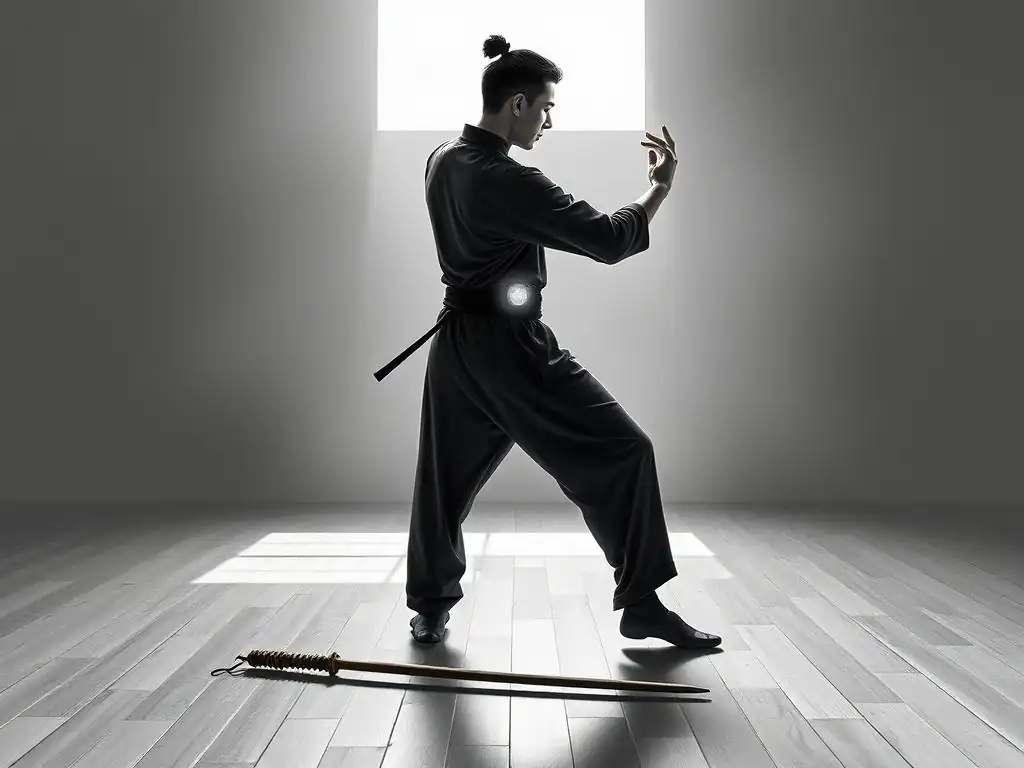
Activating the dantian is paramount for developing the profound sense of stability and balance characteristic of advanced Tai Chi practitioners. By focusing awareness and gently engaging the muscles around the lower abdomen, practitioners effectively lower their center of gravity. This grounding effect makes them less susceptible to being pushed off balance and provides a solid foundation for all movements. The feeling is often described as being "rooted" or "heavy" in the lower body.
Furthermore, dantian engagement facilitates the principle of separating the weight (distinguishing between weighted and unweighted legs). When shifting weight in a Tai Chi form, initiating the movement from the dantian ensures that the transfer is smooth and controlled, maintaining stability throughout the transition. For example, transitioning from "Ward Off" to "Rollback" requires a precise shift of weight; initiating this shift from the dantian ensures the practitioner remains stable on the supporting leg while the other leg becomes empty, ready to move. This enhanced stability is a direct outcome of dedicated Tai Chi dantian power training.
Enhanced Power Generation and Force Transmission in Tai Chi Movements
One of the most significant benefits of cultivating the dantian is the dramatic increase in power generation and the efficiency of force transmission. Instead of relying on isolated muscular effort, power originates from the body's core, the dantian, and is propelled outward through the limbs via coordinated body movement. This "whole body power" is far more potent and sustainable than relying solely on muscular strength.
Consider the "Punch" movement in Tai Chi. While the arm extends, the true power comes from the rotation of the waist and the settling of the weight into the dantian. This rotational energy, generated from the core, is then channeled through the shoulder, elbow, and wrist into the strike. This method allows even smaller practitioners to generate significant force, as demonstrated by masters who can easily uproot opponents many times their size using dantian-driven power. This ability to generate and transmit force efficiently is a key objective of Tai Chi dantian power training.
Improved Coordination and Body Awareness Through Dantian Centering
Centering consciousness and movement around the dantian significantly enhances overall body coordination and proprioception (the body's awareness of its position in space). When the dantian is the starting point for movement, the limbs naturally follow the direction initiated by the core, leading to more integrated and harmonious actions. This contrasts with moving the limbs independently, which often results in disjointed and inefficient movements.
Regular practice focused on the dantian cultivates a heightened sense of internal awareness. Practitioners become acutely attuned to the subtle shifts of weight, the alignment of the spine, and the flow of energy within their bodies. This improved body awareness allows for greater precision and control in executing complex Tai Chi forms.
For instance, maintaining awareness of the dantian during complex transitions like "Cloud Hands" helps coordinate the simultaneous movement of the hands, arms, torso, and legs, ensuring smooth and continuous rotation around the body's center. This deep connection between mind, body, and dantian is a core aspect of effective Tai Chi dantian power training.
Tai Chi Dantian Power Training Methods: A Step-by-Step Guide
Foundational Exercises for Dantian Awareness and Activation
Cultivating dantian power begins with building awareness of this vital center. Before attempting complex form integration, foundational exercises help sensitize the practitioner to the feeling and location of the dantian. These exercises are often simple but require consistent, focused effort. The goal is to shift consciousness from the periphery (limbs, muscles) to the core.
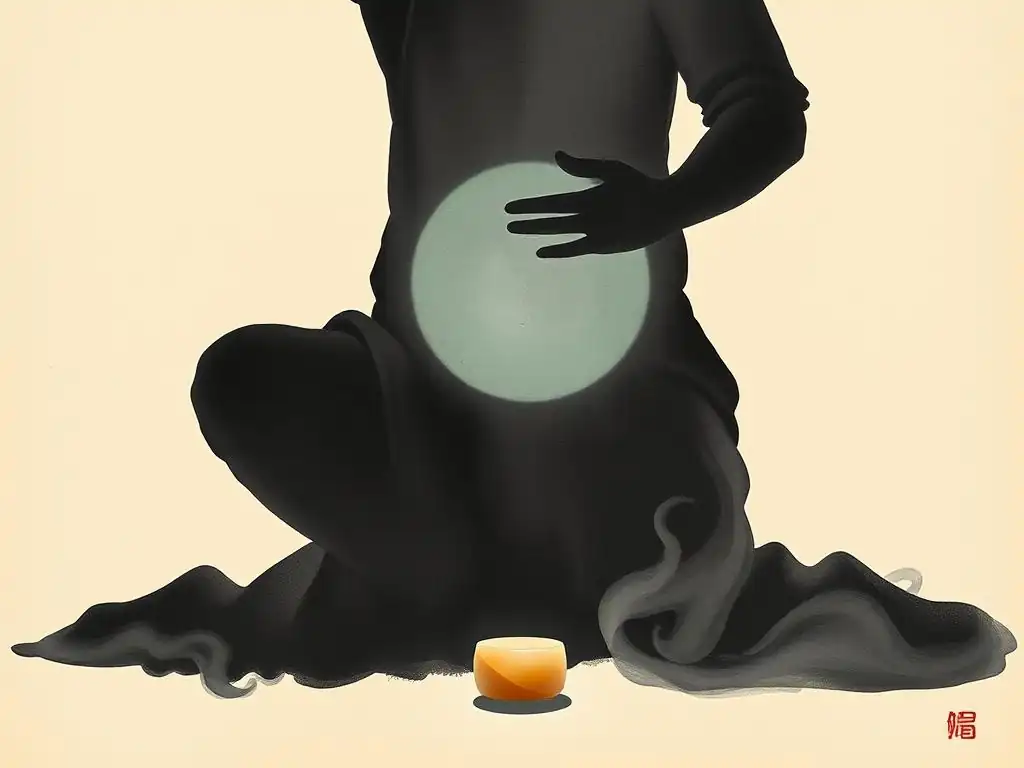
A basic exercise involves standing or sitting quietly and directing attention to the lower abdomen. Imagine a warm, heavy sphere or a gentle internal pressure in this area. Simply holding this awareness for several minutes daily begins to build the mind-body connection to the dantian. Another simple method is placing the hands lightly on the lower abdomen while breathing, focusing on the subtle expansion and contraction in this region. This initial phase of Tai Chi dantian power training is about sensing and locating the internal engine.
Dantian Breathing Techniques: Cultivating Internal Energy (Qi)
Dantian breathing, often called abdominal breathing or reverse abdominal breathing, is a cornerstone of cultivating internal energy and activating the dantian. The basic technique involves breathing deeply into the lower abdomen, allowing it to expand gently on inhalation and contract on exhalation. The focus is on drawing the breath down past the chest and into the lower dantian area. This type of breathing massages the internal organs and helps to "sink the qi" to the body's center, reinforcing the connection to the dantian.
A common variation, reverse abdominal breathing, involves gently drawing the abdomen in on inhalation and allowing it to expand slightly on exhalation. While seemingly counterintuitive, this technique, when practiced correctly, can create a sense of internal pressure and compactness around the dantian, further enhancing its energy-gathering capacity. Consistent practice of these breathing methods, even for just 5-10 minutes daily, is a fundamental part of Tai Chi dantian power training, helping to build the internal foundation.
Dantian Rotation Exercises: Building Core Strength and Flexibility
Dantian rotation exercises, often incorporated into basic Qigong or Tai Chi warm-ups, directly target the core musculature around the dantian and promote flexibility in the waist and hips. Standing with feet shoulder-width apart, knees slightly bent, and the spine erect, the practitioner initiates gentle rotations of the torso from the waist, keeping the hips relatively stable initially. The movement should feel as though it is originating from the dantian itself, like stirring a pot from the bottom.
These rotations can be performed slowly, focusing on the internal sensation, or with slightly more speed to develop explosive power. The key is to keep the upper body relaxed and allow the arms to swing naturally, driven by the waist rotation. As proficiency increases, the rotation can involve the hips more fully, creating a spiraling motion that is essential for generating power in Tai Chi forms. Regular practice of these rotations significantly improves core strength, flexibility, and the ability to initiate movement from the dantian, crucial for Tai Chi dantian power training.
Integrating Dantian Power into Tai Chi Form Practice
Once a basic awareness and activation of the dantian are established through foundational exercises, the next step is to integrate this awareness into the actual Tai Chi form practice. This involves consciously initiating and guiding movements from the dantian rather than relying solely on the muscles of the limbs. It transforms the form from a series of external postures into an internal cultivation and power-generating exercise.
This integration requires patience and diligent attention to detail. Initially, it may feel awkward or slower than moving from the limbs. However, with practice, the movements become more grounded, connected, and powerful. Every posture transition, every turn, every extension should ideally begin with a subtle internal adjustment or rotation centered in the dantian. This is where the true transformation of Tai Chi dantian power training occurs within the form itself.
Shifting Weight and Maintaining Dantian Connection in Postures
Proper weight shifting is fundamental to Tai Chi, and maintaining a connection to the dantian during these transitions is critical for stability and rooting. As weight transfers from one leg to the other, the movement should be orchestrated from the waist and hips, driven by the intention and subtle engagement of the dantian. The feeling is one of the center of gravity moving smoothly from one point to another, rather than simply lifting and placing the feet.
In each posture, even static ones, the awareness of the dantian should be maintained. Imagine the weight settling down into the dantian, creating a sense of rootedness through the legs into the ground. This internal sinking helps to keep the upper body relaxed and prevents stiffness. For example, in the "Single Whip" posture, the weight is primarily on one leg. Maintaining dantian connection ensures the practitioner is deeply rooted on the weighted leg while the empty leg is light and ready to move, demonstrating effective Tai Chi dantian power training in action.
Coordinating Movement with Dantian Breathing in Form Sequences
Harmonizing movement with dantian breathing is another key aspect of integrating dantian power into Tai Chi forms. Generally, expansive movements (like Ward Off or Punch) are coordinated with exhalation, while receptive or coiling movements (like Rollback or Grasp Sparrow's Tail) are coordinated with inhalation. The breath should be deep, relaxed, and centered in the abdomen, initiated from the dantian.
This coordination ensures that the internal energy (qi) flow is synchronized with the physical movement, enhancing both the power and the health benefits of the practice. The breath acts as a guide for the movement, and the movement supports the breath. For example, in a "Push" movement, as you extend the hands forward, you exhale, allowing the energy generated from the dantian and rootedness to flow outward. This conscious coordination of breath, movement, and dantian awareness is vital for unlocking true Tai Chi dantian power training potential.
Advanced Tai Chi Dantian Training Techniques
Once the foundational principles of dantian awareness, breathing, and integration into basic forms are established, practitioners can explore more advanced techniques designed to further refine internal power and energy cultivation. These methods often involve more complex energetic principles and require a deeper understanding of Tai Chi mechanics.
These advanced techniques are not typically taught to beginners and require guidance from an experienced instructor. They build upon the basic principles of rooting and core-initiated movement, adding layers of internal complexity and energetic refinement. Exploring these methods marks a significant step in the journey of Tai Chi dantian power training mastery.
Silk Reeling Exercises: Developing Spiral Energy from the Dantian
Silk Reeling (Chan Si Gong) is a set of exercises, particularly prominent in Chen style Tai Chi, specifically designed to cultivate the spiraling energy that originates from the dantian and propagates throughout the body. These exercises involve continuous, circular, and spiraling movements of the joints and limbs, all initiated and guided by the rotation of the waist and the engagement of the dantian.
The metaphor is that of reeling silk from a silkworm cocoon – the movement is continuous, smooth, and consistent, without breaks or abrupt changes. Practicing Silk Reeling helps to loosen the joints, improve connectivity throughout the body, and teach the practitioner how to generate and channel force through spiraling motions originating from the core. This development of internal spiraling power is a key component of advanced Tai Chi dantian power training.
Fa Jing (Emitting Power) Techniques: Focusing Dantian Energy for Striking
Fa Jing, the emission of explosive power, is a direct application of cultivated dantian energy for martial purposes. It involves focusing the rootedness from the ground, the structural alignment of the body, and the rotational power generated from the dantian into a sudden, concentrated burst of force directed towards an opponent. This power is not generated through brute muscular strength but through the coordinated release of internal energy.
Training Fa Jing requires significant practice in developing rootedness, aligning the structure, coordinating body movements, and, crucially, learning to gather and release energy from the dantian. Techniques often involve specific postures and movements designed to load energy internally before a sudden, sharp release. Mastering Fa Jing is considered an advanced stage of Tai Chi dantian power training, demonstrating the martial efficacy of internal cultivation. Historical accounts describe Tai Chi masters being able to send opponents flying across a room with minimal apparent effort, illustrating the potential of focused dantian power.
Troubleshooting Common Dantian Training Challenges
Training the dantian can be a subtle and sometimes frustrating process, especially for beginners accustomed to more external forms of exercise. It requires patience, introspection, and a willingness to explore internal sensations. Several common challenges arise during Tai Chi dantian power training, but understanding and addressing them can significantly improve progress.
These challenges are a normal part of the learning curve. Persistence and proper guidance are essential. Recognizing these hurdles and having strategies to overcome them helps maintain motivation and ensures effective progress in developing dantian power for Tai Chi.
Difficulty Feeling the Dantian: Tips and Techniques
Many beginners struggle with simply feeling or locating the dantian. It's not a muscle you can tense or a bone you can touch directly. The sensation is often subtle, more energetic or internal. This difficulty is normal and does not mean you are doing something wrong.
Tips to help include:
- Gentle Pressure: Place your hands lightly on the lower abdomen while breathing, focusing on the subtle movement beneath your palms.
- Visualization: Imagine a warm ball of light or energy in the area.
- Focused Relaxation: Practice relaxing the shoulders and chest while focusing your breath and awareness low in the abdomen. Avoid forcing the breath or creating tension.
- Post-Meal Practice: Sometimes, practicing 30-60 minutes after a light meal can help bring a subtle sense of fullness or warmth to the abdominal area, making it easier to locate the dantian sensation. Consistent, relaxed practice is more important than trying too hard to "find" it immediately in Tai Chi dantian power training.
Maintaining Dantian Engagement Throughout the Entire Form
Another common challenge is maintaining conscious awareness and engagement of the dantian throughout the entire Tai Chi form, especially as movements become more complex or transitions occur. Beginners often lose the connection as they focus on remembering the choreography or coordinating limbs.
To address this:
- Practice Shorter Sections: Break down the form into smaller sequences (e.g., 2-3 movements) and practice them repeatedly, focusing solely on maintaining the dantian connection through the transitions.
- Slow Down: Reduce the speed of your form practice significantly. Moving slowly makes it easier to monitor internal sensations and ensure the dantian is leading the movement.
- Regular Check-ins: Mentally "check in" with your dantian at key points in the form, such as at the end of each movement or during weight shifts. This reinforces the connection.
- Listen to the Body: Pay attention to where the movement feels like it's originating. If it feels like it's starting in the arms or legs, gently redirect your intention back to the dantian. Consistent effort in maintaining this internal connection is crucial for effective Tai Chi dantian power training.
Avoiding Common Mistakes in Dantian Breathing and Movement
Several common mistakes can hinder the effective cultivation of dantian power. One is forcing the breath or breathing too shallowly into the chest, which defeats the purpose of abdominal breathing. Another is tensing the abdominal muscles excessively, which creates stiffness rather than relaxed strength.
In terms of movement, a frequent error is initiating actions from the shoulders or knees rather than the waist and hips, disconnecting the movement from the dantian. Relying on external muscular strength is also a major pitfall, as it prevents the development of internal, whole-body power. Avoiding these mistakes requires mindful practice and often correction from an experienced instructor guiding your Tai Chi dantian power training. Learning to distinguish between muscular tension and internal engagement is key.
The Dantian and its Importance in Health and Wellbeing
Beyond its role in martial applications, cultivating the dantian holds profound benefits for overall health and wellbeing, aligning with the holistic philosophy of Tai Chi. The practices associated with Tai Chi dantian power training are deeply rooted in traditional Chinese principles of health and longevity.
These health benefits stem from the physical and energetic effects of focusing on and activating this central region of the body. The connection between the dantian and vital internal systems underscores its importance not just for martial prowess but for a balanced and healthy life.
Dantian Activation and its Impact on Stress Reduction
Engaging the dantian through deep, abdominal breathing and relaxed, centered movement has a significant calming effect on the nervous system. This type of breathing stimulates the parasympathetic nervous system, which is responsible for the body's "rest and digest" state, counteracting the "fight or flight" response associated with stress.
By focusing the mind on the dantian and the breath, practitioners learn to quiet the incessant mental chatter, leading to a state of relaxed awareness. The physical act of sinking the qi to the lower abdomen also helps to ground excess energy that might otherwise accumulate in the upper body, contributing to feelings of anxiety or tension.
Regular Tai Chi dantian power training can therefore be a powerful tool for managing stress and promoting mental tranquility. Studies have shown that practices like Tai Chi and Qigong, which emphasize abdominal breathing and core engagement, can significantly reduce cortisol levels, a key stress hormone.
Improving Circulation and Digestion Through Dantian Exercises
The gentle internal massage provided by deep abdominal breathing and the subtle movements originating from the dantian can significantly improve circulation and aid digestion. The rhythmic expansion and contraction of the abdomen during dantian breathing stimulates blood flow to the internal organs located in this region, including the intestines, liver, and kidneys.
Furthermore, the twisting and spiraling movements inherent in many Tai Chi forms, when driven by the dantian, gently massage the abdominal organs, promoting peristalsis (the muscular contractions that move food through the digestive tract). Improved circulation ensures that oxygen and nutrients are efficiently delivered to these organs, while better digestion enhances nutrient absorption and waste elimination. This aspect of Tai Chi dantian power training contributes directly to physical vitality. For example, individuals practicing abdominal breathing exercises have reported reduced symptoms of irritable bowel syndrome (IBS) and improved digestive regularity.
Dantian Training and its Role in Longevity and Vitality
In traditional Chinese thought, the dantian is considered the root of vitality and the source of jing (essence), which is closely linked to longevity. Cultivating and preserving the energy in the dantian is believed to strengthen the body's overall constitution, enhance immune function, and slow the aging process.
Regular Tai Chi dantian power training helps to build and store vital energy, preventing its depletion through stress or inefficient movement. The improved circulation, reduced stress, and enhanced organ function resulting from dantian practice all contribute to a stronger, more resilient body. Many long-term practitioners of Tai Chi and Qigong attribute their sustained health, vitality, and longevity well into old age to their consistent focus on cultivating the dantian, making it a key factor in promoting a long and healthy life.
Conclusion: Mastering Dantian Power for Tai Chi Excellence
Mastering the concept and application of the dantian is a transformative journey in Tai Chi Chuan. It represents the shift from merely performing the external movements to embodying the internal principles that give the art its depth, power, and health benefits. Unlocking your dantian is not a destination but a continuous process of refinement, awareness, and integration into every aspect of your practice.
The benefits of dedicated Tai Chi dantian power training extend far beyond martial efficacy, encompassing profound improvements in physical health, mental clarity, and emotional balance. It is the engine that drives effective Tai Chi, providing the foundation for rootedness, stability, power generation, and overall wellbeing.
Consistent Practice: The Key to Unlocking Your Dantian's Potential
Like any skill in martial arts, developing dantian power requires consistent and dedicated practice. Sporadic effort yields minimal results. Daily, focused training sessions, even if short, are far more effective than infrequent long ones. Incorporate dantian breathing, foundational exercises, and mindful integration into your form practice every time you train.
Be patient with yourself. Feeling and utilizing the dantian is subtle and takes time to develop. Don't get discouraged if you don't feel it immediately. Trust the process, stay consistent, and gradually, your awareness and ability to utilize this powerful center will grow. Regular, mindful practice is the single most important factor in unlocking the full potential of Tai Chi dantian power training.
Further Exploration: Resources for Deepening Your Dantian Understanding
To deepen your understanding of the dantian and its role in Tai Chi, seek guidance from experienced instructors who emphasize internal principles. Reading classical texts on Tai Chi and Qigong can also provide valuable theoretical insights, though practical guidance is essential. Look for workshops or retreats specifically focused on internal cultivation, dantian training, or Qigong practices.
Many excellent books and articles delve into the philosophy and practice of the dantian in Chinese internal arts. Engaging with these resources can provide different perspectives and techniques to enhance your personal Tai Chi dantian power training journey. Remember that learning from a qualified teacher is invaluable for correcting mistakes and receiving personalized guidance.
The Dantian: A Lifelong Journey of Self-Discovery Through Tai Chi
Cultivating the dantian is more than just a physical exercise; it is a lifelong journey of self-discovery and internal refinement. As you deepen your connection to this center, you not only enhance your Tai Chi skills but also gain a greater understanding of your own body, mind, and energetic system.
The principles of centering, rootedness, and internal connection learned through Tai Chi dantian power training can be applied to all aspects of life, bringing greater balance, stability, and presence. Embrace the journey, stay curious, and allow the cultivation of your dantian to enrich your Tai Chi practice and your life. It is a path that promises continuous growth and deeper connection to your own internal power.
Frequently Asked Questions
What is the dantian, and why is it important in Tai Chi?
The dantian is a key energy center located in the abdomen, traditionally believed to be the source of internal power. In Tai Chi, cultivating the dantian is crucial for generating smooth, powerful movements and improving overall health.
How does dantian power relate to the movements in Tai Chi forms?
Dantian power provides the foundation and stability for all Tai Chi movements. It allows for coordinated and fluid transitions, generating power that is rooted in the core rather than relying solely on muscular strength.
What are some practical exercises to develop dantian power for Tai Chi?
Exercises like dantian breathing, silk reeling, and stance work can help cultivate dantian power. These practices focus on connecting the mind and body to promote the flow of qi and strengthen the dantian region.
How long does it typically take to feel the effects of dantian training in Tai Chi?
The time it takes varies greatly depending on individual factors and dedication to practice. However, with consistent and mindful training, practitioners may start to feel subtle shifts in their posture and energy levels within a few months.
Is dantian power training only beneficial for Tai Chi practitioners?
While central to Tai Chi, dantian training offers benefits beyond the art itself. It can improve overall body awareness, balance, and core strength, contributing to improved physical and mental well-being for anyone.
Final Reflection: Embracing the Dantian's Potential
The journey through understanding and cultivating the Tai Chi dantian power reveals more than just physical strength; it unveils a pathway to inner harmony and a deeper connection to the flow of life. The principles explored within this article are not merely theoretical constructs confined to the practice mat, but rather, potent tools for navigating the complexities of our modern world with grace, resilience, and unwavering focus.
The influence of the dantian extends far beyond the realm of martial arts; it permeates our everyday existence, shaping our posture, our breath, and ultimately, our ability to respond to life's challenges. This exploration has personally reinforced the importance of mindful movement and the profound impact of cultivating inner stillness. The body benefits from movement, and the mind benefits from stillness.
- Sakyong Mipham. This quote encapsulates the essence of dantian training, reminding us that true power lies not in brute force, but in the balanced integration of body and mind.
Now, dear reader, I invite you to embark on your own journey of self-discovery. Explore the depths of your dantian, not just through the physical practice of Tai Chi, but through mindful awareness in every aspect of your life. Feel the subtle shifts in your energy, embrace the power of your breath, and unlock the boundless potential that resides within. Let the principles of dantian training guide you towards a life of greater strength, balance, and unwavering inner peace.
Ignite Your Internal Energy: Embark on Your Dantian Journey!
Thank you for delving into the power of the Dantian! Now that you understand its significance in Tai Chi, it's time to translate knowledge into action and feel the energy flow.
Here’s how to deepen your practice and unlock the potential within:
- Commit to 15 minutes of daily Dantian breathing exercises. Focus on expanding and contracting your abdomen with each breath, visualizing the energy accumulating in your lower abdomen.
- Explore other styles that emphasize core strength: Experiment with incorporating principles from Pilates or Yoga into your warm-up routine to further enhance your Dantian awareness.
- Share your experience! Post a brief video clip of your Dantian breathing practice on social media using #MartialArtsMastery and #DantianPower to connect with fellow practitioners.
What subtle shifts in your balance or coordination have you noticed since focusing on your Dantian?