
The Abaniko Fan Strike: Deceptive Speed and Angles in Eskrima

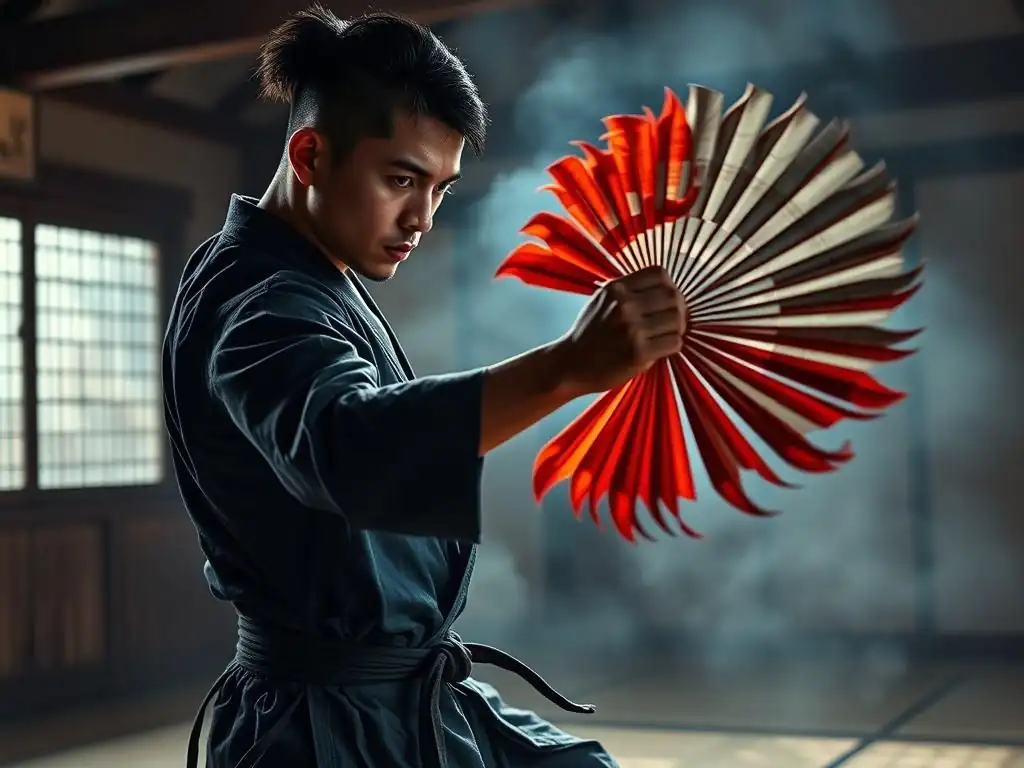
Welcome to Martial Arts Mastery, where tradition meets technique! Delve into the fascinating world of combat arts and discover the secrets behind legendary styles. This time, we unravel a particularly intriguing technique: the Eskrima Abaniko Fan Strike. Its deceptive speed and unusual angles make it a powerful, yet often overlooked, weapon. But what makes it so effective? Prepare to explore the nuances of this unique strike and learn how it can elevate your Eskrima practice. Intrigued? Let's begin.
- The Sinawali Weave: Deceptive Flow and Interlocking Patterns in Eskrima
- Understanding the Eskrima Sinawali Weave
- The Deceptive Nature of the Sinawali in Eskrima/Kali/Arnis
- Mastering the Patterns: Eskrima Sinawali Techniques
- Training Drills for the Eskrima Sinawali
- The Sinawali in Self-Defense Applications
- Common Mistakes to Avoid When Learning the Sinawali
- The Sinawali: A Core Training Method in Eskrima
- Frequently Asked Questions
- Final Reflection: The Unfolding Potential of Eskrima
- Ignite Your Eskrima with Lightning-Fast Fan Strikes!
The Sinawali Weave: Deceptive Flow and Interlocking Patterns in Eskrima
Understanding the Eskrima Sinawali Weave
What is the Sinawali Weave in Filipino Martial Arts?
The Sinawali weave is a fundamental and iconic training method within Filipino martial arts (FMA) such as Eskrima, Kali, and Arnis. At its core, it involves a series of rhythmic, flowing striking patterns, typically executed with two sticks, though it can also be practiced with one stick, bladed weapons, or even empty hands.
The term "Sinawali" itself translates roughly to "to weave," referencing the intricate, overlapping motion of the sticks that resembles the weaving of mats or baskets. This practice is not merely a drill but a comprehensive system designed to develop crucial attributes like coordination, timing, spatial awareness, flow, and the ability to use both hands independently and simultaneously.
Mastering the Eskrima Sinawali weave provides practitioners with a deep understanding of combative angles, distance management, and the principles of continuous motion. While it appears as a complex dance, each movement in the Sinawali pattern represents a potential strike, block, or check. The rhythmic nature helps internalize these movements, making reactions instinctive rather than requiring conscious thought.
Beginners often spend significant time on basic Sinawali patterns, building the necessary foundation before moving to more complex variations or direct applications in sparring or self-defense scenarios. It is considered a cornerstone drill across many FMA systems, valued for its ability to build ambidexterity and peripheral vision.
Key Characteristics of the Sinawali Pattern
The defining characteristic of the Eskrima Sinawali weave is its continuous, cyclical motion. Unlike many martial arts drills that involve discrete strike-and-recover movements, Sinawali involves a constant flow where one action immediately leads into the next. The patterns are typically based on sequences of strikes aimed at different angles, often targeting zones like the head, shoulders, knees, and midsection. A common basic pattern, the Double Sinawali, involves alternating high and low strikes from each side, creating an interlocking "X" pattern in the air.
Another key aspect is the development of independent limb control. Practicing the Eskrima Sinawali weave requires the practitioner to move both sticks (or hands) simultaneously in different, yet coordinated, patterns. This ambidexterity is vital for combat effectiveness, allowing for simultaneous offense and defense, or complex sequences that overwhelm an opponent. Furthermore, the rhythmic nature of the drill helps develop internal timing and cadence, which translates into the ability to control the tempo of an exchange in a real confrontation. The patterns are highly adaptable, forming the basis for single-stick techniques, empty-hand flow drills, and even weapon transitions.
The Deceptive Nature of the Sinawali in Eskrima/Kali/Arnis
Why the Sinawali is Difficult to Predict
The Eskrima Sinawali weave is inherently deceptive due to its continuous, flowing nature. When watching a skilled practitioner execute Sinawali, the constant motion of the sticks can make it difficult for an observer (or opponent) to discern the beginning and end of individual strikes. The rhythmic pattern creates a visual blur, masking the actual point of impact until it's too late. An opponent attempting to predict the next strike based on a static guard or preparatory movement will find it challenging, as the sticks are always in motion, transitioning seamlessly from one angle to the next.
Furthermore, the various Sinawali patterns often involve strikes from multiple angles in rapid succession. A common Sinawali sequence might involve strikes targeting angles 1, 2, 4, and 5 (using the De Campo 12 angles of attack, for example) within just a few seconds.
This rapid switching between high and low lines, and left and right sides, forces the opponent to constantly shift their guard and attention, creating openings that the practitioner can exploit. The ability to generate multiple threats almost simultaneously is a core reason why the Eskrima Sinawali weave is such an effective training tool for developing unpredictable offense.
The Role of Continuous Motion in the Sinawali
The principle of continuous motion is central to the deceptive power of the Eskrima Sinawali weave. Unlike systems that emphasize a distinct strike, recoil, and guard position, Sinawali promotes a state of perpetual movement. This constant flow means that the practitioner is always "loaded" and ready to strike from any point in the pattern. There are no telegraphing pauses or wind-ups that an opponent can easily read. The energy from one strike feeds into the next, allowing for rapid, successive attacks that can overwhelm an opponent's defenses.
This continuous motion also makes the practitioner a harder target to hit. The constant movement of the sticks provides a dynamic shield, allowing for fluid blocks, checks, and parries that are integrated into the offensive flow. Instead of a static block, a Sinawali practitioner might use a weaving motion to deflect an incoming strike while simultaneously setting up their own counter-attack. This seamless integration of offense and defense, driven by continuous motion, is a hallmark of advanced Eskrima Sinawali weave application and contributes significantly to its effectiveness in overwhelming and deceiving an opponent.
Mastering the Patterns: Eskrima Sinawali Techniques
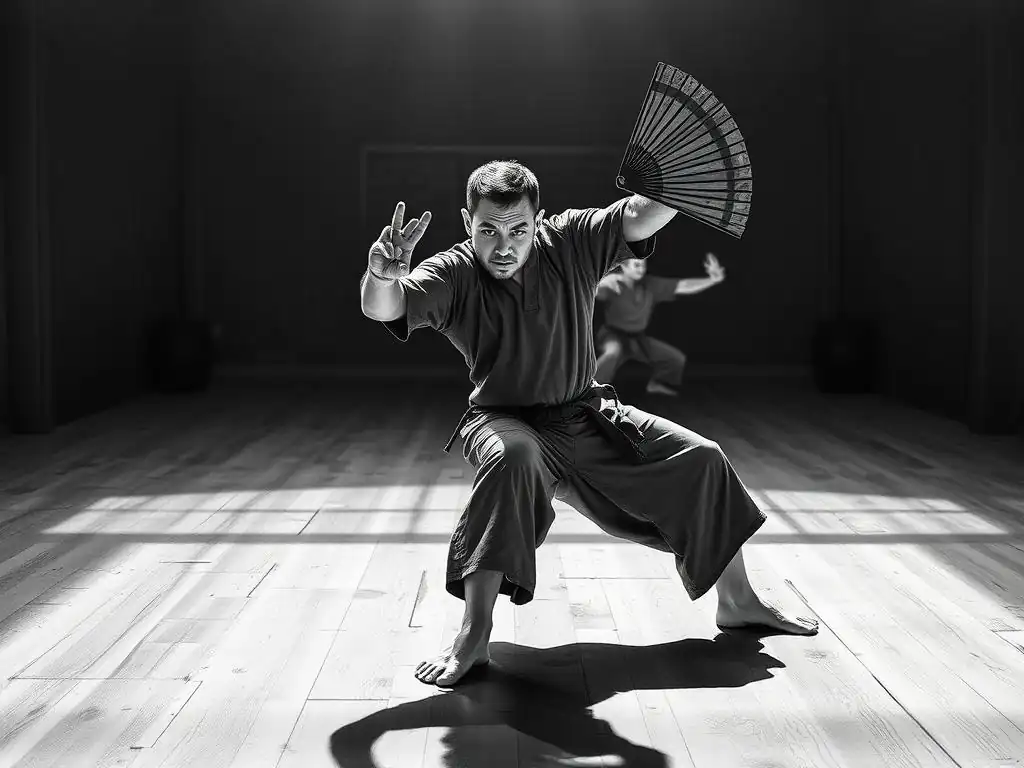
Basic Sinawali Patterns: Double Stick Variations
Mastering the Eskrima Sinawali weave typically begins with fundamental double-stick patterns. The most common is the Double Sinawali, often called the "Heaven and Earth" or "Figure 8" pattern. This involves striking high on one side (e.g., angle 1 or 2), followed by a low strike on the same side (e.g., angle 4 or 5), then repeating the sequence on the opposite side.
The sticks pass each other in the center, creating the weaving effect. For example, Right high -> Right low -> Left high -> Left low, repeating. Another foundational pattern is the Single Sinawali, which uses only one stick at a time while the other remains ready, often involving alternating high strikes from each side.
Beyond these, variations like the Reverse Sinawali (starting with the low strike) or patterns focusing purely on horizontal or vertical strikes are practiced. The key is developing rhythm, coordination, and precision. Beginners might spend dozens of hours, potentially accumulating tens of thousands of repetitions, just on the basic Double Sinawali to achieve fluidity and consistency. These initial patterns build the core timing and spatial awareness needed for all subsequent Sinawali variations and applications in Eskrima training.
Advanced Sinawali Variations and Applications
Once the basic Eskrima Sinawali weave patterns are internalized, practitioners move onto more complex variations and their practical applications. Advanced patterns might involve:
- High/Low/Middle combinations: Integrating strikes to the body or legs into the weave.
- Passing Sinawali: Practicing the patterns while moving forward, backward, or laterally.
- Broken Sinawali: Intentionally pausing or changing the rhythm to disrupt an opponent's timing.
- Translating patterns to other weapons: Applying the same weaving principles to knives, swords, or even improvised weapons.
Advanced application involves using the Sinawali flow in partner drills for disarming, checking, and countering. For instance, a practitioner might use a high Sinawali strike to draw a block, then immediately follow with a low strike through the opening. The continuous motion allows for rapid shifts in target and angle, making defenses difficult. These variations move the Eskrima Sinawali weave from a pure coordination drill to a dynamic combative strategy.
Generating Power and Control in the Sinawali
Generating power in the Eskrima Sinawali weave comes not from brute force, but from body mechanics, leverage, and momentum. The power is often "whipped" from the core and hips, transferring through the shoulders and arms to the stick. The rhythmic, circular motion of the patterns naturally builds momentum, allowing subsequent strikes in a sequence to gain speed and force with minimal effort. The wrists play a crucial role, acting like hinges to snap the sticks into place with speed and precision.
Control is equally vital. While speed and power are developed, the ability to control the striking angle, distance, and force is paramount. This is where the extensive repetitions of the Eskrima Sinawali weave pay off. Through consistent practice, the body learns the precise movements needed, allowing the practitioner to execute strikes with accuracy, stop them short if necessary (for training partners), or deliver full power when appropriate. Proper grip, relaxed shoulders, and coordinated footwork are all essential elements in achieving both power and control within the Sinawali flow.
Training Drills for the Eskrima Sinawali
Solo Drills to Improve Sinawali Coordination
Solo practice is the foundation for mastering the Eskrima Sinawali weave. The most basic solo drill is performing the core patterns (Double Sinawali, Single Sinawali, Reverse Sinawali) repeatedly in place. Focus should be on rhythm, smooth transitions between strikes, and maintaining proper form – keeping the sticks aligned, using wrist snap, and coordinating body movement.
- Basic Pattern Repetition: Practice Double Sinawali for 5-10 minutes, focusing purely on rhythm and flow.
- Stance and Footwork Integration: Perform Sinawali patterns while practicing basic stances (e.g., fighting stance, ready stance) and adding simple footwork like forward/backward steps or side-to-side shuffling.
- Target Visualization: As you perform the patterns, visualize striking specific targets (e.g., head, shoulder, knee) with each movement, enhancing focus and accuracy.
- Speed and Power Progression: Start slow, focusing on perfect form. Gradually increase speed while maintaining control. Incorporate drills focusing on generating power through hip rotation for specific strikes within the pattern.
Partner Drills for Practicing Sinawali Defense and Offense
Partner drills are essential for translating solo coordination into practical application of the Eskrima Sinawali weave. These drills introduce live resistance and the need for timing and adaptation.
- Mirror Drill: Partners face each other and perform the same Sinawali pattern simultaneously, focusing on maintaining synchronization and distance. This builds timing and spatial awareness relative to another person.
- Call-Out Drill: One partner calls out the pattern (e.g., "Double Sinawali," "Single Sinawali high") and the other executes it, improving responsiveness.
- Follow the Leader: One partner initiates a Sinawali flow, and the other follows their movements precisely, developing the ability to read and react to changing rhythms and patterns.
- Controlled Sparring with Sinawali Focus: Engage in light, controlled sparring where the primary focus is on using Sinawali principles to generate offense and defense, allowing contact on padded areas or gear.
Integrating the Sinawali into Sparring and Flow Drills
The ultimate goal of Eskrima Sinawali weave training is its seamless integration into live application. Flow drills and sparring provide the context to use the learned patterns and principles reactively.
- Flow Drill Transition: Start with a basic Sinawali pattern, then have one partner introduce a block or check, forcing the other to transition from the pattern into a different technique (e.g., a disarm, an angle change, an empty hand check) before potentially returning to the Sinawali flow.
- Scenario-Based Application: Practice applying Sinawali concepts within specific self-defense scenarios (e.g., defending against a specific angle of attack, transitioning from sticks to empty hands).
- Light Contact Sparring: Engage in controlled sparring using protective gear (helmets, padded sticks, gloves). Focus on using the continuous motion and multiple angles of the Sinawali to create openings and land controlled strikes, as well as using the weaving motion for dynamic defense. The goal is not necessarily to perform a perfect Sinawali pattern in sparring, but to apply the principles of continuous motion, angle coverage, and simultaneous action developed through the drills.
The Sinawali in Self-Defense Applications
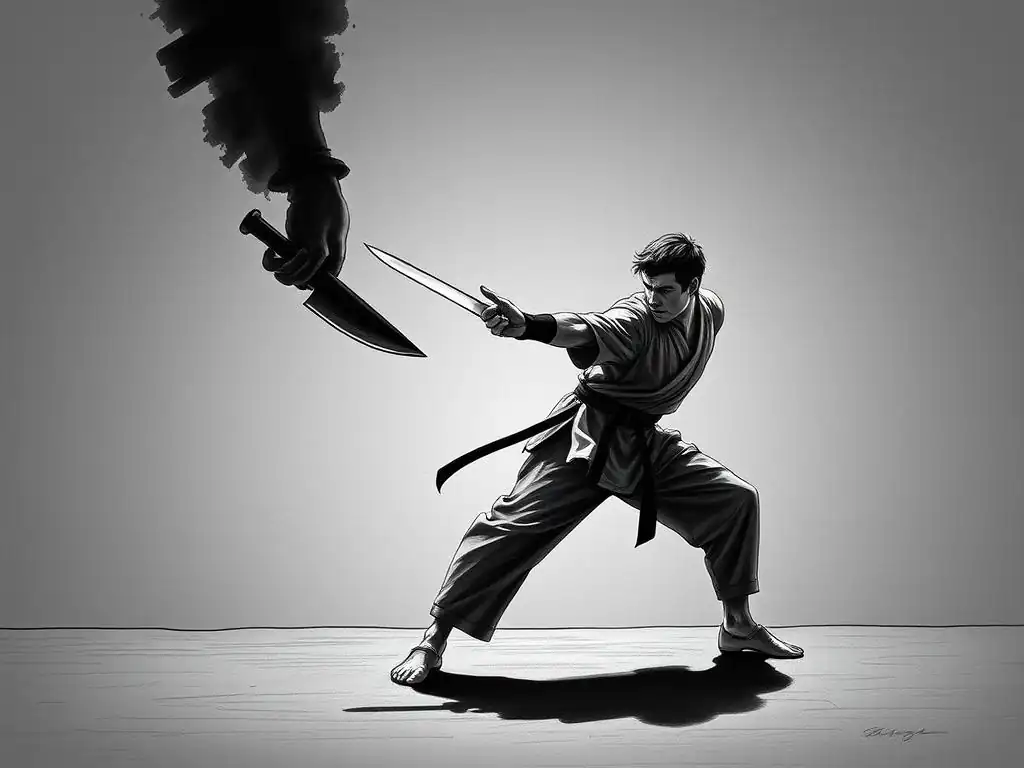
Adapting the Sinawali for Empty Hand Techniques
While typically associated with stick fighting, the principles of the Eskrima Sinawali weave are highly adaptable to empty-hand combat. The core concepts of continuous motion, simultaneous offense and defense, and striking from multiple angles translate directly to hand and arm movements. For instance, the weaving motion of the sticks can be applied to simultaneous parrying and striking with the hands, using forearm or hand movements to deflect an incoming attack while the other hand delivers a strike.
Many FMA systems teach "empty hand Sinawali" drills where practitioners perform the same patterns using their open hands or closed fists. This develops the same coordination, timing, and flow, preparing the practitioner to use their limbs in complex, multi-directional movements. The ability to strike high and low, left and right, in rapid succession with the hands, mirroring the stick patterns, makes the empty-hand Sinawali a powerful tool for overwhelming an opponent's guard and creating openings in a self-defense situation where weapons are not available.
Using Sinawali Principles for Weapon Disarms
The continuous, interlocking motion of the Eskrima Sinawali weave is highly effective for weapon disarms, particularly against stick or knife attacks. The weaving action allows the defender to simultaneously block or deflect the incoming weapon while using their other hand or stick to control the opponent's limb or weapon. The continuous flow makes it difficult for the attacker to withdraw their weapon or regain control once the disarm sequence has begun.
A common application involves using a Sinawali-like motion to trap the attacker's weapon arm against their body or the defender's own arm, while simultaneously striking or manipulating the weapon for the disarm. The rapid, successive movements prevent the attacker from establishing a stable base or counter-attacking effectively. The principles of continuous motion mean that if the initial disarm attempt doesn't succeed, the defender can immediately transition into another technique without pausing, maintaining pressure and control.
Strategic Considerations for Applying Sinawali Concepts
Applying Eskrima Sinawali weave concepts in self-defense requires strategic thinking beyond just executing patterns. Key considerations include:
- Distance Management: Sinawali is primarily a close to medium-range fighting method. Applying its principles effectively requires closing the distance quickly and safely.
- Targeting: While the drills hit theoretical angles, real application involves targeting vulnerable points like wrists, elbows, knees, and head. The multi-angle attack of Sinawali can overwhelm an opponent's ability to protect all these areas simultaneously.
- Adaptability: Be ready to transition out of the Sinawali flow if the opponent breaks the rhythm or introduces a different type of attack. The goal is to use the principles, not to rigidly perform a pattern in a chaotic encounter.
- Environmental Awareness: The wide, flowing motions of some Sinawali patterns might be impractical in confined spaces. Adapting the movements to be tighter and more linear is crucial for real-world application.
[ ] Assess the environment
[ ] Determine appropriate range
[ ] Initiate attack using multi-angle principle
[ ] Maintain continuous motion if possible
[ ] Be ready to transition to other techniques (empty hand, grappling)
[ ] Target vulnerable points
Common Mistakes to Avoid When Learning the Sinawali
Stiffness and Lack of Fluidity
One of the most common errors when learning the Eskrima Sinawali weave is practicing with excessive stiffness. Beginners often tense their shoulders, arms, and wrists, which hinders the natural flow and rhythm of the patterns. Stiffness reduces speed, limits power generation (which comes from whip-like motion, not rigidity), and makes transitions between strikes jerky and predictable. The sticks should feel like extensions of the arms, moving with relaxed power.
Overcoming stiffness requires conscious effort and focused practice. Beginners should prioritize slow, deliberate practice, focusing on relaxing the shoulders and allowing the wrists to snap freely. Visualizing the weaving motion as water flowing or a pendulum swinging can help cultivate the necessary fluidity. Recording oneself or getting feedback from an instructor is also invaluable for identifying and correcting areas of tension. Remember, the power in the Eskrima Sinawali weave comes from relaxed speed and timing, not muscular tension.
Telegraphing Movements in the Sinawali
Telegraphing refers to unintentionally giving away your intended strike through preparatory movements, changes in tension, or eye direction. While the continuous motion of the Eskrima Sinawali weave is designed to be deceptive, a practitioner who tenses up before a strike or makes a large, unnecessary chambering motion can still telegraph their intentions. This defeats the purpose of the drill, which is to make strikes appear suddenly from the ongoing flow.
To avoid telegraphing, focus on keeping the movements compact and efficient. The energy for the strike should come from the core and wrist snap, not a large wind-up from the shoulder. Maintain a consistent, relaxed expression and avoid fixating on the intended target before the strike is launched. Practicing in front of a mirror or with a partner who can identify telegraphing habits is crucial. The goal is for each strike to emerge seamlessly from the preceding movement in the Sinawali pattern, giving the opponent minimal warning.
Neglecting Footwork and Stance
While the sticks are the most visible element, neglecting footwork and stance is a critical mistake that undermines the effectiveness of the Eskrima Sinawali weave. Proper stance provides balance, stability, and the ability to generate power from the ground up. Footwork allows the practitioner to manage distance, change angles of attack, pursue a retreating opponent, or evade an incoming strike while maintaining the Sinawali flow. Performing the patterns purely with upper body motion in a static stance severely limits their combative application.
Integration of footwork should begin early in training. Basic drills should involve performing the Sinawali patterns while stepping forward, backward, and laterally. More advanced drills incorporate pivoting, shuffling, and angling. A stable, dynamic stance allows the practitioner to absorb force, shift weight for power, and maintain balance even when moving rapidly. Without proper footwork, the impressive hand speed of the Sinawali becomes largely ineffective in a dynamic combat situation.
The Sinawali: A Core Training Method in Eskrima
Historical Significance of the Sinawali in Filipino Martial Arts
The Eskrima Sinawali weave holds deep historical significance within Filipino martial arts. While its exact origins are difficult to pinpoint due to the oral tradition of many FMA systems, it is widely considered one of the most ancient and fundamental training methods. It is believed to have evolved from practices involving rattan sticks, swords, and even agricultural tools, reflecting the combative needs and available resources of the Filipino people throughout history. The rhythmic, weaving patterns likely served as a way to train large groups efficiently and to develop universal movement principles applicable across various weapons.
Historically, mastery of the Sinawali was often a prerequisite for learning more advanced techniques. It wasn't just a physical drill; it instilled discipline, focus, and a deep understanding of combative timing and distance. Passed down through generations of masters, often within families or specific villages, the Eskrima Sinawali weave has remained a constant across the diverse landscape of FMA styles, a testament to its enduring value as a core training methodology for developing essential fighting attributes.
The Sinawali as a Foundation for Advanced Techniques
The Eskrima Sinawali weave serves as a crucial foundation upon which many advanced Eskrima techniques are built. The continuous motion and limb independence developed through Sinawali directly translate into complex sequences involving simultaneous blocking and striking, rapid transitions between targets, and the ability to maintain offensive pressure while defending. Techniques like disarms, joint locks, and throws often incorporate elements of the weaving motion to control the opponent's limbs or weapon.
Furthermore, the spatial awareness and timing honed by practicing the Sinawali pattern are essential for techniques that require precise distance management and interception. Flow drills derived from Sinawali teach practitioners how to adapt to an opponent's movements in real-time, transitioning seamlessly between offensive and defensive actions. In essence, the Eskrima Sinawali weave provides the underlying motor skills and combative principles that make more complex and spontaneous fighting possible.
The Sinawali in Modern Martial Arts Training
In modern martial arts training, the Eskrima Sinawali weave continues to be a vital component, not only in traditional FMA schools but also in integrated self-defense systems. Its value extends beyond weapon proficiency, being recognized for its benefits in developing ambidexterity, coordination, focus, and stress management. Many contemporary FMA instructors structure their beginner curriculum heavily around Sinawali drills, acknowledging their effectiveness in quickly building fundamental skills.
The Sinawali is also appreciated for its adaptability. It can be practiced solo, with partners, with various weapons, and even integrated into fitness routines. The rhythmic, almost meditative aspect of repetitive Sinawali patterns can also contribute to mental discipline and focus. As FMA gains global recognition, the Eskrima Sinawali weave stands out as a unique and highly effective training method, providing practitioners with a dynamic foundation for both traditional stick fighting and practical self-defense applications.
Frequently Asked Questions
What is the Abaniko Fan Strike in Eskrima?
The Abaniko Fan Strike is a core technique in Eskrima involving a whipping motion with a blade or impact weapon, mimicking the action of opening and closing a fan. It emphasizes deceptive speed and unpredictable angles to strike an opponent.
Why is the Abaniko Fan Strike considered deceptive?
The fan-like motion creates misdirection and makes it difficult for an opponent to anticipate the point of impact. The speed and the wide arc of the strike can also obscure the weapon's true trajectory.
What kind of weapon is typically used for the Abaniko Fan Strike?
While the technique can be adapted to various weapons, it's commonly practiced with a single stick (baston) or a bladed weapon like a knife or bolo. The weapon's length influences the reach and power of the strike.
How does the Abaniko Fan Strike relate to self-defense?
The unpredictable nature and range of the Abaniko Fan Strike make it effective in close-quarters self-defense situations. It can be used to disrupt an attacker's balance or create openings for follow-up techniques.
Where can I learn more about Eskrima and the Abaniko Fan Strike?
MartialArtsMastery.org offers resources on Eskrima history, training techniques, and practical self-defense strategies. You can find more in-depth information about various martial arts disciplines and their applications.
Final Reflection: The Unfolding Potential of Eskrima
The deceptive speed and intricate angles of the Abaniko Fan Strike, as explored throughout this article, are not merely historical techniques; they represent a living testament to the ingenuity and adaptability of Eskrima. In a world increasingly reliant on speed and precision, understanding these principles offers a unique advantage, not just in self-defense, but also in strategic thinking and problem-solving.
The Abaniko Fan Strike, with its blend of tradition and innovation, has profoundly influenced the way we perceive movement and combat. Its elegance belies its effectiveness, a reminder that true power often lies in subtlety and misdirection. The best weapon is the one you don't have to draw,
as a wise Eskrimador once said, and the Abaniko Fan Strike embodies this philosophy, transforming an everyday object into a formidable tool.
Now, consider how the principles of the Abaniko Fan Strike – deception, agility, and strategic use of angles – can be applied beyond the training hall. How can you use these lessons to navigate challenges in your own life, to find innovative solutions, and to turn perceived weaknesses into strengths? Let the spirit of Eskrima guide you, and may you discover the hidden potential within yourself, ready to unfold at a moment's notice.
Ignite Your Eskrima with Lightning-Fast Fan Strikes!
Thank you for diving into the art of the Abaniko Fan Strike with us! We hope you've discovered new depths to this deceptive weapon and are eager to elevate your Eskrima skills. Now, it's time to put that knowledge into action!
- Master the "Witik" motion! Dedicate at least 15 minutes today to practicing the wrist snap and precise angles we discussed. Repetition is key to unlocking the fan's true potential.
- Explore variations! Experiment with integrating the Abaniko fan strike into your current Eskrima forms. Surprise yourself (and your training partners!) with unexpected combinations.
- Share the knowledge! Introduce a training partner to the basics of the Abaniko fan strike and observe their reactions to its speed and angles.
What subtle adjustment to your wrist motion yielded the most surprising increase in strike speed? Share your discovery in the comments below!