
Arnis Terminology 101: Key Filipino Terms for Stick Fighting Beginners


Welcome to Martial Arts Mastery, your gateway to understanding the world's most captivating combat traditions. Ever been curious about Arnis and its dynamic stick-fighting techniques? Dive into "Arnis Terminology 101," where we unravel the essential Filipino terms every beginner needs to know. Prepare to unlock the secrets of this ancient art and discover the language of its powerful movements – let's begin!
- Introduction to Arnis Stick Fighting Terminology
- Essential Arnis Stance Terminology
- Basic Arnis Striking Terminology
- Arnis Blocking and Defense Terminology
- Disarming Techniques Terminology in Arnis
- Arnis Training Terminology
- Key Arnis Terminology Beyond the Basics
- Conclusion: Mastering Arnis Stick Fighting Terms for Enhanced Learning
- Frequently Asked Questions
- Final Reflection: Embracing the Language of Arnis
- Unleash Your Inner Warrior: Embrace the Arnis Journey!
Introduction to Arnis Stick Fighting Terminology
Why Learning Arnis Terms is Crucial for Beginners
Embarking on the journey of learning Arnis, the national martial art of the Philippines, involves much more than just mastering stick techniques. Understanding the specific Arnis terminology used in training is absolutely fundamental for beginners. Without a grasp of these terms, communication with instructors and training partners becomes difficult, hindering the learning process significantly. Imagine being told to perform a Sangga without knowing it means 'block,' or attempting Sinawali drills without understanding the weaving patterns involved. Proper use of Arnis stick fighting terms ensures clarity, precision, and safety during practice.
Furthermore, knowing the correct Arnis terminology allows practitioners to access a deeper understanding of the art's principles and history. Many terms describe not just physical movements but also underlying concepts or strategic intentions. For instance, terms related to footwork or body positioning are integral to developing proper balance and power generation.
A student who diligently learns the Arnis stick fighting terms will progress faster, retain information more effectively, and feel more connected to the rich heritage of Filipino martial arts. It's the foundational layer upon which all advanced techniques are built, ensuring that the student can follow instructions accurately and participate fully in classes.
The Importance of Filipino Language in Arnis Practice
The terminology of Arnis is deeply rooted in the Filipino language, reflecting the art's origins and cultural significance. While English explanations are often provided in international schools, the original Filipino terms carry specific nuances and historical context that are often lost in translation. Using the correct Filipino terms, such as Hekasi for the ready stance or Banda y Banda for specific strikes, honors the tradition and lineage of the art. It connects modern practitioners to the masters and fighters who developed these techniques over centuries in the Philippines.
Moreover, the use of Filipino Arnis stick fighting terms fosters a sense of community and shared identity among practitioners worldwide. Whether training in Manila, California, or London, using the same language for techniques and concepts creates a universal understanding. Many Arnis systems, like Doce Pares or Eskrima de Campo, maintain specific regional dialect terms within their curriculum, adding another layer of cultural richness. Learning these terms is not just about memorizing words; it's about embracing the cultural vessel that carries the knowledge and spirit of Filipino martial arts, making the learning experience more authentic and profound.
Essential Arnis Stance Terminology
Hekasi: The Ready Stance in Arnis
Hekasi is one of the most fundamental Arnis stick fighting terms a beginner will learn. It refers to the basic ready stance, the position assumed before initiating action or after completing a sequence. In many Arnis systems, Hekasi involves standing with feet shoulder-width apart, relaxed yet alert, with the stick held in a specific position, often across the body or held low, ready to transition into a guard or attack. This stance emphasizes balance, stability, and readiness, allowing for quick movement in any direction. It's the starting point for drills and sparring, signifying that the practitioner is prepared to engage.
Maintaining a proper Hekasi is crucial for efficiency and safety. A typical Hekasi might involve holding the stick in the right hand, resting the tip on the left shoulder or pointing it down, while the left hand is kept free for balance or checking. The body weight is usually centered, and the knees are slightly bent. This neutral yet engaged posture minimizes telegraphing intentions while providing maximum mobility. Instructors often correct beginners on their Hekasi posture, reinforcing its importance as the foundation for all subsequent movements and techniques in Arnis stick fighting.
Understanding Different Arnis Fighting Stances
Beyond the basic Hekasi, Arnis utilizes various fighting stances, each designed for specific situations or techniques. Terms like Pugay (often a salutation/ready stance variation), Fighting Stance (a more dynamic, bladed posture), or Forward Stance and Backward Stance are common Arnis stick fighting terms. The fighting stance typically involves one foot forward, weight distributed for mobility, and the weapon held in a guarding position, ready to strike or block. The exact angle and weight distribution can vary between styles, but the core principle is to be mobile and protected.
Specific stances might also be named after the weapon configuration, such as stances for single stick ( Solo Baston), double stick ( Doble Baston), or stick and dagger ( Espada y Daga). For example, an Espada y Daga stance might involve the lead hand holding the dagger lower while the rear hand holds the stick higher, reflecting the different ranges and purposes of the weapons. Understanding these different Arnis terminology terms for stances is vital for executing techniques correctly and adapting to the dynamic nature of stick fighting, allowing practitioners to maintain balance and leverage during exchanges.
Footwork Terminology in Filipino Martial Arts (FMA)
Effective footwork is the backbone of Arnis stick fighting, enabling practitioners to generate power, evade attacks, and control distance. Filipino martial arts (FMA) have specific terms for various footwork patterns. Common Arnis terminology includes terms like Lateral Shuffle (moving side-to-side), Forward/Backward Step, Passing Step (stepping through), and Pivoting. These terms describe the mechanics of movement, allowing instructors to quickly communicate complex maneuvers. For instance, a combination might involve a Forward Step followed by a Lateral Shuffle to evade and counter.
More specific FMA terms might describe diagonal movements, triangular footwork patterns ( Triángulo), or circular steps ( Redondo). Triangular footwork, for example, is crucial for changing angles and creating openings while staying safe; it involves stepping along the sides of an imaginary triangle relative to the opponent. Mastering this Arnis terminology and the corresponding movements allows beginners to develop agility and positional advantage, which are critical elements in effective Arnis stick fighting. Consistent practice of these footwork patterns is emphasized from the early stages of training.
Basic Arnis Striking Terminology
Banda y Banda: Side to Side Strikes Explained
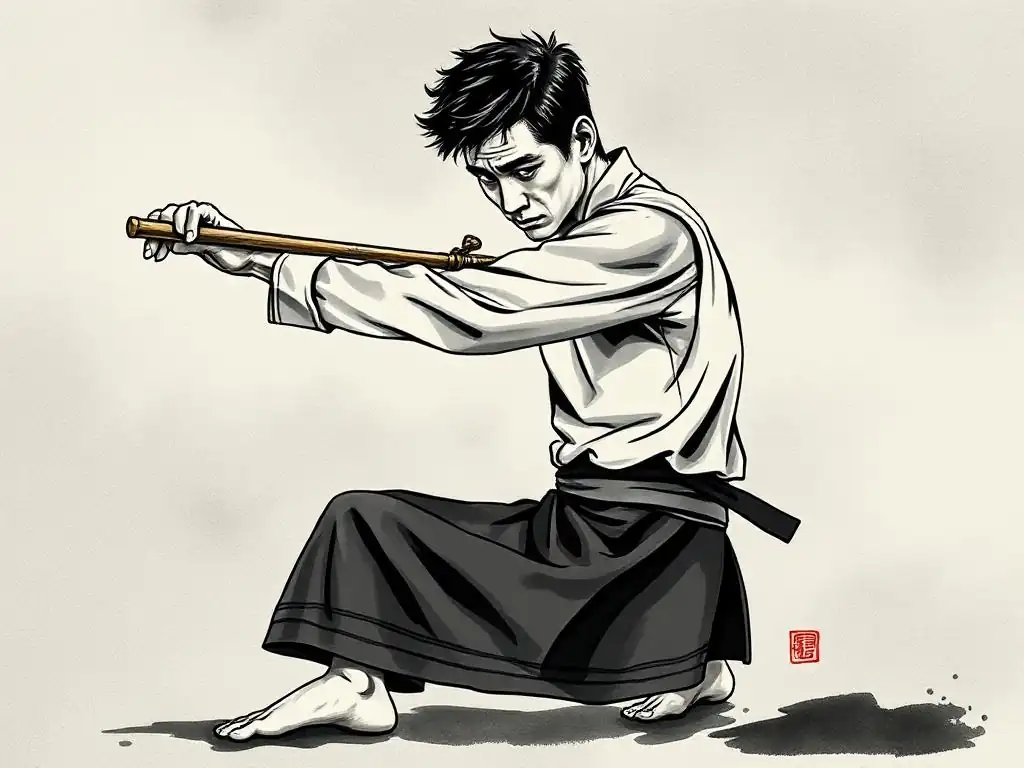
Banda y Banda is a widely recognized Arnis stick fighting term referring to a series of continuous strikes delivered from side to side, typically targeting the opponent's head or upper body. This technique involves alternating strikes, often angles 1 and 2 (right and left temple strikes), in a fluid, rhythmic motion. It's a fundamental drill used to develop coordination, speed, and endurance. Beginners often practice Banda y Banda against a stationary target or in the air, focusing on proper form, power generation from the hips and core, and maintaining a consistent rhythm.
Executing Banda y Banda effectively requires not just arm movement but coordinated body mechanics. The power should originate from the rotation of the hips and shoulders, driving the stick through the target area. While seemingly simple, mastering Banda y Banda develops essential attributes like timing, distance judgment, and the ability to deliver multiple strikes rapidly. Many training sessions start with repetitions of this basic strike pattern, sometimes performing hundreds of repetitions to build muscle memory and stamina. Understanding this Arnis terminology is key to participating in and benefiting from these foundational drills.
Rompi: Upward Strike Techniques in Arnis
Rompi is an Arnis stick fighting term that generally refers to upward striking techniques. These strikes are typically delivered from a low position, targeting the opponent's lower body (knees, shins), groin, or even rising to target the jaw or under the armpit. Rompi strikes are powerful and often used to disrupt an opponent's base or create openings. A common Rompi strike might be delivered with a whipping motion, generating significant force upwards. These techniques are less common than horizontal or diagonal strikes in basic patterns but are vital for a complete understanding of Arnis offense.
Upward strikes like Rompi are particularly effective against certain guards or when an opponent is leaning forward. They require good body mechanics, often involving rising slightly from a bent-knee position to add power. Training for Rompi involves practicing the upward trajectory and impact generation, sometimes targeting suspended objects or sparring partners wearing protective gear. Incorporating Rompi into combinations adds unpredictability to a practitioner's offense, making it harder for opponents to defend solely against common angles. Learning this specific Arnis terminology expands a beginner's offensive vocabulary significantly.
Abaniko: Fan-Like Striking Motions in Eskrima
Abaniko is a distinct Arnis terminology term describing a fan-like or fanning strike. This technique involves rotating the wrist to deliver rapid, short-range strikes, often targeting the hands or wrists of an opponent. The motion resembles the flicking of a fan, hence the name. Abaniko strikes are typically delivered from close range and are excellent for disrupting an opponent's grip, disarming them, or creating openings for follow-up techniques. There are variations like Abaniko sa Itaas (upward fan) or Abaniko sa Ibaba (downward fan).
The power in Abaniko comes primarily from wrist flexibility and speed, supported by minimal forearm movement. It's a technique that requires significant practice to develop the necessary wrist strength and fluidity. Practitioners often drill Abaniko against focus mitts or during sensitivity drills, aiming for precision and speed. Mastering Abaniko adds a crucial close-quarters tool to a practitioner's skillset, allowing them to control the opponent's weapon-bearing limbs effectively. Understanding this Arnis stick fighting term is essential for learning these unique and effective close-range strikes.
Other Common Arnis Striking Terms
Beyond the specific examples, many other Arnis terminology terms describe strikes based on their angle, trajectory, or target. The "12 Angles of Attack" is a fundamental concept in Arnis, with each angle often having a specific name or number associated with it. For instance, Angle 1 might be Redonda (circular) strike to the left temple, and Angle 5 could be a thrust to the stomach. Terms like Planchada (horizontal strike), Aldabis (diagonal cut), and Saksak (thrust) are common Arnis stick fighting terms used to categorize strikes.
Understanding these terms allows practitioners to learn and execute complex striking sequences and defenses. Instructors use these terms to call out specific drills or combinations, such as "Perform Angle 1, then Angle 5, followed by a Planchada." Different Arnis systems may use slightly different names or numbering conventions for angles, but the underlying concept of categorizing strikes by trajectory is universal. Familiarity with this broader Arnis terminology for strikes is crucial for effective communication and training in Filipino martial arts.
Arnis Blocking and Defense Terminology
Sangga: The Concept of Blocking in Arnis
Sangga is the core Arnis terminology term for blocking or parrying. In Arnis stick fighting, blocking is not merely about stopping an incoming strike but often involves deflecting it or redirecting its force while simultaneously positioning oneself for a counter-attack. Sangga techniques emphasize using the stick to meet the incoming force at an angle, absorbing minimal impact while controlling the opponent's weapon. Effective Sangga requires precise timing, distance judgment, and proper body mechanics to avoid being overwhelmed.
The philosophy behind Sangga often includes the principle of "meeting force with angle" rather than direct opposition. This minimizes wear and tear on the practitioner's weapon and body. Training involves practicing blocking against various angles of attack, learning to judge the incoming speed and power to apply the appropriate Sangga technique. Understanding the concept of Sangga is fundamental to Arnis defense, as it forms the basis for surviving an exchange and creating opportunities to counter. Mastery of this Arnis stick fighting term and its application is essential for defensive proficiency.
Common Blocking Techniques and Their Filipino Names
Arnis employs a variety of blocking techniques, each with specific Arnis terminology. Terms like Pasungkit (scooping block), Pariangga (cross block), Hataw Tulak (deflection push), and Sangga sa Itaas (overhead block) are used to describe different methods of defense. A Pasungkit block, for example, might involve scooping upwards with the stick to deflect a low strike, while a Pariangga uses two sticks or a stick and arm to form an 'X' block against overhead attacks. These terms precisely describe the physical action and intent of the block.
Practitioners learn to apply the appropriate blocking technique based on the angle and power of the incoming strike. For instance, defending against a horizontal strike to the side might involve a specific Sangga that redirects the force outwards, preparing for an immediate counter. Training drills often focus on reacting to random angles of attack with the correct blocking response, reinforcing the Arnis terminology and muscle memory. Proficiency in these common Arnis stick fighting terms for blocks is vital for developing a robust defense against armed attacks.
Understanding Espada y Daga Terminology (Sword and Dagger)
Espada y Daga, meaning "sword and dagger" in Spanish (a common colonial influence on Arnis terminology), is a distinct category within Arnis stick fighting that involves using a long weapon (like a stick representing a sword) and a short weapon (like a training knife representing a dagger) simultaneously. The terminology specific to Espada y Daga reflects the unique coordination and strategies involved in wielding two different weapons. Terms describe stances, strikes, blocks, and disarms specific to this combination.
For example, blocking in Espada y Daga might involve using the stick to parry the main attack while the dagger hand controls the opponent's weapon or limb, using terms like Daga Sangga (dagger block/check). Strikes might involve combinations like a stick strike followed by a dagger thrust, each action having its specific term or place within a sequence. Understanding Espada y Daga Arnis stick fighting terms is crucial for practitioners specializing in this complex and highly effective system, which requires sophisticated coordination between both hands and weapons.
Disarming Techniques Terminology in Arnis
Agaw: Disarming Techniques Explained
Agaw is the general Arnis terminology term that refers to disarming techniques, the methods used to take away an opponent's weapon. Disarming is a critical component of Arnis stick fighting, focusing on controlling the opponent's weapon hand or arm, disrupting their grip, and safely removing the weapon from their possession. Agaw techniques can range from simple twists and levers to more complex joint manipulations or strikes aimed at the weapon-bearing hand. The goal is always to neutralize the armed threat as quickly and safely as possible.
Effective Agaw requires precise timing, leverage, and control. Practitioners learn to identify opportunities during an exchange, such as after a block or during a transition, to execute a disarm. Training drills often simulate scenarios where an opponent is trying to maintain their grip, emphasizing the application of pressure at specific points to break their control. Mastering the various Agaw techniques and the associated Arnis stick fighting terms is essential for advanced practitioners looking to escalate or de-escalate confrontations by neutralizing the opponent's weapon.
Key Terms for Weapon Retention and Disarming
Within the concept of Agaw, specific Arnis terminology describes different disarming methods and, importantly, weapon retention techniques. Terms might describe specific locks ( Trangka), twists ( Pilipit), or strikes ( Tusok - thrust, or Hataw - strike, applied to the hand) used to achieve the disarm. For example, a common disarm might be described as a specific sequence of blocks ( Sangga) followed by a Pilipit applied to the wrist.
Conversely, Arnis also teaches weapon retention, techniques to prevent one's own weapon from being disarmed. Terms related to maintaining a strong grip, shifting weight, or counter-locking might also fall under this category, though specific Filipino terms for every retention method can vary by system. Understanding these Arnis stick fighting terms, both for taking weapons and keeping your own, is crucial for surviving and controlling engagements, highlighting the comprehensive nature of Arnis training which covers both offense, defense, and weapon control.
Arnis Training Terminology
Sinawali: Weaving Patterns and Drills
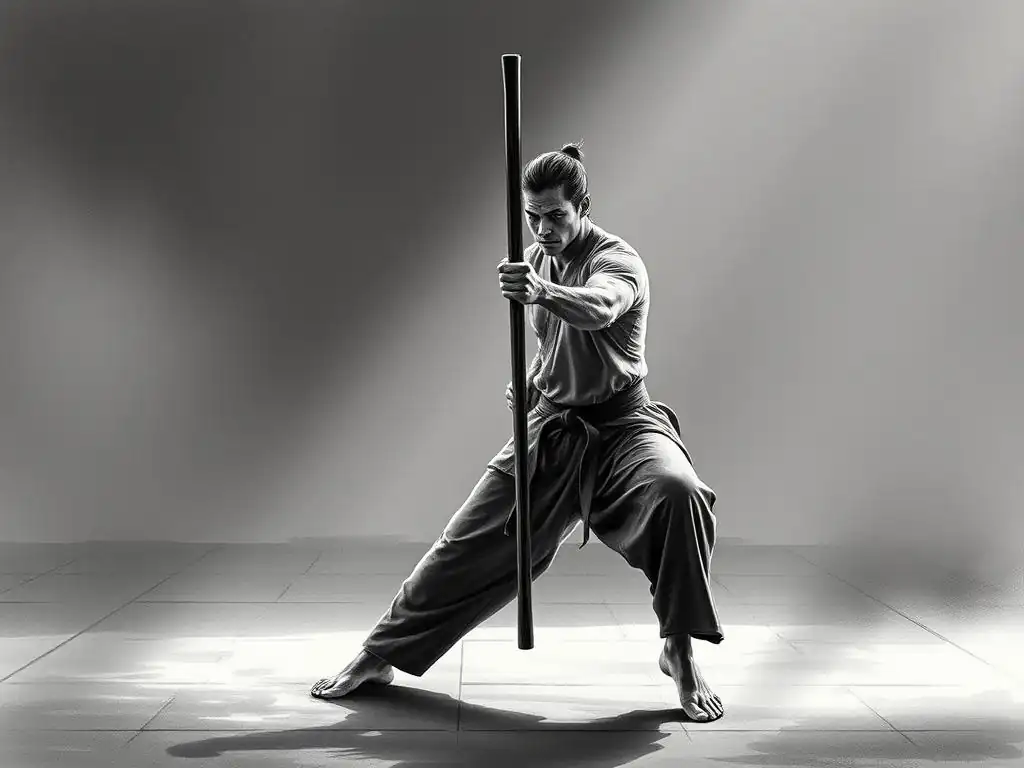
Sinawali is perhaps one of the most iconic Arnis terminology terms, referring to the core weaving patterns practiced with single or double sticks. These drills involve continuous, flowing movements that mimic striking and blocking sequences. The name Sinawali comes from the word "sawali," a type of woven bamboo material used in house construction in the Philippines, aptly describing the intricate, crisscrossing patterns of the sticks. There are numerous Sinawali variations, such as Single Sinawali, Double Sinawali, Reverse Sinawali, and Heaven and Earth Sinawali, each with its unique pattern and rhythm.
Practicing Sinawali is fundamental for developing coordination between both hands, timing, flow, and muscle memory for basic striking and blocking angles. Beginners often spend significant time drilling Sinawali patterns, starting slowly and gradually increasing speed and power. These drills are not just theoretical movements; they build the physical attributes and instinctive reactions necessary for live Arnis stick fighting. Mastery of the various Sinawali patterns and their Arnis terminology is considered a benchmark of proficiency and fluidity in Filipino martial arts.
Understanding Arnis Training Exercises and Terminology
Beyond Sinawali, Arnis training involves a variety of exercises, each with its own Arnis terminology. Terms like Punto Daga (point of the dagger, referring to close-range stick work that mimics dagger fighting), Tapi-Tapi (checking/tapping drills), and Sumbrada (a call-and-response drill where partners exchange pre-arranged or free-flowing techniques) are common. Tapi-Tapi, for instance, focuses on developing sensitivity and control by lightly tapping and checking an opponent's incoming strikes or limbs.
These training exercises are designed to develop specific skills, from range management and timing to sensitivity and counter-offense. Sumbrada drills are particularly valuable for integrating different techniques and developing reflexive responses in a semi-cooperative environment. Understanding the Arnis stick fighting terms for these exercises allows practitioners to follow instructions and participate effectively in class, progressing from basic movements to more complex sequences and sparring preparations. Consistent engagement with these varied drills is key to holistic development in Arnis.
Lakan: Rank and Advancement Terminology in Arnis
Like many martial arts, Arnis utilizes a ranking system to mark a student's progress, and specific Arnis terminology is used for these ranks. While systems vary widely, a common term for a high-ranking practitioner or instructor is Lakan (for males) or Lakambini (for females). Some systems use belt ranks similar to Japanese arts (white, yellow, blue, black, etc. ), while others use sashes, patches, or simply levels (e.g., Level 1, Level 2). The term Guro is universally used to mean 'teacher' or 'instructor'.
In systems using Filipino terms, beginner ranks might be referred to by terms indicating student status, progressing through intermediate levels before reaching advanced ranks like Lakan. Achieving a Lakan rank typically signifies years of dedicated training, deep understanding of Arnis terminology and techniques, and often the ability to teach. The journey through these ranks involves testing on physical techniques, theoretical knowledge (including Arnis stick fighting terms), and sometimes historical or philosophical understanding. Understanding these ranking terms provides context for a student's place and progression within their specific Arnis lineage.
Key Arnis Terminology Beyond the Basics
Exploring Advanced Arnis Concepts and Their Terms
As practitioners advance in Arnis, they encounter more complex concepts and associated Arnis terminology. Terms related to joint locks ( Trangka), throws ( Bagsak), ground fighting ( Lupa), and multiple opponent strategies become relevant. Concepts like Kontra (counter), Seguida (follow-up), and Redonda (circular or continuous motion, also a strike type) are explored in greater depth, applying them in more dynamic and unpredictable scenarios. Advanced Arnis stick fighting terms often describe intricate sequences or principles of motion and energy.
For example, understanding the term Kontra-Seguida might involve learning specific counters that lead immediately into follow-up attacks, a more advanced tactical concept. Similarly, terms describing specific limb destruction techniques or nerve point strikes ( Punto) become part of the vocabulary. These advanced Arnis terminology terms move beyond basic techniques to encompass strategy, timing, and the application of principles under pressure, representing a deeper level of mastery in Filipino martial arts.
The Role of Tradition in Arnis Terminology
The preservation of traditional Arnis terminology plays a vital role in maintaining the integrity and historical connection of the art. Many terms have been passed down through generations within specific families or schools (known as Lineages or Styles). While some terms are widely recognized across most systems (like Sinawali or Sangga), others are unique to particular lineages, reflecting regional dialects or the specific focus of that system (e.g., terms specific to blade work vs. stick work).
Using these traditional Arnis stick fighting terms is an act of honoring the ancestors and masters who developed the art. It ensures that the knowledge is transmitted with the original intent and cultural context. While modern schools may adopt standardized terms for clarity, understanding the traditional vocabulary provides a richer appreciation of the art's diverse history and the subtle differences between styles. This commitment to traditional Arnis terminology helps keep the spirit of Filipino martial arts alive for future generations.
Conclusion: Mastering Arnis Stick Fighting Terms for Enhanced Learning
Continuing Your Journey in Filipino Martial Arts
Mastering Arnis stick fighting terms is an ongoing process, crucial for continuous growth in Filipino martial arts. As you progress from beginner to intermediate and advanced levels, you will encounter new techniques, concepts, and their corresponding terminology. Embrace this learning as an integral part of your training. Regularly reviewing terms, asking questions, and using the correct vocabulary during practice will solidify your understanding and improve your communication with fellow practitioners and instructors. Your journey in Arnis is not just physical; it's also intellectual and cultural.
Actively seek opportunities to learn more Arnis terminology. This might involve studying the history of different Arnis styles, reading books by recognized masters, or even participating in workshops focused on the cultural aspects of FMA. The more fluent you become in the language of Arnis, the deeper your appreciation for the art will grow, and the more effectively you will be able to learn and apply its techniques. Your dedication to learning Arnis stick fighting terms is a testament to your commitment to mastering this dynamic martial art.
Resources for Further Arnis Terminology Study
To deepen your understanding of Arnis terminology, several resources can be invaluable. Comprehensive glossaries of Arnis stick fighting terms are available in many FMA books and online forums dedicated to Filipino martial arts. Some instructors provide handouts or study guides covering the specific terminology used in their school's curriculum. Watching instructional videos by reputable practitioners and paying close attention to the terms they use can also be very helpful.
Engaging with the FMA community, whether locally or online, provides opportunities to hear and use the terms in context. Don't be afraid to ask your instructor or senior students for clarification on terms you don't understand. Many FMA practitioners are passionate about preserving the art's language and are happy to help beginners learn. By utilizing these resources and actively practicing the vocabulary, you will build a strong foundation in Arnis terminology, enhancing every aspect of your Arnis stick fighting training.
Frequently Asked Questions
What is Arnis and why is it associated with stick fighting?
Arnis is a Filipino martial art that emphasizes weapon-based fighting, often with sticks. It's known for its practical self-defense applications and dynamic movements.
What are some of the basic grip techniques in Arnis stick fighting?
Common grips include the hammer grip (like holding a hammer), the ice pick grip (stick pointed downward), and the forward grip (hand over hand). The choice depends on attack and defense strategies.
What does the term "Sinawali" refer to in Arnis?
"Sinawali" describes a specific style of double-stick weaving patterns, emphasizing coordination and ambidexterity. It is a fundamental training exercise.
How does "Espada y Daga" relate to Arnis stick fighting?
"Espada y Daga" translates to "sword and dagger," representing a style that combines a longer weapon (like a stick) with a shorter weapon (like a knife). It develops both range control and close-quarters combat skills.
What is the significance of "Tapi-Tapi" in Arnis?
"Tapi-Tapi" refers to a continuous blocking and striking flow, often involving deflecting an opponent's attack and immediately counter-attacking. It teaches reflexes and fluidity.
Final Reflection: Embracing the Language of Arnis
The journey into Arnis, the Filipino martial art of stick fighting, is more than just learning strikes and blocks; it's about understanding and respecting the language that carries its rich history and cultural significance. Mastering the fundamental Arnis stick fighting terms is the first step towards truly connecting with this powerful art form. By familiarizing ourselves with these key terms, we unlock a deeper appreciation for the nuances of Arnis and its profound connection to Filipino heritage.
The impact of Arnis extends far beyond the training hall. It's a living testament to Filipino ingenuity and resilience, a symbol of cultural pride that continues to inspire generations. Learning the language of Arnis is not just about memorizing words; it's about embracing a cultural legacy and connecting with the spirit of the Filipino people. To know a people, you must know their language.
This holds especially true for Arnis, where the terminology is intertwined with the art's philosophy and techniques.
Now, armed with this foundational knowledge of Arnis terminology, I encourage you to delve deeper into this captivating martial art. Let the language guide your practice, deepen your understanding, and connect you to the rich cultural heritage of the Philippines. Embrace the challenge, respect the tradition, and allow the spirit of Arnis to empower you on your journey.
Unleash Your Inner Warrior: Embrace the Arnis Journey!
Thank you for diving into the world of Arnis with us! We hope you now feel more confident navigating the fundamental terminology of this dynamic Filipino martial art. Ready to put your knowledge into action?
- Start practicing! Grab a stick and try to verbalize the key terms as you execute basic strikes and stances. Make it a daily habit to build your muscle memory.
- Dive deeper: Visit martialartsmastery.org to explore our detailed guides on advanced Arnis techniques.
- Share your newfound knowledge! Teach a friend a basic Arnis term. Spreading the word helps preserve this beautiful art.
What's the first Arnis term you'll be using in your next practice session?