
Beyond Mimicry: The Internal Essence of Xing Yi Quan's Twelve Animal Forms

Welcome to Martial Arts Mastery, where we delve into the depths of combat traditions worldwide. Are you ready to move beyond mere imitation and unlock the hidden power within a martial art? In this article, we're exploring the Xing Yi Quan animal forms, and you'll discover how these seemingly simple movements hold the key to profound internal development and devastating fighting skill. Intrigued? Let's begin your journey into the heart of Xing Yi!
- Introduction to Xing Yi Quan Animal Forms: More Than Just Imitation
-
The Twelve Animal Forms: Detailed Exploration of Xing Yi Quan Techniques
- Dragon Form (Long Xing): Spiraling Power and Adaptability
- Tiger Form (Hu Xing): Ferocious Power and Bone Strengthening
- Monkey Form (Hou Xing): Agility, Evasion, and Strategic Movement
- Horse Form (Ma Xing): Relentless Forward Momentum and Explosive Power
- Chicken Form (Ji Xing): Balance, Precise Footwork, and Targeted Strikes
- Hawk Form (Yao Xing): Upward Mobility, Grabbing, and Joint Locks
- Swallow Form (Yan Xing): Lightness, Speed, and Aerial Maneuvering
- Snake Form (She Xing): Coiling Power, Deceptive Movement, and Vital Point Strikes
- Ostrich Form (Tuo Xing): Gathering Power, Stability, and Grounded Strength
- Eagle Form (Diao Xing): Precision, Focus, and Decisive Strikes
- Bear Form (Xiong Xing): Solid Defense, Unwavering Stance, and Crushing Power
- Crocodile Form (E Xing): Hidden Power, Ground Fighting, and Grappling
- Integrating the Twelve Animal Forms into Xing Yi Quan Training
- Conclusion: The Enduring Legacy of Xing Yi Quan's Animal Forms
-
Frequently Asked Questions
- What are the twelve animal forms in Xing Yi Quan, and why are they important?
- Is Xing Yi Quan animal form practice simply about mimicking animal movements?
- How does the historical context of Xing Yi Quan influence the practice of its animal forms?
- What are some key training tips for mastering Xing Yi Quan's animal forms?
- How do the philosophical underpinnings of martial arts relate to Xing Yi Quan's animal forms?
- Final Reflection: Embracing the Spirit of Transformation
- Unleash Your Inner Animal: Ignite Your Xing Yi Practice!
Introduction to Xing Yi Quan Animal Forms: More Than Just Imitation
Xing Yi Quan, often translated as "Form-Intention Boxing," is a profound internal Chinese martial art renowned for its directness, explosive power, and emphasis on unified body mechanics. While it famously incorporates the Five Elements (Wu Xing) and Twelve Animal Forms (Shi Er Xing) into its curriculum, a common initial perception is that the animal forms are merely imitations of animal movements.
This view, however, only scratches the surface of their true depth. The Xing Yi Quan animal forms are not about mimicking a tiger's pounce or a snake's coil externally; rather, they embody the essence and fighting spirit of these creatures, translated into powerful, efficient, and internally connected human movements.
Understanding the Xing Yi Quan animal forms requires looking past the superficial movements to grasp the underlying principles of body mechanics, energy generation, and strategic application. Each of the twelve forms represents a unique method of applying power, navigating space, or responding to an opponent, derived from observing the natural predatory and defensive actions of animals.
Masters of Xing Yi Quan teach that true mastery lies in integrating these animal essences – the tiger's fierceness, the dragon's adaptability, the monkey's agility – with the foundational principles of the Five Elements and the core stances and body methods of the style. This internal cultivation, not external mimicry, unlocks the true power of Xing Yi Quan.
The Historical Roots of Xing Yi Quan and Animal Forms
Xing Yi Quan's origins are often traced back to the legendary General Yue Fei of the Song Dynasty (960-1279 AD), though historical evidence for this specific lineage is debated. More reliably, its development is strongly associated with figures like Ji Longfeng (also known as Ji Jike) in the late Ming and early Qing dynasties (17th century).
Ji Longfeng is credited with synthesizing earlier martial arts knowledge, potentially including spear techniques and various boxing methods, into the nascent structure of Xing Yi Quan. The integration of animal characteristics into martial arts is a common theme across many Chinese styles, reflecting a long tradition of observing nature for combat principles.
The specific Twelve Animal Forms found in later iterations of Xing Yi Quan, particularly those popularized by masters like Li Luoneng (1803-1890) and his students, represent a distillation of combat principles observed in the natural world. Li Luoneng is considered a pivotal figure, transforming the art from its earlier, potentially more linear and spear-like methods into the distinct internal system recognized today.
The selection of these specific twelve animals – Dragon, Tiger, Monkey, Horse, Chicken, Hawk, Swallow, Snake, Ostrich, Eagle, Bear, and Crocodile – was likely based on their perceived potent qualities applicable to fighting, such as explosive power, agility, stability, or deceptive movement. These forms became a structured method for practitioners to embody and cultivate specific martial attributes.
The Misconception of Purely Mimicking Animals in Xing Yi Quan
A frequent initial misunderstanding when encountering Xing Yi Quan animal forms is the belief that practitioners are simply trying to look like the animal. Beginners might attempt to contort their bodies into animalistic shapes or flap their arms like wings, which misses the core purpose entirely. This external focus leads to inefficient movement, a lack of internal connection, and ultimately, ineffective application in combat. The power of Xing Yi Quan does not come from resembling an animal, but from embodying its spirit and applying its natural mechanics through human anatomy and principles.
For example, the Tiger form isn't about crawling or roaring; it's about generating powerful, forward-driving force from the legs and waist, manifesting a feeling of pouncing or overwhelming the opponent. The Snake form isn't about slithering on the ground; it's about cultivating a flexible, coiling power in the spine and torso for deceptive movement and strikes to vital points.
The true practice involves understanding why an animal moves in a certain way to achieve a result (e.g., a tiger's pounce for explosive force), and then finding the corresponding human body mechanics (e.g., coordinated leg drive, waist rotation, and forward momentum) to achieve that same result with internal power (Nei Jin).
Understanding the Internal Principles Behind Each Animal Form
The real value of the Xing Yi Quan animal forms lies in their embodiment of specific internal principles and power generation methods. Each form serves as a vehicle for cultivating a particular type of jin (發勁, explosive power) or a specific strategic approach. For instance, the Dragon form emphasizes spiraling power and adaptability, linking the rotation of the dan tian (lower abdomen) to movements throughout the body. The Tiger form focuses on generating overwhelming forward force, often utilizing a spinal wave and powerful hip engagement ( kua).
Practicing the Xing Yi Quan animal forms correctly requires intense focus on internal sensation: feeling the connection between the ground, legs, waist, and hands; coordinating breath with movement; and directing intent ( yi) to guide the qi (vital energy) and jin. Each form isolates and develops specific physical attributes – like the agility of the Monkey, the rootedness of the Bear, or the precision of the Eagle – while simultaneously integrating these attributes into the unified structure of the body.
Through dedicated practice, practitioners learn to embody these principles, making their movements powerful, efficient, and adaptable, far beyond mere physical imitation.
The Twelve Animal Forms: Detailed Exploration of Xing Yi Quan Techniques
Dragon Form (Long Xing): Spiraling Power and Adaptability
The Dragon form in Xing Yi Quan is often associated with the element Metal (though associations can vary by lineage) and embodies the principle of spiraling, adaptable power. It's not about mythical fire-breathing, but about cultivating a fluid, undulating, and coiling movement pattern throughout the entire body. The essence of Long Xing is the ability to move with seamless transitions, adapting instantly to changes in distance, angle, and opponent's force. It teaches the practitioner how to use rotational power for both defense and offense, allowing strikes to land from unexpected angles and defenses to flow around incoming force.
Developing proficiency in Long Xing requires significant internal awareness. The form emphasizes the connection between the limbs and the core, particularly the rotation of the dan tian. This rotational power is translated into spiraling movements that can generate force, evade attacks, or control an opponent's limbs. A key aspect is the feeling of the spine moving like a dragon's body, allowing for whip-like power and flexible defense. The adaptability of the Dragon form makes it crucial for linking other forms together and for navigating the unpredictable nature of real combat.
Key Principles of Long Xing: Dan Tian Rotation and Whole-Body Connection
The central principle of the Dragon form is the coordinated rotation of the dan tian driving the entire body's movement. Imagine the lower abdomen as the engine; its subtle or pronounced rotation initiates and powers every action. This isn't just hip turning; it involves the coordinated movement of the pelvis, lower back, and abdomen, linked directly to the legs and torso. This rotation creates spiraling force that travels up the spine and out through the limbs, giving movements a unique coiling quality.
Another critical principle is whole-body connection. In Long Xing, no part of the body moves in isolation. The hands, feet, torso, and head are all integrated through the spiraling motion originating from the dan tian.
This ensures that power generated from the ground, amplified by the legs and waist, reaches the point of application (e.g., a hand strike or a block) with maximum efficiency and unified force. This principle of integrated, spiraling movement is fundamental not just to the Dragon form but underpins much of advanced Xing Yi Quan practice, demonstrating the interconnectedness of the Xing Yi Quan animal forms.
Common Mistakes in Dragon Form and How to Correct Them
One pervasive error in practicing Dragon form is attempting to generate power solely from the arms or shoulders, neglecting the crucial role of the dan tian and waist. This results in disconnected, weak movements that lack the characteristic spiraling force. Practitioners might also make movements too large or external, trying to look visibly serpentine rather than focusing on the internal coiling sensation and unified body structure. This leads to wasted energy and vulnerability.
Correction involves constant internal focus. Practice drills that isolate dan tian rotation while maintaining structural integrity. Perform the form slowly, paying attention to how movement initiates from the core and propagates outwards.
Use visualization – imagining the spine as a flexible rod or a coiling snake – to enhance the internal feeling. A common drill involves standing in a basic stance and practicing small, internal rotations of the dan tian, feeling how this subtly shifts weight and creates a spiraling tension throughout the torso, then gradually integrating this feeling into the larger movements of the form. Consistent correction reinforces the connection between the yi (intent) and the qi and jin, ensuring the true essence of the Dragon form is cultivated.
Tiger Form (Hu Xing): Ferocious Power and Bone Strengthening
The Tiger form embodies ferocious, forward-driving power and is strongly associated with bone strengthening and rootedness. It represents the tiger's predatory pounce – a sudden, overwhelming burst of power aimed at closing distance and delivering devastating force. Hu Xing focuses on generating peng jin (expansive, ward-off energy) and chuan jin (penetrating energy), often delivered through powerful palm or fist strikes. This form cultivates physical strength, particularly in the legs and torso, and is crucial for developing a solid, immovable base from which to launch attacks.
Practicing the Tiger form is physically demanding, emphasizing low stances and explosive movements. It teaches the practitioner to harness the power of the earth through strong rooting and transfer it upwards through the body in a coordinated wave. The focus is on direct, linear attacks, often combined with simultaneous defense. The spirit of the Tiger form is one of unwavering determination and aggressive forward momentum, designed to break through an opponent's defense with sheer power and structural integrity. It is a foundational form for developing direct offensive capabilities within the Xing Yi Quan animal forms.
Generating Tiger Power: Spinal Wave and Kua Engagement
Generating the characteristic explosive power of the Tiger form relies heavily on the coordinated action of the spine and the kua (inguinal creases/hips). The movement often involves a subtle or pronounced "spinal wave," where the power initiates from the legs, travels up the spine like a whip crack, and explodes outwards through the strike. This spinal action adds significant velocity and penetrating force to techniques.
Simultaneously, deep engagement of the kua is essential. As the practitioner moves forward or shifts weight, the hips must be relaxed yet engaged, allowing for efficient transfer of power from the legs and ground into the torso and strike. The feeling is one of "sitting" into the kua while simultaneously driving forward. This coordinated use of the spinal wave and kua engagement allows the practitioner to deliver power that feels heavy, rooted, and penetrating, embodying the overwhelming force of a tiger's pounce.
Hu Xing Applications in Combat: Intercepting Blocks and Powerful Strikes
In combat application, the Tiger form is primarily used for direct, aggressive offense and powerful defense. The core movement, often a powerful step forward combined with a simultaneous block and strike (like the "Tiger Claw" or a powerful palm strike), is designed to intercept an incoming attack while immediately launching a counter-offensive. This embodies the principle of jie quan (intercepting fist), a hallmark of Xing Yi Quan.
For example, if an opponent throws a punch, the practitioner might step forward with a Hu Xing step, using a powerful forearm or palm to simultaneously block the incoming limb and deliver a devastating palm strike to the opponent's chest or head. The power for this action comes from the unified forward drive of the entire body, rooted through the legs and propelled by the spinal wave and kua.
The Tiger form's techniques are typically linear and direct, aiming to overwhelm the opponent with superior structure and explosive force, making it a fundamental part of the Xing Yi Quan animal forms repertoire for direct confrontation.
Monkey Form (Hou Xing): Agility, Evasion, and Strategic Movement
The Monkey form represents agility, quick evasion, and clever, strategic movement. Unlike the direct power of the Tiger or Bear, the Monkey form emphasizes lightness, speed, and the ability to change direction instantly. It teaches the practitioner to use footwork and body angling to evade incoming attacks, create openings, and strike from unexpected positions. The essence of Hou Xing is unpredictability and fluid adaptability in motion, allowing the practitioner to dart in and out of range effectively.
Practicing the Monkey form develops balance, coordination, and reflexes. It involves quick shifts of weight, nimble steps, and the ability to lower or raise the body suddenly. The movements are often deceptive, designed to draw an opponent in or create a false sense of security before launching a swift attack. The spirit of the Monkey is one of playful cunning and opportunistic action, using agility and strategic positioning to overcome a larger or stronger opponent. It is a vital component of the Xing Yi Quan animal forms for developing evasive and tricky tactics.
Cultivating Agility and Deception in Hou Xing
Cultivating agility in the Monkey form goes beyond simply moving quickly; it involves developing the ability to change direction and level instantaneously while maintaining balance and structure. This requires relaxed joints, particularly in the hips, knees, and ankles, and a strong connection to the ground that allows for quick pushes and shifts. Drills focus on rapid footwork patterns, sudden drops and rises, and spinning movements.
Deception is also a key element. Monkey movements often involve feints, misdirection, and unexpected changes in tempo or angle. The practitioner might appear to move in one direction before suddenly darting in another, or drop low as if to evade before springing up with an attack. This requires not just physical agility but also mental quickness and the ability to read and manipulate the opponent's reactions. The coordination of eye movement, body language, and footwork is crucial for effective deception in Hou Xing.
Hou Xing Footwork and Its Tactical Advantages
The footwork of the Monkey form is its defining feature and provides significant tactical advantages. It is characterized by light, quick steps, often involving crossing or circular patterns, and sudden shifts in weight. Unlike the rooted, linear steps of the Tiger or Bear, Monkey footwork is designed for evasion, circling, and entering/exiting range rapidly. Examples include the "Monkey Step" (Hou Bu), which can involve a quick hop or a deceptive shuffle.
Tactically, this footwork allows the practitioner to avoid direct confrontation with superior force, flank an opponent, or create openings by forcing the opponent to constantly adjust their position. By moving quickly and unpredictably, the Monkey practitioner can frustrate an opponent's attempts to land solid blows and position themselves for opportunistic strikes to vulnerable areas. This emphasis on evasive and tactical movement makes Hou Xing a unique and valuable part of the Xing Yi Quan animal forms.
Horse Form (Ma Xing): Relentless Forward Momentum and Explosive Power
The Horse form embodies relentless forward momentum and explosive, driving power. It represents the unstoppable charge of a horse, focusing on generating powerful, linear force that drives straight through obstacles. Ma Xing is characterized by strong, stable stances and powerful, forward-driving techniques, often delivered with the fists. This form cultivates leg strength, stability, and the ability to generate sustained forward pressure.
Practicing the Horse form develops a deep connection with the ground and the ability to efficiently transfer ground reaction force into forward motion. It emphasizes maintaining a solid structure while moving, ensuring that power is not dissipated but channeled effectively. The spirit of the Horse form is one of powerful, unwavering advance, designed to break through an opponent's guard and overwhelm them with continuous forward pressure. It is a fundamental form for developing linear, penetrating power within the Xing Yi Quan animal forms.
Harnessing Ground Reaction Force in Ma Xing
Harnessing ground reaction force is paramount in the Horse form. Every movement, particularly the forward step and subsequent strike, relies on pushing firmly against the ground. This force travels up the legs, through the hips and torso, and is channeled into the strike. The practitioner must maintain a solid, rooted connection with the earth, even while moving, to ensure that this force is efficiently utilized.
The structure of the stance and the coordinated movement of the legs and waist are key. As one leg pushes off the ground, the other lands firmly, creating a stable platform from which to launch the strike. The waist acts as a transmission, transferring the power generated by the legs into the upper body. This process, when executed correctly, allows the practitioner to deliver strikes with the weight and momentum of their entire body behind them, creating a powerful, penetrating force characteristic of the Horse form.
Ma Xing Drills for Developing Stamina and Power
Developing stamina and power in the Horse form often involves repetitive, focused drills. A common drill is practicing the basic Horse step and punch repeatedly over a distance, focusing on maintaining a low stance, coordinating the step and strike, and generating power from the legs and waist with each movement. This builds leg strength, endurance, and the ability to maintain structural integrity under exertion.
Another effective drill is practicing the "Three Treasures Fall" (San Bao Luo) or similar downward/forward falling steps inherent in some Horse form variations, focusing on controlled descent and explosive forward drive upon landing. Practicing these movements hundreds, even thousands, of times, helps to engrain the correct body mechanics for generating and sustaining forward momentum and power, making the Ma Xing a cornerstone for developing physical resilience and offensive drive within the Xing Yi Quan animal forms.
Chicken Form (Ji Xing): Balance, Precise Footwork, and Targeted Strikes
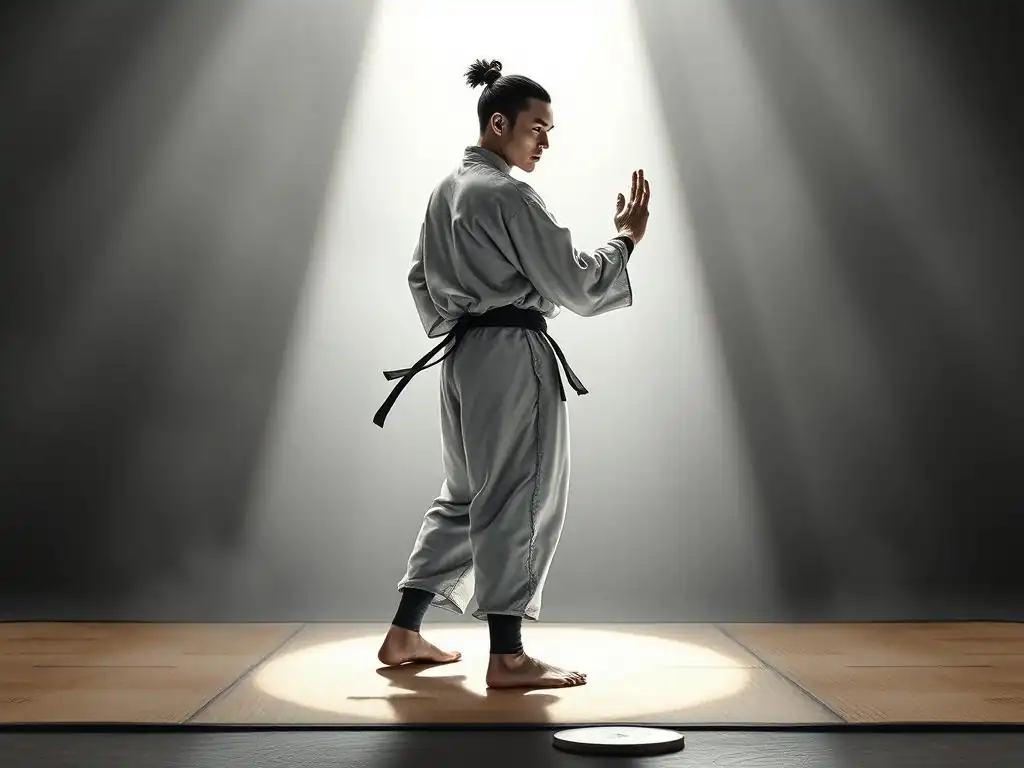
The Chicken form embodies principles of balance, precise footwork, and targeted strikes, often aimed at vulnerable points. It represents the chicken's ability to maintain stable balance on one leg while scratching or pecking with precision. Ji Xing focuses on developing exceptional balance, rootedness on a single leg, and the ability to deliver sharp, focused strikes to specific targets. This form cultivates stability, precision, and the ability to attack with speed and accuracy.
Practicing the Chicken form enhances proprioception and body control. It involves standing on one leg, shifting weight subtly, and executing techniques that require fine motor control. The movements are often quick and sharp, mimicking a chicken's peck or wing flick. The spirit of the Chicken form is one of stable precision and opportunistic, targeted attacks, designed to exploit openings with speed and accuracy. It is a crucial form for developing fine control and targeting within the Xing Yi Quan animal forms.
The Importance of Balance and Rooting in Ji Xing
Exceptional balance is fundamental to the Chicken form. Many techniques involve standing on one leg while the other is used for kicking, sweeping, or maintaining distance. The practitioner must develop the ability to maintain a stable, rooted connection to the ground through a single leg, absorbing and transferring force effectively. This one-legged rooting requires strong ankles, knees, and hips, as well as a centered core.
Maintaining balance in Ji Xing is not static; it is dynamic. The practitioner must be able to subtly adjust their weight and posture to remain stable while moving or executing techniques. This dynamic balance allows for quick transitions and the ability to recover rapidly if balance is momentarily disrupted. Developing this skill through Ji Xing practice significantly improves overall stability and control in all Xing Yi Quan animal forms and applications.
Ji Xing Hand Techniques: Pecking Hand and Wing Block
The hand techniques of the Chicken form are characterized by their precision and speed, often mimicking a chicken's actions. The "Pecking Hand" (Ji Chi Shou) is a common technique, involving a sharp, quick strike with the fingertips or knuckles to a vital point like the eyes, throat, or temple. This technique emphasizes accuracy and penetrating force over brute power.
Another representative technique is the "Wing Block" (Ji Chi), which can involve using the forearm or side of the hand to deflect an incoming attack, often with a sharp, upward or outward motion. This block is typically quick and agile, designed to redirect force rather than meet it head-on. These techniques, combined with the form's emphasis on balance and precise footwork, make the Chicken form effective for close-range, targeted attacks and agile defense within the Xing Yi Quan animal forms.
Hawk Form (Yao Xing): Upward Mobility, Grabbing, and Joint Locks
The Hawk form embodies upward mobility, seizing, and controlling principles, often associated with grabbing and joint locks (Qinna). It represents the hawk's ability to soar and then suddenly descend to grasp its prey. Yao Xing focuses on developing vertical power, the ability to spring upwards, and techniques for seizing limbs or controlling an opponent's structure. This form cultivates explosive upward movement, grip strength, and control techniques.
Practicing the Hawk form involves techniques that utilize upward force generated from the legs and waist, often culminating in a grabbing or controlling action with the hands. It teaches the practitioner to exploit an opponent's upward or downward movement and apply leverage. The spirit of the Hawk form is one of opportunistic seizing and decisive control, designed to neutralize an opponent by controlling their limbs or joints. It is a key form for developing trapping and controlling skills within the Xing Yi Quan animal forms.
Yao Xing's Focus on Vertical Power and Ascending Movement
A core principle of the Hawk form is the generation and utilization of vertical power. This involves harnessing the explosive force from the legs and pushing upwards through the body. Techniques often begin from a lower posture and involve a sudden upward spring or extension, similar to a hawk launching itself into the air or descending onto prey. This vertical power can be used to evade low attacks, gain a higher position, or add force to upward-striking or grabbing techniques.
Ascending movement is integrated with seizing actions. For example, a technique might involve dropping slightly to evade, then exploding upwards while simultaneously reaching out to grab an opponent's wrist or elbow. This coordinated vertical movement and grabbing action allows the practitioner to apply significant leverage and control, making the Hawk form effective for disrupting an opponent's balance and setting up joint locks or throws.
Applying Yao Xing Techniques in Qinna (Joint Locking)
The Hawk form has strong applications in Qinna (grappling and joint locking). The seizing techniques learned in Yao Xing are directly applicable to controlling an opponent's limbs. The upward and downward movements can be used to break an opponent's structure or create openings for joint locks. For instance, seizing an opponent's wrist while simultaneously stepping and using vertical force can set up various wrist locks or arm controls.
The ability cultivated in Yao Xing to quickly seize and apply pressure is crucial in Qinna exchanges. The form trains the practitioner to grip with strength and precision, utilizing the leverage of their entire body. By combining the seizing actions with the vertical power and strategic positioning inherent in the Hawk form, practitioners can effectively trap, control, and apply painful joint locks, making it a vital part of the Xing Yi Quan animal forms for close-quarters control.
Swallow Form (Yan Xing): Lightness, Speed, and Aerial Maneuvering
The Swallow form embodies lightness, speed, and aerial maneuvering. It represents the swallow's ability to dart and weave through the air with incredible speed and agility. Yan Xing focuses on developing light, quick footwork, evasive body movements, and rapid-fire strikes delivered while in motion. This form cultivates speed, fluidity, and the ability to attack and evade almost simultaneously.
Practicing the Swallow form requires a sense of lightness and fluidity throughout the body. It involves quick, often deceptive, steps and body shifts that allow the practitioner to avoid incoming attacks and position themselves for counter-strikes. The movements are typically swift and continuous, emphasizing flow rather than rooted power. The spirit of the Swallow form is one of elusive speed and opportunistic counter-attack, designed to overwhelm an opponent with rapid, unpredictable movements. It is a key form for developing speed and evasive counter-fighting within the Xing Yi Quan animal forms.
Achieving Weightlessness and Fluidity in Yan Xing
Achieving a sense of "weightlessness" and fluidity in the Swallow form is crucial. This doesn't mean actually being weightless, but cultivating a feeling of being light on the feet and having smooth, continuous body movement. This is achieved through relaxed joints, a lowered center of gravity, and coordinated body mechanics that minimize unnecessary tension. The practitioner learns to glide rather than stomp, flowing from one movement to the next without abrupt stops or starts.
Fluidity is also developed by linking movements seamlessly. Swallow techniques often blend together, making it difficult for an opponent to predict the next action. The footwork, body shifts, and hand techniques are integrated into a continuous flow, allowing the practitioner to evade one attack while simultaneously launching a counter-attack. This emphasis on continuous, fluid motion is a hallmark of the Swallow form.
Yan Xing's Evasive Strategies and Counterattacks
The primary tactical application of the Swallow form lies in its evasive strategies and swift counterattacks. The light and rapid footwork allows the practitioner to quickly step out of the line of fire, circle an opponent, or create distance. The body movements are often subtle shifts or angles that allow incoming force to pass by harmlessly.
Immediately following an evasion, the Swallow form emphasizes launching a rapid counterattack. Because the practitioner maintains fluidity and momentum, they are already in motion and can strike instantly after avoiding the initial attack. These counter-strikes are typically fast and precise, often aimed at vulnerable areas exposed by the opponent's committed attack. This ability to evade and counter in a single, fluid motion makes the Swallow form highly effective against aggressive opponents, demonstrating the dynamic capabilities of the Xing Yi Quan animal forms.
Snake Form (She Xing): Coiling Power, Deceptive Movement, and Vital Point Strikes
The Snake form embodies coiling power, deceptive movement, and strikes to vital points. It represents the snake's ability to move silently and deceptively, coil its body for striking, and attack with precision to vulnerable targets. She Xing focuses on developing flexibility and coiling power in the spine and torso, using subtle body shifts for deception, and delivering sharp, penetrating strikes. This form cultivates internal flexibility, deceptive movement, and targeting accuracy.
Practicing the Snake form involves cultivating a sense of undulation and coiling throughout the spine and waist. The movements are often subtle and internal, giving the appearance of effortless flow while building potential energy. The strikes are typically delivered with speed and precision, often utilizing the fingertips or edge of the hand, and aimed at soft targets.
The spirit of the Snake form is one of subtle deception and precise, debilitating attack, designed to bypass defenses and strike where the opponent is most vulnerable. It is a key form for developing internal flexibility and targeted offense within the Xing Yi Quan animal forms.
Utilizing the Spine for Coiling and Striking in She Xing
The spine is central to generating power and movement in the Snake form. The practitioner learns to use the spine to coil and uncoil, creating a whip-like action that adds speed and penetrating force to strikes. This spinal movement is integrated with subtle shifts of weight and rotation of the waist, allowing for fluid, deceptive movement and the ability to strike from unexpected angles.
The coiling action isn't just for power; it also contributes to the deceptive nature of the form. The body can shift and coil subtly, making it difficult for an opponent to read the practitioner's intentions or the direction of the next attack. This internal coiling creates a sense of contained power that can explode outwards rapidly, embodying the sudden strike of a snake.
She Xing Target Areas: Groin, Eyes, and Throat
Snake form techniques are often directed at vital and vulnerable points on the opponent's body. Unlike the brute force of the Tiger or Bear, the Snake relies on precision and targeting to incapacitate. Common target areas include the groin, eyes, throat, temples, and other soft tissues or nerve points.
Strikes are typically delivered with penetrating force, using fingertips (like a snake's fangs), the edge of the hand, or specific knuckle formations. The deceptive movement and coiling power allow the practitioner to bypass an opponent's guard and deliver these precise strikes effectively. For example, a subtle body shift combined with a whip-like spinal extension can deliver a lightning-fast fingertip strike to the eyes or throat, making the Snake form highly effective for quickly disabling an opponent within the Xing Yi Quan animal forms.
Ostrich Form (Tuo Xing): Gathering Power, Stability, and Grounded Strength
The Ostrich form embodies principles of gathering power, stability, and grounded strength. While not as visually dynamic as some other forms, Tuo Xing is essential for developing a deep connection to the earth and the ability to absorb and redirect force. It represents the ostrich's powerful legs and stable, grounded posture. This form focuses on building rootedness, developing power from the lower body, and utilizing sinking and rising actions.
Practicing the Ostrich form emphasizes maintaining a low center of gravity and a strong, stable connection to the ground. Movements often involve sinking down to gather energy before rising up with powerful leg-driven techniques. The form teaches the practitioner to absorb impact and redirect an opponent's force downwards into the earth. The spirit of the Ostrich form is one of unyielding stability and powerful, grounded counter-attack, designed to meet incoming force with superior rootedness. It is a crucial form for developing defensive stability and grounded power within the Xing Yi Quan animal forms.
Emphasizing Grounding and Rooting in Tuo Xing
Deep grounding and rooting are paramount in the Ostrich form. The practitioner learns to sink their weight, feeling a strong connection through their feet to the earth. This isn't just about having a low stance; it's about cultivating an internal feeling of being solid and immovable. This rootedness allows the practitioner to absorb powerful incoming forces without being easily pushed off balance.
The Ostrich form utilizes sinking and rising actions to generate power and maintain stability. Sinking down helps to absorb shock and gather potential energy, while rising up with power allows for strong counter-attacks. This vertical movement, driven by the legs and connected to the ground, provides a unique type of power generation distinct from the linear drive of the Horse or the spiraling of the Dragon.
Tuo Xing's Defensive Posture and Counter-Offensive Capabilities
The Ostrich form is highly effective for defense, particularly against strong, pushing, or striking attacks. The stable, grounded posture allows the practitioner to absorb impact and neutralize an opponent's forward momentum. Instead of moving away, the Ostrich practitioner meets force with rootedness, redirecting it downwards or sideways.
From this stable defensive posture, the Ostrich form launches powerful, grounded counter-attacks. These often involve rising up from a low stance with a powerful strike, or using leg-driven force for stomps, sweeps, or pushes. The power comes from the deep connection to the ground and the coordinated rising action of the entire body. This ability to absorb and counter with grounded strength makes Tuo Xing a vital defensive component of the Xing Yi Quan animal forms.
Eagle Form (Diao Xing): Precision, Focus, and Decisive Strikes
The Eagle form embodies precision, intense focus, and decisive strikes. It represents the eagle's keen eyesight, focused attention, and ability to strike with pinpoint accuracy. Diao Xing focuses on developing sharp visual focus, mental concentration, and the ability to deliver accurate, penetrating strikes to specific targets. This form cultivates mental clarity, visual acuity, and striking precision.
Practicing the Eagle form involves maintaining intense focus, both visually and mentally, on the intended target. Movements are often sharp and direct, culminating in a precise strike, often with the fingertips (like an eagle's talons) or a focused point of the hand. The form emphasizes the connection between intent, focus, and execution. The spirit of the Eagle form is one of unwavering focus and decisive, accurate attack, designed to strike with precision and end the encounter swiftly. It is a key form for developing mental focus and precise targeting within the Xing Yi Quan animal forms.
Developing Eagle-Eye Focus and Precision in Diao Xing
Developing "Eagle-Eye" focus is a core principle of the Eagle form. This involves training the eyes to lock onto a target and the mind to maintain unwavering concentration. This intense focus is not just visual; it is a state of alert readiness that integrates intent ( yi) with perception. This allows the practitioner to quickly identify openings and vulnerabilities.
Precision in Diao Xing extends to both targeting and execution. Strikes are not broad or sweeping; they are sharp, direct, and aimed at specific points. The body mechanics are refined to channel power precisely to the point of contact. Drills might involve striking small targets or focusing intently on a single point during form practice. This cultivation of focus and precision makes Eagle form techniques highly effective for exploiting small openings.
Diao Xing Striking Techniques: Clawing Hand and Precise Finger Strikes
Eagle form striking techniques often mimic the action of an eagle's talons. The "Clawing Hand" (Diao Zhao Shou) is a characteristic technique, involving a swift, penetrating strike with the fingertips or a hooking motion to seize or tear at a target. This technique is typically aimed at soft tissues, eyes, throat, or nerve points.
Precise finger strikes are also common, utilizing the hardened tips of the fingers to deliver focused, penetrating force. These strikes require significant conditioning of the fingers and a refined understanding of body mechanics to channel power effectively. The combination of intense focus, precise targeting, and sharp, penetrating strikes makes the Eagle form a powerful tool for quickly disabling an opponent through targeted attacks within the Xing Yi Quan animal forms.
Bear Form (Xiong Xing): Solid Defense, Unwavering Stance, and Crushing Power
The Bear form embodies solid defense, an unwavering stance, and crushing power. It represents the bear's immense strength, stable posture, and ability to absorb impact while delivering powerful blows. Xiong Xing focuses on developing deep rootedness, structural integrity, and the ability to generate heavy, crushing force. This form cultivates physical strength, defensive solidity, and overwhelming power.
Practicing the Bear form emphasizes maintaining a low, heavy stance and a unified, robust body structure. Movements are typically powerful and direct, utilizing the weight and mass of the entire body. The form teaches the practitioner to absorb incoming force through their stable structure and respond with powerful, often two-handed, techniques. The spirit of the Bear form is one of unyielding strength and overwhelming power, designed to meet force with greater force and crush an opponent's resistance. It is a fundamental form for developing defensive strength and heavy power within the Xing Yi Quan animal forms.
Building a Strong and Immovable Stance in Xiong Xing
Building a strong and immovable stance is the foundation of the Bear form. The stance is typically low and wide, with the weight deeply rooted through the legs and feet. The practitioner learns to feel their connection to the earth and maintain a stable, balanced posture that is difficult to disrupt. This stability allows the practitioner to absorb powerful impacts without being moved.
Maintaining an immovable stance is not static; it involves subtle internal adjustments to absorb and redirect force. The joints are relaxed but connected, allowing the body to act as a single, solid unit. This structural integrity ensures that incoming force is distributed and neutralized, rather than causing the practitioner to collapse or be pushed off balance.
Xiong Xing's Defensive Strategies and Counter-Attacks
The Bear form is primarily defensive in nature, focusing on meeting incoming force with superior structure and rootedness. Instead of evading, the Bear practitioner stands firm, absorbing the impact of strikes or pushes. Techniques often involve using the forearms or shoulders to block or deflect incoming attacks while maintaining a solid base.
From this solid defense, the Bear form launches powerful, crushing counter-attacks. These often involve heavy, two-handed techniques like pushes, strikes with the palms or fists, or powerful body checks. The power for these attacks comes from the deeply rooted stance and the unified mass of the body moving forward. The goal is to overwhelm the opponent with sheer, unyielding force, making the Xiong Xing a formidable defensive and counter-offensive tool within the Xing Yi Quan animal forms.
The Crocodile form embodies hidden power, ground fighting principles, and grappling techniques. It represents the crocodile's ability to lie low and concealed, then explode with sudden power, often utilizing its powerful jaws and tail in the water or on the ground. E Xing focuses on developing power from low stances, utilizing ground-level movements, and applying grappling and control techniques. This form cultivates low-stance stability, ground mobility, and grappling skills.
Practicing the Crocodile form involves spending time in low postures, often close to the ground. Movements can be deceptive, with power generated from seemingly static positions. The form incorporates techniques for sweeping the legs, controlling an opponent on the ground, and utilizing leverage from a low position. The spirit of the Crocodile form is one of patient, hidden power and opportunistic engagement at a low level, designed to control or disable an opponent on the ground. It is a unique form for developing ground-level combat skills within the Xing Yi Quan animal forms.
Low Stance and Ground Fighting Techniques in E Xing
A defining characteristic of the Crocodile form is its emphasis on low stances and techniques performed close to the ground. This allows the practitioner to stay beneath an opponent's primary attacks, utilize the strength of their legs from a deep squat, and transition effectively to ground-level engagements. Low stances also make it harder for an opponent to maintain balance or generate downward force.
Ground fighting techniques in E Xing include various sweeps, trips, and methods for controlling an opponent's legs and lower body. The form teaches how to generate power from a kneeling or even prone position and how to use the body's weight and leverage effectively when close to the ground. This focus on low-level engagement provides a distinct tactical advantage in certain situations.
E Xing Grappling Applications: Leg Sweeps and Ankle Locks
The Crocodile form has direct applications in grappling, particularly focusing on the lower body. Techniques include powerful leg sweeps (like the "Crocodile Tail Sweep") designed to take an opponent off their feet. These sweeps utilize the practitioner's low center of gravity and the power generated from their legs to disrupt the opponent's base.
Ankle locks and other lower-body joint controls are also prominent. From a low position, the practitioner can quickly seize an opponent's ankle or leg and apply leverage to cause pain or force submission. The hidden power generated from the low stance allows these techniques to be applied suddenly and effectively. This specialization in low-level grappling makes the Crocodile form a valuable, albeit less commonly taught, aspect of the Xing Yi Quan animal forms curriculum.
Integrating the Twelve Animal Forms into Xing Yi Quan Training
The Twelve Animal Forms are not meant to be practiced in isolation as separate, unrelated styles. Their true power is unlocked when they are integrated into the broader Xing Yi Quan system. They build upon the foundational principles established in the Five Elements (Wu Xing) and the basic stances and body methods.
Training progresses from mastering the foundational postures and movements, to understanding the mechanics of the Five Elements, and then applying these principles through the lens of the Twelve Animals. The animal forms provide a rich vocabulary of movement and power generation that enhances and expands upon the core skills.
Integrating the Xing Yi Quan animal forms involves understanding how the principles embodied by each animal can be applied in different contexts. For example, the spiraling power of the Dragon can be used within a Five Element movement, or the evasive footwork of the Monkey can be combined with the penetrating strike of the Metal element.
Advanced practitioners learn to fluidly transition between the energies and strategies of different animals and elements, adapting their approach based on the demands of the situation. This holistic integration is what allows Xing Yi Quan to be a complete and highly effective martial art.
Combining Animal Forms with the Five Elements
Combining the Xing Yi Quan animal forms with the Five Elements is essential for developing a complete understanding of the art. The Five Elements (Splitting, Drilling, Crushing, Pounding, Crossing) represent fundamental types of power and movement, often associated with specific directions or targets. The Animal Forms provide variations and applications of these fundamental powers.
For instance, the Crushing element (Pi Quan), often associated with Wood, is a powerful downward/forward force. The Tiger form embodies a similar powerful forward drive but adds the dimension of overwhelming pouncing power and bone strengthening. The Drilling element (Zuan Quan), associated with Water, is an upward, penetrating force.
The Hawk form utilizes a similar upward energy but applies it through seizing and controlling. By practicing the Five Elements and the Twelve Animals together, practitioners learn how the fundamental energies manifest through different body mechanics and strategic approaches, enriching their understanding and application of Xing Yi Quan animal forms and element techniques.
Developing a Holistic Understanding of Xing Yi Quan Through Animal Forms
Practicing the Twelve Animal Forms provides a pathway to developing a holistic understanding of Xing Yi Quan. Each form emphasizes different physical attributes, internal principles, and strategic approaches. By diligently practicing all twelve, the practitioner cultivates a wide range of skills – from the rooted power of the Bear and Ostrich, to the speed and agility of the Monkey and Swallow, the penetrating force of the Tiger and Horse, the precision of the Chicken and Eagle, the adaptability of the Dragon, and the deceptive coiling of the Snake, incorporating the ground skills of the Crocodile.
This diverse training prevents the practitioner from becoming specialized in only one type of movement or power. It builds a well-rounded martial artist capable of responding effectively to a variety of situations. The challenges presented by mastering each distinct animal essence force the practitioner to deepen their understanding of fundamental body mechanics, jin generation, and the interplay of different types of force, leading to a more complete mastery of the entire Xing Yi Quan system, including the Xing Yi Quan animal forms.
The Role of Intent (Yi) in Mastering the Animal Forms
Intent ( Yi, 意) plays a critical role in mastering the Xing Yi Quan animal forms. It is not enough to merely perform the physical movements; the practitioner must embody the spirit and intention of the animal. This means using the mind to guide the qi and power, directing the energy and focus behind each technique. When practicing the Tiger form, the intent should be that of a powerful pounce; in the Snake form, it should be one of subtle deception and precise targeting.
The Yi is the driving force that links the internal principles to the external movement. It ensures that the physical actions are imbued with meaning and power. Through focused practice, the practitioner learns to unify their Yi, Qi, and Jin, making their movements not just physically correct but also internally powerful and strategically effective. This cultivation of intent is what truly separates superficial mimicry from the deep embodiment of the Xing Yi Quan animal forms.
Conclusion: The Enduring Legacy of Xing Yi Quan's Animal Forms
The Xing Yi Quan animal forms represent a sophisticated system for cultivating diverse martial attributes and embodying profound internal principles. Far from being simple imitations, they are vehicles for understanding how to generate and apply power, move strategically, and embody different fighting spirits derived from the natural world. The structured progression through the Twelve Animals, integrated with the Five Elements and foundational training, provides a comprehensive path to developing a highly effective and internally powerful martial art.
The legacy of Xing Yi Quan animal forms lies in their ability to transform the practitioner both physically and mentally. Through dedicated training, the body becomes unified, strong, and adaptable, while the mind becomes focused, alert, and strategic. The process of embodying the essence of each animal teaches valuable lessons in power generation, movement efficiency, and tactical application that transcend mere technique.
The Importance of Understanding the Internal Essence for True Mastery
True mastery of the Xing Yi Quan animal forms hinges entirely on understanding and cultivating the internal essence, not just perfecting the external movements. Without grasping the underlying principles of dan tian rotation, spinal wave, kua engagement, rooting, and the coordination of Yi, Qi, and Jin, the forms remain empty shells, lacking the explosive power and strategic depth for which Xing Yi Quan is renowned. Focusing solely on outward appearance leads to superficial performance, whereas internal cultivation unlocks the art's true potential.
This internal understanding is not achieved quickly; it requires years of dedicated practice, self-reflection, and guidance from an experienced teacher. It involves learning to feel the energy flow within the body, to coordinate breath with movement, and to direct intent with clarity and power. It is this deep internal work that allows the practitioner to embody the spirit of the animals and utilize their principles effectively in any situation, whether in solo practice or application.
Xing Yi Quan Animal Forms: A Path to Physical and Mental Cultivation
Ultimately, the Xing Yi Quan animal forms offer a profound path to both physical and mental cultivation. Physically, they build a strong, resilient, and dynamically connected body, capable of generating significant power and moving with speed and agility. The diverse demands of the twelve forms ensure comprehensive physical development.
Mentally and spiritually, the forms teach focus, patience, perseverance, and the ability to embody different states of being – from the grounded power of the Bear to the elusive speed of the Swallow. The process of learning to unify Yi, Qi, and Jin deepens self-awareness and cultivates a calm yet alert mind. The Xing Yi Quan animal forms are more than just fighting techniques; they are a complete system for self-mastery, offering a lifetime of learning and personal growth.
Frequently Asked Questions
What are the twelve animal forms in Xing Yi Quan, and why are they important?
The twelve animal forms (e.g., Dragon, Tiger, Monkey) are core components of Xing Yi Quan. They are important because they embody specific fighting strategies and cultivate internal energy and body mechanics.
Is Xing Yi Quan animal form practice simply about mimicking animal movements?
No, it's not simply mimicry. While the forms are visually based on animals, the focus is on understanding and embodying the underlying principles of each animal's movement, cultivating internal power, and developing effective fighting techniques.
How does the historical context of Xing Yi Quan influence the practice of its animal forms?
Historically, Xing Yi Quan evolved from battlefield experience. The animal forms reflect this, emphasizing directness, efficiency, and practical self-defense. Understanding this history helps practitioners grasp the combat applications of each form.
What are some key training tips for mastering Xing Yi Quan's animal forms?
Focus on correct posture, internal alignment, and generating power from the core. Practice slowly and deliberately, gradually increasing speed and intensity as your skill improves. Seeking guidance from a qualified instructor is highly recommended.
How do the philosophical underpinnings of martial arts relate to Xing Yi Quan's animal forms?
Xing Yi Quan, like many martial arts, emphasizes mind-body connection, discipline, and self-cultivation. The animal forms are a vehicle for understanding and embodying these principles, leading to personal growth and enhanced martial skill.
Final Reflection: Embracing the Spirit of Transformation
The journey through Xing Yi Quan's twelve animal forms reveals more than just a sequence of movements; it unveils a profound connection to nature and a pathway to internal transformation. While the external mimicry of animal characteristics provides a starting point, the true essence lies in embodying the spirit and intent behind each form, a principle that resonates deeply in our own pursuit of self-improvement and mastery.
The enduring power of Xing Yi Quan lies in its ability to cultivate not only physical prowess but also mental clarity and emotional resilience. This holistic approach, mirroring the interconnectedness of nature itself, has profoundly influenced my understanding of martial arts and its potential for personal growth. The highest form of martial arts is not about winning fights, but about winning the inner battle against oneself.
This ancient wisdom reminds us that the true reward lies not in external validation, but in the continuous refinement of our character and spirit.
As you contemplate the lessons of Xing Yi Quan's animal forms, I invite you to consider how you can embody their essence in your own life. Can you cultivate the steadfastness of the ox, the agility of the monkey, or the ferocity of the tiger in your daily endeavors? Embrace the spirit of transformation, and allow the wisdom of these ancient forms to guide you on your own path to self-discovery and fulfillment.
Unleash Your Inner Animal: Ignite Your Xing Yi Practice!
Thank you for exploring the profound depths of Xing Yi Quan's Twelve Animal Forms with us. Now that you've gained a deeper understanding of their internal essence, it's time to translate theory into powerful action.
Here's how you can further cultivate your Xing Yi journey:
- Prioritize feeling over form: Dedicate your next training session to embodying the intention of a single animal, allowing the form to naturally adapt to the feeling. Focus less on perfect technique and more on internalizing the animal's spirit and energy.
- Record and analyze a training session focusing on one specific animal form, then compare it with professional examples, but not for mere replication. Observe deviations and adjust your internal intention to see how these changes affect form and power.
- Share your insights! Engage with fellow martial artists online and discuss your personal interpretations of the animal forms and how they manifest in your Xing Yi practice. This cross-pollination of ideas can be invaluable.
Which animal form are you most excited to embody and how will you specifically integrate its essence into your daily practice beyond the training hall?