
Drills to Sharpen Your Uppercut Accuracy and Impact


Welcome to Martial Arts Mastery, your gateway to a deeper understanding of combat disciplines!
Ever wondered how to transform your uppercut from a basic strike into a fight-ending blow? We delve into the techniques, history, and philosophy that underpin true martial arts prowess. Today, we're focusing on a crucial element for any striker: uppercut accuracy training drills. Explore how to hone your precision and power with targeted exercises, and discover the secrets to mastering this devastating technique. Prepare to elevate your game and unlock the true potential of your uppercut!
- Mastering the Uppercut: Accuracy and Power Drills for Boxing
- Uppercut Accuracy Training Drills: Level Up Your Punch
- Power Generation Drills for Uppercuts: Maximizing Impact
- Integrating Uppercut Drills into Your Boxing Training Routine
- Common Mistakes to Avoid During Uppercut Training
- Conclusion: Achieving Uppercut Mastery Through Dedicated Drilling
-
Frequently Asked Questions
- What are some basic drills I can use to improve my uppercut accuracy?
- How important is footwork in executing an accurate and powerful uppercut?
- What type of equipment is best for uppercut accuracy training?
- How often should I practice uppercut accuracy drills to see improvement?
- Are there any common mistakes to avoid when training uppercut accuracy?
- Final Reflection: The Rising Tide of Precision
- Unleash Your Uppercut Power!
Mastering the Uppercut: Accuracy and Power Drills for Boxing
Introduction: The Importance of Uppercut Training in Boxing
The uppercut stands as one of boxing's most devastating punches, capable of ending a fight with a single, well-placed strike. Unlike horizontal hooks or straight jabs, the uppercut travels vertically, originating low and driving upwards into the opponent's chin or solar plexus. This unique trajectory makes it difficult to see and defend against, particularly when thrown correctly and with sufficient power. Integrating dedicated uppercut training into your regimen is not merely about adding another punch to your arsenal; it's about cultivating a high-percentage knockout weapon.
Developing proficiency with the uppercut requires more than just brute force. It demands precision, timing, and the ability to throw the punch from various angles and situations. Many boxing training programs emphasize the jab and cross, but neglecting specific uppercut accuracy training drills can leave a significant gap in a fighter's striking capability. Mastery of this punch can open up opponents who shell up or lean forward, providing opportunities that other punches might miss.
Why Uppercut Accuracy is Crucial for Knockouts
Accuracy is paramount when throwing an uppercut, arguably more so than for other basic punches. A slightly off-target jab or cross might still score points or set up another punch, but a poorly aimed uppercut often leaves you exposed without delivering significant impact. The primary knockout targets for an uppercut are the chin and the solar plexus. Hitting the chin disrupts the opponent's brain function, leading to concussive force, while a strike to the solar plexus can momentarily paralyze the diaphragm, stunning or dropping the fighter.
Consider the statistics from professional boxing; a significant percentage of knockouts occur from short, precise power punches like uppercuts thrown in close range or during infighting. For example, analysis of many heavyweight bouts shows uppercuts contributing substantially to finishes, often when fighters are tangled up or guarding against body shots. Without pinpoint accuracy, these critical targets are missed, and the punch's potential is wasted, sometimes even resulting in the puncher hitting the opponent's shoulder or elbow, risking injury or losing balance. Therefore, dedicating time to uppercut accuracy training drills is not just beneficial; it's essential for maximizing knockout potential.
Understanding the Mechanics of a Proper Uppercut
A proper uppercut is a full-body movement, not just an arm punch. It begins with a slight drop in your stance, often a bend at the knees, generating power from the ground up. As you initiate the punch, you rotate your hips and torso forcefully, transferring this rotational energy through your core and into your shoulder and arm. The punching arm travels upwards in a tight, vertical or slightly diagonal arc, with the palm facing upwards or slightly inwards upon impact.
The lead uppercut typically originates from a slightly lower position and is often used as a quick, surprising shot or a counter punch. The rear uppercut, drawing power from the dominant side, is usually thrown with more force and is a primary knockout punch. Both require maintaining a balanced base and keeping the non-punching hand high to protect the face.
Common errors include throwing the punch too wide, dropping the non-punching hand, or failing to utilize hip and core rotation, all of which reduce power and leave the fighter vulnerable. Consistent practice of correct form is fundamental to effective uppercut accuracy training drills.
Uppercut Accuracy Training Drills: Level Up Your Punch
Drill 1: Shadow Boxing for Uppercut Form and Targeting
Shadow boxing is a foundational drill for any boxer, and it's particularly effective for refining uppercut technique and visualizing targets. Without the resistance of a bag or opponent, you can focus entirely on the mechanics: the dip, the rotation, the upward trajectory, and the hand position at the imaginary point of impact. This drill allows for immediate self-correction and helps build muscle memory for the proper movement pattern.
Incorporating specific visualization into your shadow boxing enhances its effectiveness for uppercut accuracy training drills. Picture an opponent directly in front of you. Imagine their guard, their head movement, and specifically target their chin or solar plexus. Throw the uppercut slowly at first, feeling every part of the movement. Gradually increase speed and power, but always prioritize form over velocity. Spend several rounds focusing only on uppercuts, varying between lead and rear hands, and practicing them in isolation before integrating them into combinations.
Focusing on Proper Technique and Visualization
This part of the drill emphasizes mindful execution. Start with a mirror if possible to observe your form. Pay close attention to:
- Stance: Are your feet properly positioned for balance and power generation?
- Dip: Is the initial dip controlled and not excessively low?
- Rotation: Are you rotating your hips and torso fully as you punch?
- Trajectory: Is the punch traveling upwards in a tight, vertical arc?
- Non-punching hand: Is your other hand protecting your face?
- Balance: Are you maintaining balance throughout the punch?
Visualize hitting the target through the imaginary opponent. Feel the 'snap' at the end of the punch. This mental rehearsal significantly improves your physical execution when you move to tangible targets. Practice throwing single uppercuts, then double uppercuts (lead followed by rear, or vice versa), and finally integrate them into simple combinations like a jab-uppercut or cross-uppercut. Aim for 2-3 minute rounds, focusing solely on the details of the uppercut.
Targeting Specific Areas: Chin, Solar Plexus
Within the shadow boxing drill, dedicate rounds to specifically targeting the chin and the solar plexus.
- Chin Target: For the chin, visualize hitting upwards and slightly through the point where the jawline meets the neck. Practice throwing uppercuts from different ranges – close range, where the punch is shorter and sharper, and slightly longer range, requiring more forward movement and rotation.
- Solar Plexus Target: For the solar plexus, the target is lower on the body. Visualize hitting upwards into the center of the chest, just below the ribcage. This requires a slightly different angle and often comes after a feint or body shot to open the target.
Practice switching between these targets within a single round. For instance, throw a rear uppercut to the chin, then a lead uppercut to the solar plexus. This variation helps you adapt your uppercut mechanics for different body levels and prepares you for real-fight scenarios where targets shift. Consistent visualization and deliberate targeting during shadow boxing are crucial uppercut accuracy training drills.
Drill 2: Heavy Bag Uppercut Accuracy Drill
The heavy bag provides resistance, allowing you to practice generating power with your uppercuts while still focusing on accuracy. Simply wailing on the bag is not effective uppercut accuracy training. You need to introduce specific targets and variations to make the drill productive. The heavy bag also allows you to feel the impact and understand how your body mechanics translate into force upon contact.
This drill helps bridge the gap between the theoretical movement in shadow boxing and the practical application against a solid object. It reveals whether your power generation is efficient and if your structure holds up under impact. It's vital to remember that the goal here is not just maximum power, but controlled power directed precisely at the intended spot. This makes it a core component of practical uppercut accuracy training drills.
Marking Targets on the Heavy Bag for Precision
To make this drill effective for accuracy, mark specific targets on the heavy bag. Use tape (colored electrical tape works well) to create distinct zones representing the chin and the solar plexus.
- Chin Target: Place a horizontal strip of tape around the bag at approximately head height. You can even add a smaller, vertical strip intersecting it to represent the center line or "sweet spot" of the chin.
- Solar Plexus Target: Place another horizontal strip lower on the bag, roughly chest height.
During the drill, focus on hitting these marked zones with the knuckles of your uppercut. Don't just hit the bag; aim for the tape. Throw single uppercuts, focusing on hitting the exact spot. Then, throw combinations incorporating uppercuts, always aiming for the marked targets. Spend rounds dedicated solely to hitting the chin target, then rounds for the solar plexus target, and finally rounds where you switch between the two, simulating hitting a moving opponent. Aim for 3-minute rounds, focusing on precision hits on the marked areas.
Varying Uppercut Angles and Power Levels
Once you can consistently hit the marked targets, introduce variations in angle and power. A real opponent isn't stationary, and their guard will change.
- Angle Variation: Practice throwing uppercuts from slightly outside angles, as if slipping to the side before punching. Try throwing them after stepping in or stepping back. Experiment with slightly diagonal uppercuts versus purely vertical ones, as different situations might call for slightly varied trajectories.
- Power Variation: Throw some uppercuts with moderate speed and power, focusing purely on accuracy and snap. Then, throw others with maximum power, ensuring your form doesn't break down and you still hit the target zone. Practice throwing light, rapid uppercuts in combination, and heavy, single knockout uppercuts.
This variation makes the heavy bag drill more dynamic and realistic, improving your ability to land accurate uppercuts in a wider range of fight scenarios. Dedicate time each session to these uppercut accuracy training drills on the heavy bag, perhaps 3-4 rounds, ensuring you hit the marked targets consistently while experimenting with angles and power.
Drill 3: Focus Mitt Uppercut Combination Drills
Working with a partner holding focus mitts is invaluable for developing timing, distance, and reaction speed, all critical components of accurate uppercut delivery. The mitt holder can simulate an opponent's movement and defenses, providing a dynamic target. This drill allows you to practice throwing uppercuts in realistic sequences and learn to land them when openings appear.
Focus mitts provide immediate feedback on your accuracy and power. A good mitt holder can guide you, calling out targets ("chin," "body") or combinations, forcing you to react quickly and throw the uppercut precisely when the mitt is presented. This interaction is far more dynamic than hitting a stationary bag and is essential for translating practice into performance. These are highly interactive uppercut accuracy training drills.
Partner Drills for Reaction and Timing
In these drills, the mitt holder presents the mitt in a specific way to simulate an opening for an uppercut.
- Basic Uppercut Call: The mitt holder simply presents one mitt upwards, indicating the target (e.g., left mitt for a lead uppercut, right mitt for a rear uppercut). You react by throwing the corresponding uppercut, focusing on hitting the center of the mitt.
- Combination Calls: The mitt holder calls out or presents mitts for a sequence of punches ending in an uppercut (e.g., "Jab-Cross-Uppercut," "Hook-Uppercut"). This forces you to integrate the uppercut smoothly into combinations while maintaining accuracy.
- Defensive Reaction: The mitt holder might simulate a jab or cross, and you practice slipping or parrying before throwing an uppercut counter. This hones your timing for throwing uppercuts off defensive movements.
Vary the speed and complexity of the combinations and reactions. The mitt holder should move around, simulating a moving opponent, forcing you to adjust your footwork and distance while throwing accurate uppercuts. Aim for 4-5 rounds of dynamic mitt work focused on uppercuts and combinations ending in uppercuts.
Integrating Footwork with Uppercut Combinations
Accurate uppercuts often depend on getting into the correct range and position. This requires seamless integration of footwork with your punches.
- Stepping In: Practice stepping slightly forward with your lead foot as you throw a rear uppercut, closing the distance.
- Pivoting: Work on pivoting slightly before or as you throw an uppercut, creating a better angle or avoiding a counter.
- Shifting Weight: Practice shifting your weight forward or backward while throwing uppercuts, maintaining balance and adapting to the opponent's movement.
The mitt holder can facilitate this by moving in and out or side-to-side, requiring you to adjust your footwork to stay in range to land the uppercut accurately. For example, the mitt holder might step back, requiring you to step forward quickly before throwing your combination ending in an uppercut. Or they might step to the side, requiring a slight pivot. This focus on movement makes these uppercut accuracy training drills significantly more functional for actual sparring or fighting.
Drill 4: Double-End Bag Uppercut Targeting

The double-end bag is excellent for improving timing, rhythm, and hitting a moving target. Its unpredictable movement simulates an opponent's head bobbing and weaving, forcing you to adjust your timing and aim constantly. While often used for jabs and crosses, it's highly effective for developing uppercut accuracy against a dynamic target.
Hitting the double-end bag requires precise timing – you need to hit it just as it's coming towards you or at the peak of its rebound. This develops the crucial timing needed to land an uppercut on a moving target, like an opponent ducking or coming forward. It's a challenging yet rewarding tool for enhancing your uppercut accuracy training drills.
Improving Timing and Reflexes with a Moving Target
The key to this drill is rhythm and anticipation.
- Find the Rhythm: Start by hitting the bag gently with jabs or crosses to establish a consistent rhythm. Once the bag is moving predictably, introduce single uppercuts. Aim to hit the bag as it swings back towards you or just after it starts its return journey.
- Varying Speed: Practice hitting the bag when it's moving slowly and when it's bouncing rapidly. This teaches you to time your uppercuts against different speeds of movement.
- Adding Combinations: Integrate uppercuts into combinations with other punches, always aiming to land the uppercut accurately on the moving target. For example, throw a jab, then a rear uppercut as the bag rebounds.
This constant adjustment to the bag's movement sharpens your reflexes and timing specifically for landing uppercuts on a non-stationary target. Spend 3-4 rounds per session on the double-end bag, focusing specifically on landing clean, accurate uppercuts.
Maintaining Accuracy Under Pressure
The double-end bag bounces back quickly, putting pressure on you to recover your guard and prepare for the next punch or combination.
- Guard Recovery: After throwing an uppercut, immediately bring your punching hand back to protect your face. The bag's rebound will quickly expose poor defensive habits.
- Footwork: Use small adjustments in footwork to stay in range and maintain balance as the bag moves. Don't just stand still; move with the bag slightly.
- Continuous Flow: Aim for a continuous flow of punches and movements, maintaining accuracy even as you are pressured by the bag's rapid return.
This drill helps you practice throwing accurate uppercuts while simultaneously managing defense and rhythm, simulating the pressure of a real exchange. It's an excellent test of your ability to maintain uppercut accuracy training drills principles when tired or under simulated pressure.
Drill 5: Slip Bag Uppercut Practice
A slip bag (a small bag or ball hanging from a rope that allows you to practice slipping punches) is primarily a defensive tool, but it's incredibly useful for practicing uppercut counters. Many uppercut opportunities arise when an opponent throws a straight punch and you slip or weave under it. Practicing throwing uppercuts immediately after defensive movements is a high-level uppercut accuracy training drill.
This drill teaches you to transition instantly from defense to offense, throwing a precise uppercut from a low position after avoiding a punch. It builds the reactive timing necessary to capitalize on openings created by your defensive actions.
Enhancing Head Movement and Uppercut Countering
The core of this drill is timing your uppercut with the bag's movement.
- Basic Slip & Uppercut: Let the bag swing towards your head. As you slip under it (as if slipping a jab or cross), immediately fire a lead or rear uppercut upwards towards where the opponent's chin would be.
- Weave & Uppercut: Practice weaving under a wider arc of the bag's swing, simulating avoiding a hook or combination, and coming up with an uppercut.
- Varying Slips: Practice slipping to the left and countering with a rear uppercut, and slipping to the right and countering with a lead uppercut.
Focus on smooth, efficient head movement followed by an explosive, accurate uppercut aimed at the bag's height. This drill directly links defensive skills with offensive opportunities, making your uppercuts more functional in a live situation. Spend 3-4 rounds focusing on slip-and-uppercut or weave-and-uppercut combinations.
Practicing Uppercuts After Slips and Weaves
This specific focus refines the transition from defense to offense.
- Timing the Counter: The key is to throw the uppercut as you are coming up from the slip or weave. This utilizes the upward momentum generated by your leg drive.
- Maintaining Balance: Ensure you regain your balance quickly after the slip or weave before throwing the punch. A wobbly base reduces power and accuracy.
- Guard: Even though you are countering, keep your non-punching hand high to protect yourself in case of a follow-up punch from the opponent.
This drill is challenging because it requires coordination between head movement, footwork, and punching. However, mastering the uppercut counter after a slip or weave is a hallmark of skilled boxers and a prime example of advanced uppercut accuracy training drills.
Power Generation Drills for Uppercuts: Maximizing Impact
Accuracy is essential, but an accurate uppercut without power won't finish a fight. Power generation for an uppercut comes from the ground up, involving the legs, hips, and core. Specific drills can enhance the explosive strength and rotational power needed to throw devastating uppercuts.
These drills complement the accuracy work by building the physical attributes necessary for maximum impact. Combining precise targeting with explosive power makes the uppercut a truly formidable weapon.
Drill 1: Medicine Ball Uppercut Throws
Medicine ball throws are excellent for developing the rotational power and core strength crucial for uppercuts. They mimic the movement pattern of the punch but with added resistance.
Holding a medicine ball (start with a lighter one, maybe 4-6 kg) in a stance similar to your boxing stance, dip down slightly and rotate your torso as if throwing a rear uppercut. Instead of punching, explosively throw the ball upwards and slightly forwards towards a wall or partner. Catch the rebound and repeat, focusing on generating power from your legs and hips. Practice lead and rear uppercut throws. Do 3 sets of 10-15 repetitions for each side.
Developing Core Strength and Explosive Power
This drill directly targets the muscles involved in the kinetic chain of an uppercut: the legs for the initial drive, the hips and obliques for rotation, and the core for transferring power.
- Core Engagement: Feel your abdominal muscles contract forcefully as you rotate and throw the ball. A strong core is vital for transferring power efficiently from your lower body to your upper body.
- Hip Drive: Focus on the powerful rotation of your hips as the primary engine of the movement.
- Explosive Finish: Aim to throw the ball with maximum speed and force, mimicking the 'snap' at the end of a powerful uppercut.
Adding medicine ball uppercut throws 2-3 times a week can significantly boost the raw power behind your uppercuts.
Drill 2: Resistance Band Uppercut Training
Resistance bands provide accommodating resistance, meaning the tension increases as you extend the band. This helps build speed and power through the entire range of motion of the uppercut.
Anchor a resistance band securely near the floor. Hold the band handle in one hand, assume your boxing stance, and perform uppercut motions against the band's resistance. Focus on exploding upwards through the punch and controlling the eccentric (return) phase. You can perform these as single punches or in combinations.
Increasing Punching Power and Endurance
Working against resistance bands helps build the specific muscles used in the uppercut motion while also improving muscular endurance.
- Speed Development: The resistance forces your muscles to work harder throughout the punch, which can increase the speed at which you deliver the uppercut.
- Muscle Activation: Bands provide constant tension, keeping your muscles engaged throughout the movement, leading to greater strength gains over time.
- Endurance: Performing sets of 15-20 repetitions against the band helps build the endurance needed to throw powerful uppercuts late in rounds.
Incorporate resistance band uppercut training into your routine 2-3 times per week, performing 3-4 sets of 15-20 repetitions per arm.
Drill 3: Plyometric Exercises for Uppercut Power
Plyometrics are exercises that involve explosive movements to build power. They train your muscles to exert maximum force in short intervals, which directly translates to punching power.
Exercises like box jumps, jump squats, and medicine ball slams build lower body and core explosiveness, crucial for the upward drive and rotational power of the uppercut.
Box Jumps, Jump Squats, and Medicine Ball Slams
- Box Jumps: Stand in front of a sturdy box, dip down, and explode upwards, landing softly on the box. This builds the explosive leg strength needed for the initial dip and drive of the uppercut. Perform 3-4 sets of 5-8 repetitions.
- Jump Squats: Perform a regular squat, but explode upwards into a jump at the top of the movement. Land softly and immediately go into the next squat. This further develops lower body power. Do 3-4 sets of 8-12 repetitions.
- Medicine Ball Slams: Hold a medicine ball overhead, then forcefully slam it down towards the ground using your core and upper body. This builds core strength and explosive power applicable to rotational movements. Do 3-4 sets of 10-15 repetitions.
Integrating these plyometric drills 1-2 times per week can significantly enhance the raw power you can generate with your uppercuts.
Integrating Uppercut Drills into Your Boxing Training Routine
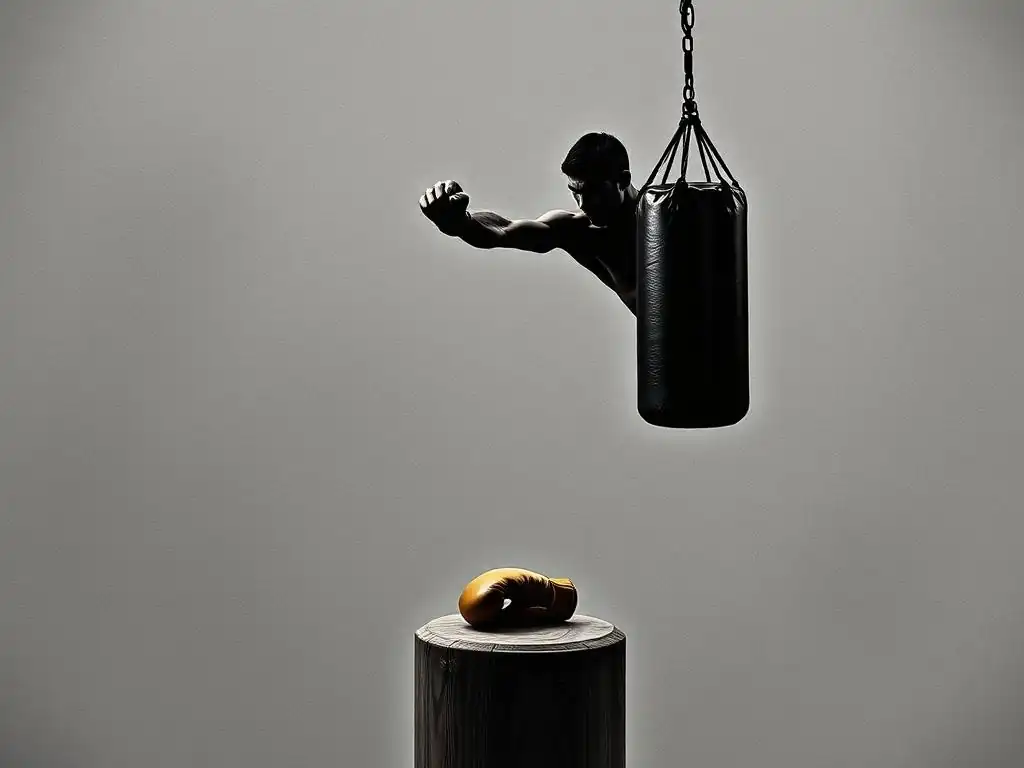
To see significant improvement in both uppercut accuracy and power, these drills must be incorporated consistently into your overall boxing training regimen. Simply doing them sporadically won't yield optimal results. A structured approach ensures that you dedicate sufficient time to mastering this crucial punch.
Balancing uppercut-specific work with other boxing fundamentals, conditioning, and sparring is key. Don't let the focus on uppercuts detract from other essential aspects of your training, but ensure they receive dedicated attention.
Sample Weekly Uppercut Training Schedule
Here is a sample structure for integrating uppercut accuracy training drills and power work into a typical week for a dedicated boxer:
- Monday: Heavy Bag (focus on marked targets, varying angles/power - 3-4 rounds), Plyometrics (1-2 exercises, 3-4 sets each).
- Tuesday: Mitt Work (focus on uppercut combinations and timing - 4-5 rounds), Shadow Boxing (focus on form and visualization for uppercuts - 2-3 rounds).
- Wednesday: Active Recovery or Strength & Conditioning (Medicine ball throws - 3 sets).
- Thursday: Heavy Bag (focus on integrating uppercuts into longer combinations, maintaining accuracy - 3-4 rounds), Double-End Bag (focus on uppercut timing and accuracy on moving target - 3-4 rounds).
- Friday: Mitt Work (focus on uppercut counters after defensive moves - 3-4 rounds), Resistance Band Uppercuts (3-4 sets per arm).
- Saturday: Sparring (actively look for opportunities to land accurate uppercuts), Shadow Boxing (light, focus on flow and visualization - 2-3 rounds).
- Sunday: Rest.
This sample schedule dedicates specific time slots throughout the week to uppercut development, ensuring consistent practice of uppercut accuracy training drills and power exercises.
Progressing the Difficulty of Drills Over Time
As you become more proficient, it's important to progress the difficulty of your uppercut training drills to continue challenging yourself and improving.
- Shadow Boxing: Increase the complexity of the combinations, visualize more dynamic opponent movements, and focus on throwing accurate uppercuts while moving around the space.
- Heavy Bag: Reduce the size of the target zones, practice hitting the targets while the bag is swinging more aggressively, or throw uppercuts after completing other tasks (e.g., 10 push-ups, then 10 accurate uppercuts).
- Focus Mitts: Ask your partner to increase the speed and unpredictability of the mitt presentations, add defensive requirements before the uppercut, or require you to throw uppercuts from less advantageous positions.
- Double-End Bag: Increase the tension on the cords for faster movement, require hitting specific sides of the bag with your uppercut, or integrate longer, more complex combinations ending with an accurate uppercut.
- Slip Bag: Increase the swing speed, combine slips/weaves with footwork before countering, or require multiple defensive moves before throwing the uppercut.
- Power Drills: Increase the weight of the medicine ball or resistance band, increase the height of the box for jumps, or reduce rest times between sets.
Consistent progression keeps the training stimulating and ensures you continue to develop your uppercut accuracy and power.
Common Mistakes to Avoid During Uppercut Training
Even with dedicated practice, certain common errors can undermine your uppercut's effectiveness and leave you vulnerable. Recognizing and correcting these mistakes is crucial for mastering the punch. Pay close attention to these pitfalls during your uppercut accuracy training drills.
Avoiding these mistakes ensures that the power and accuracy you develop translate effectively into real-world situations, preventing wasted energy and unnecessary exposure to counters.
Over-Extending the Punch
One of the most frequent errors is throwing the uppercut too long, almost like a wild swing. An effective uppercut is typically a short, sharp punch, especially at close to medium range. Over-extension reduces power at the point of impact, slows down your recovery, and leaves you wide open for counter punches.
During uppercut accuracy training drills, especially on the heavy bag or mitts, focus on the snap and stopping your punch shortly after impact. Visualize hitting through the target but not swinging wildly past it. The power comes from the explosion and rotation, not the length of the arm extension. Practice short, controlled uppercuts, particularly in close quarters.
Dropping Your Guard
When throwing an uppercut, there's a natural tendency to drop the non-punching hand low, especially when trying to generate maximum power. This leaves the entire side of your head and body exposed to counter shots, most commonly hooks or straight punches over the top.
Consciously focus on keeping your non-punching hand glued to your cheekbone or temple during every uppercut accuracy training drill. In shadow boxing, visualize your opponent's potential counter and ensure your guard is up. On the bag or mitts, make it a rule that the non-punching hand must stay high. This defensive discipline is just as important as the offensive technique.
Telegraphing the Uppercut
Telegraphing means giving away your intention to throw a punch through subtle movements before the punch is launched. For an uppercut, this might involve dropping your punching hand too low, winding up excessively, or making a distinct body movement that signals the punch is coming. A telegraphed uppercut is easily seen and defended against, or worse, countered.
Work on throwing your uppercuts without unnecessary preliminary movements. The dip should be quick and integrated into the punch initiation, not a separate, obvious movement. Practice throwing uppercuts disguised within combinations or immediately after defensive actions (like the slip bag drill). The goal is for the uppercut to explode upwards with minimal warning, making your uppercut accuracy training drills focus on sudden, explosive execution.
Conclusion: Achieving Uppercut Mastery Through Dedicated Drilling
Mastering the uppercut is a journey that requires consistent effort and intelligent practice. It's not enough to simply throw the punch; you must train for both pinpoint accuracy and explosive power. The diverse range of uppercut accuracy training drills outlined here – from foundational shadow boxing and heavy bag work to dynamic mitt drills and reactive slip bag practice – provides a comprehensive approach to developing this formidable weapon.
By systematically working on your form, timing, targeting, and power generation through these dedicated drills, while consciously avoiding common mistakes, you will transform your uppercut from an occasional punch into a high-percentage fight-ending strike. Remember that patience and persistence are key. Track your progress, perhaps by noting how many accurate hits you land on marked targets during a round, and continuously challenge yourself by increasing the difficulty of the drills. This commitment to detailed uppercut accuracy training drills is the path to true uppercut mastery in boxing.
The Path to Powerful and Accurate Uppercuts in Boxing
Achieving powerful and accurate uppercuts requires a holistic training approach that addresses both the technical and physical aspects of the punch. It involves refining the intricate mechanics of the movement, developing the explosive strength needed for impact, and honing the timing and spatial awareness required to land the punch on a moving target. Each drill contributes a unique piece to this puzzle, building layers of skill and physical capacity.
Ultimately, the ability to throw a devastating uppercut comes down to consistent, focused practice. Dedicating specific time each week to these uppercut accuracy training drills, analyzing your performance, and making necessary adjustments based on feedback (from coaches, partners, or self-observation) will steadily elevate your skill level. Embrace the process, drill diligently, and you will unlock the full potential of one of boxing's most exciting and effective punches.
Frequently Asked Questions
What are some basic drills I can use to improve my uppercut accuracy?
Focus on target practice using a heavy bag or focus mitts. Incorporate footwork drills to ensure proper positioning and power generation. Remember to visualize your target.
How important is footwork in executing an accurate and powerful uppercut?
Footwork is crucial. Proper footwork allows you to generate power from the ground up and position yourself for optimal target alignment, directly impacting accuracy and power.
What type of equipment is best for uppercut accuracy training?
Heavy bags and focus mitts are excellent. Focus mitts allow for dynamic target practice and feedback. Heavy bags help develop power and accuracy in a stationary setting.
How often should I practice uppercut accuracy drills to see improvement?
Consistency is key. Aim for at least 3-4 sessions per week, focusing on quality over quantity. Track your progress to identify areas for improvement.
Are there any common mistakes to avoid when training uppercut accuracy?
Avoid telegraphing your punches and dropping your guard. Maintain a strong core for stability and power. Ensure proper form and technique before increasing speed and power.
Final Reflection: The Rising Tide of Precision
The pursuit of uppercut accuracy transcends mere physical training; it's a journey of discipline, focus, and the relentless refinement of technique. In a world increasingly demanding precision, the principles learned in mastering this powerful punch – meticulous practice, unwavering attention to detail, and the constant striving for improvement – resonate far beyond the boxing ring.
The impact of consistent, focused training, as outlined in these drills, extends beyond athletic prowess. It cultivates a mindset of continuous growth and adaptability, qualities invaluable in navigating the complexities of modern life. This dedication to honing one's skills, to relentlessly pursuing improvement, is a lesson that resonates deeply with me, reminding me that mastery is a journey, not a destination. The more I practice, the luckier I get.
- Gary Player
As you integrate these uppercut accuracy training drills into your routine, remember that the true power lies not just in the punch itself, but in the dedication and focus you cultivate along the way. Embrace the challenge, refine your technique, and allow the discipline you develop to permeate every aspect of your life. Let the pursuit of precision in the ring inspire a life of unwavering commitment to excellence in all that you do.
Unleash Your Uppercut Power!
Thank you for exploring the secrets to a more powerful and accurate uppercut! Now it's time to translate that knowledge into real fighting skill. Let's take the next step on your martial arts journey.
Here's how to continue your progress:
- Head to the gym and dedicate at least 15 minutes to practicing the shadow boxing drill outlined in the article. Visualization is key!
- Share your newfound knowledge! Tell a friend about the article and invite them to join you in improving your uppercuts.
- Explore other striking techniques on Martial Arts Mastery!
What small adjustment will you make to your uppercut technique today to increase its power?