
Exploring the 'Eight Gates' (Ba Men) in Yang Tai Chi: An Introduction

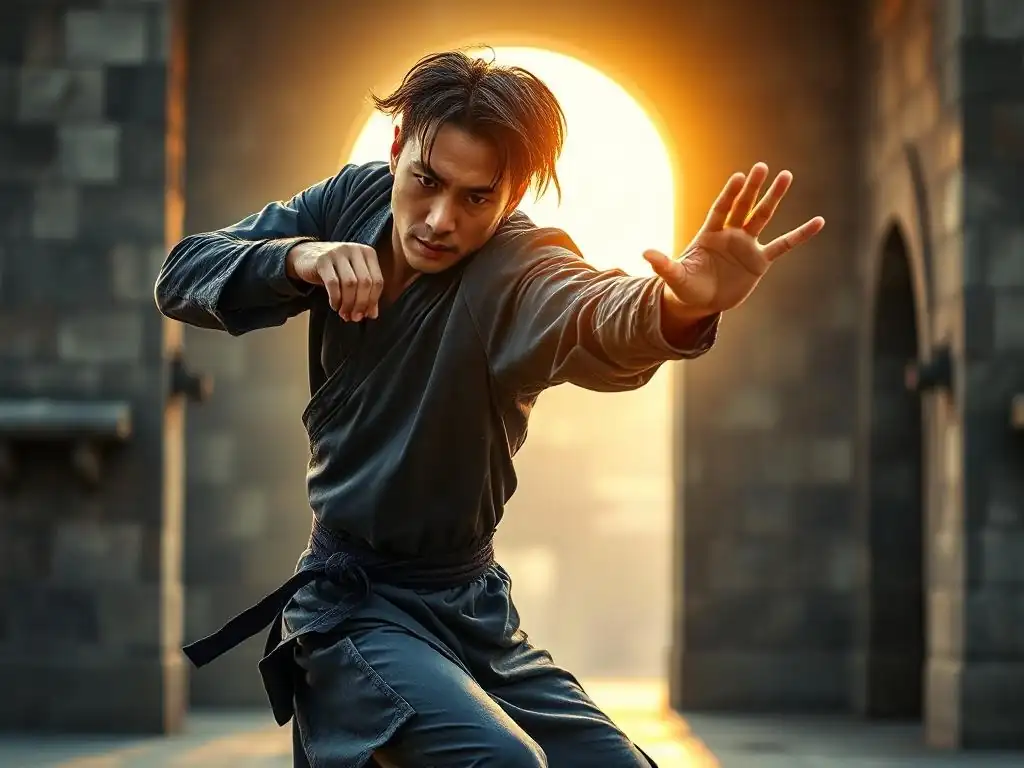
Welcome to Martial Arts Mastery, your definitive guide to the world's fighting arts! Delve into the rich tapestry of martial arts traditions, from historical roots to cutting-edge training methods. This week, we unlock the secrets of Yang Tai Chi, specifically exploring the crucial 'Eight Gates' (Ba Men). What fundamental principles underpin these movements and how do they unlock greater power and fluidity? Discover the answers and begin your journey to mastery!
- Exploring Taijiquan's Eight Gates and Five Steps (Ba Men Wu Bu): An Introduction
- Understanding the Core Principles of Taijiquan
- Unveiling the Eight Gates (Ba Men) and Five Steps (Wu Bu) in Taijiquan
- The Four Primary Cardinal Directions (Four Zheng Gates) in Taijiquan
- The Four Oblique or Corner Directions (Four Yu Gates) in Taijiquan
- The Five Steps (Wu Bu) in Taijiquan
- Integrating the Eight Gates (Ba Men) and Five Steps (Wu Bu) into Taijiquan Form
- Refining Your Taijiquan Practice Through the Eight Gates and Five Steps
- Advanced Concepts in Taijiquan Eight Gates and Five Steps (Ba Men Wu Bu)
- Conclusion: Mastering the Eight Gates and Five Steps for Enhanced Taijiquan Skill
-
Frequently Asked Questions
- What are the "Eight Gates" (Ba Men) in Yang Tai Chi?
- How are the Eight Gates related to the I Ching?
- Why are the Eight Gates important in Yang Tai Chi?
- What are the names of the Eight Gates and what do they generally represent?
- Where can I learn more about the practical application of the Eight Gates in Yang Tai Chi?
- Final Reflection: Embracing the Flow of Yang Tai Chi
- Unlock Your Tai Chi Potential
Exploring Taijiquan's Eight Gates and Five Steps (Ba Men Wu Bu): An Introduction
Understanding the Core Principles of Taijiquan
The Essence of Taijiquan: Softness, Yielding, and Internal Strength
Taijiquan, often referred to as Yang style Tai Chi, is renowned for its emphasis on softness and yielding over brute force. This core principle, known as Róu (柔 - soft) and Ràng (讓 - yield), is not a passive surrender but an active strategy to neutralize an opponent's incoming force. By remaining relaxed and connected, a practitioner can sense the direction and intensity of an attack, allowing them to subtly shift their structure and redirect the energy. This yielding creates openings and disadvantages for the attacker, whose force becomes misdirected or expended without effect.
This external softness is inextricably linked to the development of internal strength, or Nèi Jìn (內勁). Unlike external muscular strength, internal strength in Taijiquan comes from coordinated body structure, rootedness, and the cultivation of Qi (氣 - vital energy). The ability to yield effectively requires significant internal stability and connection throughout the body, from the feet through the legs, torso, and arms.
Training focuses on relaxing the muscles to allow the tendons and fascia to engage, creating a resilient, interconnected structure that can absorb and redirect force efficiently. This combination of softness and internal strength is the hallmark of advanced Taijiquan practice.
Introduction to Jin: Developing Internal Power in Taijiquan
Jin (勁) in Taijiquan refers to developed internal power or trained force, distinct from raw muscular strength ( Lì - 力). It is the cultivated ability to apply force that is rooted, integrated, and expressive of the body's unified structure. Developing Jin is a central goal in Taijiquan training, including the Yang style Tai Chi Eight Gates principles. It involves coordinating movement, breath, and intention ( Yi - 意) to generate power that flows through the body.
There are various types of Jin, such as Peng Jin (expansive force), Lu Jin (yielding force), Ji Jin (pressing force), and An Jin (pushing force), which correspond directly to the Eight Gates. Cultivating these different Jin requires diligent practice of the Taijiquan form, push hands (Tui Shou), and specific standing or silk reeling exercises.
For instance, developing Peng Jin involves feeling an outward, buoyant energy from the center, maintaining a resilient structure that can absorb and rebound force, much like an inflated ball. This internal power is subtle but potent, allowing a smaller person to effectively neutralize or move a larger, stronger opponent.
Unveiling the Eight Gates (Ba Men) and Five Steps (Wu Bu) in Taijiquan
What are the Eight Gates and Five Steps of Taijiquan?
The Eight Gates ( Ba Men - 八門) and Five Steps ( Wu Bu - 五步) form the foundational energetic and directional framework of Taijiquan, particularly prominent in the Yang style Tai Chi Eight Gates teachings. Ba Men refers to eight primary Jin or energetic applications/strategies used in combat and form practice, corresponding to the four cardinal and four oblique directions. These are Peng (Ward Off), Lu (Roll Back), Ji (Press), An (Push), Cai (Pluck), Lie (Split), Zhou (Elbow), and Kao (Shoulder/Hip).
Wu Bu refers to the five fundamental footwork patterns or stances used in Taijiquan. These represent movement through space and stability. The Five Steps are Jin Bu (Advancing Step), Tui Bu (Retreating Step), Zuo Gu (Looking Left - shifting weight left), You Pan (Looking Right - shifting weight right), and Zhong Ding (Central Equilibrium - maintaining rooted stability). Together, the Eight Gates and Five Steps encompass the complete range of energetic interactions and spatial movements within Taijiquan, providing a comprehensive system for both health cultivation and self-defense.
The Significance of Ba Men Wu Bu in Taijiquan Practice
Understanding and embodying the Ba Men Wu Bu is crucial for developing authentic Taijiquan skill. They are not merely techniques to be memorized but represent fundamental principles of force application, redirection, and structural integrity. In the Yang style Tai Chi Eight Gates curriculum, these principles are woven throughout the solo form, push hands, and self-defense applications. Practicing the form helps internalize the feeling and connection of each Jin, while push hands provides a dynamic environment to test and refine their application against a partner.
The Five Steps provide the necessary mobility and stability to effectively utilize the Eight Gates. For example, applying An Jin (Push) effectively requires a solid Zhong Ding (Central Equilibrium) and potentially a Jin Bu (Advancing Step) to root and project force. Similarly, performing Lu Jin (Roll Back) relies on Zuo Gu or You Pan (weight shifts) coupled with Tui Bu (Retreating Step) to redirect incoming force. Mastery of Ba Men Wu Bu allows practitioners to move and interact with sensitivity, adaptability, and integrated power, forming the basis of advanced Taijiquan proficiency.
The Four Primary Cardinal Directions (Four Zheng Gates) in Taijiquan
Peng (Ward Off): The Foundation of Defensive Energy
Peng Jin is arguably the most fundamental of the Eight Gates and is central to Yang Tai Chi Eight Gates training. It represents an expansive, outward, and upward energy that maintains structural integrity and prevents collapse. It's like a buoyant shield around the body, capable of absorbing impact and simultaneously creating pressure against an incoming force. While often translated as "Ward Off," it's more accurately understood as maintaining an integrated, resilient structure that naturally resists or redirects force without rigidity.
In practice, Peng Jin is felt as a connection and gentle expansion through the arms, torso, and legs, rooted firmly to the ground. When an opponent applies force, instead of collapsing or opposing strength with strength, the practitioner uses Peng Jin to connect to the incoming force and redirect it along their structure and into the ground, while maintaining their own integrated posture. For instance, if someone pushes your chest, instead of pushing back, you maintain Peng, connecting their force through your structure and into your feet, causing their push to feel unstable or ineffective against your resilient frame.
Applying Peng Jin in Taijiquan Movements
Peng Jin is present in virtually every movement of the Taijiquan form. For example, in the opening movement, "Beginning of Taiji," the subtle upward and outward expansion of the arms cultivates Peng Jin. In "Grasp the Sparrow's Tail," the initial "Peng" posture explicitly demonstrates this principle, with the arms held in a rounded, expansive shape, embodying the feeling of an inflated ball.
During push hands practice, applying Peng Jin means maintaining this resilient structure while in contact with a partner. If they push, you don't collapse; you maintain Peng, allowing their force to be absorbed and potentially redirected. If they pull, you don't follow passively; you maintain Peng, preventing your structure from being broken. A common drill involves partners applying gentle pressure against each other's arms, practicing maintaining Peng Jin without using muscular force, focusing solely on structural integrity and internal connection. A skilled practitioner can use Peng Jin to feel their partner's intention and force direction instantly.
Lu (Roll Back): Redirecting and Neutralizing Force
Lu Jin is the yielding or neutralizing energy, designed to receive and redirect an opponent's force. It involves rotating and rolling back, drawing the opponent's energy off-balance or into empty space. Unlike passive retreat, Lu is an active, circular motion that adheres to the incoming force, guiding it away from your center and structure, often involving a slight retreat or turning of the body.
Mastering Lu Jin requires sensitivity to feel the direction of incoming force and the ability to relax and move with that force. The movement is typically circular and downward or sideways, using the waist and hips to guide the redirection. By rolling back and adhering, you prevent the opponent from establishing solid contact or leverage, effectively dissolving their attack without confrontation. This principle is foundational in Taijiquan's strategy of using minimal effort to overcome maximum force.
Mastering Lu Jin for Effective Deflection
Lu Jin is prominently seen in the "Grasp the Sparrow's Tail" sequence, specifically in the "Lu" section where the arms perform a circular, yielding motion. This movement teaches the body to adhere to an incoming force, absorb it, and redirect it downwards and to the side.
In push hands, Lu is applied when a partner pushes. Instead of resisting, you "stick" to their arm and perform a circular, retreating or turning motion, guiding their force past you. For example, if a partner pushes forward on your right arm, you might adhere to their arm, sink slightly, and rotate your waist counter-clockwise, drawing their arm and force off to your left side and downwards.
Effective Lu Jin requires soft, rounded arms and a connected, mobile waist, allowing the entire body to act as a single unit to absorb and redirect the force smoothly. Practitioners spend considerable time practicing the circular Lu movement to develop this sensitivity and fluidity.
Ji (Press): Applying Pressure and Control
Ji Jin is a pressing or squeezing energy, often applied with both hands or forearms simultaneously. It's used to apply pressure against an opponent's structure, break their balance, or create an opening. Unlike a blunt push, Ji involves a focused, integrated force that penetrates the opponent's defense, often targeting their center or points of instability.
Ji Jin is generated from the ground, coordinated through the legs and waist, and expressed through the arms and hands. It's a cohesive force that presses inward and slightly forward or upward, aiming to collapse the opponent's structure or drive them back. This principle highlights the offensive potential within Taijiquan's seemingly soft movements.
Utilizing Ji Jin for Offensive Advantage
The "Ji" section of "Grasp the Sparrow's Tail" demonstrates this principle clearly, where both hands come together to apply a forward and slightly upward pressing force. The movement is initiated from the legs and waist, with the arms acting as conduits for the power.
In push hands, Ji Jin is applied when you have gained a position of advantage, often after neutralizing an opponent's force with Lu. You might apply Ji Jin to their chest or arms with both hands or forearms, pressing forward and slightly inward to disrupt their posture or push them back.
For example, after redirecting a push with Lu, you might step forward and apply Ji to their chest, using your body weight and integrated structure to generate a powerful, penetrating press. Effective Ji requires a solid stance, coordinated body movement, and the ability to focus your internal energy to the point of contact.
An (Push): Projecting Force with Body Unity
An Jin is the pushing energy, typically applied with the palms. It is similar to Ji but often involves a more direct, forward projection of force, usually with open palms. An Jin is used to push an opponent away, break their balance, or drive them back. Like all Taijiquan Jin, it is not generated solely from the arms but from the coordinated power of the entire body, rooted to the earth.
An Jin requires the body to act as a single unit, with power originating from the feet, transferring through the legs and waist, and expressing through the palms. The push is often accompanied by a sinking or rooted feeling, ensuring that the practitioner remains stable while projecting force. This principle emphasizes the integrated power of the body in motion.
Developing An Jin for Powerful Strikes
The "An" section of "Grasp the Sparrow's Tail" is the quintessential example of An Jin, where the hands push forward with the palms, rooted through the body. The movement involves a forward shift of weight coordinated with the extension of the arms.
In push hands or self-defense applications, An Jin is used when you have an opening to push an opponent directly. For instance, if an opponent is off-balance forward, you might apply An Jin to their chest or shoulders to push them over. A powerful An Jin comes from a solid stance (like Gong Bu - Bow Stance), a relaxed but connected torso, and a coordinated forward movement originating from the back leg.
A common drill for developing An Jin is pushing against a wall or a heavy bag, focusing on using body weight and connection rather than just arm strength to generate the push. This helps cultivate the feeling of the whole body moving as one unit.
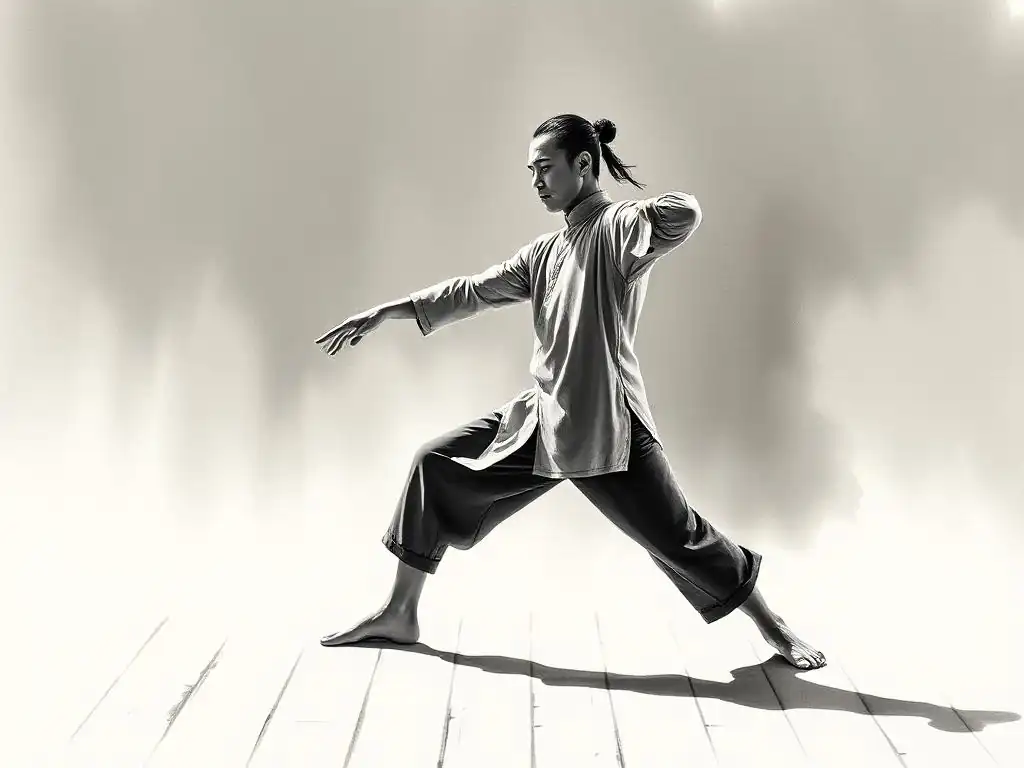
The Four Oblique or Corner Directions (Four Yu Gates) in Taijiquan
Cai (Pluck/Grasp): Seizing and Controlling the Opponent
Cai Jin is the plucking or grasping energy, used to seize, pull, or control an opponent's limb or joint. It involves a sudden, sharp pull or downward movement, often combined with a twist, designed to break balance or set up a joint lock or throw. While the cardinal gates are primarily expansive or yielding, the oblique gates, including Cai, tend to be more focused and disruptive.
Cai Jin requires quick sensitivity and precise timing to seize an opportunity. The force is concentrated and directed, often involving a sudden application of power from a relaxed state. It's about disrupting the opponent's structure by targeting a specific point of contact, such as a wrist, elbow, or shoulder.
Implementing Cai Jin for Joint Locks and Throws
Cai Jin is often seen in movements that involve seizing an opponent's arm, such as "Single Whip" variations or specific joint lock applications. For example, after neutralizing a punch, you might quickly apply Cai to the opponent's wrist, pulling it sharply downwards and inwards to break their balance or control their arm.
In self-defense scenarios derived from the form, Cai is used to control limbs. Imagine an opponent reaching; you might apply Cai to their wrist or elbow, pulling it down and twisting to compromise their structure or set up a throw like "Fair Lady Works the Shuttle." The effectiveness of Cai Jin lies in its suddenness and the ability to apply focused force from a relaxed state, making it difficult for the opponent to anticipate or resist effectively. Partner drills focusing on seizing and controlling limbs are essential for developing Cai Jin.
Lie (Split): Dividing and Unbalancing the Opponent
Lie Jin is the splitting energy, used to divide or tear an opponent's structure apart, often by applying opposing forces simultaneously. It can involve movements that separate an opponent's limbs or disrupt their central equilibrium by pushing and pulling in different directions. Lie is a powerful, disruptive force that exploits weaknesses in the opponent's connection or balance.
Lie Jin requires coordination of two distinct forces, often working in tandem from different parts of the body. For example, one hand might push while the other pulls, or one arm might apply pressure while the body turns to create a splitting effect. It's about creating torque and instability in the opponent's structure.
Using Lie Jin to Disrupt Stability
Movements like "Part the Wild Horse's Mane" or certain applications within "Fair Lady Works the Shuttle" can utilize Lie Jin. In "Part the Wild Horse's Mane," the outward separation of the hands and the turning of the body can be applied to an opponent's arm and shoulder to split their connection and unbalance them.
In push hands or applications, Lie Jin is used when an opponent is leaning or committed in one direction. You might apply a force to their arm pushing one way while your body movement or other hand pulls or redirects in an opposing direction, effectively splitting their base or posture.
For example, if a partner is pushing forward with both hands, you might use your arms to adhere and then suddenly turn your body and apply opposing forces – one hand pulling downwards on an arm while the other pushes outwards – to disrupt their connection and split their balance. Lie Jin requires good body coordination and the ability to apply distinct, coordinated forces.
Zhou (Elbow): Employing Close-Range Power
Zhou Jin is the elbow energy, utilizing the power of the elbow for close-range striking or leverage. Elbow strikes are powerful because they are generated from close to the body's core and can utilize significant body weight and structure. Zhou Jin is applied when in close proximity to an opponent, where longer-range techniques like punches or pushes might be less effective.
Zhou Jin can be applied in various directions – forward, sideways, upward, or downward. It requires grounding through the feet and coordination through the waist to channel power into the elbow. Unlike external elbow strikes that rely purely on muscular force, Zhou Jin in Taijiquan integrates the entire body's power into the elbow strike.
Exploring Zhou Jin in Close-Quarters Combat
While not explicitly named in every form movement, the principle of Zhou Jin is embedded in transitions and close-in applications. For example, the circular movements of the arms can transition into powerful elbow strikes. Movements like "Elbow Strike" variations found in some Taijiquan systems exemplify Zhou Jin.
In self-defense, Zhou Jin is invaluable in grappling range or when an opponent gets too close. If an opponent is attempting a grab or is pressing in, you can use a sudden turn of the waist and sinking to generate a powerful elbow strike to their ribs, head, or solar plexus. Or, you might use the elbow as leverage against their arm or body to create space or break their hold.
The power of Zhou Jin comes from the sudden release of integrated body power into a short-range weapon. Practicing short, explosive movements that engage the core and hips is key to developing Zhou Jin.
Kao (Shoulder/Hip): Utilizing Body Mass for Impact
Kao Jin is the shoulder or hip energy, using the substantial mass and structure of the body's core to generate impact or leverage. It involves driving the shoulder or hip into an opponent, often used when in very close contact. Kao Jin is a powerful, rooted force that can destabilize or drive back an opponent using the entire body's momentum and weight.
Kao Jin requires grounding and a strong connection through the legs and waist. The movement is often a coordinated step and turn, allowing the practitioner to bring their body mass to bear on the opponent. It's a principle of using structure and weight distribution effectively, rather than just muscular force.
Understanding Kao Jin for Powerful Body Blows
Movements like "Shoulder Strike" or certain applications within transitions demonstrate Kao Jin. For example, as you shift weight and turn, the shoulder or hip can become the point of contact to apply force.
In close-quarters self-defense, Kao Jin is used when an opponent is pressing in or attempting to clinch. You might step slightly, turn your body, and drive your shoulder or hip into their chest, side, or thigh to disrupt their balance or create distance. For instance, if an opponent grabs you, you might sink your weight, step to the side, and turn your hip into them to break their hold or knock them off balance.
The power of Kao Jin comes from the integrated movement of the entire body, channeling force through the shoulder or hip like a battering ram. Partner drills focusing on maintaining structure and using body mass in close contact are useful for developing Kao Jin.
The Five Steps (Wu Bu) in Taijiquan
Jin Bu (Advancing Step): Moving Forward with Intention
Jin Bu is the advancing step, involving moving forward while maintaining balance and connection. It's not just putting one foot in front of the other; it's a controlled, rooted movement where the weight transfer is deliberate and coordinated with the body's intention. The front foot lands softly, and the weight shifts forward smoothly, maintaining a solid base throughout the movement.
An effective Jin Bu allows the practitioner to close distance safely, apply force forward (like An Jin or Ji Jin), or transition into the next posture with stability. The rear leg pushes, and the front leg receives the weight, ensuring that the connection to the ground is never lost. This forward movement is essential for offensive applications and maintaining pressure.
Tui Bu (Retreating Step): Moving Backward with Balance
Tui Bu is the retreating step, involving moving backward while maintaining balance and the ability to respond. Like Jin Bu, it's a controlled movement. The front foot lifts slightly, the rear foot steps back, and the weight shifts smoothly backward. The body remains upright and centered, ready to yield (Lu Jin) or change direction.
Tui Bu is crucial for yielding to incoming force, creating distance, or repositioning oneself. It allows the practitioner to escape a committed attack or draw an opponent off-balance. The ability to retreat smoothly and maintain structure is as important as the ability to advance.
Zuo Gu (Looking Left): Shifting Weight to the Left
Zuo Gu refers to shifting weight onto the left leg while turning the body to the left. This movement allows for redirection of force, changing direction, or preparing for a technique to the left side. It involves rotating the waist and hips while transferring weight, maintaining rooting through the left foot.
This weight shift is fundamental in many Taijiquan movements, enabling smooth transitions and the application of techniques like Lu or Cai to the left. It emphasizes the principle of separating weight (distinguishing between substantial and insubstantial legs) and using the waist as the pivot.
You Pan (Looking Right): Shifting Weight to the Right
You Pan refers to shifting weight onto the right leg while turning the body to the right. Similar to Zuo Gu, it facilitates redirection, changing direction, or preparing for techniques to the right side. It involves rotating the waist and hips while transferring weight, maintaining rooting through the right foot.
This weight shift is equally important for smooth transitions and applying techniques like Lu or Cai to the right. Both Zuo Gu and You Pan highlight the importance of the waist and hip rotation in generating movement and maintaining balance while shifting weight.
Zhong Ding (Central Equilibrium): Maintaining Balance and Rooting
Zhong Ding is the principle of maintaining central equilibrium and rootedness. It is not a step in the same sense as the others but represents the stable state or the goal of all stepping. Regardless of the direction of movement (Jin Bu, Tui Bu, Zuo Gu, You Pan), the practitioner strives to maintain their vertical axis and connection to the ground.
Zhong Ding is achieved through proper posture, alignment, and sinking the weight. It provides the stable platform from which all Eight Gates Jin can be effectively generated and applied. Losing Zhong Ding means losing balance and the ability to issue power or neutralize force. Cultivating Zhong Ding is a continuous process throughout Taijiquan training.
Integrating the Eight Gates (Ba Men) and Five Steps (Wu Bu) into Taijiquan Form
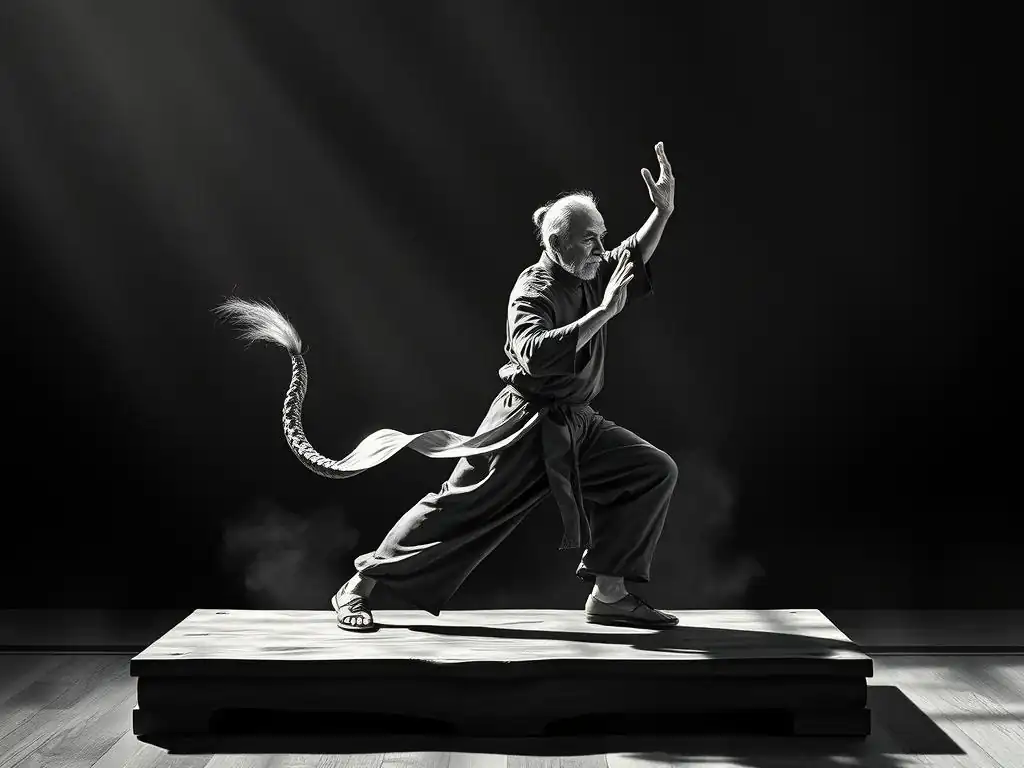
Connecting the Eight Gates and Five Steps in the Taijiquan Sequence
The Taijiquan solo form, particularly in the Yang style Tai Chi Eight Gates lineage, is essentially a moving meditation that embodies the principles of Ba Men Wu Bu. Each posture and transition within the form contains specific applications of the Eight Gates, executed through the framework of the Five Steps. For instance, the movement "Grasp the Sparrow's Tail" explicitly sequences Peng, Lu, Ji, and An, performed while shifting weight (Zuo Gu, You Pan) and potentially stepping (Jin Bu, Tui Bu), all while maintaining Zhong Ding.
Practicing the form slowly and mindfully allows the practitioner to feel the internal connections and energetic expressions of each Jin as they transition through different stances and steps. The form links these seemingly individual techniques into a continuous, flowing sequence where one principle naturally leads to the next. For example, yielding with Lu often creates an opening to apply Ji or An, and these transitions are facilitated by the appropriate Jin Bu or Tui Bu. This integration ensures that the practitioner develops a holistic understanding of Taijiquan principles, rather than viewing them as isolated techniques.
Practical Applications of Ba Men Wu Bu in Taijiquan Self-Defense
While the Taijiquan form is often practiced for health, its underlying purpose includes self-defense, and the Ba Men Wu Bu are the core combat applications. Every movement in the form can be interpreted through the lens of these principles. For example, "Single Whip" can be seen as embodying Peng, Lu, and Cai Jin, used to ward off, redirect, and seize an opponent's limb. "Cloud Hands" involves continuous application of Peng and Lu while moving laterally using variations of the Wu Bu steps, teaching adaptability and yielding under pressure.
In a self-defense situation, recognizing and applying the appropriate Jin from the Eight Gates, supported by stable and mobile footwork from the Five Steps, allows for effective response. If someone pushes, you apply Lu and Tui Bu; if they pull, you apply Peng and maintain Zhong Ding; if there's an opening, you apply Ji or An with Jin Bu. The Eight Gates and Five Steps provide a versatile toolkit for handling various types of force and movement, emphasizing redirection, control, and using the opponent's energy against them, core strategies in Yang style Tai Chi self-defense.
Refining Your Taijiquan Practice Through the Eight Gates and Five Steps
Drills and Exercises for Developing Ba Men Wu Bu Sensitivity
Developing sensitivity and proficiency in the Eight Gates and Five Steps requires targeted training beyond just the solo form. Push hands ( Tui Shou) is the primary partner drill for this purpose. Fixed-step push hands allows practitioners to focus on feeling and applying the four cardinal gates (Peng, Lu, Ji, An) in a stationary context, refining sensitivity to incoming force and the ability to neutralize and issue Jin. Moving-step push hands incorporates the Five Steps, adding the complexity of mobility and coordination, allowing practitioners to practice transitions and applications of all Eight Gates while stepping.
Other valuable drills include standing meditation ( Zhan Zhuang) to cultivate Zhong Ding and Peng Jin, silk reeling exercises ( Chan Si Gong) to develop integrated, spiraling power and connection throughout the body (essential for all Jin), and specific drills focusing on individual Jin, such as practicing the Lu motion with a partner applying pressure or practicing An Jin against a wall. These exercises isolate principles, allowing for deeper understanding and refinement before integrating them back into the form and push hands.
The Importance of Partner Work in Understanding Ba Men Wu Bu
Partner work, particularly push hands, is indispensable for truly understanding and embodying the Eight Gates and Five Steps. While the solo form builds internal structure and energy flow, it is only through contact with another person that you can test and refine your ability to apply Taijiquan principles dynamically. A partner provides real-time feedback on whether your Peng Jin is truly resilient, if your Lu Jin effectively neutralizes force, or if your An Jin is rooted and connected.
Through push hands, practitioners learn to "listen" ( Ting Jin - 聽勁) to their partner's force, feeling its direction, intensity, and intention. This sensitivity is crucial for knowing which of the Eight Gates to apply and when. Partner drills also force practitioners to utilize the Five Steps effectively to maintain balance and position while interacting with a moving opponent. Without partner work, the understanding of Ba Men Wu Bu remains largely theoretical; with it, the principles come alive as practical, adaptable skills.
Advanced Concepts in Taijiquan Eight Gates and Five Steps (Ba Men Wu Bu)
Exploring the Interplay of Yin and Yang Within the Eight Gates and Five Steps
At an advanced level, the Eight Gates and Five Steps are understood not as rigid techniques but as dynamic expressions of Yin and Yang principles. Each Jin within the Ba Men has both Yin and Yang aspects. For example, Peng Jin is primarily Yang (expansive, outward), but it must contain Yin (softness, receptivity) to avoid becoming rigid. Similarly, Lu Jin is primarily Yin (yielding, receptive), but it must contain Yang (active redirection) to avoid being passive. The skilled practitioner can switch between these aspects fluidly, instantly adapting to the opponent's force.
The Five Steps also embody Yin and Yang. Jin Bu (Advancing) is Yang, Tui Bu (Retreating) is Yin. However, even within an advance, there must be Yin (readiness to change or retreat), and within a retreat, there must be Yang (readiness to counter or advance). Zhong Ding represents the balance point, the dynamic equilibrium between Yin and Yang, allowing for instantaneous manifestation of any of the Eight Gates or transitions between the Five Steps. Advanced Yang Tai Chi Eight Gates practice delves into this subtle interplay, seeking seamless transitions between yielding and issuing, rootedness and mobility.
Lineage Specific Interpretations of Ba Men Wu Bu
While the core concepts of Ba Men Wu Bu are shared across Taijiquan styles, there can be subtle variations in emphasis and interpretation within different lineages, particularly within the broad Yang style Tai Chi Eight Gates family. Some lineages might place greater emphasis on the health aspects, leading to softer, less overtly martial interpretations of the Jin. Others might focus more on self-defense applications, leading to more compact or explosive expressions of power.
For instance, while all Yang style teaches Peng, Lu, Ji, An, the specific body mechanics or the degree of visible movement used to express these Jin might differ slightly between, say, the Cheng Man Ching lineage (known for its emphasis on relaxation and sensitivity) and the Yang Chengfu lineage (often characterized by larger, more expansive movements). Similarly, the applications of the oblique gates (Cai, Lie, Zhou, Kao) can vary in how explicitly they are taught or emphasized within the curriculum.
Exploring these lineage-specific nuances can provide deeper insights into the rich history and diverse expressions of the Ba Men Wu Bu within Taijiquan.
Conclusion: Mastering the Eight Gates and Five Steps for Enhanced Taijiquan Skill
Mastery of the Eight Gates (Ba Men) and Five Steps (Wu Bu) is the key to unlocking the full potential of Taijiquan, including the specific principles within the Yang style Tai Chi Eight Gates system. These foundational principles represent the complete spectrum of energetic interactions and spatial movements within the art. From the expansive resilience of Peng to the close-range power of Kao, and from the rooted stability of Zhong Ding to the fluid mobility of Jin Bu and Tui Bu, Ba Men Wu Bu provides the framework for both effective self-defense and profound internal development.
Consistent, dedicated practice of the solo form, push hands, and supplementary drills is essential for internalizing these principles. It is through this diligent training that the practitioner develops the sensitivity to feel and apply the appropriate Jin and the coordination to move with balance and power using the Five Steps. Embracing the Ba Men Wu Bu transforms Taijiquan from a sequence of physical movements into a dynamic, adaptable system of internal power and strategic interaction, leading to enhanced skill, deeper understanding, and a more profound connection to the art.
Frequently Asked Questions
What are the "Eight Gates" (Ba Men) in Yang Tai Chi?
The Eight Gates (Ba Men) are eight fundamental Tai Chi energies or techniques used for defense and offense. They are rooted in the I Ching and relate to specific directions and types of force.
Each Gate is associated with a trigram from the I Ching. These trigrams represent different natural forces and directional energies, influencing how the technique is applied.
Why are the Eight Gates important in Yang Tai Chi?
Understanding the Eight Gates provides a deeper understanding of Tai Chi principles. It allows practitioners to apply techniques with greater precision and power, moving beyond simple memorization of forms.
What are the names of the Eight Gates and what do they generally represent?
The Eight Gates are Peng (Ward Off), Lu (Roll Back), Ji (Press), An (Push), Cai (Pluck/Grasp), Lie (Split), Zhou (Elbow Strike), and Kao (Shoulder Strike). They represent different ways of neutralizing and redirecting an opponent's force and generating offensive power.
Where can I learn more about the practical application of the Eight Gates in Yang Tai Chi?
MartialArtsMastery.org provides resources on training tips and self-defense strategies. Look for articles specifically dealing with Yang Tai Chi and its applications for practical self-defense.
Final Reflection: Embracing the Flow of Yang Tai Chi
The exploration of the Eight Gates (Ba Men) in Yang Tai Chi reveals more than just a series of movements; it unveils a profound philosophy of balance, adaptability, and harmonious interaction. Today, in a world often characterized by speed and fragmentation, the principles of yielding, adhering, sticking, and following, inherent in these gates, offer a powerful antidote to the stresses of modern life. The enduring relevance of Yang Tai Chi lies in its ability to cultivate inner peace and resilience through mindful movement.
The influence of Yang Tai Chi extends far beyond the physical realm, shaping our understanding of interconnectedness and the importance of yielding to find strength. Personally, I've found that practicing the Eight Gates has not only improved my physical balance but also fostered a greater sense of emotional equilibrium. The softest thing in the world overcomes the hardest thing in the world,
as Lao Tzu wisely stated. This principle, so central to Tai Chi, reminds us that true power lies not in brute force but in adaptability and yielding.
As you conclude this exploration of the Eight Gates, I invite you to reflect on how these principles can be applied to your own life. Consider how you can embrace yielding in the face of adversity, adhere to your values with unwavering commitment, stick to your goals with gentle persistence, and follow the natural flow of life with grace and acceptance. Let the wisdom of Yang Tai Chi guide you towards a more balanced, harmonious, and fulfilling existence.
Unlock Your Tai Chi Potential
Thank you for exploring the fundamentals of the Eight Gates in Yang Tai Chi! We hope this introduction has sparked your curiosity and deepened your understanding of this powerful aspect of the art. Now, it's time to put that knowledge into practice and continue your journey.
Here are a few steps you can take:
- Dedicate just 15 minutes each day to practice the Peng, Lu, Ji, and An energies, focusing on proper body alignment and mindful movement.
- Delve deeper into the theory by researching the I Ching trigrams associated with each gate. You might be surprised by what you uncover!
- Share your insights and experiences with fellow Tai Chi enthusiasts in our Martial Arts Mastery forum.
What's one small adjustment you can make to your Tai Chi practice today to better embody the essence of the Eight Gates?