
Eskrima Knife Strategy: Thinking Three Steps Ahead of Your Adversary


Welcome to Martial Arts Mastery, your portal to unlocking the secrets and power of global martial arts traditions. Ever wondered how to truly master the art of Filipino stick fighting and translate that skill into life-saving self-defense? This isn't just about wielding a blade; it's about strategy, anticipation, and control. Dive in to discover Eskrima knife defense techniques and learn how to think three steps ahead of your adversary, transforming reactive defense into proactive dominance. Are you ready to elevate your understanding of Eskrima and its practical applications?
- Introduction to Eskrima Knife Fighting and Tactical Foresight
- Core Principles of Eskrima Knife Defense Techniques
- Developing a Three-Step Strategy in Eskrima Knife Combat
- Eskrima Knife Fighting Drills for Strategic Development
- Advanced Eskrima Knife Defense Concepts
- Mental Preparation and Awareness in Eskrima Knife Fighting
- Conclusion: Mastering Strategic Thinking for Eskrima Knife Defense
-
Frequently Asked Questions
- What is Eskrima and how does it relate to knife defense?
- Why is "thinking three steps ahead" important in Eskrima knife defense?
- What are some fundamental principles of Eskrima knife defense techniques?
- How does Eskrima differ from other knife defense systems?
- Where can I learn more about Eskrima knife defense techniques?
- Final Reflection: Mastering the Dance of Blades
- Elevate Your Eskrima: Embrace the Blade's Edge!
Introduction to Eskrima Knife Fighting and Tactical Foresight
The Importance of Strategic Thinking in Filipino Martial Arts Knife Combat
In the realm of Filipino martial arts, particularly Eskrima, Kali, and Arnis, the blade holds a central, almost revered, position. Unlike many other systems that focus primarily on empty-hand techniques, Eskrima integrates weapon use, especially the knife, as a foundational element. Strategic thinking isn't merely a supplement; it is the core principle that dictates survival.
A practitioner must not just react to an attack but anticipate the attacker's movements, intentions, and potential follow-ups, effectively playing a mental chess game several moves in advance. This foresight is paramount because the speed and lethality of a knife attack leave virtually no margin for error.
Studies and real-world analyses of knife assaults consistently show that the initial moments are critical. A typical attack sequence can unfold in less than three seconds, involving multiple rapid thrusts or slashes. Without a pre-developed strategy and the ability to predict likely actions, the defender is immediately at a severe disadvantage, relying solely on desperate, often ineffective, reactions.
Therefore, developing a strategic mindset in Eskrima knife defense techniques is not an academic exercise but a vital component of practical self-preservation. This involves understanding attack patterns, recognizing psychological indicators, and having a tiered response plan ready before the first move is even made.
Understanding Eskrima's Emphasis on Preemptive Defense
Eskrima's approach to conflict is inherently pragmatic and often emphasizes finishing encounters swiftly and decisively, ideally preventing the opponent from fully executing their attack. This philosophy translates directly into its knife defense methodologies. While techniques for dealing with an ongoing attack exist, a significant portion of training focuses on preemptive actions – recognizing the threat early, understanding the attacker's range and capabilities, and disrupting their initiative before their attack gains momentum. This might involve managing distance, employing verbal de-escalation while preparing physically, or even initiating a defensive counter-attack if escape isn't feasible and the threat is imminent.
The concept of "preemption" in Eskrima knife defense techniques is not about aggressive initiation but about seizing control of the timeline of the confrontation. It acknowledges the grim reality that allowing a committed knife attack to unfold fully drastically reduces the defender's chances of survival without severe injury. Training drills frequently simulate scenarios where the defender must react to subtle cues or sudden lunges, emphasizing the speed of recognition and the efficiency of the initial defensive action. This proactive mindset, ingrained through repetition and scenario-based training, forms the bedrock of Eskrima's effective strategies against bladed threats.
Core Principles of Eskrima Knife Defense Techniques
Footwork and Positioning: The Foundation of Effective Knife Defense
Effective footwork is arguably the single most critical element in any martial art, and its importance is amplified exponentially in the context of Eskrima knife defense techniques. Proper positioning allows a practitioner to manage distance, control angles, and create opportunities for defense or escape while simultaneously denying the attacker easy access to vital targets.
Eskrima footwork patterns, such as the triangle concept (stepping offline to create a new angle of attack or defense) or linear retreats combined with lateral shifts, are designed specifically to evade incoming attacks and gain positional advantage. Merely standing still or moving directly backward in a straight line against a knife is often a fatal error, as it maintains the line of attack and allows the opponent to close distance easily.
Training emphasizes footwork drills performed both statically and dynamically, often incorporating simulated knife attacks from various angles. For instance, practicing the "male triangle" involves stepping into an attack's line while simultaneously moving offline, aiming to get behind or to the side of the attacker's weapon hand. Conversely, the "female triangle" involves stepping away from the attack's line while moving offline.
Mastery of these movements, often practiced hundreds or thousands of times, allows the practitioner to instinctively shift their body out of danger while setting up subsequent defensive or counter-offensive actions. This foundational skill significantly reduces the likelihood of being cut or stabbed during the initial phase of an encounter.
Blending and Evasion: Avoiding Direct Confrontation in Eskrima
Eskrima knife defense techniques often prioritize blending with or evading the attack rather than meeting force with force, especially against a live blade. Blending involves moving with the energy of the attack, guiding it past your body rather than attempting to block or stop it head-on. This principle, common in many martial arts like Aikido, is adapted in Eskrima to the specific context of edged weapons.
Direct blocks against a sharp blade are incredibly dangerous and likely to result in severe cuts to the defender's limbs. Therefore, the goal is to redirect the attack's force and trajectory, rendering it harmless as it passes by.
Evasion involves using rapid footwork and body mechanics to simply move out of the path of the incoming blade. This could be a quick sidestep, a pivot, or a rapid retreat combined with an angle change. The aim is to avoid being where the knife is going. Eskrima drills often incorporate "flow" exercises where partners simulate attacks and defenses, emphasizing continuous movement and adaptation.
This constant motion and refusal to present a static target significantly increases survival odds. For example, instead of blocking a straight thrust to the chest, an Eskrimador might simultaneously step offline (e.g., using a female triangle) and use their forearm to guide the incoming arm past their torso, minimizing the risk of being cut by the sliding blade. This blending and evasion strategy is a cornerstone of staying safe while setting up further techniques.
Disarming Techniques: Creating Opportunities for Control
While evasion and blending are crucial for immediate survival, neutralizing the weapon through disarming is often the ultimate goal in Eskrima knife defense techniques once the initial attack has been evaded or controlled. Eskrima possesses a rich repertoire of disarming techniques, but they are typically applied after the initial danger has passed and control over the attacker's weapon arm has been established. Attempting a disarm against a fully committed, uncontrolled attack is extremely risky. Disarms in Eskrima often rely on leverage, joint manipulation, and striking specific points to break the attacker's grip or force them to release the weapon.
Common disarming principles involve trapping the weapon arm, controlling the wrist or elbow joint, and applying pressure or a sharp twist or strike to force the release. For instance, techniques might target the radial nerve in the forearm or apply extreme pressure to the wrist joint's range of motion. A well-executed disarm can happen in a fraction of a second once the opportunity arises.
However, it's vital to understand that even a successful disarm does not immediately end the threat; the attacker still poses a danger, and follow-up control or neutralization is necessary. Eskrima training emphasizes transitioning smoothly from control to disarm, and then immediately to follow-up techniques, ensuring the practitioner doesn't get fixated solely on taking the weapon away.
Developing a Three-Step Strategy in Eskrima Knife Combat
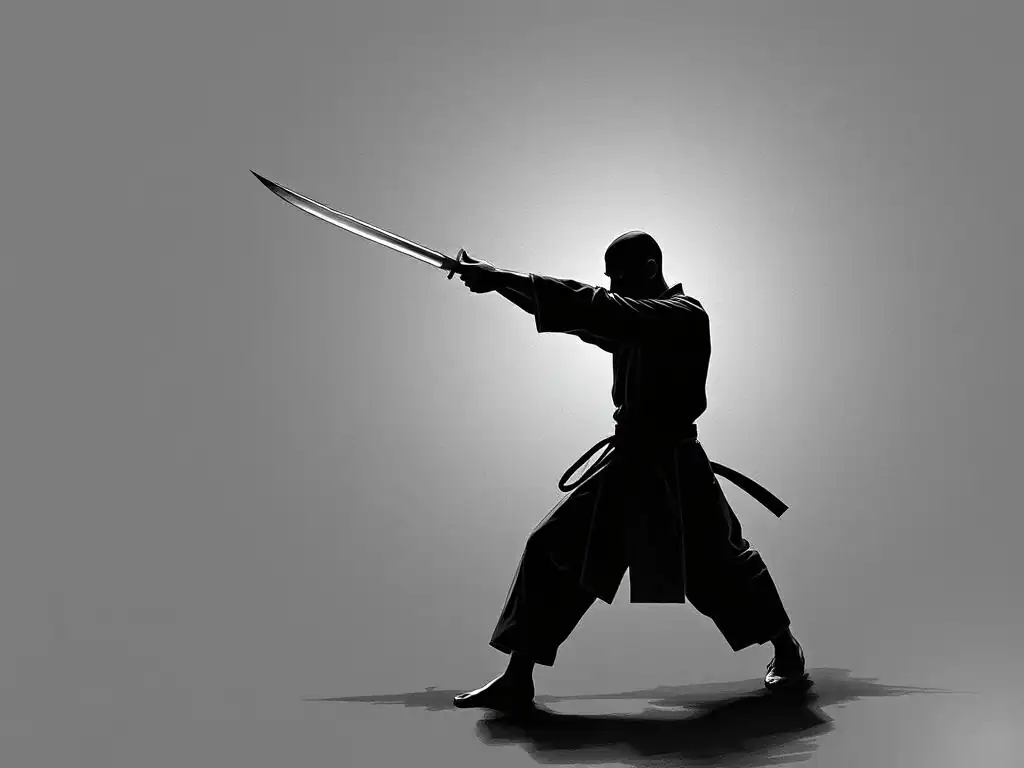
Step 1: Recognizing the Attacker's Intent and Anticipating the Initial Attack
Developing a three-step strategy begins with the crucial first step: early recognition and anticipation. This involves cultivating a high level of situational awareness long before a physical attack occurs. Recognizing pre-attack indicators – changes in body language, verbal cues, target fixation, or the subtle shifting of weight – can provide precious milliseconds of warning.
An attacker preparing to lunge might exhibit flushed skin, rapid breathing, clenched fists (even if the knife isn't visible yet), or a sudden narrowing of focus. Learning to read these signals, often through scenario training and observation, allows the defender to shift from a state of unawareness to alert readiness.
Furthermore, understanding common knife attack patterns is vital for anticipation. While attacks can be unpredictable, many follow basic trajectories: straight thrusts (like a boxer's jab), upward thrusts (often to the abdomen), or slashing motions (horizontal, diagonal, or vertical). In training, practitioners learn to identify these "lines of attack" (like the angles 1-12 in Eskrima stick fighting, adapted for the blade).
Anticipating whether the likely initial attack will be a high diagonal slash (Angle 1 or 2), a straight thrust (Angle 5), or an upward thrust (Angle 6) allows the defender to mentally prepare the most appropriate initial defensive movement, such as a specific angle of evasion or a preemptive check/block. This foresight, based on recognizing intent and predicting trajectory, is the absolute starting point for effective Eskrima knife defense techniques.
Identifying Common Knife Attack Patterns in Eskrima
Eskrima categorizes attack trajectories using numerical or descriptive systems, often derived from stick fighting angles but adapted for the blade's cutting and thrusting nature. While variations exist between systems, common patterns include:
- Angle 1 & 2: Diagonal slashes (forehand and backhand) often targeting the head, neck, or shoulder.
- Angle 3 & 4: Horizontal slashes (forehand and backhand) targeting the ribs, arms, or waist.
- Angle 5: Straight thrust, often targeting the solar plexus or face.
- Angle 6: Upward thrust, often targeting the abdomen or groin.
- Angles 7-12: Various other thrusts or slashes targeting lower areas or specific points.
Training involves defending against these angles from multiple ranges. For instance, practicing defense against Angle 5 (straight thrust) is critical as it's statistically a very common attack in real-world scenarios due to its directness and speed. A defender who can instantly recognize the setup for a straight thrust can initiate a rapid sidestep and deflection, significantly reducing the likelihood of being stabbed.
Reading Body Language and Pre-Attack Indicators
Beyond the attack angle itself, an attacker's body language provides crucial clues. Signs of adrenaline dump (shaking, rapid breathing), target fixation (staring intently at the intended strike point), or "telegraphing" movements (winding up a swing, shifting weight heavily onto one foot before a lunge) are all indicators that an attack is imminent. Experienced practitioners learn to spot these subtle signs. For example, a slight shift in weight onto the rear foot might precede a powerful forward thrust, or a rotation of the hips might indicate an impending slashing motion.
Training often includes drills focused solely on observing a partner who is instructed to "think" about attacking from a specific angle or with a certain technique, while the defender practices identifying the subtle preparatory movements before the attack is launched. This teaches the defender to react to the intention rather than just the action, buying critical time. While not foolproof, developing the ability to read these pre-attack indicators significantly enhances the defender's ability to anticipate and prepare their initial defensive response, forming the cornerstone of proactive Eskrima knife defense techniques.
Step 2: Intercepting and Redirecting the Attack: Eskrima Knife Blocking Techniques
Once the initial attack is anticipated or initiated, Step 2 involves intercepting or redirecting the blade's path. As mentioned, direct, forceful blocks are generally avoided. Eskrima knife defense techniques emphasize controlling the limb holding the weapon and guiding the blade away from the body. This is achieved through various checking, parrying, and blending techniques that utilize minimal force but maximum leverage and angle manipulation. The goal is not to stop the knife, but to safely divert it.
This step is dynamic and requires precise timing and spatial awareness. It's about meeting the attacker's force with intelligent redirection, using their momentum against them. Successful execution of this step creates the necessary opening for the subsequent steps of control, disarm, or counter-attack. Failure at this stage often means sustaining injury, highlighting the criticality of mastering the techniques involved in safely managing the incoming blade.
Utilizing "Gunting" (Scissoring) Techniques for Disruption
"Gunting," meaning "to scissor," is a core concept in Filipino martial arts used to disrupt an opponent's limb structure and function. In Eskrima knife defense, Gunting techniques are applied to the attacker's weapon arm or hand to weaken their grip, disrupt their balance, or create pain compliance that forces them to release the weapon or cease their attack. These techniques often involve simultaneous checking/controlling of the weapon arm with one limb while striking nerve points or vulnerable areas on the same arm with the other limb or a weapon.
For example, against a thrusting attack, a defender might use one hand or forearm to check the incoming wrist while simultaneously using their other hand to deliver a sharp Gunting strike (like a finger jab or knuckle strike) to the attacker's biceps or forearm nerve. This scissoring action, controlling one part of the arm while attacking another, disrupts the muscular and neurological control of the limb, significantly degrading the effectiveness of their attack and creating an opportunity for a disarm or follow-up.
Mastery of Gunting principles is essential for effectively breaking down an attacker's structure in Eskrima knife defense techniques.
Employing Deflection and Redirection to Control the Blade
Deflection and redirection techniques are fundamental to avoiding direct impact with the blade. Rather than attempting to absorb the force of a slash or thrust, the defender uses their limbs (often the forearms or hands, protected by bone structure and trained conditioning) to subtly guide the attacker's weapon arm off-line. This requires precise timing – meeting the attack as it arrives, not too early or too late. The angle of contact is crucial; the defender's limb makes contact at an oblique angle to the attacker's arm, causing the blade to slide past harmlessly.
Consider defending against a forehand diagonal slash (Angle 1). Instead of putting a forearm directly in the path to block, the Eskrimador might step offline (using a triangle) and use their lead forearm to redirect the attacker's wrist upwards and outwards as it passes, allowing the blade to continue its trajectory away from the defender's body.
This redirection often involves a minimal amount of force, relying instead on leveraging the attacker's momentum and the principles of angular deflection. These techniques are drilled extensively, often starting slowly and gradually increasing speed, to build the necessary timing, sensitivity, and control required for effective Eskrima knife defense.
Step 3: Counter-Attacking and Neutralizing the Threat: Eskrima Knife Counter-Offenses
The third step in the strategy, often happening almost simultaneously with Step 2, is the counter-attack. In Eskrima knife defense, the goal is not just to survive the initial attack but to neutralize the threat entirely. Once the attacker's initiative has been disrupted and their blade redirected or controlled, the defender immediately transitions to offense. This might involve striking vulnerable points, applying joint locks, or using the attacker's own weapon (if disarmed) or a secondary weapon. The counter-attack must be decisive and overwhelming to prevent the attacker from recovering and launching a follow-up attack.
This phase requires a seamless transition from defensive posture to offensive action. The opening created by the successful deflection, evasion, or control is exploited instantly. The counter-attack aims to incapacitate or severely disrupt the attacker, providing an opportunity to escape or maintain control until help arrives. Speed, power, and accuracy are paramount in this final phase of the three-step process.
Effective Striking Points and Target Areas
When counter-attacking in Eskrima knife defense, practitioners target vulnerable areas that can quickly incapacitate or stun an attacker. These often include:
- Head and Neck: Temples, jaw, eyes, throat (carotid artery, trachea). Even non-lethal strikes can cause disorientation.
- Nervous System Targets: Brachial plexus (side of the neck), radial nerve (forearm), median nerve (inner forearm/wrist), femoral nerve (inner thigh). Strikes here can cause temporary paralysis or severe pain, forcing the attacker to release their grip or collapse.
- Joints: Knees, elbows, wrists. Striking or manipulating joints can break structure and limit mobility.
- Torso: Solar plexus, floating ribs, groin. Powerful strikes here can cause severe pain, loss of breath, or collapse.
Eskrima training emphasizes precision strikes to these targets, often using empty hands (fists, elbows, knees, headbutts) or a secondary weapon if available. For example, after deflecting a thrust, a rapid elbow strike to the attacker's jaw or a knee strike to the groin could be the immediate counter-action, followed by a disarm if the grip is loosened.
Transitions from Defense to Offense in Eskrima
The transition from defense to offense is a fluid, almost instantaneous process in effective Eskrima knife defense techniques. It's not a distinct pause followed by an attack, but rather a continuous action where the defensive movement flows directly into the offensive strike or control technique. This is often described as "checking and passing" – controlling the weapon arm (check) while simultaneously moving to an advantageous position and attacking (pass).
Drills focus heavily on this seamless transition. For instance, a drill might involve a partner throwing a specific knife attack (e.g., Angle 5 thrust). The defender practices evading/redirecting (Step 2) and immediately following up with a specific counter-strike (Step 3) to a designated target, such as a palm heel strike to the chin or a Gunting strike to the forearm. Repetition builds the muscle memory so that the defensive action naturally initiates the offensive response, making the entire sequence a single, unbroken flow of movement designed to survive the attack and neutralize the threat.
Eskrima Knife Fighting Drills for Strategic Development
Shadow Fighting with a Knife: Visualizing and Practicing Scenarios
Shadow fighting, or solo training, is a fundamental drill in Eskrima knife defense techniques that allows practitioners to visualize and practice strategic responses without a partner. Holding a training knife, the practitioner simulates various attack scenarios – imagining an opponent attacking from different angles, ranges, and speeds. This is where the three-step strategy is mentally rehearsed: visualizing the attacker's intent (Step 1), practicing the evasion/redirection (Step 2), and flowing immediately into the counter-attack and follow-up (Step 3).
This drill helps in several ways: it improves muscle memory for footwork and body mechanics, enhances visualization skills, and allows for repetition of complex sequences. A practitioner might spend 10-15 minutes per session focusing solely on shadow fighting, running through a mental library of attack scenarios and practicing the appropriate defensive and offensive responses. This mental and physical rehearsal is crucial for making the strategic steps instinctive under pressure, as hesitation in a real knife confrontation can be fatal.
Partner Drills: Implementing Three-Step Strategy Under Pressure
Partner drills are essential for applying the three-step strategy against a live, albeit controlled, threat. These drills start slowly, with partners simulating specific attacks (e.g., "give me Angle 1, then Angle 5") and the defender practicing the learned responses. As proficiency increases, the speed and unpredictability of the attacks are gradually increased. Using training knives (rubber, plastic, or padded), partners practice recognizing the attack (Step 1), executing the deflection/evasion/control (Step 2), and delivering the counter-attack (Step 3).
- Example Drill: Partner A throws a slow Angle 5 thrust. Partner B practices stepping offline (female triangle), using their forearm to redirect A's arm past their body, and simultaneously delivering a simulated palm heel strike to A's jaw (Step 3). They then reset and repeat.
- Progression: The drill progresses by increasing speed, adding feints, and allowing the attacker (Partner A) to follow up with a second attack if the initial defense (Partner B's Step 2) is ineffective. This forces the defender to react to realistic pressure and reinforces the need for a decisive Step 3. Partner drills are critical for developing timing, distance management, and the ability to execute the strategy under duress.
Sparring with Controlled Resistance: Applying Strategic Thinking in Real-Time
Sparring with controlled resistance is the most advanced form of drilling for Eskrima knife defense techniques, moving closer to a realistic simulation. Using protective gear and heavily padded or marked training weapons, practitioners engage in simulated combat scenarios where the attacker is actively trying to "tag" the defender, and the defender is attempting to apply the three-step strategy. The resistance level is gradually increased, pushing practitioners to apply their skills under pressure.
Controlled sparring helps test the practitioner's ability to read unpredictable movements (Step 1), adapt their defense (Step 2) when the initial plan doesn't work perfectly, and find openings for counter-attacks (Step 3) against a resisting opponent. While not a full-contact fight, this level of drilling provides invaluable feedback on the practicality and effectiveness of techniques and strategies. It highlights weaknesses in timing, distance, or technique application, forcing the practitioner to refine their skills and truly embody the "thinking three steps ahead" mindset in a dynamic environment.
Advanced Eskrima Knife Defense Concepts
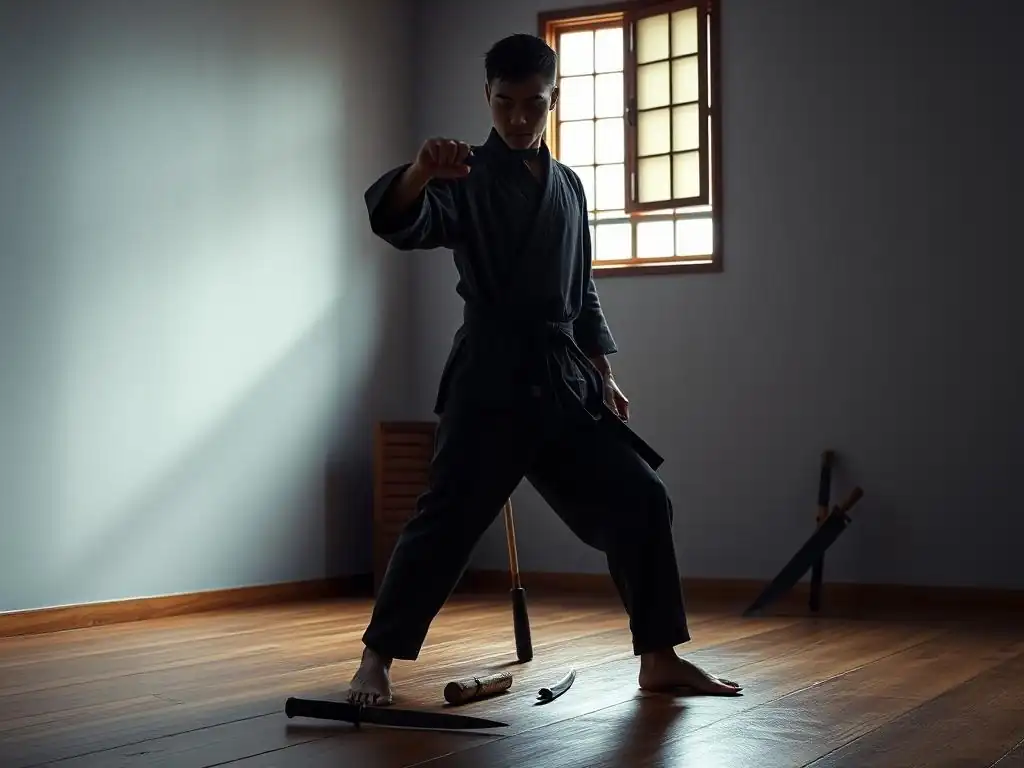
Weapon Disarmament Techniques: Hubud-Lubud Disarm
Hubud-Lubud is a foundational drill and concept in Eskrima, involving continuous, flowing movements between trapping, checking, and striking. While often practiced with empty hands or sticks, its principles are directly applied to knife defense and disarmament. An advanced application involves using the flow of Hubud-Lubud to control the attacker's weapon arm, transition through various checks and traps, and find opportunities for disarms based on leverage and joint manipulation.
A Hubud-Lubud based disarm might involve checking the incoming weapon arm, transitioning into a wrist control, using the circular flow of the drill to apply pressure to the wrist joint's weakest point, and executing a sharp twist or push that forces the attacker to release the blade. This isn't a single technique but a fluid sequence of movements adapted to the attacker's resistance. Mastery of Hubud-Lubud provides the practitioner with a versatile framework for controlling and disarming an opponent's weapon hand through continuous motion and leverage, essential for advanced Eskrima knife defense techniques.
Integrating Empty-Hand Techniques with Knife Defense
Eskrima is a holistic system that seamlessly integrates weapon and empty-hand techniques. In knife defense, empty-hand skills are not secondary but integral to the overall strategy. As discussed in counter-attacking (Step 3), empty-hand strikes (punches, elbows, knees, headbutts) are frequently used to stun or incapacitate the attacker after the blade has been evaded or controlled. Furthermore, trapping, joint locks, and throws from empty-hand systems are used to control the attacker's body and weapon arm.
For instance, after deflecting a slash, the defender might immediately transition to an empty-hand trap on the attacker's wrist, followed by an elbow strike to the head, and then a standing joint lock on the weapon arm to facilitate a disarm. The ability to fluidly move between using limbs for checking/controlling the weapon and using them for powerful strikes or grappling entries is a hallmark of advanced Eskrima knife defense. Training consistently blends weapon and empty-hand applications, ensuring practitioners are not reliant on just one skillset but can adapt to the dynamic nature of a real confrontation.
Adapting Your Strategy to Different Attack Styles
A key aspect of advanced Eskrima knife defense is the ability to adapt the three-step strategy to different attack styles, attackers (size, strength, skill level), and environments. Not all knife attacks are the same; some are wild and untrained, others are precise and targeted. A larger, stronger attacker requires different applications of leverage and body mechanics than a smaller, faster one. The environment (confined space, slippery floor, presence of bystanders) also dictates tactical adjustments.
Advanced training involves scenario-based practice against partners instructed to use different attack styles (e.g., "street fighter," "trained assailant"). The practitioner must quickly assess the threat (adapting Step 1), choose the most appropriate defensive response from their repertoire (adapting Step 2), and select the most effective counter-attack for that specific situation (adapting Step 3). This adaptability comes from a deep understanding of the core principles rather than just memorizing techniques, allowing the Eskrimador to effectively apply Eskrima knife defense techniques in a wide range of unpredictable situations.
Mental Preparation and Awareness in Eskrima Knife Fighting
Cultivating a Calm and Focused Mindset
Facing a knife attack is an incredibly stressful and terrifying experience. Panic can override training and lead to fatal errors. Therefore, cultivating a calm and focused mindset is as critical as physical technique in Eskrima knife defense. Training incorporates stress inoculation – gradually introducing stressors in a controlled environment (like increasing speed and resistance in drills) to help practitioners learn to function under pressure.
Techniques like controlled breathing, visualization, and positive self-talk are also used to build mental resilience. The ability to remain calm allows the practitioner to access their training, accurately assess the situation (Step 1), execute techniques precisely (Step 2), and make sound tactical decisions (Step 3). This mental fortitude is not innate but developed through consistent training that challenges both the body and the mind, preparing the Eskrimador to face fear and act decisively.
Developing Situational Awareness and Risk Assessment Skills
Situational awareness is the ability to perceive environmental cues, understand their meaning, and project their status in the near future. In the context of Eskrima knife defense, this means constantly scanning the environment, identifying potential threats before they manifest, recognizing danger zones (e.g., dark alleys, isolated areas), and assessing the risk posed by individuals. Is someone acting suspiciously? Are they concealing something? What are their possible intentions?
Risk assessment involves quickly evaluating a potential threat based on available information: the attacker's demeanor, size, potential weapon, and the environment. This assessment informs the initial strategic decisions (part of Step 1): Should I attempt to de-escalate? Should I create distance? Is escape feasible? Or is immediate physical defense necessary? Eskrima training encourages practitioners to develop a "combat radar," constantly processing information and making preliminary risk assessments, preparing them to initiate their three-step strategy if a threat escalates.
Overcoming Fear and Hesitation in Confrontational Scenarios
Fear and hesitation are natural responses to a life-threatening situation, but they are liabilities in knife combat. Eskrima training aims to mitigate these responses through realistic, progressive exposure to stress and the development of automatic, trained responses. By practicing techniques thousands of times, the physical actions become muscle memory, reducing the cognitive load and allowing the practitioner to act instinctively even when experiencing fear.
Furthermore, understanding the principles behind Eskrima knife defense techniques provides confidence. Knowing why a technique works and having successfully executed it hundreds of times in training builds self-belief. While fear may still be present, training helps manage it, preventing it from freezing the practitioner. The goal is to train the mind and body to act decisively despite the fear, enabling the execution of the strategic steps necessary for survival.
Conclusion: Mastering Strategic Thinking for Eskrima Knife Defense
The Path to Proficiency in Eskrima Knife Combat: Constant Learning and Adaptation
Mastering strategic thinking in Eskrima knife defense is not a destination but an ongoing journey that requires constant learning and adaptation. The landscape of potential threats evolves, and practitioners must remain vigilant, continuously refining their skills and expanding their understanding. Proficiency comes from dedicated, consistent training that includes solo practice, partner drills, controlled sparring, and theoretical study of tactics and psychology.
True mastery lies not just in executing techniques flawlessly but in the ability to apply the underlying principles of Eskrima knife defense techniques – footwork, blending, leverage, timing, and the three-step strategy – to novel and unpredictable situations. It demands humility, a willingness to identify weaknesses, and a commitment to continuous improvement. The dedicated practitioner understands that readiness against a bladed threat requires perpetual refinement of both physical skills and strategic mindset.
Embracing the Philosophy of "Thinking Ahead" in All Aspects of Martial Arts
The philosophy of "thinking three steps ahead," so vital in Eskrima knife defense techniques, extends beyond weapon combat and permeates all aspects of martial arts mastery. It encourages practitioners to view conflict not as a series of isolated events but as a dynamic, unfolding process. This mindset applies equally to empty-hand sparring, self-defense against unarmed assailants, and even the strategic planning of training sessions.
By habitually considering potential actions, counter-actions, and follow-ups, the martial artist develops a deeper understanding of tactics, timing, and distance. This strategic foresight enhances reaction time, improves decision-making under pressure, and ultimately makes the practitioner more effective and safer in any confrontational scenario. Embracing this core Eskrima principle transforms a collection of techniques into a cohesive, intelligent system for navigating conflict, embodying the true spirit of Filipino martial arts.
[ ] Review Step 1 content for detail and examples.
[ ] Review Step 2 content for detail and examples.
[ ] Review Step 3 content for detail and examples.
[ ] Ensure all ### headers have >= 2 paragraphs.
[ ] Verify keyword usage (Eskrima knife defense techniques and variations).
[ ] Check for prohibited elements (links, images, etc.).
[ ] Proofread for fluency, accuracy, and tone.
[ ] Confirm output is only the article content.
Frequently Asked Questions
What is Eskrima and how does it relate to knife defense?
Eskrima, also known as Kali or Arnis, is a Filipino martial art that emphasizes weapon-based fighting, including knives. Eskrima knife defense techniques are designed to disarm and control an attacker.
Why is "thinking three steps ahead" important in Eskrima knife defense?
Anticipating your opponent's moves is crucial. "Thinking three steps ahead" allows you to proactively position yourself, control the engagement, and create opportunities for disarming or neutralizing the threat.
What are some fundamental principles of Eskrima knife defense techniques?
Key principles include angle of attack, footwork, and weapon manipulation. Deflecting, redirecting, and controlling the attacker's weapon while maintaining a safe distance are also fundamental.
How does Eskrima differ from other knife defense systems?
Eskrima often emphasizes fluidity and adaptability, using a variety of techniques and counters. Many Eskrima systems teach weapon disarms and control techniques before unarmed defense, which is a distinct approach.
Where can I learn more about Eskrima knife defense techniques?
MartialArtsMastery.org provides a wealth of information on Eskrima, including historical overviews, training techniques, and practical self-defense strategies. Look for articles and resources specifically related to knife fighting and Filipino martial arts.
Final Reflection: Mastering the Dance of Blades
The exploration of Eskrima knife strategy, particularly the emphasis on thinking three steps ahead, isn't just about combat techniques; it's about cultivating a mindset of proactive awareness and strategic foresight. In a world increasingly demanding adaptability and quick thinking, the principles of Eskrima knife defense offer invaluable lessons that extend far beyond the training mat.
This ancient martial art, with its focus on anticipating an opponent's moves, has profoundly shaped the way I approach problem-solving, both in physical and mental arenas. The discipline required to visualize multiple scenarios and react accordingly has instilled a sense of calm and control in high-pressure situations. The best defense is a good offense
is often quoted, but in Eskrima, it's about understanding that the best offense is a well-prepared defense, anticipating the attack before it even materializes.
Now, consider how you can apply this principle of strategic foresight in your own life. Whether it's planning a project, navigating a difficult conversation, or simply making everyday decisions, embrace the Eskrima mindset. Visualize the potential outcomes, anticipate the challenges, and prepare your response. By thinking three steps ahead, you can not only defend against adversity but also proactively shape your own destiny.
Elevate Your Eskrima: Embrace the Blade's Edge!
Thank you for diving deep into the art of Eskrima knife strategy. You've now unlocked a deeper understanding of tactical thinking and anticipating your opponent's moves. Ready to put this knowledge into action?
- Master the Primary Technique: Commit to practicing the "Hubud Lubud" flow drill daily for at least 15 minutes to internalize its principles of continuous motion and redirection.
- Reflect on three real-life scenarios where this strategic mindset could be applied beyond martial arts, improving your problem-solving skills.
- Share your insights and challenges with fellow Eskrima practitioners online, fostering a collaborative learning environment and gaining diverse perspectives.
How will you translate this sharpened strategic thinking into your daily life, both on and off the mat?