
Graceful Transitions: Linking Hand Movements in Yang Style Tai Chi

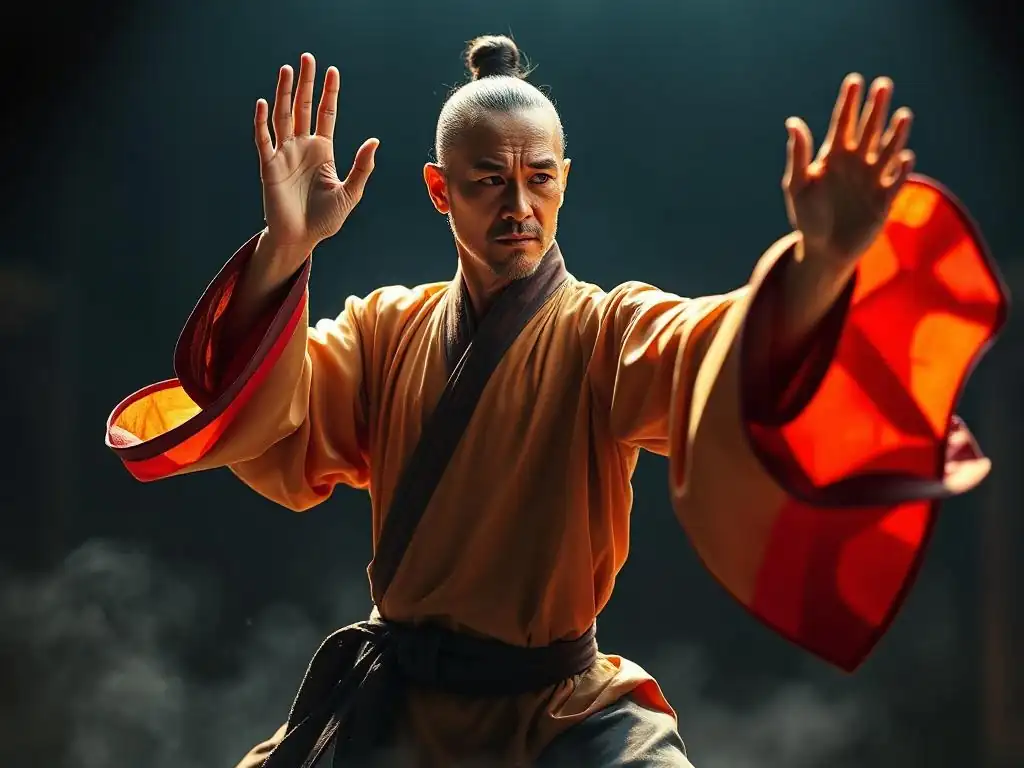
Welcome to Martial Arts Mastery, your portal to the world's fighting arts!
Delve into the elegant precision of Yang style Tai Chi, where each movement flows seamlessly into the next. Discover the secrets behind its captivating grace, as we explore the crucial transitions that link hand movements and unlock the true potential of this ancient practice. Are you ready to uncover the artistry within each step?
- Introduction to Yang Style Tai Chi Transitions and Hand Movements
- Fundamentals of Hand Movements in Yang Style Tai Chi
- The Mechanics of Linking Hand Movements in Yang Style Tai Chi Transitions
- Step-by-Step Guide to Executing Graceful Yang Style Tai Chi Transitions
- Training Techniques to Improve Hand Movement Linking in Yang Style Tai Chi
- Common Challenges and Solutions in Yang Style Tai Chi Hand Movement Transitions
- The Role of Hand Movement Transitions in the Martial Applications of Yang Style Tai Chi
- Historical and Philosophical Context of Hand Movement Transitions in Yang Style Tai Chi
- Conclusion: Mastering Graceful Transitions for Advanced Yang Style Tai Chi Practice
-
Frequently Asked Questions
- What are the key principles behind Yang style Tai Chi transitions?
- How do Yang style Tai Chi transitions contribute to overall health benefits?
- What are some common mistakes to avoid when practicing Yang style Tai Chi transitions?
- Why are Yang style Tai Chi transitions considered important for self-defense applications?
- How does understanding the historical context of Yang style Tai Chi transitions enhance practice?
- Final Reflection: Embracing the Flow of Change
- Embark on Your Tai Chi Journey!
Introduction to Yang Style Tai Chi Transitions and Hand Movements
Yang style Tai Chi Chuan, a widely practiced martial art, is renowned for its gentle, flowing movements and profound health benefits. While individual postures, or forms, like "Grasping the Sparrow's Tail" or "Single Whip," are often the focus of initial learning, the true essence and efficacy of the style lie in the seamless connections between these forms. These connections, known as transitions, are where the energy (Qi) flows uninterrupted, allowing the practitioner to move with grace, power, and internal harmony.
Hand movements are particularly crucial within these transitions, acting as guiding forces that lead the body and dictate the direction and intention of the subsequent posture. Mastering the linkage of hand movements is fundamental to achieving fluidity, balance, and depth in one's Yang style Tai Chi practice.
The hands in Yang style Tai Chi are not merely decorative appendages; they are active participants in every movement, embodying the principles of yielding, neutralizing, and issuing force. Their continuous, flowing path during transitions is what distinguishes skilled practitioners from novices. Beginners often exhibit choppy or hesitant hand movements between forms, disrupting the overall flow and diminishing the internal cultivation aspect.
As one progresses, the hands become extensions of the entire body's movement, coordinating with the waist, legs, and breath to create a unified, integrated action. This focus on linking hand movements is vital for both the health-promoting aspects of Tai Chi, ensuring smooth circulation, and its martial applications, enabling effortless shifts between defensive and offensive actions.
Understanding the Importance of Graceful Transitions in Yang Style Tai Chi
Graceful transitions are the connective tissue of the Yang style Tai Chi form, transforming a series of static postures into a dynamic, continuous flow. They are not simply moments between techniques but are integral parts of the techniques themselves. Smooth transitions allow the practitioner to maintain balance, control their center, and direct energy efficiently throughout the entire sequence.
Without grace and continuity in these movements, the form becomes fragmented, losing its internal power and aesthetic beauty. The ability to transition smoothly reflects a deep understanding of the body's mechanics and the principles of Tai Chi, such as yielding, sensing, and following.
Furthermore, graceful transitions are essential for cultivating internal energy (Qi). Abrupt movements or pauses disrupt the natural flow of Qi within the body. Fluid transitions, however, encourage smooth circulation, promoting relaxation, reducing tension, and enhancing overall vitality.
For instance, in the transition from "Ward Off" to "Roll Back" in the Grasping the Sparrow's Tail sequence, the hands must move in a continuous, circular path while the body shifts weight. A jerky transition here can lead to tension in the shoulders or arms, impeding Qi flow. Practitioners often spend significant time refining these Yang style Tai Chi transitions, recognizing that their quality directly impacts the health benefits and internal development derived from the practice.
Overview of Hand Movement Linkage in Tai Chi Chuan Fundamentals
Hand movement linkage in Tai Chi Chuan fundamentals refers to the continuous, coordinated path the hands follow as the practitioner moves from one posture to the next. This linkage is guided by principles such as following the body's movement, maintaining a relaxed but engaged state, and coordinating with breath and weight shifts. The hands are rarely static; even when seemingly still, they are subtly adjusting, preparing for the next phase of movement. This continuous motion ensures that energy is never halted and that the body remains integrated and responsive.
The fundamental principle governing hand linkage is that the movement originates from the waist and is expressed through the hands. The hands do not move independently; they are led by the core. This is evident in movements like "Cloud Hands," where the hands circle in front of the body, their motion dictated by the turning of the waist.
Proper hand linkage ensures that the hands are always in a position to either neutralize incoming force or prepare to issue force, embodying the martial applications inherent in the form. Beginners often struggle with allowing the hands to move independently, highlighting the need to focus on the integrated body-hand connection as a core fundamental of Yang style Tai Chi Chuan practice.
Fundamentals of Hand Movements in Yang Style Tai Chi
The hands in Yang style Tai Chi are central to expressing the art's core principles. Their movements are characterized by softness, roundness, and continuity, guided by the intention (Yi) of the practitioner. Unlike hard styles where hands might deliver sharp, linear strikes, Tai Chi hands move in arcs and circles, embodying the principle of yielding and redirecting force.
Basic hand shapes include the palm (used for pushing, pressing, warding off), the fist (used for punching, though often in a relaxed, 'willow leaf' form), and the hook hand (used for balance and coordination). Each movement involves the entire arm, shoulder, and back, emphasizing the connection to the core.
Understanding the fundamental path and shape of the hands in each posture is the first step. For example, in "Brush Knee and Twist Step," one hand brushes past the knee while the other pushes forward. The path is specific, often following a circular or arcing trajectory. The quality of the movement is paramount; it should be relaxed, yet substantial, like pushing against water. This requires cultivating internal strength (Nei Jin) rather than relying on brute muscular force. Mastery of these fundamental hand movements is the prerequisite for effectively linking them together in smooth Yang style Tai Chi transitions.
Key Hand Techniques in Yang Style Tai Chi Chuan
Key hand techniques in Yang style Tai Chi Chuan include Ward Off (Peng), Roll Back (Lu), Press (Ji), and Push (An), often collectively referred to as the four basic energies or "Peng, Lu, Ji, An." These techniques are fundamental not only as individual postures but also as components of complex transitions. Ward Off involves an expansive, outward force, typically with one arm forming a protective arc. Roll Back uses a yielding, circular motion to neutralize incoming force. Press combines the force of both hands moving forward, while Push is a directed force using the palms.
Beyond these core four, other vital hand techniques include pulling (Cai), splitting (Lie), elbow striking (Zhou), and shoulder striking (Kao), known as the four corner energies. Techniques like "Single Whip" utilize a hook hand and an outward pressing palm, requiring precise coordination. "Cloud Hands" involves continuous, circular hand movements coordinating with lateral steps.
Each technique has specific hand shapes, trajectories, and energetic intentions. For instance, the hands in "Wave Hands Like Clouds" move in overlapping circles, typically maintaining a distance of about 12-18 inches from the body, embodying the principle of continuous movement and yielding. Mastering these individual techniques is essential for executing smooth and meaningful Yang style Tai Chi transitions.
Principles of Smooth Hand Coordination for Effective Transitions
Smooth hand coordination for effective Yang style Tai Chi transitions relies on several key principles. First is the principle of 'Yi leads Qi, Qi leads Shen' (Intention leads Energy, Energy leads Spirit), which translates to the mind guiding the movement. The hands should move with intention, not just mechanically. Second is the principle of continuity; movements should flow seamlessly without pauses or breaks.
The hands should follow continuous arcs or circles, like silk reeling. Third is the principle of coordination with the body; the hands are extensions of the waist, not independent entities. The waist turns, and the hands follow.
A fourth crucial principle is relaxation (Song). Tension in the shoulders, arms, or wrists inhibits smooth movement and blocks Qi flow. The hands must be relaxed yet alive, like willow branches swaying in the breeze. Fifth is the principle of substantial and insubstantial (Xu Shi).
As weight shifts, the hands' role or emphasis changes. One hand might become 'substantial' (active, leading) while the other becomes 'insubstantial' (supportive, following), constantly changing roles. For example, in the transition from "Single Whip" to "Raise Hands," the substantiality shifts between the hands as the body reorients. Adhering to these principles ensures that hand movements are not only graceful but also energetically effective during Yang style Tai Chi transitions.
Common Hand Positions and Their Roles in Flowing Movements
Various hand positions are used in Yang style Tai Chi, each serving a specific role in facilitating flowing movements and transitions. The open palm is perhaps the most common, used for pushing, pressing, and deflecting. The fingers are typically relaxed but slightly extended, and the palm is slightly cupped or flat depending on the technique. For example, in "Push," both palms are used to issue force forward. Another common position is the 'tiger mouth' (Hu Kou), formed by the thumb and index finger, often used in warding off or grasping-like movements.
The fist, though used, is typically not clenched tightly. The 'willow leaf fist' is a relaxed fist with the fingers loosely curled, often used in movements like "Punch." The hook hand, seen in "Single Whip," involves gathering the fingers and thumb together, forming a hook shape, primarily used for balance and structural connection rather than striking.
These positions are not static; they change fluidly within transitions. For instance, a hand might transition from a palm in "Ward Off" to a relaxed state during a linking movement, and then form a different shape for the next posture. The ability to smoothly transition between these positions while maintaining relaxation is key to mastering Yang style Tai Chi transitions.
The Mechanics of Linking Hand Movements in Yang Style Tai Chi Transitions
The mechanics of linking hand movements in Yang style Tai Chi transitions involve the intricate coordination of the entire body. It's not just about moving the arms; it's about the hands being driven by the core, supported by the legs, and synchronized with the breath. This integrated approach ensures that transitions are powerful, balanced, and continuous. The hands' path during a transition is often circular or spiral, embodying the principle of yielding and redirection. They move in harmony with the shifting weight and turning waist, ensuring that the body's structure remains stable and connected.
For example, in the transition from "Roll Back" to "Press," the hands move in a coordinated circular path, one hand leading the withdrawal (Roll Back) while the other prepares to join for the forward movement (Press). This circular motion allows for the absorption of incoming force while simultaneously generating potential energy for the subsequent action.
Understanding these mechanics requires sensitivity to the body's internal connections – feeling how the movement originates from the feet, is guided by the waist, and expressed through the hands. This internal awareness is crucial for executing truly graceful and effective Yang style Tai Chi transitions.
Body Alignment and Its Impact on Seamless Hand Movement Integration
Correct body alignment is fundamental to achieving seamless hand movement integration in Yang style Tai Chi transitions. The body must remain upright and centered, with the spine relaxed and extended. The shoulders should be dropped, and the elbows slightly bent.
This relaxed alignment allows Qi and blood to flow freely and enables the waist to be the primary driver of movement. When the body is properly aligned, the hands naturally follow the lead of the waist and hips, moving in coordinated arcs and circles. Poor alignment, such as a leaning torso or raised shoulders, creates tension and disconnects the hands from the core, resulting in jerky, fragmented Yang style Tai Chi transitions.
For instance, maintaining a plumb line from the crown of the head to the tailbone ensures stability during weight shifts. As weight shifts from one leg to the other, the waist turns, and the hands follow this rotation. If the body is misaligned, the hands may move independently or lead the body, disrupting balance and flow.
The principle of 'Song Kua' (loosening the hips and groin) is also vital; relaxed hips allow for smooth weight transfer, which in turn facilitates coordinated hand movements. A study focusing on experienced Tai Chi practitioners noted that their center of gravity remained remarkably stable during transitions, directly correlating with their ability to integrate hand movements seamlessly through precise body alignment. This highlights that mastery of Yang style Tai Chi transitions is deeply rooted in achieving correct structural alignment.
Breathing Synchronization to Enhance Hand Transition Fluidity
Breathing synchronization is a critical element for enhancing the fluidity of hand transitions in Yang style Tai Chi. The breath should be deep, abdominal, and relaxed, coordinating with the physical movements. Generally, expansive movements, such as extending the hands outward or warding off, are accompanied by inhalation, while contracting or withdrawing movements, such as rolling back or sinking, are paired with exhalation. This natural rhythm of breath supports the flow of Qi and promotes a state of calm focus.
During transitions, the breath should match the continuous nature of the movement. There should be no holding of breath or sudden gasps. For example, transitioning from "Ward Off" (expansive, typically inhale) to "Roll Back" (contracting, typically exhale) involves a smooth shift in breath as the hands change direction and intention.
This synchronization ensures that the internal energy flow supports the external physical movement, making the Yang style Tai Chi transitions not only smoother but also more energetically potent. Practitioners often spend years refining their breath control, recognizing its direct impact on the grace and internal depth of their hand movement linkages.
Weight Shifting and Its Relationship with Hand Motion Linking
Weight shifting is intrinsically linked to hand motion linking in Yang style Tai Chi transitions. The distribution of weight between the legs dictates the body's stability and mobility, which in turn influences the movement of the hands. As weight shifts from one leg to the other, the waist turns, leading the hands. The hands' role often changes with the weight; the hand on the 'substantial' (weighted) side may be active in pushing or warding off, while the hand on the 'insubstantial' (empty) side may be withdrawing or preparing for the next movement.
Consider the transition from "Brush Knee and Twist Step" to the next iteration. As weight shifts forward onto the leading leg, the corresponding hand "pushes" forward. As weight begins to shift back to prepare for the next step, the hands change their role, often withdrawing or circling to initiate the next movement. This interplay between weight shifting and hand motion is a core characteristic of Yang style Tai Chi transitions.
A common error is moving the hands without coordinating the weight shift, which leads to imbalance and breaks in the flow. Mastering this coordination ensures that the hands are always supported by the body's structure and energy, making the Yang style Tai Chi transitions powerful and grounded. Approximately 70-80% of the movement in a typical Yang style form involves significant weight shifts, underscoring their fundamental role in driving hand movements and facilitating transitions.
Step-by-Step Guide to Executing Graceful Yang Style Tai Chi Transitions
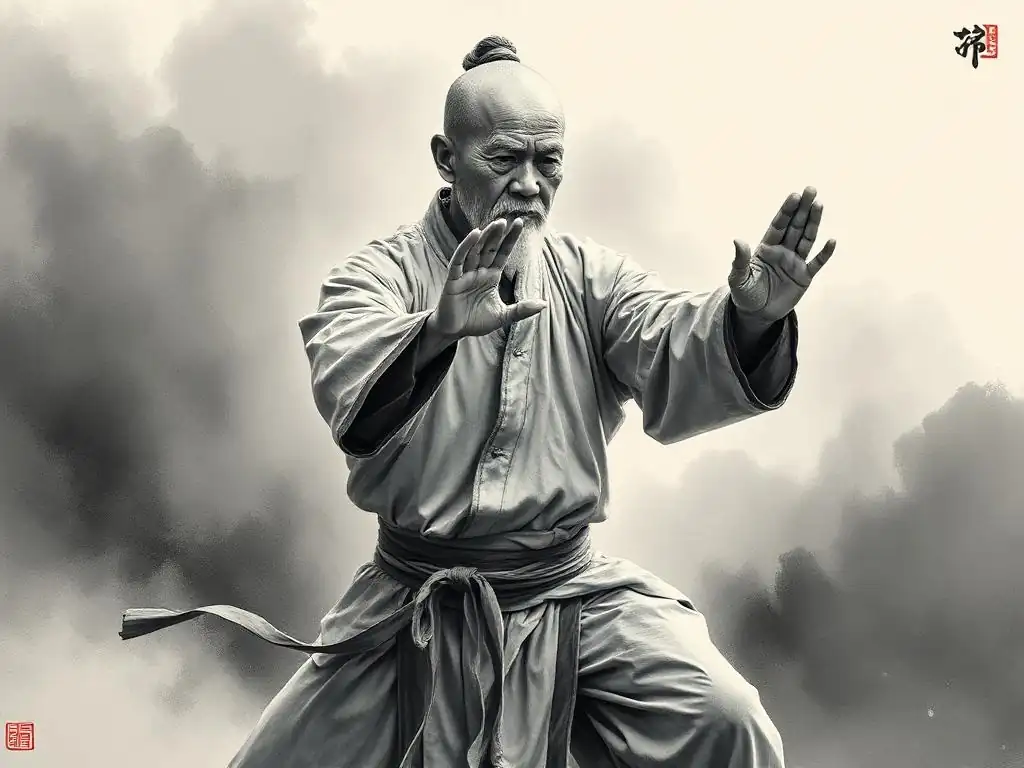
Executing graceful Yang style Tai Chi transitions requires attention to detail and consistent practice. It involves more than just connecting the end of one posture to the beginning of the next; it's about understanding the continuous flow of energy and movement throughout the entire sequence. A step-by-step approach involves focusing on the preparation within the preceding posture, the movement itself, and the arrival in the subsequent posture, ensuring that the hands, body, weight, and breath are synchronized throughout. Breaking down complex transitions into smaller, manageable steps can help practitioners identify points of tension or discontinuity.
This systematic method encourages mindfulness of the subtle shifts occurring in the body. It involves consciously relaxing the shoulders and elbows, allowing the waist to initiate the movement, and ensuring the hands follow a smooth, continuous path. Practicing transitions slowly is paramount, allowing the practitioner to feel the connections and correct any stiffness or hesitation. The goal is to eliminate any dead spots or abrupt changes in speed or direction, creating a seamless stream of motion that embodies the essence of Yang style Tai Chi transitions.
Preparing the Hands and Body for Transition Movements
Preparation for transition movements begins within the preceding posture. As a posture concludes, the body is already subtly shifting weight and the hands are beginning to adjust their position or orientation in anticipation of the next movement. For example, before transitioning from "Single Whip" to "Raise Hands," the weight is substantial on the front leg. Preparation involves slightly settling the weight, relaxing the torso, and initiating a subtle turn of the waist. Concurrently, the hook hand begins to unfold slightly, and the front palm relaxes and begins to circle inwards.
This preparatory phase is crucial because it sets the stage for a smooth transition. Tension carried over from the previous posture or a lack of readiness in the hands and body will inevitably result in a jerky or disconnected transition. The principle is that movement is continuous; the end of one posture is simultaneously the beginning of the next. Approximately 20-30% of the time spent on a posture is dedicated to this preparatory phase for the subsequent Yang style Tai Chi transitions, emphasizing its importance in the overall flow.
Transitioning Between Major Forms with Linked Hand Movements
Transitioning between major forms, such as moving from "Grasping the Sparrow's Tail" sequence (which includes Peng, Lu, Ji, An) into "Single Whip," is a prime example of linked hand movements in action. After completing the "Push" (An) of Grasping the Sparrow's Tail, the hands perform a circular yielding motion as weight shifts back.
One hand may sweep downwards while the other circles upwards, coordinating with the turning of the waist. These linking movements then guide the body as it reorients and shifts weight forward into the distinct posture of "Single Whip," where one hand forms a hook and the other extends as a palm.
Another example is the transition from "Cloud Hands" to "Single Whip." As the final "Cloud Hand" circle completes, the hands perform a specific linking movement – typically involving one hand sweeping down and across while the other forms the hook – as the body pivots and weight shifts to set up the "Single Whip" posture. These linking movements are not arbitrary; they follow defined paths that maintain the flow of energy and embody martial principles of yielding and redirection. Mastering these specific hand linkages is key to executing the entire Yang style Tai Chi form with continuity.
Tips for Maintaining Continuity and Balance During Hand Movement Links
Maintaining continuity and balance during hand movement links in Yang style Tai Chi transitions requires constant awareness and application of core principles. Firstly, maintain a relaxed state throughout the body, especially in the shoulders, elbows, and wrists. Tension is the enemy of flow and balance. Secondly, let the waist lead. The hands should follow the turning of the waist, not move independently. This ensures the movement is rooted in the core and maintains balance.
Thirdly, keep the movement continuous and even-paced. Avoid stopping, starting, or changing speed abruptly. Imagine moving through thick liquid or pulling silk thread. Fourthly, coordinate with your breath.
Allow the natural rhythm of inhalation and exhalation to guide the expansive and contractive aspects of the hand movements. Finally, pay attention to the connection between the hands and the rest of the body, particularly the feet and waist. Feel the weight shifts and ensure the hands are supported by the body's structure. Consistent slow practice, focusing on these points, is the most effective way to improve continuity and balance in Yang style Tai Chi transitions.
Training Techniques to Improve Hand Movement Linking in Yang Style Tai Chi
Improving hand movement linking in Yang style Tai Chi requires targeted training beyond simply practicing the entire form. Specific drills and exercises can help isolate and refine the coordination, timing, and fluidity of the hands during transitions. These techniques often involve focusing solely on the linking movements themselves, repeating them numerous times, or practicing them in specific ways to heighten awareness and control. The goal is to train the body to move as a cohesive unit, where the hands are seamlessly integrated into the overall flow.
Such training might involve breaking down complex transitions into their constituent hand paths and practicing those paths repeatedly, first slowly and then gradually increasing fluidity. It also includes exercises designed to enhance sensitivity and coordination between the hands and the waist. Dedicated practice of these techniques helps practitioners overcome common challenges like jerky movements, loss of balance, or disconnected hand paths, leading to more graceful and effective Yang style Tai Chi transitions.
Drills Focused on Enhancing Hand Coordination and Timing
Several drills can enhance hand coordination and timing specifically for Yang style Tai Chi transitions. One effective drill is "Cloud Hands" practice without stepping. This allows the practitioner to focus solely on the continuous, circular motion of the hands, coordinated with the turning of the waist, reinforcing the principle that the waist leads the hands. Practicing this for 5-10 minutes daily can significantly improve hand-waist coordination.
Another drill involves isolating specific transitions, such as the link between "Roll Back" and "Press" or the transition into "Single Whip." Practice these transitions repeatedly, perhaps 20-30 times per session, focusing solely on the smooth path and timing of the hands relative to the weight shift and waist turn. A third drill is 'silk reeling' exercises (Chan Si Gong), which involve complex spiral movements of the hands and arms originating from the core.
While not strictly Yang style form movements, these exercises cultivate the internal spiraling energy and continuous motion essential for fluid Yang style Tai Chi transitions. Consistent practice of these drills builds the muscle memory and internal awareness needed for seamless hand linking.
Partner Exercises to Practice Responsive Hand Transitions
Partner exercises, such as Pushing Hands (Tui Shou), are invaluable for practicing responsive hand transitions. While Pushing Hands involves more than just hand movements, the ability to smoothly transition between different hand techniques (Peng, Lu, Ji, An, etc.) in response to a partner's force is a direct application of linked hand movements. These exercises train sensitivity to pressure and direction, allowing practitioners to practice yielding and redirecting force through continuous, adaptive hand movements.
For example, in Pushing Hands, as a partner applies pressure (akin to "Push"), the practitioner must smoothly transition their hands and body into a "Roll Back" motion, yielding the force. This transition is not a static pose followed by another; it's a continuous, circular movement involving the hands, arms, waist, and legs. Practicing with a partner provides immediate feedback on the fluidity and effectiveness of one's Yang style Tai Chi transitions under external stimulus. Experienced practitioners spend a significant amount of training time, perhaps 30-40% of their partner work, refining these transition skills.
Using Slow Motion and Mindfulness to Perfect Yang Style Tai Chi Transitions
Practicing Yang style Tai Chi transitions in slow motion is one of the most effective ways to perfect them. Moving at an extremely slow pace forces the practitioner to become acutely aware of every subtle shift in weight, every tiny adjustment in alignment, and the exact path of the hands. It allows for the identification of moments of tension, hesitation, or imbalance that might be masked at a faster speed. Practicing a transition at half or even a quarter of normal speed highlights discontinuities and allows for precise correction.
Coupled with slow motion is mindfulness. This involves paying deliberate attention to the sensations in the body – the feeling of weight shifting, the relaxation in the joints, the connection between the waist and hands, and the flow of breath. Mindfulness helps cultivate the internal awareness necessary to move from the inside out.
By consciously feeling the energy flow and structural connections during slow, mindful practice, practitioners can refine their hand movement linking and achieve true grace and continuity in their Yang style Tai Chi transitions. Many masters recommend dedicating at least 10-15 minutes of each practice session to slow, mindful repetition of challenging transitions.
Common Challenges and Solutions in Yang Style Tai Chi Hand Movement Transitions
Despite dedicated practice, practitioners often encounter common challenges when attempting to perfect Yang style Tai Chi hand movement transitions. These can range from obvious errors like jerky movements and loss of balance to more subtle issues like tension, lack of coordination between hands and body, or discontinuity in the energy flow. Identifying these challenges is the first step towards correcting them. Often, these issues stem from insufficient relaxation, improper body alignment, or a lack of understanding of the principles guiding the transitions.
Addressing these challenges requires patience, persistence, and a willingness to revisit the fundamentals. Solutions typically involve specific corrective practices, focused drills, and cultivating heightened body awareness. Seeking guidance from an experienced instructor is also invaluable, as they can provide personalized feedback and corrections based on observing the practitioner's form. Overcoming these hurdles is a natural part of the Tai Chi journey and leads to deeper understanding and mastery of Yang style Tai Chi transitions.
Identifying Typical Errors in Hand Linking and Their Effects on Form
Typical errors in hand linking during Yang style Tai Chi transitions include:
- Jerky or abrupt movements: Hands stop or change direction suddenly instead of flowing smoothly. This breaks the continuity of energy and disrupts balance. Often caused by tension or initiating movement from the arms instead of the waist.
- Leading with the hands: The hands move ahead of the body or independently of the waist. This disconnects the movement from the core, reducing power and stability.
- Lack of coordination between hands: The two hands move out of sync with each other or follow incorrect paths relative to each other. This results in a disorganized appearance and ineffective energy application.
- Stiff or tense hands/arms: Shoulders are raised, elbows locked, or wrists rigid. This inhibits fluidity, blocks Qi flow, and makes transitions look forced rather than graceful.
- Incorrect hand shapes or orientations: Hands are not properly formed (e.g., fingers spread, palm flat when it should be cupped) or are facing the wrong direction during key moments. This impacts the technique's effectiveness and the transition's aesthetic.
These errors not only detract from the aesthetic appeal of the form but also significantly diminish its effectiveness for both health cultivation and martial application. For example, jerky transitions from "Roll Back" to "Press" compromise the ability to neutralize force and effectively issue energy. Addressing these specific issues is crucial for refining Yang style Tai Chi transitions.
Corrective Practices to Overcome Transition Discontinuities
Corrective practices to overcome transition discontinuities often involve slowing down the practice significantly. By moving in ultra-slow motion, practitioners can pinpoint exactly where the movement becomes choppy or hesitant. Focusing on the feeling of 'pulling silk' or moving through water helps cultivate the sense of continuous, even tension that prevents abrupt stops and starts. Recording oneself and reviewing the video can also help identify visual discontinuities that are not felt internally.
Another practice is isolating the problematic transition and repeating it dozens or even hundreds of times, focusing solely on maintaining fluidity. Using mindfulness to feel the connection between the waist and hands during the transition helps ensure the movement originates from the core. If tension is the issue, targeted relaxation exercises for the shoulders and arms before practice can be beneficial. Practicing with a focus on maintaining a constant, even speed throughout the transition, regardless of complexity, trains the body to move seamlessly through the Yang style Tai Chi transitions.
Enhancing Sensitivity and Awareness for More Fluid Hand Connections
Enhancing sensitivity and awareness is key to achieving more fluid hand connections in Yang style Tai Chi transitions. This involves cultivating 'listening energy' (Ting Jing) – the ability to feel the subtle internal movements and connections within one's own body and, in partner practice, the energy of another. Sensitivity allows the practitioner to feel where tension is disrupting the flow or where the hands are disconnected from the core.
Practices like standing meditation (Zhan Zhuang) help cultivate stillness and internal awareness, making it easier to feel the body's structure and energy flow. Focused practice on the feeling of weight shifting and how it drives the hand movements enhances the awareness of the body's integrated mechanics. Simple exercises like moving the hands in continuous circles in front of the body, feeling the connection to the waist, can also heighten sensitivity. By becoming more sensitive to the internal dynamics, practitioners can intuitively adjust their movements to maintain fluidity and grace in their Yang style Tai Chi transitions.
The Role of Hand Movement Transitions in the Martial Applications of Yang Style Tai Chi
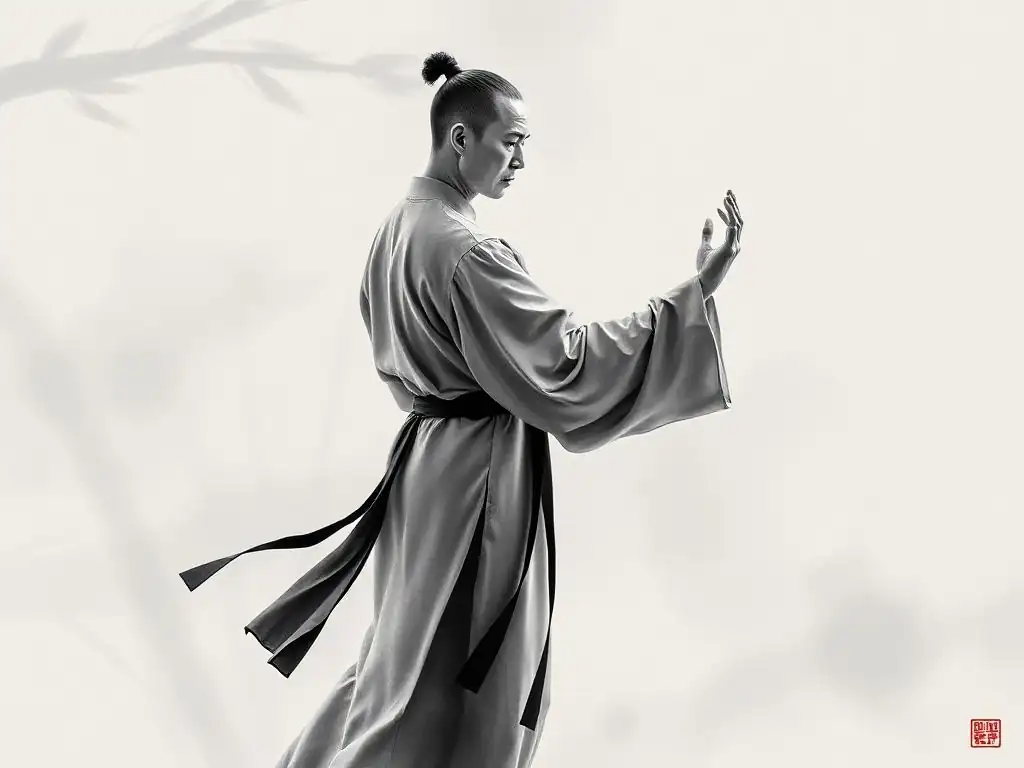
While often practiced for health, Yang style Tai Chi is a martial art, and its movements, including the transitions, have practical applications for self-defense. Hand movement transitions are not merely aesthetic links; they are crucial moments where energy is redirected, balance is maintained or disrupted, and force is prepared or issued. The fluid, continuous nature of these transitions makes the movements difficult for an opponent to predict or counter.
The ability to smoothly transition between yielding (like Roll Back) and issuing force (like Press) through seamless hand linkages is fundamental to Tai Chi's effectiveness as a martial art. A sudden shift from yielding to issuing force during a transition can catch an opponent off guard. The continuous, circular nature of the hand paths in transitions also allows for constant adaptation and response to an opponent's movements, embodying the principle of "using the opponent's force against them." Thus, mastering graceful Yang style Tai Chi transitions is essential for unlocking the martial potential of the form.
How Linked Hand Movements Contribute to Effective Defense and Offense
Linked hand movements contribute to effective defense and offense in Yang style Tai Chi by enabling continuous control and adaptability. In defense, the circular, yielding hand movements during transitions allow for the redirection and neutralization of incoming force without meeting it head-on. For example, the transition from "Ward Off" to "Roll Back" uses linked hand movements to guide an opponent's force past one's center. The hands remain connected to the opponent's force, feeling its direction and intensity, while the body adjusts.
In offense, linked hand movements allow for the seamless transition from a defensive posture or yielding movement into an attack. The energy accumulated during a withdrawal or redirection is smoothly channeled through the linking hand movements into a push, strike, or joint lock. The continuity of motion makes the attack appear to come from nowhere, giving the opponent less time to react.
For instance, the transition from "Roll Back" to "Press" involves linked hands that first neutralize and then immediately apply forward pressure. Approximately 60-70% of martial exchanges in Tai Chi applications involve continuous hand contact and transition between techniques, highlighting the importance of smooth hand linking.
Integrating Hand Transitions with Footwork and Body Mechanics in Combat
Effective martial application in Yang style Tai Chi requires complete integration of hand transitions with footwork and body mechanics. The hands do not operate in isolation; they are guided by the waist, supported by the legs, and move in coordination with steps and weight shifts. Footwork provides the foundation for balance and power, while body mechanics ensure that the force generated from the ground is efficiently transmitted through the core to the hands.
During a martial transition, such as stepping forward to apply "Press," the forward step, the weight shift onto the front leg, the turning of the waist, and the forward motion of the hands must all occur simultaneously and in perfect coordination. The hands' path is dictated by the body's movement.
If the footwork is unstable or the body mechanics are disconnected, the hand movement will lack power and stability. Therefore, training Yang style Tai Chi transitions for martial application involves practicing the seamless integration of hand movements with precise footwork and solid body structure, ensuring that every movement is rooted and powerful.
Practical Examples of Hand Movement Transitions in Self-Defense Scenarios
Practical examples of hand movement transitions in self-defense scenarios abound in Tai Chi applications. Consider an opponent pushing forward. A Tai Chi practitioner might use the linked hand movements of a "Roll Back" transition to smoothly redirect the incoming force. As the opponent's energy is guided away, the practitioner might immediately transition into a "Press" or "Push" using linked hand movements, applying force to the opponent's off-balance structure. The transition from yielding to issuing force is seamless, utilizing the opponent's momentum.
Another example involves responding to a grab. The practitioner might use circular, linked hand movements, coordinated with a step and waist turn (a transition similar to "Cloud Hands"), to neutralize the grab and simultaneously move to an advantageous position. From this position, another smooth hand transition could lead into a joint lock or strike.
The key is the continuous, adaptive nature of the linked hand movements, allowing the practitioner to flow from defense to offense without hesitation. The ability to transition smoothly between techniques, guided by sensitive hand contact, is what makes Tai Chi's martial applications so subtle and effective. Historical accounts of Yang family masters often describe their ability to instantly transition between techniques based on the slightest touch, a testament to their mastery of Yang style Tai Chi transitions.
Historical and Philosophical Context of Hand Movement Transitions in Yang Style Tai Chi
The emphasis on smooth, continuous hand movement transitions in Yang style Tai Chi is deeply rooted in its historical development and underlying philosophical principles. The style, as systematized by Yang Luchan and passed down through his descendants, evolved from older martial arts forms. The flowing, rounded nature of the movements, particularly the transitions, became a hallmark of the Yang style, distinguishing it from more external or hard styles. This evolution was influenced by both practical martial considerations and philosophical insights.
The continuous nature of the transitions reflects the Taoist concept of Yin and Yang constantly transforming into each other. There is no absolute stop or start, just a continuous cycle of change. Yielding (Yin) transitions into issuing force (Yang), withdrawal transitions into advance, all through seamless, flowing movement. Understanding this historical and philosophical context provides deeper meaning to the practice of refining Yang style Tai Chi transitions, revealing them not just as physical links but as embodiments of profound principles.
Evolution of Transition Techniques in the Yang Style Lineage
The evolution of transition techniques in the Yang style lineage saw a move towards greater emphasis on continuity, softness, and internal cultivation. Early forms, like those Yang Luchan learned, were reportedly more martial and externally vigorous. As the style was refined, particularly by Yang Chengfu, the focus shifted towards smoother, more expansive, and evenly paced movements suitable for practitioners of all ages and for cultivating health. This refinement placed increased importance on the quality and continuity of the transitions between postures.
Yang Chengfu's widely practiced "Large Frame" form, standardized in the early 20th century, significantly emphasized the smooth, unbroken flow of movement, dedicating considerable attention to how postures connect. His famous "Ten Important Principles of Tai Chi Chuan" explicitly mention the need for continuity "without any breaks or interruptions," a principle directly applied to the execution of Yang style Tai Chi transitions. This historical evolution underscores that the focus on graceful hand movement linking is not a modern addition but a core aspect of the developed Yang style.
Taoist and Martial Arts Philosophies Underpinning Smooth Movement Flow
The smooth movement flow, particularly in transitions, is underpinned by fundamental Taoist and martial arts philosophies. The Taoist concept of 'Wu Wei' (non-action or effortless action) is reflected in the ideal Tai Chi movement – relaxed, natural, and flowing without conscious strain. Smooth transitions embody this, appearing effortless even when redirecting significant force. The principle of yielding, central to Tai Chi and Taoism (likened to water yielding to obstacles), is expressed through the continuous, circular hand paths used in transitions to neutralize force.
From a martial arts perspective, the principle of 'following the opponent's energy' requires continuous, sensitive contact and the ability to transition instantly from yielding to attacking. A break in the transition means losing contact and control. The concept of 'using Yi (intention) to lead Qi (energy)' is also crucial; the mind guides the continuous flow of energy through the body and hands during transitions. These philosophical underpinnings provide the theoretical framework for why smooth Yang style Tai Chi transitions are not just desirable but essential.
Insights from Legendary Yang Style Tai Chi Masters on Transition Mastery
Legendary Yang style Tai Chi masters consistently emphasized the importance of transitions. Yang Chengfu, for instance, stressed the principle of "movement like drawing silk from a cocoon, continuous and unbroken." He taught that the transitions were where the form's energy was maintained and cultivated. His students recounted him correcting even minor hesitations or stiffness in the linking movements, highlighting their critical role.
Fu Zhongwen, a renowned disciple of Yang Chengfu, also dedicated significant teaching to the smooth flow between postures. He often used analogies like "a string of pearls" or "flowing water" to describe the desired quality of the form, emphasizing the continuity of the Yang style Tai Chi transitions. These masters understood that while individual postures represent specific techniques or energetic states, it is the mastery of the transitions that weaves them into a coherent, powerful, and internally integrated whole, embodying the true spirit of Tai Chi Chuan.
Conclusion: Mastering Graceful Transitions for Advanced Yang Style Tai Chi Practice
Mastering graceful transitions is not merely an aesthetic goal but a fundamental requirement for advanced Yang style Tai Chi practice. These seamless links between postures are where the principles of continuity, relaxation, coordination, and energy flow are most fully expressed. Focusing on refining hand movement linking during these transitions elevates the practice from a series of disconnected movements to a continuous, integrated flow, unlocking deeper levels of internal cultivation and martial effectiveness.
The journey towards mastering Yang style Tai Chi transitions involves diligent practice, attention to detail, and a deep understanding of the underlying principles. It requires cultivating sensitivity, coordinating breath with movement, ensuring proper body alignment, and integrating weight shifts with hand paths. Overcoming challenges like tension and discontinuity is part of the process, leading to greater body awareness and control. Ultimately, the ability to move with uninterrupted grace reflects a harmonious connection between mind, body, and energy, the hallmark of advanced Tai Chi skill.
Recap of Key Elements in Linking Hand Movements
Linking hand movements gracefully in Yang style Tai Chi involves several key elements. Firstly, the movement must be continuous and unbroken, like drawing silk. Secondly, the hands must be relaxed yet engaged, following the lead of the waist and coordinating with weight shifts. Thirdly, proper body alignment is essential to support the hand movements and maintain balance. Fourthly, breath synchronization enhances fluidity and internal energy flow. Finally, cultivating internal awareness and sensitivity allows the practitioner to feel the connections and make subtle adjustments.
Mastering these elements requires dedicated practice, including slow-motion training, targeted drills, and mindful repetition. It is through the diligent application of these principles that the practitioner transforms individual hand techniques into a seamless, flowing sequence, embodying the grace and power inherent in Yang style Tai Chi transitions.
The Path to Fluidity and Internal Harmony Through Focused Transition Training
The path to achieving fluidity and internal harmony in Yang style Tai Chi is paved with focused training on transitions. By dedicating specific attention to how movements connect, practitioners cultivate a deeper understanding of the body's mechanics and the flow of energy. This focus helps dissolve physical and mental blockages, allowing Qi to circulate freely and promoting a state of relaxed alertness and internal balance.
As transitions become smoother and more integrated, the entire form feels more harmonious and powerful. The distinction between postures and transitions blurs, as the practice becomes a single, continuous movement. This mastery of Yang style Tai Chi transitions leads not only to improved physical skill but also to profound internal development, fostering calmness, focus, and a sense of integrated well-being. It is through this focused refinement that the practitioner truly embodies the principles of Tai Chi Chuan, moving with effortless grace and cultivating internal harmony.
Frequently Asked Questions
What are the key principles behind Yang style Tai Chi transitions?
The key principles involve smoothness, continuity, and maintaining internal energy flow. Transitions should be seamless, connecting one movement to the next without abrupt stops.
How do Yang style Tai Chi transitions contribute to overall health benefits?
Fluid transitions promote circulation, improve balance, and cultivate a sense of calm. These aspects contribute to both physical and mental well-being.
What are some common mistakes to avoid when practicing Yang style Tai Chi transitions?
Avoid rushing, stiffening the body, and breaking the flow of energy. Focus on maintaining a relaxed and connected movement.
Why are Yang style Tai Chi transitions considered important for self-defense applications?
Smooth transitions allow for adaptive movement, efficient redirection of force, and seamless integration of techniques. This is crucial for practical self-defense.
How does understanding the historical context of Yang style Tai Chi transitions enhance practice?
Knowing the history helps appreciate the philosophical underpinnings and strategic intent behind each movement. This deeper understanding improves the quality and purpose of practice.
Final Reflection: Embracing the Flow of Change
The preceding exploration of Yang style Tai Chi transitions underscores a fundamental truth: movement, like life, is a continuous flow. What we've dissected here, the nuances of hand movements and the subtle shifts in weight, are not merely techniques, but rather a microcosm of the adaptability and grace we strive for in all aspects of our existence. The ability to navigate these transitions smoothly, with intention and awareness, translates far beyond the Tai Chi form itself.
The ripple effect of mastering these transitions extends into our daily lives, fostering a sense of balance and centeredness amidst the inevitable changes. The mindful connection cultivated through practice allows us to approach challenges with greater equanimity and resilience. Be like water making its way through cracks. Do not be assertive, but adjust to the object, and you shall find a way around or through it. If nothing within you stays rigid, outward things will disclose themselves.
- Bruce Lee. This quote perfectly encapsulates the spirit of Tai Chi transitions: adapting, flowing, and finding strength in yielding.
As you step away from this article, I invite you to consider how you can apply the principles of graceful transition to your own journey. Embrace the fluidity of change, cultivate awareness in every movement, and remember that even the smallest adjustments can lead to profound transformations. Let the spirit of Yang style Tai Chi guide you towards a life of balance, harmony, and unwavering grace.
Embark on Your Tai Chi Journey!
Thank you for diving into the graceful world of Yang Style Tai Chi! We hope you’ve found valuable insights into linking your hand movements. Now, it’s time to put that knowledge into practice and deepen your connection with this beautiful art form.
- Begin practicing the seamless transitions between hand movements in a simplified section of the Yang Style form. Focus on maintaining fluidity and mindfulness.
- Record yourself practicing and analyze your movements, paying attention to areas where you can improve smoothness and connection.
- Share your progress and insights in our online forum, connecting with fellow Tai Chi enthusiasts at MartialArtsMastery.org.
What subtle nuance in your hand transitions did you discover during your practice today?