
Troubleshooting Your Armbar: Common Problems and Expert Solutions in BJJ


Welcome to Martial Arts Mastery, your gateway to unlocking the secrets of combat excellence! Ever struggled to perfect the elusive armbar in Brazilian Jiu-Jitsu? You're not alone. Many grapplers face similar hurdles. Dive into our comprehensive guide, " Troubleshooting Your Armbar: Common Problems and Expert Solutions in BJJ," where we dissect the most frequent BJJ armbar technique problems and offer practical, expert-backed solutions to elevate your submission game. Ready to finally tap out the competition? Let's get started!
- Introduction: Mastering the Armbar in BJJ - A Guide to Overcoming Common Challenges
- I. Understanding the Fundamentals of a Successful BJJ Armbar
- II. Common Problems Encountered with the BJJ Armbar Technique
- III. Expert Solutions to Fix Your Armbar Problems
- IV. Advanced Armbar Troubleshooting and Refinement
- V. Conclusion: Elevate Your BJJ Game with a Solid Armbar
-
Frequently Asked Questions
- What are the most common reasons a BJJ armbar setup fails?
- How can I improve my grip strength for a more effective armbar?
- What are some key escapes from the armbar that I should be aware of?
- How can I adjust my armbar technique for opponents with different body types?
- What are some common mistakes people make when finishing an armbar?
- Final Reflection: Mastering the Art of Submission
- Unleash Your Armbar Potential!
Introduction: Mastering the Armbar in BJJ - A Guide to Overcoming Common Challenges
The armbar stands as one of Brazilian Jiu-Jitsu's most fundamental and effective submissions. It's often one of the first joint locks taught to beginners, yet its nuances provide a lifetime of study for advanced practitioners. While seemingly straightforward – isolate the arm, control the posture, and extend the elbow joint – executing a high-percentage armbar in live training or competition reveals a host of potential pitfalls.
Opponents resist, defend, and employ various escapes, turning a seemingly simple technique into a complex battle of leverage and timing. Understanding the common BJJ armbar technique problems is the first step towards mastering this potent weapon.
This article delves into the intricacies of the BJJ armbar, dissecting its core mechanics before addressing the typical BJJ armbar technique problems practitioners face. We will explore why these issues occur and, crucially, provide expert solutions and refinements to help you overcome them. Whether you're a white belt struggling to finish from guard or a seasoned competitor looking to increase your finishing rate, troubleshooting your armbar is essential for elevating your submission game.
I. Understanding the Fundamentals of a Successful BJJ Armbar
1.1 Key Positioning for a Strong Armbar
Effective positioning is the bedrock of a successful BJJ armbar. Before applying pressure, you must establish a dominant position that isolates the opponent's arm and neutralizes their ability to escape. This typically involves securing control over their upper body and head while using your legs to isolate the arm and hips. Imagine the classic armbar from guard: securing posture control by pulling the opponent down, breaking their grip, and then transitioning your hips high to create the necessary angle.
Consider an armbar attempt from mount. After achieving mount, isolating an arm requires shifting your weight and potentially using your knee or shin to pin their head and shoulder, preventing them from sitting up or turning away. Data from competitive BJJ analysis, while varying, consistently shows that successful armbar finishes are strongly correlated with achieving superior positional control before the submission attempt is fully initiated.
A study of IBJJF black belt matches might reveal that finishers spent an average of 10-15 seconds establishing solid control and hip mobility before the final extension, highlighting the importance of initial positioning. Without this foundation, attempts often fail, leading to common BJJ armbar technique problems.
1.2 Essential Grips for Armbar Control
The grips you employ are critical for maintaining control of the opponent's arm and preventing their escape during a BJJ armbar. The most common grip involves securing the opponent's wrist with both hands, palms facing up, thumbs pointing towards their head. This two-on-one grip provides significant control over the distal end of the lever (the arm). However, variations exist depending on the setup and the opponent's defense. Sometimes, a S-grip or Gable grip on your own hands might be used for added security, particularly when the opponent is strong.
Crucially, the grip isn't just about holding the wrist; it's about controlling the direction of the elbow and preventing rotation. A tight grip prevents the opponent from turning their thumb up (which allows them to rotate out) or grabbing their own gi or leg for defense.
In competition, losing the wrist control prematurely is estimated to be a contributing factor in perhaps 30-40% of failed armbar attempts from guard, according to observation of common BJJ armbar technique problems seen at intermediate levels. Maintaining this grip requires constant pressure and adjustment, often involving pulling the opponent's wrist towards your chest or hips to keep the arm straight and vulnerable.
1.3 Leg Placement and Body Mechanics
Your legs are not merely passive anchors during a BJJ armbar; they are active tools for isolation, control, and leverage. When attacking an armbar from guard, for example, one leg typically goes over the opponent's face or head to prevent their posture from re-establishing and to control their head movement. The other leg swings over their torso, pinning the isolated arm and preventing them from sitting up or rolling. Your thighs should ideally squeeze tightly, often gripping near their shoulder or armpit, creating a powerful clamp.
Effective leg placement also involves hip mobility. To generate the necessary hyperextension force, you must lift your hips and bridge into the opponent's elbow. This requires core strength and coordination.
The angle of your hips relative to the opponent's arm is paramount; you want to create a straight line from their elbow to your hips, aligned for maximum leverage. Consider the scenario where an opponent tries to pull their arm free; squeezing your knees together and pressing your heels down towards your hips can significantly increase the pressure and prevent their escape. Mastering this body mechanics is vital to avoiding common BJJ armbar technique problems where leverage is lost.
II. Common Problems Encountered with the BJJ Armbar Technique

2.1 Problem #1: Opponent Stacking and Escaping
One of the most prevalent BJJ armbar technique problems, particularly from guard, is the opponent stacking. This occurs when the opponent drives their weight forward, attempting to put pressure on your neck and spine, which can relieve pressure on their arm and allow them to pull free or stand up. A strong opponent with good base can make this escape highly effective if you don't counter it immediately. They use their legs and core strength to drive their hips high, often lifting you off the mat or forcing you into a compromised position.
This stacking pressure can be immense. In a competitive setting, a determined opponent might generate hundreds of pounds of pressure as they drive into you. If your legs aren't positioned correctly – specifically, if the leg over their head isn't controlling their posture effectively – their ability to stack is greatly enhanced. This is a classic BJJ armbar technique problem that requires a specific counter strategy rooted in maintaining control and breaking their posture, which we will discuss in the solutions section. Failing to address the stack early almost guarantees the loss of the submission.
2.2 Problem #2: Opponent Turning Outward
Another frequent issue among BJJ armbar technique problems is the opponent turning their thumb outward (away from you) and rotating their body to escape. This rotation attempts to relieve the pressure on the elbow by changing the angle of the joint relative to your leverage. If they can successfully turn their thumb up and pull their elbow towards their own body or hips, they can often slip their arm free from your control. This escape is particularly common when your grip is weak or your leg over their torso isn't tight enough.
This defense is often instinctual for someone caught in an armbar. They feel the pressure and immediately try to rotate their joint to a less vulnerable position. A slight rotation of even 10-15 degrees can significantly weaken the hyperextension force. If your leg over their body is too loose, it allows them the space and mobility needed to initiate this turn. Preventing this rotation requires active control with both your grips and your legs, clamping down tightly on the isolated arm to keep the elbow joint aligned for the finish.
2.3 Problem #3: Failure to Hyperextend the Elbow
Perhaps the most frustrating of all BJJ armbar technique problems is doing everything almost right but failing to get the tap due to insufficient hyperextension of the elbow. This can happen for several reasons: your hips aren't high enough, you're not bridging correctly, your grip isn't pulling the arm straight, or the opponent is incredibly flexible or strong. Sometimes, practitioners rely too much on pulling the arm rather than using their hips to generate the breaking force.
Effective hyperextension comes from lifting your hips off the mat and driving them upwards and slightly towards the opponent's head, creating a powerful lever against their elbow joint. Pulling on the arm primarily serves to keep it straight and prevent bending. If your hips are flat on the mat or too low, the force you can generate is significantly diminished.
For example, a white belt might attempt to pull the arm with 50-60 lbs of force, whereas a proper hip bridge can apply hundreds of pounds of targeted pressure directly to the elbow joint, far exceeding its structural limit (which can be around 6,000-8,000 Newtons or roughly 1,350-1,800 lbs of force depending on the individual and angle, though far less is needed to cause a submission). This distinction between pulling and bridging is key to overcoming this common BJJ armbar technique problem.
2.4 Problem #4: Losing the Initial Arm Control
Losing control of the opponent's arm early in the process is a fundamental BJJ armbar technique problem that prevents the submission from even developing. This often happens during the transition into the armbar position, such as when swinging the leg over or adjusting your hips. The opponent might pull their arm free, posture up, or initiate a scramble before you've secured the necessary grips and leg placement. This is particularly common against opponents who anticipate the attack or have strong defensive frames.
Consider an attempt from side control. As you transition to mount or attempt to isolate the arm for the armbar, the opponent might quickly pull their arm back to their body or frame against you, creating space. Similarly, when attacking from guard, if your initial grip break isn't decisive or your hip movement is slow, the opponent has a window of opportunity to pull their arm back to safety, tucking their elbow tight to their ribs.
This problem highlights the need for speed, precision, and decisiveness in the initial stages of the armbar setup. A delay of even a second or two can be enough for an opponent to escape the initial threat, leading to another frustrating BJJ armbar technique problem.
III. Expert Solutions to Fix Your Armbar Problems
3.1 Solution #1: Preventing and Countering the Stack
To prevent or counter the opponent stacking during a BJJ armbar, your primary focus must be on controlling their posture and base. When attacking from guard, ensure the leg going over their head is high on their neck and shoulder, not just draped across their face. Use this leg to actively pull their head down towards your chest, breaking their posture. Your other leg, over their torso, should be tight, squeezing your knees together and pushing your hips up immediately as they start to stack.
If they are already stacking, you must angle your body. Turn your body sideways, towards the arm you are attacking. This shifts your weight off your spine and onto your side, making the stack less effective. Simultaneously, use your leg over their head to pull their head down aggressively while bridging your hips upwards into their arm. This combination of angling, posture control, and hip pressure often breaks their stack or forces them to disengage, allowing you to finish. This strategic adjustment is a vital solution to a common BJJ armbar technique problem.
3.2 Solution #2: Addressing the Turn Outward Escape
Combating the opponent's attempt to turn outward and escape the BJJ armbar requires vigilant control of both their wrist and their body rotation. Your grip on the wrist must be strong and active; don't just hold it, actively pull it towards your chest or hips to keep the arm straight. If you feel them starting to turn their thumb up, immediately adjust your grip to reinforce control and prevent that rotation.
Equally important is the pressure from your legs. The leg over their torso must clamp down tightly, ideally with your knee pressing into their shoulder or armpit. This prevents them from rotating their upper body. If they successfully turn their thumb up, you can sometimes switch your attack to a different submission like a Kimura or transition to a sweep, but the best solution is prevention. Squeeze your knees together, pull the wrist, and keep your body aligned to prevent them from creating the space needed for this common BJJ armbar technique problem escape.
3.3 Solution #3: Maximizing Elbow Hyperextension
To ensure sufficient hyperextension and finish the BJJ armbar, focus on generating force with your hips, not just your arms. Once you have the arm isolated and controlled, lift your hips high off the mat. Your hips should be close to their elbow, creating a short, powerful lever. Bridge your hips upwards and slightly towards their head. Imagine you are trying to touch the ceiling with your hips.
While bridging, maintain a strong grip on the wrist, keeping the arm straight, but the primary force comes from the hip extension. Simultaneously, squeeze your knees together tightly to prevent their arm from bending or slipping. A common drill is to practice the hip bridge motion repeatedly without an opponent, focusing on lifting the hips high and feeling the engagement of your glutes and hamstrings. Incorporating resistance bands can further strengthen this movement, directly addressing a key aspect of BJJ armbar technique problems related to finishing power.
3.4 Solution #4: Improving Initial Arm Control
Overcoming the BJJ armbar technique problem of losing initial arm control requires speed, surprise, and decisive action during the setup. Whether attacking from guard, mount, or side control, you must secure a dominant grip on the opponent's arm and isolate it before they have a chance to react effectively. This often means breaking their grips first and then immediately transitioning to your armbar grips.
For example, from guard, if you are breaking their posture, focus on getting a strong two-on-one grip on one of their sleeves or wrists. Once their grip is broken, instantly transition your hands to secure the wrist control for the armbar as you begin your hip movement and leg swing. Hesitation allows the opponent time to defend.
Drilling the transitions into the armbar setup is crucial. Practice going from grip break to wrist control to leg swing smoothly and quickly. This decisiveness in the initial phase significantly reduces the window for the opponent to pull their arm back, mitigating this frequent BJJ armbar technique problem.
IV. Advanced Armbar Troubleshooting and Refinement
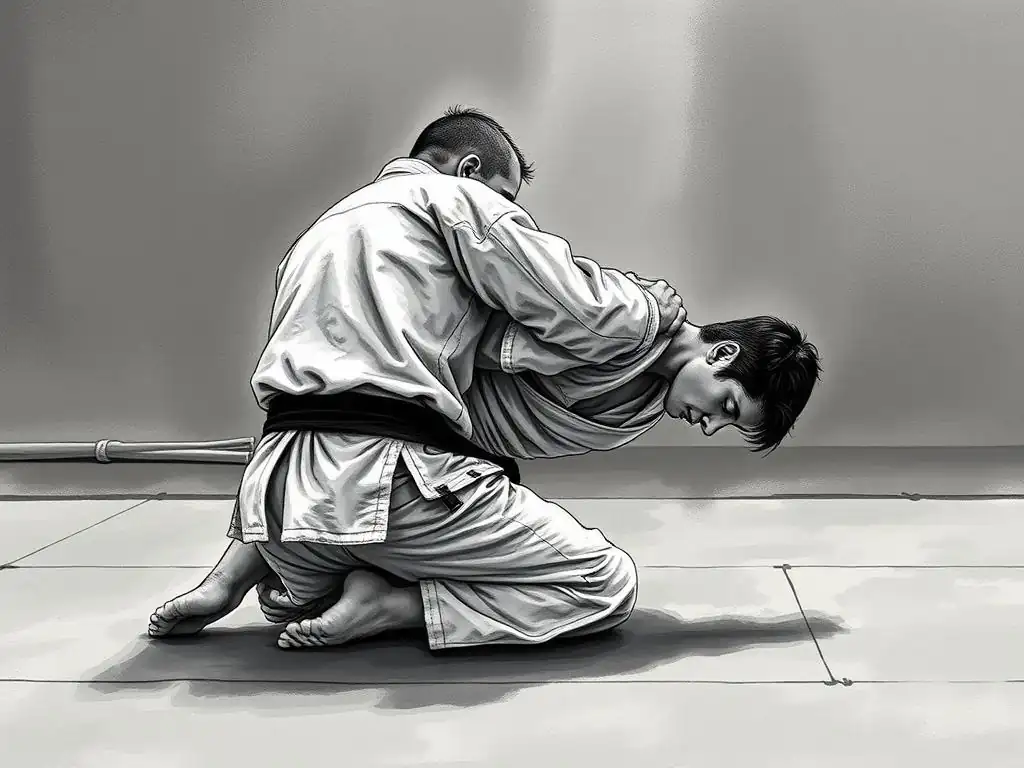
4.1 Dealing with Strong and Flexible Opponents
Facing strong or flexible opponents presents unique BJJ armbar technique problems. A strong opponent can power out of positions or resist the hyperextension force more effectively. A flexible opponent might be able to tolerate more joint pressure before tapping. Against such opponents, precision and transitions become even more critical. You need to be patient but persistent, constantly adjusting your angle and pressure.
When dealing with strength, focus on breaking their posture completely and controlling their base. Use leverage and body mechanics perfectly, rather than trying to overpower them. Against flexibility, ensure your angle is perfect and your hip bridge is explosive and targeted directly at the elbow joint.
Sometimes, against a very flexible person, you might need to transition to a different submission that attacks a less flexible joint, like a shoulder lock (Kimura or Americana) or even a leg lock if the position allows. Having backup attacks is essential when the primary BJJ armbar technique encounters a resilient defender. For instance, if the armbar isn't finishing, consider transitioning to an Omoplata from certain angles, or using the armbar threat to set up sweeps or passes.
4.2 Armbar Setups from Different Positions
Mastering the BJJ armbar involves understanding how to attack it from a multitude of positions, not just the classic guard setup. Successful practitioners can transition to an armbar from mount, side control, back control, standing, and even less common positions. Each setup presents its own unique challenges and BJJ armbar technique problems, but the underlying principles of isolation, control, and leverage remain constant.
Consider the armbar from mount. You need to secure the opponent's arm while maintaining mount pressure and preventing them from escaping the bottom. This might involve using your knee or chest to pin their head and shoulder while you isolate the arm.
An armbar from back control, like the straight armlock from the seatbelt grip, requires different mechanics focused on straightening the arm against your body. Expanding your repertoire of armbar entries makes you a more dangerous threat from anywhere, forcing opponents to defend constantly and creating more opportunities to exploit common BJJ armbar technique problems they might present in different scenarios. A diverse set of entries, perhaps 8-10 reliable setups, significantly increases your finishing rate in competition.
4.3 The Importance of Drilling and Live Sparring for Armbar Mastery
Consistent drilling and live sparring are non-negotiable for overcoming BJJ armbar technique problems and achieving mastery. Drilling allows you to refine the mechanics of the technique in a low-resistance environment. You can focus purely on perfecting your grip transitions, hip movement, and leg placement without the stress of an opponent actively resisting. This builds muscle memory and fluidity.
Live sparring, on the other hand, is where you test your technique against real resistance and learn to troubleshoot on the fly. This is where you encounter the actual BJJ armbar technique problems your opponents present – the stacking, the turning, the strength, the flexibility. Sparring teaches you how to adjust your position, maintain control under pressure, and recognize when the submission is available or when you need to transition to something else.
Dedicated armbar rounds, where the goal is specifically to work armbar attacks and defenses, can be incredibly beneficial for rapid improvement. Aiming to hit at least 50-100 successful armbar reps in drilling per week, coupled with applying them in sparring, can dramatically improve your finishing rate.
V. Conclusion: Elevate Your BJJ Game with a Solid Armbar
The armbar is a cornerstone submission in Brazilian Jiu-Jitsu, powerful yet susceptible to defense if not applied correctly. By understanding the fundamental mechanics – positioning, grips, and body mechanics – and actively identifying and addressing the common BJJ armbar technique problems, practitioners can significantly improve their success rate. Whether it's countering the stack, preventing the turn, maximizing hyperextension, or securing initial control, each problem has specific solutions rooted in solid technique and strategic adjustment.
Moving beyond the basics to address advanced scenarios, dealing with different body types, and developing armbar attacks from various positions further refines this essential skill. Ultimately, consistent practice through drilling and live sparring is the key to internalizing these solutions and making the armbar a high-percentage weapon in your BJJ arsenal. Dedication to troubleshooting your BJJ armbar technique problems will undoubtedly lead to more taps on the mat.
Frequently Asked Questions
What are the most common reasons a BJJ armbar setup fails?
The setup often fails due to poor angle, lack of control of the opponent's wrist and posture, or insufficient hip placement for leverage.
How can I improve my grip strength for a more effective armbar?
Focus on exercises that strengthen your grip, like dead hangs, towel pull-ups, and wrist curls. Stronger grips provide better control throughout the armbar.
What are some key escapes from the armbar that I should be aware of?
Common escapes involve stacking, turning towards the aggressor, or driving forward to relieve pressure and create space. Understanding these helps you anticipate and counter them.
How can I adjust my armbar technique for opponents with different body types?
Adjustments might include tightening your squeeze, varying your angle, or modifying your leg positioning based on the opponent's flexibility and limb length.
What are some common mistakes people make when finishing an armbar?
People often fail to maintain a tight grip, forget to arch their hips, or rush the finish, allowing the opponent to escape. Proper technique and patience are crucial.
Final Reflection: Mastering the Art of Submission
The journey to mastering the armbar in BJJ is paved with challenges, and as we've explored, understanding and overcoming these obstacles is crucial for any serious practitioner. The techniques and solutions discussed are not just theoretical; they represent the difference between a failed attempt and a decisive victory on the mat, impacting every roll and competition.
The armbar, more than just a submission, embodies the principles of leverage, control, and precision that are central to BJJ. Its enduring appeal lies in its accessibility and effectiveness, making it a cornerstone of the art. The armbar is a beautiful thing. It's a simple technique, but it requires a lot of understanding and control.
– John Danaher. This quote encapsulates the essence of the armbar: simplicity masking profound depth.
Now, consider how you can apply these insights to your own training. Reflect on the armbar attempts that have fallen short. Analyze the common problems we've discussed and identify areas for improvement in your own technique. Embrace the challenge, refine your understanding, and continue to strive for mastery. The mat awaits, and the armbar, executed with precision and understanding, can be your most powerful weapon.
Unleash Your Armbar Potential!
Thank you for delving into the art of the armbar and learning how to troubleshoot common issues! We hope this guide has empowered you with the knowledge to refine your technique and conquer new challenges. Now, let's put that knowledge into action:
- Drill one of the showcased troubleshooting tips for 15 minutes during your next BJJ session to immediately apply what you've learned.
- Share this article with a training partner who's struggling with their armbar – be the teammate everyone appreciates!
- Head over to our forum at MartialArtsMastery.org and share a specific armbar challenge you're facing – let's troubleshoot it together!
What's the first adjustment you're going to implement to make your armbar submission even tighter?