
Guard Passing Strategies: Contrasting Approaches in Gi and NoGi BJJ

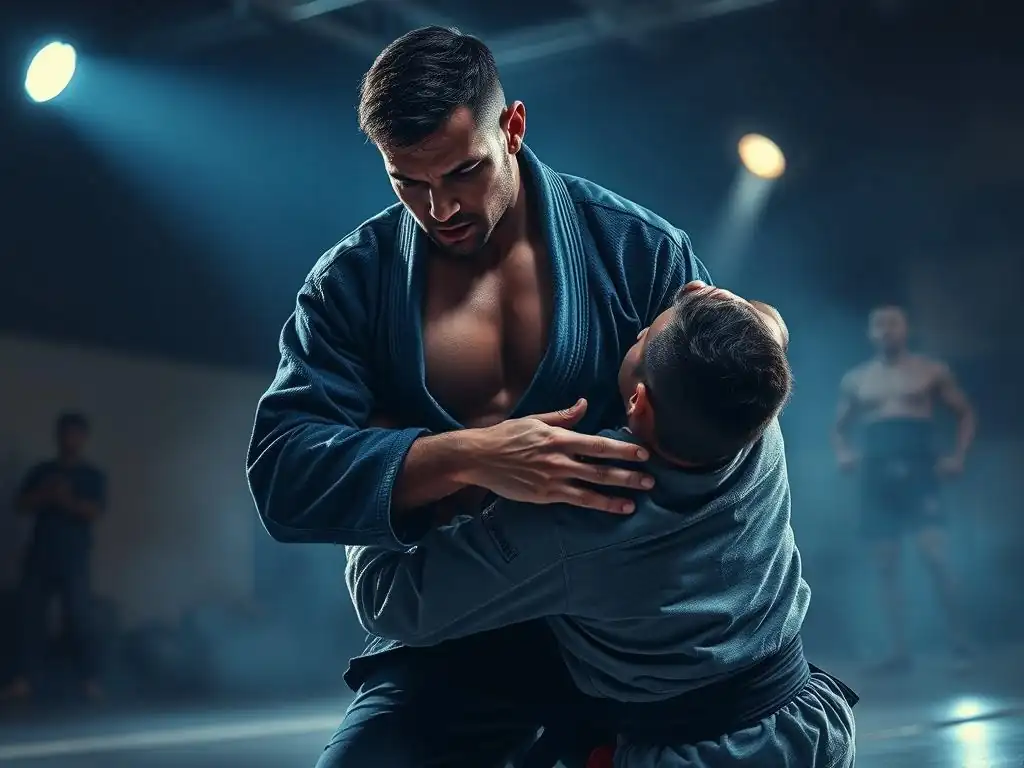
Welcome to Martial Arts Mastery, your ultimate resource for exploring the rich tapestry of martial arts!
Ever wondered how the grip-focused world of Gi Brazilian Jiu-Jitsu fundamentally alters guard passing compared to its slippery, NoGi counterpart? Dive deep into our featured article, " Guard Passing Strategies: Contrasting Approaches in Gi and NoGi BJJ," and unlock the secrets to dominating the guard in both disciplines. Prepare to sharpen your skills and refine your understanding of this critical aspect of grappling. Let's explore the differences and intricacies together... and discover which approach best suits your game.
- Introduction to BJJ Guard Passing: Gi vs. NoGi
- Gi Guard Passing Techniques: Leveraging Grips and Control
- NoGi Guard Passing Techniques: Prioritizing Pressure and Movement
- Comparing and Contrasting Gi and NoGi Guard Passing
- Drills and Training Methods for Guard Passing in BJJ
- Advanced Guard Passing Concepts
- Developing Your BJJ Guard Passing Game: A Personalized Approach
-
Frequently Asked Questions
- What are the fundamental differences in guard passing strategies between Gi and NoGi Brazilian Jiu-Jitsu (BJJ)?
- How does the presence of the Gi affect common guard passing techniques?
- What adjustments need to be made to Gi passing techniques when transitioning to NoGi BJJ?
- Are there specific NoGi guard passing techniques that are less effective in Gi?
- What are some key considerations for developing a well-rounded guard passing game in both Gi and NoGi BJJ?
- Final Reflection: Bridging the Gi and NoGi Divide
- Master the Pass: Ignite Your BJJ Game!
Introduction to BJJ Guard Passing: Gi vs. NoGi
The Importance of Effective Guard Passing in Brazilian Jiu-Jitsu
Effective guard passing is arguably one of the most critical skills in Brazilian Jiu-Jitsu. A practitioner's ability to navigate past an opponent's legs and establish a dominant top position, such as side control, mount, or back control, is fundamental to controlling the flow of a match and ultimately securing submissions or scoring points. Without strong guard passing skills, even the most potent top-game player will struggle to apply their techniques against a skilled guard player.
Mastering BJJ guard passing gi noGi is essential for competitive success and practical self-defense. In competition, passing the guard typically scores points (often 3 points in IBJJF rules), shifting the momentum and scoreboard significantly. Furthermore, maintaining a dominant top position after passing the guard makes it substantially harder for the opponent to attack effectively and easier for the top player to apply pressure, wear them down, and set up finishing sequences.
Key Differences Influencing Guard Passing: Gi vs. NoGi
The presence or absence of the Gi fundamentally alters the dynamics of guard passing in BJJ. The Gi provides a wealth of gripping opportunities – on the collar, sleeves, and pants – which significantly impact control, posture breaking, and leverage. These grips allow the passer to anchor themselves, restrict the guard player's movement more effectively, and apply specific types of pressure that are simply not possible in NoGi.
Conversely, NoGi relies heavily on body-to-body contact, hand fighting, and wrestling-based controls like underhooks, overhooks, and body locks. The lack of fabric means guard passing becomes faster, more fluid, and often more scrambly. Passers must rely on speed, pressure, and superior positioning rather than fixed grips. Understanding these distinctions is crucial for developing a versatile BJJ guard passing gi noGi game.
Gi Guard Passing Techniques: Leveraging Grips and Control
Understanding Gi Grips for Guard Passing
Gi grips are the cornerstone of effective guard passing when wearing the kimono. They provide points of attachment that allow the passer to dictate distance, control limbs, break posture, and initiate movement. Developing strong, strategic Gi grips is often the first step in a successful Gi guard pass.
Mastery of grip fighting is paramount. Learning to establish dominant grips while preventing the opponent from doing the same is a constant battle in Gi BJJ. A well-timed grip break or a powerful grip on a sleeve or collar can instantly change the advantage in a guard passing scenario, setting the stage for a successful pass.
Collar Grips for Control and Passing
Collar grips offer powerful control over an opponent's upper body, impacting their posture and ability to sit up or create space. A strong cross-collar grip can pull an opponent's chest down, making it difficult for them to establish an effective open guard or sit-up guard. This grip is often used in conjunction with leg controls to execute passes like the Knee Slice or the X-Pass.
Furthermore, collar grips can be used to create angles and off-balance the opponent. For instance, gripping the far collar while controlling a leg can help turn their hips away, opening up passing lanes. Many successful Gi passers utilize deep collar grips to staple the opponent's upper body, limiting their mobility and setting up passes that rely on isolating the lower body.
Sleeve Grips for Breaking Posture
Sleeve grips are invaluable for controlling an opponent's arms, which are their primary tools for gripping, framing, and maintaining distance. By controlling one or both sleeves, the passer can prevent the guard player from establishing grips on their Gi, disrupting their guard structure. A common tactic is to secure sleeve grips to break the opponent's posture when they attempt a closed guard or sit-up guard.
Controlling the sleeves also allows the passer to manipulate the opponent's balance. By pulling or pushing the sleeves, the passer can off-balance the opponent, creating opportunities to step around their legs or initiate passes that require the guard player to react with their hands, often leading to openings.
Pant Grips for Leg Control and Passing
Pant grips are essential for controlling an opponent's legs, which are the core of their guard. Gripping the pants, particularly near the knees or ankles, allows the passer to pin the legs, control their movement, and prevent them from following the passer's movements. These grips are fundamental to passes like the Toreando, Leg Drag, and Stack Pass.
Using pant grips, the passer can effectively 'staple' the opponent's legs to the mat or to their own body, neutralizing their ability to use their hooks or frames. For example, gripping both pants near the knees and driving forward is the basis of a powerful Stack Pass, aiming to compress the opponent's guard. These grips provide the necessary leverage to fight against dynamic leg movements.
Common Gi Guard Passing Strategies
Gi BJJ guard passing strategies often revolve around using grips to control the opponent's structure and movement, creating opportunities to advance position. The fabric provides the friction and attachment points needed for systematic, step-by-step passing sequences.
Many Gi passes involve breaking down the opponent's guard layer by layer, first addressing grips and posture, then neutralizing the legs, and finally moving to a dominant side. This structured approach is heavily enabled by the persistent control offered by Gi grips.
Knee Slice Pass in the Gi
The Knee Slice pass is a staple in Gi BJJ guard passing. It involves driving one knee through the opponent's open guard, aiming to slide it between their legs and chest. Gi grips, typically on the collar and pants or sleeve, are crucial for controlling the opponent's posture and preventing their hips from escaping effectively.
A key detail in the Gi Knee Slice is using the grips to pull the opponent's upper body towards the passing knee while driving the knee through. This creates immense pressure and limits the guard player's ability to frame or create space. Successfully executed, it often leads directly to side control or modified mount.
Torreando Pass (Bull Pass) in the Gi
The Torreando, or Bull Pass, is another fundamental Gi pass, particularly effective against open guards. It relies on using strong pant grips (or sometimes ankle grips) to control the opponent's legs and rapidly moving from side to side to bypass them. The Gi pants offer the necessary friction and control points for this dynamic pass.
The passer grips both pants near the knees and uses quick lateral steps, often faking one direction before passing to the other. The grips allow the passer to lift, push, or pull the opponent's legs out of the way, preventing them from reconnecting their guard. This pass emphasizes speed and agility facilitated by secure Gi grips.
Leg Drag Pass in the Gi
The Leg Drag pass is a highly effective pass in Gi BJJ, often initiated from open guard scenarios. It involves isolating one of the opponent's legs and dragging it across their body, pinning it to the mat or the passer's hip while controlling their upper body, often with a cross-collar grip. Pant or ankle grips are vital for controlling the isolated leg.
The Gi fabric aids significantly in securing and maintaining control of the dragged leg. Once the leg is pinned, the passer uses upper body control (via collar or shoulder pressure) to prevent the opponent from turning in or recovering their guard. This pass is known for its effectiveness in immediately establishing a dominant position, frequently leading to side control or even the back.
Adapting Gi Guard Passing for Different Guard Types
Successful BJJ guard passing gi noGi requires adapting techniques to counter the specific structure and attacks presented by different guard types. What works against a closed guard is ineffective against a modern open guard like the Lasso or Spider guard, which heavily utilize Gi grips.
Understanding the mechanics and typical attacks of each guard type allows the passer to choose the most appropriate grips and passing strategy. For instance, passing a De La Riva guard requires specific grips to neutralize the DLR hook and control the free leg.
Passing the Open Guard in the Gi
Passing the open guard in the Gi is a complex dance of grip fighting, posture, and movement. Open guards like Spider, Lasso, De La Riva, and Reverse De La Riva heavily rely on Gi grips to control distance and off-balance the passer. The passer must first contend with these grips, often needing to break them before initiating a pass.
Strategies for passing the open guard in the Gi include pressure passing (e.g., Half Guard passing into a knee slice), dynamic passing (e.g., Toreando, Leg Drag), or combinations. The choice often depends on the opponent's specific open guard variation and the grips they are using. For example, against a strong Spider guard, breaking sleeve grips is paramount before attempting to pass.
Passing the Closed Guard in the Gi
The Closed Guard is a fundamental position in Gi BJJ, where the guard player locks their legs around the passer's waist. Passing the closed guard in the Gi typically involves a structured process: first, establishing posture, then breaking the guard, and finally initiating a pass. Gi grips are critical throughout this sequence.
Common strategies include standing up to break the guard with grips on the sleeves and belt, or maintaining a kneeling posture while using grips (e.g., two on one sleeve, or lapel grips) to break the leg lock. Once the guard is open, the passer transitions immediately into a passing attempt, such as a Knee Slice, Stack Pass, or combat base pass.
Passing the Butterfly Guard in the Gi
The Butterfly Guard involves the guard player using their hooks inside the passer's thighs, often from a seated position. Passing the Butterfly Guard in the Gi involves neutralizing these hooks and controlling the opponent's upper body to prevent sweeps. Gi grips on the sleeves, collar, or lapels are essential for controlling posture and limiting the opponent's ability to elevate or sweep.
Strategies include using pressure to flatten the opponent's hooks (e.g., a heavy sit pass), controlling the upper body with grips to prevent sweeps while circling to the side (e.g., an over-under pass setup), or using specific grips to lift and clear the hooks before passing. For example, gripping both sleeves can prevent the opponent from using arm drags or elevating for sweeps, allowing the passer to establish upper body control and initiate a pass.
NoGi Guard Passing Techniques: Prioritizing Pressure and Movement
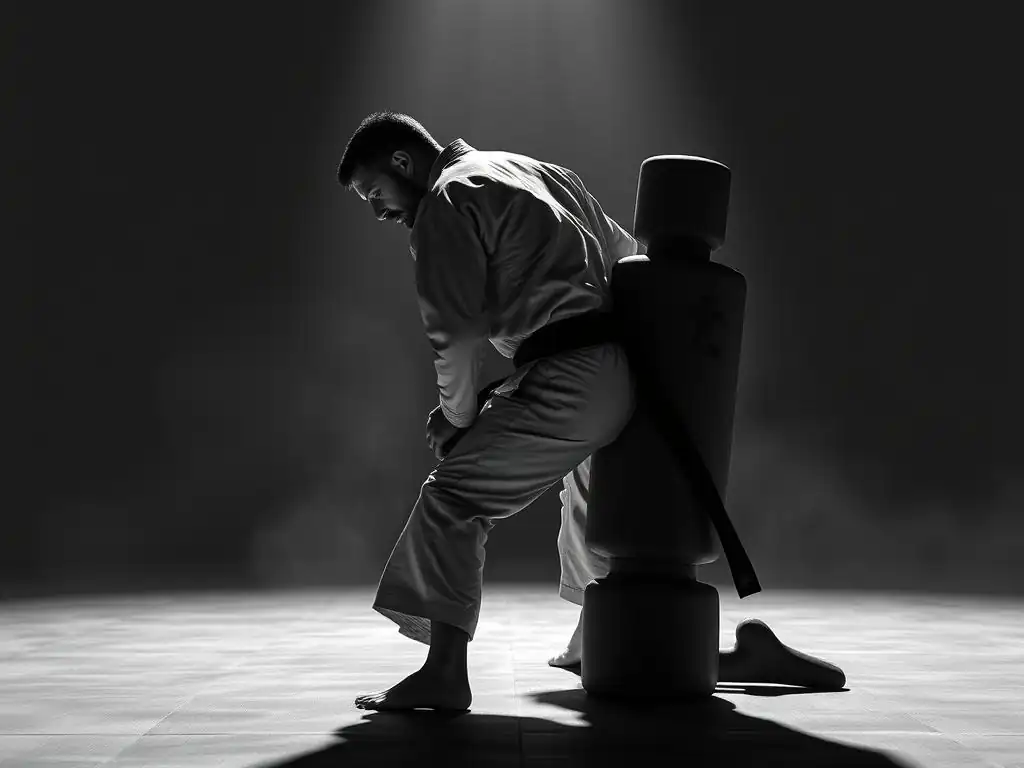
NoGi Grips and Control Considerations
Without the Gi, grip fighting and control change dramatically in NoGi BJJ guard passing. There are no collars, sleeves, or pants to grab onto. Control relies on securing 'skin-to-skin' or 'limb-to-limb' connections, utilizing natural handles like wrists, necks, ankles, and body structures.
This shift necessitates a greater reliance on hand fighting, body mechanics, weight distribution, and wrestling-based controls. The passing game becomes faster and more dependent on timing, speed, and applying relentless pressure.
Hand Fighting and Wrist Control in NoGi
Hand fighting is paramount in NoGi guard passing. The initial battle often revolves around controlling the opponent's hands and wrists to prevent them from establishing frames, grips on the passer's body, or initiating leg entanglement entries. Winning the hand fight is often the prerequisite for initiating a pass.
Controlling the opponent's wrists or hands allows the passer to dictate their arm movements, limiting their ability to defend or attack. This control is less secure than Gi grips but is mobile and can be used to transition into more dominant controls like underhooks or overhooks.
Overhooks and Underhooks for Passing
Overhooks (controlling the opponent's armpit from over their shoulder) and Underhooks (controlling the opponent's armpit from under their shoulder) are fundamental wrestling controls that translate directly to NoGi guard passing. These controls allow the passer to secure the upper body, apply pressure, and limit the opponent's mobility.
An underhook provides powerful control over the opponent's shoulder and torso, allowing the passer to drive into them and prevent them from turning away. An overhook can be used to pull the opponent towards the passer, disrupt their posture, or set up submissions, though it offers less passing control than an underhook in many scenarios. Combining these controls with leg control is key to many NoGi passes.
Body Locks and Pressure Passing in NoGi
Body locks involve wrapping the arms around the opponent's torso, either over or under their arms. This is a powerful NoGi control that allows the passer to compress the opponent's body, limit their hip movement, and apply crushing pressure, forming the basis of many pressure passing systems.
Pressure passing in NoGi relies on using body weight and structure to flatten the opponent and negate their guard. Techniques like the Double Under Pass or Over-Under Pass utilize body locks or similar torso controls to drive forward and pin the opponent's hips and legs, grinding through the guard rather than going around it dynamically. This approach requires good physical conditioning and understanding of weight distribution.
Common NoGi Guard Passing Strategies
NoGi BJJ guard passing strategies prioritize speed, pressure, and seizing opportunities as they arise due to the fluid nature of exchanges without the Gi. Passes often involve powerful drives, quick transitions, and maintaining tight body contact.
The passing game is less about breaking established, fixed grips and more about navigating frames, clearing legs through movement and pressure, and securing dominant body positions like underhooks or body locks.
Knee Cut Pass in NoGi
The Knee Cut pass in NoGi shares principles with its Gi counterpart but is executed without the aid of fabric grips. It relies on using hand fighting to control the opponent's arms/wrists, driving the knee through, and using upper body pressure (often with an underhook or crossface) to staple the opponent down.
Because there are no pant grips, the passer must rely on speed, hip pressure, and potentially gripping the opponent's far hip or belt line (if they are wearing a rashguard with one) to keep their legs from following. The finish often involves a strong crossface and chest-to-chest pressure to consolidate side control.
Double Under Pass in NoGi
The Double Under Pass is a classic pressure pass in NoGi, often initiated from open guard or standing. It involves securing underhooks on both of the opponent's legs, wrapping the arms around their thighs, and driving forward with powerful hip pressure, aiming to lift and pass their legs by driving them towards their head.
This pass is highly effective against many open guards and requires significant physical strength and endurance to maintain the forward drive and pressure. It bypasses leg entanglements by simply driving through them, making it a robust option provided the passer can secure the initial grips and maintain posture.
Over-Under Pass in NoGi
The Over-Under Pass is another potent pressure pass in NoGi. It involves controlling one of the opponent's legs with an underhook (passing under their thigh) and the other leg with an overhook (passing over their thigh or hip), securing the upper body with a crossface or chest pressure, and driving forward.
This pass allows the passer to split the opponent's guard and apply heavy pressure. It's particularly effective against flexible guard players or those who rely on open guard variations. The combination of isolating one leg with an underhook and controlling the other side with an overhook and upper body pressure creates a dilemma for the guard player, making defense difficult.
Adapting NoGi Guard Passing for Different Guard Types
Adapting NoGi BJJ guard passing strategies is crucial because the lack of grips means guard players rely heavily on frames, leg dexterity, and finding opportunities for leg entanglements. Passers must be agile and aware of common NoGi guard setups.
Dealing with dynamic leg movements and entries into positions like Ashi Garami or 50/50 guard is a constant challenge. Passing often involves proactive defense against leg attacks while simultaneously advancing position.
Passing the Open Guard in NoGi
Passing the open guard in NoGi is characterized by constant movement and hand fighting. Without Gi grips, the guard player uses frames (shins, knees, hands) and active hooks to maintain distance and create angles. The passer must navigate these frames using speed, angle changes, and pressure.
Strategies include dynamic passes like the Knee Cut or Toreando (executed with hand grips on the legs/hips), pressure passes like the Double Under or Over-Under, or utilizing leg weave concepts. The ability to transition quickly between different passing approaches based on the opponent's reactions is key.
Dealing with Leg Entanglements in NoGi
Leg entanglements, such as Ashi Garami (single leg X), 50/50, or outside Ashi, are far more prevalent and dangerous in NoGi BJJ compared to Gi. Passing the guard often involves dealing with an opponent actively seeking these positions. Effective passing requires understanding how to prevent entry or dismantle entanglements while advancing.
Passing strategies against leg lock players often involve maintaining posture, controlling distance to prevent hooks from engaging, and having defensive strategies ready if an entanglement occurs. Passes like the Double Under or Over-Under can be effective if secured early, as they can prevent the opponent from isolating a leg effectively. Escaping entanglements is often a necessary step in NoGi guard passing.
Passing the Butterfly Guard in NoGi
Passing the Butterfly Guard in NoGi relies on controlling the upper body and neutralizing the butterfly hooks without Gi grips. The passer must use underhooks, overhooks, or chest-to-chest pressure to prevent the guard player from elevating or sweeping.
Strategies include using pressure passes like the X-Pass (executed by controlling the legs/hips and driving), Over-Under Pass setups, or utilizing body locks to compress the opponent and negate their hooks. The key is often to flatten the opponent's hips or lift them off the ground to remove the power from their hooks, allowing the passer to transition to side control or mount.
Comparing and Contrasting Gi and NoGi Guard Passing
Grip Dependency: A Key Differentiator
The most significant difference in BJJ guard passing gi noGi lies in the reliance on grips. Gi passing is heavily dependent on securing and utilizing fabric grips for control, leverage, and breaking posture. This allows for a more structured, often slower, and pressure-oriented approach, where control can be maintained even with some distance.
In contrast, NoGi passing minimizes grip dependency. Control is achieved through body-to-body contact, hand fighting, and securing natural handles like wrists, necks, or limbs. This makes the passing game more fluid, dynamic, and reliant on constant movement and pressure rather than static holds.
Speed and Mobility: NoGi's Emphasis
NoGi guard passing generally emphasizes speed and mobility more than Gi. Without the friction and anchors provided by the Gi, exchanges tend to be faster and more dynamic. Passers must be quicker to react to the opponent's movements and often rely on explosive bursts of speed or rapid changes in angle to bypass the guard.
While speed is valuable in Gi passing, the ability to secure strong grips allows for a more deliberate, pressure-based approach where the passer can slowly grind their way through the guard. NoGi's lack of grips often forces a faster pace to prevent the opponent from establishing frames or entanglements.
Control and Immobilization: Gi's Focus
The Gi offers superior potential for control and immobilization once a grip is secured. A strong collar or sleeve grip can severely restrict an opponent's movement and make it very difficult for them to escape or set up attacks. This allows the passer to establish and maintain dominant positions more effectively in the Gi.
In NoGi, control is harder to maintain without constant pressure and body connection. Escapes are often easier for the guard player if the passer makes space. While positions can be immobilized with body weight and wrestling ties, the control is less 'sticky' than with Gi grips, leading to more frequent scrambles.
Energy Expenditure: Efficiency in Both Styles
The energy expenditure in BJJ guard passing gi noGi differs based on the approach. Gi passing can be physically taxing due due to the isometric strength required to maintain grips and apply grinding pressure. A long, drawn-out pressure pass in the Gi can be exhausting for both parties.
NoGi passing, while potentially faster, can also be energy-intensive, especially if it involves explosive movements, constant scrambling, or resisting powerful leg lock entries. Pressure passing in NoGi (like the Double Under) also requires significant muscular endurance. Efficiency in both styles comes from understanding timing, leverage, and minimizing wasted effort, adapting the approach to your own body type and conditioning.
Drills and Training Methods for Guard Passing in BJJ
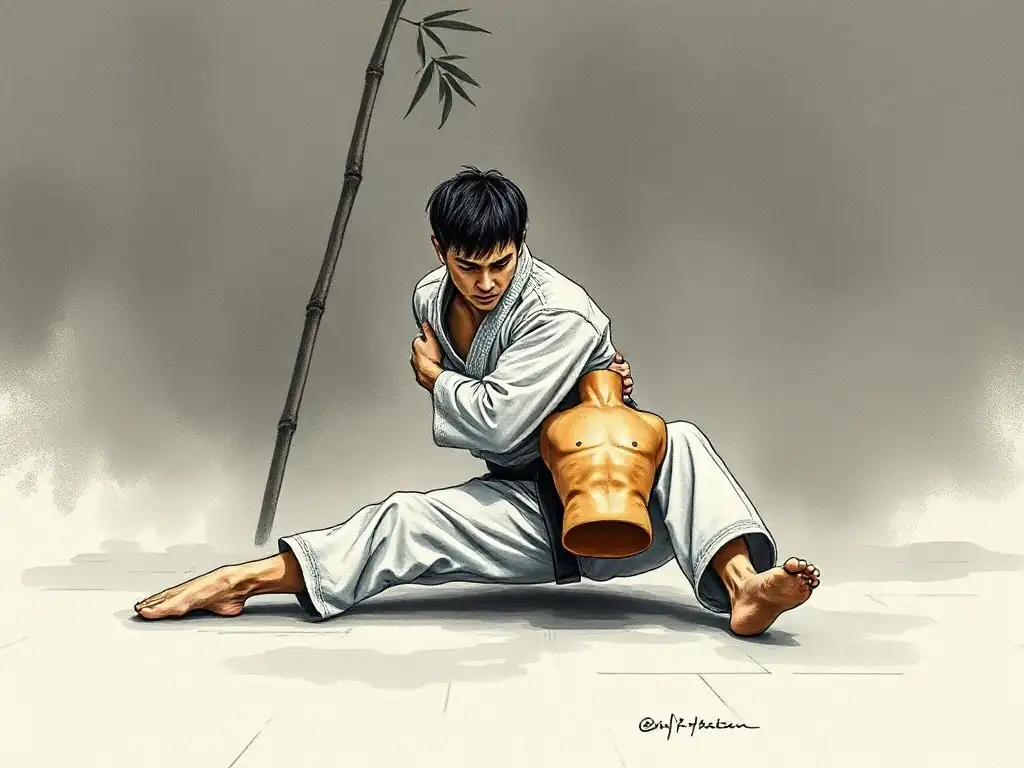
Effective BJJ guard passing gi noGi requires dedicated training that addresses the unique demands of each format. Drills should focus on developing the specific skills needed, whether it's grip fighting and pressure in the Gi or speed, hand fighting, and body mechanics in NoGi.
Training should incorporate positional sparring, specific drills, and live rolling to simulate real-world scenarios. Consistency is key to developing muscle memory and strategic understanding.
Gi Guard Passing Drills: Developing Grip Strength and Control
Gi guard passing drills often focus on repetition of core movements while emphasizing grip acquisition and maintenance.
- Grip Fighting Drills: Practice establishing dominant collar and sleeve grips against resistance.
- Posture Drills: Spend rounds in the closed guard focusing solely on maintaining good posture while your partner tries to break it with grips.
- Specific Pass Repetition: Drill the steps of a single pass, like the Knee Slice or Toreando, 10-20 times on each side with a compliant partner, focusing on grip details and body mechanics.
- Positional Sparring: Start sparring from specific guard positions (e.g., open guard, closed guard) with the goal of passing and maintaining side control for 30 seconds.
These drills help build the necessary grip strength, forearm endurance, and understanding of how grips enable movement and control in the Gi.
- [ ] Practice breaking common Gi grips (e.g., sleeve and collar).
- [ ] Drill establishing dominant passing grips (e.g., cross-collar, double pants).
- [ ] Execute Knee Slice repetitions with partner resistance on hip escape.
- [ ] Perform Toreando pass entries focusing on speed and footwork with pant grips.
NoGi Guard Passing Drills: Enhancing Speed and Pressure
NoGi guard passing drills emphasize movement, speed, hand fighting, and applying pressure through body weight.
- Hand Fighting Drills: Spend rounds focusing only on controlling your partner's wrists and arms from inside their open guard.
- Frame Clearing Drills: Practice clearing shin and knee frames using body movement and hand control, moving around the legs without securing static grips.
- Pressure Passing Entries: Drill entering into Double Under or Over-Under positions from open guard, focusing on head position and hip drive.
- Positional Sparring: Start sparring from open guard or seated guard with the goal of passing and establishing top control, emphasizing speed and pressure.
These drills develop sensitivity to body movement, improve hand fighting skills, and build the physical endurance needed for pressure passing and dynamic movement in NoGi.
- [ ] Practice clearing shin and knee frames with speed and angle changes.
- [ ] Drill securing underhooks and crossfaces from open guard.
- [ ] Execute Double Under pass entries focusing on hip pressure and head position.
- [ ] Perform Knee Cut pass repetitions emphasizing speed and chest-to-chest pressure.
Integrating Gi and NoGi Principles into Your Training
While distinct, Gi and NoGi guard passing principles can complement each other. Training in both formats can enhance your overall BJJ guard passing gi noGi game. For example, the pressure concepts learned in NoGi pressure passing can be applied in the Gi, making your passes heavier. Conversely, the control and structure emphasized in Gi training can improve your positional control once you pass the guard in NoGi.
Cross-training helps develop a more complete understanding of body mechanics, leverage, and control regardless of the uniform. A NoGi player training Gi might improve their ability to use subtle controls, while a Gi player training NoGi might develop faster reactions and better hand fighting. Many high-level competitors excel in both formats by integrating these principles.
Advanced Guard Passing Concepts
Beyond fundamental techniques, advanced BJJ guard passing gi noGi involves a deeper understanding of angles, timing, leverage, and combining different approaches. It's about reading the opponent's reactions and adapting the passing strategy in real-time.
Advanced players often have multiple layers to their passing game, starting with one approach and seamlessly transitioning to another if the initial one is defended. This requires extensive mat time and experience.
Passing with Angles and Off-Balancing
Utilizing angles and off-balancing the opponent is a key advanced guard passing concept in both Gi and NoGi. Instead of just driving straight forward, skilled passers use lateral movement, circling, and changes in angle to disrupt the opponent's base and create openings.
In the Gi, grips can be used to pull or push the opponent off-balance while the passer moves to the side. In NoGi, body weight distribution and hand fighting are used to achieve similar off-balancing effects, making it difficult for the guard player to maintain their structure or recover their guard effectively.
Utilizing Leg Weaving and Footwork
Advanced guard passing often involves intricate leg weaving and sophisticated footwork. Leg weaving involves using your own legs and feet to control, pin, or bypass the opponent's legs, often seen in passes like the Leg Weave or Headquarters position setups.
Precise and timely footwork is essential for changing angles, stepping over legs, or maintaining balance while the opponent attempts to sweep or set up entanglements. Great passers have light feet, allowing them to adjust their position instantly based on the opponent's reactions, whether they are using Gi grips or relying purely on body mechanics in NoGi.
Combining Passing Styles for Maximum Effectiveness
The most effective BJJ guard passing gi noGi players don't limit themselves to one style. They seamlessly combine elements of pressure passing, speed passing, and dynamic passing, transitioning between approaches as the situation dictates.
For example, a passer might start with a pressure pass setup (like an Over-Under) but if the opponent creates space, they might transition to a faster, dynamic pass (like a Toreando or Leg Drag entry). Or, in the Gi, they might use grips to initiate a pressure pass but be ready to switch to a stack pass if the opponent defends by pulling their knees in. This adaptability makes them incredibly difficult to defend against.
Developing Your BJJ Guard Passing Game: A Personalized Approach
Developing a strong BJJ guard passing gi noGi game is a continuous process that requires self-awareness, consistent practice, and willingness to adapt. It's not about mastering every single pass but rather finding the techniques and strategies that work best for your individual attributes and preferences.
Consider your body type, athleticism, and natural tendencies. Are you more suited to heavy pressure passing or dynamic, movement-based passing? Tailoring your game will make your training more efficient and your passing more effective.
Identifying Your Strengths and Weaknesses
Take an honest assessment of your current guard passing abilities. Are you better at passing specific guards? Do you struggle against opponents who use heavy frames or specific leg entanglements? Record your rolling sessions or ask training partners and instructors for feedback.
Understanding your weaknesses allows you to focus your training energy effectively. If you constantly get swept from Butterfly Guard in NoGi, dedicate specific drilling and positional sparring time to that scenario. If your Gi pressure passes stall against flexible opponents, work on supplementing them with dynamic options.
Tailoring Your Game to Your Body Type and Style
Your physical attributes significantly influence which BJJ guard passing gi noGi strategies will be most effective for you. A larger, stronger practitioner might naturally gravitate towards pressure passing (Stack Pass, Double Under), while a smaller, faster person might prefer dynamic passes (Toreando, Leg Drag, Knee Cut).
Consider your flexibility, endurance, and natural movement patterns. Experiment with different passing styles and see which ones feel most comfortable and yield the best results against various opponents. Don't force yourself into a style that doesn't suit you; instead, build a game around your natural strengths while shoring up critical weaknesses.
Continuous Learning and Adaptation in BJJ Guard Passing
The landscape of BJJ, including guard playing and passing, is constantly evolving. New guards, techniques, and strategies emerge regularly. Therefore, developing your BJJ guard passing gi noGi game is an ongoing process of learning and adaptation.
Stay curious, watch instructional videos, attend seminars, and analyze high-level competition footage. Be willing to experiment with new techniques and refine your existing ones. The best guard passers are those who are always learning and finding new ways to navigate the ever-evolving challenges presented by skilled guard players.
Frequently Asked Questions
What are the fundamental differences in guard passing strategies between Gi and NoGi Brazilian Jiu-Jitsu (BJJ)?
The key difference lies in grip reliance. Gi BJJ utilizes the Gi fabric for control and leverage, while NoGi emphasizes body positioning and pressure due to the lack of grips.
How does the presence of the Gi affect common guard passing techniques?
The Gi allows for lapel and sleeve grips, enabling techniques like the Toreando pass to be more effective. These grips can control posture and limit mobility in ways not possible in NoGi.
What adjustments need to be made to Gi passing techniques when transitioning to NoGi BJJ?
In NoGi, focus shifts to underhooks and overhooks for control. Passes need to be faster and more direct, relying on pressure and movement rather than grip fighting.
Are there specific NoGi guard passing techniques that are less effective in Gi?
Wrestling-based passes, such as the knee cut pass with a head control, are often less effective in Gi due to the opponent's ability to use Gi grips to defend and create space.
What are some key considerations for developing a well-rounded guard passing game in both Gi and NoGi BJJ?
Develop a strong understanding of basic body mechanics and positional control. Practice both grip-based and pressure-based passes to adapt to different scenarios and opponents.
Final Reflection: Bridging the Gi and NoGi Divide
The exploration of guard passing strategies in both Gi and NoGi Brazilian Jiu-Jitsu reveals that while techniques may differ, the underlying principles of pressure, control, and positional dominance remain paramount. The ability to adapt and apply these principles across both disciplines is what truly separates a proficient guard passer from a novice. This adaptability is increasingly relevant in today's BJJ landscape, where cross-training and hybrid styles are becoming the norm.
The nuances between Gi and NoGi passing, from grip fighting to friction control, highlight the beautiful complexity of BJJ. Personally, understanding these differences has deepened my appreciation for the art and its endless possibilities for innovation. It’s a constant reminder that learning is a lifelong journey. The journey of a thousand miles begins with a single step.
- Lao Tzu. This quote resonates deeply, as each training session, each passed guard, is a step further on that journey.
Now, armed with a deeper understanding of both Gi and NoGi guard passing, I encourage you to reflect on your own game. How can you integrate the lessons learned here to become a more versatile and effective practitioner? Embrace the challenges, experiment with new techniques, and remember that the true mastery of BJJ lies not just in knowing the techniques, but in understanding the principles that underpin them. Go forth and pass with purpose!
Master the Pass: Ignite Your BJJ Game!
Thanks for diving deep into the world of guard passing! We hope you've discovered some valuable insights to elevate your BJJ game, whether you're rocking the gi or going no-gi. Ready to put that knowledge into action?
Here's how to keep the momentum going:
- Prioritize one new technique from this article in your next training session. Focus on drilling it until it becomes second nature.
- Join our Martial Arts Mastery online forum to share your experiences with these techniques and learn from other BJJ practitioners.
- Challenge yourself to identify one aspect of your guard passing game you can immediately adjust based on what you've learned today.
What's the first guard passing concept you're excited to test on the mats?