
Hapkido Weapon Disarms: When to Engage, When to Escape

Welcome to Martial Arts Mastery, where the pursuit of skill and knowledge transcends borders and disciplines. Delve into the intricate world of combat, philosophy, and self-discovery. Are you prepared to elevate your understanding of Hapkido? This article unlocks the secrets of Hapkido weapon disarm techniques, exploring the critical balance between decisive engagement and strategic escape. Discover when to stand your ground and when to choose a different path. The journey to mastery begins now...
- Understanding Hapkido Weapon Disarm Techniques
- Evaluating the Threat: Assessing the Situation Before Disarming
- When to Engage: Tactical Considerations for Hapkido Weapon Disarms
- Hapkido Disarm Techniques: Step-by-Step Breakdown
- When to Escape: Prioritizing Self-Preservation in Hapkido
- Bridging the Gap: Moving From Escape to Counter-Attack
- Training Drills for Hapkido Weapon Disarm Proficiency
- Ethical Considerations and Legal Ramifications of Weapon Disarms
- Mastering the Art of the Hapkido Weapon Disarm: A Lifelong Journey
-
Frequently Asked Questions
- What is the primary goal when facing an armed attacker in Hapkido?
- How does Hapkido differ from other martial arts in its approach to weapon disarms?
- What types of weapons does Hapkido training prepare you to disarm?
- When is it not advisable to attempt a weapon disarm in Hapkido?
- What are some fundamental principles that guide Hapkido weapon disarm techniques?
- Final Reflection: Mastering the Art of Strategic Disarmament
- Master Hapkido Disarms: Embrace the Challenge!
Understanding Hapkido Weapon Disarm Techniques
The Core Principles of Hapkido Disarms
Hapkido weapon disarm techniques are deeply rooted in the art's core principles, primarily focusing on leveraging the attacker's force against them, utilizing joint manipulation, and maintaining fluid movement. Unlike styles that might rely solely on blocking or brute force, Hapkido emphasizes redirecting the incoming attack and controlling the opponent's balance and structure.
This is achieved through techniques like circular motion, non-resistance (going with the force), and exploiting anatomical weaknesses. A fundamental principle applied in Hapkido weapon disarms is the concept of Yu (water-like fluidity) and Won (circular motion), allowing practitioners to evade direct confrontation and move into positions where control is easily established before attempting the disarm.
Furthermore, Hapkido disarms heavily incorporate Hap (coordination) and Ki (internal power or vital energy), focusing on the coordinated application of body mechanics, breath control, and mental focus to execute techniques efficiently. Joint locks ( Kwan-jol ki) are paramount; controlling the wrist, elbow, or shoulder of the armed limb is often the precursor to safely removing the weapon.
For instance, a common Hapkido weapon disarm technique against a knife attack might involve stepping off the line of attack, controlling the attacker's wrist with a grasping or hooking motion, and then applying a small-joint manipulation or a wrist lock while simultaneously striking or disrupting their balance to facilitate the disarm. The principle here is not just taking the weapon, but controlling the individual wielding it.
Why Weapon Disarms are a Critical Hapkido Skill
In the context of modern self-defense, understanding Hapkido weapon disarm techniques is not merely an advanced skill but a critical necessity. While the ideal scenario is always avoidance or escape, real-world confrontations can escalate rapidly, and weapons, even improvised ones, are unfortunately common. Training in Hapkido weapon disarms prepares practitioners to respond effectively and decisively in life-threatening situations where disarming the assailant is the only viable option to ensure survival. This training builds confidence and reduces panic by providing a framework for action under extreme duress.
Moreover, the study of Hapkido weapon disarm techniques reinforces the fundamental principles of the art itself. The precise timing, distance management, sensitivity to pressure, and understanding of body mechanics required for a successful disarm translate directly to proficiency in empty-hand techniques. For example, the footwork and body angling used to evade a knife thrust are the same movements used to avoid a punch.
The wrist locks and joint manipulations used to control an armed limb are variations of techniques used in grappling and throwing. Therefore, practicing Hapkido weapon disarm techniques enhances overall martial skill, making the practitioner a more well-rounded and capable defender.
Evaluating the Threat: Assessing the Situation Before Disarming
Recognizing Different Weapon Types and Their Dangers
Effectively executing Hapkido weapon disarm techniques begins with accurately assessing the threat, starting with recognizing the type of weapon involved. Different weapons pose distinct dangers and require varied approaches. Knives, for instance, are prevalent and present risks from both thrusting and slashing attacks, often causing severe, potentially fatal, wounds rapidly.
The typical range for effective knife attacks is very close, usually within arm's length or slightly beyond. Blunt objects like sticks, bats, or pipes pose significant risks of bone fractures, severe internal injuries, or concussions due to kinetic energy transfer upon impact. Their effective range is generally slightly greater than knives.
Firearms introduce a different dynamic entirely. While often perceived as a distant threat, the most dangerous scenarios for Hapkido weapon disarm techniques are at extremely close range (within a few feet or contact distance), where drawing and aiming are almost instantaneous. The primary danger is, of course, the projectile, but the weapon itself can also be used as a blunt instrument.
Recognizing whether the firearm is a handgun, shotgun, or rifle also informs the potential threat, though close-quarters disarms often focus on controlling the barrel and trigger mechanism regardless of type. Understanding these distinct dangers allows a Hapkido practitioner to quickly prioritize actions – evading the immediate lethal aspect (the bullet, the blade, the impact) before attempting a disarm.
Gauging the Attacker's Skill Level and Intent
Beyond identifying the weapon, a critical aspect of threat evaluation before attempting Hapkido weapon disarm techniques is assessing the attacker's skill level and intent. Is the attacker a trained individual with fluid, deliberate movements, or are they panicked, unpredictable, and perhaps under the influence? A highly skilled attacker with a weapon presents a significantly higher degree of risk, requiring near-perfect execution of techniques and potentially making escape a more viable first option.
An untrained attacker might be easier to disarm physically, but their lack of predictability can also be dangerous. Observing their stance, grip on the weapon, eye contact, and verbal cues can provide clues.
Furthermore, discerning the attacker's intent is paramount. Are they trying to rob you with minimal force, or is their intent clearly malicious and life-threatening?
While assuming the worst is prudent in any weapon confrontation, recognizing subtle cues about their psychological state or goals can sometimes influence the decision to engage or attempt de-escalation if escape is impossible. An attacker whose primary goal is simply to scare you into compliance might drop the weapon or retreat if met with unexpected resistance or a sudden, decisive Hapkido movement, whereas an attacker intent on causing harm is unlikely to be deterred by anything less than complete neutralization of the threat, potentially requiring a Hapkido weapon disarm.
Environmental Awareness: Analyzing Your Surroundings for Escape Routes
Before committing to Hapkido weapon disarm techniques, a rapid assessment of the immediate environment is crucial. Your surroundings can either offer advantages for disarming or provide essential escape routes. Are there obstacles that can be used for cover or to impede the attacker's movement? Is the ground surface stable, or is it slippery or uneven, potentially compromising your balance or the attacker's? Identifying potential escape paths – doorways, alleys, crowds, or even simply open space – allows for a quick transition from a disarm attempt that goes wrong to a full retreat.
Environmental factors also influence the feasibility of specific Hapkido weapon disarm techniques. Attempting a technique that requires significant lateral movement or a throw in a narrow corridor or crowded space might be impractical or even dangerous. Conversely, using a wall or corner to trap the attacker or limit their movement can create a tactical advantage for certain disarms.
For example, pinning an attacker's weapon arm against a wall can simplify a knife disarm. A quick scan upon recognizing a threat – noting exits, potential cover, and ground conditions – is an indispensable part of the decision-making process in a weapon confrontation, potentially dictating whether a disarm is even a viable option compared to immediate escape.
When to Engage: Tactical Considerations for Hapkido Weapon Disarms
Identifying Opportunities for Successful Disarms
Deciding to engage in Hapkido weapon disarm techniques is a high-stakes decision, contingent on identifying specific opportunities that maximize the chances of success while minimizing risk. A primary opportunity arises when the attacker is momentarily off-balance, distracted, or committed to an attack that leaves them vulnerable.
For instance, as an attacker lunges forward with a thrusting motion, their balance is often shifted onto their front foot, creating a brief window where redirection and control of the weapon arm are more effective. Similarly, if an attacker is fumbling with the weapon or momentarily looks away, this can provide the split-second needed to initiate a disarm.
Another key opportunity stems from being within optimal range for a specific Hapkido technique. For many Hapkido weapon disarm techniques, this means being at close range, often grappling distance, where joint locks and leverage can be effectively applied. If the attacker is too far away, attempting a disarm is premature and exposes you to their weapon's full reach.
Conversely, if you are already in a struggle at extremely close quarters, the opportunity for a disarm might be immediate, requiring rapid, decisive action to secure the weapon and control the attacker before they can effectively utilize it. Recognizing these fleeting moments is a critical skill developed through extensive Hapkido training.
Minimizing Risk: Reducing Your Exposure to the Weapon
Successfully executing Hapkido weapon disarm techniques is not just about applying the technique; it's fundamentally about minimizing your exposure to the weapon itself during the process. This is achieved primarily through strategic positioning and movement. The first rule is often to move off the line of attack – getting your body out of the path of the blade, bullet, or impact. This isn't just a small step; it's a decisive angular or circular movement that places you in a safer zone, ideally to the side or rear of the attacker.
Furthermore, maintaining control of the weapon-bearing limb throughout the disarm is paramount. Hapkido weapon disarm techniques emphasize securing the wrist or forearm as quickly as possible after evading the initial attack. By controlling the limb, you directly influence the weapon's trajectory and ability to cause harm.
This control should be maintained with strength and sensitivity, feeling the attacker's movements and adjusting your pressure and position accordingly. The goal is to stay "inside" the weapon's danger arc while controlling its source, using your body structure and leverage to keep the weapon away from yourself and gain mechanical advantage over the attacker.
Using Evasion and Footwork to Create Disarming Opportunities
Mastering Hapkido weapon disarm techniques relies heavily on sophisticated evasion and dynamic footwork, which are used not just to avoid the weapon but actively to create opportunities for disarming. Simply standing and blocking is often insufficient against a determined attacker with a weapon. Instead, Hapkido practitioners utilize circular steps ( Won Hyung Bop) and angular movements ( Bang Hyung Bop) to shift their body off the center line, disrupting the attacker's aim and balance. This movement allows the defender to enter into a safer zone relative to the weapon.
For example, against a straight knife thrust to the abdomen, a Hapkido practitioner would likely step sharply to the side (e.g., 45 degrees off the line of attack) while simultaneously using a hand technique to guide or parry the incoming arm. This evasion takes the target away and positions the defender to the side of the attacker, where they have better access to the weapon arm's joint structure for a lock or control, setting up the subsequent disarm technique.
Effective footwork maintains balance and mobility, enabling rapid adjustments, pursuing control of the attacker, or transitioning to escape if the disarm attempt is unsuccessful. It's the foundation upon which successful Hapkido weapon disarm techniques are built.
Hapkido Disarm Techniques: Step-by-Step Breakdown
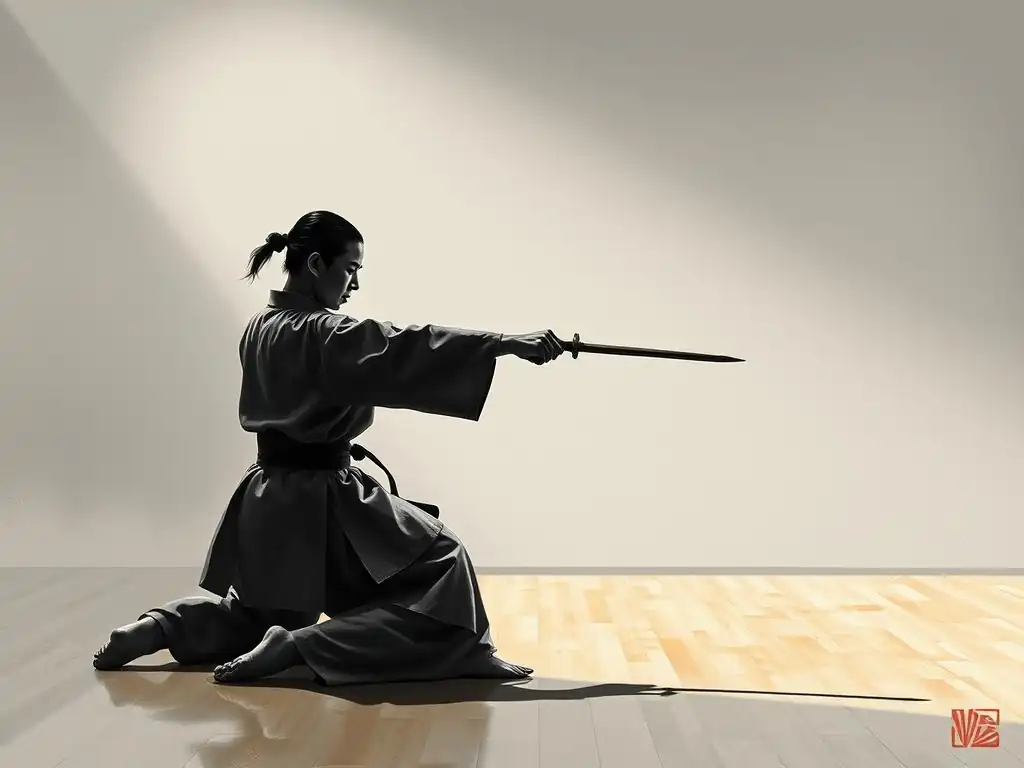
Knife Disarms: Specific Techniques and Counters
Defending Against a Straight Knife Thrust
Defending against a straight knife thrust is a fundamental scenario addressed by Hapkido weapon disarm techniques. One common approach involves a combination of evasion and control. As the attacker thrusts, the defender executes a sharp, angular step off the line of attack (e.g., to the outside of the thrusting arm). Simultaneously, the defender uses their lead hand to parry or guide the incoming wrist or forearm outwards, further deflecting the attack and preventing it from reaching the body. This initial evasion and deflection are critical to avoiding injury.
Immediately following the deflection, the defender's other hand secures the attacker's wrist, establishing a strong grip. The goal is to control the tip of the blade and prevent further thrusts or changes in attack angle. With both hands now controlling the weapon arm – one guiding/parrying, the other securing the wrist – the defender applies a joint manipulation, often a wrist lock ( Son Mok Kwan Jol Ki).
By bending the attacker's wrist backward or twisting it while applying downward pressure and stepping in closer, the defender creates pain and leverage, forcing the attacker to release the knife or be taken down. The disarm occurs as the attacker yields to the pain or is forced off balance, dropping the weapon.
Countering a Knife Slash
Countering a knife slash presents a different dynamic, requiring rapid closing of distance or redirection to avoid the cutting edge. Against a horizontal slash, a Hapkido response might involve stepping inside the attack radius and raising an arm (often covered) to block or deflect the incoming slash high, while simultaneously closing the distance to jam the attack.
This is often combined with a simultaneous movement to control the attacker's wrist or elbow with the other hand, preventing follow-up slashes. The principle is to meet the force and redirect it or bypass it entirely by getting "inside" the arc of the weapon.
Once the initial slash is deflected or jammed and the range is closed, the technique transitions to controlling the weapon arm. For instance, if the slash is deflected high, the defender might immediately secure the attacker's wrist or forearm and apply a technique like an elbow lock ( Pal Gup Kwan Jol Ki) or a wrist lock while turning their body to break the attacker's balance.
The disarm is achieved by applying the joint lock with sufficient pressure and leverage to force the attacker to release the weapon. Throughout this, the defender must maintain awareness of the blade's position and use body mechanics to keep it pointed away from themselves.
Gun Disarms: Managing Close-Range Firearms Threats
Securing the Weapon: Preventing Further Harm
Close-range gun threats require immediate, decisive action focused on securing the weapon to prevent it from being fired effectively. Hapkido gun disarm techniques emphasize controlling the barrel and the attacker's hand.
If the gun is pointed at the defender's chest at contact distance, for example, the first movement is typically a simultaneous block/parry to redirect the muzzle away from the body and a grab to secure the slide/cylinder area of the weapon. This initial action is performed while simultaneously executing a small, sharp movement off the line of fire, such as stepping slightly to the side and turning the body.
The grab on the weapon must be firm, concentrating force on the part of the gun that moves or cycles, preventing it from firing or cycling if it does discharge. While securing the weapon, the defender simultaneously uses their other hand to control the attacker's weapon hand or wrist. The goal is to gain mechanical control over both the weapon itself and the limb holding it.
This often involves twisting the wrist or applying pressure to the back of the hand holding the grip, making it difficult or impossible for the attacker to maintain control or pull the trigger effectively. The entire initial sequence is executed in fractions of a second, as speed and timing are critical.
Controlling the Attacker: Maintaining Dominance
Securing the weapon is only the first part of Hapkido gun disarm techniques; controlling the attacker is equally vital to prevent them from regaining control or resorting to secondary attacks. Once the weapon is secured and the attacker's hand/wrist is controlled, the technique transitions into a joint lock or throw that disrupts the attacker's balance and structure. For example, applying a strong wrist lock or finger lock while maintaining control of the weapon forces the attacker to follow the direction of the lock, usually leading them to the ground.
As the attacker is taken down or incapacitated by the joint lock, the defender maintains control of the weapon-bearing limb and works to physically separate the weapon from the attacker's hand. This might involve twisting the weapon free, prying the fingers open, or using a strike to the hand. Even after the weapon is dislodged, maintaining control of the attacker through joint locks or pins is crucial until the threat is completely neutralized and the weapon can be secured away from them. The emphasis is on transitioning smoothly from securing the weapon to controlling the person wielding it.
Stick and Blunt Weapon Disarms: Neutralizing Impact Weapons
Redirecting the Attack: Using Leverage and Momentum
Disarming a stick or blunt weapon attack in Hapkido often involves utilizing the attacker's momentum and the weapon's length against them. Against an overhead strike, for instance, a Hapkido practitioner might step forward and slightly to the side, entering the attacker's space while simultaneously using a rising block or deflection to redirect the downward force of the weapon. The principle here is not to stop the weapon head-on, but to meet the attack at an angle and guide it away from the target area, often causing the attacker to overextend or lose balance due to their own committed force.
Following the redirection, the defender moves to control the weapon itself or the attacker's grip on it. This might involve trapping the weapon under the arm, grasping the stick with one or both hands, or moving in to apply a joint lock on the attacker's hands or wrists while they are still gripping the weapon.
Leverage is key; using your body weight and structure against the attacker's grip or the length of the weapon creates mechanical advantage, making it easier to break their hold or manipulate their limb. For example, twisting the stick while holding it firmly can apply torque to the attacker's wrists.
Striking Vulnerable Points: Creating an Opening for a Disarm
While Hapkido weapon disarm techniques prioritize control and leverage, striking vulnerable points can be an effective tactic to create the necessary opening for a disarm against a blunt weapon. A sharp, sudden strike can momentarily stun or distract the attacker, causing them to loosen their grip or flinch, providing the defender with a critical window to secure the weapon. Vulnerable targets include the eyes, throat, groin, or nerve points on the arm or hand holding the weapon.
For instance, against a swinging stick attack, after initial evasion and redirection, a quick, focused strike to the attacker's eyes or nose can disrupt their vision and balance. In that instant of disorientation, the Hapkido practitioner can move in aggressively to grasp the stick or apply a wrist lock to force the release.
Similarly, a forceful strike to the nerve bundle on the inside of the forearm holding the stick can cause involuntary muscle contraction and pain, often leading to a dropped weapon. These strikes are not intended to end the fight outright but serve as tactical tools to facilitate the primary goal: safely executing the Hapkido weapon disarm techniques.
When to Escape: Prioritizing Self-Preservation in Hapkido
Recognizing Overwhelming Odds: When Disarming is Too Risky
While Hapkido weapon disarm techniques provide powerful options, recognizing situations where attempting a disarm is too risky is paramount for survival. Overwhelming odds might include facing multiple armed attackers simultaneously; attempting to disarm one could leave you vulnerable to the others. Similarly, if the attacker has superior positioning (e.g., you are cornered with no room to maneuver) or if the environment is highly restrictive and prevents effective movement or technique application, the risk associated with a disarm attempt escalates significantly.
Another factor indicating overwhelming odds is a significant disparity in size, strength, or skill level when combined with the weapon threat. While Hapkido principles are designed to overcome physical differences, a combination of a large, strong, skilled attacker in a disadvantageous environment might make direct engagement for a disarm overly hazardous. In such scenarios, the Hapkido practitioner is trained to prioritize creating distance and escaping the immediate danger zone. The philosophy dictates that survival is the primary objective, and sometimes that means choosing retreat over confrontation, even when equipped with Hapkido weapon disarm techniques.
Creating Distance: Utilizing Hapkido Evasion Techniques
When escape is the chosen course of action, creating distance quickly and effectively is crucial. Hapkido's emphasis on dynamic footwork and circular motion is invaluable here. Instead of moving backward in a straight line (which is slow and predictable), Hapkido evasion techniques involve sharp, often diagonal or circular steps combined with body turns to rapidly move away from the attacker and their weapon. This might involve pivoting and running, or using explosive bursts of movement to break contact.
Utilizing obstacles or terrain to your advantage is also part of Hapkido-based evasion. Running around objects (cars, tables, corners) can slow the attacker, break their line of sight, and increase the distance.
Incorporating simple hand techniques, like a quick push or distraction, as you initiate your escape can buy precious seconds. The goal is to transition instantly from recognizing the threat to initiating a rapid, committed movement away from the danger, making yourself a difficult target and increasing the distance to a point where the weapon threat is neutralized or significantly reduced, rather than attempting complex Hapkido weapon disarm techniques.
Escape Strategies: Breaking Free and Seeking Safety
Effective escape isn't just about running; it involves a strategy focused on breaking free from the immediate threat and moving towards safety. If the attacker has grabbed you or is blocking your path, Hapkido break-release techniques ( Ho Shin Sul) are employed to free yourself before initiating movement away. These techniques often target the attacker's grip or balance using joint locks, pressure points, or sharp, explosive movements designed to create separation.
Once free, the strategy involves moving towards a known safe location – a crowded area, a police station, a well-lit building, or simply putting as many physical barriers and as much distance as possible between yourself and the attacker. Shouting for help can also be part of the strategy, potentially deterring the attacker or alerting others.
The Hapkido practitioner uses their awareness (developed partly through training for Hapkido weapon disarm techniques) to navigate the environment rapidly and efficiently during the escape, constantly monitoring the attacker's pursuit while moving towards perceived safety. The successful execution of the escape is the ultimate goal when disarming is not feasible or too risky.
Bridging the Gap: Moving From Escape to Counter-Attack
Maintaining Awareness After Escape
Successfully escaping the immediate vicinity of an armed threat is a critical first step, but maintaining heightened awareness immediately afterward is crucial. The threat is not necessarily neutralized simply because distance has been created. The attacker may pursue, switch tactics, or have accomplices. A Hapkido practitioner who has chosen to escape rather than attempt Hapkido weapon disarm techniques must continue to monitor the attacker's actions, their position, and the environment.
This involves glancing back while running, listening for sounds of pursuit, and assessing whether the distance created is sufficient to negate the weapon threat (e.g., being out of knife-fighting range, beyond the effective range of a handgun, or having cover against a firearm). Maintaining awareness also means identifying potential secondary threats or obstacles in the escape path. This ongoing assessment informs the next steps – whether to continue fleeing, seek better cover, or recognize an opportunity to transition from defense back to a counter-offensive if the situation changes favorably.
Strategic Repositioning for a Counter-Offensive
In some scenarios, escaping and creating distance can paradoxically lead to an opportunity for a counter-attack, particularly if the attacker makes errors in pursuit or the environment offers new advantages. Strategic repositioning involves using movement to gain a tactical advantage after the initial escape. This might mean leading the attacker into a narrow space where their weapon is less effective, positioning yourself between the attacker and a source of light to blind them, or using terrain to create an ambush scenario if necessary.
By moving to a more advantageous position, the Hapkido practitioner can turn the tables. For example, if the attacker is focused on pursuit and rounds a corner without caution, they might be vulnerable to a sudden, decisive strike or technique from the defender who has positioned themselves strategically.
This transition back to offense is not a primary goal but a potential outcome of effective escape and environmental awareness. It requires the defender to be fluid in their strategy, ready to shift from evasion back to techniques, potentially including Hapkido weapon disarm techniques if the opportunity reappears under more favorable conditions.
Utilizing Improvised Weapons for Self-Defense
Should escape be impossible or a counter-offensive become necessary after an initial retreat, and if a Hapkido weapon disarm technique was not successful or attempted, the Hapkido practitioner's training in using their environment can extend to utilizing improvised weapons. Everyday objects can become tools for defense, distraction, or creating distance. A chair can be used to block or create space, a belt or jacket can be used to entangle or distract, and items like keys, pens, or bottles can be used for striking vulnerable points.
Training in Hapkido encourages adaptability and resourcefulness. While the focus might be on empty-hand techniques or specific Hapkido weapon disarm techniques, the underlying principles of leverage, timing, and targeting apply equally to using improvised tools. Knowing how to effectively swing a bag to create distance, throw objects to distract, or use a sturdy item to block or strike adds layers to a self-defense strategy. This capability can be crucial in bridging the gap between a failed escape or disarm attempt and successfully neutralizing the threat.
Training Drills for Hapkido Weapon Disarm Proficiency
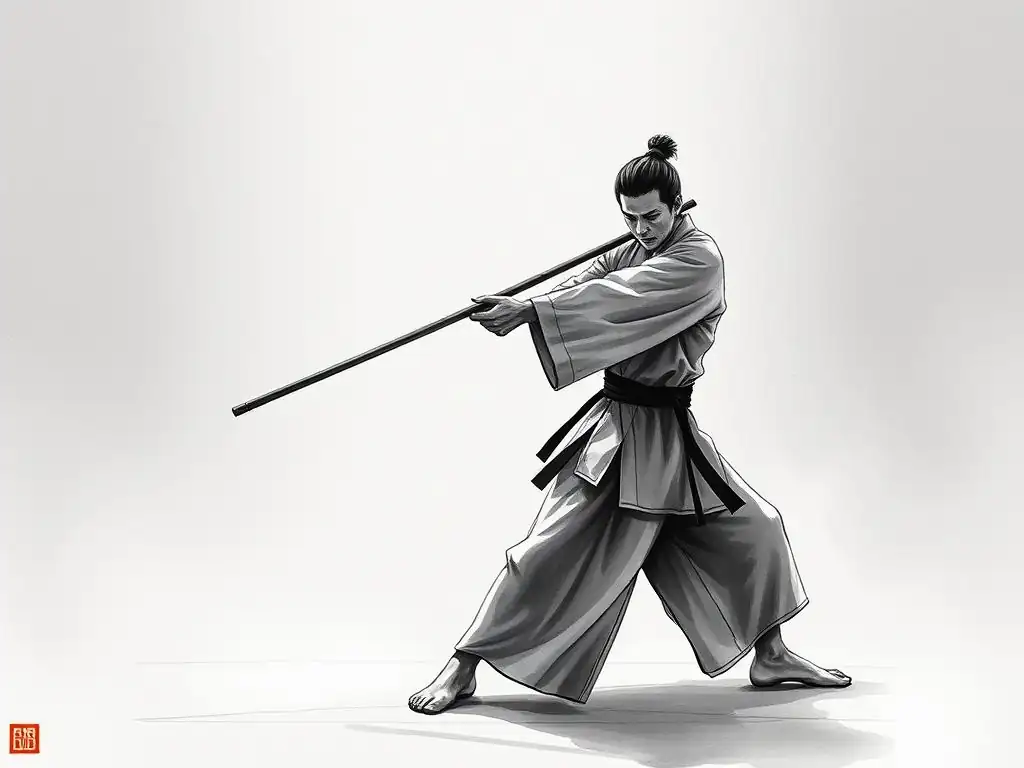
Partner Drills: Practicing Disarm Techniques in a Controlled Environment
Partner drills are fundamental to developing proficiency in Hapkido weapon disarm techniques. These drills begin slowly with compliant partners using training weapons (rubber knives, padded sticks, inert firearms) to practice the mechanics of evasion, control, and disarm sequences step-by-step. For example, one partner might perform a slow, committed knife thrust, and the other practices the specific Hapkido evasion and control technique repeatedly until the movement is fluid and automatic.
As proficiency increases, the drills progress to moderate speed and resistance. Partners might offer light resistance, attempting to maintain control of the weapon or recover their balance, forcing the defender to apply more leverage and pressure to the Hapkido weapon disarm techniques. These drills help refine timing, distance management, and the application of joint locks under slight stress. Safety protocols, including clear communication and controlled movements, are paramount to prevent injuries during these drills, even with training weapons.
Scenario Training: Simulating Real-World Weapon Attacks
Moving beyond basic partner drills, scenario training simulates more realistic, dynamic weapon attacks to test the application of Hapkido weapon disarm techniques under pressure. These scenarios involve multiple steps by the attacker (feints, varied attacks, movement) and might take place in different environments (simulated tight spaces, low light). The attacker's intent and intensity can be varied to challenge the defender's threat assessment and decision-making process – forcing them to decide whether to disarm or escape.
For example, a scenario might start with a verbal confrontation that escalates into a sudden knife pull, or a seemingly innocuous interaction where a weapon is produced unexpectedly. The defender must react based on their training, applying appropriate Hapkido weapon disarm techniques if feasible, or executing an escape strategy. Scenario training helps integrate the physical techniques with the mental and emotional aspects of self-defense, including managing adrenaline and fear, and reinforces the critical decision-making process of "when to engage, when to escape."
Mental Preparation: Cultivating Focus and Composure Under Pressure
Effective execution of Hapkido weapon disarm techniques or successful escape in a real confrontation requires significant mental preparation alongside physical training. Cultivating focus and composure under extreme pressure is vital. This involves visualization exercises, mentally rehearsing responses to various weapon threats, and practicing maintaining calm breathing and clear thought processes during high-stress drills. Understanding the physiological effects of adrenaline (tunnel vision, auditory exclusion, loss of fine motor skills) helps practitioners anticipate and mitigate them.
Training also focuses on developing a strong "combat mindset" – the ability to switch instantly from everyday awareness to a state of alert readiness and decisive action. This involves recognizing the threat signal and immediately initiating a trained response without freezing. Techniques like meditation and mindfulness can complement physical training by improving focus and emotional regulation. Ultimately, mental preparation ensures that when faced with a genuine weapon threat, the Hapkido practitioner can access their physical training effectively, making sound decisions about whether to attempt Hapkido weapon disarm techniques or prioritize escape based on the situation.
Ethical Considerations and Legal Ramifications of Weapon Disarms
Understanding the Laws of Self-Defense
Understanding the laws of self-defense is a critical, though often overlooked, aspect of training in Hapkido weapon disarm techniques. While martial arts provide the physical skills, legal frameworks dictate when and how those skills can be used. Generally, self-defense laws permit the use of necessary and reasonable force to protect oneself from imminent threat of harm. The key terms are "necessary" and "reasonable." Using force is typically considered necessary only when there is no safe avenue of escape and the threat is immediate.
"Reasonable force" is often interpreted in proportion to the threat. Using a Hapkido weapon disarm technique against an attacker brandishing a deadly weapon (like a knife or gun) is more likely to be considered reasonable force to neutralize a deadly threat than using such a technique against an unarmed person presenting minimal threat.
However, laws vary significantly by jurisdiction (country, state, even city). Practitioners should be aware of the specific self-defense laws in their area, particularly regarding the use of force, the duty to retreat (if any), and the legal standing after using force, especially if the attacker is injured or the weapon is taken.
Using Disarms as a Last Resort
Given the inherent risks and legal complexities, Hapkido weapon disarm techniques should generally be considered a last resort. The primary goals in a potential confrontation are always avoidance and de-escalation. If avoidance is impossible and a threat is imminent, the next priority is escape if a safe path exists. Only when avoidance and escape are not viable options, and faced with a credible, imminent threat of serious harm or death from a weapon, should a Hapkido practitioner consider attempting a disarm.
This prioritization aligns with both safety and legal principles. Attempting a disarm carries a high risk of injury, even if successfully executed. Legally, demonstrating that you attempted to avoid the confrontation or escape if possible strengthens a self-defense claim. Therefore, while training in Hapkido weapon disarm techniques is essential for preparedness, the decision to use them is a grave one, reserved for situations where inaction or escape are more dangerous than the attempt itself.
De-escalation Techniques: Avoiding Violence Whenever Possible
True mastery in Hapkido, and martial arts in general, includes the wisdom to avoid physical conflict whenever possible, particularly when weapons are involved. De-escalation techniques are the first line of defense. This involves maintaining a non-threatening posture, speaking calmly and clearly, attempting to understand the attacker's motives (if discernible), and trying to diffuse the situation verbally. Simple actions like raising hands palms out to show you are not a threat, agreeing with non-harmful demands (like giving up property), and avoiding eye contact can sometimes prevent an attack from escalating to the point where Hapkido weapon disarm techniques become necessary.
De-escalation is not about showing weakness but about tactical intelligence – recognizing that avoiding a fight is always safer and less complicated than winning one, especially against a weapon. While Hapkido provides the physical tools for when de-escalation fails, the art's underlying philosophy encourages peaceful resolution. Training often includes role-playing scenarios that start with verbal confrontation, emphasizing the importance of attempting de-escalation before any physical technique, including Hapkido weapon disarm techniques, is considered.
Mastering the Art of the Hapkido Weapon Disarm: A Lifelong Journey
Frequently Asked Questions
What is the primary goal when facing an armed attacker in Hapkido?
The primary goal in Hapkido weapon disarms is not always direct confrontation. It often involves creating distance and assessing the situation to determine the best course of action, which might include escape.
How does Hapkido differ from other martial arts in its approach to weapon disarms?
Hapkido emphasizes circular movements and joint manipulation to redirect the attacker's force and disrupt their balance, differing from more linear or strength-based approaches found in some other martial arts.
What types of weapons does Hapkido training prepare you to disarm?
Hapkido training covers a wide range of weapons, including knives, sticks, and firearms, focusing on adapting principles to various threats rather than specific techniques for each weapon.
When is it not advisable to attempt a weapon disarm in Hapkido?
Attempting a disarm is generally discouraged if the attacker has a clear advantage in distance, position, or skill, or if there's an opportunity to safely escape the situation without engaging.
What are some fundamental principles that guide Hapkido weapon disarm techniques?
Key principles include redirecting energy, maintaining balance, controlling joints, and using pressure points to neutralize the attacker and gain control of the weapon.
Okay, here's a final reflection section designed for your article "Hapkido Weapon Disarms: When to Engage, When to Escape," optimized for the keyword "Hapkido weapon disarm techniques" and following the structure you provided:
Final Reflection: Mastering the Art of Strategic Disarmament
The preceding exploration of Hapkido weapon disarm techniques highlights more than just physical maneuvers; it underscores the critical importance of strategic decision-making under pressure. In today's complex world, where threats can manifest in various forms, the ability to assess risk and choose the appropriate response – whether engagement or escape – is a skill of paramount importance, extending far beyond the dojang.
The principles of Hapkido weapon disarms, emphasizing awareness, timing, and leverage, offer a profound lesson in self-preservation and conflict resolution. This journey into the intricacies of these techniques has reinforced the idea that true mastery lies not only in the execution of a technique but also in the wisdom to know when and how to apply it. The supreme art of war is to subdue the enemy without fighting.
- Sun Tzu. This quote encapsulates the essence of Hapkido's philosophy, reminding us that the ultimate goal is de-escalation and the preservation of life, not simply the demonstration of force.
As you reflect on the techniques and strategies discussed, consider how these principles of awareness, assessment, and decisive action can be applied to the challenges you face in your own life. Embrace the wisdom of Hapkido, not just as a martial art, but as a philosophy for navigating the complexities of the world with courage, discernment, and a commitment to peace. Let the lessons learned here empower you to make informed choices, protect yourself and others, and ultimately, contribute to a safer and more harmonious world.
Master Hapkido Disarms: Embrace the Challenge!
Thank you for diving into the world of Hapkido weapon disarms! We hope you've gained valuable insights into the art of engagement and strategic retreat. Now, it's time to translate theory into action.
Here's how you can further your Hapkido journey:
- Commit to Action: Immediately begin practicing the disarm techniques covered in this article with a qualified Hapkido instructor. Consistent practice is the key to mastery.
- Explore Beyond the Obvious: Instead of just focusing on common weapons, brainstorm scenarios involving everyday objects and how you might apply Hapkido principles for self-defense. Consider a pen, a rolled-up magazine, or even an umbrella.
- Share Your Insights: Start a discussion in your dojang or online martial arts community about the ethical considerations of weapon disarms. How do you balance self-defense with the potential for escalating a situation?
What specific disarm technique are you most eager to master, and what challenges do you anticipate encountering?