
Hira Shuriken (Star) Throwing: Grip, Stance, and Accurate Release

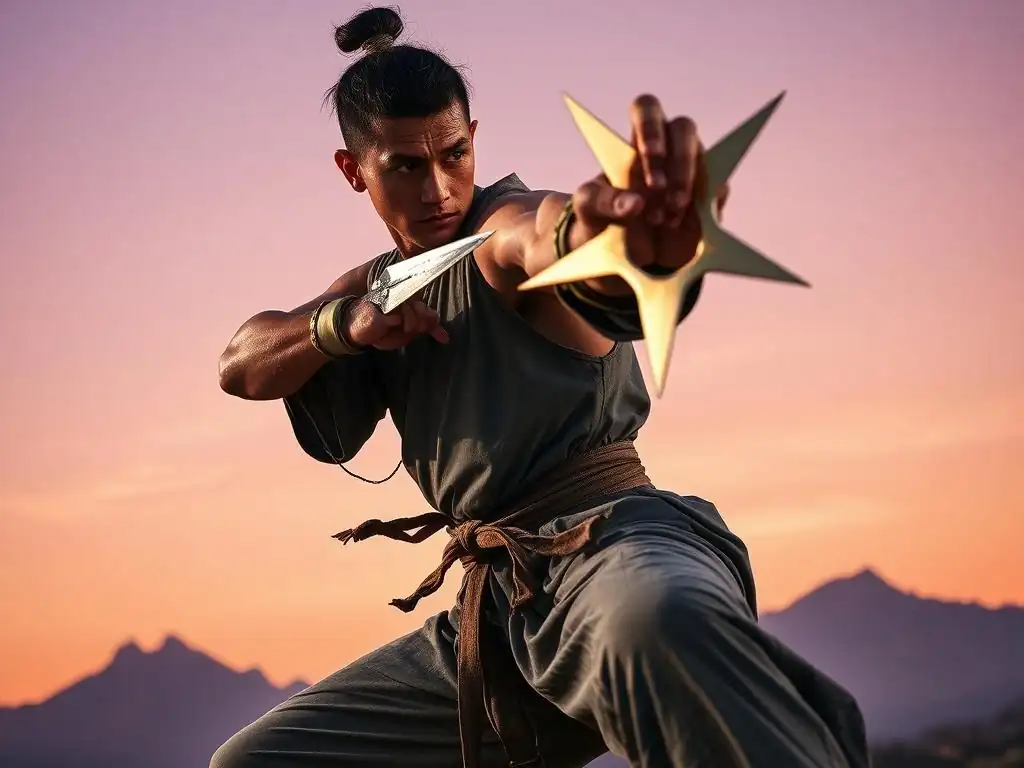
Welcome to Martial Arts Mastery, your gateway to the world's most compelling fighting arts!
Delve into the fascinating history, intricate techniques, and profound philosophies that underpin martial arts traditions worldwide. Today, we unravel the secrets behind a particularly captivating skill: the Hira Shuriken throwing technique. But is it just brute force, or is there a deeper science to mastering the star's flight? Explore our guide to discover the grip, stance, and release methods that separate a novice from a true practitioner. Prepare to unlock the precision and power behind this ancient art!
- Shurikenjutsu: Grip, Stance, and Accurate Throwing
- Mastering Shurikenjutsu: A Comprehensive Guide
- Understanding Shuriken: History and Purpose
- Essential Shuriken Throwing Technique Fundamentals
- Grip Techniques for Accurate Shuriken Throwing
- Stance and Body Positioning for Shuriken Accuracy
- The Art of the Release: Accuracy and Power
- Advanced Shuriken Throwing Drills and Techniques
- Troubleshooting Common Shuriken Throwing Problems
- Maintaining Your Shuriken
- Conclusion: Continued Practice in Shurikenjutsu
-
Frequently Asked Questions
- What is a Hira Shuriken and why is it called a "star?"
- What are the key elements of a proper stance for Hira Shuriken throwing?
- How does grip influence the accuracy of a Hira Shuriken throw?
- What are some common mistakes beginners make when learning Hira Shuriken throwing technique?
- What are some practical self-defense applications of Hira Shuriken throwing?
- Final Reflection: Mastering the Silent Strike
- Unleash Your Inner Ninja: Master the Throw!
Shurikenjutsu: Grip, Stance, and Accurate Throwing
Mastering Shurikenjutsu: A Comprehensive Guide
Shurikenjutsu, the art of throwing shuriken, is often depicted in popular culture, yet its practical application and historical context are less understood. This ancient discipline, primarily associated with ninja and samurai, involves the skillful projection of small, handheld blades. Mastering the Hira Shuriken throwing technique, specifically, requires dedicated practice focused on fundamental principles like grip, stance, and the precise timing of release. While not a primary weapon for direct combat in most historical accounts, shuriken served roles in distraction, harassment, and creating openings.
Developing proficiency in shurikenjutsu goes beyond simply throwing sharp objects. It cultivates body control, spatial awareness, and focus. The techniques, particularly for the flat, star-shaped Hira Shuriken, demand a nuanced understanding of aerodynamics, trajectory, and personal biomechanics. Achieving accuracy and consistency in Hira Shuriken throwing technique involves breaking down the complex motion into manageable components, practicing each element diligently, and integrating them into a fluid action. This guide delves into these core components, providing a framework for understanding and practicing this unique martial art skill.
Understanding Shuriken: History and Purpose
The Historical Context of Shuriken in Japanese Martial Arts
Shuriken have a long, albeit sometimes debated, history within Japanese martial traditions. While their exact origins are difficult to pinpoint, references and artifacts suggest their use dating back centuries, possibly as early as the Muromachi period (1336-1573). They were employed by various martial schools (ryū), not exclusively by ninja, and were often part of a broader curriculum that included swordsmanship, spear fighting, and unarmed combat. Historical documents and traditions indicate they were sometimes carried concealed and used as supplementary tools rather than primary weapons of assault.
Their historical use varied. Some accounts suggest they were thrown to injure or distract an opponent's hands, eyes, or legs at close range, particularly when other weapons were unavailable or impractical. Other uses included marking trails, testing wind direction, or even embedding them in the ground as obstacles. The precise application and design often depended on the specific martial school and the intended purpose, with training emphasizing accuracy over raw power, often within relatively short distances, perhaps ranging from 3 to 10 meters depending on the technique and target.
Shuriken Types: Hira Shuriken and Bo Shuriken
Shuriken can be broadly categorized into two main types: Hira Shuriken and Bo Shuriken. Hira Shuriken (平手裏剣), also known as "flat hand blades," are typically flat, plate-like objects made from sheet metal, often resembling stars (hence the common term "throwing star"), crosses, or other geometric shapes with multiple points. Their design allows them to be thrown with a spinning motion, relying on rotational stability to maintain trajectory.
Bo Shuriken (棒手裏剣), or "stick hand blades," are straight spikes or rods, often square, round, or octagonal in cross-section, and pointed at one or both ends. These are generally thrown with a non-spinning (or minimal spin) technique, relying on linear momentum and point-forward trajectory. While this article focuses on the Hira Shuriken throwing technique, understanding the distinction is crucial, as grip, stance, and release mechanics differ significantly between the two types. Hira Shuriken are the more widely recognized type due to their depiction in media.
Purpose and Effective Use of Shuriken in Combat and Training
In historical martial arts, the shuriken's purpose was often tactical rather than purely offensive. They could be used to momentarily stun or distract an opponent, breaking their concentration or forcing them to deflect, creating an opening for a follow-up attack with a primary weapon like a sword or spear. A well-aimed throw at the face or hands could be highly disruptive, even if it didn't inflict a deep wound. They were also valuable as a concealed weapon for surprise attacks or defense in tight situations.
For modern training, the purpose shifts towards developing precision, focus, and body mechanics. Practicing the Hira Shuriken throwing technique hones skills in judging distance, controlling force, and achieving consistent accuracy. It serves as an excellent exercise in coordinating the entire body for a seemingly simple action, teaching patience and repetitive refinement. While direct combat application is rare today, the discipline involved in mastering shurikenjutsu builds valuable attributes applicable to other martial arts or physical disciplines.
Essential Shuriken Throwing Technique Fundamentals
Choosing Shuriken: Weight, Shape, and Material
Selecting the right Hira Shuriken is crucial for effective practice of the throwing technique. Weight is a significant factor; beginners might start with slightly heavier shuriken (e.g., 60-80 grams) as they are often more stable in flight and provide better feedback on the throw's power and consistency. Lighter shuriken (e.g., 30-50 grams) require more finesse and precise control to throw accurately, making them more challenging initially but rewarding for advanced practitioners.
The shape, while often iconic (like the four-pointed or eight-pointed star), affects balance and aerodynamics. Symmetrical shapes are generally easier to throw consistently. The material, typically steel, impacts durability and weight distribution. High-carbon steel is common for its strength and ability to hold an edge (though sharp edges are not always necessary for practice). When choosing, consider the intended practice range and your current skill level; a heavier, simpler shape might be best for learning the basic Hira Shuriken throwing technique.
Safety Precautions for Shuriken Practice
Safety is paramount when practicing any weapon art, and shurikenjutsu is no exception. Always practice in a controlled environment, free from bystanders, pets, or breakable objects. A dedicated throwing target, such as a large piece of soft wood, a straw bale, or a specialized foam target, is essential. Never throw at hard surfaces that could cause the shuriken to ricochet dangerously.
Wear appropriate clothing that doesn't restrict movement but is also durable. Eye protection is highly recommended, especially during the initial stages when throws might be inconsistent. Always handle shuriken with care, particularly if they have sharpened edges. Establish clear rules for the practice area and never retrieve thrown shuriken until all throwing has ceased. Treat the shuriken with respect as a training tool, understanding the potential dangers if handled carelessly.
Grip Techniques for Accurate Shuriken Throwing
The Importance of a Proper Grip
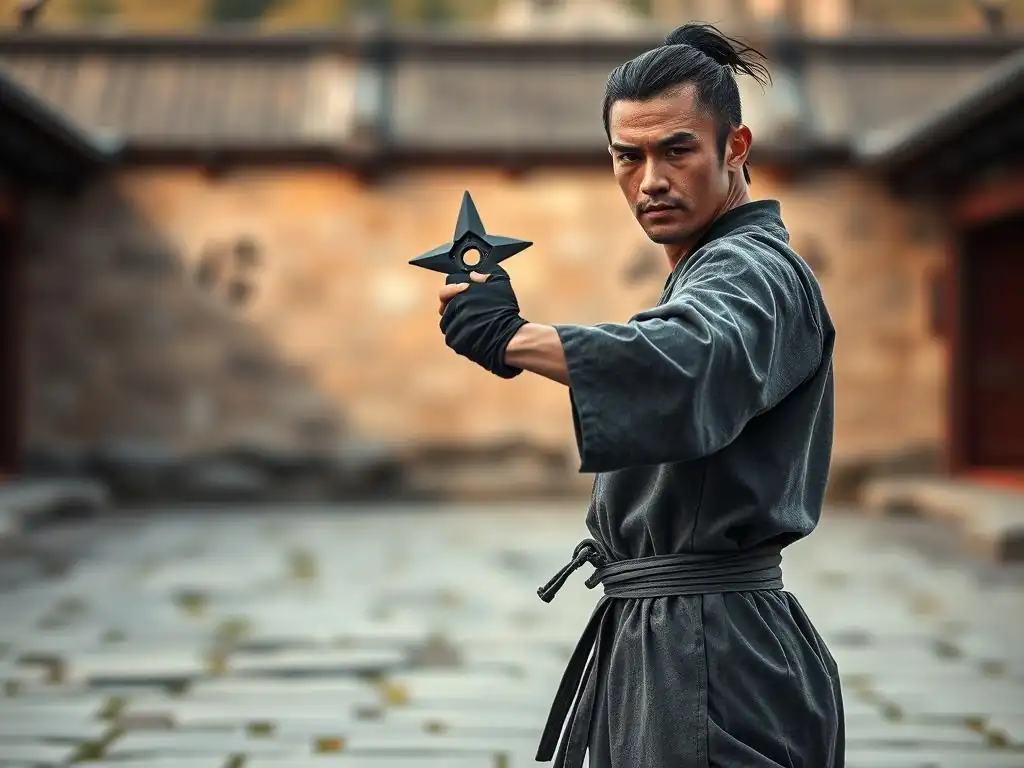
The grip is arguably the single most critical element in mastering the Hira Shuriken throwing technique. A correct grip ensures the shuriken is held securely yet allows for a clean release. An improper grip can lead to wobbling, inconsistent flight, and reduced accuracy. The way the shuriken is held dictates its initial spin and trajectory upon leaving the hand. Different grips are used depending on the shuriken type, the desired spin, and the target distance.
Developing a consistent and comfortable grip is a foundational step. It should feel natural and allow for relaxed control. Tension in the hand or arm will negatively impact the throw's fluidity and accuracy. Experimenting with slight variations within the established techniques is necessary to find what works best for your hand size and the specific shuriken you are using. The goal is a grip that facilitates a smooth, predictable release every time you perform the Hira Shuriken throwing technique.
The Thumb Grip for Hira Shuriken
The thumb grip is one of the most common methods for throwing Hira Shuriken, particularly for generating a stable spin. In this grip, the shuriken is held flat against the palm with the fingers curled around the edges, and the thumb pressed firmly against the center or near the edge of the shuriken's surface. The exact placement of the thumb can vary slightly, influencing the spin axis and speed.
When using the thumb grip for the Hira Shuriken throwing technique, the thumb provides the primary pressure point against the palm. The fingers act as a guide and support. At the moment of release, the thumb slides off the shuriken last, imparting a strong rotational force. This grip is effective for throws where a pronounced, stable spin is desired, helping the shuriken cut through the air more predictably over moderate distances. It requires practice to release the thumb cleanly without causing the shuriken to wobble.
The Finger Grip for Enhanced Control
Another effective grip for Hira Shuriken, often used for throws requiring fine control or specific trajectories, is the finger grip. In this technique, the shuriken is held between the pads of the index and middle fingers, or sometimes supported by the thumb and index finger with the other fingers supporting from underneath or the side. There are several variations within the finger grip category.
One common finger grip involves holding the shuriken by one of its points or edges between the index and middle finger, with the thumb providing light pressure on the opposite side for stability before the throw. This grip allows for a different type of release, potentially generating less initial spin than the thumb grip but offering more control over the shuriken's angle and direction at the moment of release. Mastering the finger grip is key for executing certain specialized Hira Shuriken throwing techniques.
Grip Variation: Adapting to Shuriken Type and Target
The optimal grip for Hira Shuriken throwing technique is not a one-size-fits-all solution. It depends significantly on the shuriken's shape and weight, the distance to the target, and the desired effect. A heavier shuriken might require a firmer grip or a slightly different hand position to control its momentum. A lighter shuriken might be better suited to a finger grip that allows for a more delicate release.
Furthermore, adapting the grip can help compensate for wind conditions or target specifics. For instance, a slight adjustment in thumb pressure or finger placement can alter the spin rate or initial angle, helping the shuriken stick more reliably in the target. Experienced practitioners often develop a repertoire of grip variations, understanding how each subtle change impacts the flight path and terminal behavior of the shuriken when performing the Hira Shuriken throwing technique.
Stance and Body Positioning for Shuriken Accuracy
Achieving a Balanced and Stable Stance
Just as in any throwing or striking art, a stable and balanced stance is fundamental to accurate shuriken throwing. Your stance provides the base from which power is generated and controlled. An unbalanced stance leads to inconsistent throws, as weight shifts and body movements become unpredictable. The goal is a posture that allows for smooth rotation and arm movement without losing equilibrium.
A proper stance distributes your weight effectively, enabling you to transfer energy from your lower body through your core and into your throwing arm. It should feel grounded and ready to move, yet stable enough to maintain precision. Before initiating the throw, ensure your feet are properly positioned, your knees are slightly bent, and your core is engaged. This stable foundation is essential for consistent execution of the Hira Shuriken throwing technique.
Common Stances in Shurikenjutsu
Several stances are commonly employed in shurikenjutsu, each offering different advantages depending on the situation and the type of throw being executed. The choice of stance influences body alignment, potential for power generation, and readiness for subsequent actions.
Forward Stance (Hanmi) for Power
The forward stance, often resembling hanmi (half body) from other Japanese martial arts, is frequently used for throws requiring more power or targeting objects directly in front. In this stance, one foot is forward, pointing roughly towards the target, while the back foot is angled slightly outwards, providing stability. The body is angled partially towards the target, allowing for significant torso rotation.
When using the forward stance for the Hira Shuriken throwing technique, the weight is typically balanced between both feet, or slightly more on the back foot initially. As the throw is executed, weight shifts forward onto the front foot, driving power through the body. This stance allows for a strong, whip-like motion of the arm and torso, generating considerable momentum for the shuriken.
Side Stance (Yoko-tai) for Evasion
A side stance, similar to yoko-tai (side body), positions the body with one side facing the target. This stance presents a smaller target profile to an opponent (in a combat context) and can facilitate quick movement after the throw. It is often used for throws where precision and a quick, less committed release are prioritized over maximum power.
In the side stance for the Hira Shuriken throwing technique, the feet are typically shoulder-width apart, with the non-throwing side facing the target. The throwing arm is drawn back across the body. The throw involves a rotation of the torso and a lateral movement of the arm. While potentially generating less raw power than the forward stance, the side stance allows for excellent control over the throwing angle and can be quicker to execute.
Weight Distribution and Body Alignment
Effective weight distribution and body alignment are critical for harnessing the body's mechanics in shuriken throwing. Regardless of the specific stance, proper alignment ensures that energy flows smoothly from the ground up through the body. The spine should be relatively straight, and the shoulders relaxed but ready to move.
During the Hira Shuriken throwing technique, weight transfer is key. In a forward stance, the shift from the back foot to the front foot coincides with the arm motion. In a side stance, the rotation of the hips and torso drives the throw. Maintaining proper alignment throughout this motion prevents energy leaks and ensures the force generated is directed efficiently towards the target, contributing significantly to both power and accuracy.
The Art of the Release: Accuracy and Power
Focusing Your Aim: Target Acquisition
Before initiating the throw, precise target acquisition is paramount. Simply looking in the general direction is insufficient. Just like aiming a projectile weapon, you must pick a specific point on the target to focus on. This focal point should remain fixed throughout the throwing motion.
For Hira Shuriken throwing technique, aiming requires understanding how distance and throwing force affect the shuriken's trajectory. Unlike a bullet, a thrown shuriken follows a parabolic arc. You must aim slightly higher than the intended point of impact, compensating for gravity. Practice at varying distances helps develop the intuition for this necessary elevation adjustment and sharpens your ability to acquire and maintain focus on the target point.
The Release Point: Timing
The release point is the split second when the shuriken leaves your hand. This timing is incredibly critical and dictates the shuriken's initial speed, angle, and spin. Releasing too early will send the shuriken upwards or wildly off course; releasing too late will send it downwards or into the ground.
Mastering the Hira Shuriken throwing technique requires developing a consistent release point relative to your body and the target. Typically, the release occurs as the throwing arm extends forward, often around shoulder height or slightly higher, depending on the technique and desired trajectory. The hand should be moving smoothly and accelerating through the release zone. Achieving consistent timing requires countless repetitions and focused attention on the feeling of the shuriken leaving the hand.
Generating Power: Body Rotation and Arm Movement
Power in shuriken throwing doesn't come solely from the arm. It's a result of coordinated body movement. The power chain begins in the legs and hips, moves through the core via torso rotation, and is finally transferred through the shoulder, arm, and hand. This sequence of movements, executed smoothly, generates the necessary velocity for the shuriken to reach and penetrate the target.
For the Hira Shuriken throwing technique, the torque generated by rotating the hips and shoulders is crucial. As the throwing arm comes forward, the body rotates into the throw, adding momentum. The arm movement itself is often a combination of a whip-like action from the elbow and a snap of the wrist at the moment of release, further accelerating the shuriken and imparting spin.
Follow-Through for Consistency
Just as important as the release is the follow-through. The motion of the arm and body should continue naturally after the shuriken has left the hand. Stopping the motion abruptly at the release point disrupts the flow and can negatively impact accuracy and power.
A proper follow-through allows the energy to dissipate smoothly and helps maintain balance. For the Hira Shuriken throwing technique, the throwing arm often continues across the body, and the torso completes its rotation. This consistent follow-through helps to make each throw feel similar, building muscle memory and improving overall consistency in your Hira Shuriken throwing technique.
Advanced Shuriken Throwing Drills and Techniques
Target Practice: Distance and Accuracy Drills
Once the basic Hira Shuriken throwing technique is understood, varied target practice is essential for improvement. Start close, perhaps 3-5 meters, focusing purely on sticking the shuriken consistently. Gradually increase the distance, paying attention to how the required power and trajectory change. Practice throwing at smaller targets to refine precision.
- Beginner: 3 meters, large target (e.g., 60cm x 60cm wood block). Focus: Sticking rate > 80%.
- Intermediate: 5-7 meters, medium target (e.g., 40cm x 40cm). Focus: Center mass hits.
- Advanced: 7-10+ meters, small target (e.g., 20cm x 20cm). Focus: High accuracy on specific points.
Varying the distance challenges your ability to adjust power and release timing. Keeping a log of throws, hits, and misses can provide valuable data on your progress and identify areas needing improvement in your Hira Shuriken throwing technique.
Throwing from Different Angles and Positions
Real-world situations (or even just varied training) rarely involve throwing from a perfect, static stance straight ahead. Practice throwing from kneeling positions, from a lower crouch, or even while stepping or moving. This develops adaptability and functional strength.
Experiment with throwing from the side (e.g., across your body), overhand, or underhand, understanding how each angle affects the shuriken's flight. For example, an underhand throw might be useful from a low position or for a quick, low trajectory throw. Integrating these variations into your Hira Shuriken throwing technique practice makes you a more versatile practitioner.
Incorporating Shuriken into Movement Drills
Advanced shurikenjutsu training often involves throwing as part of a larger sequence of movements. This could include drawing a primary weapon, moving to a different position, and throwing the shuriken as a distraction or preparatory action.
Practice drills where you move towards or away from the target, or sidestep, and throw the shuriken. This simulates more dynamic scenarios and helps you maintain balance and accuracy while in motion. Coordinating the Hira Shuriken throwing technique with footwork and body transitions adds a layer of complexity and realism to training.
Spin Throw: Rotation Control Drill
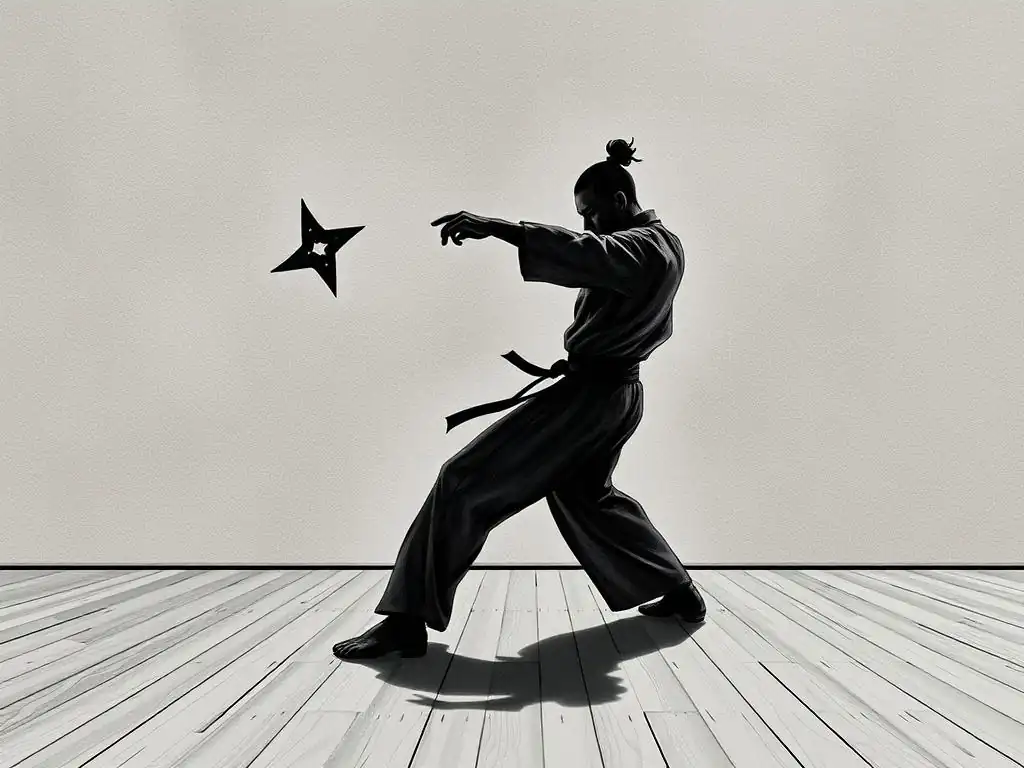
While the thumb grip naturally imparts spin, this drill focuses specifically on controlling the amount and consistency of the rotation. Practice throwing the shuriken with varying degrees of spin to understand its effect on stability and penetration.
Try to achieve a consistent number of rotations before the shuriken reaches the target at a specific distance. For example, at 5 meters, aim for the shuriken to complete 1.5 or 2 full rotations before impact. This requires precise control of the release and hand speed.
No-Look Throw: Peripheral Vision Drill
This drill, for experienced practitioners, focuses on using peripheral vision and body awareness to throw accurately without directly looking at the target during the execution. The target is acquired before the throw, but the eyes might shift or the head turn slightly during the motion.
This drill builds intuition and reliance on proprioception rather than purely visual feedback. It's challenging and should only be attempted after achieving high consistency with basic techniques. It hones the ability to integrate the Hira Shuriken throwing technique into dynamic or unpredictable scenarios.
Troubleshooting Common Shuriken Throwing Problems
Inconsistent Accuracy: Diagnosis
One of the most common frustrations in shurikenjutsu is inconsistent accuracy. This can stem from several factors:
- Varying grip pressure or release points.
- Lack of a stable stance or inconsistent weight transfer.
- Failure to focus on a specific target point.
- Tension in the throwing arm or hand.
- Inconsistent backswing or throwing motion.
To diagnose inconsistent accuracy in your Hira Shuriken throwing technique, record yourself throwing from different angles. Analyze your grip, stance, release timing, and follow-through. Focus on isolating each part of the throw in practice to identify which element is causing the variation. Sometimes, simply slowing down the motion and practicing each step deliberately can help pinpoint the issue.
Wobbling Shuriken: Grip and Release Correction
A wobbling shuriken in flight indicates instability, usually caused by a poor release. This often means the shuriken is not leaving the hand cleanly or is being pushed sideways rather than released with a smooth forward and rotational motion.
Common causes include:
- Fingers or thumb interfering with the shuriken's exit.
- Wrist snapping incorrectly or too early/late.
- Shuriken being held loosely or too tightly.
- Body leaning or jerking at the moment of release.
Correcting a wobbling Hira Shuriken throwing technique involves focusing intently on the release. Practice slow-motion throws, feeling how the shuriken separates from your hand. Ensure your fingers and thumb clear the shuriken smoothly and that the final impulse is a clean push or snap forward, imparting the desired spin without sideways movement.
Lack of Power: Stance and Body Mechanics Improvement
If your shuriken aren't penetrating the target or reaching the desired distance, the issue is likely insufficient power generation. This rarely means you need more arm strength alone; it usually points to inefficient use of body mechanics.
Causes of low power in Hira Shuriken throwing technique include:
- Throwing primarily with the arm and shoulder, neglecting the hips and core.
- Lack of proper weight transfer from the back to the front foot.
- Limited torso rotation.
- A weak or absent follow-through.
To improve power, revisit your stance and body alignment drills. Focus on initiating the throw from your lower body, rotating powerfully through your core, and allowing your arm to act as the whip at the end of the chain. Ensure your weight transfers smoothly and that your follow-through is complete. Practice throws emphasizing the coordination of hips, torso, and arm.
Maintaining Your Shuriken
Cleaning and Sharpening
Proper maintenance ensures your shuriken remain effective training tools. After practice, especially if they've been thrown into wood or damp targets, shuriken should be cleaned to prevent rust. Wipe them down with a dry cloth to remove debris and moisture. A light coating of oil (like mineral oil or gun oil) can help protect the steel, particularly if storing them for extended periods.
While not always necessary for practice targets, keeping shuriken points sharp (depending on your training goals and safety protocols) can aid penetration. Use a sharpening stone or file to carefully hone the edges and points. Always sharpen away from your body and wear protective gloves. A sharp shuriken sticks more reliably, providing better feedback on the accuracy of your Hira Shuriken throwing technique.
Proper Storage
Storing shuriken safely and correctly is vital. They should be kept in a location where they are out of reach of children and anyone unfamiliar with weapons. A dedicated case, pouch, or box is ideal. Some practitioners use custom-made wooden boxes with slots for each shuriken to prevent them from dulling their edges or scratching each other.
Store shuriken in a dry environment to prevent rust. Avoid leaving them exposed to the elements. Proper storage not only maintains the condition of the shuriken but also reinforces the discipline and respect required when handling any martial arts weapon, preserving your tools for continued practice of the Hira Shuriken throwing technique.
Conclusion: Continued Practice in Shurikenjutsu
Mastering the Hira Shuriken throwing technique is a journey that requires patience, dedication, and countless repetitions. It's a skill that refines body mechanics, focus, and precision. While the historical context of shuriken use in combat is specific, the discipline developed through their practice remains highly valuable in modern martial arts training.
By focusing on the fundamentals – achieving a stable stance, employing a proper grip, executing a clean release with coordinated body movement, and practicing consistently – practitioners can develop remarkable accuracy and consistency. Troubleshooting common issues through careful analysis and targeted drills further refines the technique. Shurikenjutsu is more than just throwing; it is a path of continuous improvement, demanding mindfulness and persistent effort to truly master the art of the Hira Shuriken throwing technique.
Frequently Asked Questions
What is a Hira Shuriken and why is it called a "star?"
A Hira Shuriken is a flat, multi-pointed throwing weapon, often called a "star" due to its star-like shape. Its effectiveness relies on accurate throwing technique and sharp edges.
What are the key elements of a proper stance for Hira Shuriken throwing?
The stance is crucial for balance and power. A good stance typically involves a stable base, weight distribution favoring the throwing arm side, and a focused gaze on the target.
How does grip influence the accuracy of a Hira Shuriken throw?
The grip determines the spin and trajectory of the shuriken. A consistent grip, such as a pinch grip or a full hand grip, is vital for predictable and accurate throws.
What are some common mistakes beginners make when learning Hira Shuriken throwing technique?
Common mistakes include improper stance, inconsistent grip, and lack of follow-through in the throwing motion. Practice and repetition are key to overcoming these.
What are some practical self-defense applications of Hira Shuriken throwing?
While primarily a historical weapon, Hira Shuriken can be used to distract or disorient an attacker, creating an opening for escape or further defensive actions. Accuracy and speed are paramount in such situations.
Final Reflection: Mastering the Silent Strike
The journey into Hira Shuriken throwing technique transcends mere physical skill; it's a pursuit of precision, discipline, and a connection to a rich martial arts tradition. While this article has focused on the practical aspects of grip, stance, and release, the true essence lies in the dedication required to master these fundamentals and unlock the potential for accurate, silent strikes.
The art of Hira Shuriken throwing has influenced not only martial arts practices but also popular culture, often romanticized as a symbol of stealth and deadly accuracy. My own fascination with this technique stems from the allure of achieving such focused control and the respect for the history it represents. The ultimate aim of martial arts is not to win battles, but to avoid battles altogether.
This quote, though often attributed to various martial arts masters, perfectly encapsulates the underlying philosophy of Hira Shuriken throwing: a tool of last resort, wielded with precision and responsibility.
Now, armed with a deeper understanding of Hira Shuriken throwing technique, I invite you to reflect on the principles of focus, discipline, and respect that underpin this art. Consider how these principles can be applied to other areas of your life, fostering a greater sense of control, precision, and mindful action. Embrace the challenge of mastering a skill, not just for the skill itself, but for the personal growth it inspires.
Unleash Your Inner Ninja: Master the Throw!
Thank you for diving into the art of Hira Shuriken throwing with us. We hope you've gained valuable insights into the grip, stance, and release techniques. Now it's time to put that knowledge into action!
- Commit to 30 minutes of practice, three times a week, focusing specifically on perfecting your grip and stance.
- Explore different release points – experiment to find what feels most natural and accurate for you.
- Share your progress or any unique challenges you face in the comments below and connect with fellow shuriken enthusiasts.
What small adjustment will you make in your next practice session to improve your star's accuracy?