
Hui Shen Zhang: Returning to Center with Power, Precision, and Awareness

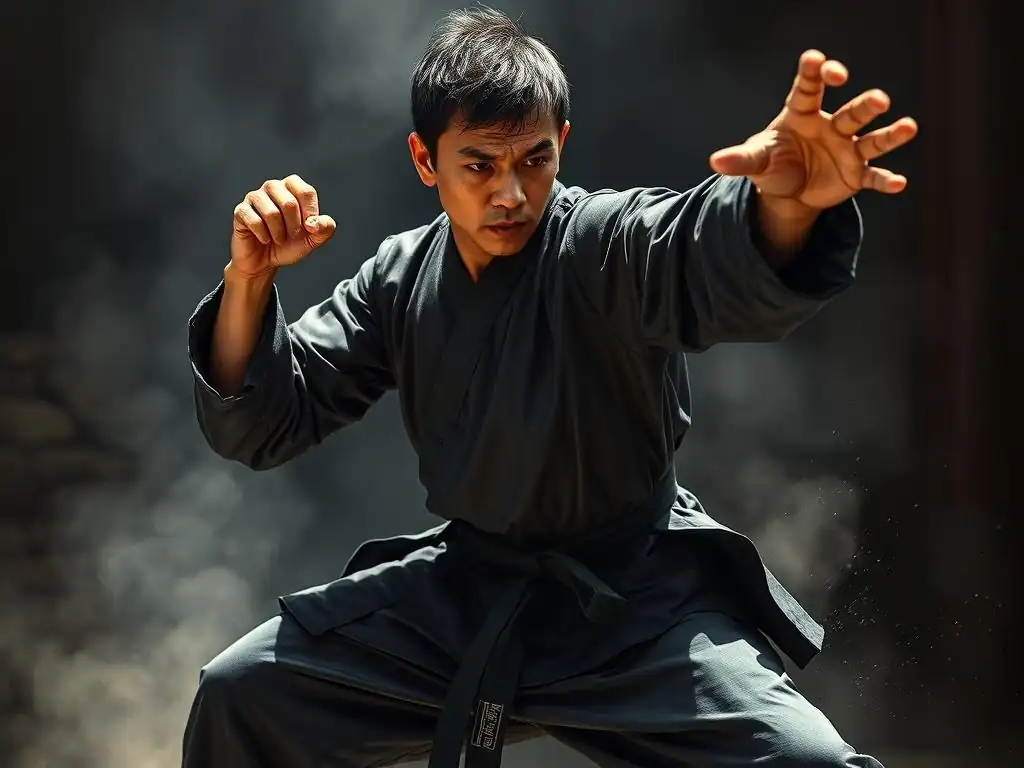
Welcome to Martial Arts Mastery, your gateway to the profound world of combat traditions! Are you ready to unlock the secrets of Hui Shen Zhang training techniques? This ancient practice emphasizes a return to center, unlocking a wellspring of power, precision, and heightened awareness. But what makes Hui Shen Zhang unique among martial arts, and how can its principles be applied to enhance your own training? Dive in to discover the answers and embark on a journey of martial arts enlightenment.
- Baguazhang: Returning to Center with Power, Precision, and Awareness
- Understanding Baguazhang: A Foundation
- Baguazhang Training Techniques: A Deep Dive
- Power Generation in Baguazhang: Leveraging Whole-Body Movement
- Precision and Accuracy in Baguazhang: Refining Technique
- Cultivating Awareness in Baguazhang Practice
- Baguazhang Styles and Lineages
- Practical Applications of Baguazhang: Self-Defense Strategies
- Advanced Baguazhang Training Methods
- The Legacy of Baguazhang in Kung Fu
-
Frequently Asked Questions
- How does Hui Shen Zhang training emphasize returning to center?
- What are the key benefits of practicing Hui Shen Zhang techniques as taught on MartialArtsMastery.org?
- What is the historical significance of Hui Shen Zhang and its connection to other martial arts disciplines?
- How does Hui Shen Zhang training address practical self-defense strategies?
- What aspects of Hui Shen Zhang training are covered on MartialArtsMastery.org?
- Final Reflection: Embracing the Centered Self
- Unleash Your Inner Warrior: Take Action Now!
Baguazhang: Returning to Center with Power, Precision, and Awareness
Understanding Baguazhang: A Foundation
Baguazhang, often translated as "Eight Trigram Palm," is one of the major internal Chinese martial arts, alongside Taijiquan and Xingyiquan. Its distinctive feature is its reliance on circular movement, specifically circle walking, as a primary training method. Unlike linear styles that emphasize direct confrontation, Baguazhang employs constant motion and evasive footwork to outmaneuver opponents, striking from angles and utilizing whole-body power. The art is deeply rooted in Taoist philosophy, particularly the concepts of change and interconnectedness as symbolized by the Bagua (eight trigrams).
The historical development of Baguazhang is generally attributed to Dong Haichuan (1797 or 1813–1882) in the 19th century. Dong, a skilled martial artist, synthesized various existing techniques and principles into the unique system we recognize today. His students further developed and spread the art, leading to the diverse styles and lineages practiced globally. Baguazhang training techniques are designed not only for combat but also for cultivating internal energy (Qi), improving health, and developing a calm, focused mind. The continuous, flowing motion is central to both its physical and philosophical aspects.
Exploring the Core Principles of Baguazhang
The core principles of Baguazhang revolve around circular motion, constant change, and the integration of the body and mind. One fundamental principle is the concept of "circling the center," where the practitioner maintains their own center of gravity while orbiting a central point, often an imagined opponent or simply the center of the training area.
This continuous movement facilitates evasion, allows for the generation of spiral energy, and constantly presents new angles of attack. A key aspect of Baguazhang training techniques involves learning to move the entire body as a unified unit, coordinating steps, waist rotation, and palm movements seamlessly.
Another vital principle is the emphasis on change and transformation. Baguazhang techniques are fluid and adaptable; a block can instantly become a strike, and a defensive posture can transition into an offensive maneuver. This adaptability is reflected in the various palm changes practiced during circle walking. These changes embody the principles of Yin and Yang, transitioning between yielding and attacking, open and closed, high and low. Mastering these principles through consistent Baguazhang training techniques allows a practitioner to respond effectively to unpredictable situations by constantly shifting their position and strategy, much like the ever-changing patterns of the Bagua itself.
The Significance of Center in Baguazhang Practice
Maintaining and utilizing one's center is paramount in Baguazhang training techniques. The physical center, roughly located in the lower abdomen (Dantian), is considered the source of power and stability. All movements in Baguazhang originate from or pass through this center. During circle walking, the practitioner learns to keep their core stable while the limbs move around it, creating a powerful rotational force. This focus on the center helps develop strong internal connections and improves balance and coordination significantly. Without a stable center, circular movement becomes unstable and lacks power.
Beyond the physical, the concept of "returning to center" also refers to a mental and energetic state. It involves maintaining composure, focus, and internal calm even amidst dynamic movement or conflict.
This mental centering, sometimes described in the context of advanced Baguazhang training techniques as achieving a state akin to Hui Shen Zhang or "Returning Spirit/Center," allows the practitioner to be fully present and responsive. By cultivating this internal stillness while the body is in motion, Baguazhang practitioners develop heightened awareness and the ability to react instinctively and effectively, drawing power from a grounded, stable core rather than relying solely on muscular strength.
Baguazhang Training Techniques: A Deep Dive
Baguazhang training techniques are multifaceted, encompassing foundational postures, dynamic movement, and partner drills. The core of solo practice revolves around circle walking, often referred to as the "mother palm" or "mother step" practice. This foundational exercise builds the essential footwork, body alignment, and internal connections necessary for all subsequent techniques. Palm changes are then integrated into circle walking, adding complexity and developing the ability to transition smoothly between different postures and applications.
Beyond solo practice, Baguazhang training techniques include various two-person drills, such as push hands (similar in principle but different in execution from Taiji push hands), sensing hands, and sparring applications. These drills help practitioners develop sensitivity to an opponent's force and intention, practice evasive maneuvers, and apply techniques in a dynamic context. Weapon training, particularly with the Bagua broadsword or deer horn knives, is also a significant part of advanced Baguazhang training techniques, further developing coordination, power, and strategic movement.
Foundational Stances and Postures for Baguazhang
Fundamental to all Baguazhang training techniques are specific stances and postures that ensure proper body alignment and facilitate the generation of power. The most common stance is the "mud walking" or "mud wading" step used during circle walking, where the feet move in a semicircular pattern close to the ground. The body maintains a slightly crouched posture with the knees bent and the weight distributed evenly or shifting smoothly. The torso is typically held upright but relaxed, with the shoulders dropped and the elbows slightly bent.
Other important postures include various palm shapes, such as the "ox tongue palm" (where the fingers are held together forming a slightly curved shape) and the "dragon claw palm" (where the fingers are slightly separated and bent). The alignment of the spine, often described as "suspending the headtop" and "sinking the tailbone," is crucial for maintaining proper structure and allowing energy to flow freely.
Mastering these foundational postures through dedicated Baguazhang training techniques lays the groundwork for developing the fluid, powerful movements characteristic of the art. For example, maintaining the correct knee bend (often around 45 degrees initially for beginners) ensures the legs are engaged and rooted, providing a stable base for upper body rotation and power generation.
Circle Walking Drills in Baguazhang: Building a Solid Base
Circle walking, or Zhan Zhuang Bu (Standing Posture Step) while circling, is the cornerstone of Baguazhang training techniques. Practitioners walk in a circle, typically around a central point or pole, maintaining a specific posture and body alignment. The distance from the center can vary, from a tight circle of perhaps 1-2 meters radius for developing compact movement to wider circles of 3-5 meters or more for developing expansive steps. The duration of circle walking sessions can range from short 10-15 minute periods for beginners to over an hour for advanced practitioners, building stamina, leg strength, and mental endurance.
During circle walking, the focus is on smooth, continuous motion, coordinating the movement of the feet, hips, waist, and hands. Various palm postures are held while walking, such as the single palm change posture where one palm faces towards the center of the circle and the other away. This practice develops balance, spatial awareness, and the ability to maintain structure while moving. Consistent circle walking is essential for developing the unique footwork and body mechanics of Baguazhang, enabling the practitioner to change direction and angle rapidly and effectively, a vital aspect of Baguazhang training techniques.
The Importance of Grounding and Rooting in Circle Walking
Grounding and rooting are critical concepts deeply integrated into Baguazhang training techniques, especially during circle walking. Rooting refers to the ability to connect firmly with the ground, using the legs and stance to create a stable foundation. This is achieved by sinking the weight, engaging the leg muscles, and ensuring proper alignment from the feet up through the hips and torso. During circle walking, the feeling is often described as having "heavy legs" or being "rooted like a tree," even while in motion.
Proper grounding allows the practitioner to absorb incoming force and generate powerful outgoing force by leveraging the connection to the earth. It prevents being easily pushed off balance. In Baguazhang training techniques, developing a strong root means that power is generated from the ground, traveling up through the legs and waist, and expressed through the hands or body.
This principle is vital not just for stability but for creating the characteristic spiraling, whole-body power of Baguazhang. A well-rooted practitioner can use minimal apparent effort to generate significant force, as they are utilizing the entire body's structure and connection to the ground.
Palm Changes and Evasions in Baguazhang: Cultivating Agility
Palm changes are the dynamic transitions performed during circle walking, representing the core techniques and applications of Baguazhang. There are typically eight fundamental palm changes, though many variations exist across different styles. These changes involve shifting body weight, rotating the waist, changing hand positions, and often altering the direction of movement or stepping pattern. Each palm change embodies specific principles of attack, defense, or transition, such as deflecting, striking, hooking, or throwing.
Integrating palm changes into Baguazhang training techniques cultivates agility, coordination, and the ability to transition smoothly between different postures and intentions. Evasions are intrinsically linked to palm changes and circle walking. Rather than blocking force head-on, Baguazhang emphasizes moving away from the line of attack by circling, stepping offline, or shifting the body. For example, evading a punch might involve stepping slightly to the side while simultaneously executing a palm change that leads into a counter-attack from an unexpected angle. This constant movement and fluidity make Baguazhang practitioners difficult targets to pin down.
Integrating Evasive Footwork with Palm Strikes
Effective Baguazhang training techniques emphasize the seamless integration of evasive footwork with palm strikes. The footwork is not merely a means of getting from point A to point B; it is an integral part of the technique itself, generating power and creating advantageous angles. As the practitioner circles or steps offline to evade, the momentum and rotation generated by the lower body are channeled through the core and expressed as a powerful palm strike. This coordination allows for strikes to be delivered with full body weight and rotational force, even while the practitioner is moving.
For instance, a common application involves stepping inside an opponent's guard while circling, using the step to evade a strike aimed at the outside. As the foot lands and the body rotates, a palm strike (such as a thrusting palm or chopping palm) is delivered to a vital area like the ribs or solar plexus. This simultaneous evasion and counter-attack is a hallmark of Baguazhang training techniques. The evasive step creates the opening and generates the power for the strike, demonstrating the art's principle of using movement to both defend and attack simultaneously.
Power Generation in Baguazhang: Leveraging Whole-Body Movement
Power generation in Baguazhang is fundamentally different from relying solely on muscular strength. It centers on the concept of Nei Jin, or internal power, which is generated through coordinated, relaxed, whole-body movement. This involves aligning the body structure correctly, sinking the weight, and using the rotation of the waist and hips to drive the movements of the limbs. The power is not fragmented in the arms or legs but unified, flowing from the ground, up through the core, and out to the point of contact.
Baguazhang training techniques systematically develop this whole-body power. Exercises like circle walking build the foundational connection between the lower and upper body. Palm changes teach how to transfer rotational energy into strikes. The spiraling nature of Baguazhang movements is key; forces are generated through twisting and untwisting actions that engage large muscle groups and connective tissues throughout the body. This results in strikes that can feel deceptively soft upon initiation but deliver a powerful, penetrating force upon impact, often described as "shock power."
Connecting Breath and Movement for Enhanced Power
A crucial element in generating internal power within Baguazhang training techniques is the coordination of breath with movement. Proper breathing techniques, typically deep abdominal breathing, help relax the body, improve circulation, and focus the mind. The breath is synchronized with physical action: often, an exhalation accompanies the release of power in a strike or push, while inhalation occurs during preparatory or yielding movements. This conscious connection enhances the flow of Qi (vital energy) and allows for greater relaxation and fluidity.
Synchronizing breath and movement ensures that the body is relaxed and aligned at the moment of power generation. Tension inhibits the flow of energy and reduces the effectiveness of internal power. By breathing deeply and coordinating it with the physical action, practitioners learn to harness the body's natural mechanics more effectively. For example, during a powerful palm strike, a sharp exhalation helps to tighten the core and focus the energy, similar to how a weightlifter uses breath to stabilize and generate force. This integration is a vital component of advanced Baguazhang training techniques aimed at developing explosive Nei Jin.
Utilizing Spiraling Energy in Baguazhang Techniques
Spiraling energy is a defining characteristic of Baguazhang training techniques and is central to its power generation. Movements are rarely purely linear; they involve twisting, rotating, and spiraling actions throughout the entire body, from the feet and legs up through the torso and out to the hands. This spiraling motion is derived from the art's circular nature and its philosophical roots in the concept of continuous change and transformation.
This spiraling action creates multiple layers of movement that converge at the point of impact, generating a powerful, penetrating force. For example, as a practitioner steps and rotates their waist, the arm does not just move forward linearly; it spirals outwards or inwards, adding torque and complexity to the strike.
This spiraling also makes techniques harder to block or resist, as the force is not a simple push but a complex, twisting vector. Developing the ability to generate and utilize this spiraling energy is a primary focus of advanced Baguazhang training techniques and is key to unlocking the art's full potential for power and effectiveness.
Precision and Accuracy in Baguazhang: Refining Technique
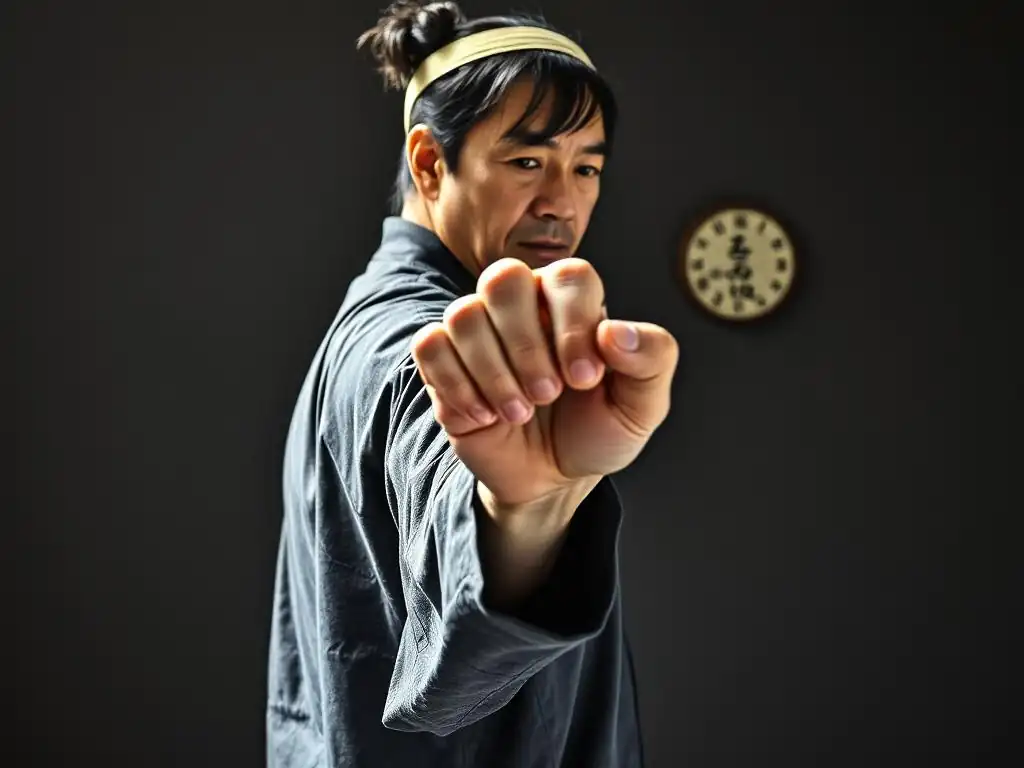
While Baguazhang is known for its dynamic, flowing movement and evasiveness, precision and accuracy are equally vital aspects of its training techniques. Effective application requires not only generating power but also delivering it precisely to the intended target at the correct moment. This involves refined body mechanics, spatial awareness, and the ability to control the direction and focus of force. Precision ensures that techniques are efficient, minimizing wasted energy and maximizing impact.
Accuracy in Baguazhang training techniques extends beyond simply hitting a target. It includes controlling distance, timing the strike to coincide with an opening or an opponent's vulnerability, and directing the force through the target rather than just at its surface. This requires subtle adjustments in body alignment, weight distribution, and muscular engagement.
Constant practice of forms, palm changes, and partner drills helps develop the proprioception and control necessary for this level of precision. For instance, a palm strike aimed at a specific point on the body requires the coordination of the entire kinetic chain to ensure the force arrives accurately and with maximum effect.
Developing Sensitivity and Responsiveness
Developing sensitivity, often referred to as Ting Jin (Listening Energy), is a critical component of refining precision and accuracy in Baguazhang training techniques. Sensitivity involves learning to feel and interpret the opponent's force, intention, and structure through physical contact or even subtle visual cues. This allows the practitioner to respond instantaneously and appropriately, adjusting their movement and technique based on real-time feedback. Sensitivity training is often developed through partner drills like push hands or sensing hands, where practitioners maintain contact and learn to yield to or redirect incoming force.
Responsiveness is the ability to react effectively based on this sensitivity. It involves transitioning smoothly and quickly between different techniques and strategies. Baguazhang training techniques cultivate responsiveness by emphasizing continuous motion and the ability to change direction and intention rapidly. For example, if an opponent applies pressure in one direction during a sensing hands drill, a sensitive practitioner can immediately feel this force and respond by yielding, redirecting, or counter-attacking from a different angle, demonstrating high responsiveness. This intuitive reaction, honed through consistent training, is essential for applying Baguazhang effectively in dynamic situations.
Targeting Vital Points with Baguazhang Palm Strikes
A key aspect of precision in Baguazhang training techniques is the targeting of vital points on the human body. While powerful whole-body strikes can be effective anywhere, targeting specific vulnerable areas maximizes the impact and efficiency of techniques. Baguazhang palm strikes are particularly well-suited for this, as the various palm shapes (like the ox tongue palm, willow leaf palm, or piercing palm) can be directed at specific anatomical targets.
Training includes learning the location and effects of strikes to points such as acupuncture points, nerve centers, major blood vessels, or structural weaknesses (like joints or ribs). For example, a downward chopping palm might target the collarbone or the side of the neck, while a piercing palm might aim for the eyes or throat.
A specific Baguazhang training technique might involve practicing striking imaginary targets at different heights and angles during circle walking, focusing on the precise trajectory and final alignment of the palm. Developing this anatomical knowledge and practicing accurate targeting ensures that Baguazhang techniques are not just powerful but also highly effective in disabling or controlling an opponent.
Cultivating Awareness in Baguazhang Practice
Awareness in Baguazhang extends beyond mere physical technique; it encompasses spatial awareness, self-awareness, and awareness of others. Cultivating heightened awareness is a fundamental goal of Baguazhang training techniques. It involves being fully present in the moment, observing one's own body mechanics, understanding the surrounding environment, and perceiving the intentions and movements of an opponent. This comprehensive awareness allows the practitioner to move intelligently, adapt spontaneously, and respond effectively to changing circumstances.
Developing awareness is an ongoing process integrated into all aspects of Baguazhang practice, from quiet standing meditation to dynamic sparring. Circle walking itself is a form of moving meditation that fosters focused attention and body awareness. Partner drills require constant observation and interpretation of the opponent's actions. This cultivated awareness is what enables a skilled Baguazhang practitioner to anticipate movements, exploit openings, and maintain composure under pressure, distinguishing effective application from simply executing techniques mechanically.
Mindfulness and Presence in Movement
Mindfulness and presence are integral to cultivating awareness within Baguazhang training techniques. Mindfulness involves paying deliberate attention to one's physical sensations, breath, thoughts, and emotions during practice, without judgment. This helps the practitioner become acutely aware of their body alignment, tension levels, and internal state while moving. Presence refers to being fully engaged in the current moment, not distracted by past mistakes or future outcomes.
Practicing mindfulness during circle walking, for example, involves focusing on the feeling of the feet on the ground, the smooth rotation of the waist, and the coordination of the hands and steps. This internal focus enhances body awareness and helps develop the ability to move with conscious control and efficiency. By cultivating this deep connection to the present moment through mindful Baguazhang training techniques, practitioners develop a sense of calm centeredness that enhances their ability to react instinctively and effectively in dynamic situations, embodying the principle of Hui Shen Zhang – returning the spirit/mind to the center.
Developing Sensitivity to Opponent's Intentions
A crucial aspect of awareness in Baguazhang training techniques is developing sensitivity to an opponent's intentions. This goes beyond simply reacting to physical contact; it involves reading subtle cues in their posture, breathing, eye movements, and muscular tension to anticipate their actions before they fully materialize. This predictive awareness allows the Baguazhang practitioner to evade or counter-attack proactively rather than merely reacting defensively.
Sensitivity to intention is honed through specific partner drills that emphasize feeling and reading the opponent's energy and structure. Through repeated practice, the practitioner learns to recognize patterns of movement and tension that precede an attack. For example, a slight shift in weight or a tensing of shoulder muscles might indicate an impending punch. By developing this heightened sensitivity through dedicated Baguazhang training techniques, the practitioner gains a significant advantage, allowing them to move into a superior position or initiate a counter-attack before the opponent's technique is fully committed.
Baguazhang Styles and Lineages
Baguazhang is not a single monolithic system but encompasses numerous styles and lineages, each with its unique characteristics and emphasis, though all share the core principles of circle walking and palm changes. The variations arose as students of Dong Haichuan developed and taught the art according to their own understanding, body type, and previous martial arts background. Prominent styles include Cheng Style (developed by Cheng Tinghua), Yin Style (developed by Yin Fu), Liang Style (developed by Liang Zhenpu), and Gao Style (developed by Gao Yisheng), among others.
While specific techniques and training methodologies may differ, the fundamental Baguazhang training techniques like circle walking and basic palm changes are common across most styles. For instance, Cheng Style is often characterized by larger, more expansive movements and emphasis on the "dragon body," while Yin Style is known for its more compact, explosive movements and emphasis on the "chicken step" and "ox tongue palm." Liang Style emphasizes practical applications and a direct approach. Understanding these stylistic differences provides insight into the rich diversity within Baguazhang.
Comparing Different Baguazhang Styles (e.g., Liang Style, Yin Style, Cheng Style)
Comparing different Baguazhang styles reveals variations in emphasis within the shared framework of Baguazhang training techniques. Cheng Style, perhaps the most widespread, is known for its emphasis on smooth, continuous movement, large circles, and relaxed power. Its palm changes tend to be expansive and flowing, utilizing the whole body's rotation. A typical Cheng Style circle walk might involve a wider radius (e.g., 4-5 meters) and a focus on the "dragon body" posture, promoting flexibility and evasiveness.
In contrast, Yin Style Baguazhang, often considered more combative and direct, emphasizes compact, explosive movements and rapid changes. Its footwork, like the "chicken step," is designed for quick, short bursts of movement. Yin Style palm changes are often more focused on specific vital points and may incorporate sharp, percussive force.
Liang Style, stemming from Liang Zhenpu, tends to be practical and emphasizes direct application and powerful, rooted movements. While all styles use circle walking, the specific postures, stepping patterns, and palm changes employed as Baguazhang training techniques can differ significantly, reflecting the lineage's specific approach to combat and internal development.
The Role of Foundational Training in Developing Advanced Baguazhang Skills
Regardless of the specific style or lineage, foundational training is absolutely critical for developing advanced Baguazhang skills. Mastery of basic Baguazhang training techniques like proper stances, circle walking, and the initial palm changes provides the essential physical conditioning, body mechanics, and internal connection necessary for more complex applications. Attempting advanced techniques without a solid foundation leads to inefficient movement, lack of power, and increased risk of injury.
Consistent practice of foundational elements builds the core strength, flexibility, balance, and coordination required for the dynamic and intricate movements of advanced Baguazhang. It also cultivates the internal qualities such as rootedness, relaxation, and awareness. For example, spending years mastering the basic "mud walking" step ensures that the practitioner's legs are strong and stable, and their body is aligned to efficiently generate power from the ground.
This foundational strength and stability are indispensable when learning advanced techniques like complex joint locks, throws, or multiple opponent applications. The depth of one's foundational Baguazhang training techniques directly correlates with the potential for developing high-level skill.
Practical Applications of Baguazhang: Self-Defense Strategies
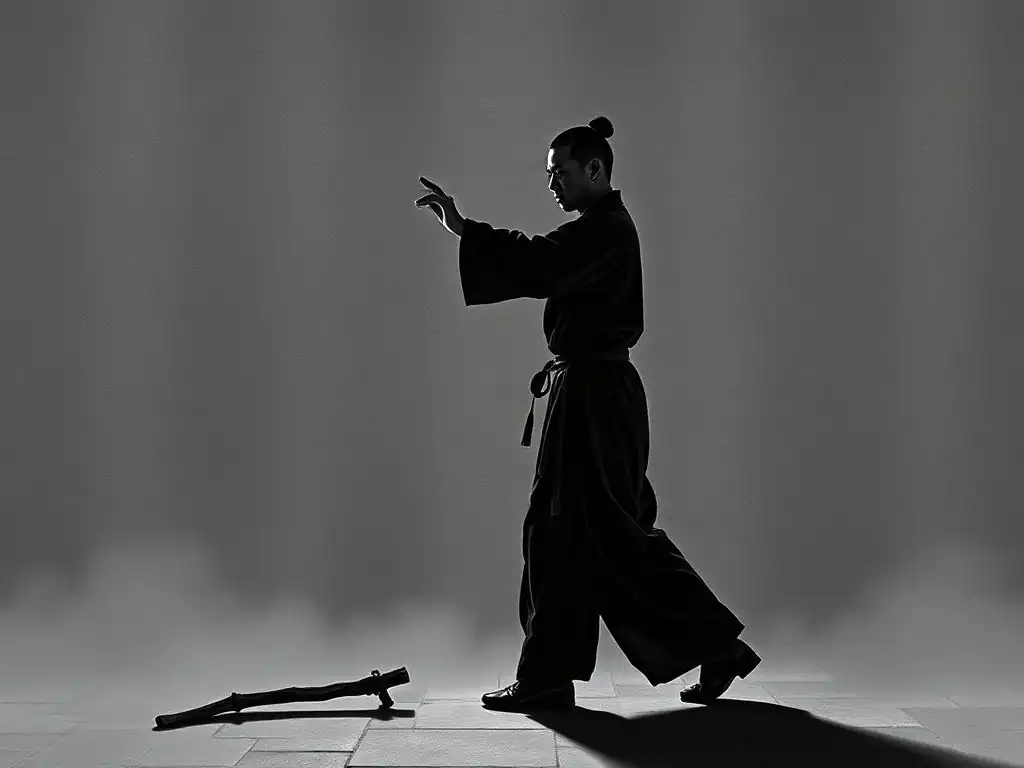
While often practiced for health and internal development, Baguazhang is a highly effective martial art with practical applications for self-defense. Its emphasis on continuous movement, evasive footwork, and striking from angles makes it well-suited for dealing with various types of aggression. Rather than meeting force with force, Baguazhang strategy involves redirecting or avoiding the incoming attack while simultaneously positioning oneself for a counter-attack from a superior angle.
Baguazhang self-defense strategies leverage the art's unique characteristics. The ability to circle allows the practitioner to evade linear attacks like punches or kicks and move to the opponent's side or rear, positions from which they have limited defense. The diverse palm changes provide a wide array of options for striking, pushing, locking, or controlling an opponent. Baguazhang training techniques teach practitioners to use the entire body as a weapon, employing not just the hands but also elbows, shoulders, hips, and even the head in close-quarters combat.
Adapting Baguazhang for Real-World Scenarios
Adapting Baguazhang for real-world self-defense scenarios requires understanding its core principles in a non-traditional context. While forms and circle walking are practiced in open spaces, self-defense often occurs in confined or unpredictable environments. Therefore, Baguazhang training techniques include drills that simulate real-world situations, such as dealing with grabs, holds, or attacks in limited space. The principles of evasive footwork and using angles remain relevant, but the scale and execution may need modification.
For example, in a narrow hallway, the wide circles of traditional practice might be impossible. Adaptation involves using smaller, more compact steps, utilizing the environment (walls, obstacles) to one's advantage, and focusing on close-range techniques like elbow strikes or joint manipulation derived from palm changes. Real-world application also emphasizes the importance of awareness – scanning the environment, recognizing potential threats, and de-escalating situations when possible. Effective Baguazhang training techniques for self-defense integrate these principles, focusing on practical, efficient movements that can be applied under stress, often combining evasion with immediate counter-action, reflecting the art's dynamic nature.
Integrating Baguazhang with Other Martial Arts Disciplines
Historically, many Baguazhang masters were also skilled in other martial arts, such as Xingyiquan or Taijiquan, and integrated techniques from different styles. This cross-training is still relevant today, as integrating Baguazhang with other disciplines can enhance a practitioner's overall martial skill set. Baguazhang's emphasis on circular movement and internal power can complement the linear force and directness of Xingyi or the yielding and rooting principles of Taiji.
For example, the dynamic footwork and evasiveness of Baguazhang can be combined with the powerful, direct strikes of Xingyiquan for a more versatile combat approach. The sensitivity and internal cultivation developed through Baguazhang training techniques can also deepen the understanding and application of Taijiquan principles. Practitioners might use Bagua's circling to evade and create an opening, then transition into a powerful Xingyi strike, or use Bagua's fluid transitions to set up a Taiji-like push or throw. This integration allows for a more comprehensive martial art, drawing on the strengths of different systems while maintaining the core principles of Baguazhang.
Advanced Baguazhang Training Methods
Advanced Baguazhang training methods delve deeper into the cultivation of internal power, complex applications, and weapon forms. These methods build upon the foundational Baguazhang training techniques mastered in the initial stages. They require greater physical conditioning, mental focus, and a refined understanding of the art's principles. Advanced training is often more individualized, tailored to the practitioner's progress and the specific lineage's emphasis.
Advanced practitioners spend significant time on standing meditation (Zhan Zhuang) and specialized internal power drills to deepen their connection to the ground and refine the flow of Qi and Jin (expressed force). They also practice more intricate palm changes, linking them together in complex sequences, and explore advanced applications involving joint locks, throws, and control techniques. Weapon training, particularly with the Bagua broadsword or unique deer horn knives, becomes a significant focus, further developing body unity, power generation, and spatial awareness in dynamic movement.
Standing Meditation (Zhan Zhuang) for Internal Power
Standing meditation, or Zhan Zhuang (Standing Post), is a crucial advanced Baguazhang training technique used to cultivate internal power ( Nei Jin) and develop a strong, rooted structure. While seemingly static, Zhan Zhuang is a highly dynamic internal exercise involving specific postures held for extended periods (often 20-60 minutes or longer). The focus is on relaxation, proper alignment, sinking the weight, and cultivating a sense of connection between the body and the ground.
During Zhan Zhuang, practitioners pay close attention to internal sensations, releasing tension and allowing Qi to flow freely. Different postures, such as holding the arms in a circle or in front of the chest, target different energy pathways and muscle groups. Regular Zhan Zhuang practice builds tremendous leg strength, improves circulation, calms the mind, and develops the ability to generate power from a relaxed, unified structure. This internal cultivation through standing is considered essential for unlocking the deeper levels of power and effectiveness in Baguazhang movements and applications.
Developing Internal Power (Nei Jin) through Specialized Drills
Beyond standing meditation, advanced Baguazhang training techniques employ specialized drills specifically designed to develop and refine internal power ( Nei Jin). These drills often involve subtle, coordinated movements that emphasize rooting, waist rotation, and the spiraling action characteristic of the art. Examples include specific pushing or pulling exercises performed slowly and deliberately, focusing on the internal connection and the generation of force from the core.
One such drill might involve practicing a simple palm push against an imaginary or partner's resistance, focusing not on muscular effort but on channeling power from the ground up through the waist and out through the palm, maintaining relaxation throughout the rest of the body. Another involves specific breathing exercises coordinated with small, controlled movements to enhance the flow of Qi and the expression of Jin.
These drills, practiced diligently, help the practitioner understand and consciously control the generation and application of internal power, moving beyond relying on external muscle strength, a hallmark of true mastery in Baguazhang training techniques.
The Legacy of Baguazhang in Kung Fu
Baguazhang occupies a significant place in the legacy of Chinese martial arts, particularly within the family of internal styles. Its unique approach to movement, emphasis on internal cultivation, and philosophical underpinnings have influenced many other martial arts systems. As one of the three main internal arts (alongside Taijiquan and Xingyiquan), it represents a distinct branch of Kung Fu focused on utilizing the body's natural mechanics, internal energy, and adaptability for both combat and health.
The art's emphasis on continuous movement and changing strategies reflects a sophisticated understanding of combat dynamics, moving beyond simple exchanges of blocks and strikes. Baguazhang's legacy is preserved through its various lineages and the dedicated practitioners who continue to train and teach its complex system of Baguazhang training techniques, ensuring that its unique principles and methods are passed down to future generations.
Historical Lineage and Influential Practitioners
The historical lineage of Baguazhang traces back to its founder, Dong Haichuan, a figure whose life is partly shrouded in legend but whose impact is undeniable. Dong Haichuan reportedly taught several prominent students who became the progenitors of the major Baguazhang styles. Key disciples include Yin Fu (founder of Yin Style), Cheng Tinghua (founder of Cheng Style), Liang Zhenpu (founder of Liang Style), and Ma Weiqi. These individuals further developed and propagated the art, each adding their own interpretations and emphasis based on their skills and experiences.
Later generations produced equally influential practitioners who refined the Baguazhang training techniques and spread the art further. Figures like Gao Yisheng (developer of Gao Style), Sun Lutang (who integrated Bagua with Taiji and Xingyi), and Fu Zhensong (known for his large circle Bagua and weapons expertise) played crucial roles in the art's evolution and dissemination throughout China and eventually worldwide. Studying the lives and teachings of these masters provides valuable insight into the history and development of Baguazhang.
Preserving and Promoting Baguazhang for Future Generations
Preserving and promoting Baguazhang for future generations is a crucial task undertaken by dedicated practitioners and organizations worldwide. This involves not only teaching the physical Baguazhang training techniques but also transmitting the art's underlying philosophy, history, and cultural context. Masters and schools work to maintain the integrity of traditional training methods while also making the art accessible to modern students.
Efforts include documenting forms and techniques, translating historical texts, organizing workshops and seminars, and building communities of practitioners. The rise of international interest and the ability to share knowledge globally through various platforms play a significant role in this preservation. By fostering a deep understanding and appreciation for all aspects of Baguazhang, from its foundational circle walking to its advanced internal cultivation and practical applications, practitioners ensure that this rich and dynamic martial art continues to thrive and benefit people around the world.
Frequently Asked Questions
How does Hui Shen Zhang training emphasize returning to center?
Hui Shen Zhang's training focuses on finding and maintaining your core, allowing for powerful and precise movements. This "returning to center" is crucial for balance and stability in all techniques. It's a foundational aspect of the art.
What are the key benefits of practicing Hui Shen Zhang techniques as taught on MartialArtsMastery.org?
The benefits include improved body awareness, enhanced coordination, and increased self-defense capabilities. The training also encourages mindfulness and a deeper understanding of martial arts principles.
What is the historical significance of Hui Shen Zhang and its connection to other martial arts disciplines?
While specific historical details are scarce, Hui Shen Zhang likely draws inspiration from various internal martial arts, such as Tai Chi and Xing Yi. It emphasizes internal energy cultivation and efficient movement principles. MartialArtsMastery.org offers context within a broader historical overview of similar arts.
How does Hui Shen Zhang training address practical self-defense strategies?
Hui Shen Zhang training equips practitioners with effective striking and grappling techniques. It emphasizes using an opponent's force against them, promoting efficient and adaptable self-defense skills. The application of these techniques is explored on MartialArtsMastery.org.
What aspects of Hui Shen Zhang training are covered on MartialArtsMastery.org?
MartialArtsMastery.org covers the fundamental stances, forms, and applications of Hui Shen Zhang. The website also delves into the philosophical underpinnings and provides training tips for maximizing learning and progress. It aims to provide a comprehensive resource.
Okay, here's a final reflection crafted to fit your article "Hui Shen Zhang: Returning to Center with Power, Precision, and Awareness," optimized for the keyword "Hui Shen Zhang training techniques," and following the structure you provided:
Final Reflection: Embracing the Centered Self
The journey through Hui Shen Zhang training techniques reveals more than just physical prowess; it illuminates a path toward cultivating inner balance and focused awareness in a world demanding constant adaptation. Understanding and applying these principles transcends the martial art itself, offering a framework for navigating life's challenges with grace and strength.
The enduring appeal of Hui Shen Zhang lies in its holistic approach, fostering not only physical discipline but also mental clarity and emotional resilience. This practice reminds us that true power stems from a deep connection to our center, a concept increasingly vital in our fragmented and fast-paced society. The center is everywhere, and the circumference is nowhere.
This ancient wisdom, echoed in the essence of Hui Shen Zhang, underscores the importance of grounding ourselves in the present moment, allowing us to respond to life's demands with unwavering focus and intention.
Now, as you step away from this exploration of Hui Shen Zhang training techniques, consider how you can integrate these principles into your daily life. Can you find moments of stillness amidst the chaos? Can you cultivate a deeper awareness of your body and mind? Embrace the challenge of returning to your center, and discover the power, precision, and awareness that reside within you.
Unleash Your Inner Warrior: Take Action Now!
Thank you for exploring the depths of Hui Shen Zhang's approach to martial arts with us. We hope you've found valuable insights into cultivating power, precision, and awareness. Now, it's time to integrate these lessons into your own journey.
Here's how you can begin:
- Prioritize daily mindfulness exercises to enhance your awareness, both in and out of your training.
- Challenge yourself to identify one area in your technique where you can apply greater precision – focus on that area during your next training session.
- Share your most impactful takeaway from Hui Shen Zhang's philosophy with a fellow martial artist to spark a deeper conversation.
How will you channel Hui Shen Zhang's wisdom to elevate your martial arts practice today?