
The Philosophical Benefits of Kendo Training: Beyond Physical Fitness

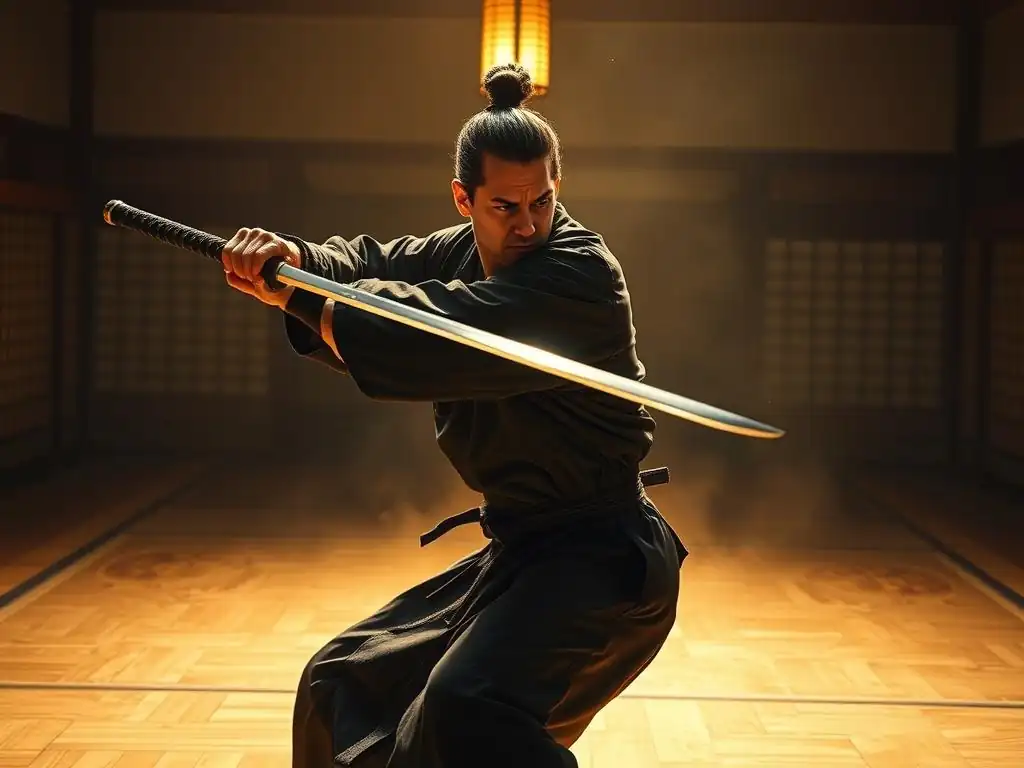
Welcome to Martial Arts Mastery, your portal to unlocking the profound depths of combat arts. Are you ready to delve into the intricate connection between discipline, mind, and spirit? This article explores the powerful Kendo philosophy and its surprising benefits for mental health. Prepare to discover how the ancient art of the sword can forge not only a formidable warrior, but also a resilient and balanced mind. Curious to know how Kendo can sharpen your focus and cultivate inner peace? Read on...
- Introduction: Unveiling the Mental and Spiritual Depths of Kendo
- Understanding the Core Principles of Kendo Philosophy
- Kendo Training and its Positive Impact on Mental Wellbeing
- Kendo's Role in Developing Self-Discipline and Mental Fortitude
- Kendo as a Path to Self-Discovery and Personal Transformation
- Kendo's Impact on Ethical Decision-Making and Moral Character
- The Link Between Kendo Training and Cognitive Enhancement
- Kendo vs. Other Martial Arts: A Philosophical Comparison
- Practical Tips for Incorporating Kendo Philosophy into Your Life
- Conclusion: Embracing the Holistic Benefits of Kendo Training
-
Frequently Asked Questions
- What are the core philosophical principles underpinning Kendo training?
- How does Kendo philosophy contribute to mental resilience?
- Can Kendo philosophy help reduce stress and anxiety?
- In what ways does Kendo training promote self-awareness?
- How does the concept of Ki-Ken-Tai-Icchi in Kendo relate to mental health?
- Final Reflection: Embracing the Way of the Sword for a Sharper Mind
- Unleash Your Inner Samurai: Embark on Your Kendo Journey!
Introduction: Unveiling the Mental and Spiritual Depths of Kendo
Kendo: More Than Just Swordsmanship
Kendo, meaning "Way of the Sword," is often perceived simply as a martial sport involving bamboo swords and protective armor. While it certainly encompasses rigorous physical techniques and competitive elements, this perspective only scratches the surface of what Kendo truly offers. Rooted deeply in the traditions of the Japanese samurai, Kendo is fundamentally a Do (道), a path or way of life, rather than merely a Jutsu (術), a collection of techniques. It is a discipline designed not just to train the body in swordsmanship, but profoundly to forge the spirit and refine the character of the practitioner.
The physical demands of Kendo are undeniable, requiring strength, speed, and stamina for powerful strikes ( datotsu) and dynamic footwork ( ashi-sabaki). However, the true essence of Kendo lies in the intense mental focus, unwavering spirit ( ki), and ethical conduct it demands. Every movement, every strike, and every interaction within the dojo is imbued with philosophical significance, aimed at developing mental fortitude, self-control, and a deep sense of respect. It is this holistic approach, integrating mind, body, and spirit, that sets Kendo apart and contributes significantly to personal development.
The Growing Interest in Kendo's Mental Health Benefits
In an era increasingly focused on mental wellbeing and stress management, the traditional disciplines offering pathways to inner peace and resilience are gaining renewed attention. Kendo, with its emphasis on mindfulness, discipline, and emotional regulation, fits squarely into this trend. People are seeking activities that provide not just physical fitness but also tools for navigating the complexities of modern life, and the philosophical underpinnings of Kendo offer exactly that. The structured environment, the demand for present-moment awareness, and the challenge of confronting fear in a controlled setting provide a unique crucible for mental growth.
While specific global participation numbers directly correlated with mental health outcomes are still a developing area of research, anecdotal reports from dojos worldwide consistently highlight the positive impact of Kendo training on practitioners' psychological states. Many report reduced anxiety, improved ability to handle pressure, and a greater sense of calm and focus in their daily lives. The growing recognition of how Kendo philosophy benefits mental health is driving interest from individuals looking for a discipline that nurtures the mind as diligently as it trains the body, offering a compelling alternative to more conventional forms of exercise or stress relief.
Understanding the Core Principles of Kendo Philosophy
Bushido and its Influence on Kendo Ethics
Kendo's philosophical foundation is inextricably linked to Bushido, the code of the samurai. Developed over centuries, Bushido provided a moral and ethical framework for the warrior class, emphasizing virtues such as integrity ( gi), respect ( rei), courage ( yu), honor ( mei), compassion ( jin), honesty ( shin), and loyalty ( chu). These principles were not abstract ideals but practical guidelines for conduct both on and off the battlefield. As the martial arts evolved from battlefield techniques ( jutsu) to ways of self-cultivation ( do), these Bushido virtues were integrated into the core philosophy of disciplines like Kendo.
In Kendo, Bushido manifests in every aspect of training. The strict adherence to reiho (etiquette), the emphasis on fair play, the expectation of honesty in calling points, and the cultivation of a fearless but respectful spirit towards opponents are direct descendants of Bushido ethics. Practitioners are constantly reminded that the ultimate goal is not merely to defeat an opponent but to cultivate their character through the rigorous demands of the practice. This ethical dimension is fundamental to how Kendo philosophy benefits mental health, providing a strong moral compass and fostering a sense of self-worth based on integrity and discipline.
Ki-Ken-Tai-Ichi: The Harmony of Spirit, Sword, and Body
A central concept in Kendo is Ki-Ken-Tai-Ichi (気剣体一致), which translates to "Spirit, Sword, and Body as One." This principle asserts that for a strike ( datotsu) to be valid and effective, these three elements must converge simultaneously and harmoniously. Ki represents the spirit, intent, and energy; Ken represents the sword (or shinai) and technique; and Tai represents the body's physical movement and posture. Achieving Ki-Ken-Tai-Ichi requires complete mental focus and physical coordination, executed with powerful spirit.
Practicing to achieve Ki-Ken-Tai-Ichi is a constant process of self-refinement. It demands intense concentration to align one's mental intent with precise physical action at the exact moment of impact. This pursuit trains the mind to be fully present and unified with the body, dissolving internal conflict and hesitation. Mastering this harmony is not just about better Kendo technique; it is a profound lesson in integrating one's inner will with outward action, fostering a sense of presence and control that significantly contributes to emotional stability and mental clarity – a key aspect of how Kendo philosophy benefits mental health.
The Importance of Reiho (Etiquette) in Cultivating Respect
Reiho (礼法), or etiquette, is a cornerstone of Kendo practice and philosophy. It encompasses the numerous bows performed before entering and leaving the dojo, to the sensei, to fellow practitioners, and even to the shinai itself. While seemingly formal, these rituals are deeply meaningful, serving to instill humility, respect, and mindfulness. Each bow is an acknowledgment of the shared space, the guidance received, the partnership in training, and the tools used for practice. It creates a structured environment built on mutual respect and gratitude.
Beyond the bows, Reiho extends to how practitioners conduct themselves throughout training – maintaining proper posture, speaking respectfully, helping others, and cleaning the dojo. This consistent practice of etiquette fosters a strong sense of community and belonging within the dojo, reducing ego and promoting harmonious interaction. By constantly practicing respect towards others and the training environment, practitioners cultivate respect for themselves and the discipline, laying a solid foundation for positive social engagement and inner peace, thereby reinforcing how Kendo philosophy benefits mental health through structured social and personal conduct.
Kendo Training and its Positive Impact on Mental Wellbeing
Enhanced Focus and Concentration Through Kendo Practice
Kendo training demands an exceptional level of focus and concentration. During sparring ( jigeiko) or even structured drills, practitioners must maintain constant awareness of their opponent's posture, movement, and intent, while simultaneously being mindful of their own guard, breathing, and readiness to strike. Drills like kirikaeshi, which involves repetitive strikes with precise footwork, require sustained attention to detail and rhythm. This intense, dynamic requirement for focus trains the mind to filter distractions and remain anchored in the present moment.
This continuous mental effort strengthens the ability to concentrate, a skill highly valuable in all areas of life, from work and study to personal relationships. The practice of focusing solely on the immediate task at hand within the dojo translates into an improved capacity to resist distractions and maintain attention in other environments. This enhanced cognitive control is a tangible way that Kendo philosophy benefits mental health, particularly for individuals struggling with attention deficits or mind-wandering, promoting a sense of mental clarity and presence.
Stress Reduction and Improved Emotional Regulation in Kendo
The physical intensity of Kendo serves as a powerful outlet for stress. The vigorous strikes, loud kiai (shouts), and dynamic movements release physical tension and pent-up energy. Moreover, the mental discipline required forces practitioners to channel their energy and emotions constructively rather than being overwhelmed by them. Facing an opponent, even in practice, generates pressure and can trigger anxiety or frustration, but the structured environment of the dojo provides a safe space to practice managing these emotions.
Learning to remain calm under pressure, to accept being struck without losing composure, and to continue training despite fatigue or frustration builds significant emotional resilience. Kendo teaches practitioners to acknowledge difficult emotions but not be controlled by them, instead focusing on the technique and spirit.
Anecdotal evidence from dojos suggests that practitioners often report a noticeable decrease in general stress levels within 6-12 months of consistent Kendo training, citing the physical release and mental discipline as key factors. This development of emotional regulation is a crucial aspect of how Kendo philosophy benefits mental health, equipping individuals with better coping mechanisms.
Cultivating Resilience and Perseverance Through Kendo's Challenges
Kendo is a discipline that inherently involves facing challenges and setbacks. Receiving painful strikes, losing matches, struggling to grasp a technique, or feeling exhausted during practice are common experiences. However, the philosophy of Kendo emphasizes perseverance and learning from these difficulties. Practitioners are taught to get up after being struck, to analyze their mistakes, and to return to practice with renewed determination. This process builds grit and mental toughness.
The commitment required for consistent Kendo training, especially during periods of slow progress or frustration, cultivates a deep sense of perseverance. Overcoming physical discomfort and mental obstacles in the dojo strengthens the ability to face challenges outside of training with a more resilient mindset. This ingrained habit of pushing through difficulty and learning from failure is a significant Kendo philosophy benefit for mental health, fostering an optimistic outlook and the confidence to tackle adversity in all aspects of life.
Kendo's Role in Developing Self-Discipline and Mental Fortitude
Overcoming Fear and Anxiety on the Kendo Shiai-jo (Competition Floor)
Stepping onto the shiai-jo (competition floor) or even engaging in intense jigeiko (sparring) can be intimidating. The fear of being struck, the pressure to perform, and the anxiety of facing an opponent are natural responses. Kendo training, however, provides a structured environment to directly confront and manage these fears. By repeatedly engaging in controlled combat situations, practitioners learn to move beyond their initial apprehension and focus on the task at hand.
The philosophy of Kendo teaches that true courage is not the absence of fear, but the ability to act effectively in spite of it. Through consistent practice, the initial anxiety gradually diminishes, replaced by focused energy and determination. This process of confronting fear in the dojo builds mental fortitude that extends far beyond swordsmanship, equipping practitioners with the courage to face daunting situations and performance anxiety in their professional and personal lives. This direct engagement with fear is a practical way Kendo philosophy benefits mental health by fostering bravery and composure.
Building Self-Confidence Through Skill Mastery and Personal Growth
Progress in Kendo is hard-earned, requiring dedication and consistent effort. As practitioners gradually improve their technique, timing, and strategic understanding, they experience tangible signs of skill mastery. Executing a clean, effective strike, successfully applying a learned tactic, or passing a grading examination provides concrete evidence of personal growth and competence. These achievements, no matter how small, build a powerful sense of accomplishment.
This gradual accumulation of skill and the recognition of personal progress are fundamental in building self-confidence. The belief in one's ability to learn, improve, and overcome challenges through dedicated effort cultivated in the dojo translates directly into increased self-efficacy in other areas. This enhanced self-esteem is a significant Kendo philosophy benefit for mental health, empowering individuals to pursue goals and face challenges with greater assurance.
The Power of Kata in Refining Mental and Physical Discipline
Kendo Kata (剣道形) are pre-arranged forms performed with a partner, using wooden swords ( bokuto). There are ten standard Kata, each representing fundamental principles and techniques of swordsmanship. Unlike sparring, Kata is not about winning or losing, but about perfect execution, timing, precision, and conveying intent ( ki). It requires intense focus, mutual trust with the partner, and meticulous attention to detail.
Practicing Kata instills a deep sense of discipline and patience. It demands mental presence and physical control to perform the movements correctly and in perfect synchronization with the partner. The repetitive, deliberate nature of Kata training refines both physical technique and mental concentration, reinforcing the importance of precision and intent over brute force. This disciplined approach to practice is a core component of how Kendo philosophy benefits mental health by cultivating patience, attention to detail, and the ability to focus on quality over speed or outcome.
Kendo as a Path to Self-Discovery and Personal Transformation
Exploring the Concept of Mushin (No-Mind) in Kendo
Mushin (無心), often translated as "no-mind," is a state sought after in many Zen-influenced martial arts, including Kendo. It refers to a state of mind free from conscious thought, deliberation, or emotional attachment – a state where action flows spontaneously and effectively from instinct and training, unhindered by fear, anxiety, or ego. In Kendo, intense sparring or moments of critical decision-making can push practitioners towards this state, where the trained body reacts instantaneously without the interference of overthinking.
Pursuing Mushin in Kendo is a journey of letting go of mental clutter and trusting one's training. It requires overcoming the ego's desire to control and predict, allowing for a more intuitive and present way of being. Experiencing moments of Mushin in the dojo can provide glimpses of deeper self-awareness and a sense of effortless flow, offering profound insights into the nature of consciousness and action. This exploration of higher states of awareness is a unique way Kendo philosophy benefits mental health, promoting a sense of inner peace and freedom from intrusive thoughts.
Developing Self-Awareness Through Introspection and Practice
Kendo training provides constant feedback on one's physical, mental, and emotional state. Mistakes in technique, failures in sparring, or difficulty maintaining composure under pressure reveal areas for improvement. The rigorous demands of practice strip away pretenses and force practitioners to confront their limitations, fears, and habits. This raw, immediate feedback loop is a powerful catalyst for self-awareness.
Beyond the physical practice, Kendo encourages introspection. Reflecting on training sessions, analyzing one's performance, and receiving guidance from a sensei prompts deeper understanding of one's own reactions, thought patterns, and emotional responses. This process of self-examination, driven by the pursuit of improvement in Kendo, fosters significant personal growth and a clearer understanding of oneself. This cultivated self-awareness is a fundamental Kendo philosophy benefit for mental health, enabling individuals to identify and work on their inner challenges.
Finding Inner Peace and Mental Clarity Through Kendo's Rigorous Demands
The intense physical exertion and mental focus required in Kendo can be surprisingly meditative. The need to be fully present, combined with the physical demands, leaves little room for the mind to wander or dwell on external worries. The structured nature of practice, the repetitive movements, and the emphasis on breath control ( kiai) can induce a state of focused calm, similar to active meditation.
For many practitioners, the dojo becomes a sanctuary from the stresses of daily life. The demanding nature of Kendo forces a singular focus that quiets the 'noise' of anxieties and obligations. This immersion in the present moment during training leads to increased mental clarity and a sense of inner peace that extends beyond the practice session. The unique combination of physical rigor and mental discipline offers a potent pathway to reduced mental clutter and a greater sense of calm, demonstrating how Kendo philosophy benefits mental health by providing a structured escape and fostering present-moment awareness.
Kendo's Impact on Ethical Decision-Making and Moral Character
Applying Kendo Principles to Everyday Life
The principles and discipline cultivated in the Kendo dojo are not intended to remain confined to the training hall. The goal is for the lessons learned through the Way of the Sword to permeate and positively influence all aspects of a practitioner's life. The courage to face an opponent in shiai can translate into the courage to confront difficult conversations or challenges at work. The respect shown to fellow practitioners can deepen empathy and improve interactions with family and friends.
The perseverance developed through rigorous training can fuel determination in pursuing personal or professional goals. The self-control practiced under pressure in sparring can help manage emotional responses in stressful situations outside the dojo. By consciously applying the values and disciplines learned in Kendo – such as maintaining composure, acting with integrity, and showing respect – practitioners find that they are better equipped to navigate the complexities of everyday life, demonstrating the broad reach of how Kendo philosophy benefits mental health by shaping ethical behavior and resilience in the wider world.
Fostering Integrity and Honesty Through Kendo's Code of Conduct
Integrity and honesty are core tenets of Bushido and, consequently, of Kendo. This is particularly evident in the practice of acknowledging when a valid point ( yuko-datotsu) has been scored against oneself, even if the referee does not call it. This adherence to truthfulness, even when it means admitting defeat, is deeply ingrained in Kendo culture. The emphasis is on upholding the spirit of fairness and honesty above the desire to win at all costs.
Consistently practicing this level of integrity in the dojo builds a strong moral character. It reinforces the importance of being truthful with oneself and with others, fostering a sense of self-respect and trustworthiness. This commitment to an ethical code provides a solid foundation for personal conduct and decision-making, contributing significantly to a stable mental state. By prioritizing integrity, Kendo philosophy benefits mental health by fostering self-respect and reducing the internal conflict that can arise from compromising one's values.
Kendo is not a solitary pursuit; it is inherently communal. Training partners rely on each other for safe and effective practice. Senior practitioners guide and support juniors. Everyone shares responsibility for maintaining the dojo space and upholding the standards of Reiho. This collaborative environment fosters a strong sense of belonging and mutual responsibility.
Through this shared practice, practitioners develop greater social awareness and empathy. Learning to work safely and effectively with different partners, understanding their needs and limitations, and contributing to the dojo community cultivates a sense of responsibility towards others. This positive social engagement and the feeling of being part of a supportive community are vital for mental wellbeing, highlighting another way Kendo philosophy benefits mental health by promoting connection and shared purpose.
The Link Between Kendo Training and Cognitive Enhancement
Improved Memory and Cognitive Function Through Kendo's Demands
Kendo training is a complex cognitive task. It requires remembering numerous techniques, understanding strategic principles, recalling Kata sequences, and processing information rapidly in dynamic sparring situations. Practitioners must constantly analyze their opponent's movements, anticipate their intentions, and select appropriate responses instantaneously, all while maintaining awareness of their own body and position.
This constant mental engagement acts as a rigorous workout for the brain. The demands on working memory (holding information about the current situation), processing speed (reacting quickly), and executive function (planning and adapting strategy) are significant. While large-scale studies specifically on Kendo and memory are limited, research on complex motor learning, which Kendo embodies, suggests potential benefits for cognitive function, with some research indicating improved performance on memory tasks in participants engaged in similar disciplines. This cognitive stimulation is a key component of how Kendo philosophy benefits mental health and overall cognitive health.
Enhanced Problem-Solving Skills and Strategic Thinking in Kendo
Sparring in Kendo is a dynamic problem-solving exercise. Each encounter presents a unique challenge requiring rapid assessment and strategic adaptation. Practitioners must read their opponent's habits, identify openings, set up attacks, and counter defensive maneuvers in real-time. This requires flexible thinking, the ability to adapt plans quickly, and creative problem-solving under pressure.
The strategic depth of Kendo trains the brain to think tactically and solve problems efficiently in a fast-paced environment. This constant engagement with strategic challenges cultivates skills that are highly transferable to professional and personal contexts, improving the ability to analyze situations, anticipate outcomes, and devise effective solutions. This enhancement of strategic thinking is another valuable way Kendo philosophy benefits mental health by increasing cognitive agility and problem-solving capacity.
The Benefits of Kendo for Brain Health and Cognitive Longevity
Engaging in regular Kendo training combines significant physical activity with intense mental demands, a combination widely recognized for its benefits to brain health. Physical exercise promotes blood flow to the brain and stimulates the release of neurotrophic factors that support neuron growth and survival. The complex cognitive demands of Kendo, meanwhile, promote neuroplasticity – the brain's ability to reorganize itself by forming new neural connections.
Research generally supports that combining vigorous physical activity with mentally challenging tasks, as found in Kendo, can contribute positively to brain health and potentially mitigate age-related cognitive decline. The stress reduction aspects also play a role, as chronic stress is known to be detrimental to cognitive function. By providing a holistic workout for both body and mind, Kendo offers a pathway not just to present mental well-being but also potentially to long-term cognitive longevity, further reinforcing how Kendo philosophy benefits mental health across the lifespan.
Kendo vs. Other Martial Arts: A Philosophical Comparison
Contrasting Kendo's Mental Focus with Other Disciplines
While many martial arts emphasize mental discipline, Kendo's approach is distinct. Arts like Karate or Taekwondo often focus on perfecting powerful strikes and forms, while Judo and Aikido center on grappling and throws. Kendo, stemming from the life-or-death context of samurai swordsmanship, places an unparalleled emphasis on reading intent ( seme) and achieving a state of focused readiness where technique flows from spirit ( ki). The protective armor and shinai allow for full-force, realistic engagement, forcing practitioners to confront fear and maintain composure in a uniquely intense psychological environment.
Unlike arts where technique might sometimes override mental state in a controlled drill, Kendo's effective execution is inextricably linked to the practitioner's ki and mental presence. A strike lacking sufficient spirit or intent, even if physically correct, is not considered a valid point. This intrinsic link between mental state and technical effectiveness highlights Kendo's unique philosophical emphasis on the mind as the driver of action, setting it apart in its specific focus on mental and spiritual unity with physical technique.
Unique Philosophical Aspects of Kendo Training
Several philosophical concepts are particularly prominent and uniquely embodied in Kendo training. Sutemi (捨身), meaning "throwing away one's body," refers to the complete commitment to an attack, regardless of the potential risk. This isn't recklessness but a philosophical readiness to sacrifice one's own safety for the successful execution of a technique, demonstrating ultimate courage and resolve. Zanshin (残心), or "remaining spirit," emphasizes maintaining awareness and readiness even after a strike or engagement, representing continuous presence of mind and spirit.
The profound respect shown towards the shinai, the opponent, and the dojo environment through meticulous Reiho is also a distinguishing feature. The shinai is treated not just as a piece of equipment but as a symbolic extension of the warrior's spirit. This deep reverence for the tools and partners of practice, combined with the explicit pursuit of states like Mushin and Zanshin within the context of realistic combat simulation, gives Kendo a unique philosophical depth that permeates every aspect of training and is core to how Kendo philosophy benefits mental health.
Why Kendo Stands Out for Mental and Spiritual Development
While all martial arts offer paths to physical and mental discipline, Kendo's historical lineage, its unique training methods, and its explicit philosophical goals make it particularly potent for mental and spiritual development. The direct connection to the samurai code of Bushido provides a rich ethical framework. The intense, yet safe, simulation of combat demands the constant confrontation of fear and the cultivation of composure under pressure in a way few other arts replicate.
Furthermore, the central concept of Ki-Ken-Tai-Ichi and the pursuit of Mushin are not just abstract ideas but are actively trained for and experienced through the physical practice itself. This embodied philosophy, where mental and spiritual states are integral to effective technique, creates a powerful feedback loop for personal growth.
For those seeking a discipline that challenges the mind and spirit as much as the body, and offers a structured path to courage, resilience, and self-awareness grounded in a rich ethical tradition, Kendo stands out as a profound vehicle for mental and spiritual mastery, making the Kendo philosophy benefits for mental health particularly significant.
Practical Tips for Incorporating Kendo Philosophy into Your Life
Mindfulness Exercises Inspired by Kendo Principles
The intense focus required in Kendo can be adapted into practical mindfulness exercises for daily life. Try focusing completely on a single task, like washing dishes or commuting, bringing your attention back whenever your mind wanders, much like focusing on your opponent's center. Practice Zanshin by consciously maintaining awareness and readiness after completing an activity, ensuring you don't immediately become distracted but carry that focused energy forward.
Another technique is to use breathing as an anchor, similar to how Kendo practitioners control their breath for kiai and sustained effort. When feeling stressed or overwhelmed, take a moment to focus solely on your breath, grounding yourself in the present moment before reacting. These simple practices, inspired by Kendo's demand for present-moment awareness, can significantly enhance mindfulness and emotional regulation, extending the Kendo philosophy benefits mental health into everyday routines.
Applying Bushido Values in Your Daily Interactions
Consciously integrate Bushido values into your interactions. Practice Rei (respect) by actively listening to others and acknowledging their perspectives, even in disagreement. Demonstrate Gi (integrity) by being honest in your communication and commitments. Show Yu (courage) by standing up for what you believe in or having difficult but necessary conversations. Uphold Shin (honesty) by being truthful in all your dealings.
By making a conscious effort to embody these values, just as you would in the dojo, you strengthen your moral character and improve your relationships. Living in alignment with these principles reduces internal conflict and builds trust with others, contributing to a greater sense of peace and stability. This practical application of Kendo's ethical framework is a powerful way Kendo philosophy benefits mental health by fostering positive character development and harmonious relationships.
Using Kendo as a Tool for Self-Reflection and Personal Growth
View your Kendo training as a metaphor for life's journey and a catalyst for self-reflection. After a challenging practice or a difficult match, take time to reflect not just on the techniques, but on your mental and emotional responses. Ask yourself: How did I react under pressure? What fears or frustrations arose? How did I handle setbacks?
Journaling about these experiences can provide valuable insights into your patterns of thinking and behavior. Use the concept of Kaizen (改善 - continuous improvement), central to Japanese disciplines, to identify specific areas for personal growth, both in and out of the dojo. By actively using Kendo as a mirror for self-discovery and committing to continuous improvement, you deepen the transformative power of the practice, making this reflective approach a core element of how Kendo philosophy benefits mental health by promoting ongoing personal development and self-awareness.
Conclusion: Embracing the Holistic Benefits of Kendo Training
Kendo: A Pathway to Physical, Mental, and Spiritual Mastery
Kendo is far more than just a physical sport or a historical martial art; it is a comprehensive discipline that offers a profound pathway to holistic mastery. While the physical training builds strength, agility, and endurance, the true depth of Kendo lies in its capacity to cultivate the mind and spirit. Through its rigorous demands, ethical framework rooted in Bushido, and unique philosophical concepts like Ki-Ken-Tai-Ichi and Mushin, Kendo challenges practitioners to achieve unity of purpose and being.
The practice provides powerful tools for enhancing mental wellbeing, fostering improved focus, emotional regulation, resilience, and self-confidence. It cultivates self-discipline and mental fortitude by requiring practitioners to confront fear and persevere through challenges. Furthermore, Kendo serves as a vehicle for self-discovery, ethical development, and even cognitive enhancement, demonstrating how Kendo philosophy benefits mental health on multiple interconnected levels, leading towards a more balanced and integrated self.
The Enduring Legacy of Kendo Philosophy
The philosophical principles embedded in Kendo have been refined over centuries, evolving from the life-preserving arts of the samurai into a modern discipline focused on human development. This enduring legacy remains profoundly relevant in contemporary society, offering timeless wisdom and practical methods for navigating the complexities of modern life. In a world often characterized by distraction and disconnection, Kendo provides a structured path towards presence, discipline, and inner strength.
The unique contribution of Kendo philosophy benefits mental health by offering a rigorous, embodied practice that directly addresses fear, builds resilience, and cultivates mindfulness and ethical character. It is a discipline that encourages continuous self-improvement, not just in skill, but in spirit. For those seeking a martial art that offers deep personal transformation and a pathway to mastering not only the sword but also the self, the Way of Kendo offers a challenging yet incredibly rewarding journey.
Frequently Asked Questions
What are the core philosophical principles underpinning Kendo training?
Kendo philosophy emphasizes discipline, respect, and self-improvement. These principles are deeply rooted in Bushido, the samurai code, and influence all aspects of training.
How does Kendo philosophy contribute to mental resilience?
Kendo's rigorous training fosters mental fortitude by requiring practitioners to overcome challenges and persevere through adversity. This builds resilience and a stronger sense of self.
Can Kendo philosophy help reduce stress and anxiety?
Yes, the focus on mindfulness during training and the emphasis on controlled breathing can help regulate emotions and reduce stress. The discipline required promotes a sense of calm.
In what ways does Kendo training promote self-awareness?
Kendo encourages introspection and self-reflection. By analyzing their performance and understanding their weaknesses, practitioners develop a deeper understanding of themselves and their capabilities.
How does the concept of Ki-Ken-Tai-Icchi in Kendo relate to mental health?
Ki-Ken-Tai-Icchi, meaning "spirit, sword, and body as one," promotes holistic integration of mind and body. This unity fosters a sense of inner harmony and improved mental well-being.
Final Reflection: Embracing the Way of the Sword for a Sharper Mind
The journey through the philosophical benefits of Kendo training reveals more than just physical prowess; it unveils a path to enhanced mental well-being. In a world increasingly demanding mental fortitude, the principles of Kendo, from discipline and respect to mindfulness and perseverance, offer a tangible framework for cultivating inner strength and resilience, making its relevance more profound than ever.
The enduring impact of Kendo extends far beyond the dojo, shaping character and fostering a deeper understanding of oneself. My own exploration of Kendo's philosophy has highlighted its power to cultivate a calm and focused mind, a skill invaluable in navigating the complexities of modern life. The ultimate aim of Kendo is to mold character, to train the mind and body, and to cultivate a vigorous spirit, and through correct and rigid training, to strive for improvement in the art of Kendo.
- All Japan Kendo Federation. This quote encapsulates the transformative potential that lies within the practice.
Now, I invite you to consider how the principles of Kendo, the discipline, the focus, the unwavering spirit, can be applied to your own life. How can you embrace the "way of the sword" to sharpen your own mind, cultivate resilience, and find a deeper sense of purpose? Let the lessons of Kendo inspire you to face challenges with courage, integrity, and an unwavering commitment to personal growth.
Unleash Your Inner Samurai: Embark on Your Kendo Journey!
Thank you for exploring the philosophical depths of Kendo training with us! Now that you've uncovered its mental and spiritual benefits, it's time to translate that knowledge into action.
- Find a local Kendo dojo and attend an introductory class. This is the most direct way to experience the discipline and principles firsthand. Don't be intimidated; beginners are always welcome!
- Share this article with a friend or family member who might also benefit from the philosophical insights of martial arts. Spread the wisdom!
- Reflect on how the Kendo principles of respect, discipline, and perseverance can be applied to your daily life outside of the dojo. Consider journaling your insights.
Ready to embrace the Way of the Sword and cultivate a stronger mind and spirit?