
Jigoro Kano's Blueprint for a Better World Through Judo

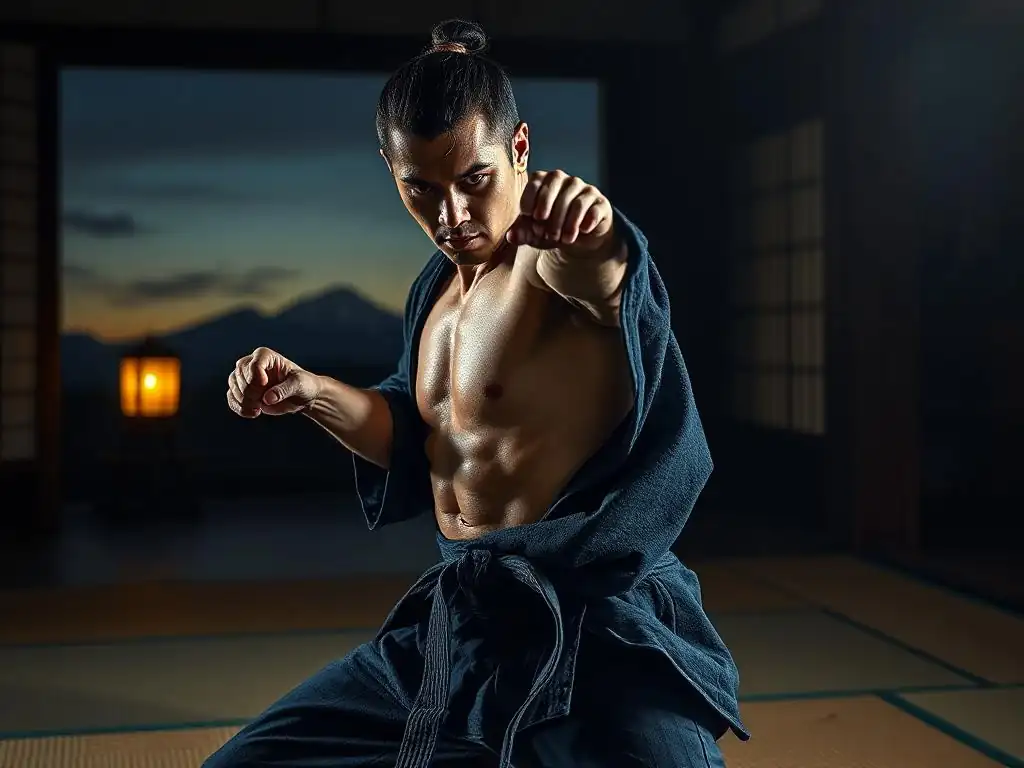
Welcome to Martial Arts Mastery!
Delve into the profound world of combat and self-discovery. Are you ready to unlock the secrets of martial arts? Prepare to embark on a journey that transcends mere physical prowess. This site is dedicated to exploring the rich tapestry of martial arts traditions, from their historical roots to their modern applications.
Today, we begin with a deep dive into the core of Judo, exploring Jigoro Kano's Blueprint for a Better World Through Judo. Discover the Judo training philosophy, the underlying principles, and the multifaceted benefits that extend far beyond the dojo. What if the true strength of Judo lies not just in its techniques, but in its power to shape character and cultivate a more harmonious world? Keep reading to find out!
Seiryoku Zenyo, often translated as "maximum efficiency, minimum effort," stands as a cornerstone of Jigoro Kano's Judo training philosophy. This principle is not merely a technical guideline but a fundamental approach to problem-solving and action within Judo and beyond.
At its heart, it teaches practitioners to utilize leverage, timing, and an opponent's momentum against them, rather than relying solely on brute strength. Kano developed this concept by analyzing the techniques of various jujutsu schools and applying scientific principles of mechanics and physics.
For example, in executing a throw like O Goshi (major hip throw), maximum efficiency is achieved not by lifting the opponent with raw power, but by using hip rotation and body alignment to off-balance them and direct their weight over your center of gravity, requiring significantly less muscular effort than a direct lift. This emphasis on intelligent application of force is a key principle that distinguishes Judo from many other grappling arts focused purely on strength.
Applying Seiryoku Zenyo in practice is a continuous learning process during Judo training. Beginners learn foundational movements and breakfalls, but as they progress, they are guided to understand how to exploit subtle shifts in weight or posture. In a sparring scenario (randori), a judoka embodying Seiryoku Zenyo might wait patiently for their opponent to commit to an attack, then use that forward momentum to execute a counter-throw, requiring far less energy than initiating a powerful attack themselves.
This strategic thinking and economical use of energy are significant benefits derived from embracing this core Judo training principle. Mastering Seiryoku Zenyo leads to more fluid, effective techniques and conserves stamina, allowing for longer and more productive training sessions and matches. It's a practical demonstration of how intelligent application surpasses raw power, a lesson profoundly valuable both on and off the mat.
-
Frequently Asked Questions
- What are the core philosophical principles of Judo training according to Jigoro Kano?
- How does Judo training benefit practitioners beyond physical fitness?
- What is the historical significance of Jigoro Kano's contribution to Judo?
- How can Judo training principles be applied outside of the dojo?
- What are some practical self-defense strategies taught in Judo training?
- Final Reflection: The Enduring Legacy of Judo's Principles
- Unlock Your Potential: Embrace the Path of Judo!
Frequently Asked Questions
What are the core philosophical principles of Judo training according to Jigoro Kano?
Jigoro Kano emphasized Seiryoku Zenyo (maximum efficiency, minimum effort) and Jita Kyoei (mutual welfare and benefit) as the foundational principles of Judo. These extend beyond the mat into daily life.
How does Judo training benefit practitioners beyond physical fitness?
Judo training develops mental discipline, self-confidence, and respect for oneself and others, fostering a holistic approach to personal growth. It's about more than just physical prowess.
What is the historical significance of Jigoro Kano's contribution to Judo?
Kano transformed traditional Jujutsu into a modern educational and character-building system known as Judo. He focused on ethical development alongside physical skill.
How can Judo training principles be applied outside of the dojo?
The principles of Seiryoku Zenyo and Jita Kyoei can be applied to problem-solving, relationships, and community involvement, promoting efficiency and mutual benefit in all aspects of life.
What are some practical self-defense strategies taught in Judo training?
Judo training provides practical self-defense skills through techniques like throws, grappling, and submissions, emphasizing controlled aggression and effective use of leverage to neutralize threats.
Okay, here's a final reflection designed to close your article "Jigoro Kano's Blueprint for a Better World Through Judo," optimized for the keyword "Judo training philosophy principles benefits," and following the structure you provided:
Final Reflection: The Enduring Legacy of Judo's Principles
The exploration of Jigoro Kano's Judo training philosophy, principles, and benefits reveals more than just a martial art; it unveils a profound system for personal and societal betterment. Kano's vision, rooted in mutual welfare and benefit, remains strikingly relevant today, offering a powerful antidote to the divisive forces that often dominate our world. His emphasis on discipline, respect, and continuous self-improvement provides a timeless framework for navigating the complexities of modern life.
The influence of Judo extends far beyond the dojo, shaping character and fostering a sense of community that transcends cultural boundaries. The principles of Judo, particularly "Seiryoku Zenyo" (maximum efficiency, minimum effort) and "Jita Kyoei" (mutual welfare and benefit), have profoundly impacted my understanding of collaboration and ethical conduct. Judo is not just a sport; it's a way of life. It's a philosophy that teaches us to be better people, to contribute to society, and to live in harmony with others.
This quote encapsulates the enduring power of Kano's vision, a vision that continues to resonate with individuals seeking a path towards personal growth and social responsibility.
As we conclude this exploration of Jigoro Kano's blueprint, I invite you to reflect on how the principles of Judo can be applied in your own life. Consider how you can embody "Seiryoku Zenyo" in your daily tasks, striving for efficiency and effectiveness in all that you do. Embrace "Jita Kyoei" by actively seeking opportunities to contribute to the well-being of others. Let the spirit of Judo inspire you to cultivate discipline, respect, and a relentless pursuit of self-improvement, ultimately contributing to a better world for all.
Unlock Your Potential: Embrace the Path of Judo!
Thanks for exploring the principles of Judo and Jigoro Kano's vision for a better world. We hope you found inspiration in his philosophy and the transformative power of martial arts. Now, it’s time to apply these lessons to your own journey.
Here's how you can take the next step:
- Commit to incorporating one Judo principle into your daily life this week, such as mutual welfare or maximum efficiency. See how it impacts your interactions and decisions.
- Share this article with a friend or family member who might benefit from learning about Judo's philosophy.
- Explore local Judo dojos or martial arts communities to discover opportunities for training and connection.
How will you use Judo's principles to build a better version of yourself?