
Partner Drills for Realistic Praying Mantis Sweep Training

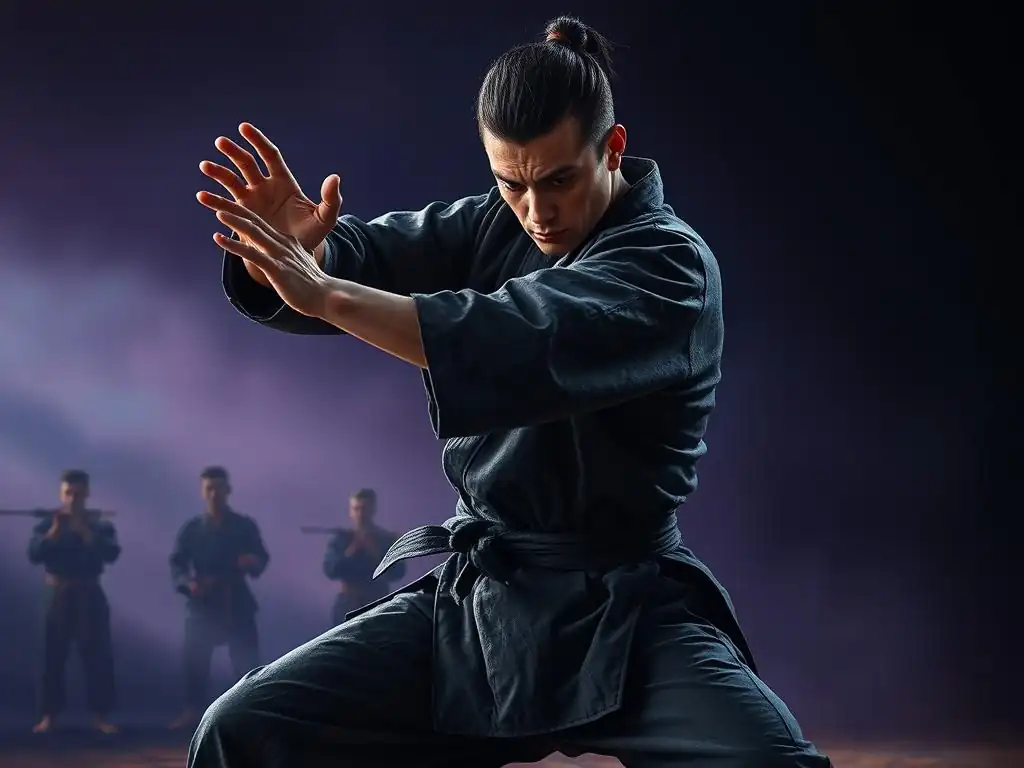
Welcome to Martial Arts Mastery, your gateway to the world's fighting arts! Ever wondered how the fluid movements of the Praying Mantis style translate to realistic combat? This article delves into the heart of effective training with a breakdown of realistic praying mantis sweep drills. Discover partner exercises designed to bridge the gap between form and function, and unlock the secrets to mastering this deceptively powerful technique. Ready to take your Mantis Kung Fu to the next level?
- Partner Drills for Praying Mantis Leg Techniques
- Introduction to Praying Mantis Leg Techniques: Enhancing Practical Application Through Partner Drills
- Understanding Praying Mantis Leg Techniques: Foundational Elements
- Partner Drills for Developing Effective Leg Techniques
- Advanced Training: Increasing the Realism of Leg Techniques
- Safety Considerations for Partner Leg Technique Drills
- Conclusion: Mastering Realistic Praying Mantis Leg Techniques Through Partner Training
-
Frequently Asked Questions
- What makes Praying Mantis sweeps different from other martial arts sweeps?
- Why is partner drilling essential for learning Realistic Praying Mantis sweeps?
- What are some key considerations when choosing a partner for Realistic Praying Mantis sweep drills?
- How can I ensure the safety of myself and my partner during these drills?
- Where can I find resources to supplement partner drills for Realistic Praying Mantis sweep training?
- Final Reflection: Embracing the Flow of Realistic Combat
- Unleash Your Inner Mantis: Start Practicing!
Partner Drills for Praying Mantis Leg Techniques
Introduction to Praying Mantis Leg Techniques: Enhancing Practical Application Through Partner Drills
The Importance of Partner Training in Developing Leg Techniques
Partner training is an indispensable element in the development of effective martial arts techniques, particularly for styles like Northern Praying Mantis Kung Fu. While solo forms (Tao Lu) build foundational movements, coordination, and power generation, it is through interaction with a training partner that one learns to apply these techniques against a resisting, unpredictable opponent.
This interactive environment allows practitioners to test their understanding of distance, timing, and leverage in a dynamic context, moving beyond theoretical knowledge to practical application. Without the feedback provided by a partner – whether absorbing a technique, reacting to an entry, or providing resistance – the practitioner's understanding of how techniques function in a real-world scenario remains incomplete.
Moreover, partner training fosters crucial attributes often overlooked in solo practice, such as sensitivity (ting jing), the ability to 'listen' to an opponent's force and intention through physical contact. It develops reactive skills, forcing practitioners to adapt their planned techniques based on the partner's movements and defenses. Realistic praying mantis sweep drills, for instance, require precise timing and understanding of an opponent's balance points, which can only be accurately practiced when attempting to genuinely unbalance another person. This iterative process of attempt, feedback, and adjustment is the cornerstone of developing functional martial arts skills.
Why Partner Drills are Crucial for Realistic Application
Realistic application in martial arts means being able to execute techniques effectively under pressure, against a moving target, and in unpredictable situations. Partner drills bridge the gap between the controlled environment of solo practice and the chaos of actual combat or self-defense. They allow practitioners to simulate aspects of a real encounter in a safe and controlled manner, gradually increasing intensity and complexity.
This is particularly true for realistic praying mantis sweep drills and other leg techniques, which rely heavily on timing an opponent's weight distribution and movement. Attempting a sweep on air or a stationary object provides only limited insight; attempting it on a partner who shifts weight or resists offers invaluable feedback on entry angles, force application, and follow-through.
Furthermore, partner drills enable the development of essential fighting attributes like spatial awareness, reaction time, and the ability to read an opponent's body language. By working with a partner, practitioners learn how to judge distance accurately for leg techniques, how to time their movements to exploit openings, and how to react instinctively to defensive maneuvers.
Realistic praying mantis sweep drills, when practiced with increasing levels of resistance, teach the practitioner how much force is truly needed to disrupt balance and how to maintain their own equilibrium during the attempt. This practical experience is vital for transforming theoretical knowledge into usable skills, making partner drills an indispensable component of a comprehensive training regimen.
Understanding Praying Mantis Leg Techniques: Foundational Elements
Key Principles of Praying Mantis Footwork and Stance
Praying Mantis Kung Fu emphasizes agile and adaptable footwork, designed to facilitate rapid movement, generate power, and maintain balance while attacking or defending. The stances are generally higher and more mobile than in some other traditional styles, allowing for quick transitions between attacking ranges and angles.
A core principle is the concept of 'sticky' or 'hooking' steps (Gou Bu), where the feet move in a way that maintains connection with the ground while allowing for swift repositioning, similar to how a praying mantis uses its legs to grip. This footwork is crucial for setting up entries for realistic praying mantis sweep drills and other leg attacks.
Another vital principle is the coordination of footwork with hand techniques and body mechanics. Footwork isn't just about moving; it's about creating opportunities, closing distance, evading attacks, and generating torque for strikes and sweeps. The shifting of weight and the precise placement of the feet are integral to executing powerful and balanced leg techniques.
For instance, setting up a sweep often involves subtle footwork adjustments to get inside the opponent's base or off-balance them slightly before initiating the leg action. Mastering these foundational principles of stance and footwork is paramount before attempting realistic praying mantis sweep drills with a partner.
Common Leg Techniques in Praying Mantis Style
Praying Mantis Kung Fu incorporates a variety of leg techniques, ranging from low sweeps and kicks to higher-line attacks, though the style is arguably more renowned for its intricate hand techniques and trapping. Leg techniques are often used in conjunction with hand work to disrupt an opponent's balance, create openings, or deliver disabling blows.
Common examples include sweeps (often low to the ankle or shin), stomps, low kicks to the knee or thigh, and sometimes higher kicks used as distractions or follow-ups. The emphasis is generally on practicality and using the legs to either set up hand techniques or deliver quick, effective attacks that don't compromise balance excessively.
The application of these techniques is deeply intertwined with the style's characteristic close-range fighting and trapping strategies. A leg sweep might be used after trapping an opponent's arms to prevent them from regaining balance, or a low kick could be used to disrupt their posture while simultaneously attacking the upper body. Realistic praying mantis sweep drills focus on the timing and coordination required for these combined actions. While not as flashy as some other styles, the leg techniques in Praying Mantis are designed to be efficient and integrated seamlessly into the overall fighting structure.
Taan Teui (Springing Leg) Application
Taan Teui, often translated as "Springing Leg" or "Snap Kick," is a foundational technique found in many Northern Kung Fu styles, including Praying Mantis. It is typically a straight or slightly angled kick delivered with the ball of the foot or the heel, often aimed at targets like the knee, shin, or groin.
The power comes from a rapid extension of the leg, akin to a spring uncoiling, emphasizing speed and penetration over brute force. This technique is versatile and can be used as an offensive strike, a defensive check against an opponent advancing, or a disruptive force to create an opening for other techniques.
In Praying Mantis, the Taan Teui is often used in combination with hand techniques. For example, a quick Taan Teui to the knee might distract or momentarily halt an opponent, allowing the practitioner to follow up with characteristic Praying Mantis trapping and striking combinations.
Partner drills for Taan Teui focus on developing timing, accuracy, and the ability to execute the kick rapidly while maintaining balance. Practicing against a partner holding a pad or simulating an advance helps refine the distance and timing needed for effective application in a dynamic situation, contributing to the realism needed for effective praying mantis leg technique training.
Gwa Teui (Hanging Leg) Drill Breakdown
Gwa Teui, or "Hanging Leg," is another distinctive Praying Mantis leg technique, often resembling a low, hooking sweep or a checking motion. It involves using the side or heel of the foot to hook or sweep an opponent's leg, typically below the knee or at the ankle, aiming to disrupt their balance and potentially cause a fall.
The motion is often circular or semi-circular, leveraging body weight and hip rotation to generate force. Unlike a powerful roundhouse sweep, Gwa Teui can be more subtle, relying on timing and disrupting the opponent's structure rather than simply knocking them over with force.
A common partner drill for Gwa Teui involves one partner standing with a stable stance while the other practices the sweeping motion, initially without resistance. The focus is on the foot placement, the angle of the sweep, and coordinating the leg action with a slight shift in body weight.
As proficiency increases, the standing partner can add slight resistance or shift their weight naturally, forcing the practitioner to time the sweep precisely when the opponent's weight is committed or transitioning. This graduated resistance is key to developing realistic praying mantis sweep drills, teaching practitioners how to feel for and exploit moments of instability.
Partner Drills for Developing Effective Leg Techniques
Drill 1: Basic Kicking Entry and Execution
Setting Up the Drill: Distance and Timing
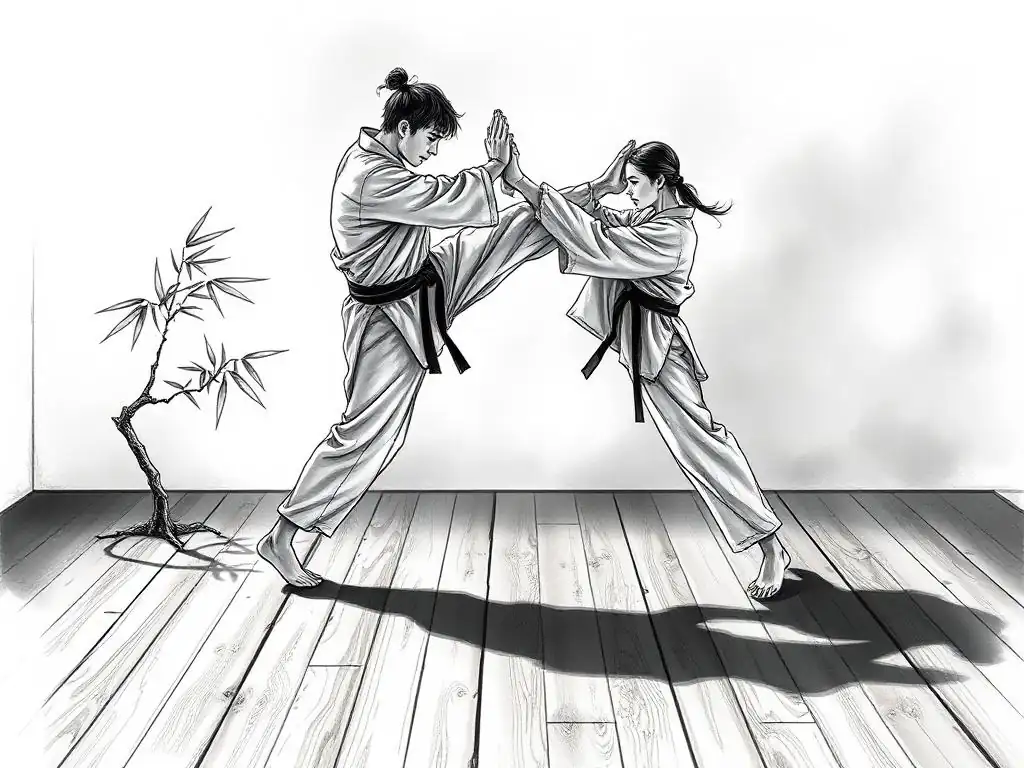
This fundamental drill focuses on safely entering range and executing a basic leg technique like a low Taan Teui or a checking kick. Partners stand at a distance just outside of kicking range. The drill begins with one partner initiating a simple, predictable movement, such as stepping forward or throwing a slow, non-committal punch.
The other partner's task is to use their footwork to quickly close the distance and execute the leg technique (e.g., a low kick to the thigh or knee) as the opponent is committing their weight forward or is momentarily off-balance. The focus is not on power but on correct timing and judging the distance needed to land the technique effectively and retract the leg safely.
Initial repetitions should be slow and deliberate, allowing both partners to understand the required timing and movement. The partner receiving the kick can hold a pad or simply absorb the light impact on a protected area (like the thigh). Gradually, the speed and variability of the initiating movement can increase, forcing the practitioner to react more instinctively. This drill helps develop the crucial sense of timing required for realistic praying mantis sweep drills and other leg attacks, teaching the practitioner to recognize the opportune moment to strike with the leg.
Technique Execution: Maintaining Balance and Power
Executing leg techniques effectively requires not only timing but also maintaining one's own balance and generating sufficient power without compromising stability. In this drill, after closing distance and executing the kick, the practitioner must immediately retract the leg and return to a balanced stance, ready to follow up or defend. The power for the kick should come from proper body mechanics, including hip rotation and core engagement, rather than simply swinging the leg. Practicing this against a partner allows for feedback on whether the kick is disruptive or if the practitioner is losing their own balance.
Partners can provide feedback on the impact (was it solid?) and the practitioner's stability (did they wobble after kicking?). The receiving partner can also slightly shift their weight or position after the initiating movement, making the target slightly harder to hit and forcing the practitioner to adjust their angle or timing on the fly. This iterative process of execution, feedback, and adjustment is essential for developing realistic praying mantis leg techniques that are both effective and safe to apply in dynamic situations.
Common Mistakes and Corrections in the Basic Kick Drill
Several common errors occur during basic leg technique drills. One frequent mistake is losing balance when kicking, often due to leaning back excessively or failing to engage the core. This leaves the practitioner vulnerable. The correction involves focusing on keeping the torso relatively upright and using the supporting leg and hip to drive the kick, ensuring a stable base. Another error is misjudging distance, either kicking too early (falling short) or too late (getting jammed or losing the opportunity). This is corrected through repetition and conscious effort to time the footwork entry with the opponent's movement.
A third common mistake, particularly relevant for realistic praying mantis sweep drills, is failing to retract the leg quickly after execution, leaving it exposed to grabs or counters. The correction involves practicing snapping the leg back immediately after contact, utilizing the same 'springing' action used to extend it. Partners can actively attempt to 'trap' the leg if it lingers too long, providing immediate negative feedback. Consistent practice with mindful attention to these common errors and their corrections is key to developing reliable and effective leg techniques.
Drill 2: Combining Leg Techniques with Hand Techniques
Integrating Punches and Blocks Before the Kick
Praying Mantis Kung Fu excels at combining hand and leg techniques seamlessly. This drill focuses on using hand techniques – such as jabs, straight punches, or even simple blocks – to set up a leg attack.
One partner initiates with a combination (e.g., a jab-straight punch), and the other partner practices blocking or evading the hand strikes while simultaneously preparing or executing a leg technique (like a low kick or a sweep attempt) as a counter or follow-up. The timing is crucial: the leg technique should often coincide with or immediately follow the opponent's completion of their hand combination, when their weight or attention might be momentarily shifted.
For instance, as the partner finishes their straight punch and begins to retract their arm, the practitioner could step in with footwork and attempt a low sweep ( Gwa Teui) to their lead leg. The hand techniques serve to occupy the opponent's upper body defense and potentially mask the intention of the leg attack. Practicing this integration requires coordination between the upper and lower body, which partner drills are ideal for developing. It moves practitioners closer to performing realistic praying mantis sweep drills within the flow of combat.
Developing Combinations for Off-Balancing the Opponent
Praying Mantis techniques often aim to off-balance the opponent before or during a finishing technique. Combining hand and leg techniques is a primary method for achieving this. Drills should focus on sequences where hand strikes or trapping actions disrupt the opponent's posture or force them to shift weight, creating an opportunity for a leg sweep or trip. For example, a quick series of hand traps and pulls could momentarily shift the opponent's weight onto one leg, making it vulnerable to a sweep on the supporting leg.
Partners can practice predetermined combinations initially, focusing on the mechanics of the off-balancing action and the timing of the subsequent leg technique. As proficiency grows, the drills can become more reactive, with the practitioner using hand techniques based on the partner's movement to create an off-balance, then immediately capitalizing with a leg attack. This develops the ability to 'feel' the opponent's balance and react instantly, which is fundamental for realistic praying mantis sweep drills against a dynamic opponent.
Example Combination: Jab-Front Kick
A simple yet effective combination is the jab followed by a front kick ( Taan Teui). In a partner drill, one partner assumes a fighting stance. The other partner throws a light, quick jab towards the head or chest. As the partner reacts (perhaps by blocking or slightly flinching), the practitioner immediately follows with a front kick to the knee or lower thigh. The jab serves as a distraction and helps close distance, while the kick targets a lower, often less defended area.
The drill involves alternating roles. The focus for the attacker is on the speed and seamless transition between the jab and the kick, ensuring the jab serves its purpose in setting up the leg technique. The receiving partner provides feedback on the timing and effectiveness of the combination – did the jab cause a reaction? Was the kick difficult to defend? This helps refine the execution of realistic praying mantis leg techniques in combination with hand strikes.
Drill 3: Countering and Evasion
Responding to Incoming Attacks
Realistic praying mantis sweep drills and other leg techniques are not just offensive tools; they can also be used defensively or as counters. This drill focuses on using leg techniques to respond to an opponent's attack. One partner initiates with a simple attack, such as a punch or a step-in. The practitioner's task is to use footwork for evasion or blocking, and immediately counter with a leg technique. For example, as the partner steps in to punch, the practitioner might side-step (evasion) and simultaneously execute a low kick to the advancing leg or attempt a sweep as they pass.
The drill should start slowly, allowing the practitioner time to process the incoming attack and select an appropriate response. As skill improves, the speed and variety of incoming attacks can increase. This teaches practitioners how to integrate leg techniques into their defensive reactions, making their game more unpredictable and effective. It highlights that realistic praying mantis leg techniques are part of a complete defensive and offensive system.
Developing Evasion Strategies
Effective leg techniques often rely on creating angles or distance through evasion before attacking with the leg, or using leg techniques during an evasion. This drill specifically targets developing evasion strategies that set up leg attacks. The attacking partner throws a strike, and the practitioner practices different types of evasive footwork (e.g., side-stepping, stepping back, circling) while looking for an opportunity to land a leg technique as a counter or follow-up.
For example, as the partner throws a round punch, the practitioner might step inside the arc of the punch and execute a low sweep ( Gwa Teui) on the partner's lead leg, using the evasion to simultaneously gain a favorable angle and disrupt the partner's balance. The drill emphasizes coordinating the evasive movement with the leg action, ensuring that the evasion doesn't just avoid the attack but actively creates an opportunity for a counter leg technique. This adds another layer of realism to praying mantis leg technique training.
Drill Scenario: Opponent Attacks with a Punch
A specific drill scenario for countering involves a partner attacking with a straight punch. The practitioner's task is to slightly shift their body off the line of attack (e.g., stepping slightly to the outside or inside) while simultaneously using a leg technique against the attacker's lead leg. If stepping outside, a low kick to the back of the thigh or knee might be appropriate. If stepping inside, a sweep or trip could be attempted as the attacker's weight commits forward.
The attacker provides a consistent, medium-speed punch initially. The practitioner focuses on the timing of the evasion and the counter leg technique. Both should happen almost simultaneously or in rapid succession. As the drill progresses, the attacker can vary the speed and angle slightly, forcing the practitioner to adapt their evasion and counter. This practical application scenario is vital for developing realistic praying mantis sweep drills and counters under simulated pressure.
Drill 4: Dynamic Sparring with Limited Resistance
Controlled Sparring for Leg Technique Application
Moving towards realistic application requires practicing techniques in a more fluid, less predictable environment. Controlled sparring with limited resistance allows practitioners to apply leg techniques within a dynamic exchange without the intensity or risk of full-contact fighting. The focus in this type of sparring is specifically on the application of leg techniques, rather than winning. Partners agree on a level of intensity (e.g., light contact for leg techniques, no power on hand strikes) and focus on setting up and attempting their leg attacks.
For instance, practitioners might agree to focus only on low kicks and sweeps below the waist. They move and interact as they would in sparring, but their primary goal is to find opportunities to land the agreed-upon leg techniques effectively. This could involve using feints, footwork, and hand techniques to create openings for realistic praying mantis sweep drills or low kicks. The opponent reacts defensively, practicing evasion, blocking, and countering, but without excessive force.
Focus on Timing and Precision
In controlled sparring, the emphasis shifts from the mechanical execution of individual techniques to the timing and precision required to apply them effectively against a moving opponent. Practitioners learn to read their partner's movements, anticipate shifts in weight, and choose the correct moment and angle for their leg attacks. This is particularly important for realistic praying mantis sweep drills, where timing the opponent's weight distribution is paramount.
The limited resistance allows practitioners to experiment with different setups and entries for their leg techniques without fear of immediate, powerful counters. They can focus on why a technique works or doesn't work in a particular situation, refining their understanding of leverage, balance disruption, and opportunity creation. Feedback from the partner during breaks is invaluable, discussing what worked, what didn't, and why.
Implementing Defenses and Counters
Controlled sparring also provides an opportunity for the receiving partner to practice defending against and countering leg techniques. This includes practicing evasive footwork to avoid sweeps, checking kicks with their own legs or shins, or attempting to trap the opponent's leg after an attempted attack. By practicing both the attack and defense of leg techniques in a dynamic setting, both partners develop a more complete understanding of their application and limitations.
For example, if one partner attempts a sweep, the other partner practices stepping out of it, hopping over it, or using a hand technique to disrupt the attacker's balance during the sweep attempt. This reciprocal practice makes the drills more realistic, as practitioners learn not only how to attack with their legs but also how to deal with an opponent who is actively defending against those attacks. This two-way interaction is crucial for developing truly realistic praying mantis leg techniques.
Advanced Training: Increasing the Realism of Leg Techniques
Adding Resistance and Pressure in Partner Drills
To further enhance the realism of praying mantis leg technique training, resistance and pressure must be gradually increased in partner drills. This doesn't mean hitting harder, but rather the partner providing more active defense, stronger base, and less predictable movements. For instance, during sweep drills, the partner might actively try to maintain their balance, shift their weight unpredictably, or use subtle counter-movements to nullify the sweep attempt. For kicks, they might practice more active checks or evasions.
Increasing pressure also involves adding elements like limited space or requiring techniques to be executed after a period of fatigue. Practicing realistic praying mantis sweep drills when both partners are slightly tired, or in a confined area, simulates the stress and physical demands of a real encounter. This forces practitioners to rely on efficient technique and timing rather than brute force, refining their ability to apply leg techniques under duress.
Incorporating Multiple Attackers in Leg Technique Training
While advanced, practicing leg techniques against multiple opponents adds a significant layer of realism. This type of training is usually done at a very low intensity initially, focusing on footwork and positioning. For leg techniques, it might involve practicing using low kicks or sweeps to momentarily disrupt one attacker while simultaneously managing the threat from another. The challenge is maintaining balance and awareness while engaging one opponent with a leg technique, knowing another might be attacking from a different angle.
A simple drill could involve two partners approaching slowly from slightly different angles. The practitioner must use footwork to manage the distance to both and find an opportunity to quickly execute a low leg technique on one, then immediately reposition. This type of training is complex and requires significant control and safety precautions, but it pushes the practitioner to apply realistic praying mantis leg techniques in a highly dynamic and stressful environment, emphasizing efficiency and quick recovery.
Using Training Equipment to Enhance Power and Precision [e.g., Thai Pads]
While partner-to-partner contact is essential for timing and feel, using training equipment like Thai pads can significantly enhance the power and precision of leg techniques in a controlled environment. Thai pads are large, thick pads worn on the arms or legs, designed to absorb powerful kicks and knee strikes. Incorporating them into Praying Mantis leg technique training allows practitioners to practice delivering techniques with greater force than would be safe against an unprotected partner.
Drills using Thai pads can focus on generating maximum power through proper body mechanics for techniques like Taan Teui or low-line power kicks. The pad holder can also move, simulating a mobile target, allowing the practitioner to practice timing and hitting a moving target with power. While not a substitute for partner drills focusing on timing and balance disruption (like realistic praying mantis sweep drills), pad work is invaluable for developing the physical attributes needed to make those techniques impactful when they land.
Safety Considerations for Partner Leg Technique Drills
Importance of Communication and Control
Safety is paramount in all partner training, especially when practicing techniques that target the legs and can affect balance. Clear and consistent communication between partners is non-negotiable. Before starting any drill, partners must agree on the intensity level, target areas, and stopping signals. During the drill, partners should provide feedback on discomfort or excessive force immediately. Using verbal cues like "stop" or tapping signals should be standard practice.
Maintaining control over techniques is equally important. Even when practicing with increased resistance or pressure, the practitioner must maintain control over the force and trajectory of their leg techniques. The goal is effective application, not causing injury. Partners should work together to ensure techniques are executed with precision rather than reckless power. This collaborative approach to safety ensures productive and injury-free training sessions for realistic praying mantis sweep drills and other leg techniques.
Proper Protective Gear and Training Environment
Appropriate protective gear is essential for mitigating the risk of injury during partner leg technique drills. Shin guards are highly recommended for drills involving kicks to the legs, as both the attacker and defender can experience significant impact. Mouthguards are advisable whenever sparring or dynamic drills are performed, regardless of the focus being on leg techniques, as accidental contact can occur. Groin protectors for males and chest protectors for females add further layers of safety.
The training environment itself must also be safe. The training area should have adequate padding (e.g., mats) to cushion potential falls, especially when practicing realistic praying mantis sweep drills. There should be sufficient space to move without colliding with walls, obstacles, or other training groups. Checking the training area for hazards before beginning practice is a simple but crucial safety step.
Preventing Injuries During Leg Technique Practice
Preventing injuries goes beyond gear and environment; it involves proper technique and gradual progression. Practitioners should ensure they are adequately warmed up before attempting dynamic leg techniques. Techniques should be learned and practiced slowly with minimal resistance before increasing speed, power, or complexity. Attempting realistic praying mantis sweep drills at full power or speed without proper foundational practice significantly increases injury risk for both partners.
Listen to your body and your partner. Pushing through pain is counterproductive and often leads to injury. If a technique causes discomfort or pain to either partner, stop and assess. It might be an issue with technique, timing, or simply needing to reduce intensity. Consistency in safe practice habits, coupled with open communication, is the most effective way to prevent injuries and ensure long-term progress in developing realistic praying mantis leg techniques.
Conclusion: Mastering Realistic Praying Mantis Leg Techniques Through Partner Training
The Path to Practical Application Through Consistent Drills
Mastering realistic Praying Mantis leg techniques, including effective sweeps and low-line attacks, is a journey that fundamentally relies on consistent and intelligent partner training. While solo practice builds the necessary physical attributes and mechanical understanding, it is the dynamic interaction with a training partner that transforms theoretical knowledge into practical, applicable skill. Through structured partner drills, ranging from basic entries to complex combinations and controlled sparring, practitioners learn to time their movements, judge distance, maintain balance under pressure, and adapt their techniques to a non-compliant opponent.
The progressive nature of partner drills, starting with low intensity and gradually adding resistance, pressure, and complexity, is the surest path to developing techniques that work in real-world scenarios. Realistic praying mantis sweep drills, when practiced against a partner who actively defends and reacts, teach invaluable lessons about leverage, off-balancing, and seizing fleeting opportunities. This iterative process of practice, feedback, and refinement, conducted safely and collaboratively, is what allows practitioners to internalize the principles of Praying Mantis leg techniques and use them effectively when needed.
Furthering Your Praying Mantis Kung Fu Journey
Developing proficiency in realistic praying mantis leg techniques through dedicated partner training is a significant step in deepening your understanding and capability within the style. It enhances your overall fighting structure, complementing the intricate hand techniques and trapping methods that characterize Praying Mantis Kung Fu. By integrating powerful and well-timed leg attacks and defenses into your practice, you become a more versatile and unpredictable martial artist.
Continue to seek guidance from experienced instructors who can provide expert feedback on your partner drills. Train diligently and mindfully with respectful partners, always prioritizing safety and mutual learning. Embrace the challenges of realistic praying mantis sweep drills and other dynamic exercises, understanding that each repetition builds not just physical skill but also tactical intelligence and adaptability. Through this committed approach to partner training, you will undoubtedly further your journey towards true mastery in Praying Mantis Kung Fu.
Frequently Asked Questions
What makes Praying Mantis sweeps different from other martial arts sweeps?
Praying Mantis sweeps emphasize disrupting the opponent's balance using unique hand and foot coordination, often targeting the ankle and knee in a fluid, deceptive manner. They are less about brute force and more about precise technique.
Why is partner drilling essential for learning Realistic Praying Mantis sweeps?
Partner drilling allows you to develop timing and sensitivity crucial for executing sweeps effectively. It provides realistic resistance and feedback, far exceeding the benefits of solo practice.
What are some key considerations when choosing a partner for Realistic Praying Mantis sweep drills?
Ideally, your partner should be willing to provide constructive feedback, understand the principles of controlled resistance, and be similar in size and skill level for optimal training.
How can I ensure the safety of myself and my partner during these drills?
Prioritize clear communication and controlled movements. Start with slow, deliberate repetitions to build confidence and avoid injury. Always warm up properly before starting any drilling.
Where can I find resources to supplement partner drills for Realistic Praying Mantis sweep training?
MartialArtsMastery.org offers a wealth of information, including historical overviews, training techniques, and practical self-defense strategies, specifically tailored to various martial arts disciplines, including Praying Mantis. Look under the "Training Tips" and "Practical Self-Defense Strategies" sections.
Final Reflection: Embracing the Flow of Realistic Combat
The techniques explored in this article, focusing on realistic praying mantis sweep drills, are not merely historical exercises; they are a vital bridge connecting ancient martial wisdom with the demands of modern self-defense. In a world increasingly unpredictable, the ability to seamlessly transition from stance to sweep, from defense to offense, remains a crucial skill, offering a practical and effective response to potential threats.
The influence of these drills extends beyond the physical realm, fostering a deeper understanding of body mechanics, timing, and spatial awareness. This journey into the heart of praying mantis sweeps has profoundly impacted my own approach to martial arts, highlighting the importance of adaptable and reactive movement. The best fighter is never angry.
This ancient wisdom underscores the need for calm precision and strategic thinking, qualities cultivated through dedicated practice of these realistic drills.
Now, take a moment to consider how you can integrate these principles of adaptability and reactive movement into your own life, both within and beyond the martial arts. Embrace the flow, cultivate your awareness, and remember that true strength lies not just in power, but in the ability to adapt and overcome any challenge that comes your way.
Unleash Your Inner Mantis: Start Practicing!
Thank you for diving deep into the world of Praying Mantis Sweep training! Now that you understand the core principles and techniques, it’s time to translate that knowledge into practical skill. Don't let this information gather dust – let's get you moving!
Here's how to start:
- Find a partner and begin practicing the basic sweeping motions. Remember to focus on smooth transitions and proper body mechanics. Consistent practice is key!
- Explore online forums and martial arts communities to find training partners or even a local Praying Mantis Kung Fu school. Shared learning accelerates progress!
- Share this article with a fellow martial artist and discuss how you can integrate these sweeps into your existing training regimen. Collaboration is a powerful tool!
Ready to feel the flow and precision of the Praying Mantis Sweep? How will you incorporate these drills into your next training session?