
**Culture & Philosophy**

Welcome to Martial Arts Mastery, your gateway to understanding the world's fighting arts. Delve into the rich tapestry of combat traditions where physical prowess meets profound wisdom. Intrigued by the intricate connection between movement and mindset? Prepare to explore the fascinating realm of martial arts philosophical traditions. Uncover the principles that shape not only fighting techniques but also a way of life. Continue reading to discover how these philosophies influence specific martial arts styles and their practitioners.
- Culture & Philosophy: Unveiling the Philosophical Roots of Capoeira
- Capoeira: More Than Just a Fight - Exploring its Cultural Significance
- Martial Arts Philosophical Traditions in Capoeira: A Deep Dive
- Ethical Considerations in Capoeira Training: Beyond Physical Prowess
- Capoeira's Connection to Other Martial Arts Philosophical Traditions
- The Future of Capoeira: Preserving its Culture and Philosophy
-
Frequently Asked Questions
- What are some common philosophical underpinnings found in various martial arts?
- How do martial arts philosophical traditions contribute to personal development?
- Can the philosophical aspects of martial arts be applied to everyday life?
- Where can I learn more about the philosophical traditions within specific martial arts styles?
- How important is understanding the philosophical side of martial arts in becoming proficient?
- Final Reflection: Embracing the Way of Harmony
- Ignite Your Inner Warrior: Embrace the Code!
Culture & Philosophy: Unveiling the Philosophical Roots of Capoeira
Capoeira: More Than Just a Fight - Exploring its Cultural Significance
The History of Capoeira: A Tapestry of Resistance and Tradition
Capoeira's origins are deeply intertwined with the history of African enslavement in Brazil, beginning in the 16th century. Enslaved Africans, brought primarily from regions like Angola, Congo, and Mozambique, developed Capoeira as a means of self-defense disguised as dance and ritual. This ingenious concealment allowed practitioners to train combat techniques under the watchful eyes of their oppressors, blending movements with rhythmic music and songs. Early forms likely existed in various clandestine communities, known as quilombos, where escaped slaves formed independent settlements, the most famous being Palmares, which thrived for nearly a century in what is now Alagoas.
Over centuries, Capoeira evolved, facing periods of brutal suppression. Following the abolition of slavery in Brazil in 1888, many former enslaved people moved to cities, bringing Capoeira with them.
It was often associated with criminality and gangs, leading to its prohibition and severe penalties for practitioners throughout the late 19th and early 20th centuries. Despite this oppression, masters like Mestre Bimba and Mestre Pastinha played crucial roles in its survival and legitimization in the 20th century, formalizing teaching methods and bringing it into the public eye, albeit initially under strict control or within specific cultural spaces, demonstrating the enduring power of its martial arts philosophical traditions rooted in resilience.
Capoeira's Cultural Expression: Music, Dance, and Ritual
Capoeira is fundamentally a holistic art form where movement, music, and ritual are inseparable. The roda, the circle of people where Capoeira is played, is the central ritual space. Participants form a circle, with musicians at the pé do berimbau (foot of the berimbau) directing the energy and speed of the game. The instruments, particularly the berimbau (a musical bow), the atabaque (drum), and the pandeiro (tambourine), dictate the ritmo (rhythm) and toque (tune), which in turn influence the style and intensity of the jogo (game) played by the two capoeiristas inside the circle.
The songs, sung in Portuguese, are equally vital, recounting history, folklore, philosophy, and commentary on the game itself. They often tell stories of famous capoeiristas, historical events, or offer life lessons. The call-and-response format involves the coro (chorus) responding to the ladainha (litany) or chula sung by the lead singer. This integration of music, song, and movement transforms the physical techniques into a dynamic, expressive dialogue, embedding the cultural narratives and philosophical underpinnings deep within the practice, distinguishing Capoeira's unique place among martial arts philosophical traditions.
Martial Arts Philosophical Traditions in Capoeira: A Deep Dive
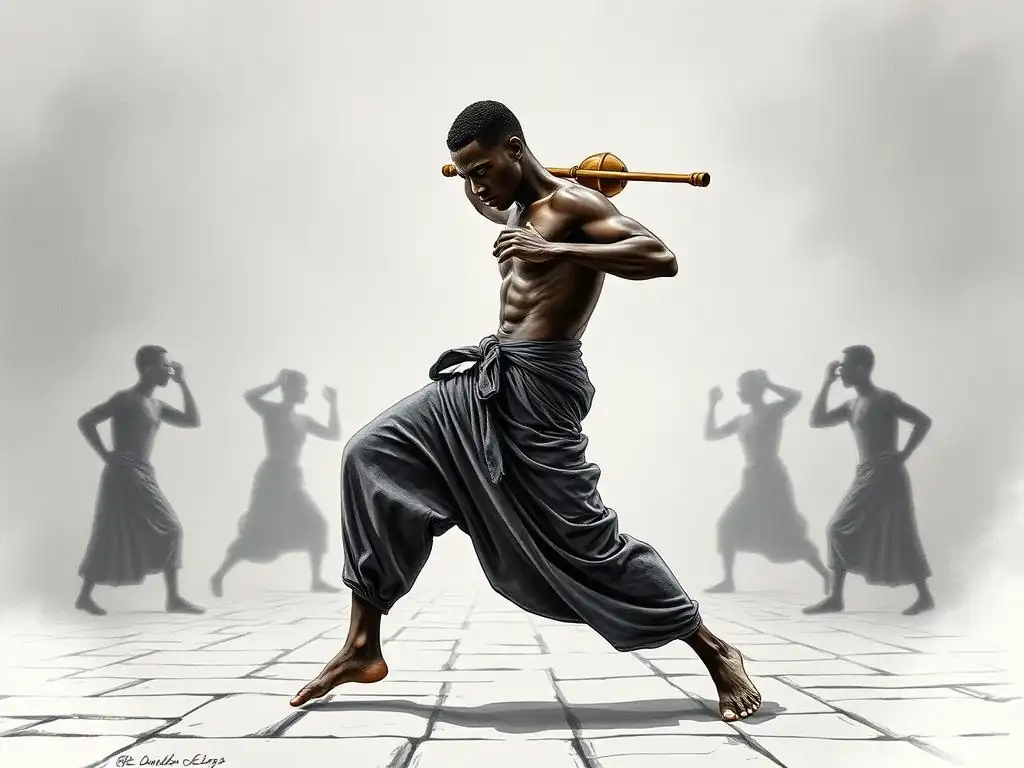
Afro-Brazilian Philosophy and its Influence on Capoeira
Capoeira's philosophical core is deeply influenced by the syncretic blend of African spiritual and cultural traditions with elements of indigenous Brazilian and Portuguese cultures that emerged during the colonial period. This Afro-Brazilian philosophy emphasizes concepts like community ( comunidade), ancestral knowledge ( ancestralidade), and the importance of the collective over the individual. The roda itself is a manifestation of this, representing a communal space where energy flows and participants support and challenge each other.
Concepts like axé, a vital life force or spiritual energy drawn from Afro-Brazilian religions like Candomblé and Umbanda, are central to understanding the power and flow within the Capoeira roda. Axé is generated through the music, the singing, the energy of the players, and the collective participation of the circle. It is this shared energy that elevates the physical exchange into a profound cultural and philosophical experience, highlighting the unique spiritual dimension within Capoeira's contribution to martial arts philosophical traditions.
The Concept of "Jogo" (The Game) and its Philosophical Underpinnings
The term jogo translates literally to "game," and in Capoeira, it signifies much more than a simple fight or sparring match. The jogo is a complex dialogue between two players, a conversation expressed through movement. It involves fluid transitions between attack and defense, deception and strategy, and a constant interplay of energy. Unlike purely combative martial arts, the goal is not necessarily knockout or submission, but rather to play well, to engage in a dynamic, aesthetically pleasing, and challenging exchange that demonstrates skill, creativity, and understanding of the art.
The philosophical underpinning of the jogo lies in its metaphor for life itself. The roda becomes a microcosm of the world, where challenges are faced, strategies are tested, and adaptability is paramount. The ability to react spontaneously, read one's opponent's intentions, and flow with the rhythm of the game mirrors the skills needed to navigate the unpredictability of life. This concept of jogo as a life philosophy is a key element separating Capoeira from many other martial arts philosophical traditions focused primarily on direct confrontation.
The Role of Malícia (Cunning) and Astúcia (Guile) in Capoeira Philosophy
Malícia and astúcia are fundamental philosophical concepts within Capoeira, often described as cunning, malice, trickery, or guile. However, in the context of Capoeira, these terms carry a nuanced meaning that is not necessarily negative. They represent the ability to deceive one's opponent, to set traps, to read between the lines, and to use intelligence and strategy to gain an advantage, rather than relying solely on brute force. It's about the unexpected movement, the feigned vulnerability, or the sudden change in rhythm.
These qualities were essential for the survival of enslaved people who developed Capoeira. They needed to be clever and adaptable to overcome a physically superior and oppressive force. Therefore, malícia and astúcia are not just fighting techniques but embody a philosophical approach to overcoming adversity through wit and intelligence. Mastering these concepts is crucial for effective play in the roda and reflects a deep understanding of Capoeira's historical roots and its unique perspective among martial arts philosophical traditions.
Ethical Considerations in Capoeira Training: Beyond Physical Prowess
Respect, Discipline, and Community within Capoeira
Respect ( respeito) forms a cornerstone of Capoeira ethics. This includes respect for the masters ( mestres), instructors ( professores, contra-mestres), fellow students ( alunos), the instruments, the roda space, and the history of the art. Discipline ( disciplina) is cultivated not just in physical training but also in adherence to the rules of the roda, punctuality, and dedication to practice. Students learn to follow the lead of the berimbau and the Mestre, understanding that the collective harmony of the roda is paramount.
Community ( comunidade) is perhaps the most vital ethical principle. Capoeira is a collective practice; the roda cannot exist without the participation of everyone – players, musicians, singers, and spectators. The group supports the players, provides energy, and ensures safety. This strong sense of community fosters mutual support, shared responsibility, and a feeling of belonging. It's through this communal practice that many of Capoeira's deeper martial arts philosophical traditions are transmitted and experienced.
The Importance of Self-Control and Responsibility in Capoeira Practice
Capoeira training emphasizes developing profound self-control. This is evident in the precision required for movements, the ability to control the intensity of the jogo, and the discipline to maintain composure even in challenging situations within the roda. Players must learn to manage their energy, control their strikes (often pulling them back to avoid injury, especially in Capoeira Angola), and respond thoughtfully rather than react impulsively.
Along with self-control comes responsibility ( responsabilidade). Practitioners are responsible for their own safety and the safety of their partner in the jogo. They are responsible for contributing positively to the energy of the roda and upholding the traditions of the art. This personal accountability extends beyond the training space, encouraging practitioners to apply these principles of self-control and responsibility in their daily lives, reflecting the comprehensive nature of Capoeira's martial arts philosophical traditions.
Capoeira has historically served as a vehicle for social change and empowerment, particularly for marginalized communities. Its origins as a tool of resistance against oppression are deeply embedded in its practice. In contemporary Brazil and globally, numerous Capoeira groups continue this legacy, using the art to uplift individuals and communities, providing structure, discipline, and a connection to cultural heritage, particularly for at-risk youth.
A notable example is the work of groups like Capoeira Angola Palmares in Salvador, Bahia, Brazil. This organization, founded by Mestre Nô, is dedicated to preserving the historical and philosophical roots of Capoeira Angola. They work within communities, particularly with children and adolescents, offering Capoeira classes that go far beyond physical training. Their programs focus on education, cultural identity, citizenship, and providing a safe and supportive environment, using the rich martial arts philosophical traditions of Capoeira to foster empowerment and positive social development.
Capoeira's Connection to Other Martial Arts Philosophical Traditions
Commonalities with Eastern Philosophies: [Example: Parallels to Zen Buddhism's emphasis on mindfulness]
While originating from distinct cultural contexts, Capoeira shares surprising commonalities with certain Eastern martial arts philosophical traditions, such as those influenced by Zen Buddhism. One significant parallel is the emphasis on mindfulness and being present in the moment. In the Capoeira roda, players must be fully aware of their own body, their partner's movements, the music, and the energy of the circle simultaneously. This state of heightened awareness and focus, reacting instinctively and flowing with the present situation, mirrors the Zen concept of mushin (no-mind) or a state of flow.
Furthermore, both traditions stress the importance of discipline as a path to self-mastery. Just as Zen practice involves rigorous meditation and physical training to discipline the mind and body, Capoeira demands consistent physical training, musical practice, and a deep engagement with its cultural and philosophical aspects to achieve proficiency. This shared emphasis on discipline as a means of cultivating inner harmony and effective action highlights interesting connections across diverse martial arts philosophical traditions.
Unique Aspects of Capoeira's Philosophical Approach
Despite shared elements, Capoeira possesses unique philosophical aspects that distinguish it from many other martial arts traditions. Its foundation in resistance, camouflage, and survival under extreme oppression gives rise to concepts like malícia and the blending of fighting with dance and music, which are not typically found elsewhere. The central role of the roda as a communal, ritualistic space where the "fight" is a "game" or dialogue is also highly specific to Capoeira.
Moreover, the direct link to Afro-Brazilian history, culture, and spirituality imbues Capoeira with a philosophical depth rooted in ancestral knowledge and the concept of axé. While many martial arts philosophical traditions emphasize personal cultivation, Capoeira places a strong emphasis on the collective energy and the community's role in empowering the individual. This blend of individual skill and communal energy, resistance history, and cultural expression creates a distinct philosophical framework.
The Future of Capoeira: Preserving its Culture and Philosophy
Challenges Facing Capoeira in the Modern World
Capoeira faces several challenges in the modern world as it continues to grow globally. One challenge is the risk of commercialization and dilution of its cultural and philosophical roots. As Capoeira becomes more popular internationally, there is a tendency in some contexts to focus solely on the acrobatic or fighting aspects, neglecting the music, history, language (Portuguese), and ethical framework that are integral to the art. This can lead to a superficial understanding of its rich martial arts philosophical traditions.
Another challenge involves the preservation of diverse lineages and styles, particularly the more traditional Capoeira Angola, which is sometimes overshadowed by the more dynamic Capoeira Regional or contemporary styles. Ensuring that the historical context and the profound philosophical meanings behind the movements, songs, and rituals are transmitted accurately across generations and cultures requires dedicated effort from masters and practitioners worldwide.
Ensuring the Transmission of Capoeira's Philosophical Values to Future Generations [Example: UNESCO Intangible Cultural Heritage designation]
Preserving Capoeira's deep martial arts philosophical traditions for future generations is a critical ongoing effort. Masters and teachers play a vital role in this by not just teaching the physical techniques but also sharing the history, music, songs, and ethical principles. This often involves oral transmission of knowledge, storytelling, and creating an environment in the roda that embodies the art's cultural values.
A significant global recognition that aids in this preservation is the designation of the Capoeira circle (roda de Capoeira) as an Intangible Cultural Heritage of Humanity by UNESCO in 2014. This designation highlights the cultural significance of Capoeira beyond its physical form, acknowledging its role as a symbol of resistance and freedom and emphasizing the importance of the music, instruments, songs, and the oral tradition that carries its philosophical and historical knowledge. This global recognition helps raise awareness and encourages structured efforts for preservation.
The Continued Evolution of Capoeira's Philosophy
Like any living art form, Capoeira and its philosophy continue to evolve. As it spreads to new countries and interacts with different cultures, new interpretations and perspectives emerge. This evolution can be seen in the development of contemporary Capoeira styles that blend traditional elements with modern influences, or in the ways practitioners apply Capoeira's philosophical lessons to contemporary social issues.
While evolution is natural, the key lies in ensuring that this adaptation does not sever the connection to the art's core principles and historical context. The adaptability inherent in concepts like malícia and astúcia suggests that Capoeira's philosophy is inherently dynamic. The challenge for the future is to embrace innovation while remaining firmly rooted in the rich martial arts philosophical traditions that have shaped Capoeira into the profound and multifaceted art it is today.
Frequently Asked Questions
What are some common philosophical underpinnings found in various martial arts?
Many martial arts emphasize discipline, respect, and self-control. They often incorporate elements of mindfulness and meditation to enhance focus and awareness.
How do martial arts philosophical traditions contribute to personal development?
The study of martial arts philosophy cultivates inner strength and resilience. It can also foster ethical behavior and a sense of community, extending beyond the training dojo.
Can the philosophical aspects of martial arts be applied to everyday life?
Absolutely! Principles like perseverance, adaptability, and non-aggression can be valuable tools for navigating challenges in personal and professional settings.
Where can I learn more about the philosophical traditions within specific martial arts styles?
MartialArtsMastery.org offers resources on the history, philosophy, and cultural context of numerous martial arts disciplines. This includes profiles of influential figures and key concepts.
How important is understanding the philosophical side of martial arts in becoming proficient?
While physical skill is essential, understanding the philosophy provides a deeper understanding of the art. It can enhance mental fortitude and strategic thinking, leading to greater mastery.
Final Reflection: Embracing the Way of Harmony
The exploration of martial arts philosophical traditions, as we've seen, isn't merely an academic exercise; it's a vital lens through which we can understand the enduring quest for balance and self-mastery in a world increasingly defined by chaos. The principles of discipline, respect, and inner peace, so deeply embedded within these traditions, offer a powerful antidote to the anxieties and uncertainties of modern life.
The influence of these philosophies extends far beyond the dojo, shaping our understanding of conflict resolution, personal growth, and the interconnectedness of all things. My own journey into understanding these traditions has revealed the profound potential for self-discovery and the cultivation of a more compassionate and mindful existence. The ultimate aim of martial arts is not to win battles, but to avoid fighting altogether.
This quote, often attributed to various martial arts masters, encapsulates the core principle of seeking harmony and resolving conflict through wisdom and understanding.
As you reflect on the diverse philosophical underpinnings of martial arts, I invite you to consider how these principles can be integrated into your own life. Embrace the discipline, cultivate respect for yourself and others, and strive for inner peace amidst the challenges you face. By doing so, you not only honor the rich legacy of these traditions but also unlock your own potential for growth, resilience, and a more meaningful existence.
Ignite Your Inner Warrior: Embrace the Code!
Thank you for delving into the philosophy of martial arts! We hope you've found new insights to sharpen your mind and spirit. Now, let's translate these lessons into action.
- Commit to one principle: Choose one key value from this article (e.g., discipline, respect, perseverance) and consciously apply it in your daily life for the next week.
- Share the wisdom: Discuss this article with a training partner or fellow martial arts enthusiast. Sharing insights can deepen understanding for both of you.
- Explore the roots: Research the origin of your martial art's core philosophy. Understanding its historical and cultural context can enrich your practice.
What's one small but significant change you'll make to live more in line with the martial arts code today?