
Silat Joint Lock Takedowns (Kuncian): Control and Submission


Welcome to Martial Arts Mastery, where we delve into the fascinating world of combat arts. Prepare to unravel the secrets of ancient traditions and modern techniques. Intrigued by the art of control and submission? Then explore the intricacies of Silat Kuncian joint locks in our latest deep dive. Discover how these devastating takedowns can be applied, and unlock the power of precise movement and leverage. Ready to learn more and master this crucial aspect of Silat?
- Understanding Silat Kuncian: Joint Locks in Indonesian Martial Arts
- Principles of Silat Kuncian for Effective Takedowns
- Executing Silat Kuncian Takedowns: A Step-by-Step Guide
- Integrating Silat Kuncian into Your Training
- Advanced Concepts in Silat Kuncian
- The Ethical Considerations of Using Silat Kuncian
- Mastering Silat Kuncian: A Path to Control and Submission
-
Frequently Asked Questions
- What is Silat Kuncian and why is it important in self-defense?
- How does Kuncian differ from joint locks found in other martial arts like Aikido or Jujutsu?
- What are some common Silat Kuncian targets on the body?
- Does learning Silat Kuncian require a specific level of physical strength or flexibility?
- Where can I find resources to learn more about Silat Kuncian techniques and training?
- Final Reflection: Mastering the Art of Kuncian
- Unlock Your Silat Mastery: Dominate with Kuncian!
Understanding Silat Kuncian: Joint Locks in Indonesian Martial Arts
What is Kuncian in Silat? Exploring the Art of Joint Manipulation
Kuncian, in the context of Silat, refers to the intricate techniques involving the manipulation and locking of an opponent's joints. This aspect of Indonesian and Malay martial arts is less about brute force and more about leverage, anatomical understanding, and precise application of pressure. Kuncian techniques target vulnerable points like the wrist, elbow, shoulder, knee, and ankle, aiming to disrupt balance, induce pain, and ultimately gain control or force a submission. It's a sophisticated system rooted in ancient battlefield tactics and adapted for close-quarters combat, emphasizing efficiency and effectiveness against potentially larger or stronger opponents.
The historical development of Silat Kuncian is deeply intertwined with the diverse styles found across the Indonesian archipelago and Malay peninsula. Each region and lineage often possesses its unique variations and specializations in joint locks. For example, some styles might focus heavily on standing joint locks to control an opponent before a takedown, while others might emphasize ground-based kuncian for submission. This rich diversity reflects the adaptable nature of Silat, which has absorbed influences from various fighting systems and practical combat experiences over centuries, continuously refining its methods for controlling and incapacitating an adversary through joint manipulation.
The Importance of Kuncian for Control and Submission in Silat
Kuncian plays a crucial role in Silat beyond just inflicting pain; its primary purpose is control. By locking a joint, a practitioner can dictate an opponent's movement, posture, and balance, effectively neutralizing their ability to strike or escape. This control can range from minor discomfort used to guide an opponent off-balance to severe locks that threaten serious injury if not released. The ability to maintain control through a Silat Kuncian allows the practitioner to transition smoothly into takedowns, throws, or other control positions, maintaining the advantage throughout the engagement.
Furthermore, Silat Kuncian is a highly effective method for achieving submission. When applied correctly, the pressure on a joint can become unbearable, forcing the opponent to yield to avoid potential dislocation, fracture, or ligament damage. This makes Kuncian a powerful tool for ending a confrontation quickly and decisively, especially in self-defense situations where de-escalation or non-lethal resolution is desired. The emphasis on submission through pain or threatened injury allows a Silat practitioner to end the fight without necessarily resorting to debilitating strikes, highlighting the art's practical and often pragmatic approach to conflict resolution.
Principles of Silat Kuncian for Effective Takedowns
Leverage and Body Mechanics in Silat Joint Locks
The core principle behind effective Silat Kuncian is the masterful application of leverage. Instead of relying on muscular strength to overpower a joint, the practitioner uses their body weight, skeletal structure, and positioning to apply force at an advantageous angle. This involves understanding basic physics – how to create a fulcrum, apply force, and generate movement or pressure with minimal effort but maximum effect on the opponent's joint. For instance, a wrist lock might not require significant grip strength if the practitioner uses their entire body to create torque through rotational movement around the opponent's wrist joint.
Effective body mechanics are intrinsically linked to leverage in Silat Kuncian. This means using proper posture, balance, and coordination of the entire body, not just the hands or arms, to execute the technique. A stable base is essential to maintain control and generate power.
The movement should originate from the core and flow through the limbs, ensuring that the force applied to the joint is supported by the practitioner's entire structure. For example, taking someone down with an elbow lock often involves stepping off-line, turning the hips, and using downward pressure from the shoulders, coordinating these movements to break the opponent's balance while simultaneously stressing the joint.
Identifying Vulnerable Joints for Kuncian Application
A deep understanding of human anatomy is fundamental to applying Silat Kuncian successfully. Practitioners must be able to quickly identify the most vulnerable joints – those that are easily exposed, have limited range of motion in certain directions, or are critical for balance and movement. Key targets include the fingers, wrist, elbow, shoulder, neck (though often restricted in training due to high risk), spine, hip, knee, and ankle. The effectiveness of a kuncian depends on attacking the joint in a direction contrary to its natural range of motion or hyperextending it.
Identifying these vulnerable joints often happens in the heat of an exchange, requiring sensitivity and timing. For instance, if an opponent reaches or punches, their wrist and elbow become exposed. If they lean or are off-balance, their knees or ankles might be easier to target. Silat training emphasizes developing this sensitivity – the ability to feel the opponent's structure, movement, and balance to identify openings for kuncian application. This isn't just theoretical knowledge; it's developed through countless hours of partner drills focused on touch sensitivity and recognizing anatomical weaknesses under pressure.
Understanding Angling and Positioning for Successful Silat Takedowns
Angling and positioning are critical components of successful Silat Kuncian takedowns. Simply applying a joint lock is often not enough to bring an opponent to the ground; the practitioner must also manipulate their balance and structure. This is achieved by moving to an angle that disrupts the opponent's base while simultaneously applying the lock. For example, stepping to the side or rear of an opponent while applying a wrist or elbow lock can use their own forward momentum or lack of backward balance against them, facilitating the takedown.
Proper positioning also ensures the practitioner's safety and ability to maintain control. Being in the wrong position can allow the opponent to escape the lock, counter, or even reverse the technique. This means maintaining a stable base, keeping one's own joints protected, and ensuring the applied kuncian forces the opponent into a position where they are off-balance and unable to effectively resist the takedown. Mastering Silat Kuncian takedowns requires understanding how to combine the joint lock with strategic movement and positioning to collapse the opponent's structure and bring them to the ground under control.
Executing Silat Kuncian Takedowns: A Step-by-Step Guide
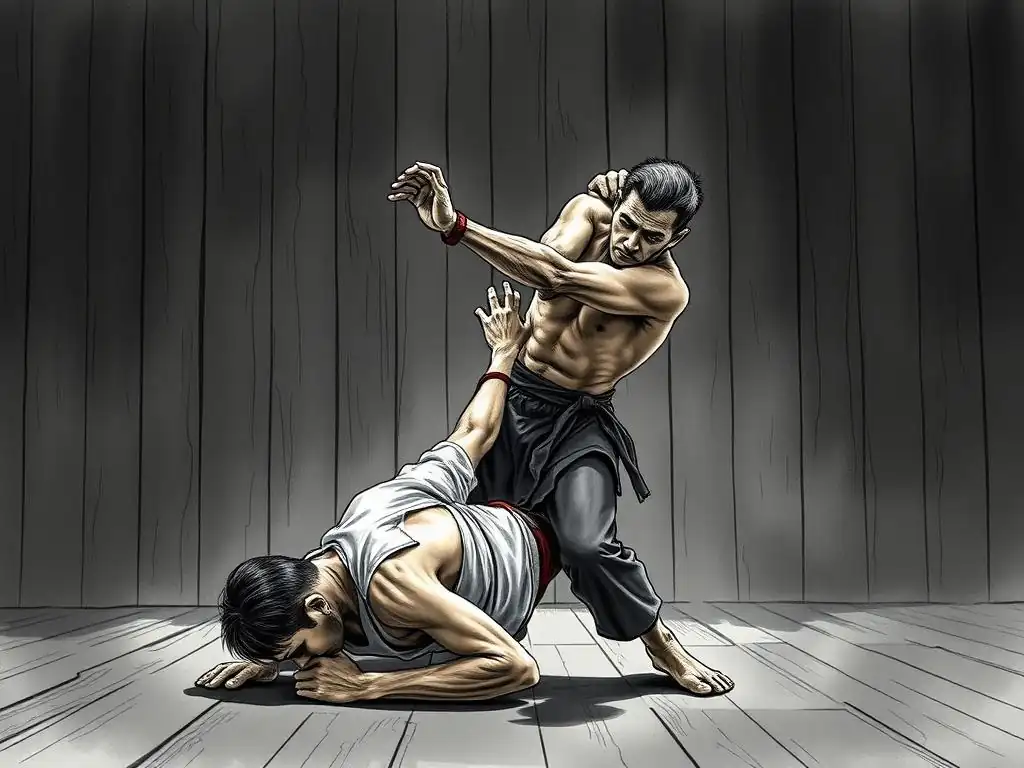
Kuncian Takedown #1: Siku Dalam (Inside Elbow Lock) Takedown
Step 1: Establishing Initial Control and Grip
This technique often begins from a close-quarters engagement, perhaps blocking a punch or entering a clinch. The goal is to secure control of the opponent's arm, specifically near the elbow. Imagine blocking an opponent's right punch with your left arm.
As their arm extends, your left hand can transition to grab their wrist or forearm while your right hand secures their upper arm, just above the elbow. Your body should be slightly off-line to avoid further strikes and begin disrupting their base. The grip needs to be firm enough to prevent them from easily pulling their arm away but not so tense that it restricts your own movement.
Step 2: Applying Pressure to the Elbow Joint
With the arm secured, the next step involves applying pressure to the elbow joint in a direction it's not meant to go, typically inwards or slightly upwards relative to their limb's orientation. Using your right hand on their upper arm as a fulcrum near their elbow, your left hand on their wrist or forearm begins to bend their arm inwards towards their body while simultaneously lifting it slightly.
Your body should be close, using your chest or shoulder to help pin their upper arm against your body or applying pressure. This action stresses the inside of the elbow joint (Siku Dalam), causing discomfort and beginning to break their posture.
Step 3: Executing the Takedown and Maintaining Control
As pressure is applied and the opponent's posture starts to collapse, you initiate the takedown. This is usually done by stepping back or to the side, pulling their now compromised arm downwards and inwards, guiding them towards the ground. Your body weight and movement are crucial here; you are not just pulling with your arms but using your entire structure to create the downward force and disrupt their balance.
As they fall, maintain control of the locked arm, which allows you to guide their descent and land in a dominant position, such as on the ground beside them, still controlling the elbow lock. This controlled landing minimizes injury to both parties while securing your dominant position.
Kuncian Takedown #2: Patahan Lengan (Arm Break) Variation
Step 1: Creating an Opening for the Kuncian
This particular kuncian variation, often translated ominously as "Arm Break," is typically applied when the opponent's arm is extended or partially extended. This could be during a strike, a grab, or even while they are trying to push you away. The key is to secure both ends of the limb you intend to attack – usually the wrist and the elbow or upper arm.
Imagine an opponent pushing you away with their right arm; you would quickly move inside their reach, using your left hand to secure their wrist and your right hand to secure their upper arm near the tricep or elbow. Speed and timing are essential to capture the arm before they can retract it.
Step 2: Securing the Joint Lock on the Wrist and Elbow
With the arm secured at both ends, the lock is applied by creating opposing forces on the wrist and the elbow. Your left hand (on the wrist) will manipulate the hand/wrist in one direction (e.g., bending it back or rotating it), while your right hand (on the upper arm) will apply pressure in the opposite direction, often against the elbow joint.
For instance, you might bend their wrist backward (hyperextending it) while simultaneously pushing down on their elbow. The name "Patahan Lengan" hints at the severe pressure applied across the length of the arm, targeting multiple joints or the entire structure of the limb.
Step 3: Completing the Takedown and Transitioning to Submission
As the intense pressure from the Patahan Lengan variation takes effect, the opponent's ability to stand and resist is severely compromised. You use this moment to execute the takedown. This typically involves stepping to the side or behind them, pulling their locked arm downwards and forwards, guiding them to the ground face-first or onto their side.
The takedown is a direct consequence of the pain and structural collapse induced by the kuncian. Once on the ground, you maintain the lock, transitioning from a standing takedown to a ground submission hold. This requires maintaining control of the opponent's body while ensuring the kuncian remains applied effectively, ready to escalate pressure if resistance continues or ease off if submission is given.
Kuncian Takedown #3: Kuncian Pinggang (Waist Lock) into Arm Bar from a Clinch
Step 1: Gaining a Dominant Clinch Position
This technique starts from a close-range clinch situation, where you and your opponent are grappling upright. The goal is to establish a dominant position, such as an over-under clinch or a body lock, that allows you to control their upper body and posture. For the Kuncian Pinggang component, securing a grip around their waist or lower back is key.
This might involve getting inside their arms and wrapping your arms around their torso, locking your hands. Your head should be positioned strategically (e.g., against their chest or shoulder) to maintain pressure and prevent them from gaining separation or striking effectively.
Step 2: Applying the Kuncian in Close Quarters
While maintaining the waist lock (Kuncian Pinggang can also refer to techniques targeting the hip or spine, but here we focus on the control aspect leading to a takedown), you transition to attacking an arm. This often happens if they are using an arm to post, push, or try to grip you. From the clinch, you might secure one of their arms, perhaps trapping it between your bodies or using a free hand to control their wrist or elbow.
The 'kuncian' here isn't a typical joint bend but rather using your body mechanics from the dominant clinch position to isolate and control one of their limbs, setting it up for the takedown and subsequent arm bar. For instance, if you have an underhook on their right side, you control their right arm's movement while your waist lock prevents them from turning effectively.
Step 3: Taking the Opponent Down and Maintaining the Lock
With the arm isolated and controlled from the clinch, you execute the takedown. This often involves using your waist lock and body position to off-balance them, perhaps tripping their leg or driving them backward, while simultaneously manipulating the trapped arm. As they fall, you follow them to the ground, immediately transitioning your control on the arm into a ground-based arm bar (a form of kuncian).
For example, if you took them down while controlling their right arm in an underhook, you would secure their arm between your legs or under your armpit upon landing, extend your hips, and apply pressure to the elbow joint to complete the submission. The Kuncian Pinggang (waist lock/control) facilitates the takedown, allowing you to seamlessly move into the arm kuncian on the ground.
Integrating Silat Kuncian into Your Training
Drills for Developing Sensitivity and Precision in Silat Joint Locks
Developing proficiency in Silat Kuncian requires significant focus on sensitivity (rasa) and precision. Training should include dedicated partner drills performed slowly and cooperatively initially. These drills might involve one partner offering a limb passively while the other practices securing different kuncian grips and applying gentle pressure. The defender focuses on feeling the direction of force and identifying the point of pain or potential injury, learning how to respond or submit safely. Examples include flow drills where partners continuously transition between different wrist or elbow locks, focusing on smooth transitions and maintaining control without using excessive force.
More advanced sensitivity drills involve light resistance. The defender might try to subtly pull their limb away or shift their weight, requiring the attacker to adjust their grip and leverage instantly. This develops the reactive sensitivity needed to apply kuncian effectively against a non-compliant opponent. Precision is honed by repeating techniques thousands of times, focusing on the exact angle, point of contact, and amount of pressure required to achieve the desired effect with minimal effort. This systematic approach, starting slow and gradually adding complexity and resistance, is crucial for building a deep understanding of Silat Kuncian mechanics.
Sparring Exercises to Practice Kuncian Takedowns in a Dynamic Environment
While full-force sparring with joint locks is inherently dangerous and rarely practiced, specific sparring exercises can integrate Silat Kuncian takedowns safely. "Flow sparring" or "submission grappling lite" where practitioners agree beforehand to apply locks slowly and release immediately upon a tap or sign of discomfort is one method. The focus is on positioning, entry into the kuncian, and executing the takedown phase, with submission being a secondary, safely managed outcome. This allows practitioners to experience applying kuncian against a moving, resisting opponent in a dynamic context.
Another exercise involves focusing specifically on the transition from standing engagement or clinch into a kuncian takedown. Partners might spar with light striking or grappling, with the explicit goal being to find an opening for a specific type of Silat Kuncian takedown.
Upon securing the lock and initiating the takedown, both partners cooperate to execute a safe fall, and the engagement ends there or transitions into a predetermined control position on the ground, avoiding full-pressure submission holds. These controlled sparring scenarios are vital for bridging the gap between static drills and live application, allowing practitioners to develop timing and adaptability for Silat Kuncian in realistic scenarios.
Strengthening and Conditioning for Enhanced Kuncian Effectiveness
While Silat Kuncian emphasizes leverage over brute strength, specific physical conditioning can significantly enhance a practitioner's ability to apply and maintain these techniques. Grip strength is important for securing limbs, though leverage is primary. Forearm and wrist conditioning can help prevent injury when applying or defending against locks. Core strength is paramount for maintaining a stable base, generating power through body mechanics, and controlling an opponent's posture during a takedown. Shoulder and back strength contribute to the ability to apply downward or rotational pressure effectively.
Conditioning should also focus on mobility and flexibility in one's own joints. Being flexible can help prevent self-injury when caught in a less-than-ideal position during grappling exchanges or while practicing dynamic takedowns. Exercises like planks, deadlifts (with proper form), pull-ups, and various grip-specific exercises can build the necessary functional strength. Yoga or dedicated stretching routines can improve flexibility. This physical preparation complements the technical training, ensuring the body is robust and capable of executing complex Silat Kuncian techniques efficiently and safely.
Advanced Concepts in Silat Kuncian
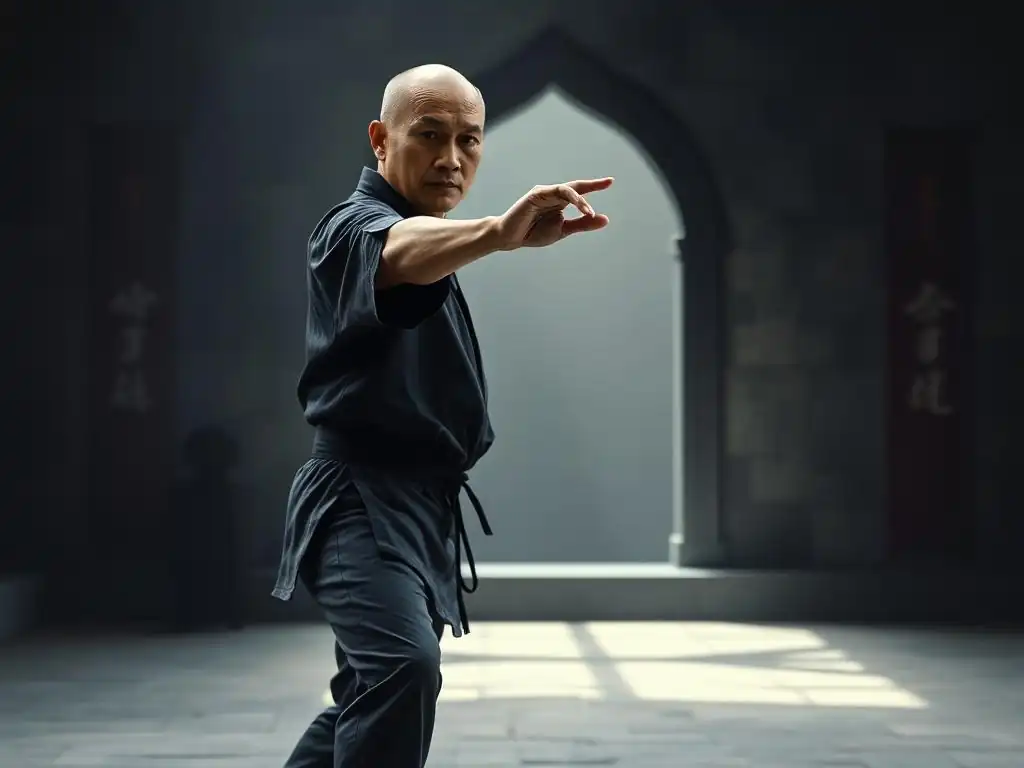
Combining Kuncian with Strikes and Sweeps
In practical Silat application, Kuncian techniques are rarely used in isolation. Advanced practitioners seamlessly integrate joint locks with strikes and sweeps to create multi-faceted attacks. A strike can serve as a distraction or create an opening, momentarily exposing a limb or disrupting balance, immediately followed by an entry into a kuncian.
For example, a quick palm strike to the face might cause an opponent to flinch and raise their hands, exposing an arm for a wrist or elbow lock. Conversely, attempting a kuncian might fail to secure the joint but leave the opponent off-balance, setting them up perfectly for a sweep or a follow-up strike.
This combination creates a dynamic and unpredictable fighting system. The threat of a strike makes the opponent react in a way that facilitates a kuncian entry, while the threat of a kuncian makes them hesitant, potentially creating openings for strikes.
Advanced drills focus on these transitions – moving fluidly from striking ranges to grappling ranges, using each element to enhance the effectiveness of the others. A well-timed sweep can put an opponent on the ground, making ground-based kuncian much easier to apply, or a failed kuncian attempt might transition directly into a foot sweep as the opponent tries to regain balance.
Defending Against Kuncian Attempts
Effective defense against Silat Kuncian involves a combination of prevention, recognition, and escape. Prevention starts with maintaining good posture, balance, and spatial awareness, denying the opponent easy access to your limbs and joints. Keeping limbs close to the body or moving them quickly can make them harder to trap. Recognition involves developing sensitivity to feel when a kuncian is being attempted – feeling the initial grip, the shift in weight, or the direction of applied pressure before the lock is fully secured. Early recognition provides the best chance to escape.
Escape techniques vary depending on the specific kuncian applied but generally involve moving in a direction that alleviates the pressure on the joint, using body mechanics to create leverage, or distracting the opponent to buy time. For example, against a wrist lock, stepping into the lock and turning the hand might be an initial escape attempt. Against an arm bar, bridging and turning the body can often relieve pressure.
Learning how to fall safely (breakfalling) is also a crucial defensive skill, as it allows a practitioner to minimize injury when a takedown results from a failed kuncian defense. Consistent drilling of defenses against common kuncian is vital.
Adapting Kuncian for Self-Defense Scenarios
Adapting Silat Kuncian for real-world self-defense involves considering the context, legal implications, and the goal of neutralizing a threat safely. In self-defense, the objective is often simply to escape or control the situation until help arrives, rather than achieving a formal submission. Kuncian can be incredibly effective for this purpose, allowing a smaller person to control a larger aggressor without needing to inflict serious harm, provided the technique is applied with appropriate force and released when the threat is neutralized.
Using Kuncian in self-defense requires careful consideration of the environment (e.g., hard surfaces increase injury risk) and the level of force necessary. A gentle joint lock might be enough to deter an unwanted grab, while a more forceful application might be needed against a violent assault.
Training for self-defense often focuses on gross motor skills and techniques that are effective under adrenaline stress. While intricate kuncian require fine motor skills, basic, high-percentage joint locks that target easily accessible joints (like the wrist or fingers) can be highly practical for creating pain compliance or facilitating an escape in a self-defense situation.
The Ethical Considerations of Using Silat Kuncian
Responsible Application of Joint Locks for Safety
Training and applying Silat Kuncian comes with significant ethical responsibilities. Joint locks, by their nature, can cause serious injury if applied improperly or with excessive force. Therefore, responsible application begins in the training hall, where techniques are learned slowly, cooperatively, and with constant communication between partners. The principle of "tap or snap" is paramount – the defender must be vigilant and tap out early if they feel pain or pressure, and the attacker must release the lock immediately upon feeling the tap or hearing a verbal submission.
Beyond the training environment, the responsible application of Silat Kuncian in self-defense means using only the necessary force to neutralize the threat. A kuncian should be maintained only as long as required to escape or gain control, and pressure should be eased or released once the aggressor ceases their attack or is under control. This requires discipline and sound judgment, ensuring that the power of kuncian is used defensively and ethically, minimizing potential harm to all parties involved while ensuring personal safety.
Understanding the Potential for Injury and Minimizing Risk
Practitioners of Silat Kuncian must have a clear understanding of the potential for injury associated with joint manipulation. Dislocations, ligament tears, sprains, and even fractures are possible outcomes if techniques are applied incorrectly, too quickly, with excessive force, or if a partner fails to submit in time. This understanding reinforces the need for meticulous training practices, including proper warm-ups, clear communication, and the use of protective gear in some contexts (though less common for kuncian itself).
Minimizing risk involves several factors: training under qualified instructors who emphasize safety, practicing techniques gradually, developing body awareness to feel when a joint is reaching its limit, and cultivating a training culture based on mutual respect and safety. In a self-defense situation, while the risk of injury to an aggressor might be a necessary consequence of defending oneself, the practitioner should still aim to use the technique to control or escape rather than to inflict gratuitous harm. Knowledge of anatomy and the biomechanics of injury is a crucial part of a Silat practitioner's education in Kuncian.
Respecting the Art and Your Training Partners
Respect is a cornerstone of traditional martial arts, and this is particularly true when practicing techniques as potentially dangerous as Silat Kuncian. Respect for the art involves appreciating its complexity, history, and the responsibility that comes with learning such powerful techniques. It means dedicating oneself to disciplined practice and understanding the deeper principles beyond mere physical application.
Respect for training partners is non-negotiable. Partners entrust each other with their physical safety during practice. This requires honesty, carefulness, and a commitment to protecting one another. Learning Silat Kuncian is a collaborative process; without trusting partners willing to explore these techniques safely, mastery is impossible. This mutual respect fosters an environment where practitioners can push their limits, learn from mistakes, and develop high-level skills in Silat Kuncian without undue risk, honoring the tradition and the individuals involved.
Mastering Silat Kuncian: A Path to Control and Submission
Mastering Silat Kuncian is a long and rewarding journey that transcends simple technique memorization. It requires developing a deep intuitive understanding of leverage, anatomy, and timing, combined with physical conditioning and mental discipline. Proficiency in Silat Kuncian provides a practitioner with potent tools for control and submission, applicable in various contexts from competitive grappling to self-defense scenarios. It highlights the sophistication of Silat as a complete martial art, capable of addressing threats at multiple ranges and through diverse methods.
The path to mastery involves continuous learning, refining techniques, and exploring the vast variations of Silat Kuncian found across different lineages. It requires dedication to safe training practices, ethical considerations, and a commitment to the principles of leverage and precision. Ultimately, mastering Silat Kuncian is not just about executing joint locks; it's about cultivating control – control over an opponent, control over a situation, and ultimately, control over oneself.
Frequently Asked Questions
What is Silat Kuncian and why is it important in self-defense?
Silat Kuncian refers to the joint locking techniques within the Silat martial art. It's important for self-defense because it allows for control and submission of an opponent through leverage and pain compliance, potentially ending a conflict quickly.
How does Kuncian differ from joint locks found in other martial arts like Aikido or Jujutsu?
While the principle of joint locking is universal, Kuncian often incorporates unique angles and body mechanics specific to Silat. It also relies heavily on flowing movements and trapping techniques before applying the joint lock, distinguishing it from more static approaches.
What are some common Silat Kuncian targets on the body?
Common targets include the wrist, elbow, shoulder, and knee joints. Kuncian focuses on exploiting these vulnerable areas to disrupt balance and force submission.
Does learning Silat Kuncian require a specific level of physical strength or flexibility?
While strength and flexibility are beneficial in any martial art, Silat Kuncian emphasizes technique and leverage over brute force. Proper execution of the locks can be effective regardless of size or strength, but basic flexibility is needed to avoid injury.
Where can I find resources to learn more about Silat Kuncian techniques and training?
Websites like MartialArtsMastery.org often provide historical overviews, training tips, and profiles related to Silat. Seeking out a qualified Silat instructor is crucial for learning the techniques safely and effectively.
Final Reflection: Mastering the Art of Kuncian
The journey through the intricacies of Silat Kuncian, as explored in this article, reveals more than just a series of joint lock takedowns; it unveils a profound understanding of leverage, control, and respect. The principles of Kuncian are not limited to the martial arts arena; they offer valuable lessons in negotiation, conflict resolution, and even self-awareness in our daily lives. The ability to find the point of imbalance, to apply pressure strategically, and to maintain composure under duress are skills that transcend physical combat.
The enduring appeal of Silat, and specifically its Kuncian techniques, lies in its adaptability and its emphasis on sensitivity. This art form, passed down through generations, continues to resonate because it teaches us to listen to our bodies, to understand our opponents, and to find strength in yielding. It's a dance of power and finesse, a constant negotiation between force and flexibility. Empty your mind, be formless, shapeless, like water. Now you put water into a cup, it becomes the cup. You put it into a bottle it becomes the bottle. You put it in a teapot it becomes the teapot. Now water can flow or it can crash. Be water, my friend.
- Bruce Lee, capturing the essence of adaptability central to Kuncian.
As you reflect on the techniques and principles discussed, consider how you can apply the spirit of Kuncian to your own life. Embrace the challenge of finding balance in moments of chaos, seek understanding in the face of conflict, and remember that true strength lies not just in force, but in the ability to adapt and yield. Let the art of Silat Kuncian inspire you to find your own point of leverage, to control your own destiny, and to submit to the wisdom of continuous learning and growth.
Unlock Your Silat Mastery: Dominate with Kuncian!
Thanks for diving into the world of Silat joint lock takedowns! We hope you've gained valuable insights into the control and submission techniques of kuncian. Ready to put that knowledge into action?
- Master the Fundamentals: Dedicate at least 15 minutes each day this week to practicing the foundational kuncian drills presented.
- Share this article with a training partner or on your martial arts social media!
- Visit a local Silat school for an in-person class and learn from an experienced instructor.
What kuncian technique are you most eager to drill and integrate into your sparring sessions?