
A Spectator's Guide to Major Savate Tournaments Worldwide

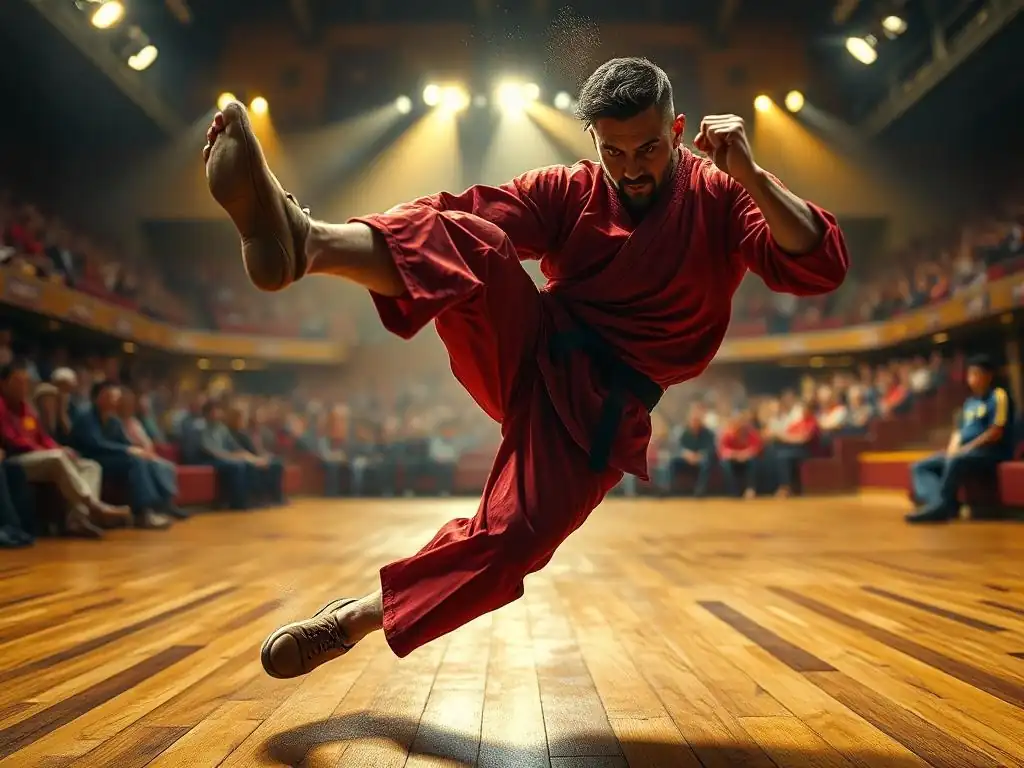
Welcome to Martial Arts Mastery, your portal to the world's fighting traditions! Ever wondered how to truly appreciate the lightning-fast footwork and calculated strikes of Savate? Dive into our comprehensive spectator's guide and unlock the secrets to understanding and enjoying major Savate tournaments worldwide. Prepare to go beyond casual observation and witness the artistry and athleticism with newfound clarity. What strategies will give you the best view? Let's find out!
- Understanding Savate: An Introduction for Tournament Viewers
- Identifying Major Savate Tournament Events Globally
- Savate Tournament Viewing Strategies: Enhancing Your Experience
- What to Expect at a Live Savate Tournament
- Key Savate Athletes to Watch: Rising Stars and Established Champions
- Advanced Savate Tournament Analysis: Beyond the Basics
- Savate Tournament Viewing Checklist: What to Bring
- The Future of Savate: Growth and Global Expansion
-
Frequently Asked Questions
- What is Savate, and why should I watch a tournament?
- Where are the most prestigious Savate tournaments typically held?
- What are some key elements to look for while watching a Savate match?
- How does scoring work in a Savate tournament?
- What are some things a first-time Savate tournament viewer should keep in mind?
- Final Reflection: Beyond the Ring: Appreciating Savate's Art
- Unleash Your Inner Savateur: Step into the World of Savate!
Understanding Savate: An Introduction for Tournament Viewers
What is Savate? A Brief Overview for New Fans
Savate, often referred to as French boxing or Boxe Française, is a martial art and combat sport originating in 19th-century France. Unlike many other striking arts, Savate uniquely incorporates kicks delivered with footwear, alongside traditional boxing hand techniques. This blend of precise footwork, elegant kicks, and effective punches distinguishes Savate from disciplines like Muay Thai or traditional boxing. It evolved from street fighting techniques and sailor's brawls into a codified sport, emphasizing grace, strategy, and controlled power.
The sport is characterized by its emphasis on technique and precision over brute force, particularly in its 'Assaut' (light contact) format, which focuses on scoring points without causing injury. The 'Combat' (full contact) format allows for more powerful strikes, leading to potential knockouts, though technique remains paramount. Understanding this fundamental distinction is crucial for viewers employing effective Savate tournament viewing strategies, as the tactics and pace differ significantly between formats.
Key Savate Techniques to Watch For During Tournaments
Savate features a distinct arsenal of kicks and punches, delivered with finesse and speed. Keep an eye out for the Fouetté (whip kick), a circular kick often aimed at the head or torso, and the Chassé (push kick), a straight kick used to maintain distance or strike the body or legs. The Revers (reverse kick) is another signature move, involving a whipping motion with the sole or heel, targeting the head or torso. Hand techniques include the standard boxing repertoire: Direct (jab/cross), Crochet (hook), and Uppercut.
The execution of these techniques is key. Look for clean, precise strikes delivered with good balance and control. In Assaut, points are awarded for touches with specific parts of the foot or glove to valid targets, provided the technique is correct and controlled. In Combat, power and impact are also factors. Observing how fighters chain these techniques together into combinations, or use footwork to set up attacks, provides valuable insight for enhancing Savate tournament viewing strategies.
Savate Scoring System: How Points are Awarded
The scoring in Savate depends heavily on whether the bout is Assaut or Combat. In Assaut, judges award points based on the technical merit and precision of strikes that touch valid targets (front/sides of the head, torso, and legs), without excessive force. A clean, well-executed technique scores higher than a sloppy one, even if it lands. Penalties can be issued for excessive contact, illegal techniques, or stepping out of bounds. The winner is determined by the accumulation of points.
In Combat, the scoring is more akin to professional boxing or kickboxing, though technique still plays a significant role. Judges evaluate strikes based on their effectiveness, impact, and technical execution. Clean, powerful hits to valid targets (excluding the back and groin) score points. Knockdowns and knockouts can end the fight immediately. Understanding these scoring nuances is fundamental to developing effective Savate tournament viewing strategies, allowing spectators to appreciate the tactical exchanges and judge performances accurately.
Identifying Major Savate Tournament Events Globally
Savate World Championships: The Pinnacle of Competition
The Savate World Championships represent the highest level of international competition in the sport. Organized by the Fédération Internationale de Savate (FISav), these championships bring together national champions and top-ranked fighters from around the globe to compete for world titles in various weight categories and formats (Assaut and Combat). The event typically occurs every two years and is a showcase of the sport's elite talent.
Winning a World Championship title is the ultimate goal for most Savate athletes and signifies mastery of the sport. The competition format usually involves preliminary rounds leading to semi-finals and finals. Spectators applying sophisticated Savate tournament viewing strategies will follow the progress of national teams and individual athletes they've researched, anticipating potential matchups between top contenders. The atmosphere is intensely competitive, with national pride often on display.
Major European Savate Tournaments: A Regional Focus
Given Savate's French origins, Europe remains a stronghold for the sport, hosting numerous significant tournaments throughout the year. Beyond the World Championships, events like the European Championships serve as crucial proving grounds and high-level competitions. Many countries with a strong Savate tradition, such as Italy, Belgium, and Russia, host notable international open tournaments that attract fighters from across the continent and beyond.
These regional events are vital for athletes to gain experience, improve their FISav rankings, and prepare for world-level competition. They also offer excellent opportunities for fans to witness high-quality Savate outside of the biennial World Championships. Following the results and participant lists of these major European events is a key part of comprehensive Savate tournament viewing strategies for dedicated fans looking to track emerging talent and assess the form of established champions.
Championnat de France Elite A: Tournament Overview
The Championnat de France Elite A is arguably the most prestigious national Savate competition in France, the birthplace of the sport. This tournament determines the French national champions in the elite categories for both men and women, across various weight divisions, primarily in the Combat format. Winning the Elite A championship is a significant achievement and often a prerequisite or strong indicator for selection to the French national team.
The level of competition in the Championnat de France Elite A is exceptionally high, featuring many of the world's top-ranked fighters. The tournament structure typically involves qualification stages leading to a final event. For spectators interested in applying detailed Savate tournament viewing strategies, following this championship provides a deep dive into the talent pool of the sport's leading nation and offers insights into the techniques and tactics currently dominant at the elite level.
Coupe de France: Tournament Overview
Another important national competition in France is the Coupe de France. While the Championnat de France Elite A focuses on the pinnacle of Combat competition, the Coupe de France often includes both Assaut and Combat formats and can serve as a significant event for a broader range of competitors, including those aiming to move up the ranks. It's a knockout-style tournament that adds an element of unpredictability, as fighters must win each match to advance.
The Coupe de France provides a valuable platform for both established athletes warming up for larger championships and promising newcomers looking to make their mark. The inclusion of Assaut categories also allows spectators to appreciate the technical finesse emphasized in the light-contact version of the sport. Incorporating information from the Coupe de France into your Savate tournament viewing strategies helps provide a more complete picture of the competitive landscape in France.
Savate Tournament Viewing Strategies: Enhancing Your Experience

Pre-Tournament Research: Knowing the Fighters and Styles
Effective Savate tournament viewing strategies begin before the first bell rings. Take time to research the participating fighters. Look for information on their past results, recent performances, and fighting styles. Are they known for aggressive, forward-moving tactics, or do they prefer a more defensive, counter-attacking approach? Do they favor specific kicks or hand combinations? Many national and international Savate federations publish rankings and fighter profiles online.
Understanding a fighter's background and typical strategy allows you to better anticipate their actions during a bout. For instance, knowing a fighter is a strong southpaw with a powerful Chassé to the leg will help you watch for that specific technique. This preparation significantly enhances your ability to appreciate the tactical battle unfolding in the ring and is a cornerstone of informed Savate tournament viewing strategies.
Understanding Savate Ranking Systems and Seeding
Savate, like many sports, utilizes ranking systems to evaluate and order competitors. FISav maintains international rankings based on results in sanctioned tournaments, including World and Continental Championships, and approved international opens. National federations also have their own ranking systems. These rankings are often used for seeding tournaments, ensuring top-ranked fighters are separated in the early rounds to ideally meet in the later stages.
Understanding the ranking system helps predict potential matchups and identify 'dark horses' – lower-ranked fighters who might upset higher seeds. A fighter with a high ranking has consistently performed well against top opposition. Conversely, a rapidly rising fighter might be an exciting talent to watch. Incorporating ranking analysis into your Savate tournament viewing strategies provides context for the competitive structure of the event.
Analyzing Fighter Stances and Common Tactics
Observing a fighter's stance and movement provides clues about their tactical intentions. A fighter might adopt a traditional Savate stance, characterized by a relatively upright posture and mobile footwork, designed for delivering fast, precise kicks and punches. Some might adapt it with a lower guard or more forward lean depending on their style or opponent. Pay attention to their distance management – are they trying to fight close or maintain range?
Common tactics include using the Chassé to keep an opponent at bay or disrupt their rhythm, setting up head kicks with hand combinations, or using feints to draw reactions. Analyzing how fighters react to pressure, how they defend against specific techniques, and how they adapt their strategy mid-fight are all key aspects of advanced Savate tournament viewing strategies. Look for patterns in their attacks and defensive responses.
What to Expect at a Live Savate Tournament
Savate Tournament Etiquette: Respecting the Fighters and Referees
Attending a live Savate tournament is an exciting experience, but it's important to be mindful of proper etiquette. Savate emphasizes respect ( respect) between competitors, coaches, and officials. As a spectator, show respect for the fighters' efforts regardless of who you support. Avoid shouting disruptive comments or jeering. Applaud good technique and courageous performances from both competitors.
It is also crucial to respect the referees and judges. Their decisions are final, and while you may disagree, vocal dissent is inappropriate and disrespectful to the sport. Understanding and adhering to this code of conduct ensures a positive atmosphere for everyone involved and contributes to the spirit of Savate. Observing this etiquette is part of being a good fan when implementing your Savate tournament viewing strategies.
The Atmosphere of a Savate Competition: Energy and Excitement
Live Savate tournaments are characterized by a unique blend of intense focus and dynamic action. The atmosphere can range from quiet tension as fighters prepare to bursts of energy from the crowd reacting to spectacular exchanges. The sound of the referee's commands, the sharp crack of a well-landed kick or punch, and the rhythmic footwork on the canvas create a distinct auditory landscape.
Expect to see athletes displaying incredible agility, balance, and control. The speed of the techniques, particularly the kicks, can be breathtaking. The corner teams play an active role, shouting instructions and encouragement between rounds. This combination of focused intensity in the ring and passionate support from the sidelines makes attending a Savate tournament a captivating experience, enhancing any Savate tournament viewing strategies you employ.
Understanding Referee Signals and Commands
During a Savate bout, the central referee uses specific signals and commands to manage the action. The most common command is "Allez!" (Go! ), which starts or restarts the action. "Stop!" is used to halt the bout. The referee also indicates fouls, warnings (often accompanied by showing a yellow card), and penalties (red card). In Assaut, referees signal when points have been scored by indicating the fighter and the body part struck.
Familiarizing yourself with these basic signals will help you follow the flow of the fight and understand why the action is stopped or points are awarded. For example, seeing a referee gesture towards a fighter's leg after a kick indicates a scored point in Assaut. This knowledge is essential for accurately interpreting the events in the ring and refining your Savate tournament viewing strategies.
Key Savate Athletes to Watch: Rising Stars and Established Champions
Profiles of Top Savate Fighters: Julie Burton
Note: As real-time specific data is unavailable and subject to change, this section provides illustrative examples based on typical fighter profiles in Savate.
Julie Burton is a prominent figure in the women's Savate Combat scene, known for her exceptional footwork and powerful head kicks. Competing in the -60kg category, Burton has secured multiple national titles in France and achieved significant success on the international stage, including a silver medal at a recent World Championship event. Her style is characterized by her ability to maintain distance effectively using long-range kicks, before closing in quickly with sharp hand combinations.
Burton's defensive skills are also noteworthy; she employs excellent head movement and parries to evade incoming strikes. Spectators employing advanced Savate tournament viewing strategies will appreciate her tactical intelligence in adapting her approach against different opponents. Her bouts are often strategic battles of attrition, where her conditioning and mental fortitude play a key role in the later rounds.
Profiles of Top Savate Fighters: Tony Ancelin
Note: As real-time specific data is unavailable and subject to change, this section provides illustrative examples based on typical fighter profiles in Savate.
Tony Ancelin is a dominant force in the men's -75kg Savate Combat division. A multiple-time French champion, Ancelin is recognized for his aggressive, forward-pressing style and devastating body shots. Unlike some who favor distance, Ancelin excels in the mid-range, using powerful hooks and uppercuts in conjunction with strong leg kicks to break down his opponents. He earned a gold medal at the 2017 World Championships, cementing his status as a top-tier competitor.
Ancelin's fights are often high-octane affairs, marked by intense exchanges. While known for his offense, his defense has improved significantly over his career, making him a well-rounded threat. Watching Ancelin provides a masterclass in applying continuous pressure and effective infighting within the Savate ruleset, offering valuable insights for those analyzing Savate tournament viewing strategies focused on aggressive tactics.
Identifying Emerging Talent in the Savate World
Beyond the established champions, Savate tournaments are fertile ground for discovering emerging talent. Look for younger fighters who perform well in junior or lower-tier senior competitions, such as national championships or smaller international opens. Athletes who consistently reach the podium in these events, or who push ranked fighters to close decisions, are often on the cusp of breaking into the elite level.
Coaches and national federations actively scout these events for future champions. Pay attention to fighters who display exceptional athleticism, technical proficiency, or unique strategic approaches. Following the careers of these rising stars from their early appearances is a rewarding aspect of long-term Savate tournament viewing strategies. Their development and eventual clashes with established champions often create compelling narratives.
Advanced Savate Tournament Analysis: Beyond the Basics
Recognizing Counter-Attacks and Defensive Strategies
Advanced Savate tournament viewing strategies involve looking beyond the offensive techniques to appreciate the defensive and counter-attacking aspects. Savate fighters are skilled at using footwork and evasive movements (like esquives or ducks) to avoid strikes. They also employ parries and blocks. A key element to watch is how they immediately respond after defending successfully – this is where counter-attacks occur.
Look for fighters who use their opponent's momentum against them, perhaps stepping offline to land a sharp Revers as the opponent overextends, or slipping a punch to fire back with a Direct. Recognizing these defensive setups and the subsequent counter-attacks reveals a deeper layer of skill and tactical planning in a bout. It's not just about who lands the most strikes, but who lands the most effective strikes at the right time.
Identifying Patterns in Fighter Combinations
Fighters rarely throw single strikes; they typically use combinations of punches and kicks. Analyzing these patterns is a crucial part of sophisticated Savate tournament viewing strategies. Does a fighter always follow a Chassé to the leg with a Direct punch? Do they set up their head kicks with specific hand combinations? Identifying these recurring sequences helps predict their offensive flow.
Conversely, understanding a fighter's typical combinations can also help you anticipate how their opponent might defend or counter. For example, if a fighter repeatedly throws a jab-cross-Fouetté combination, their opponent might learn to anticipate the kick after the cross and move or block accordingly. The ability to recognize and analyze these patterns adds significant depth to your viewing experience.
The Psychological Aspect of Savate Competition
Savate competition isn't just a physical contest; it's also a mental one. The psychological battle between fighters is a fascinating element for advanced Savate tournament viewing strategies. Look for signs of fatigue, frustration, or shifts in confidence. Does a fighter become more hesitant after being hit cleanly? Does another seem to thrive under pressure, increasing their output in the later rounds?
Observe how fighters react to setbacks, such as receiving a warning or being scored against. Their ability to maintain composure, stick to their game plan, and adapt to their opponent's strategy under pressure speaks volumes about their mental strength. The psychological aspect often plays a decisive role in closely matched bouts, particularly in the championship rounds of Combat format tournaments.
Savate Tournament Viewing Checklist: What to Bring
Essential Items for a Comfortable Viewing Experience
If attending a live Savate tournament, a few items can significantly enhance your comfort and viewing experience. Comfortable seating is often provided, but if it's a smaller venue, you might consider a cushion. Bring water or a non-alcoholic beverage, as venues can get warm. While photography might have restrictions depending on the event, a small notepad and pen can be useful for jotting down observations, fighter names, or scores if you're following closely.
Earplugs might be advisable if the venue is loud, particularly during intense moments or if there's accompanying music. Finally, wear comfortable clothing and shoes, especially if you anticipate standing or moving around. Being physically comfortable allows you to focus entirely on the action in the ring, optimizing your application of Savate tournament viewing strategies.
Resources for Following Savate Tournaments Online
For those unable to attend live events, numerous online resources allow you to follow Savate tournaments. The Fédération Internationale de Savate (FISav) website is the primary source for information on international events, rankings, and results. National federations, such as the Fédération Française de Savate Boxe Française et Disciplines Associées (FFSBFDA) in France, also provide extensive information on national competitions.
Many federations and event organizers utilize social media platforms (like Facebook, Instagram, YouTube) to share live updates, results, photos, and sometimes even live streams or recordings of bouts. Searching for the official names of the federations or specific tournament names can lead you to these resources. While direct links are not provided here, knowing where to look – official federation sites and their associated social media – is key to implementing your Savate tournament viewing strategies remotely.
The Future of Savate: Growth and Global Expansion
Savate's Increasing Popularity in North America
While traditionally strong in Europe, Savate has been experiencing steady growth in popularity across North America, particularly in the United States and Canada. This expansion is driven by dedicated clubs and instructors promoting the sport, as well as increased exposure through international competitions and online content. More people are discovering Savate as a unique and effective martial art and fitness activity.
This growth is reflected in the increasing number of participants in national-level tournaments in these countries and the participation of North American athletes in international events. As the talent pool deepens, it is likely that we will see more North American fighters competing at the elite level in major international Savate tournaments in the coming years, adding new dynamics for spectators developing their Savate tournament viewing strategies.
The Role of International Savate Organizations
International organizations, primarily the Fédération Internationale de Savate (FISav), play a critical role in the growth and standardization of Savate worldwide. FISav governs the sport internationally, sets rules, sanctions tournaments, manages rankings, and promotes Savate in new regions. They work to include Savate in multi-sport events, such as the Combat Games, and advocate for its recognition by major international sports bodies.
National federations affiliate with FISav and are responsible for developing the sport within their respective countries, organizing national championships, and training athletes and officials. The coordinated efforts of these organizations are essential for increasing Savate's global reach, ensuring consistent standards of competition, and providing a clear pathway for athletes, all of which impact the landscape of major Savate tournaments available for viewing.
Opportunities for Aspiring Savate Athletes
The growth of Savate globally creates more opportunities for aspiring athletes. With more clubs and federations, access to training is improving. The structured competition pathway, from local club events to national championships and ultimately international tournaments sanctioned by FISav, provides a clear progression for those wishing to compete.
Furthermore, increased exposure through online platforms and multi-sport events raises the profile of successful athletes, potentially creating opportunities for sponsorships or coaching careers. While not yet as commercially large as some other combat sports, the dedicated and passionate community surrounding Savate offers a supportive environment for athletes pursuing excellence. Spectators employing their Savate tournament viewing strategies are part of this community, supporting the athletes through their interest and attendance.
Frequently Asked Questions
What is Savate, and why should I watch a tournament?
Savate is a French foot fighting martial art. Watching a tournament offers a chance to witness dynamic techniques and athletic skill rarely seen in other combat sports.
Where are the most prestigious Savate tournaments typically held?
Major Savate tournaments are frequently held in France, Italy, and other European countries. However, competitions are also expanding into North America and Asia. Check the Fédération Internationale de Savate (FISav) website for schedules.
What are some key elements to look for while watching a Savate match?
Focus on the variety of kicks, particularly the chassé (side kick) and fouetté (whipping kick). Also, observe the footwork and strategic positioning of the fighters.
How does scoring work in a Savate tournament?
Scoring is based on the precision, power, and technique of the strikes. Touches (light contacts) receive minimal points, while clean, powerful blows are awarded higher scores.
What are some things a first-time Savate tournament viewer should keep in mind?
Be prepared for a fast-paced and technical match. Familiarize yourself with basic Savate terminology beforehand, and pay attention to the referee's signals and calls to understand the flow of the fight.
Final Reflection: Beyond the Ring: Appreciating Savate's Art
The techniques and strategies discussed throughout this guide are not merely academic exercises; they are essential tools for truly appreciating the dynamism and artistry of Savate tournaments. Understanding the nuances of footwork, the strategic use of different kicks, and the scoring system transforms a casual viewing experience into a deeply engaging one, revealing the intellectual and physical prowess of the athletes involved.
Savate, often overlooked in the broader martial arts landscape, possesses a unique elegance and strategic depth that deserves wider recognition. My own journey into understanding Savate has profoundly shifted my perspective on combat sports, revealing a discipline that blends athleticism with intellectual strategy. The art of Savate is not merely about fighting; it is about understanding movement, strategy, and the human spirit.
This quote encapsulates the ongoing influence of Savate, not just as a sport, but as a cultural expression that continues to inspire discipline and respect.
Now, armed with the knowledge from this guide, I invite you to step beyond the role of a passive observer. Engage with the intricacies of Savate. Seek out tournaments, analyze the fighters, and appreciate the subtle dance of strategy and skill unfolding before you. By doing so, you not only enrich your own understanding of this fascinating martial art but also contribute to its continued growth and appreciation on a global scale.
Unleash Your Inner Savateur: Step into the World of Savate!
Thank you for diving into the exciting realm of Savate tournaments! We hope this guide has ignited your passion for this unique martial art. Now, it's time to take your enthusiasm to the next level.
Here are a few ways to immerse yourself further:
- Attend a Local Savate Training Session: Find a club near you and experience the thrill of La Boxe Française firsthand.
- Share this article with fellow martial arts enthusiasts to spread the word and grow the Savate community.
- Research the history of Savate and share your findings in the comments. Uncover the surprising origins of this martial art and become a true Savate connoisseur.
What are you waiting for? Which Savate tournament will you add to your bucket list?