
The Guillotine in MMA: A GameChanging Submission

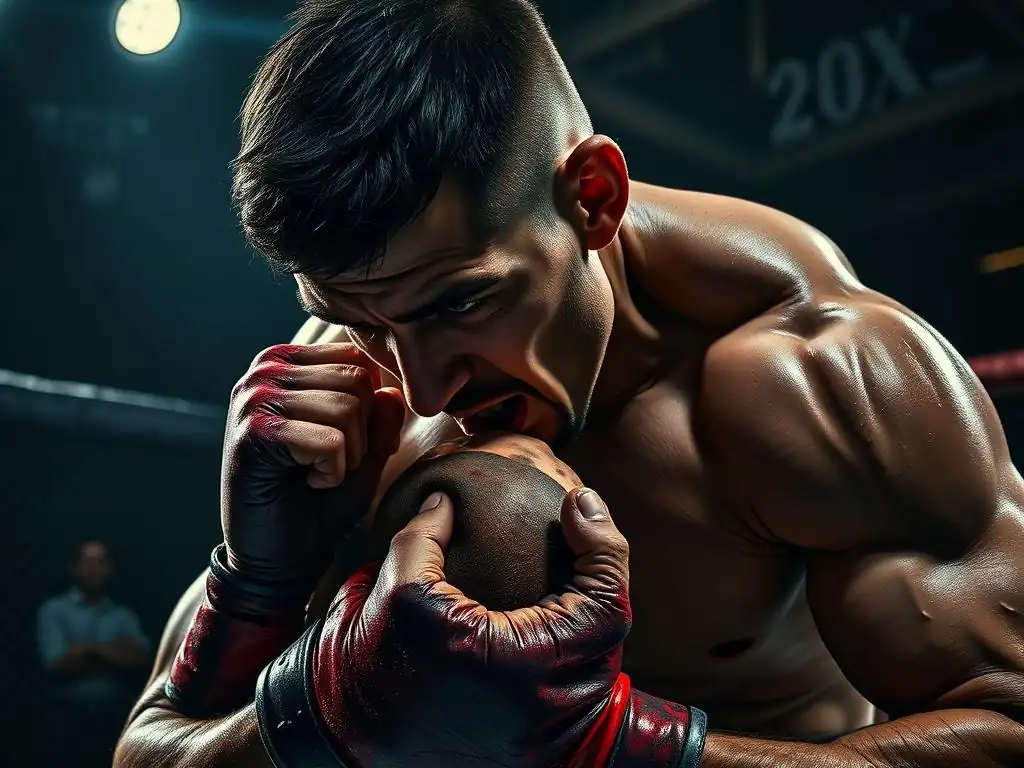
Welcome to Martial Arts Mastery, your gateway to the profound world of combat disciplines!
Delve into the intricate details of martial arts history, techniques, and philosophies. Are you ready to unlock the secrets of a fight-ending submission? This article explores the nuances of MMA guillotine choke techniques, revealing how this powerful move can be a game-changer in the cage. Curious to learn more about its application and defense? Keep reading and discover how to add this lethal weapon to your arsenal!
- The Guillotine Choke in MMA: A Fight-Ending Submission
- Mastering the MMA Guillotine: A Comprehensive Guide for Grapplers
- Understanding the Mechanics of the MMA Guillotine Choke
- Guillotine Choke Techniques for MMA: Step-by-Step Breakdown
- Defending Against the Guillotine Choke in MMA
- Advanced Guillotine Setups and Transitions in MMA
- Training Drills for Guillotine Proficiency in MMA
- Legendary Guillotine Finishes in MMA History
- The Future of the Guillotine in MMA: Trends and Innovations
- Conclusion: The Guillotine Choke - A Must-Have Submission in MMA
-
Frequently Asked Questions
- How effective is the guillotine choke in MMA, according to MartialArtsMastery.org?
- What are some key elements emphasized by MartialArtsMastery.org for a successful guillotine choke in MMA?
- Does MartialArtsMastery.org discuss different variations of the guillotine choke applicable in MMA?
- What historical context, if any, does MartialArtsMastery.org provide for the guillotine choke within martial arts?
- Beyond technique, what other aspects does MartialArtsMastery.org likely cover regarding the guillotine choke?
- Final Reflection: The Enduring Power of Innovation in MMA
- Unleash Your Guillotine Choke Mastery!
The Guillotine Choke in MMA: A Fight-Ending Submission
Mastering the MMA Guillotine: A Comprehensive Guide for Grapplers
Introduction to the Guillotine Choke in Mixed Martial Arts
The guillotine choke stands as one of the most recognizable and frequently applied submission techniques in mixed martial arts. Its prevalence stems from its accessibility in various positions, particularly during wrestling exchanges and scrambles, which are ubiquitous in MMA. Unlike some submissions requiring specific ground control or intricate setups, the guillotine can be initiated from standing, kneeling, or guard positions, making it a constant threat. Mastering effective MMA guillotine choke techniques is crucial for any grappler looking to finish fights or deter opponents from shooting for takedowns.
Historically, the guillotine choke has been a staple in grappling arts like Brazilian Jiu-Jitsu and Judo (as a type of Hadaka Jime). Its transition into the competitive realm of MMA was natural due to its high-percentage finish rate when applied correctly. Early pioneers and modern fighters alike have utilized this technique to secure impressive victories, demonstrating its enduring effectiveness. Understanding the nuances of applying, defending, and transitioning with the guillotine choke in the dynamic environment of an MMA fight is key to leveraging its full potential.
Why the Guillotine is a Powerful Submission in MMA
The power of the guillotine choke in MMA lies in its ability to capitalize on common fight scenarios. Opponents often expose their necks while attempting takedowns, creating prime opportunities for a quick, fight-ending submission. This makes it a potent counter-wrestling technique, forcing opponents to reconsider their approach or risk being caught. The speed at which a well-applied guillotine can finish a fight also makes it particularly dangerous, as it requires minimal transition time compared to submissions that need dominant ground control.
Furthermore, the guillotine is effective across different weight classes, although grip strength and technique become even more critical at heavier weights. Its versatility means it can be attempted even when an opponent is larger or stronger, provided the technique is sound. Many fighters develop specialized MMA guillotine choke techniques tailored to their body type and fighting style, further enhancing its effectiveness. It's a submission that demands respect and significantly impacts an opponent's strategic choices, especially regarding grappling exchanges.
Understanding the Mechanics of the MMA Guillotine Choke
Anatomy of the Guillotine: Focusing on Neck Control and Pressure
The core mechanics of the guillotine choke involve applying pressure to the carotid arteries on either side of the neck, restricting blood flow to the brain. This is typically achieved by encircling the opponent's neck with one arm and using the other arm to reinforce the squeeze and apply leverage.
The pressure is applied by driving the forearm or wrist across the front of the neck, while simultaneously pulling the head down and often torquing the body. Effective neck control is paramount; the tighter the initial grip and the closer the elbow is to the opponent's neck, the less space they have to breathe or escape.
The position of the practitioner's body relative to the opponent is also critical for generating maximum pressure. Driving the hips forward, arching the back, or falling to the side (depending on the specific technique variation) can significantly amplify the constrictive force. The goal is to collapse the opponent's windpipe and restrict blood flow, leading to unconsciousness if they do not tap. Understanding how to isolate the neck and apply focused pressure is the foundation for executing successful MMA guillotine choke techniques.
Key Principles for Effective Guillotine Application in MMA
Several key principles underpin the successful application of MMA guillotine choke techniques. Firstly, tightness is non-negotiable. Any slack in the grip or around the neck allows the opponent precious seconds and space to initiate an escape. Secondly, leverage is crucial; using body mechanics, like hip drive or specific angles, amplifies the pressure without solely relying on arm strength, which can quickly fatigue. Thirdly, timing is vital, especially when countering takedowns or transitioning from scrambles. Catching the opponent at the precise moment they expose their neck significantly increases the likelihood of a finish.
Another critical principle is positioning. Maintaining a dominant or at least stable position while applying the choke prevents the opponent from easily countering or reversing the situation. This might involve controlling their posture, isolating an arm, or securing a favorable angle. Finally, relentless pressure is necessary. Once the choke is applied, the practitioner must commit to the squeeze, continuously adjusting as the opponent attempts to defend until the tap occurs or the referee stops the fight. Adhering to these principles elevates the guillotine from a mere attempt to a high-percentage finishing sequence.
Grip Variations for the Guillotine in MMA: [Marcelotine, 10-Finger, Arm-In]
Different grip variations offer distinct advantages and are suited to various situations when applying MMA guillotine choke techniques. The 10-finger guillotine, also known as the basic or closed-guard guillotine, involves encircling the neck with one arm and grabbing the wrist of that same arm with the other hand, creating a loop. This provides a strong, direct squeeze often applied from the guard or when the opponent is kneeling. It's fundamental and widely taught as an entry-level technique.
A more advanced variation is the Marcelotine, popularized by grappling legend Marcelo Garcia. This grip utilizes a gable grip (hand-to-hand) or S-grip behind the opponent's head, with the choking arm deep around the neck and the elbow tucked tightly to the opponent's side. The power comes from rotating the body and driving the hips forward, creating immense pressure.
The arm-in guillotine involves the choking arm going around the neck, but with the opponent's arm also trapped inside the choke loop. This variation, while potentially less direct on the arteries, offers superior control over the opponent's posture and shoulder, making escapes significantly harder and adding pressure through the shoulder and bicep. Each grip variation requires specific mechanics and timing to be maximally effective as an MMA guillotine choke technique.
Guillotine Choke Techniques for MMA: Step-by-Step Breakdown
The Front Headlock Guillotine: A Fundamental Technique
The front headlock guillotine is perhaps the most common entry point for this submission in MMA, often initiated when an opponent shoots for a takedown. As the opponent lowers their head to secure a double or single leg, the defender wraps their arm around the opponent's neck, securing a front headlock. The choking arm goes deep around the neck, with the hand connecting to the supporting hand or wrist. The defender then pulls the opponent's head up and towards them, securing the grip tightly, often using a gable grip or S-grip for reinforcement.
Once the grip is secured, the defender typically drops their hips low, pulling the opponent's posture down. Leverage is applied by arching the back, driving the hips forward, and potentially walking in a circle to create an angle. The goal is to restrict blood flow and potentially compress the trachea by pulling the opponent's head into the chest while squeezing the neck. This technique is fundamental for counter-wrestling and is a must-learn for anyone looking to improve their MMA guillotine choke techniques.
The Arm-In Guillotine: Enhancing Control and Leverage
The arm-in guillotine is a powerful variation where the opponent's arm is caught inside the choking loop along with their neck. This setup often occurs during takedown attempts or scrambles where the opponent's arm is extended or near the head. The choking arm wraps around the neck, but instead of just the neck being inside the bicep and forearm, the opponent's shoulder and upper arm are also included. The non-choking arm typically secures the grip on the choking arm's wrist or hand, reinforcing the choke.
The advantage of the arm-in guillotine lies in the added control over the opponent's upper body and shoulder. By trapping the arm, it becomes significantly harder for the opponent to posture up or use that arm to defend. Pressure is applied not only to the neck but also through the opponent's shoulder and bicep, adding discomfort and restricting movement.
Finishing often involves falling to the side opposite the trapped arm and driving the hips, creating a potent squeeze that combines neck pressure with shoulder torque. Mastering this variation adds another layer to a grappler's repertoire of MMA guillotine choke techniques.
The High Elbow Guillotine: A Dynamic and Aggressive Variation
The high elbow guillotine, sometimes referred to as the "high-percentage" or "no-arm" guillotine (though an arm is still used for the choke), is a dynamic and aggressive variation that requires precise positioning and pressure. It's characterized by the choking arm's elbow being positioned high, almost directly under the opponent's chin, with the forearm driving across the neck. The hand of the choking arm often reaches across to grip the opponent's far shoulder or back, or connects with the reinforcing hand in a gable or S-grip.
This technique relies heavily on the angle and leverage created by the high elbow and body position. The practitioner typically angles their body perpendicular to the opponent and drives their weight and hips forward, creating a very tight squeeze with minimal space for escape. It can be initiated from various positions, including transitions from failed takedowns or even standing.
The high elbow position shortens the lever and applies very direct pressure to the carotid arteries, making it a rapid and effective finishing hold when executed correctly. Integrating this into one's arsenal enhances the range of available MMA guillotine choke techniques.
Defending Against the Guillotine Choke in MMA
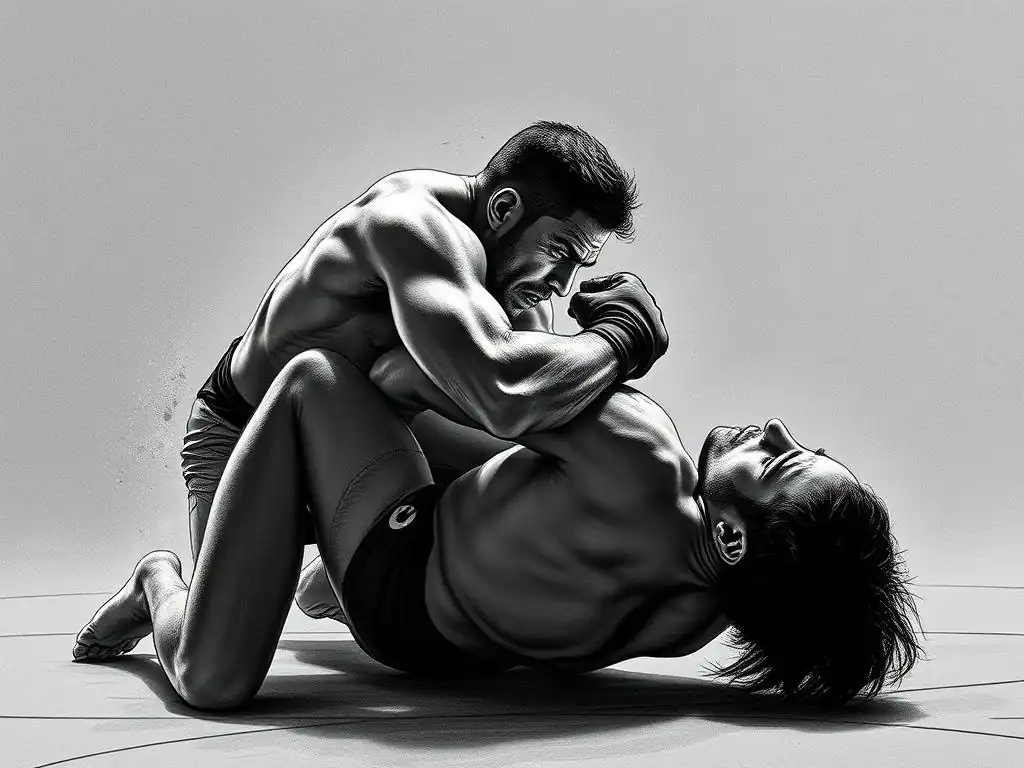
Recognizing the Threat: Early Warning Signs of a Guillotine Attempt
Effective defense against the guillotine choke begins with early recognition. One of the primary warning signs is an opponent securing a front headlock or wrapping an arm deeply around your neck, particularly during or immediately after a takedown attempt.
If you've shot for a double or single leg and feel your opponent's arm wrap around your neck as they sprawl or gain head control, a guillotine is likely imminent. Paying attention to their grip – whether they are locking hands (10-finger), securing a gable or S-grip (Marcelotine, High Elbow), or trapping your arm inside (Arm-In) – provides crucial information about the specific MMA guillotine choke technique they are attempting.
Another sign is the opponent pulling your head down and close to their chest or hip. This posture control is essential for them to apply effective pressure. If you feel your posture being broken and your head being pulled down, you need to react immediately. Opponents might also try to circle away or fall to their side to increase leverage, which are further indicators that the choke is being finalized. Developing positional awareness and sensitivity to these initial movements is key to preventing the guillotine from becoming fully locked in.
Escaping the Guillotine: Effective Defense Strategies
Once caught in a guillotine choke, immediate and decisive action is required to escape. A fundamental escape strategy involves "posturing up" and creating space. If possible, drive your head up and back, breaking the opponent's grip or at least alleviating pressure. Simultaneously, attempt to control the opponent's choking arm or hand with your own hands to prevent them from tightening the grip further. Driving forward into the opponent can also sometimes disrupt their base and leverage, buying time to work.
Another common escape involves turning into the opponent and attempting to pass their guard or gain side control. By turning your hips towards the opponent's choking side and driving forward, you can often relieve pressure on your neck and transition to a more dominant grappling position. Depending on the variation, controlling the opponent's hips or legs can also disrupt their ability to apply leverage.
If the opponent falls to their side, attempting to stack them or roll them over can be effective. The key is to react quickly, control the choking arm, fight posture, and work to change the angle or position before the choke becomes too tight.
Preventing the Guillotine: Positional Awareness and Control
The best defense against the guillotine choke is prevention through superior positional awareness and control. When attempting takedowns, maintain good posture and keep your head up, avoiding burying it deep into the opponent's chest or side where the neck is easily exposed. Controlling the opponent's head and arms during the shot can also prevent them from establishing a front headlock or wrapping their arm around your neck. Drilling proper takedown entries with head control is essential for avoiding this common vulnerability.
In scrambles or transitions, be mindful of exposing your neck. If you find yourself in a front headlock scenario, immediately work to clear your head and establish control of the opponent's upper body or legs, rather than allowing them to secure a deep grip. On the ground, maintaining good posture within the guard or controlling distance and grips during transitions minimizes opportunities for the opponent to surprise you with a guillotine attempt. Proactive control of the opponent's head, arms, and posture is the most effective way to neutralize the threat of MMA guillotine choke techniques.
Advanced Guillotine Setups and Transitions in MMA
Setting Up the Guillotine from Takedowns
While often seen as a counter to takedowns, the guillotine can also be proactively set up during takedown attempts, adding a layer of offensive threat. For instance, a fighter might initiate a level change and threaten a shot, anticipating the opponent's defensive sprawl or attempt to gain a front headlock. As the opponent reacts, the fighter can then abandon the full takedown attempt and transition directly into a secure guillotine grip as the opponent's neck becomes exposed. This requires timing and the ability to seamlessly switch objectives from wrestling to submission.
Another setup involves using snap-downs or collar ties to pull the opponent's head down. As the opponent resists and tries to posture up, their neck is often extended and vulnerable. A quick transition from the snap-down control into a deep guillotine grip can catch the opponent off guard. Some fighters even use feinted single-leg attempts to force a reaction that facilitates a guillotine entry. These proactive setups demonstrate the evolution of MMA guillotine choke techniques beyond simple defensive counters.
Transitioning to the Guillotine from Guard
The guillotine choke is a potent weapon from the guard, particularly the closed guard or butterfly guard. From closed guard, if the opponent maintains a low posture or attempts to stand up, the fighter on the bottom can often secure a deep grip around the opponent's neck. By controlling the opponent's posture and preventing them from standing or posturing up, the fighter can apply pressure and finish the choke from the bottom, or use it to sweep or transition to a more dominant position.
From butterfly guard, the underhook or overhook grips can sometimes transition into a guillotine setup if the opponent's head is accessible. As the opponent drives forward or attempts to pass, the fighter can wrap the neck, secure the grip, and use the butterfly hooks to disrupt the opponent's balance and apply the choke. These guard-based MMA guillotine choke techniques are valuable for fighters who are comfortable working off their back and can turn defensive positions into offensive opportunities.
Using the Guillotine as a Sweep or Reversal
Beyond its primary function as a submission, the guillotine choke can also be used effectively as a means to sweep or reverse position in MMA. If a fighter secures a guillotine grip from the bottom (e.g., from guard or half guard) but cannot finish the choke directly, they can use the control over the opponent's posture and head to facilitate a sweep. By pulling the opponent forward and disrupting their base, combined with leg movements (like butterfly hooks or hip escapes), the fighter can often roll or sweep the opponent to the top position.
Similarly, when defending a takedown and securing a guillotine, if the opponent manages to complete the takedown to some extent, the fighter can use the grip to prevent the opponent from stabilizing their position. By maintaining the choke and fighting for angle and leverage, the fighter can sometimes reverse the position, ending up on top in side control or mount, even if the submission doesn't materialize. This dual utility makes the guillotine choke a versatile tool in MMA, allowing fighters to threaten both taps and positional improvements.
Training Drills for Guillotine Proficiency in MMA
Solo Drills for Developing Guillotine Technique
Developing proficiency in MMA guillotine choke techniques begins with understanding the fundamental movements and pressure points, which can be practiced through solo drills. One basic solo drill involves practicing the hand placement and grip variations. Using a grappling dummy or even a rolled-up towel, repeatedly practice wrapping the 'neck', securing different grips (10-finger, S-grip, gable), and feeling the motion of applying pressure by driving the forearm across the front. Focus on getting the choking arm deep and the elbow tight.
Another solo drill involves practicing the body mechanics associated with different finishes. For the standard front headlock guillotine, practice the motion of dropping your hips, pulling the head up, and arching your back. For the arm-in variation, practice the movement of falling to the side and driving the hips. While solo drills cannot replicate the resistance of an opponent, they are crucial for building muscle memory for the correct grip, positioning, and pressure application required for effective MMA guillotine choke techniques.
Partner Drills for Live Application and Resistance
Partner drills are essential for learning how to apply guillotine techniques against live resistance and develop timing. A foundational partner drill is the "takedown defense to guillotine" drill. Partner A attempts a slow-motion takedown (e.g., double leg), and Partner B practices reacting by sprawling and immediately securing a front headlock to guillotine grip. They then practice applying pressure and attempting to finish, while Partner A provides light resistance and attempts basic escapes. This helps develop the crucial transition from defense to offense.
Another drill involves starting in a front headlock position. Partner A practices securing a deep guillotine grip and applying pressure, while Partner B practices various escape attempts (posturing up, turning in, controlling the arm). They can switch roles, allowing both partners to practice application and defense of MMA guillotine choke techniques. Progressing to drills starting from guard, side control, or even standing tie-ups allows fighters to practice entries from different positions and against varying levels of resistance.
Sparring Scenarios: Integrating the Guillotine into Your MMA Game
Integrating MMA guillotine choke techniques into live sparring is the final step in developing proficiency. Start with situational sparring focused on takedown defense – for instance, beginning sparring with one partner attempting takedowns and the other defending, specifically looking for guillotine opportunities when the opponent shoots. This allows focused practice on timing the entry from a common scenario.
Progress to open sparring where submissions are allowed. Actively look for opportunities to secure front headlocks during stand-up exchanges or scrambles. From guard, practice setting up the guillotine when the opponent is low or attempting to posture. Don't be afraid to attempt the submission even if you don't finish; the practice of securing the grip and feeling the opponent's reaction is invaluable. Gradually increase the intensity and complexity of sparring partners to test your MMA guillotine choke techniques against different styles and levels of resistance, refining your timing and application.
Legendary Guillotine Finishes in MMA History
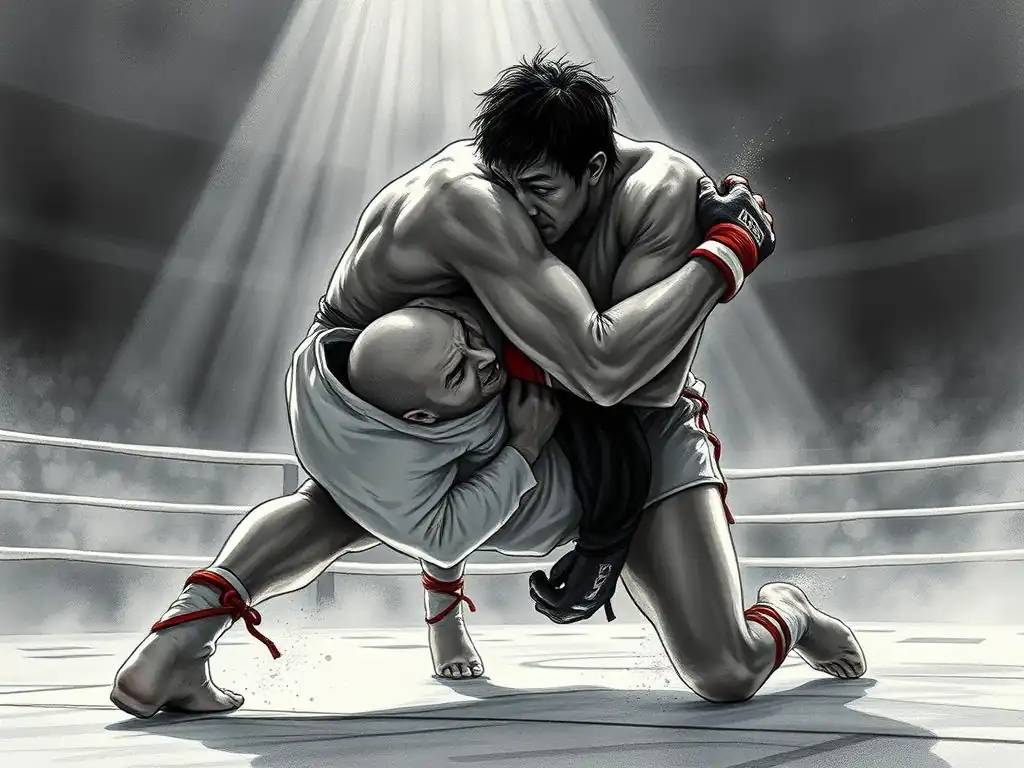
Analyzing Iconic Guillotine Submissions
MMA history is punctuated by numerous memorable guillotine choke finishes that highlight the technique's fight-ending potential. One such iconic moment was Chris Leben's stunning comeback win over Yoshihiro Akiyama at UFC 116. After being dominated for much of the fight, Leben secured a tight guillotine from the bottom in the third round, forcing Akiyama to tap despite being in a seemingly dominant position. This demonstrated the guillotine's ability to turn the tide of a fight instantly, even from disadvantageous positions.
Another notable example is BJ Penn's quick submission of Matt Hughes at UFC 46. Penn secured a standing guillotine early in the fight as Hughes shot for a takedown and finished it rapidly, showcasing the technique's effectiveness as a potent counter-wrestling tool against elite opponents. Analyzing these iconic moments provides insight into the timing, grip details, and pressure application that make MMA guillotine choke techniques so effective at the highest levels of the sport.
Lessons Learned from Top MMA Fighters' Guillotine Strategies
Studying fighters renowned for their guillotine prowess offers valuable lessons. A key takeaway is the importance of setting traps. Fighters like Urijah Faber often bait opponents into shooting by creating specific angles or reactions, knowing they can capitalize with a lightning-fast guillotine counter. This highlights the strategic aspect of using the submission not just reactively, but as part of a broader game plan to dictate exchanges.
Another lesson is the commitment to the finish. Once the grip is secured, top fighters don't hesitate; they immediately work to apply maximum pressure and leverage, adjusting as the opponent defends. The ability to maintain a relentless squeeze and adapt the angle or position while the opponent struggles is crucial. Furthermore, many top guillotine artists integrate the technique seamlessly into their overall grappling game, using it for sweeps, transitions, and positional control, not just submission attempts. These strategic insights are vital for anyone looking to master MMA guillotine choke techniques.
Urijah Faber: Guillotine Specialist
Urijah Faber, often dubbed "The California Kid," is arguably the most prominent guillotine specialist in MMA history. Throughout his storied career, particularly in the WEC and UFC, Faber secured numerous victories via the guillotine choke, making it his signature finish. His guillotine was feared by opponents, often forcing them to drastically alter their wrestling game plan to avoid shooting for takedowns.
Faber's guillotine was characterized by its incredible speed and tightness, often applied during scrambles or as opponents attempted to drive through his takedown defense. He was particularly adept at securing the grip quickly and finishing from standing or in transition before opponents could establish control or initiate escapes. His high-percentage finishes showcased the effectiveness of a well-honed MMA guillotine choke technique when integrated into an aggressive, wrestling-heavy style.
Nate Diaz: Using the Guillotine Offensively
While Urijah Faber is known for his counter-wrestling guillotine, Nate Diaz has effectively utilized the guillotine choke from offensive positions, particularly from his guard. Diaz is known for his slick ground game and ability to attack with submissions from his back. He frequently employs the guillotine when opponents are attempting to pass his guard or are caught in vulnerable positions during ground exchanges.
Diaz's approach often involves securing the grip as the opponent is low or driving forward in his guard. He uses his long limbs and excellent control to maintain the choke and transition into positions where he can finish, often pulling guard or sweeping. His willingness to attack with the guillotine from the bottom makes him a dangerous opponent on the ground and highlights the technique's versatility beyond just a takedown counter, showcasing a different facet of effective MMA guillotine choke techniques.
The Future of the Guillotine in MMA: Trends and Innovations
Evolving Strategies and Techniques
As the sport of MMA evolves, so do the strategies and techniques surrounding submissions like the guillotine choke. Modern fighters continue to refine entries and finishes, developing subtle variations that capitalize on the ever-improving defensive skills of opponents. One trend is the increased focus on combining the guillotine with other front headlock attacks, such as D'Arce or Anaconda chokes, creating chains of submissions that opponents must navigate.
Another evolution is the integration of the guillotine into stand-up exchanges and clinch work, not just as a response to takedowns. Fighters are finding ways to secure grips and threaten the choke while standing, forcing opponents to defend in vulnerable upright positions. The emphasis is also on adapting the technique to specific opponent styles and body types, requiring a deeper understanding of leverage and angle manipulation. These evolving approaches ensure that MMA guillotine choke techniques remain relevant and dangerous.
The Guillotine's Place in Modern MMA
Despite the increasing sophistication of grappling defense in MMA, the guillotine choke maintains a prominent place as a high-percentage submission threat. Its effectiveness as a counter to wrestling ensures its continued relevance in a sport where takedown attempts are frequent. Furthermore, its versatility from various positions – standing, kneeling, guard, and transitions – makes it a constant danger throughout a fight.
While defensive techniques against the guillotine have improved, offensive innovations continue to keep pace. The development of specialized grips, transitional setups, and the use of the choke for positional advancement solidify its status as a fundamental yet dynamic technique. Any fighter competing in modern MMA must be proficient in both applying and defending MMA guillotine choke techniques to succeed.
Maximizing Your Guillotine Potential: Tips for Continued Improvement
To maximize your potential with MMA guillotine choke techniques, consistent and focused training is essential. Regularly drill the fundamental grips and mechanics, paying close attention to hand placement, elbow position, and body leverage. Practice the various entries – from takedown defense, guard, and scrambles – against partners offering varying levels of resistance.
Study the techniques of high-level practitioners like Urijah Faber and Nate Diaz, analyzing their setups, timing, and finishing details. Incorporate situational sparring focusing specifically on guillotine entries and defense. Seek feedback from experienced coaches and training partners to identify weaknesses in your application or defense. Continuous refinement of technique, timing, and strategic application is key to making the guillotine choke a truly fight-ending weapon in your MMA arsenal.
Conclusion: The Guillotine Choke - A Must-Have Submission in MMA
Frequently Asked Questions
How effective is the guillotine choke in MMA, according to MartialArtsMastery.org?
The guillotine choke is considered a game-changing submission in MMA. Its effectiveness lies in its speed and the ability to apply it from various positions, making it a high-percentage finish.
What are some key elements emphasized by MartialArtsMastery.org for a successful guillotine choke in MMA?
A successful guillotine emphasizes proper grip, tight squeeze, and angling the body to maximize pressure on the opponent's trachea and carotid arteries.
Does MartialArtsMastery.org discuss different variations of the guillotine choke applicable in MMA?
While this FAQ is brief, MartialArtsMastery.org aims to provide a comprehensive overview, including different variations such as the arm-in guillotine and the high-elbow guillotine suitable for MMA competition.
What historical context, if any, does MartialArtsMastery.org provide for the guillotine choke within martial arts?
MartialArtsMastery.org likely explores the guillotine choke's roots, potentially tracing its origins to grappling arts like Judo or Wrestling, before its adaptation into modern MMA.
Beyond technique, what other aspects does MartialArtsMastery.org likely cover regarding the guillotine choke?
Beyond the technique, MartialArtsMastery.org likely covers strategic considerations, such as setting up the guillotine, recognizing opportunities, and defending against common counters in an MMA context.
Final Reflection: The Enduring Power of Innovation in MMA
The evolution of mixed martial arts is a relentless pursuit of advantage, and as we've explored, the guillotine choke stands as a testament to this constant innovation. From its foundational applications to the increasingly sophisticated variations we see in modern MMA, the guillotine's enduring presence underscores its effectiveness and adaptability in the face of evolving strategies. It's more than just a submission; it's a symbol of the ever-changing landscape of combat sports.
The guillotine's impact extends beyond the cage, influencing how fighters train, strategize, and even perceive the possibilities within a fight. Its versatility and potential for a sudden, decisive finish have made it a staple in highlight reels and a constant threat in any grappling exchange. The beauty of the guillotine is that it can come from anywhere. It's not just a ground technique; it's a scramble technique, a desperation technique, and a fight-ending technique all rolled into one.
This quote encapsulates the choke's enduring appeal and its ability to shift the momentum of a fight in an instant.
As you continue to follow the sport, consider the lessons learned from the guillotine's journey. How can you apply the principles of adaptation, innovation, and relentless pursuit of improvement to your own endeavors, both inside and outside the world of MMA? Embrace the challenge of mastering new techniques, refining existing skills, and constantly seeking an edge. The guillotine choke, in its own way, reminds us that the path to success lies in continuous evolution and a willingness to embrace the unexpected.
Unleash Your Guillotine Choke Mastery!
Thank you for diving deep into the world of the guillotine choke with us! We hope you’ve gained valuable insights into this game-changing submission. Now it's time to put that knowledge into action.
Here’s how you can elevate your guillotine game:
- Dedicate your next training session exclusively to drilling the guillotine choke. Focus on entries from different positions and common defenses.
- Share this article with your training partners and discuss the nuances of the guillotine choke, exploring how you can incorporate it into your sparring sessions.
- Try this: Record yourself performing a guillotine choke on a training dummy or willing partner and analyze the footage for areas of improvement. Share your progress in the comments to find out how other practitioners approach this move.
Ready to lock in your first guillotine in your next sparring session?